Tag: Hamas

  • Israeli fire ‘most likely’ killed woman hostage on Oct 7: Army

    Israeli fire ‘most likely’ killed woman hostage on Oct 7: Army

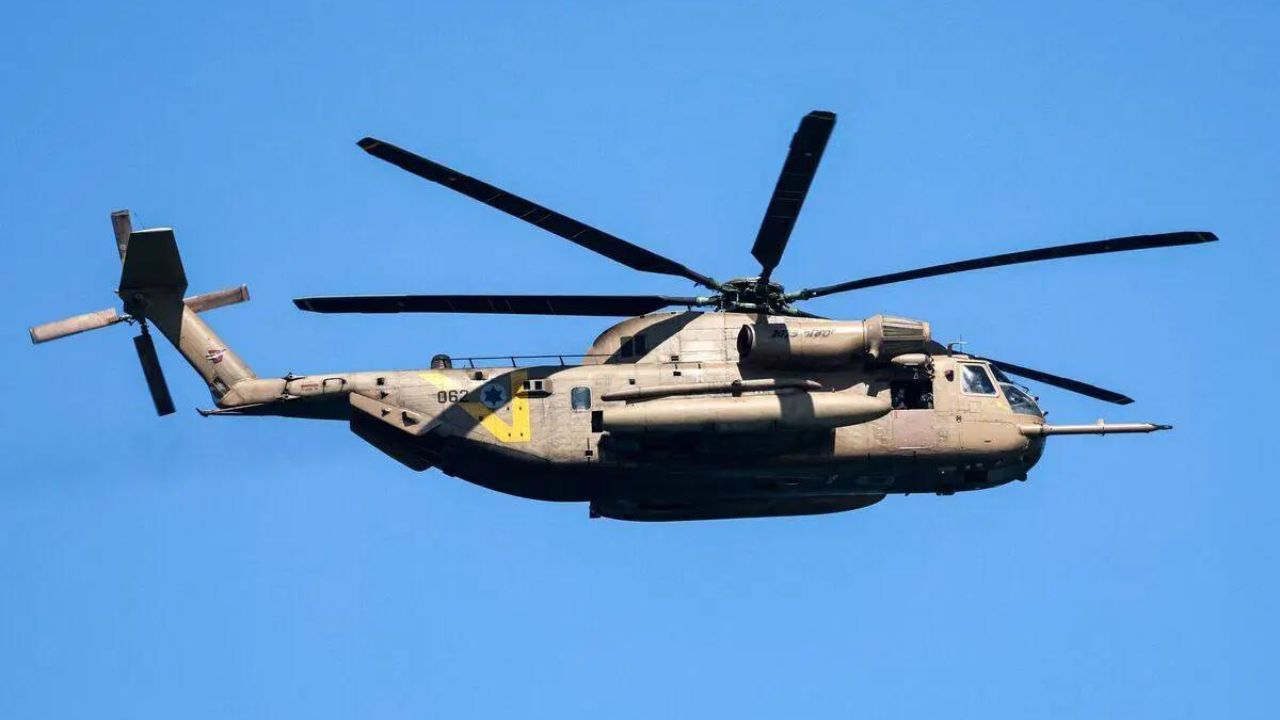
    An Israeli investigation found Friday that an Israeli woman who had been seized during the October 7 attack was “most likely” killed when a combat helicopter fired on her kidnappers’ vehicle.

    Efrat Katz and most of the militants in the vehicle were killed when the Israeli aircraft fired on them on October 7, the army investigation said.

    The helicopter “fired at a vehicle that had terrorists in it, and which, in retrospect, based on the testimonies, also had hostages in it,” the army said in a statement.

    “As a result of the fire, most of the terrorists manning the vehicle were killed, and most likely, Efrat Katz … was killed as well.”

    The “tragic and unfortunate” event occurred at a time of “fighting and conditions of uncertainty,” Israeli Air Force chief Tomer Bar said in the statement.

    “The commander of the air force did not find fault in the operation by the helicopter crew, who operated in compliance with the orders in a complex reality of war.”

    The army statement said the mistake occurred because surveillance systems could not distinguish hostages from kidnappers once in a vehicle, and that “the shooting was defined as shooting at a vehicle with terrorists”.

    Katz, 68 at the time of Hamas’s attack on southern Israel, was kidnapped from the Nir Oz kibbutz close to the Gaza border.

    Her daughter Doron Katz-Asher and her two children were taken hostage during the attack, but were later released on November 24.

    Katz’s partner Gadi Moses and his ex-wife Margalit Moses were also taken hostage during the attack. She was later released but Gadi is believed to remain in captivity in Gaza and still alive.

    The Hamas attack resulted in the death of 1,170 Israelis and foreigners, most of them civilians, according to an AFP tally of Israeli official figures.

    Palestinian militants took more than 250 hostages, of whom 130 remain in Gaza, including 34 the Israeli army says are dead.

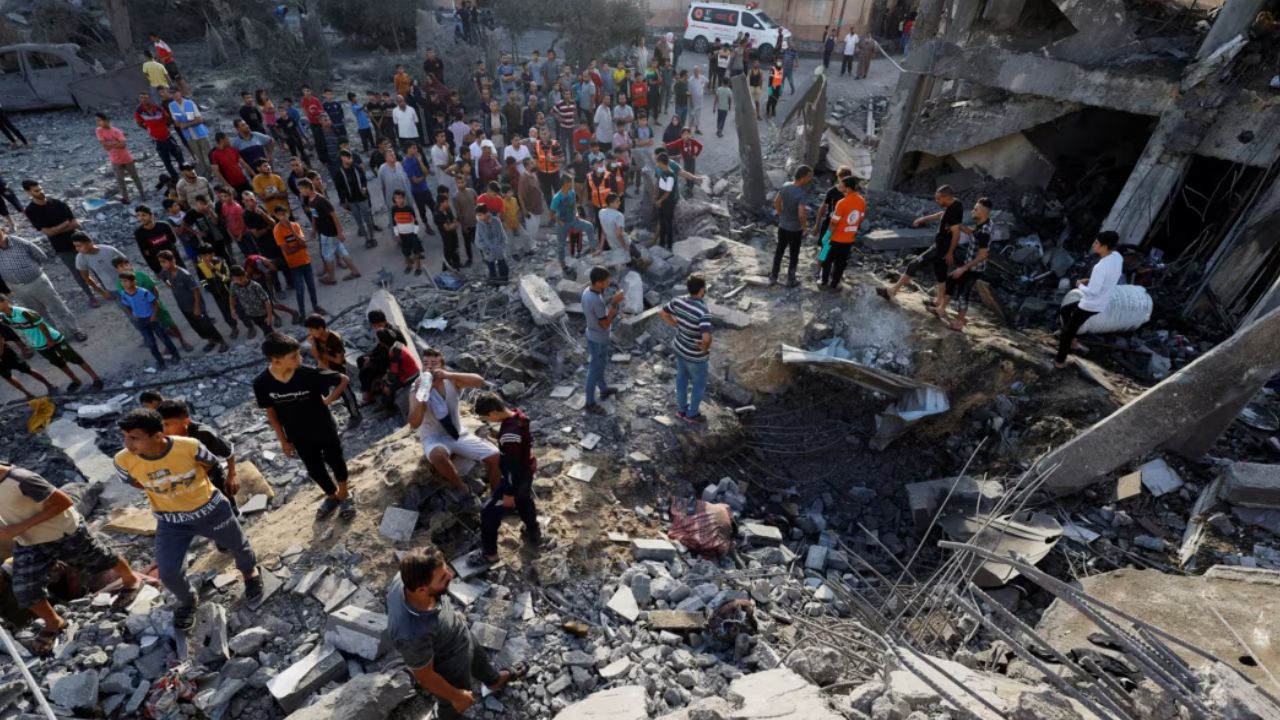
    Israeli genocide in Gaza has killed at least 33,091 people since October 7, mostly women and children, according to the health ministry in the Hamas-run territory.
  • Israel increases Gaza aid; admits ‘mistakes’ in aid worker deaths

    Israel increases Gaza aid; admits ‘mistakes’ in aid worker deaths

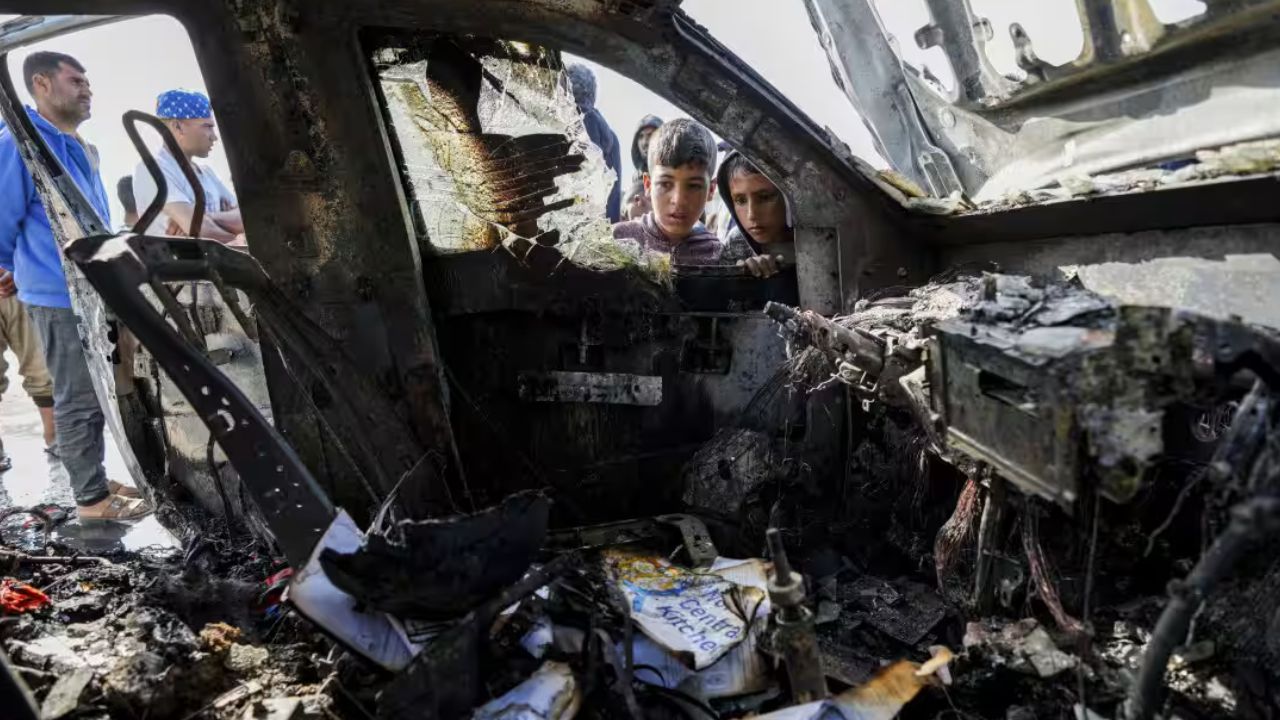
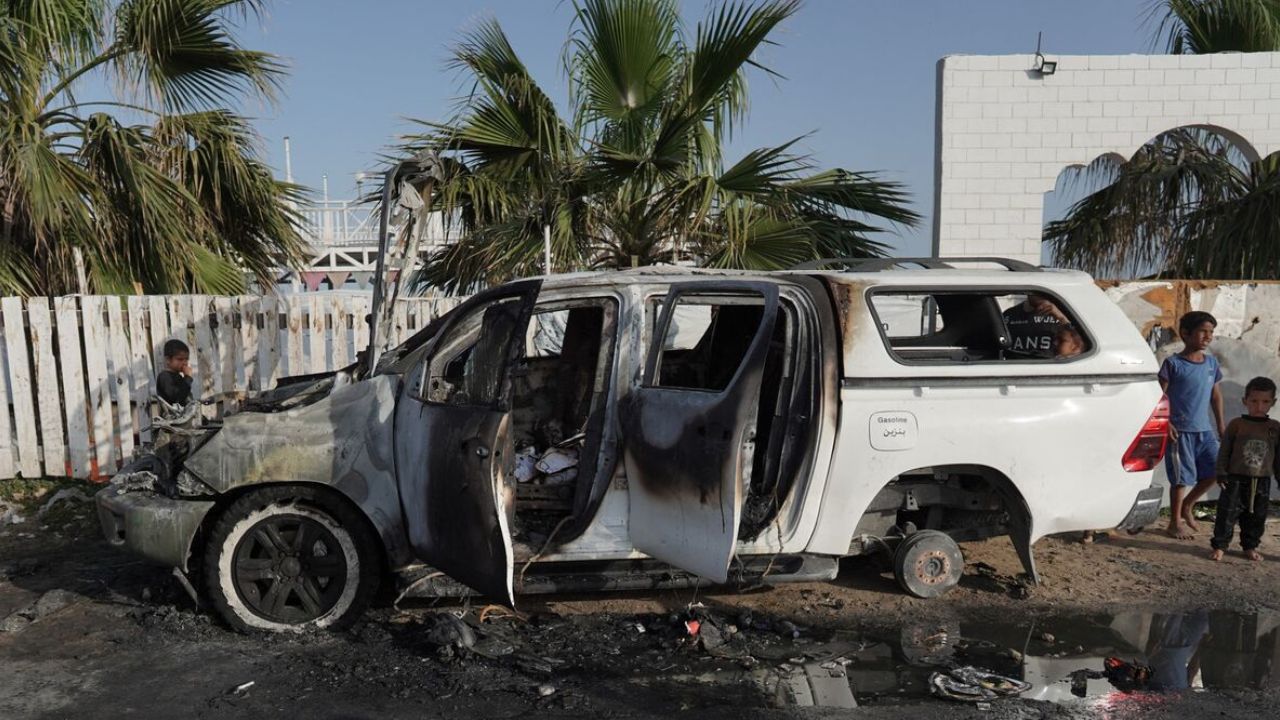
    TEL AVIV: The Israeli army on Friday admitted a series of errors and violations of its rules in the killing of seven aid workers in Gaza, saying it had mistakenly believed it was “targeting armed Hamas operatives”.

    The two brigade officers who ordered the drone strikes, a colonel and a major, are being fired, the army said, and its Southern Command chief reprimanded.

    It was a rare confession of wrongdoing by Israel in its nearly six-month war against Hamas in the Gaza Strip, where the health ministry of the Hamas-ruled territory says more than 33,000 people, mostly civilians, have been killed.

    The victims — an Australian, three Britons, a North American, a Palestinian and a Pole — were killed Monday night in three strikes over four minutes by an Israeli drone as they ran for their lives between their three vehicles, the military said.

    The US-based charity for which they worked, World Central Kitchen, demanded an independent inquiry, and Poland called for a “criminal” probe after the military’s announcement.

    The drone team who killed the aid workers made an “operational misjudgement of the situation” after spotting a suspected Hamas gunman shooting from the top of one of the food trucks the aid workers were escorting, an internal Israeli military inquiry found.

    Senior Israeli officers showed reporters clips from drone footage of what they said was a “Hamas operative” joining the US-based World Central Kitchen (WCK) convoy.

    Although the roofs of the three aid workers’ vehicles were emblazoned with WCK logos, retired Israeli general Yoav Har-Even, who is leading the investigation, said the drone’s camera could not see them in the dark.

    “This was a key factor in the chain of events,” he said.

    The aid group has said its team was travelling in a “de-conflicted” area at the time of the strike. “Despite coordinating movements with the (Israeli army), the convoy was hit as it was leaving the Deir al-Balah warehouse,” WCK said.

    The army said aid was moved at night to avoid deadly stampedes by hungry Gazans.

    The aid workers’ deaths “outraged” US President Joe Biden who demanded Israeli Prime Minister Benjamin Netanyahu order steps toward an “immediate ceasefire”.

    Israel later said it would allow “temporary” aid deliveries into northern Gaza, where the United Nations has warned of imminent famine.

    Har-Even admitted that “the three air strikes were in violation of standard operating procedures”.

    But he argued that “the state of mind” of the Israeli drone commanders “was that they were striking cars that had been seized by Hamas” after they thought one passenger was carrying a gun rather than a bag.

    “One of the commanders mistakenly assumed the gunmen were inside the vehicles and were Hamas terrorists,” the army said in a statement.

    US Secretary of State Antony Blinken said it was “very important that Israel is taking full responsibility for this incident.”

    The aid workers were killed after they had overseen the unloading of a ship carrying 300 tonnes of food aid from Cyprus to a warehouse inland.

    But as they drove south at 11:09 pm on April 1 the drone “struck one car, and identified people running out of the car and entering the second car,” Har-Even said.

    “They decided to hit it, which was against standard operating procedures. Then they struck the third car.”

    Asked by AFP, the general was not able to explain what happened to the “Hamas gunman” on the truck but he conceded they had been mistaken to think armed Hamas suspects had joined the WCK aid workers in the three pickups.

    “It is a tragedy. It is a serious mistake that we are responsible for,” Israeli military spokesman Daniel Hagari told reporters. “That shouldn’t have happened.”

    Har-Even said it was a breakdown in communication in the chain of military command which may have led to the strikes.

    He said that WCK had provided all the information necessary, but it was not passed down.

    “The biggest mistake was that (the drone team) didn’t have the coordination plan,” he said. “Their belief was the vehicles were Hamas, based on operational misjudgement and misclassification.”

  • UN Rights Council considers call for halt to arms sales to Israel

    UN Rights Council considers call for halt to arms sales to Israel

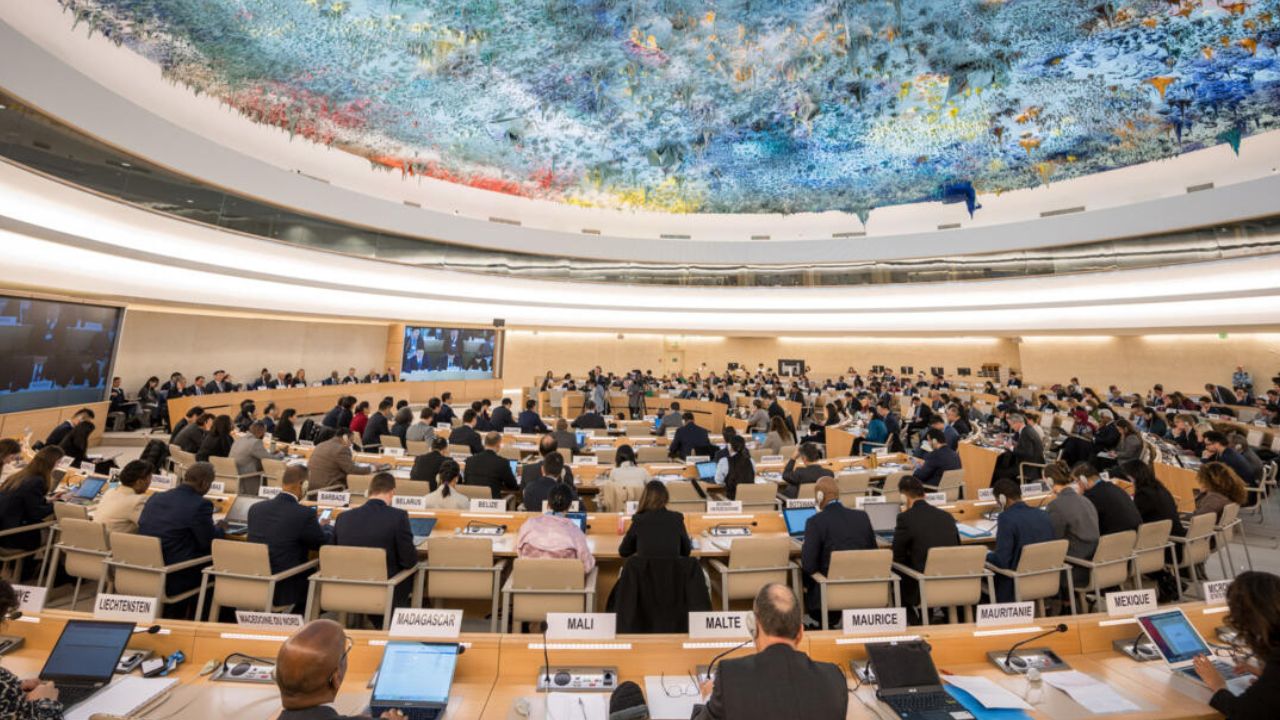
    The UN Human Rights Council was on Friday debating whether to demand a halt in arms sales to Israel, whose genocide in Gaza has killed more than 33,000 people.

    If the text is adopted, it would mark the first time that the United Nations’ top rights body has taken a position on the bloodiest-ever genocide to beset the besieged Palestinian territory.

    The draft text calls on countries to “cease the sale, transfer and diversion of arms, munitions and other military equipment to Israel”.

    This, it said, is needed among other things “to prevent further violations of international humanitarian law and violations and abuses of human rights”.

    It stresses that the International Court of Justice ruled in January “that there is a plausible risk of genocide” in Gaza.

    Friday’s draft resolution, which was brought forward by Pakistan on behalf of all Organisation of Islamic Cooperation (OIC) member states except Albania, calls for “an immediate ceasefire” and “for immediate emergency humanitarian access and assistance”.

    It comes after the UN Security Council in New York last week also finally passed a resolution calling for a ceasefire — thanks to an abstention from Washington, Israel’s closest ally and largest arms supplier.

    However, the ceasefire demand has had no impact on the ground.

    Palestinian militants also took more than 250 hostages on October 7, and 130 remain in Gaza, including 34 who the army says are dead.

    Israel’s retaliatory campaign has killed at least 33,037 people, mostly women and children, according to the health ministry in Gaza.

    The rights council draft resolution does not name Hamas but it does condemn the firing of rockets at Israeli civilian areas and demands “the immediate release of all remaining hostages”.

    The strongly worded text repeatedly names Israel, stressing it is “the occupying Power”.

    It demands that Israel end its occupation of all Palestinian territories and “immediately lift its blockade on the Gaza Strip and all other forms of collective punishment”.

    The text, which was revised late on Thursday removing several references to genocide, continues to express “grave concern at statements by Israeli officials amounting to incitement to genocide”.

    And it urges countries to “prevent the continued forcible transfer of Palestinians within and from Gaza”.

    It warns in particular “against any large-scale military operations in the city of Rafah” in the south of the densely populated Gaza Strip, where well over one million civilians are sheltering, warning of “devastating humanitarian consequences”.

    The draft resolution also condemns “the use of starvation of civilians as a method of warfare in Gaza”, where the UN has warned that famine is looming.

    And it slammed “the unlawful denial of humanitarian access, wilful impediment to relief supplies and deprivation of objects indispensable to the survival of civilians, including food, water, electricity, fuel and telecommunications, by Israel”.

    The text also condemns Israel’s “use of explosive weapons with wide area effects by Israel in populated areas in Gaza”.

    Friday’s draft resolution deplores the fact that Israel has persistently refused to cooperate with numerous investigations ordered by the UN rights council.

    And it insists on the “imperative of credible, timely and comprehensive accountability for all violations of international law” in Gaza.

    It calls on the Commission of Inquiry on the rights situation in the occupied Palestinian territories — the highest-level UN investigation launched prior to October 7 — to probe all “direct and indirect transfer or sale of arms, munitions, parts, components and dual use items to Israel, the occupying Power”.

    The team, it said, should identify the weapons used since October 7 and “analyse the legal consequences of these transfers”.

    The investigators should present their findings to the council at its 59th session, which will be held in mid-2025, it said.

  • Israeli President apologises for deaths of Gaza aid workers

    Israeli President apologises for deaths of Gaza aid workers

    Israeli President Isaac Herzog apologised Tuesday for the air strike that killed seven aid workers in Gaza.

    Herzog said he spoke to Jose Andres, the US-based celebrity chef who heads the aid group World Central Kitchen, to express his “deep sorrow and sincere apologies over the tragic loss of life”.

    Prime Minister Benjamin Netanyahu had earlier stopped short of apologising for the deaths, which he described as a “tragic case” that would be investigated “right to the end”.

    “It happens in war… we will do everything so that this thing does not happen again,” he added.

    AFPTV footage showed the roof of a white vehicle emblazoned with the group’s logo punctured with a blackened hole, alongside the mangled wreckage of other vehicles.

    World Central Kitchen had earlier said a “targeted attack” by Israeli forces on Monday had killed its staff, which included Australian, British, Palestinian, Polish and US-Canadian citizens.

    The charity, which has been delivering food aid to Gaza’s starving population, said its convoy was clearly marked and it had coordinated with the Israeli military to avoid any danger.

    Since October 7 attack, Gaza has been under a near-complete siege, with the United Nations accusing Israel of preventing deliveries of humanitarian assistance to the 2.4 million Palestinians in the devastated territory.

    UN agencies have repeatedly warned that northern Gaza is on the verge of famine, calling the situation a man-made crisis.

    But Herzog said Israel was committed to “delivering and upgrading humanitarian aid to the people of Gaza”.

    The Israeli military also said Tuesday they were looking at ways to coordinate safe aid deliveries.

    The bloodiest-ever Gaza war erupted with the October 7 attack, which resulted in about 1,160 deaths in Israel, mostly civilians, according to an AFP tally of Israeli official figures.

    Israeli genocide in Gaza since October 7, 2023, has killed at least 32,916 people, mostly women and children, according to the health ministry in Hamas-run Gaza.

  • Iran vows to punish Israel for deadly strike on embassy compound

    Iran vows to punish Israel for deadly strike on embassy compound

    Tehran (AFP) – Iran warned arch foe Israel on Tuesday that it will punish an air strike that killed seven Revolutionary Guards, two of them generals, at its consular annex in Damascus.

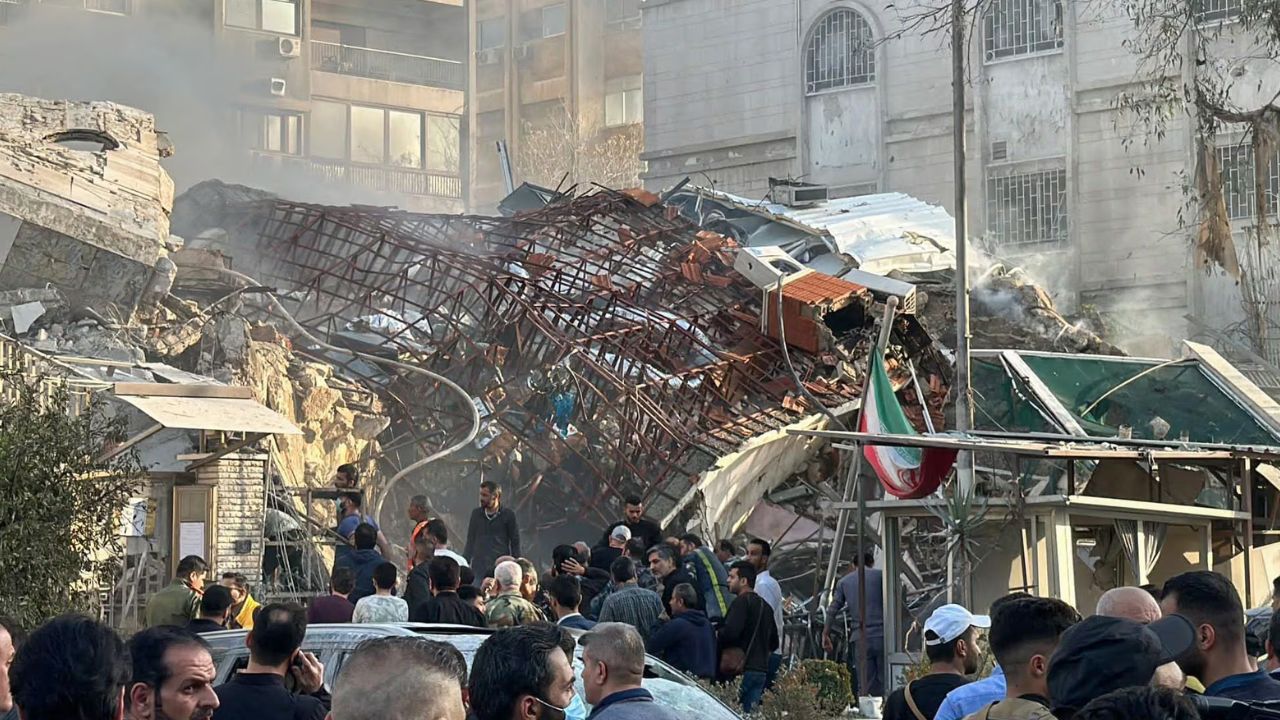
    Four other people were also reported killed in Monday’s strike which levelled the five-storey building adjacent to the Iranian embassy and further stoked tensions already running high as the Gaza war nears the end of its sixth month.

    Israel declined to comment on the strike, which fuelled Middle East tensions.

    Iran’s supreme leader Ayatollah Ali Khamenei vowed that Israel would be punished.

    “The evil Zionist regime will be punished at the hands of our brave men. We will make them regret this crime and the other ones,” Khamenei said in a message published on his official website.

    President Ebrahim Raisi condemned the attack as a “clear violation of international regulations” which “will not go unanswered”.

    “After repeated defeats and failures against the faith and will of the Resistance Front fighters, the Zionist regime has put blind assassinations on its agenda in the struggle to save itself,” Raisi said on his office’s website.

    The UN Security Council is to discuss the strike later Tuesday at a meeting requested by Syrian ally Russia.

    The strike on the annex killed seven Revolutionary Guards, including two commanders of its Quds Force foreign operations arm, Brigadier Generals Mohammad Reza Zahedi and Mohammad Hadi Haji Rahimi, Iranian offiials said.

    Zahedi, 63, had held a succession of commands in the force in a Guards career spanning more than four decades.

    A Britain-based monitor of the more than decade-old conflict in Syria, the Syrian Observatory for Human Rights said the strike killed “eight Iranians, two Syrians and one Lebanese — all of them fighters.”

    Iran’s ambassador to Syria, Hossein Akbari, told Iranian state TV that the attack “was carried out by F-35 fighter jets” which fired six missiles at the building.

    Only the gate of the building was left standing after the attack, with a sign reading “the consular section of the embassy of Iran”.

    Windows were shattered within a 500-metre (550 yard) radius and many parked cars were damaged by the blast.

    The adjacent facade of the Iranian embassy is decorated with a large portrait of Qasem Soleimani, a longtime Quds Force chief who was killed in a US drone strike just outside Baghdad airport in January 2020.

    ‘Important message to US’

    Iran’s foreign minister said Israel’s main backer the United States also bore responsibility for the strike, even though an unidentified US official quoted by Axios insisted Washington “had no involvement” or advanced knowledge of it.

    Amir-Abdollahian said on X that the ministry had summoned a diplomat from the Swiss embassy, which looks after US interests in Iran, to hear its protest.

    “An important message was sent to the American government as the supporter of the Zionist regime. America must be held accountable,” he said in the post.

    Iran’s allies around the region and beyond voiced support for its position.

    “China condemns the attack,” foreign ministry spokesperson Wang Wenbin said, adding “the security of diplomatic institutions cannot be violated, and Syria’s sovereignty, independence and territorial integrity should be respected”.

    The Iraqi foreign ministry condemned the attack as a “flagrant violation of international law” and warned of “more chaos and instability” in the region.

    Lebanon’s Iran-backed Hezbollah group warned Israel would pay for killing Guards commanders. “This crime will not pass without the enemy receiving punishment and revenge,” Hezbollah said in a statement.

    Russia blamed the Israeli air force for the “unacceptable attack against the Iranian consular mission in Syria”.

    Palestinian group Hamas condemned the strike, which it described as a “dangerous escalation”.

    Israeli genocide in Gaza has killed nearly 33,000 people in Gaza, mostly women and children, according to the territory’s health ministry.

    Iran-backed groups in Iraq, Lebanon, Syria, and Yemen have since carried out a series of attacks on Israeli and Western targets.

  • Israeli PM vows to ban Al Jazeera broadcasts

    Israeli PM vows to ban Al Jazeera broadcasts

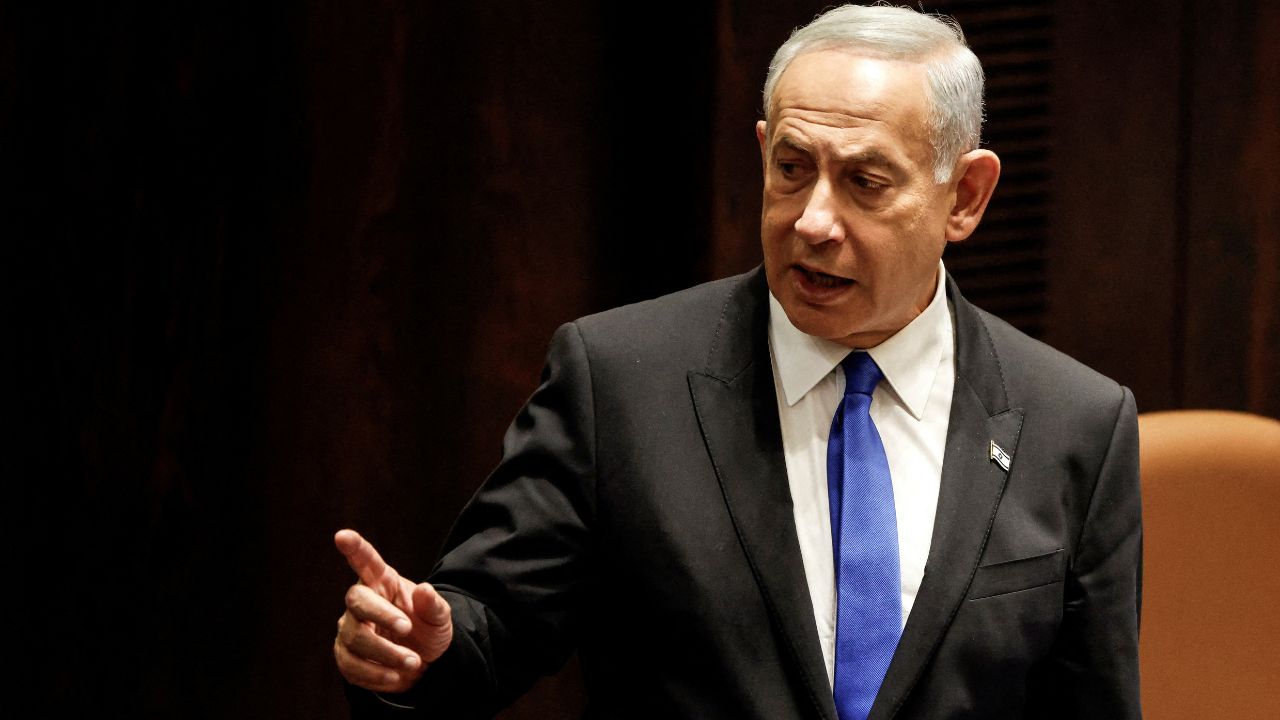
    Israeli Prime Minister Benjamin Netanyahu pledged Monday to use a fresh national security law passed by parliament to ban news channel Al Jazeera from broadcasting in the country.

    The law, passed on Monday by 70 votes to 10, grants top ministers the power to ban broadcasts by foreign channels deemed a national security threat and to shut their offices.

    Netanyahu was quick to single out Qatar-based channel Al Jazeera, with which his government has a long-running feud that predates Israeli genocide in Gaza.

    “The terrorist channel Al Jazeera will no longer broadcast from Israel. I intend to act immediately in accordance with the new law to stop the channel’s activities,” Netanyahu said on X, formerly Twitter.

    The broadcaster slammed the ban as “part of a series of systematic Israeli attacks to silence Al Jazeera”, including the killing of one of its most prominent journalists in the region while covering an Israeli raid in May 2022.

    In a statement, the network said Netanyahu had launched a “frantic” and “disgraceful” campaign of accusations against the network, vowing to continue its “bold” coverage of the war.

    Two network correspondents have been killed during the conflict and the broadcaster’s office in the besieged Palestinian territory has been bombed.

    The New York-based Committee to Protect Journalists said the law “contributes to a climate of self-censorship and hostility toward the press, a trend that has escalated since the Israel-Gaza war began”.

    At least 95 journalists and media workers have been killed since the war began after an unprecedented attack by Hamas on October 7, according to the group, marking “the deadliest period for journalists since CPJ began gathering data in 1992”.

    In January, Israel said an Al Jazeera staff journalist and a freelancer killed in an air strike in Gaza were “terror operatives”.

    The following month, it accused another journalist with the channel who was wounded in a separate strike of being a “deputy company commander” with Hamas.

    Al Jazeera has fiercely denied Israel’s allegations and accused it of systematically targeting Al Jazeera employees in the Gaza Strip.

    Hamas said in a statement that the ban showed that Israel “desperately seeks to obscure the truth of its heinous crimes”.

    White House spokeswoman Karine Jean-Pierre said “if it is true, a move like this is concerning”.

    Broadcasting in both English and Arabic, Al Jazeera bills itself as the “first independent news channel in the Arab world”.

    Launched in Doha in 1996, the network says it has more than 70 bureaus around the globe, with 3,000 employees and an audience in 430 million homes.

    Qatar, which funds Al Jazeera, also serves as a base for Hamas leader Ismail Haniyeh.

    Tensions between Israel and Al Jazeera have only grown since the latest Israel-Hamas conflict erupted on October 7.

    Al Jazeera’s bureau chief in Gaza, Wael al-Dahdouh, was wounded in an Israeli strike in December that killed the network’s cameraman.

    His wife, two of their children and a grandson were killed in the October bombardment of central Gaza’s Nuseirat refugee camp.

    His eldest son was the Al Jazeera staff journalist killed in January when a strike targeted a car in Rafah.

    Israel has launched a relentless air and ground campaign after October 7 that has reduced much of Gaza to rubble and killed at least 32,845 people, mostly women and children, according to the Gaza health ministry.

  • NGO World Central Kitchen says seven of its workers killed in Israeli strike in Gaza

    NGO World Central Kitchen says seven of its workers killed in Israeli strike in Gaza

    An Israeli strike killed several people working for US-based charity World Central Kitchen in the Gaza Strip on Monday, according to the organization’s founder.

    World Central Kitchen “lost several of our sisters and brothers in an IDF air strike in Gaza. I am heartbroken and grieving for their families and friends and our whole WCK family,” chef Jose Andres posted on social media site X.

    Earlier, the Gaza health ministry had said the bodies of four foreign aid workers and their Palestinian driver were brought to the hospital in the central town of Deir el-Balah after an Israeli strike targeted their vehicle.

    Hamas said in a statement that the aid workers included “British, Australian and Polish nationalities, with the fourth nationality not known”, and that the fifth person killed was a Palestinian driver and translator.

    US National Security Council spokesperson Adrienne Watson said the White House was “heartbroken and deeply troubled by the strike.”

    “Humanitarian aid workers must be protected as they deliver aid that is desperately needed, and we urge Israel to swiftly investigate what happened,” she wrote on X.

    The Israeli military said in a statement that it was “conducting a thorough review at the highest levels to understand the circumstances of this tragic incident”, adding that it had been “working closely with WCK” in the effort to provide aid to Palestinians.

    At the Al-Aqsa Hospital in Deir el-Balah, an AFP correspondent saw five bodies with three foreign passports lying nearby.

    Australian Prime Minister Anthony Albanese on Tuesday confirmed one of the killed aid workers was Australian national Zomi Frankcom.

    “This is completely unacceptable. Australia expects full accountability for the deaths of aid workers,” Albanese said

    World Central Kitchen has been involved in delivering the aid arriving by boat from Cyprus, and in the construction of a temporary jetty in Gaza.

    Gaza has been under a near-complete blockade since October 7, with the United Nations accusing Israel of preventing deliveries of humanitarian assistance urgently needed by all 2.4 million Palestinians.

    UN agencies have warned repeatedly that northern Gaza is on the verge of famine, calling the situation a man-made crisis because aid lorries are backed up on the Egypt-Gaza border awaiting long checks by Israeli officials. Israel has denied responsibility.

    Israeli genocide in Gaza has killed at least 32,845 people, mostly women and children, according to the health ministry in Gaza.

  • Israel pulls out of Al-Shifa hospital after killing civilians, destroying buildings

    Israel pulls out of Al-Shifa hospital after killing civilians, destroying buildings

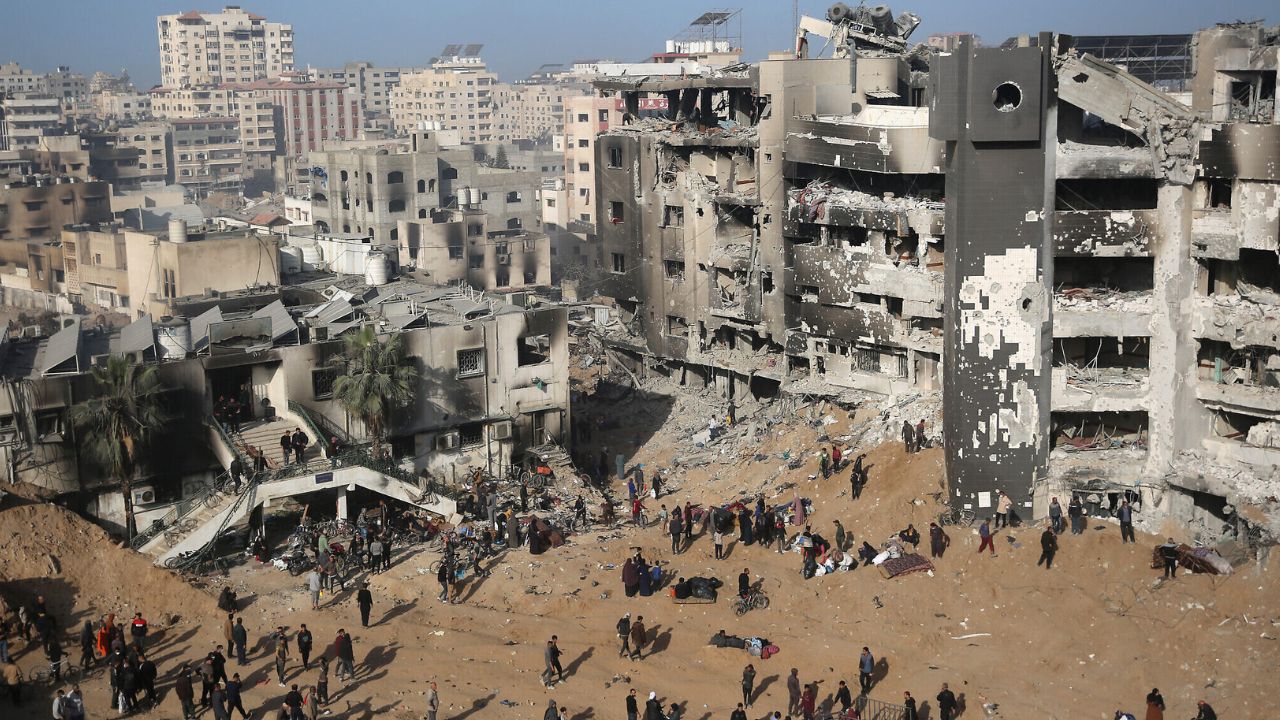
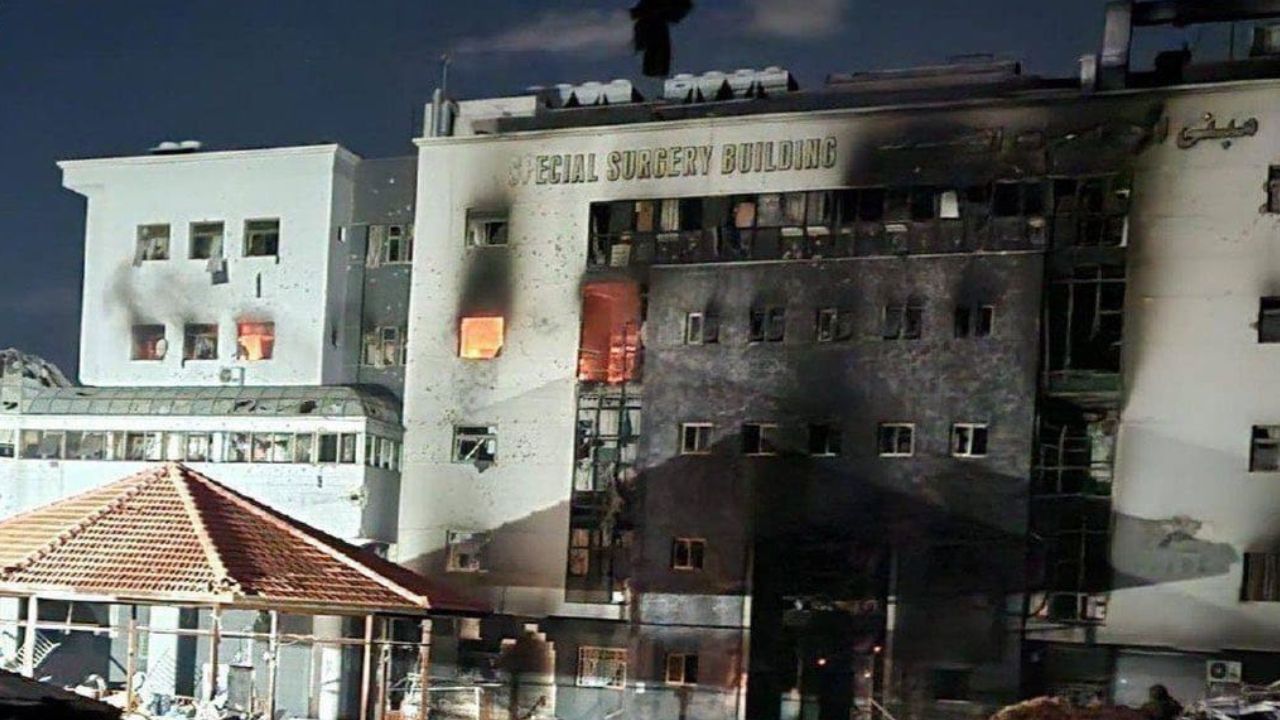
    Israeli forces on Monday pulled out of Gaza’s largest hospital complex after an intensive two-week military operation, leaving behind charred buildings and bodies strewn at the sprawling complex.

    Israel said it had battled Palestinian militants hiding inside Gaza City’s Al-Shifa Hospital, killed at least 200 fighters and recovered large stockpiles of weapons, explosives and cash.

    The health ministry in Gaza said that, after heavy Israeli air strikes and tank fire, “the scale of the destruction inside the complex and the buildings around it is very large”.

    “Dozens of bodies, some of them decomposed, have been recovered from in and around the Al-Shifa medical complex,” the ministry said, adding that the hospital was now “completely out of service”.

    A doctor told AFP more than 20 bodies had been recovered, some crushed by withdrawing vehicles.

    Israeli attacks have also flared around other Gaza hospitals almost six months since October 7 attacks which have destroyed swathes of the besieged coastal territory.

    The Hamas government press office said the army had blown up more than 20 houses within 24 hours in the main southern city of Khan Yunis, where battles have raged around the Nasser and Al-Amal hospitals.

    Israel destroys hospital

    Over the past two weeks, the Israeli army carried out what it labelled “precise operational activity” at the Al-Shifa complex, before declaring on Monday that the forces had withdrawn.

    The scene left behind was one of devastation, with windows blown out, concrete walls blackened and volunteers carrying away shrouded corpses across the sandy wasteland.

    Dozens of air strikes and shelling had hit the area around the complex in the morning, in heavy fire which the Hamas government media office said served to provide cover for the withdrawing troops and tanks.

    The army has in recent days released footage of its fighters moving through the hospital’s corridors, and pictures of large numbers of assault rifles, grenades and other weapons it said were recovered from the maternity ward.

    The military has said 200 Hamas fighters were killed in fighting in and around Al-Shifa.

    Hamas has denied operating from Al-Shifa and other health facilities.

    An Israeli strike also hit “a tent camp” inside central Gaza’s Al-Aqsa hospital compound, killing four people, said World Health Organization chief Tedros Adhanom Ghebreyesus on social media platform X.

  • No change in Gaza since UN ceasefire vote: MSF

    No change in Gaza since UN ceasefire vote: MSF

    The MSF medical charity lamented Thursday that nothing had changed on the ground in genocide ravaged Gaza since the United Nations Security Council resolution this week demanding an “immediate ceasefire”.

    After more than five months of war, the UN Security Council for the first time Monday demanded an immediate ceasefire in Gaza after Israel’s ally the United States, which vetoed previous drafts, abstained.

    That resolution demanded an “immediate ceasefire” for the ongoing Muslim holy month of Ramadan, leading to a “lasting” truce.

    But since then, “we haven’t seen any change after this resolution on the ground,” Christos Christou, MSF’s international president, told AFP in an interview.

    “We haven’t seen any impact in… people’s lives there every day; we haven’t seen an impact in our world, (and the) ways of delivering the humanitarian aid,” he said.

    “The situation remains the same.”

    And Christou stressed that MSF’s demands also remained unchanged.

    What was needed, he said, was an immediate and lasting ceasefire, a halt to all attacks on medical installations and personnel, and “unhindered humanitarian aid in Gaza”.

    For now, he acknowledged that “our efforts are just a little drop in the ocean of needs”.

    MSF still has local and international staff working in the few hospitals that are still functioning in Gaza.

    The organisation is among other things working to care for women after they undergo a caesarian section.

    He pointed out that in many cases, women who gave birth via a caesarian section were “literally kicked out of the hospital after a couple of hours because there were no beds”.

    “MSF has increased the capacity of beds in order to offer at least some quality of care to these women,” he said.

    Israel’s intensified attacks have killed at least 32,552 people, mostly women and children, according to the health ministry in Gaza.

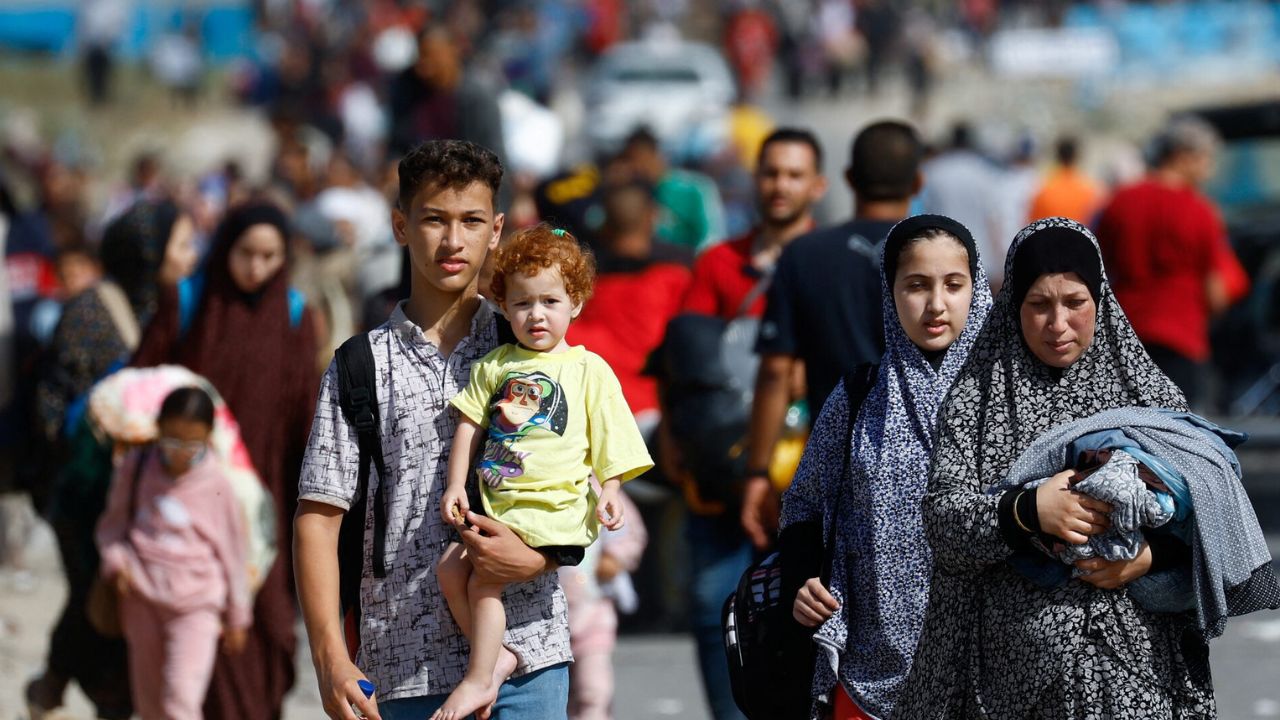
    Christou said MSF was “extremely worried” about Israeli plans to push its ground offensive into Rafah, Gaza’s southernmost city which is packed with some 1.5 million people, many of them displaced from other parts of the territory.

    “This would be really catastrophic.”

  • Teens in Gaza hoping to be killed to end their ‘nightmare’: UN

    Teens in Gaza hoping to be killed to end their ‘nightmare’: UN

    The situation in genocide-ravaged Gaza is so desperate that teenagers are now saying they hope to be swiftly killed to escape the “nightmare”, a spokesman for the UN children’s agency said Tuesday.

    “The unspeakable is regularly said in Gaza,” said James Elder, spokesman for the United Nations children’s agency UNICEF.

    Speaking to journalists in Geneva via video message from Rafah in southern Gaza, he said the agency had on Monday held a meeting with adolescents.

    Several said they were “so desperate for this nightmare to end that they hoped to be killed”, he said.

    Israel’s intense attacks in Gaza have killed at least 32,333 people, most of them women and children, according to the health ministry.

    The UN has warned that Gaza is facing a looming famine, spurring increasingly urgent appeals for Israel to open up more border crossings and to stop hampering the movement of aid through the Palestinians territory.

    The Israelis “have a right to control. They inspect every single gram, litre, kilo of whatever goes into Gaza,” Jens Laerke, spokesman for the UN humanitarian agency, told reporters.

    “But they cannot say that once it’s inside, we leave it with you. They must create this enabling environment that allows us to move it around.”

    “We need to dispel this notion that their obligation with getting aid in somehow stops with getting a few trucks, a fraction of what is needed, across the border,” he said.

    “That is not correct.”

    Elder meanwhile pointed out that the Israelis had denied a quarter of the 40 mission requests to the north since the beginning of the month.

    “Now there is an existing old crossing point that could be used in the north 10 minutes from where those people are putting their hands to their mouth pleading for food,” he said, referring to the Erez Crossing.

    “10 minutes. Open that and we could turn this humanitarian crisis around in a matter of days. But it remains closed.”

    “Let’s be clear, life-saving aid is being obstructed, lives are being lost, dignity is being denied.”