Tag: Hamas

  • Struggling for a can of food: starving Gazans scramble for aid drops

    Struggling for a can of food: starving Gazans scramble for aid drops

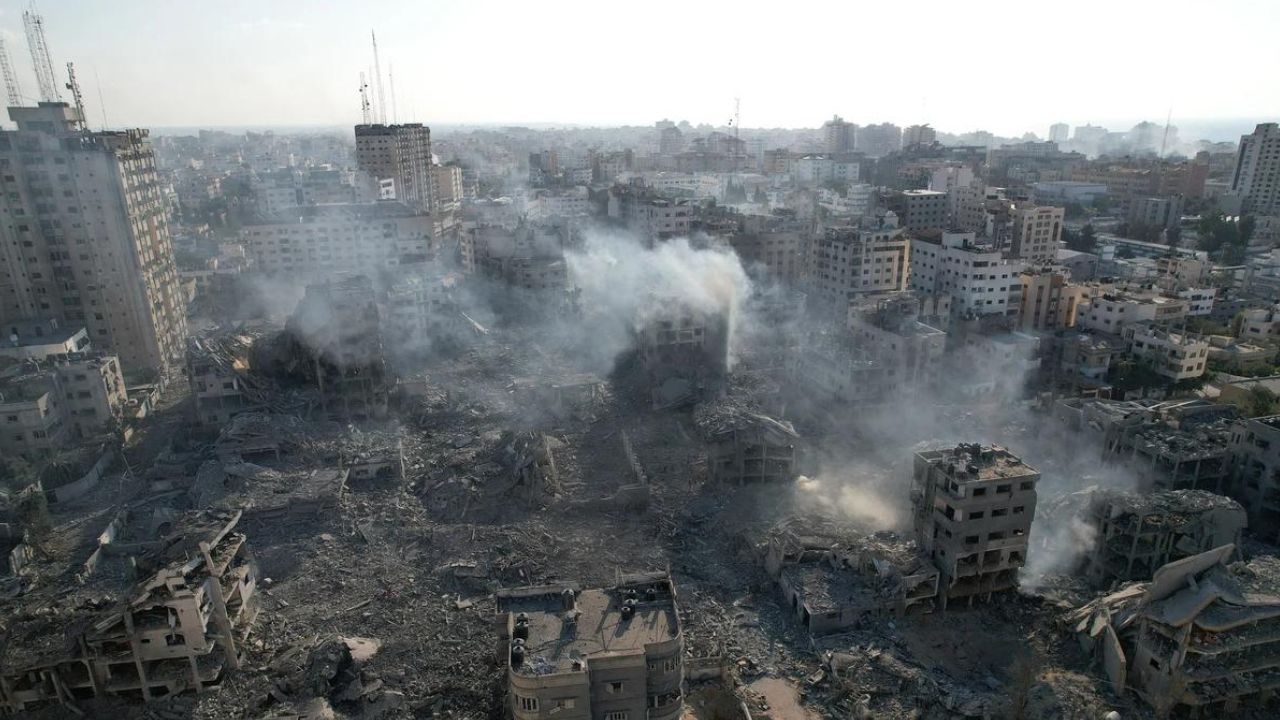
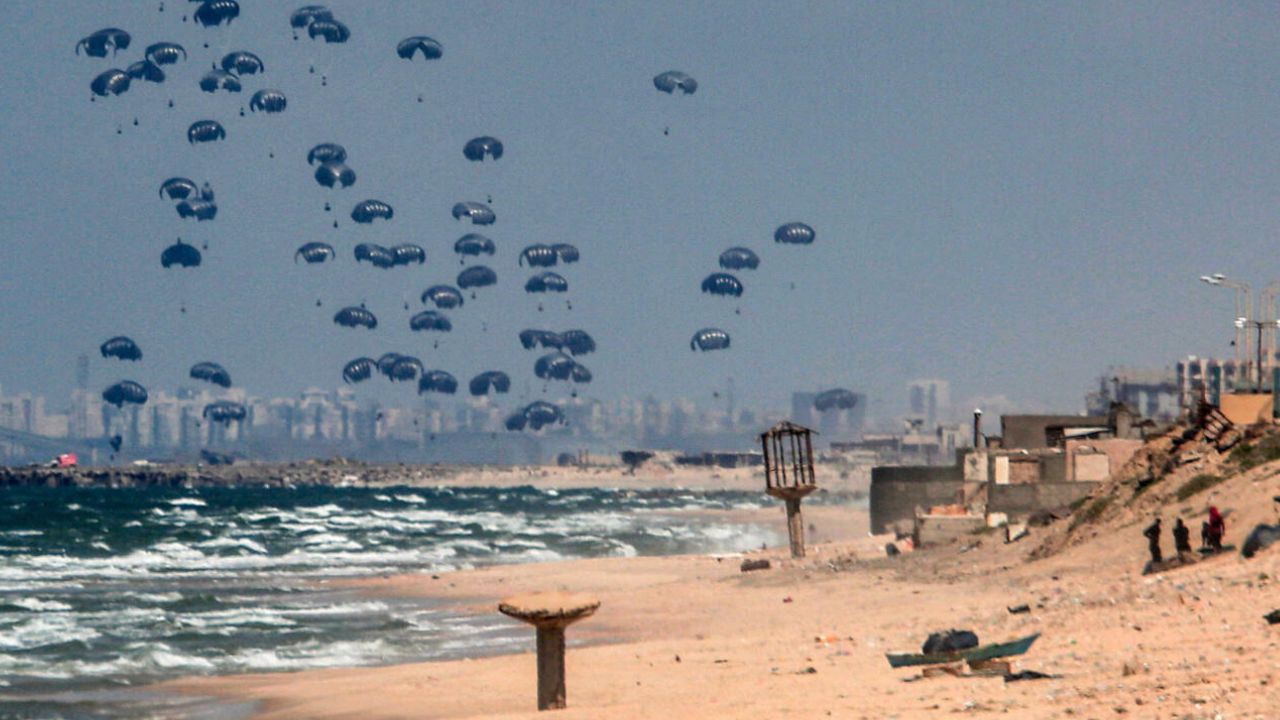
    A military plane banked over the war-ravaged ruins of Gaza City dropping dozens of black parachutes carrying food aid.

    On the ground, where almost no building within sight was still standing, hungry men and boys raced towards the beach where most of the aid seemed to have landed.

    Dozens of them jostled intensely to get to the food, with scrums forming up and down the rubble-strewn dunes.

    “People are dying just to get a can of tuna,” said Mohamad al-Sabaawi, carrying an almost empty bag on his shoulder, a young boy beside him.

    “The situation is tragic, as if we are in a famine. What can we do? They mock us by giving us a small can of tuna.”

    Aid groups say only a fraction of the supplies required to meet basic humanitarian needs have arrived in Gaza since October, while the UN has warned of famine in the north of the territory by May without urgent intervention.

    The aid entering the Gaza Strip by land is far below pre-war levels, at around 150 vehicles a day compared to at least 500 before the war, according to UNRWA, the UN agency for Palestinian refugees.

    With Gazans increasingly desperate, foreign governments have turned to airdrops, in particular in the hard-to-reach northern parts of the territory including Gaza City.

    The United States, France and Jordan are among several countries conducting airdrops to people living within the ruins of what was the besieged territory’s biggest city.

    But the aircrews themselves told AFP that the drops were insufficient.

    US Air Force Lieutenant Colonel Jeremy Anderson noted earlier this month that what they were able to deliver was only a “drop in the bucket” of what was needed.

    The air operation has also been marred by deaths. Five people on the ground were killed by one drop and 10 others injured after parachutes malfunctioned, according to a medic in Gaza.

    Calls have mounted for Israel to allow in more aid overland, while Israel has blamed the UN and UNRWA for not distributing aid in Gaza.

    “Palestinians in Gaza desperately need what has been promised — a flood of aid. Not trickles. Not drops,” UN chief Antonio Guterres said on Sunday after visiting Gaza’s southern border crossing with Egypt at Rafah.

    “Looking at Gaza, it almost appears that the four horsemen of war, famine, conquest and death are galloping across it,” he added.

    Israel has intensified its attacks in Gaza, killing at least 32,333 people, according to the health ministry in Gaza.

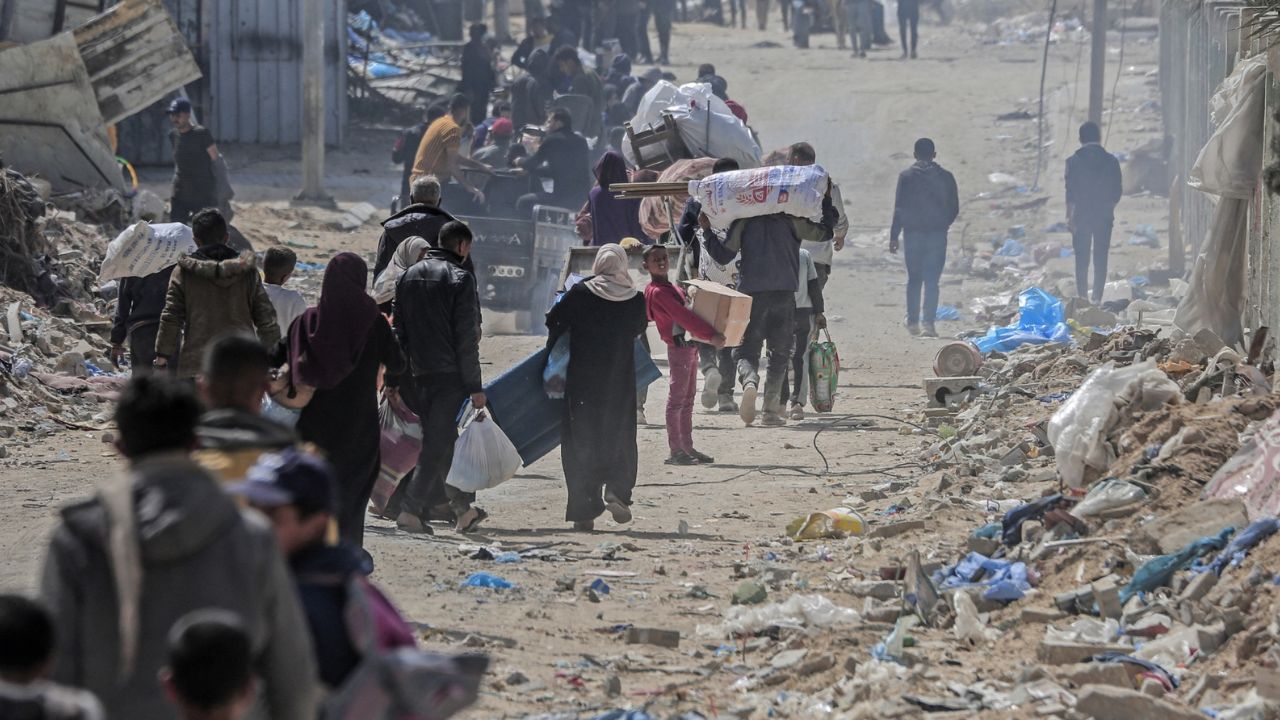
    Returning home in Gaza City with little to keep his family going, another Palestinian man said their situation was miserable.

    “We are the people of Gaza, waiting for aid drops, willing to die to get a can of beans — which we then share among 18 people,” he said.

  • No let-up in genocide in Gaza despite UN ceasefire resolution

    No let-up in genocide in Gaza despite UN ceasefire resolution

    Palestinian Territories – Israeli attacked Gaza on Tuesday, with no sign of a let-up in the war despite a UN Security Council resolution demanding an “immediate ceasefire”.

    The resolution was adopted on Monday after Israel’s closest ally the United States abstained amid growing concern for the worsening humanitarian situation after nearly six months of war.

    The text demands an “immediate ceasefire” for the ongoing Muslim holy month of Ramadan, leading to a “lasting” truce.

    It also demands that Hamas and other militants free hostages they took during the unprecedented October 7 attacks on Israel, though it does not directly link the release to a truce.

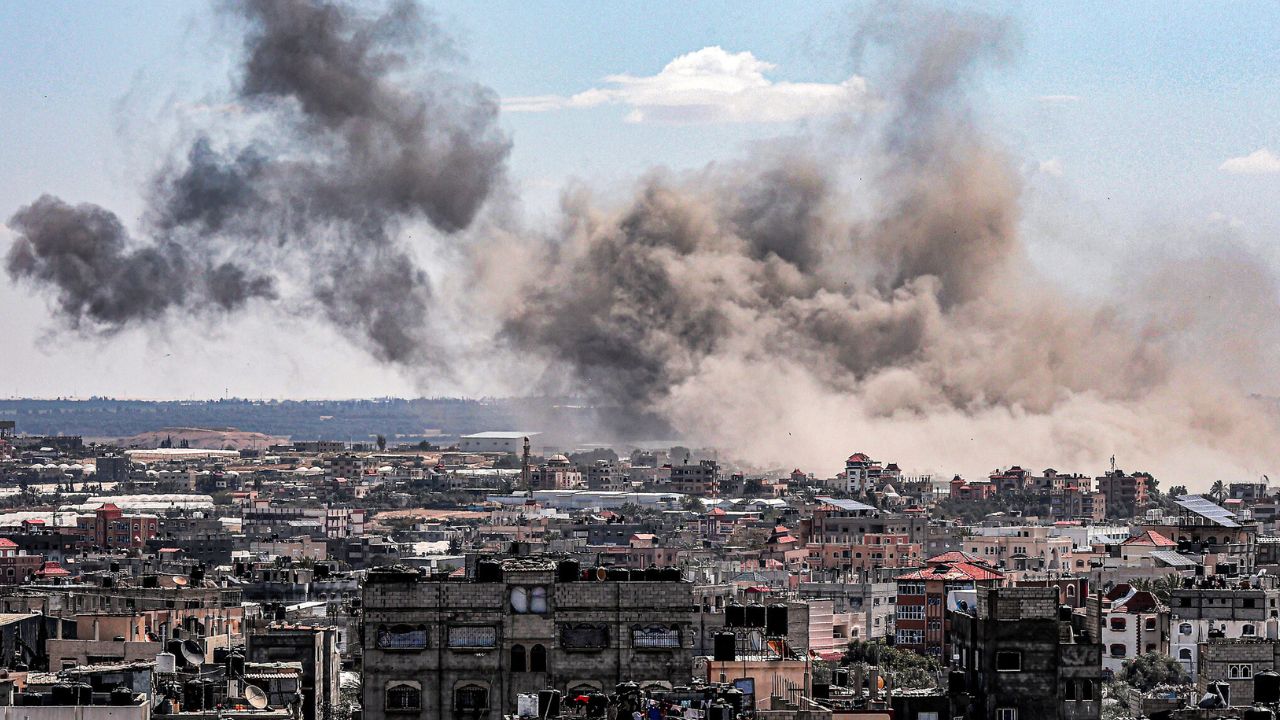
    In Gaza, there was intense fighting overnight, with Israeli operations in and around at least three major hospitals in the besieged territory.

    The Israeli military said its jets had struck more than 60 targets in Gaza in the past day, including tunnels, infrastructure and military structures “in which armed terrorists were identified”.

    The health ministry in the territory said 70 people were killed early Tuesday, 13 of them in Israeli air strikes around the southern city of Rafah.

    The Israeli military said air raid sirens sounded in areas near the Gaza border.

    The Security Council resolution was the first since the Gaza war erupted to demand an immediate halt in the fighting.

    After the vote, UN chief Antonio Guterres led calls for the resolution to be implemented. “Failure would be unforgivable,” he said on social media platform X.

    Israel reacted furiously to the US abstention, while Washington insisted that it did not mark a shift in policy, although it has taken a tougher line with Israel in recent weeks.

    The United States had previously vetoed successive draft resolutions calling for a ceasefire, but it has become increasingly concerned by the dire humanitarian situation in Gaza, where the United Nations has warned of famine in the north by May if urgent action isn’t taken.

    The Gaza health ministry said seven people had drowned in the Mediterranean trying to reach aid airdropped into the territory.

    Washington has also baulked at Israeli Prime Minister Benjamin’s determination to launch an assault on Rafah, the last major population centre still untouched by Israeli ground troops where most of Gaza’s population has sought refuge from the fighting.

    ‘Absolute interest’

    In protest at the United States’ abstention in the UN vote, which it said “hurts” both its war effort and attempts to release hostages, Israel cancelled a planned visit to Washington by a high-ranking delegation.

    Israel’s intensified attacks in Gaza killed at least 32,333 people in Gaza, most of them women and children, according to the health ministry.

    Hamas welcomed the Security Council resolution and reaffirmed its readiness to negotiate the release of hostages in exchange for Palestinian prisoners held by Israel.

    In a statement, the militant group blamed Israel for the failure to make progress in the latest round of talks hosted by mediator Qatar.

    Hamas said Netanyahu and his cabinet were “entirely responsible for the failure of negotiation efforts and for preventing an agreement from being reached up until now”.

    Netanyahu’s office hit back on X, charging that Hamas was “not interested in continuing negotiations” as it had been emboldened by the Security Council vote.

    Hamas leader Ismail Haniyeh was in Tehran on Tuesday for talks with Iranian officials, state media reported.

    It is Haniyeh’s second visit to key backer Iran since the start of the war.

    In the occupied West Bank, German Foreign Minister Annalena Baerbock met Palestinian president Mahmud Abbas.

    She welcomed the Security Council resolution and said it was “in the absolute interest of the people of Israel that we come to a ceasefire now so that the hostages can be released.”

    Hospital battles

    On the ground in Gaza, the fighting raged on unabated.

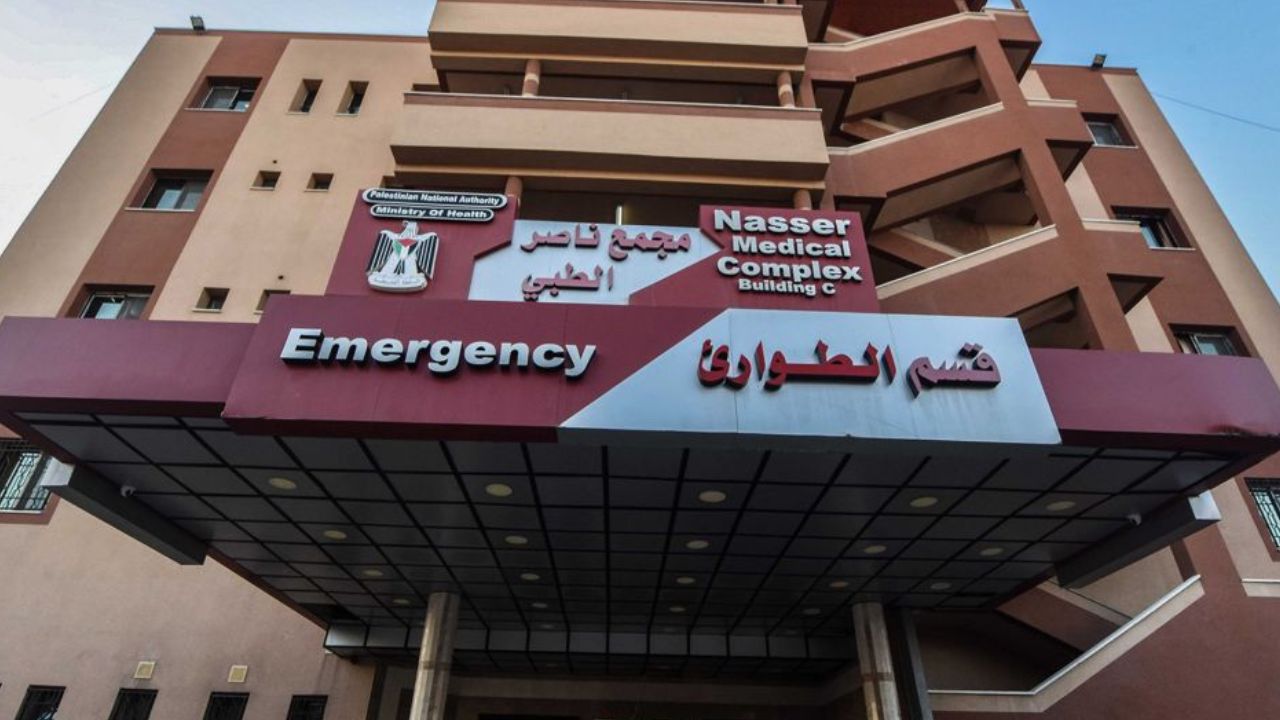
    Dozens of Israeli tanks and armoured vehicles surrounded the Nasser Hospital in the southern city of Khan Yunis, where thousands of displaced people have sought refuge, witnesses said.

    The health ministry said  shots were being fired around the sprawling complex, but no raid had yet taken place.

    At Gaza City’s Al-Shifa Hospital, the territory’s largest, Israeli troops have been involved in heavy fighting for the past nine days. Israel claims to have killed 170 Palestinian militants and arrested hundreds of others.

    And on Monday, the Israeli military reported killing about 20 fighters around Al-Amal Hospital, also in Khan Yunis, over the previous day in close-quarters combat and air strikes.

    Israel has labelled its operations “precise operational activities” and said it has taken care to avoid harm to civilians, but aid agencies have voiced concern for non-combatants caught up in the fighting.

    Palestinians living near Al-Shifa have reported corpses in the streets, constant bombardment and the rounding up of men who are stripped to their underwear and questioned.

    Palestinians in Rafah welcomed the UN vote and called on Washington to use its influence with Israel to ensure the resolution is implemented.

    Bilal Awad, 63, said Washington must “stand against an attack on Rafah, and support the return of the displaced to their cities”.

    Ihab al-Assar, 60, expressed hope that “Israel will comply” with the Security Council text.

    The fighting came as an independent UN-appointed expert, Francesca Albanese, said there were “reasonable grounds to believe” Israel’s actions in Gaza had met the threshold for “acts of genocide”.

    Israel rejected Albanese’s report, due to be presented to the UN Human Rights Council on Tuesday, as an “obscene inversion of reality”.

    bur-ser-dcp/kir

    © Agence France-Presse
  • Israel tanks surround Gaza’s Nasser Hospital: witnesses

    Israel tanks surround Gaza’s Nasser Hospital: witnesses

    Palestinian Territories – Dozens of Israeli tanks and armoured vehicles surrounded the Nasser Hospital in Gaza Tuesday, where thousands of displaced people have sought refuge from the fighting, witnesses said.

    Witnesses told AFP that shots were being fired at the sprawling complex in the southern city of Khan Yunis, but no raid was as yet taking place.

    Gaza’s health ministry said Israeli troops were shooting and firing “shells and (conducting) violent raids in its surroundings in preparation for its storming”.

    “Thousands of displaced people are still inside the hospital,” the ministry said. “They do not have sufficient quantities of drinking water, food and infant formula, and their lives are in danger.”

    The Israeli army did not immediately respond to an AFP request for comment.

    For the past nine days, Israeli troops have been involved in heavy fighting in and around Gaza City’s Al-Shifa Hospital, the territory’s biggest. They claim to have killed 170 Palestinian militants there and arrested hundreds of others.

  • UN expert accuses Israel of several acts of genocide in Gaza

    UN expert accuses Israel of several acts of genocide in Gaza

    A UN rights expert on Monday said there were “reasonable grounds” to determine that Israel has committed several acts of “genocide” in its war in Gaza, also warning of “ethnic cleansing”.

    Francesca Albanese, the UN special rapporteur on the rights situation in the Palestinian territories, said there were clear indications that Israel had violated three of the five acts listed under the UN Genocide Convention.

    “The overwhelming nature and scale of Israel’s assault on Gaza and the destructive conditions of life it has inflicted reveal an intent to physically destroy Palestinians as a group,” she said in a report, which was immediately rejected by Israel as an “obscene inversion of reality”.

    Albanese, an independent expert appointed by the UN Human Rights Council but who does not speak on behalf of the United Nations, said she had found “reasonable grounds to believe that the threshold indicating the commission of… acts of genocide against Palestinians in Gaza has been met”.

    The report, entitled “Anatomy of a Genocide”, listed those acts as: “killing members of the group; causing serious bodily or mental harm to the group’s members; and deliberately inflicting on the group conditions of life calculated to bring about its physical destruction in whole or in part”.

    Israel’s diplomatic mission in Geneva said the country “utterly rejects the report”, describing it as “simply an extension of a campaign seeking to undermine the very establishment of the Jewish State”.

    “Israel’s war is against Hamas, not against Palestinian civilians,” it said in a statement, slamming Albanese’s “outrageous accusations”.

    Israel has long been harshly critical of Albanese and her mandate, which the United States on Monday called “biased against Israel.”

    Washington is “aware” of Albanese’s report but has “no reason to believe Israel has committed acts of genocide in Gaza,” a US official told AFP.

    Last month Israel slapped a visa ban on her after she made comments denying that Hamas’s October 7 attack, which sparked the war in Gaza, was anti-Semitic.

    Israel’s relentless bombardment and ground offensive in Gaza has since killed more than 32,300 people, mainly women and children, according to the health ministry in Gaza.

    South Africa has already filed a complaint against Israel before the International Court of Justice, alleging its assault on Gaza amounts to a violation of the genocide convention.

    The court has yet to rule on the underlying issue, but earlier this year ordered Israel to do everything it could to prevent genocidal acts during its campaign and also to allow in humanitarian aid.

    In Albanese’s report, which she is due to present to the Human Rights Council on Tuesday, she maintained that Israel’s “genocidal acts” followed “statements of genocidal intent”.

    Statements by some senior Israeli officials spelling out an intent to forcibly displace Palestinians and replace them with Israeli settlers, she said, indicated that “evacuation orders and safe zones have been used as genocidal tools to achieve ethnic cleansing”.

    The report also found that Israel was treating all Palestinians and their infrastructure “as ‘terrorist’ or ‘terrorist-supporting’, thus transforming everything and everyone into either a target or collateral damage”.

    “In this way, no Palestinian in Gaza is safe by definition,” it said.

    “This has had devastating, intentional effects, costing the lives of tens of thousands of Palestinians.”

    The report also stressed that Israel’s mistreatment of the Palestinians had not begun on October 7.

    “Israel’s genocide on the Palestinians in Gaza is an escalatory stage of a longstanding settler colonial process of erasure,” it said.

  • Gaza ceasefire deal close, says Blinken

    Gaza ceasefire deal close, says Blinken

    US Secretary of State Antony Blinken has announced that the parties involved in the Israel assault on Gaza are close to reaching an agreement on a ceasefire in the besieged strip.

    In remarks given to Arab media outlets, Blinken emphasised the importance of putting a stop to the dire situation to pave the way for a better future for Gaza.

    Addressing Israel’s current offensive, Blinken stated that the US opposes Tel Aviv’s intention to carry out a large-scale ground assault on Rafah.

  • Canada FM confirms halting arms shipments to Israel

    Canada FM confirms halting arms shipments to Israel

    OTTAWA: Canada will halt all arms shipments to Israel, Foreign Minister Melanie Joly’s office confirmed Wednesday, a decision that has drawn the ire of Israeli leaders facing growing international scrutiny over the war in the Gaza Strip.

    The besieged Palestinian territory is facing a mounting humanitarian crisis, and months of war have pushed hundreds of thousands of Gazans to the brink of famine.

    Canada, a key ally of the United States, which provides Israel with billions of dollars a year in military aid, had already reduced its shipments to Israel to only include non-lethal equipment, such as radios, following the October 7 Hamas attack.

    “Since January 8th, the government has not approved new arms export permits to Israel and this will continue until we can ensure full compliance with our export regime,” said a statement from Joly’s office.

    “There are no open permits for exports of lethal goods to Israel,” it added.

    Export permits approved prior to January 8, however, would “remain in effect,” Joly’s office said, explaining that canceling them risked “important implications for both Canada and its allies,” including NATO and the Five Eyes intelligence alliance.

    A senior Canadian official had on Tuesday told AFP that “the situation on the ground makes it so that we can’t” export any equipment that could have a potential military use.

    Israel slammed the decision, with foreign minister Israel Katz saying it “undermines Israel’s right to self-defense against Hamas terrorists.”

    “History will judge Canada’s current action harshly,” he said in a post on social media platform X.

    US Senator Bernie Sanders welcomed the move, saying in his own post on social media: “Given the humanitarian catastrophe in Gaza, including widespread and growing starvation, the US should not provide another nickel for (Prime Minister Benjamin) Netanyahu’s war machine.”

    The issue of arms deliveries to Israel has triggered legal proceedings in several countries around the world.

    In Canada, a coalition of lawyers and citizens of Palestinian origin filed a complaint against the government in early March to suspend arms exports to Israel, accusing Ottawa of violating both international and domestic law.

    Israel has historically been a top receiver of Canadian arms exports, with Can$21 million worth of military materiel exported to Israel in 2022, according to government data, following Can$26 million in shipments in 2021.

    That places Israel among the top 10 recipients of Canadian arms exports.

    Israel offensive in Gaza has killed at least 31,923 people, most of them women and children, according to Gaza’s health ministry.

    While affirming Israel’s right to defend itself, Canadian Prime Minister Justin Trudeau has taken an increasingly critical stance toward Israel as civilian deaths have mounted in Gaza.

    On Monday, the Canadian Parliament passed a nonbinding resolution calling for the international community to work toward a two-state solution between Israel and the Palestinians.

  • ‘Bloody’ Ramzan Friday as Gaza strike kills 36 relatives

    ‘Bloody’ Ramzan Friday as Gaza strike kills 36 relatives

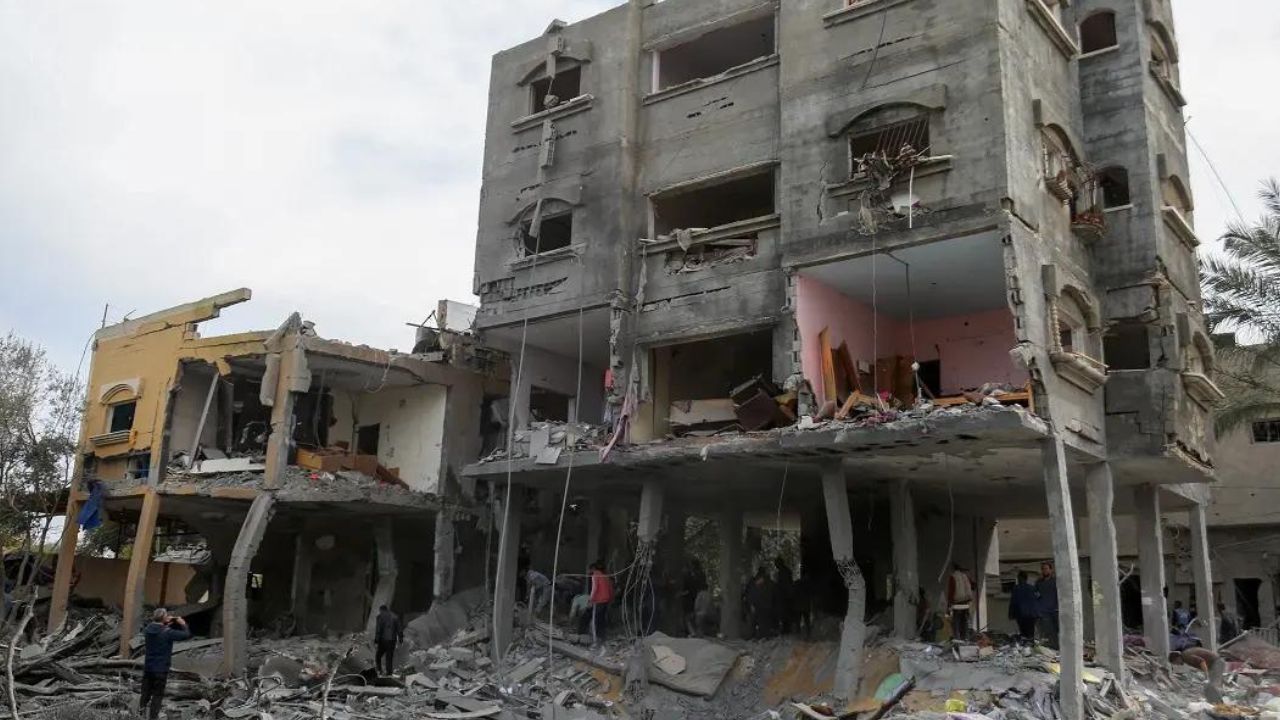
    Palestinian Territories: Displaced by Israeli bombardment, the Tabatibi family gathered in central Gaza to eat together during the first Friday night of Ramzan, a scene that soon turned into a bloodbath.

    An air strike hit the building where they were staying as women prepared the pre-fasting meal, killing 36 members of the family, survivors told AFP on Saturday.

    The health ministry in Gaza, which provided the same death toll, blamed Israel for the strike in Nuseirat, while the Israeli military said it was looking into the incident.

    “This is my mother, this is my father, this is my aunt, and these are my brothers,” 19-year-old Mohammed Al-Tabatibi, whose left hand was injured in the strike, said through tears at the Al-Aqsa Martyrs Hospital in nearby Deir Al-Balah.

    “They bombed the house while we were in it. My mother and my aunt were preparing the suhoor food. They were all martyred.”

    He spoke as bodies were spread out in the hospital courtyard, then stacked on a truck to be driven to a cemetery.

    Because there were not enough body bags, some of the dead — including at least two children — were wrapped in white cloth stained with blood, AFPTV footage showed.

    The first Friday of Ramzan, the Muslim fasting month which began on Monday, passed peacefully in Israeli-annexed east Jerusalem, despite concerns about tensions at the sacred Al-Aqsa Mosque compound.

    But it was a different story in Gaza.

    The strike in Nuseirat was one of 60 “deadly air strikes” reported overnight by the press office of the government, from Gaza City in the north to Rafah in the south.

    “This is a bloody night, a very bloody night,” said Salama Maarouf of the media office.

    Israel’s retaliatory military campaign has killed at least 31,553 people in Gaza since October 7, mostly women and children, according to the health ministry.

    In Rafah, where the majority of Gaza’s 2.4 million people have sought refuge, more bloodshed is feared after Israeli Prime Minister Benjamin Netanyahu’s office said on Friday he had approved plans for a military operation there.

    Yet even before any such operation begins, air strikes continue, including one early Saturday that witnesses said killed Issa Duhair, the muezzin of a mosque, along with his two sons.

    Mahmoud Duhair, a 41-year-old relative who lives nearby, described the muezzin as “a good man” who, as usual, dutifully performed the call to prayer before dawn on Saturday, then went to eat with his family “when his house was struck.”

    Back in Nuseirat, in central Gaza, Yussef Tabatibi said the true toll of the strike that killed 36 members of his family could rise.

    “Some of the martyrs we are unable to retrieve. We lack equipment, bulldozers, machinery, or anything else, ” he told AFP, his hands and sweatshirt covered with dust from trying to clear rubble.

    “We retrieve them only with our hands. We brought shovels and hammers, but to no avail. Look at the extent of the destruction.”

  • In Gaza, there are no more ‘normal-sized babies’: UN official

    In Gaza, there are no more ‘normal-sized babies’: UN official

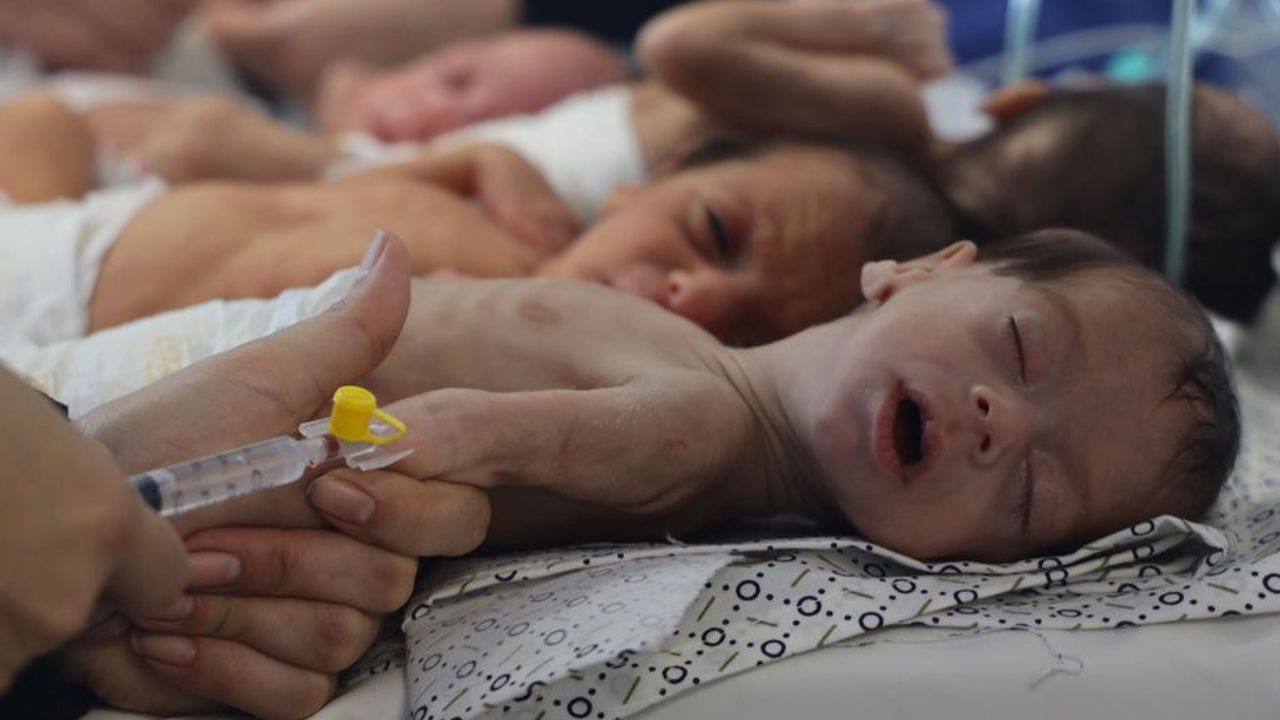
    The humanitarian situation in Gaza is a “nightmare” for mothers and babies, with doctors reporting small and sickly newborns, stillbirths and women forced to undergo C-sections without adequate anesthesia, a UN official said Friday.

    “I’m personally leaving Gaza this week terrified for the one million women and girls of Gaza… and most especially for the 180 women who are giving birth every single day,” Dominic Allen, UN Population Fund (UNFPA) representative for the state of Palestine, said in a video news conference from Jerusalem.

    “Doctors are reporting that they no longer see normal-sized babies,”  Allen said after visiting hospitals still providing maternity services in the north of Gaza, where need is especially great.

    “What they do see though, tragically, is more stillborn births… and more neonatal deaths, caused in part by malnutrition, dehydration and complications.”

    The numbers of complicated deliveries are roughly twice what they were before the war with Israel began — with mothers stressed, fearful, underfed and exhausted — and caregivers often lacking necessary supplies.

    “We have had reports of insufficient anesthetic being available” for Caesarean sections, “which again is unthinkable.”

    “Those mothers should be wrapping their arms around their children,” he said. “Those children should not be wrapped in a body bag.”

    Israel has defended its policies as it pursues its stated goal of destroying Hamas, saying the UN should send more aid to the war-ravaged territory, pushing back on reports by the UN and NGOs that cumbersome Israeli inspections are blocking food and other essentials.

    Allen said Israeli authorities had refused to allow in some UNFPA supply shipments, such as kits for midwives, or had removed supplies like flashlights and solar panels.

    “It’s a nightmare which is much more than a humanitarian crisis,” he said. “It is a crisis of humanity… beyond catastrophic.”

    What he saw while driving through Gaza, he said, “really broke my heart.”

    Everyone he passed or spoke to, Allen said, “was gaunt, emaciated, hungry” and exhausted from the daily struggle to survive.

    At one military checkpoint, he said, he saw a boy who appeared to be about five years old walking with his hands held high, clearly frightened, as his slightly older sister followed behind, holding a white flag.

    Israel’s military operations has killed at least 31,490 people in Gaza since October 7, most of them women and children, according to the health ministry.

  • All cargo offloaded from first aid ship to reach Gaza: NGO

    All cargo offloaded from first aid ship to reach Gaza: NGO

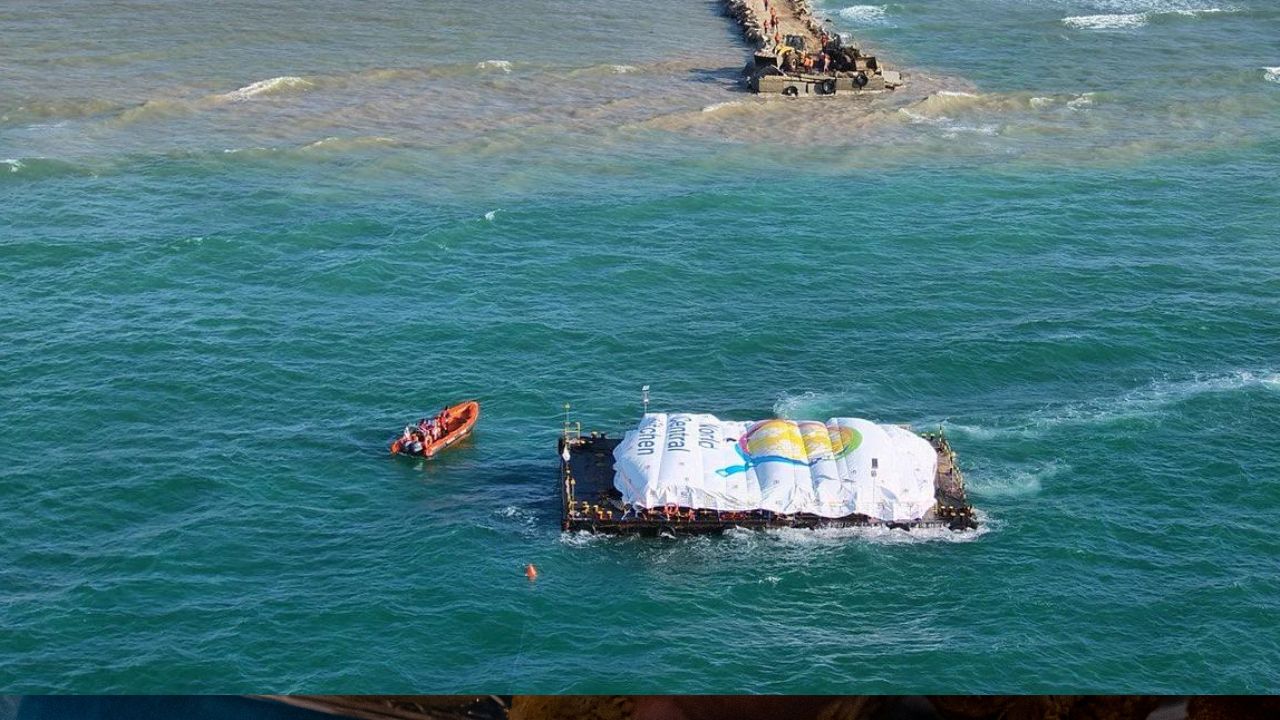
    A US charity said Saturday its team in Gaza Strip had finished unloading the first maritime aid shipment to reach the besieged territory.

    “All cargo was offloaded and is being readied for distribution in Gaza,” World Central Kitchen said in a statement, noting that the aid was “almost 200 tonnes of food”.

    The group is preparing a second boat of 240 tonnes of food to set sail from Cyprus, the starting point of a new maritime aid route across the eastern Mediterranean.

    The humanitarian effort is intended to mitigate food shortages that have prompted UN famine warnings in Gaza from the United Nations and aid workers.

    “That shipment includes pallets of canned goods and bulk product including beans, carrots, canned tuna, chickpeas, canned corn, parboiled rice, flour, oil and salt,” World Central Kitchen said.

    The second shipment would also include a forklift and a crane to assist with deliveries, it added.

    The humanitarian group said it had “no information to release on when our second boat and the crew ship will be able to embark.”

    The Israeli military on Friday confirmed the first vessel, operated by the Spanish charity Open Arms, had arrived and said soldiers had been deployed to secure the area and conduct a security inspection.

    The military also said the delivery of humanitarian aid by sea did not constitute a breach of its years-long maritime blockade of Gaza, which has been ruled since 2007 by Hamas.

    World Central Kitchen had to build a jetty southwest of Gaza City to deliver the aid.

    Israel has killed at least 31,490 people in Gaza since October 7, mostly women and children, according to the health ministry in the Hamas-run territory.

    As cumbersome Israeli security checks and logistical hurdles slow overland aid delivery to Gaza, countries have pursued alternatives including airdrops and the new maritime corridor.

    Jose Andres, founder of World Central Kitchen, said on social media platform X on Friday that the first shipment was “a test” and that “we could bring thousands of tonnes each week.”

  • Hamas Proposes New Six-week Gaza Truce, Hostage-prisoner Exchange: Official

    Hamas Proposes New Six-week Gaza Truce, Hostage-prisoner Exchange: Official

    Hamas has proposed a new six-week truce in Gaza and an exchange of several dozen Israeli hostages for Palestinian prisoners, an official from the militant group told AFP on Friday.

    “The agreement is for a six-week ceasefire and a prisoner exchange,” the official said after weeks of so far fruitless mediation efforts, adding that the group would want this to lead to “a complete (Israeli) withdrawal from the Gaza Strip and a permanent ceasefire”.

    During the proposed truce, Gaza militants would release about 42 hostages seized during the October 7 attack that triggered the war in Gaza, the official said, requesting anonymity because of the sensitivity of the talks.

    The official said that between 20 and 50 Palestinian prisoners held in Israeli jails would be released per hostage — down from a previous proposal of a roughly 100-to-one ratio, according to a Hamas source in late February.

    Under the new proposal, the initial exchange could include women, children, elderly and ill hostages, the official said.

    During the October 7 attack, militants seized about 250 Israeli and foreign hostages, dozens of whom were released during a week-long truce in November. Israel believes about 130 captives remain in Gaza including 32 presumed dead.

    The latest proposal appears to be a shift for Hamas, whose armed wing said earlier this month there would be “no compromise” on its demand that Israel withdraw from Gaza before any more hostages are freed.

    Now the militants are saying that, during a six-week truce, Israeli forces would need to withdraw from “all cities and populated areas in the Gaza Strip” and allow for the return of displaced Gazans “without restrictions”, the official said.

    The Hamas proposal also calls to ramp up the flow of humanitarian aid, the official added.

    The terms of an eventual ceasefire would see Israel’s “complete military withdrawal from the Gaza Strip” and a comprehensive hostage-for-prisoner exchange involving the release of all hostages for “an agreed-upon number of Palestinian prisoners”, according to the official.

    “Egypt and Qatar, along with the United States, are responsible for following up and ensuring the implementation of the agreement,” the official said.

    Israel’s retaliatory military campaign after October 7 has disproportionately killed at least 31,490 people in Gaza, mostly women and children, according to the health ministry.

    Israeli Prime Minister Benjamin Netanyahu’s office said late Thursday that Hamas “is continuing to hold unrealistic demands” but that an update on truce talks would be submitted to Israel’s war cabinet on Friday.