Tag: Hamas

  • Death toll in Gaza exceeds 30,000 as Israeli attacks continue and famine looms

    Death toll in Gaza exceeds 30,000 as Israeli attacks continue and famine looms

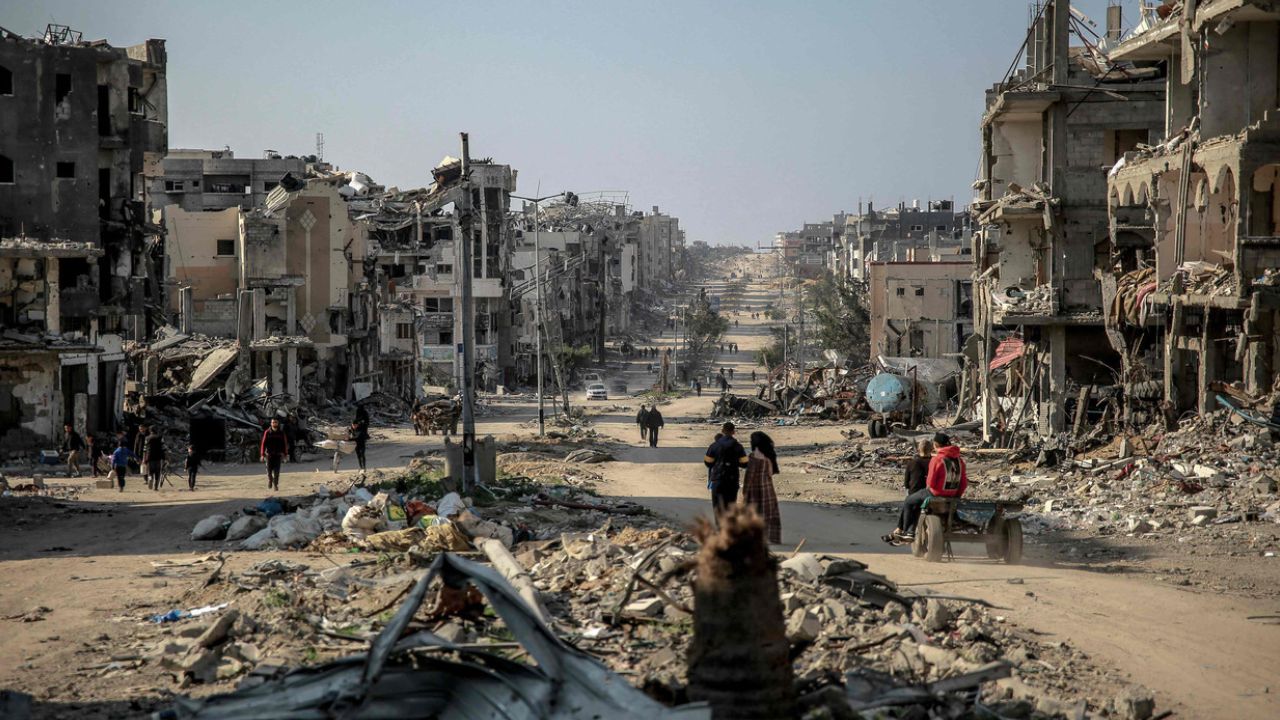
    Palestinian Territories – The health ministry of Gaza said Thursday more than 30,000 Palestinians have been killed since October 7 as Israel intensified its attacks on the besieged strip.

    While mediators say a truce deal between Israel and Hamas could be just days away, aid agencies have sounded the alarm of a looming famine in Gaza’s north.

    Children have died “due to malnutrition, dehydration and widespread famine” at Gaza City’s Al-Shifa hospital, said the health ministry, whose spokesman Ashraf al-Qudra has called for “immediate action” from international organisations to prevent more of these deaths.

    Citing the deteriorating conditions in Gaza, USAID head Samantha Power said Israel needed to open more crossings so that “vitally needed humanitarian assistance can be dramatically surged”.

    “This is a matter of life and death,” Power said in a video posted on social media platform X.

    The latest overall toll for Palestinians killed in the war came after at least 79 people died overnight across the war-torn Gaza Strip, the health ministry said Thursday.

    Mediators from Egypt, Qatar and the United States have been seeking a six-week pause.

    Negotiators are hoping a truce can begin by the start of Ramadan, the holy Muslim month that kicks off March 10 or 11, depending on the lunar calendar.

    The proposals reportedly include the release of some Israeli hostages held in Gaza in exchange for several hundred Palestinian detainees held by Israel.

    Short of the complete withdrawal Hamas has called for, a source from the group said the deal might see Israeli forces leave “cities and populated areas”, allowing the return of some displaced Palestinians and humanitarian relief.

    US President Joe Biden is “pushing all of us to try to get this agreement over the finish line”, said his secretary of state, Antony Blinken.

    Famine ‘imminent’

    The crucial southern Gaza city of Rafah is the main entry point for aid crossing the border from neighbouring Egypt.

    But the World Food Programme said no humanitarian group had been able to deliver aid to the north for more than a month, accusing Israel of blocking access.

    Neighbouring Jordan has coordinated efforts to air-drop supplies over southern Gaza.

    “If nothing changes, a famine is imminent in northern Gaza,” the World Food Programme’s deputy executive director Carl Skau said.

    Israeli officials have denied blocking supplies, and the army on Wednesday said “50 trucks carrying humanitarian aid” had made it to northern Gaza in recent days.

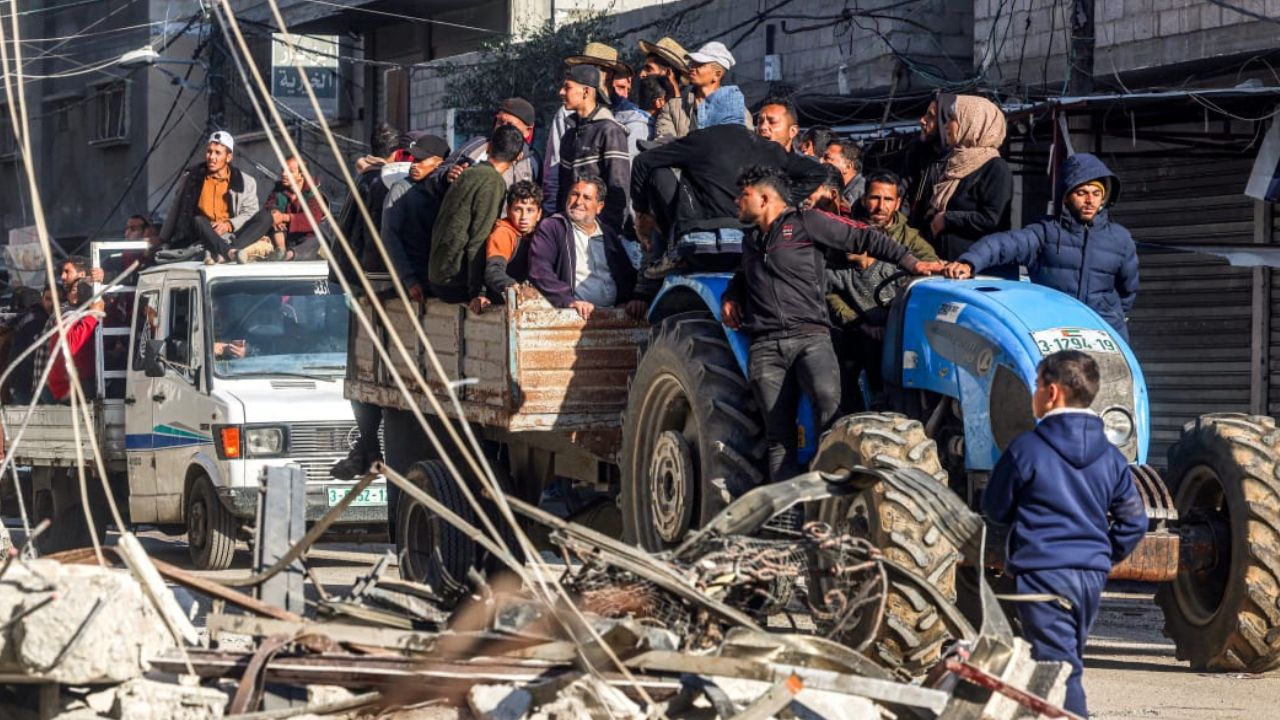
    Israel’s retaliatory military campaign in Gaza has left hundreds of thousands displaced, with nearly 1.5 million people now packed in Rafah.

    In a sign of growing desperation among Gazans over living conditions, a rare protest was held Wednesday by residents over the soaring prices of commodities.

    “Everyone is suffering inside these tents,” said Amal Zaghbar, who was displaced and sheltering in a makeshift camp.

    “We’re dying slowly.”

    Israel has repeatedly threatened a ground offensive on Rafah, with Prime Minister Benjamin Netanyahu saying a truce would only delay it, as such an operation was needed for “total victory” over Hamas.

    Egypt — which borders Rafah — says an assault on the overcrowded city would have “catastrophic repercussions”.
  • US Welcomes Palestinian Authority Reform After PM Quits

    US Welcomes Palestinian Authority Reform After PM Quits

    The United States on Monday praised reforms by the Palestinian Authority as a step toward reuniting the West Bank with war-ravaged Gaza after the prime minister stepped down.

    “We do welcome steps for the PA to reform and revitalize itself,” State Department spokesman Matthew Miller told reporters, using the Palestinian Authority’s initials.

    Miller said Secretary of State Antony Blinken had encouraged the Palestinian Authority “to take those steps” during talks with president Mahmud Abbas.

    “We think those steps are positive. We think they’re an important step to achieving a reunited Gaza and West Bank under the Palestinian Authority,” Miller said.

    He declined to comment directly on the resignation of prime minister Mohammad Shtayyeh, saying it was an internal matter for Palestinians.

    Shtayyeh submitted his resignation to 88-year-old Abbas, pointing to the need for change due to the “new reality” in the Gaza Strip, ruled by rivals Hamas.

    Israel launched a relentless military campaign into Gaza after Hamas on October 7 carried out the deadliest attack ever on Israeli soil.

    The Palestinian leadership has been divided since 2007, with the Palestinian Authority exercising limited power in the West Bank.

    Blinken has called for the Ramallah-based Palestinian Authority to exert control over the Gaza Strip after the war, an idea that has not been met with enthusiasm from Israeli Prime Minister Benjamin Netanyahu’s hard-right government, which has voiced opposition to creating a Palestinian state.

  • Arab states tell UN court Israeli occupation is ‘affront to justice’

    Arab states tell UN court Israeli occupation is ‘affront to justice’

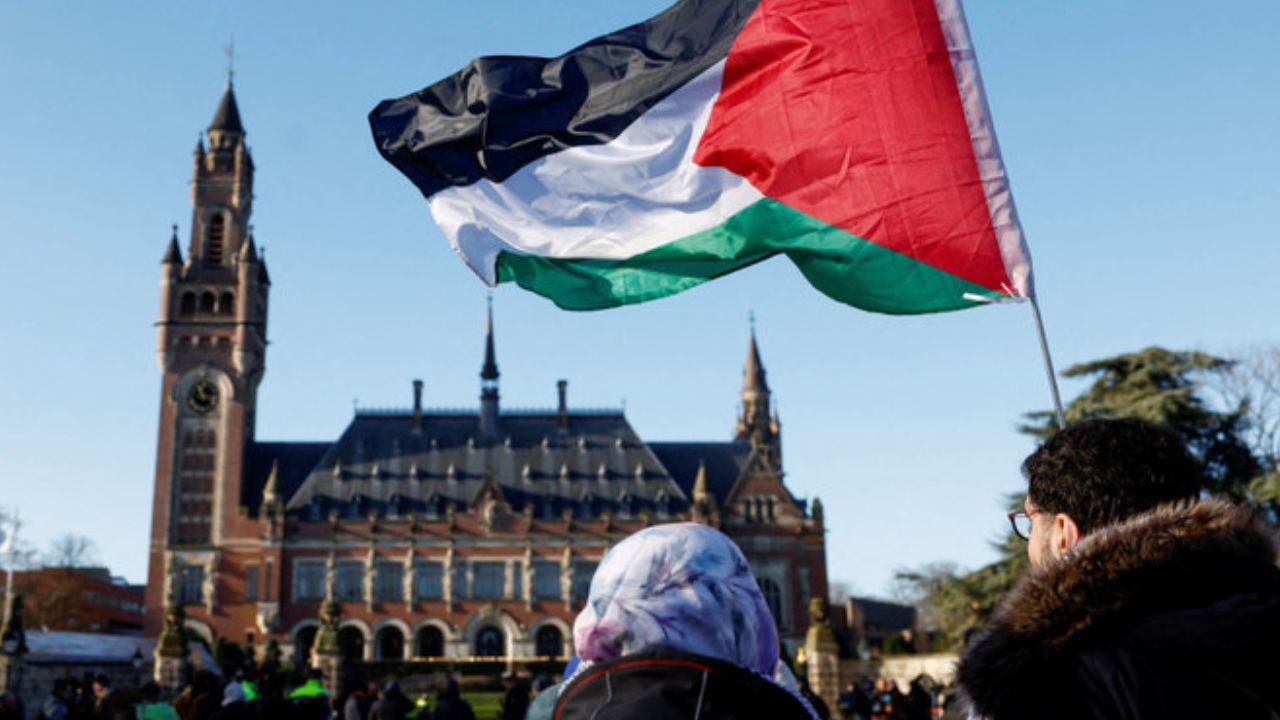
    The League of Arab States on Monday called Israel’s occupation of Palestinian territories an “affront to international justice”, saying failure to end it amounted to “genocide”.

    The International Court of Justice entered its last day of week-long hearings after a request from the United Nations, with an unprecedented 52 countries giving their views on Israel’s occupation.

    “This prolonged occupation is an affront to international justice,” the 22 Arab-country bloc’s representative told judges in The Hague.

    “The failure to bring it to an end has led to the current horrors perpetrated against the Palestinian people, amounting to genocide,” Abdel Hakim El-Rifai said, reading a written statement.

    Most speakers during the hearings have demanded that Israel end its occupation, which came after a six-day Arab-Israeli war in 1967.

    But last week the United States said Israel should not be legally obliged to withdraw without taking its “very real security needs” into account.

    Speakers on Monday warned a prolonged occupation posed an “extreme danger” to stability in the Middle East and beyond.

    “If left unchecked, it runs the risk of not only threatening regional, but also global peace and security,” Turkey’s representative Ahmet Yildiz said.

    Zambia’s representative however told judges that both sides had a duty to negotiate a peaceful settlement.

    “Both Israel and Palestine have a duty to respect international human rights law and international humanitarian law,” Marshal Mubambe Muchende said.

    He said any settlement of the conflict should not be “one that puts the blame squarely on one party, but rather one that advances a negotiated solution which culminates in a two-state solution”.

    ‘Prejudicial’

    The UN has asked the ICJ to hand down an “advisory opinion” on the “legal consequences arising from the policies and practices of Israel in the Occupied Palestinian Territory, including East Jerusalem”.

    The court will probably deliver its opinion before the end of the year but it is not binding on anyone.

    Israel is not taking part in the oral hearings. It submitted a written contribution, in which it described the questions the court had been asked as “prejudicial” and “tendentious”.

    The hearings began a week ago with three hours of testimony from Palestinian officials, who accused the Israeli occupiers of running a system of “colonialism and apartheid”.

    The case before the court is separate from one brought by South Africa against Israel for alleged genocide during its current offensive in Gaza.

    In that case, the ICJ ruled that Israel should do everything in its power to prevent genocidal acts in Gaza and allow in humanitarian aid.

    Israeli’s retaliatory military offensive in Gaza has so far killed at least 29,782 people, most of them women and children, according to the territory’s Hamas-run health ministry.

    jhe/rlp

    © Agence France-Presse

  • West Bank government submits resignation to President Abbas

    West Bank government submits resignation to President Abbas

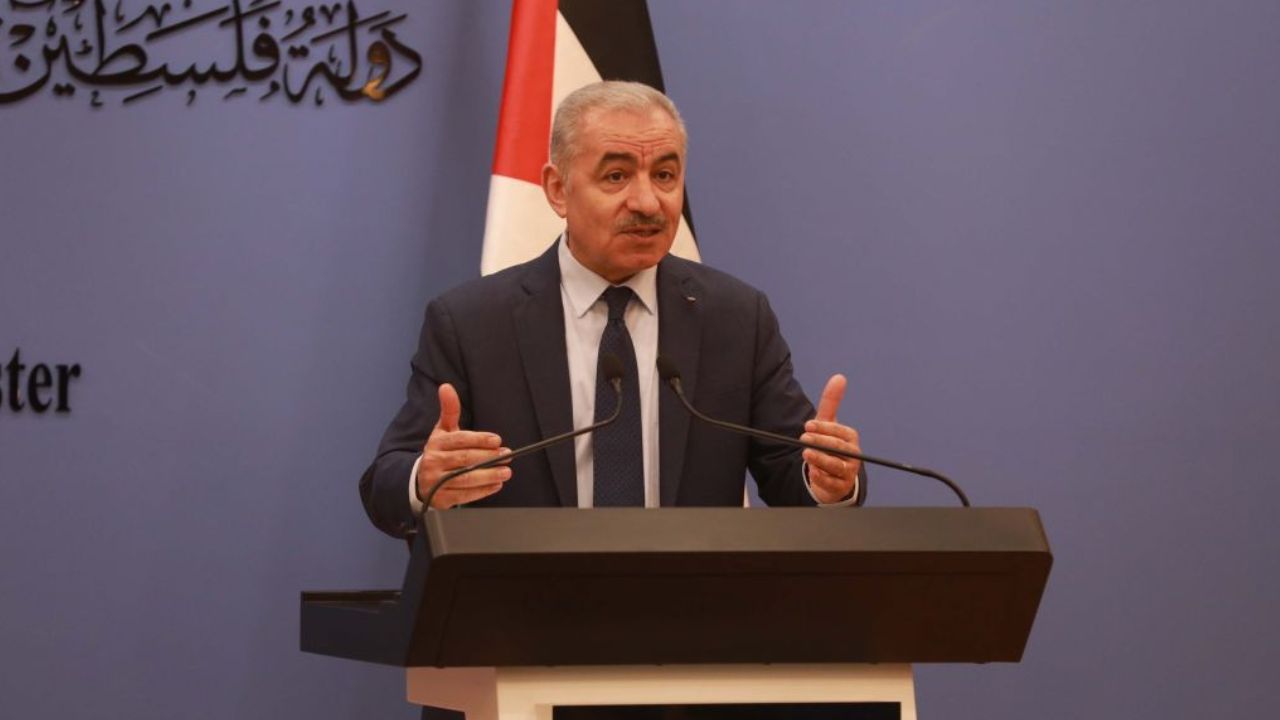
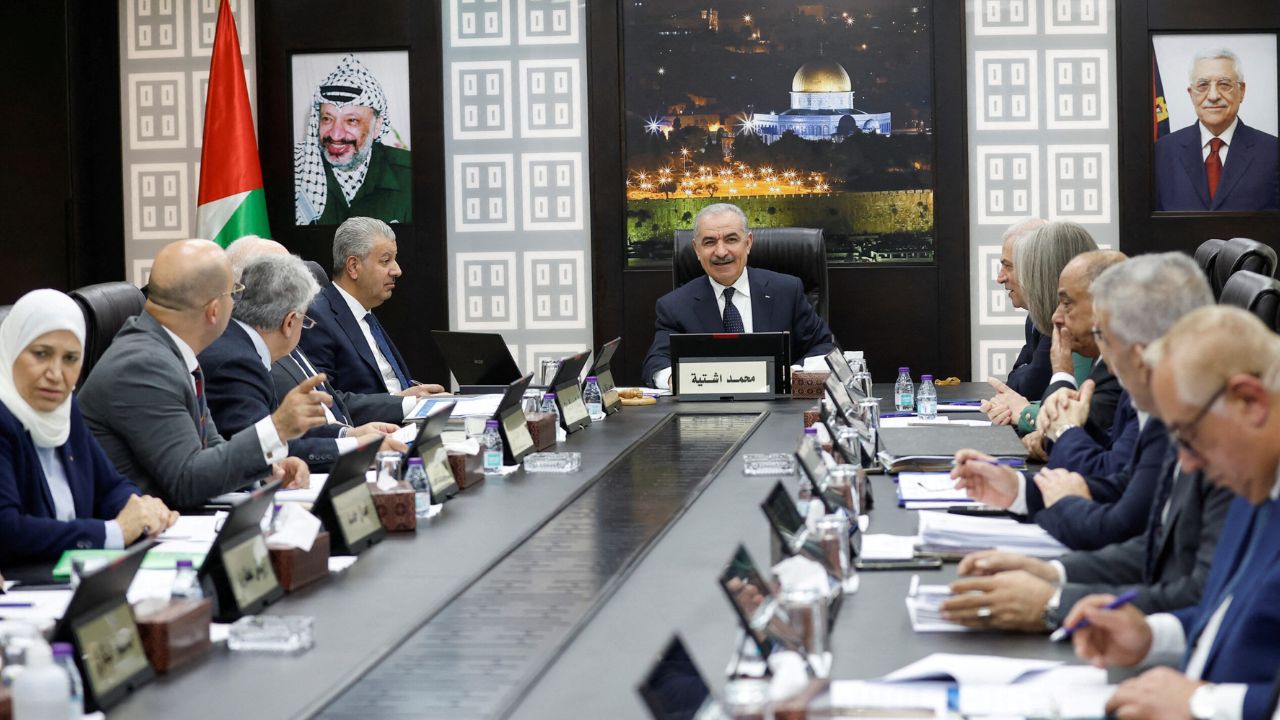
    The Palestinian Prime Minister, Mohammad Shtayyeh, says he has submitted his government’s resignation to President Mahmoud Abbas.

    Palestinian Prime Minister Mohammad Shtayyeh said Monday that he had handed his West Bank government’s resignation to Palestinian President Mahmoud Abbas.

    Shtayyeh added that he resigned last Tuesday but handed in the written resignation on Monday.

    What the Palestinian prime minister said

    “I submit the government’s resignation to Mr. President,” Shtayyeh said. He added that it came in the wake of the “developments related to the aggression against the Gaza Strip and the escalation in the West Bank and Jerusalem.”

    Shtayyeh said he was resigning to allow Palestinians to form a broad consensus among Palestinians about political arrangements amid Israel’s war against Hamas, a Palestinian militant group, in Gaza.

    The US has been pressuring Abbas to shake up the Palestinian Authority, which rules parts of the occupied West Bank. This comes amid international efforts to stop the war and work toward a political structure to govern Gaza afterward.

    Abbas has yet to accept the resignation, and he may ask the Palestinian prime minister to stay in the role until a replacement is found.

    In a statement to the Cabinet, Shtayyeh said the next stage would “require new governmental and political arrangements that take into account the emerging reality in the Gaza Strip, the national unity talks, and the urgent need for an inter-Palestinian consensus.”

    He added that “the extension of the [Palestinian] Authority’s authority over the entire land, Palestine,” is another requirement.

    The Palestinian Authority lost control over the Gaza Strip following a struggle with Hamas in 2007. Hamas is considered a terrorist organization by the European Union, the United States, and Israel.

  • Israel to discuss ‘next steps’ in Gaza truce talks

    Israel to discuss ‘next steps’ in Gaza truce talks

    Palestinian Territories – Israel sounded a positive note Saturday on efforts to broker a new hostage release and ceasefire deal in its war on Gaza, as concern deepened over the growing humanitarian crisis in the war-torn Gaza Strip.

    As aid agencies warned of unprecedented levels of desperation and looming famine, dozens more Gazans were killed in Israeli strikes, the health ministry said.

    An Israeli delegation led by Mossad intelligence agency chief David Barnea travelled to Paris for a fresh push towards a deal over a ceasefire.

    National security advisor Tzachi Hanegbi said Israel’s war cabinet would meet later Saturday to hear an update after the delegation returned from the talks with mediators.

    “There is probably room to move towards an agreement,” Hanegbi told N12 News television in an interview, without elaborating.

    Prime Minister Benjamin Netanyahu said that Saturday’s meeting would discuss the “next steps in the negotiations”.

    As with a previous week-long truce in November that saw more than 100 hostages freed, Egypt, Qatar and the United States have been spearheading efforts to secure a deal.

    White House envoy Brett McGurk held talks this week with Israeli Defence Minister Yoav Gallant in Tel Aviv, after speaking to other mediators in Cairo who had met Hamas chief Ismail Haniyeh.

    As civilians in the besieged territory struggled to get food and supplies, the United Nations agency for Palestinian refugees warned Gazans were “in extreme peril while the world watches”.

    In northern Gaza’s Jabalia refugee camp, bedraggled children held plastic containers and battered cooking pots for what little food was available.

    – ‘Unprecedented desperation’ –

    Food is running out, with aid agencies unable to get into the area because of the bombing, while the trucks that do try to get through face frenzied looting.

    Residents have taken to eating scavenged scraps of rotten corn, animal fodder unfit for human consumption and even leaves.

    The World Food Programme said this week its teams reported “unprecedented levels of desperation” while the United Nations warned that 2.2 million people were on the brink of famine.

    The health ministry said on Saturday that a two-month-old baby identified as Mahmud Fatuh had died of “malnutrition” in Gaza City.

    Save the Children said the risk of famine would continue to “increase as long as the government of Israel continues to impede the entry of aid into Gaza”.

    Israel has defended its track record on allowing aid into Gaza, saying that 13,000 trucks carrying relief supplies had entered the territory since the start of the war.

    With tempers rising dozens of people in the Jabalia camp on Friday held an impromptu protest.

    “We didn’t die from air strikes but we are dying from hunger,” read a sign held by one child.

    ‘Bring them back’

    Following October 7 attack, Hamas took hostages, 130 of whom remain in Gaza, including 30 presumed dead, according to Israel.

    Israel’s retaliatory offensive has killed at least 29,606 people, mostly women and children, according to the latest tally from Gaza’s health ministry.

    Pressure has mounted on Netanyahu’s government to negotiate a ceasefire and secure the release of the hostages.

    A group representing their families held a rally in Tel Aviv on Saturday evening to demand swifter action.

    “We keep telling you: bring them back to us! And no matter how,” said Avivit Yablonka, 45, whose sister Hanan was captured on October 7.

    Hamas said Saturday that Israeli forces launched more than 70 strikes on civilian homes in Gazan cities including Deir al-Balah, Khan Yunis and Rafah over the previous 24 hours.

    The health ministry said at least 92 people were killed.

    More Rafah strikes

    An AFP reporter in Rafah said there had been at least six air strikes on the city on Saturday evening.

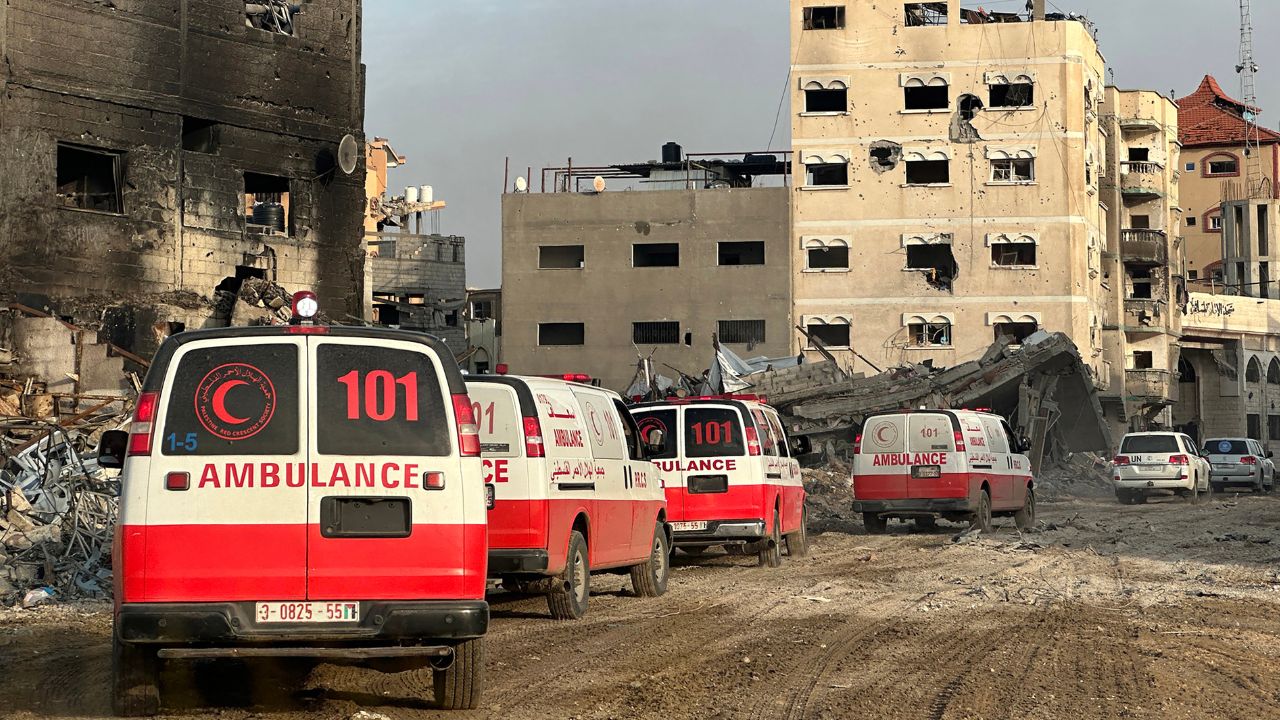
    At Najjar hospital in the city, AFP saw bodies carried from ambulances and placed in the courtyard of the hospital in body bags, while relatives grieved nearby.

    Inside the hospital, medics treated several wounded men who were laid out on the floor, one with his head wrapped in bandages.

    In Khan Yunis, which has seen heavy fighting in recent weeks, Israel’s military said it was “intensifying the operations” using tanks, close-range fire and aircraft.

    “The soldiers raided the residence of a senior military intelligence operative” in the area, a military statement said.

    With war still raging after more than four months, Netanyahu unveiled a plan for post-war Gaza this week which envisages civil affairs being run by Palestinian officials without links to Hamas.

    It also says Israel will continue with the establishment of a security buffer zone inside Gaza along the territory’s border.

    The plan has been rejected by both Hamas and the Palestinian Authority in the Israeli-occupied West Bank.

    Israel’s key ally the United States said it did not support a “reoccupation” or a “reduction of the size of Gaza”, and said “Palestinian people should have a voice and a vote… through a revitalised Palestinian Authority”.

    burs-rox/kir

    © Agence France-Presse

  • UN Security Council vote on Gaza faces threat of US veto

    UN Security Council vote on Gaza faces threat of US veto

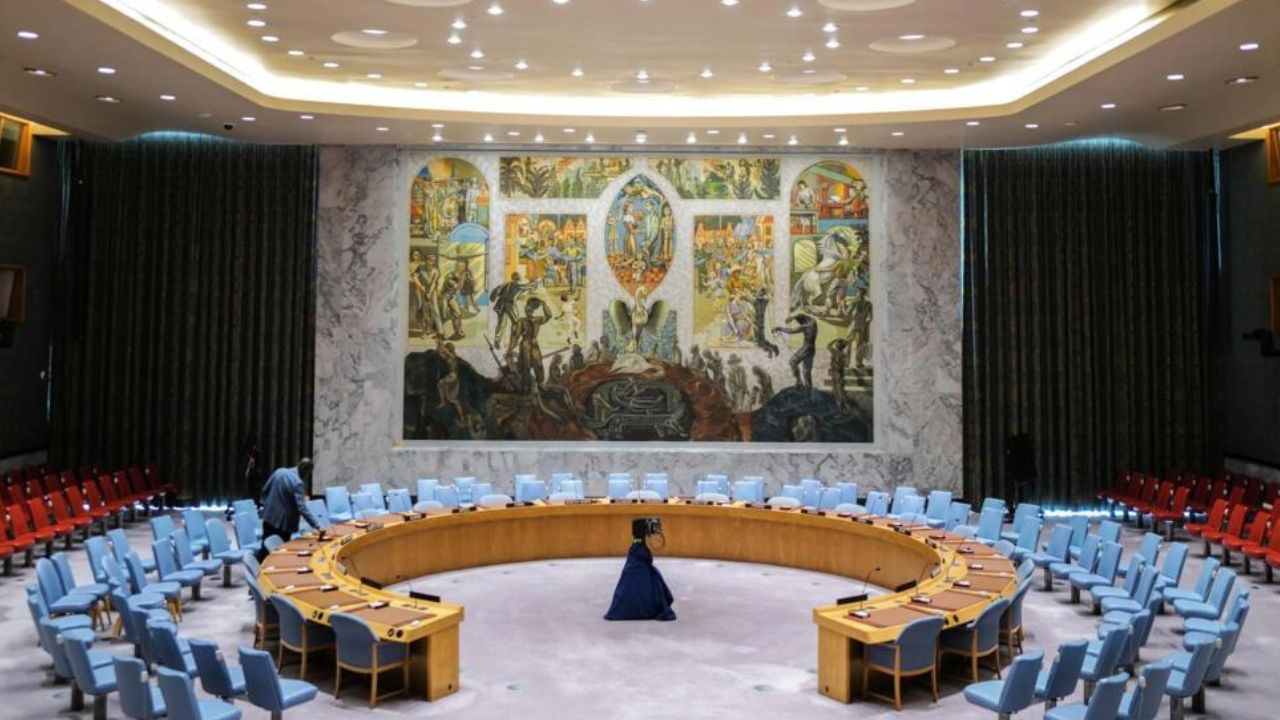
    United Nations (United States) (AFP) – The UN Security Council will vote on a new draft resolution Tuesday calling for an immediate ceasefire in Gaza, despite threat of a third US veto on such a text.

    The document, prepared by Algeria, “demands an immediate humanitarian ceasefire that must be respected by all parties.”

    The vote comes as Israel prepares to move into the southern Gaza Strip city of Rafah, where some 1.4 million people have fled, as part of its mission to destroy “Hamas”.

    However it is facing increased pressure to hold off, including from its closest ally the United States.

    The draft resolution opposes the “forced displacement of the Palestinian civilian population.”

    It additionally demands the release of all Hamas hostages.

    Similarly to other previous drafts spurned by the United States and Israel, the new text does not condemn Hamas’s October 7 assault.

    That attack left about 1,160 people dead in southern Israel, mostly civilians, according to an AFP tally of official Israeli figures.

    Israel’s retaliatory campaign has killed more than 29,000 people in Gaza, mostly women and children, according to the latest count by the health ministry.

    The United States warned over the weekend that Algeria’s text was not acceptable, threatening to veto it.

    “We don’t believe that this Council product will help the situation on the ground,” US deputy ambassador to the UN Robert Wood said Monday.

    “If this resolution does come to a vote, it will not go forward.”

    According to Wood, the passage of such a ceasefire resolution would endanger ongoing delicate diplomatic negotiations which could see the release of hostages from Gaza.

    The United States instead began circulating an alternate draft, seen by AFP Monday.

    While that text does include the word “ceasefire” — which the United States has previously avoided, vetoing two drafts in October and December which used the term — it does not call for the end of hostilities to happen immediately.

    ‘Moral obligation’

    Echoing recent comments by President Joe Biden, the US draft supports a “temporary ceasefire in Gaza as soon as practicable, based on the formula of all hostages being released.”

    It also mentions concern for Rafah, stating that “a major ground offensive should not proceed under current circumstances.”

    There is no “deadline” for a vote on the American draft, a senior US official said Monday, adding there would be no “rush.”

    But even if there is no hurry, the US text “as it is… cannot pass,” one diplomatic source said, citing several issues around the phrasing of “ceasefire” and the risk that any text introduced to the 15-member body by the United States might face a veto from Russia.

    In any case, the mere fact the United States has introduced a counter-resolution is likely to “make Israel nervous,” Richard Gowan, an analyst at the International Crisis Group, told AFP.

    “The US is finally using the Security Council as a platform to signal the limits of its patience with the Israeli campaign,” Gowan said.

    Despite the specter of a US veto, Palestinian Ambassador to the UN Riyad Mansour had insisted on a vote days ago, saying that the Arab Group had been “more than generous to give our colleagues additional time.”

    According to Gowan, “We are now grinding towards a US veto that nobody really wants, but nobody can avoid,” noting that the vote will fall within a few days of the second anniversary of Russia’s invasion of Ukraine.

    “I am sure that Russia will use the opportunity (of a US veto) to accuse the US of having double standards when it comes to dealing with civilian suffering in Ukraine and the Middle East,” Gowan said.

    Russian UN Ambassador Vasily Nebenzya said it is “sad that we cannot come (up) with a ceasefire… and that only one delegation is preventing that.”

    Chinese representative Jun Zhang said the Security Council has a “moral obligation” to take action “to stop the killings,” pointing out that the United States may veto such a move but meanwhile they are “always calling for protection of human rights.”

  • Israel sets Ramadan deadline for Rafah assault

    Israel sets Ramadan deadline for Rafah assault

    Israel will launch its long-threatened offensive against Rafah next month if the remaining hostages held in Gaza are not freed by the start of Ramadan, Israeli war cabinet member Benny Gantz said.

    “The world must know, and Hamas leaders must know — if by Ramadan our hostages are not home, the fighting will continue everywhere, including the Rafah area,” Gantz, a retired military chief of staff, told a conference of American Jewish leaders in Jerusalem on Sunday.

    Ramadan, the holy month, is expected to begin on March 10.

    The Israeli government has not previously specified a deadline for its planned assault on the city where the majority of the 1.7 million displaced Palestinians have sought refuge.

    Fearing the potential for mass casualties, foreign governments and aid organisations have repeatedly urged Israel to spare Rafah, the last major Gazan city not invaded by ground troops during the four-month-old war.

    Despite the mounting international pressure, including a direct appeal from US President Joe Biden, Israeli Prime Minister Benjamin Netanyahu insists the war cannot be completed without pressing into Rafah.

    Speaking at the same Jerusalem conference on Sunday, Netanyahu renewed his vow “to finish the job to get total victory” over “Hamas”, with or without a hostage deal.

    Gantz added that an offensive would be carried out in a coordinated manner and in conversation with Americans and Egyptians to facilitate an evacuation and “minimise the civilian casualties as much as possible”.

    But where civilians can safely relocate to on the besieged Gaza Strip remains unclear.

    The comments come after weeks of ceasefire talks have failed to produce a deal, with key mediator Qatar acknowledging over the weekend that the prospects are dimming.

    Washington, Israel’s key ally and military backer, has been pushing for a six-week truce in exchange for the release of the 130 hostages still estimated by Israel to be held in Gaza, including around 30 presumed dead.

    Israel has said it believes many of those hostages, as well as the Hamas leadership, are holed up in Rafah.

    The militants took about 250 people hostage during the October 7 attacks that triggered the war and resulted in the deaths of about 1,160 people in Israel, according to an AFP tally of Israeli figures.

    Israel’s retaliatory campaign has killed at least 28,858 people, mostly women and children, according to the health ministry.

  • Top UN court rejects South Africa request for more Gaza measures

    Top UN court rejects South Africa request for more Gaza measures

    THE HAGUE: The UN’s top court Friday rejected South Africa’s request to put more legal pressure on Israel to halt a threatened offensive against the Gaza city of Rafah, saying it was “bound to comply with existing measures.”

    Pretoria has already filed a complaint against Israel in the International Court of Justice (ICJ) in The Hague, alleging that its assault on Gaza amounts to a breach of the Genocide Convention.

    The court has yet to rule on the underlying issue, but on January 26 it ordered Israel to ensure it took action to protect Palestinian civilians from further harm and to allow in humanitarian aid.

    South African officials on Tuesday filed a further request to the court, asking it to order new measures in the light of Israel’s preparation of a new operation against Rafah.

    More than half of Gaza’s 2.4 million population have sought shelter there from Israel’s offensive on the Gaza Strip.

    The ICJ’s judges acknowledged that the recent developments “’would exponentially increase what is already a humanitarian nightmare with untold regional consequences’” — citing remarks by UN Secretary-General Antonio Guterres.

    But although Israel needed to act immediately to ensure the safety and security of Palestinians, that did not require “the indication of additional provisional measures,” they added.

    Israel remained “bound to fully comply with its obligations under the Genocide Convention and with the said Order,” the ICJ ruling said.

    Hamas’s October 7 attack resulted in the deaths of about 1,160 people in Israel, mostly civilians, according to an AFP tally based on official Israeli figures.

    Militants also took about 250 people hostage, around 130 of whom are still in Gaza, including 30 who are presumed dead, according to Israeli figures.

    Israel’s assault on Gaza has since killed at least 28,775 people, mostly women and children, according to the territory’s health ministry.

    Israel’s foreign minister on Friday said the country would coordinate with Egypt before launching any military offensive in the southern border city of Rafah.

    “We will operate in Rafah after we coordinate with Egypt,” Israel Katz told journalists on the sidelines of the Munich Security Conference, where 180 dignitaries have gathered to discuss conflicts around the globe.

    Fears had been growing for the hundreds of thousands of people who have fled the north of Gaza to Rafah as Israeli troops advanced into the territory to wage war on Hamas.

    But Israel is now planning a major operation in the overcrowded city. With the border to Egypt closed, nearly 1.5 million Palestinians are essentially trapped there.

  • Alarm over fate of major Gaza hospital after Israeli raid

    Alarm over fate of major Gaza hospital after Israeli raid

    Palestinian Territories – There was growing concern Friday over a key Gaza hospital a day after a raid by the Israeli army, with the health ministry saying several patients had died there due to a lack of oxygen.

    The health ministry said the power was cut off and the generators stopped after the raid at the Nasser hospital in the southern city of Khan Yunis, and that four patients had died Friday.

    In recent days, intense fighting has raged in the vicinity of the hospital – one of the Palestinian territory’s last remaining major medical facilities that are still operational.

    On Thursday Israeli army spokesman Daniel Hagari said there was “credible intelligence” to suggest hostages seized by Gaza militants in the October 7 attack that sparked the war had been held at the hospital, and that bodies of some of the captives may still be inside.

    But the military said later it had “not yet found any evidence of this”, although forces had found “weapons, grenades and mortar bombs” at the hospital complex.

    On Friday it said Israeli forces had taken into custody more than “20 terrorists” suspected of involvement in the October 7 attack at the hospital.

    A witness who declined to be named out of fear for their safety told AFP the army had shot “at anyone who moved inside the hospital”.

    The health ministry also raised fears over the fate of six other patients in the intensive care unit and three children, saying it held Israel “responsible for the lives of patients and staff considering that the complex is now under its full control”.

    ‘Pattern of attacks’

    Medical charity Doctors Without Borders described a “chaotic situation” at the hospital, with one employee unaccounted for and another detained by Israeli forces.

    “Our medical staff have had to flee the hospital, leaving patients behind,” it said.

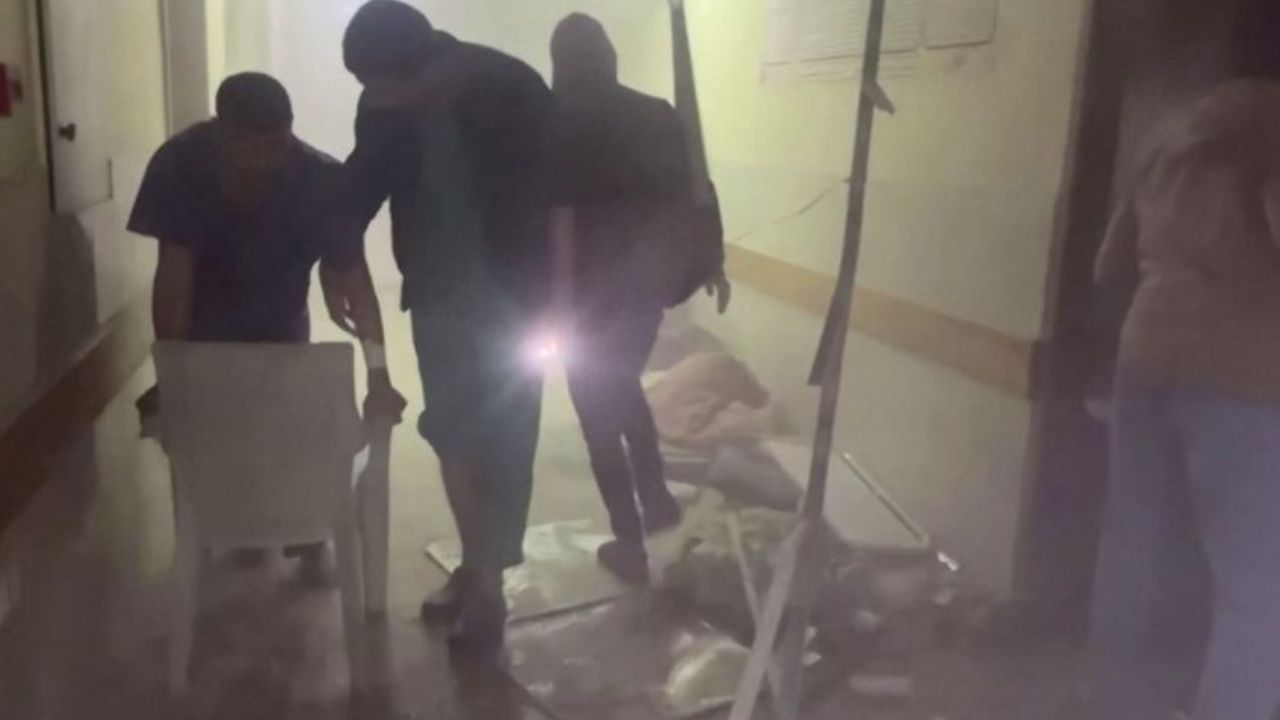
    Footage circulating on social media, which AFP could not independently verify, showed rescuers trying to move patients through dust-filled corridors amid fallen debris.

    At least 28,775 people, mostly women and children, have been killed in Israel’s assault on the Palestinian territory, according to the health ministry.

    The UN Human Rights Office said Israel’s raid on the Nasser hospital appeared to be “part of a pattern of attacks by Israeli forces striking essential life-saving civilian infrastructure in Gaza, especially hospitals”.

    The World Health Organization has described the Nasser hospital as a critical facility “for all of Gaza”, where only a minority of hospitals are even partly operational.

    Israeli strikes continued in the besieged territory overnight, with the health ministry saying Friday another 112 people were killed.

    ‘Dying slowly’

    Nearly 1.5 million displaced Palestinians are trapped in Rafah – more than half of Gaza’s population – seeking shelter in a sprawling makeshift encampment near the Egyptian border.

    There are fears about a growing humanitarian disaster without adequate supplies.

    “They are killing us slowly,” said displaced Palestinian Mohammad Yaghi. “We are dying slowly due to the scarcity of resources and the lack of medications and treatments in the city of Rafah.”

    “There is no medicine,” said Jihan al-Quqa, who was displaced from Khan Yunis to Rafah.

    “There are no antibiotics or any other treatments,” she added.

    “Everyone is sick, children and the elderly, and there is no medicine.”

    US President Joe Biden spoke by phone with Israeli Prime Minister Benjamin Netanyahu late Thursday, the White House said, and urged him again not to carry out an attack on Rafah without a plan to keep civilians safe.

    Britain, Australia, Canada and New Zealand have also urged Israel not to launch a ground offensive in the city.

    Despite international pressure, Netanyahu has insisted he would push ahead with a “powerful” operation in the overcrowded city to achieve “complete victory” over Hamas.

    Media reports suggested Egyptian authorities were building a new wall near the frontier with Gaza, amid fears of an influx of refugees.

    Truce talks

    Mediators from the United States, Qatar and Egypt gathered in Cairo this week to try and broker a deal to halt the fighting and see the release of the remaining hostages in exchange for Palestinian prisoners held by Israel.

    CIA director Bill Burns made an unannounced visit to Israel Thursday for talks with Netanyahu and the head of Israel’s Mossad intelligence agency, David Barnea.

    Barnea had already held talks with Burns and Egyptian and Qatari representatives in Cairo on Tuesday, before a Hamas delegation visited Wednesday.

    US Secretary of State Antony Blinken said he believed an agreement was still “possible”.

    But there has been limited sign of progress.

    Netanyahu said Thursday he rejected a plan for international recognition of a Palestinian state, following reports of the move in The Washington Post.

    burs-rox/dv

    © Agence France-Presse

  • Pressure mounts on Israel for Gaza ceasefire

    Pressure mounts on Israel for Gaza ceasefire

    Gaza Strip (Palestinian Territories) (AFP) – Israel faced growing international pressure to agree to a ceasefire, as it planned an incursion into the southern Gaza city Rafah where more than a million Palestinians are trapped.

    CIA Director William Burns was due in Cairo on Tuesday for a new round of talks on a Qatari-mediated ceasefire that would temporarily halt fighting in exchange for Gaza freeing hostages.

    His planned visit comes after Washington and the United Nations warned Israel against carrying out a ground offensive into Rafah without a plan to protect civilians, who say they have nowhere left to go.

    “Wherever we go there’s bombing, martyrs and wounded,” said Iman Dergham, a displaced Palestinian woman.

    On a visit to the White House Monday, Jordan’s King Abdullah II pushed for a full ceasefire to end the four-month-old war.

    “We cannot afford an Israeli attack on Rafah. It is certain to produce another humanitarian catastrophe,” said the monarch whose country hosts a large number of Palestinian refugees.

    “We cannot stand by and let this continue. We need a lasting ceasefire now. This war must end.”

    After rejecting Gazas’s terms for a truce last week, Israel conducted a predawn raid in Rafah on Monday that freed two hostages and killed around 100 people.

    Netanyahu hailed the overnight operation freeing Fernando Simon Marman, 60, and Luis Har, 70, as “perfect”, while the Palestinian foreign ministry said the deaths of dozens of Gazans amounted to a “massacre”.

    The rare rescue mission under heavy air strikes came hours after Netanyahu spoke with US President Joe Biden, who reiterated his opposition to a major assault on Rafah.

    But Netanyahu has defied pressure from key ally and military backer Washington, insisting that “complete victory” cannot be achieved until the elimination of the militants’ last battalions in Rafah.

    While meeting with the units that freed the two hostages, Israeli Defense Minister Yoav Gallant on Monday said there would be “more operations” soon and pledged to see “Gaza destroyed”.

    “In my opinion, the day is not far.”

    No safe place

    Rafah has become a last refuge for over half of Gaza’s population, who are pressed up against the Egypt border in makeshift encampments where they face outbreaks of hepatitis and diarrhoea, and a scarcity of food and water.

    Netanyahu has said Israel would provide “safe passage” to civilians trying to leave, but foreign governments and aid groups — as well as Gazans — wondered where they could go.

    “As it is, there is no place that is currently safe in Gaza,” said United Nations spokesperson Stephane Dujarric.

    When asked about an evacuation mission, he said the UN would “not be party to forced displacement of people”.

    The UN’s human rights chief Volker Turk warned that “an extremely high number of civilians” would likely be killed or injured in a full Israeli incursion into Rafah, which could also spell the end of the “meager” humanitarian aid entering Gaza.

    “It’s almost famine here, we’re almost out of flour in the north region,” said a man in northern Gaza’s Beit Lahia. “We can’t even find food and drinks for the children.”

    ‘Time is running out’

    Israel’s operation to free the two hostages left Rafah with bomb craters and piles of rubble.

    The United States said it was deeply concerned by the reports that around 100 Palestinians, including women and children, were killed in the early Monday raid.

    The State Department also called for Israel to investigate the “heartbreaking” killing of six-year-old Gazan Hind Rajab.

    Her body was recovered on Saturday along with two relatives and two Red Crescent workers who went to find her after her family’s car came under fire while trying to flee an Israeli advance on Gaza City.

    “I will question before God on Judgment Day those who heard my daughter’s cries for help and did not save her,” Hind’s mother Wissam Hamada told AFP.

    At least 28,340 people, mostly women and children, have been killed in Israel’s relentless bombardment and ground offensive in Gaza, according to the health ministry.

    Militants also seized about 250 foreign and Israeli captives from southern Israel, around 130 of whom Israel says are still held in Gaza including 29 who are presumed dead.

    The Hostages and Missing Families Forum campaign group warned that “time is running out for the remaining hostages”, urging the Israeli government to “exhaust every option on the table to release them”.