Tag: IMF

  • Pakistan seeks conversion of $5bn Saudi deposits into 10-year facility, expansion of oil support to $5bn

    Pakistan seeks conversion of $5bn Saudi deposits into 10-year facility, expansion of oil support to $5bn

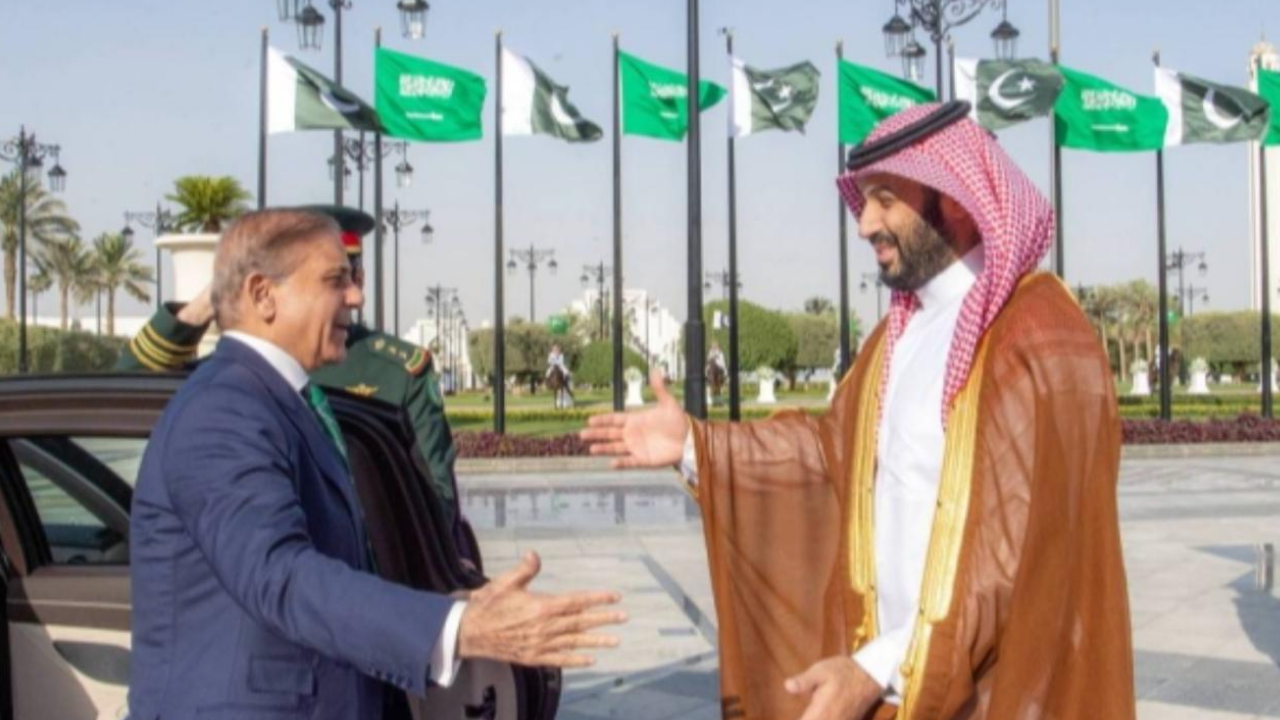
    Pakistan has sought several financial arrangements from Saudi Arabia, including converting the existing $5 billion deposits into a 10-year facility and expanding the oil supply arrangement on deferred payment terms, news reports have said. 

    The proposals were shared with Riyadh as part of discussions on long-term economic cooperation while Pakistan faces external financing needs and holds talks with the International Monetary Fund over the third review of the $7 billion Extended Fund Facility programme.

    One of the proposals involves converting the $5 billion deposits currently held with the State Bank of Pakistan into a long-term facility with a tenure of 10 years. Officials said the proposal also includes favourable pricing for the arrangement.

    Pakistan has also asked Saudi authorities to expand the existing oil supply facility on deferred payment terms from $1.2 billion to $5 billion. Under the proposal, the repayment period for each tranche could be extended from one year to three years.

    Another proposal submitted by Pakistan involves securitising up to $10 billion in remittances sent by overseas Pakistanis. Officials said the arrangement could help increase foreign exchange reserves and reduce reliance on external borrowing.

    Pakistan has also requested Riyadh to consider providing a guarantee for future international Sukuk issuances. Officials said such a guarantee could allow the country to access global capital markets at lower borrowing costs.

    In addition, Pakistan has asked Saudi Arabia to provide a concessional credit line for the Export-Import Bank of Pakistan, which was established to support exports and facilitate trade financing.

    Another proposal calls for Saudi authorities to waive bank guarantee requirements for import-related transactions between the two countries to facilitate trade operations.

    Pakistan has also invited Saudi investment through the Kingdom’s Public Investment Fund to explore investment opportunities in different sectors of the economy.

    Officials also said Pakistan sought Saudi support in facilitating adjustments to Pakistan’s primary surplus targets under the IMF programme to accommodate tax rationalisation measures while managing fiscal pressures.
  • IMF flags $30-35 billion gaps in Pakistan’s import data, seeks review

    IMF flags $30-35 billion gaps in Pakistan’s import data, seeks review

    The International Monetary Fund (IMF) has told Pakistan to conduct a comprehensive review of its import data and statistical processes following the identification of discrepancies amounting to $30-35 billion in the country’s trade figures over the past seven years.

    The most recent IMF staff report, published after the approval of a $1 billion tranche under the Extended Fund Facility (EFF), highlighted the need to enhance Pakistan’s macroeconomic statistics. 

    As stated in the report, the inconsistencies in merchandise import data reported by the Pakistan Bureau of Statistics (PBS) have cast doubt on the reliability of official statistics, despite expectations that the balance of payments figures from the State Bank of Pakistan (SBP) will not be significantly impacted.

    To continue receiving support from the EFF, the IMF has told Pakistan to assess the quality of its import data, reconsider the methods utilised for data collection and aggregation, and compile a comprehensive set of revised statistics along with explanations for public dissemination.

    Approval from a technical committee will be necessary for these measures.

    The government has committed to rectifying the discrepancies and enhancing the timeliness, quality and coverage of macroeconomic data. Recent initiatives include the release of the first Agricultural Census in 15 years, in addition to the Labor Force Survey and Household Integrated Economic Survey.

    The PBS is set to roll out a new Producer Price Index (PPI) and will begin data collection for three key surveys in fiscal year 2026, including the census of manufacturing industries, the survey of small and household manufacturing industries and the family budget survey.

    In accordance with the Government Finance Statistics (GFS) roadmap, Pakistan has formed a central GFS unit tasked with regularly collecting and classifying fiscal operations data.

    The integration of GFS mappings will facilitate the generation of reports that comply with international standards once the system upgrades are finalised.

  • IMF sets 11 new conditions for Pakistan’s $7 billion bailout

    IMF sets 11 new conditions for Pakistan’s $7 billion bailout

    The International Monetary Fund (IMF) has established 11 additional structural benchmarks for Pakistan as part of its $7 billion bailout program. These conditions are designed to tackle corruption risks, reform the sugar industry, evaluate remittance expenses, enhance governance, and boost the performance of the Federal Board of Revenue (FBR).

    On Thursday, the IMF published the staff-level report for the second review of the program. With these new additions, Pakistan now confronts a total of 64 conditions since the start of the bailout agreement a year and a half ago.

    As per the new conditions, Pakistan is tasked with making asset declarations of high-ranking federal civil servants available on a government website by December 2026. These declarations aim to pinpoint discrepancies between income and assets. 

    The initiative will eventually be expanded to senior provincial civil servants, granting banks full access to these records. By October 2026, the government is expected to present an action plan to address corruption vulnerabilities in ten identified departments, guided by institutional risk assessments. The National Accountability Bureau will oversee the development and coordination of these strategies.

    Provincial anti-corruption agencies will receive support in financial intelligence and capacity-building for financial investigations. The IMF’s actions follow the Governance and Corruption Diagnostic Assessment, which pointed out deficiencies in legal and governance frameworks.

    The conditions for the bailout also pertain to the sugar sector. Pakistan is required to formulate and implement a national policy for sugar market liberalization by June 2026, addressing aspects such as licensing, price controls, import-export permissions, zoning, and clear deadlines. This initiative aims to minimize elite influence in the sector.

    Concerning taxation, the IMF has directed Pakistan to finalize a roadmap by December 2025 that outlines priority reform areas, staffing needs, timelines, milestones, revenue impact projections, and key performance indicators (KPIs). Based on this roadmap, the government must enact at least three priority reforms, including legislation, staffing adjustments, and initial KPI reporting.

    Additionally, by December 2026, a medium-term tax reform strategy spanning three to five years must be published. This strategy will outline a sequenced approach to tax policy, administration, and legal reforms, governance structures, and a resource plan for execution.

    The IMF has also stipulated conditions regarding remittances and financial markets. By May 2026, Pakistan will conduct a thorough assessment of remittance costs and obstacles to cross-border payments. By September 2026, the government will analyze issues affecting the local currency bond market and deliver a strategic action plan.

    Energy and state-owned enterprises are also part of the requirements. Preconditions for private-sector involvement in HESCO and SEPCO are to be finalized by December 2026, and public service obligation agreements for the seven largest entities must be signed before the FY27 budget is presented to Parliament.

    Additional measures include proposing amendments to the Companies Act of 2017 to enhance compliance, modernize corporate governance, and align regulations with international standards. The government will also issue a concept note on suggested amendments to the SEZ Act, detailing objectives, anticipated outcomes, and KPIs.

    The IMF report indicates that Pakistan has fulfilled several prior benchmarks, including fiscal measures in the FY26 budget, the agricultural income tax, and amendments to the Civil Servants Act. Some benchmarks, including action plans rooted in the Governance and Corruption Diagnostic, are recommended to be postponed to December 2025.

  • Pakistan accepts 23 IMF conditions covering energy, finance, and currency

    Pakistan accepts 23 IMF conditions covering energy, finance, and currency

    Pakistan has accepted 23 stipulations put forth by the International Monetary Fund (IMF) that pertain to energy, finance, social, structural, monetary, and currency issues as part of the loan agreement.

    The IMF report indicates that Pakistan and the Fund have come to an agreement to reduce development projects. Among the stipulations are an increase of five percent in excise duty on fertilizers and pesticides, implementing excise duty on high-priced confectionery items, and expanding the sales tax base by transitioning selected goods to the standard rate.

    The government has pledged to the IMF that the sugar industry will be completely deregulated. Tariff modifications in the electricity sector will continue, along with commitments to lower system losses and reduce expenses.

    A nationwide Point of Sale (POS) system for 40,000 major retailers is set to be implemented within two years. All four provinces will progress towards a unified sales tax system.

    The IMF report highlights that provinces “have consented not to provide any new subsidies on electricity and gas.” Pakistan is also restricted from entering into new external agreements for additional RLNG. The OGRA will be instructed to establish tariffs within 40 days, after which the formal notification will be released.

    As part of the conditions, no investment initiative or company will be provided with financial benefits or guarantees. No fuel subsidies will be given, and no cross-subsidy programs will be initiated. The government will not establish targets for sectoral loans or distribute such loans.

    The phase-out of government securities from the State Bank has been prolonged. Market purchases have been halted. Throughout the program, the State Bank will refrain from launching new lending initiatives, and the currency will maintain its flexibility.

    Federal and provincial governments are prohibited from setting a support price for wheat procurement. They are also restricted from imposing new regulatory duties on imports. The Special Investment Facilitation Council (SIFC) will not recommend incentives, and the government will not provide tax benefits or guarantees. All investments channeled through the SIFC will adhere to the Public Investment Management Framework.

    The IMF has also mandated that no new special economic zones or similar zones be established. Existing concessions for these zones will not be renewed, and no new concessions will be issued.

    As the payments deficit continues to rise following the end of the previous Fund-supported program, during which the deficit reached 3.3 billion dollars, Pakistan has consented to increase tax rates on fertilizers, pesticides, and confectionery items, as well as raising the GST on selected goods to the standard 18 percent.

  • IMF confirms $1.2bn release as Pakistan meets programme targets

    IMF confirms $1.2bn release as Pakistan meets programme targets

    The International Monetary Fund (IMF) has sanctioned an additional disbursement of approximately $1.2 billion for Pakistan through the Extended Fund Facility and the Resilience and Sustainability Facility. This approval came after the Fund’s Executive Board meeting in Washington, D.C., where the second review of the EFF and the first review of the RSF were finalized. 

    With this release, the cumulative disbursements under these two arrangements have reached around $3.3 billion. 

    In its statement, the Board highlighted that Pakistan’s “strong programme implementation, despite the recent catastrophic floods, has preserved stability and enhanced both financing and external conditions.”

    It noted that the focus of policy priorities remains on macroeconomic stability, reforms in public finance, enhancing competition and productivity, reforms involving state-owned enterprises, and improvements in the energy sector.

    Pakistan recorded a primary surplus of 1.3 percent of GDP in FY25, which the IMF stated aligned with programme goals. At the conclusion of FY25, gross reserves were $14.5 billion, an increase from $9.4 billion the previous year. The Board noted that inflation had risen due to the impact of floods’ on food prices, yet deemed this increase temporary.

    IMF Deputy Managing Director and Acting Chair Nigel Clarke stated that Pakistan must uphold policies that foster stability. “Given the unpredictable global environment, Pakistan needs to maintain prudent policies to solidify macroeconomic stability while speeding up the reforms required for stronger, private sector-led, and sustainable growth in the medium term,” he remarked.

    Regarding revenue enhancements, Clarke indicated that Pakistan must “progress with reforms to boost revenues through the simplification of tax policy and broadening the tax base,” stressing that this is crucial for fiscal sustainability and for creating opportunities for climate resilience, social protection, human capital, and public investment.

    Clarke emphasized that energy reform is pivotal to the programme. He mentioned that timely adjustments in power tariffs have “contributed to reducing the accumulation and flow of circular debt,” and stated that the following phase should focus on “sustainably lowering electricity production and distribution costs while tackling inefficiencies in the power and gas sectors.”

    The IMF noted that the RSF tranche will aid Pakistan’s climate initiatives. Clarke explained that the RSF supports efforts to “enhance natural disaster response and financing coordination, optimize the use of limited water resources, incorporate climate considerations in project selection and budgeting, and improve the comprehension of climate-related risks in financing decisions.” He pointed out that the recent floods highlighted the pressing need to progress on climate reforms.

    The IMF remarked on Pakistan’s release of the Governance and Corruption Diagnostic Assessment, noting that additional efforts are necessary regarding the governance of state-owned enterprises, privatization, the business climate, and enhancements in economic data and statistics.

  • IMF pushes Pakistan on agri tax, slams subsidized power plans

    IMF pushes Pakistan on agri tax, slams subsidized power plans

    The International Monetary Fund (IMF) has asked Islamabad to comply with its program requirements during final deliberations on the budget. According to reports, the lender has asked the federal government to incorporate agricultural income tax into provincial budgets by the end of the first quarter of fiscal year (FY) 2025-26.

    The lender expects respective authorities to implement agricultural income tax which neither the federal nor provincial governments have been able to decide upon. Moreover, the IMF has voiced its disapproval of the government’s intentions to utilize surplus power capacity by boosting power usage. 

    Authorities in Pakistan reportedly attempted to get a waiver that would allow surplus power capacity to be provided at a lower rate. As per reports, the waiver would have created provisions for 7000 megawatts (MW) of electricity.

    Islamabad’s motivation behind the provision of power at lower rates lied in increasing economic output. This is because lower power rates to new entrants would yield higher industrial output.

    However, the IMF did not support the scheme as it believes that the current state of the economy is a direct consequence of the distribution of similar allowances in the past. 

    The fund correctly outlined how this policy would serve to stifle competition in the domestic industrial sector as existing users of the national grid would be stuck paying hefty bills while new users would enjoy lower prices. According to reports, the IMF suggested that Islamabad stabilize the power sector and create a fair environment where new entrants are not protected by subsidized power.

    The IMF’s stance on the provision of surplus power has led analysts to question whether the government will still honor their announcement to allocate 2000MW of power to crypto mining and AI data centers.

    Data from reports suggests that the government intended to provide crypto miners with electricity at eight to nine rupees per unit. For reference, the base rate stands at a significantly higher Rs24 to Rs25 per unit, showcasing the magnitude of savings bitcoin miners would have enjoyed.

    Moreover, reports indicate that the fund expects provincial governments to observe austerity measures by reducing expenditures. However, provincial governments are not steering clear of costly development plans.

    According to the international creditor’s estimations, Pakistan’s provincial governments have surpassed their development budgets by a staggering Rs850 billion. Details from reports regarding the upcoming federal budget paint an alarming picture, suggesting that the provinces may fail to post budget surpluses in FY 2025-26.

  • Budget delayed as IMF talks remain inconclusive

    Budget delayed as IMF talks remain inconclusive

    Discussions between Islamabad and the International Monetary Fund (IMF) have remained inconclusive, causing the federal government to delay the announcement of the budget till June 10. The IMF will reportedly continue to engage with relevant authorities over the fiscal year (FY) 2025-26’s budget in the coming days.

    The series of Pak-IMF high-level policy talks began on May 19 in Islamabad, and according to reports, both sides failed to reach an agreement on the budget by the end of the mission.

    However, the IMF’s Pakistan mission chief, Nathan Porter, described the discussions to be “constructive”. Moreover, he asserted that IMF will remain locked in talks with Pakistani authorities until an agreement is reached for the nation’s federal budget for the upcoming FY.   

    He also revealed that the talking points included avenues to boost government revenue and to “prioritise expenditure”. The federal government could attempt to expand the tax net while simultaneously increasing compliance with tax laws.

    Reports indicate that a multitude of businesses do not comply with laws surrounding taxation. This problem is especially pronounced in the cigarette manufacturing sector, where the government loses out on a staggering Rs300 billion in revenue because of tax evasion. 

    According to Nathan Porter, the discussions also went over “budget proposals and broader economic policy, and reform agenda”. Reports reveal that the aforementioned reforms are to be funded by the 2025 Resilience and Sustainability Facility (RSF) package along with other economic goals falling under funding provided by the 2024 $7 billion Extended Fund Facility (EFF) program. 

    Reports cite Porter describing Islamabad’s commitment to aim for a surplus amounting to 1.6 percent of the Gross Domestic Product (GDP) for FY 2025-26. To achieve this, the federal government will have to prioritise government expenditures and ensure an increase in revenue to consolidate its fiscal position.

    In a separate development, Minister for Power Sardar Awais Ahmad Khan Leghari received a delegation from the World Bank earlier this week to discuss reforms that are currently in progress. These reforms were in line with those recommended by the IMF, as Islamabad intends to substitute broad subsidies with those that offered support to a targeted segment, which could help with fiscal consolidation. 

    Porter outlined the importance of Pakistan’s inflation rate remaining within a band of five to seven percent in the medium term. The State Bank of Pakistan (SBP) is responsible for targeting the optimal inflation rate in the economy and, as such, has been recommended to ensure that its policies are “data-dependent”.

    Porter also highlighted the importance of allowing the exchange rate to fluctuate as it will allow Pakistan to grow resilient to “external shocks”. Currently, the rupee is subject to a managed float regime which allows for the SBP to intervene to insure that the rupee does not face significant depreciation. However, this puts pressure on the SBP’s reserves.

  • IMF team in Pakistan for crucial budget talks

    IMF team in Pakistan for crucial budget talks

    A delegation from the International Monetary Fund (IMF) has come to Pakistan to engage in high-level policy discussions regarding the federal government’s budget for fiscal year (FY) 2025-26. According to reports the delegation will remain in Pakistan until May 22. 


    As per the Ministry of Finance (MoF), Islamabad’s negotiations with the international lender will cover a vast array of budgetary estimates, revenue targets and expenditure figures. The IMF intends to lend support to the domestic economy to relieve the growing external financing and fiscal pressures.


    The IMF has also tacked on 11 conditions on Pakistan, bringing the total number of loan conditions to 50,  to ensure that it remains on the roadmap laid out by the fund. One of these conditions, revealed in a staff level report, included raising debt servicing surcharge on electricity bills.


    While stricter austerity measures might be required in FY 2025-26’s budget, the general public has witnessed a fall in purchasing power owing to rising taxation levels. 


    Reports reveal that key officials from the Federal Board of Revenue (FBR), State Bank of Pakistan (SBP), the MoF and Planning Commission are to tackle negotiations with the delegation sent by the international creditor. While macroeconomic indicators have logged a remarkable improvement, with an award winning journalist even dubbing Pakistan’s economy as a ‘mini-miracle’, the country still struggles in the face of the external financing gap.


    Reports indicate that the external financing gap continues to widen and if left unchecked, could grow to a staggering $19.75 billion in FY 2025-26. Furthermore, the gap is not expected to close any time soon as projections suggest that the gap will not shrink, with analysts anticipating for the gap to remain over $19 billion even in FY 2026-27.  


    Beyond that, estimates from reports reveal that by FY 2027-28, Pakistan’s total external financial shortfall will surge to approximately Rs9 trillion. However, by FY 2027-28, analysts believe that Pakistan foreign exchange reserves could grow to a respectable $23 billion.


    Reports suggest that remittances will remain at approximately $36 billion throughout, with the current account deficit being close to $3.85 billion. While rising remittance inflows recently allowed Pakistan to experience a rare current account surplus, a widening of the trade deficit can result in a worsening of the current account position.

  • PSX climbs as investors anticipate good news from IMF

    PSX climbs as investors anticipate good news from IMF

    The Pakistan Stock Exchange (PSX) closed in the green owing to a bull run triggered by an announcement from the International Monetary Fund (IMF) regarding its Executive Board meeting with Pakistani officials.

    As per reports, the meeting could unlock a $1.3 billion disbursement for Pakistan under the Extended Fund Facility (EFF), along with a new 28-month agreement under the Resilience and Sustainability Facility. 

    Trading hours began with a selloff, causing the KSE-100, the benchmark index of the PSX, to reach an intraday low of 112,935.56 points at approximately 11:17 AM. 

    Data from the PSX reveals that the KSE-100 index then witnessed a rally, causing the market to hit an intraday high of 115,040.58 points before closing at 114,872.18 points.

    For reference, the KSE-100 closed at 114,063.90 points on Monday, after which the index recorded a growth of 0.71 percent during trading hours on Tuesday, allowing for an 808.28 point rise.

    The index continued to climb despite border tensions escalating with neighbouring India. While a minor sell-off was noted as news of Pakistan shooting down an Indian quadcopter broke, investors seemed eager to park their funds into the PSX. 

    Of the 17 indices on the PSX, 16 remained in the green, with the UPP9 index being the only index in the red. The index shrank marginally by 0.01 percent, which translates into a 4.19-point decline. 

    The Allshare (ALLSHR) index climbed by 346.22 points, which translates into a growth of 0.49 percent. Unlike the KSE-100, which tracks the performance of the 100 largest and most liquid companies, the ALLSHR index records the performance of all publicly listed companies on the PSX.

    While recent global and regional geopolitical issues have caused a pullback in the PSX in recent weeks, data from the exchange reveals that the ALLSHR index has shot up by a staggering 52.44 percent over just one year, with the KSE-100 recording an even greater rise of 60.22 percent over a one-year period.

    A vast array of companies witnessed a rise in share prices with Tri-Star Mutual Fund Limited (TSMF) and Apna Microfinance Bank Limited (AMBL) winning big, to the tune of growth rates that sat at 10.59 percent (TSMF) and 10.41 percent (AMBL). 

    However, not every publicly listed stock witnessed an improvement, as many companies witnessed sharp declines. Of these declining companies, the one that fared the worst during intra-day trading was First Capital Equities Limited (FCEL), which posted a 13.62 percent decline in its position.

    PSX climbs as investors anticipate good news from IMF

    The trading volume of regular stocks stood at an impressive 409,933,985 shares, translating to a total value of over 29 billion rupees.

  • Finance minister’s IMF meetings could help unlock second $1bn tranche

    Finance minister’s IMF meetings could help unlock second $1bn tranche

    Pakistan’s Finance Minister Muhammad Aurangzeb has met with the chiefs of the International Monetary Fund (IMF) and the World Bank (WB) during the 2025 Spring Meetings of international creditors. According to reports, the high-profile meetings will continue until 26 April.

    Aside from his meetings with global lenders, the finance minister will hold discussions with his counterparts, central bankers, international credit rating agencies, as well as investment and commercial banks. The aim of the meetings will be to tackle issues plaguing most countries, such as sovereign liabilities and climate finance.

    Reports have revealed that the WB and IMF executives dialled in on Pakistan’s economic recovery plan. Moreover, the international lenders focused on how the government can implement reforms and stay on track to follow existing loan programs.

    As per reports, discussions with international creditors have been positive, with key figures reportedly describing the conversations as ‘constructive’.  This could spell great news for the economy, as Pakistan currently awaits an influx of funds from international sources, which can be unlocked once the IMF gives its approval. 

    The finance minister held a meeting with the Managing Director of the IMF. Analysts believe that this could help swing the IMF’s $7 billion Extended Fund Facility (EFF) review in favor of Pakistan. 

    Reports suggest that Pakistan is currently awaiting the disbursement of a second $1 billion tranche. While the finance minister’s visit could paint a positive picture, the IMF’s review team is still set to visit Pakistan on May 14. 

    Finance Minister Aurangzeb also met Ajay Banga, The World Bank’s President, to discuss medium-run reform policies. According to reports, these policies cover economic issues such as fiscal consolidation and energy sector reforms.

    Discussions with the WB’s president also led to the topic of development financing. Many believe that if the World Bank decides to grant funds to Pakistan, its macroeconomic indicators may improve.

    According to reports, the finance minister has already had six meetings since arriving in Washington, DC. However, several important meetings remain, such as those with dignitaries from the United States (US), China, the Kingdom of Saudi Arabia  (KSA) and the United Arab Emirates (UAE).

    The finance minister’s meeting with his Chinese counterpart is vital as both sides will visit Islamabad’s request to reschedule debt liabilities to alleviate pressure on Pakistan’s financing requirements. Reports have revealed that if successful, Pakistan could see $3.4 billion of debt rescheduled, providing the economy with some breathing room.