Tag: Imran Khan

  • Government decides to give extension to NAB chairman

    The government has decided to give an extension to National Accountability Bureau (NAB) Chairman Justice (retd) Javed Iqbal and a draft ordinance has been prepared, Ayaz Akbar Yousafzai reports for Geo News.

    Law Minister Dr Farogh Naseem, Adviser to the Prime Minister on Parliamentary Affairs Dr Babar Awan, and Adviser on Interior and Accountability Mirza Shahzad Akbar suggested changes in the law.

    According to sources privy to the matter, more than one amendment has been proposed.

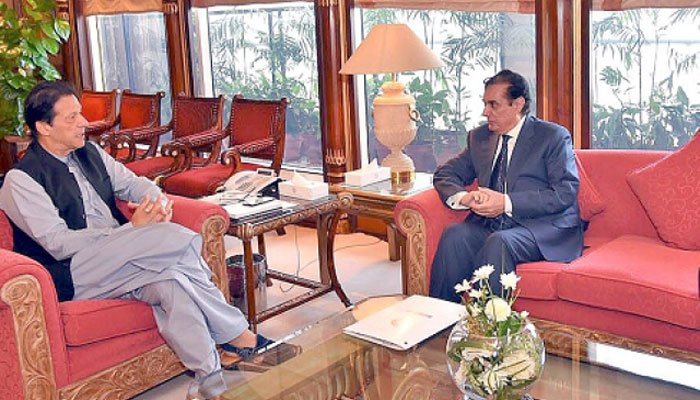
    Geo reports that Prime Minister Imran Khan will chair a meeting today (Tuesday), in which a final approval will be given to the proposal drafted in consultation with federal ministers.

    The tenure of a NAB chairman cannot be extended under section 6(b) of the NAB Ordinance 1999.

    Earlier, Pakistan People’s Party (PPP) Chairman Bilawal Bhutto-Zardari tweeted that the PPP will forcefully oppose the illegal extension in the tenure of Chairman NAB.

  • High-powered cell to investigate 700 Pakistanis in Pandora Papers: PM Khan

    High-powered cell to investigate 700 Pakistanis in Pandora Papers: PM Khan

    Prime Minis­ter (PM) Imran Khan on Monday formed a high-powered cell to investigate the 700 Pakistanis named in the Pandora Papers, including federal cabinet members, politicians, retired generals, owners of media houses, and others in establishing offshore companies.

    PM Khan categorically stated that the prominent leaders and federal ministers of Pakistan Tehreek-e-Insaf (PTI) will have to clear themselves.

    Information Minister Fawad Chaudhry, while speaking to Dawn said: “The prime minister was adamant that those who have been accused in Pandora Papers of having offshore firms will have to clear themselves.”

    The minister took to Twitter and informed about the formulation of the high-powered investigation cell. “The prime minister has set up a high-level cell under the Prime Minister’s Inspection Commission to investigate the Pandora leaks, which will present the facts before the nation,” tweeted Fawad.

    Law Minister Farogh Naseem would head the investigation cell that would also comprise the National Accountability Bureau (NAB), Federal Board of Revenue (FBR), and Federal Investigation Agency (FIA) officials. The cases of the cabinet members would be sent to NAB for investigation. A separate probe will be launched by the Ministry of Information and Broadcasting and the Pakistan Electronic Media Regulatory Authority (Pemra) to investigate the media owners whose names are included in the Pandora Papers, reports Dawn.

    Those who had evaded tax or made offshore firms through ill-gotten money would be taken to task, otherwise, no action would be taken against others because establishing offshore firms was not a crime, the source tells Dawn.

    Under the law, setting up an offshore company is not an offence or crime if the company is not involved in any illegal activity. However, those who have not declared these companies in their returns as assets may face legal action.

    After the International Consortium of Investigative Journalists (ICIJ) released a detailed list of public figures with offshore companies called the ‘Pandora Papers’ as part of their new investigation, PM Khan vowed to investigate all those Pakistanis mentioned in the Pandora Papers, and tweeted: “If any wrongdoing is established we will take appropriate action.”

  • Forgiving TTP: Never forget!

    Forgiving TTP: Never forget!

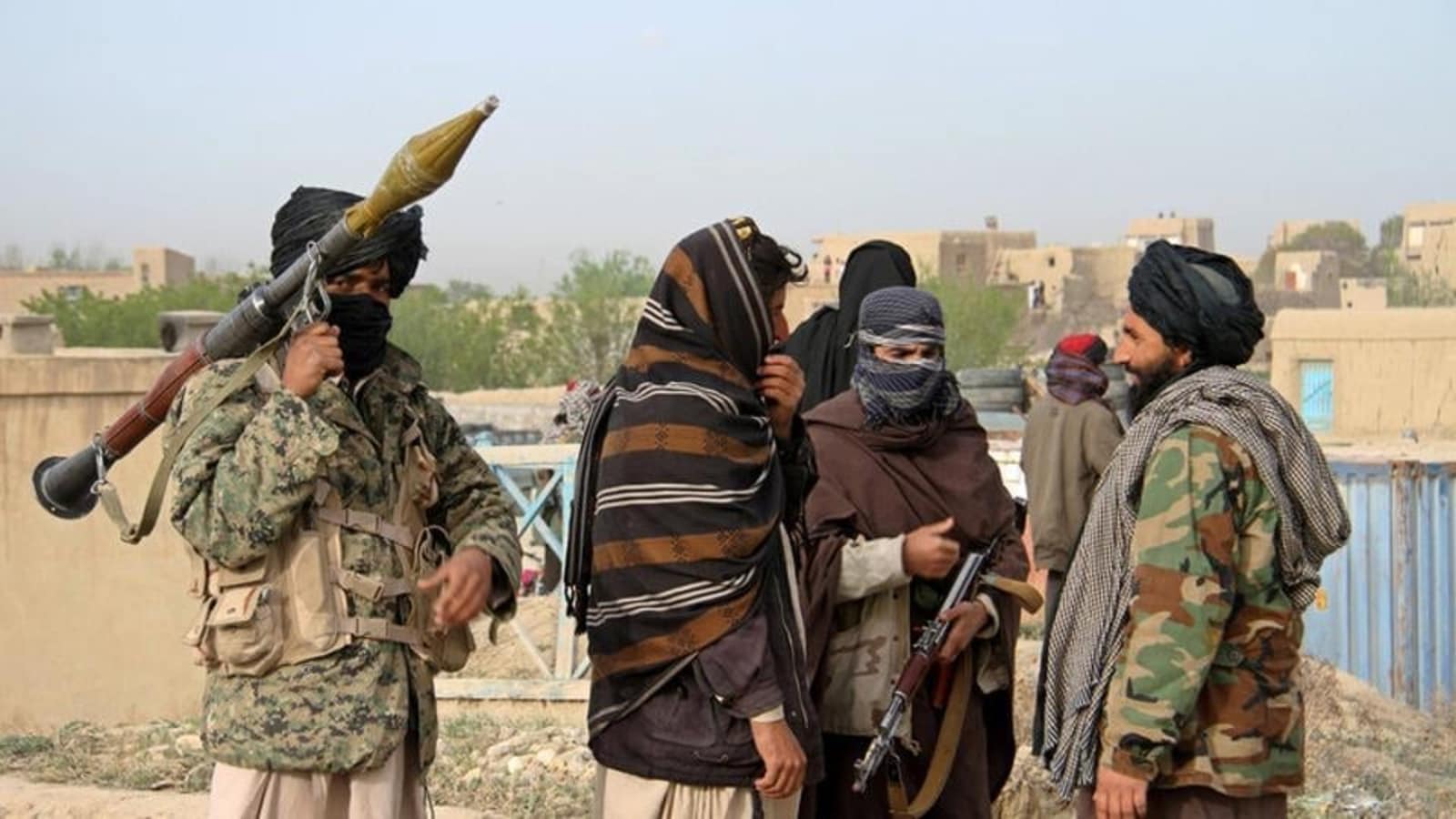
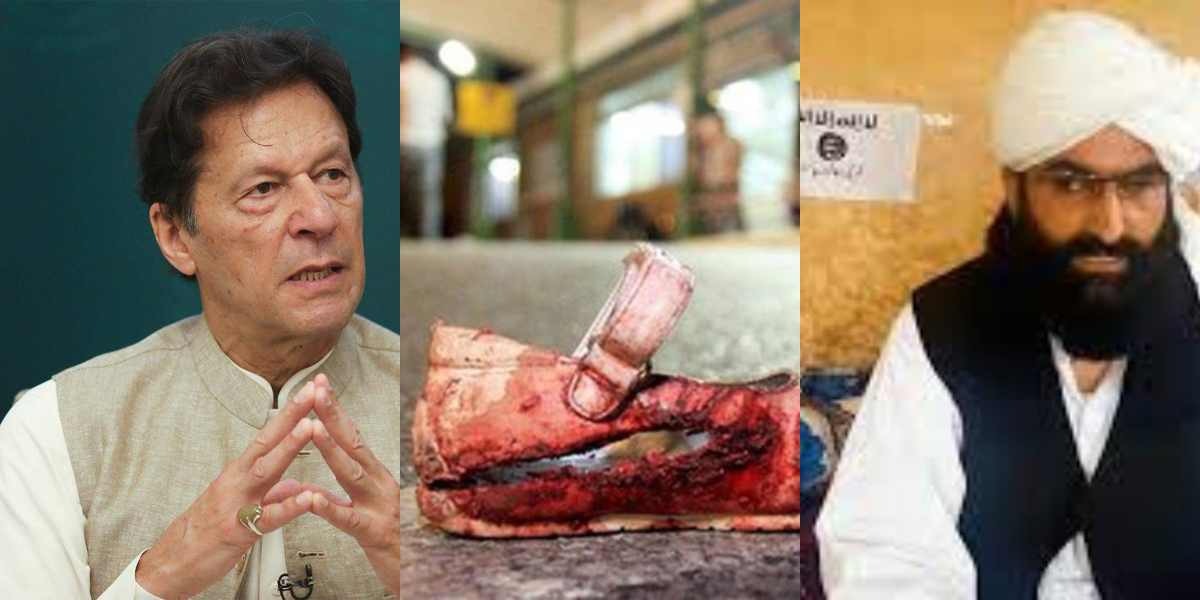
    Prime Minister Imran Khan has said that the government is in talks with some groups of the banned militant outfit, Tehreek-e-Taliban Pakistan (TTP). In an interview with TRT World, PM Khan said there are different groups that form the TTP and some of them want to talk to our government for peace. “So, we are in talks with them. It’s a reconciliation process.” Before PM’s interview, both President Arif Alvi and Foreign Minister Shah Mahmood Qureshi had talked about giving amnesty to TTP members if they lay down their arms and follow the Constitution of Pakistan.

    These statements warrant a lot of questions: why did the president, prime minister, and foreign minister disclose such important information in interviews to media outlets and not in parliament? TTP is no ordinary terrorist outfit. The entire country came together after the horrific APS attack in December 2014, in which more than 150 people were martyred – most of them children. All the political forces of Pakistan reached a consensus, after which the National Action Plan (NAP) came about. There was a massive crackdown on TTP and other terrorist outfits. We finally managed to eliminate the TTP in Pakistan. Those from the TTP who survived the crackdown ran away to Afghanistan. At that time, the government in Kabul was not friendly towards Pakistan.

    The state told us that the TTP was supported and funded by India and Afghanistan – when Ehsanullah Ehsan first surrendered to Pakistan, he confirmed in a video that Afghan and Indian intelligence agencies [RAW and NDS] gave funds and other assistance to Pakistani Taliban to fight Pakistan. Last year, after sharing a dossier containing ‘irrefutable proofs’ of Indian funding of terrorism in Pakistan, Shah Mahmood Qureshi said: “The [specific] evidence presented by Pakistan provides a concrete proof of Indian financial and material sponsorship of multiple terrorist organisations, including UN-designated terrorist organisations Jamaat-ul-Ahrar, Balochistan Liberation Army and Tehreek-e-Taliban Pakistan.”

    What is the reason for Pakistan to hold talks with a RAW and NDS-funded/supported terrorist outfit when we have broken its back in our country? And now that we have a friendly government in Kabul, what is the need to hold talks with an enemy outfit? Should the Afghan Taliban not help reign in the TTP and take action against those who are carrying out attacks against Pakistan from Afghan soil? Or, is it true that the Afghan Taliban and the Pakistani Taliban both have the same ideology, even if the targets of their attacks are different? The people of Pakistan – who have been killed and maimed by the TTP over the years – deserve an answer.

    The government needs to be transparent. This decision cannot be taken just by the government alone. All political parties must have a debate on this issue and the people of Pakistan have to be taken on board as well. We cannot forget what the TTP did to our nation. We lost more than 70,000 lives at their hands. There must be a consensus about the talks and also the government should be transparent about the negotiations. Don’t keep us in the dark, dear government, for we were told that we will never forget their heinous crimes.

  • ‘Chance at a normal life’: Fawad supports TTP integration

    ‘Chance at a normal life’: Fawad supports TTP integration

    Federal Minister for Information and Broadcasting Fawad Chaudhry is supporting ‘a normal life’ for the Tehreek-e-Taliban Pakistan (TTP), those of whom wish to pledged loyalty to the state, reports Geo.

    Fawad said, “The people who could not fulfill their pledge of allegiance to Pakistan want to return to fulfill this pledge.”

    According to the minister, those people who wish to follow the constitution should be given a chance, adding that the government seeks to move forward with the conditions laid down by Prime Minister (PM) Imran Khan.

    Earlier, PM Khan called for the disarmament of the TTP by saying, “We can forgive them and they can become normal citizens.”

    The information minister added that in Balochistan more than 3000 people have come back to a normal life, the ones who had ‘fallen prey to India’s conspiracies.’

    The TTP said that their leaders are engaged in “secret talks” and have asked all fighters to observe a ceasefire till October 20.

  • Summary being prepared for NAB chief extension

    Summary being prepared for NAB chief extension

    The Ministry of Law and Justice has reportedly been preparing a summary to send to the Prime Minister (PM) Imran Khan regarding the extension of sitting Chairman of the National Accountability Bureau (NAB) Justice (redtd) Javed Iqbal, reported Malik Asad for Dawn.

    The four-year term of Justice Iqbal as NAB chairman will expire this month. A senior official of the ministry has confirmed that they will send the proposal to the PM soon.

    However, the government hasn’t taken a final decision yet. According to an official, in the proposal, the declaration of an ordinance for giving extension has been suggested.

    “In case the PM decides to grant an extension to the chairman, the law ministry will draft an ordinance to amend the National Accountability Ordinance (NAO) and forward it to the president,” the sources said.

    If PM agrees, an amendment will be made in sub-section b of Section 6, which states, “There shall be a Chairman NAB to be appointed by the President in consultation with the [Leader of the House and the Leader of the Opposition in the National Assembly] for a [non-extendable] period of [four] years on such terms and conditions as may be determined by the President and shall not be removed except on the grounds of removal of Judge of Supreme Court of Pakistan.”

    Earlier, Information Minister Fawad Chaudhry said, “The government has decided not to consult Opposition Leader Shehbaz Sharif for the appointment of NAB chairman since he (Sharif) is accused in several corruption references filed by the bureau.”

    Later, Pakistan People’s Party (PPP) chairman Bilawal Bhutto Zardari tweeted that PPP will forcefully oppose the illegal extension in the tenure of chairman NAB.

  • VIDEO: Heated argument between PTI’s Shahbaz Gill and anchor Kamran Shahid

    VIDEO: Heated argument between PTI’s Shahbaz Gill and anchor Kamran Shahid

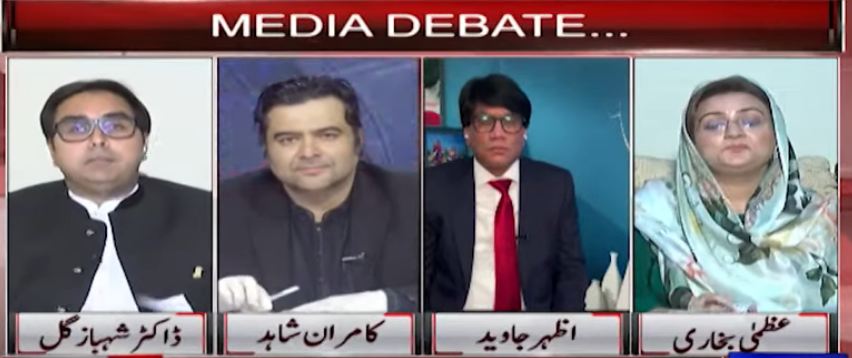
    Special Assistant to Prime Minister (SAPM), Dr Shahbaz Gill, alleged that anchorperson Kamran Shahid was asked to spread fake news and misquote facts about the United Kingdom’s (UK) court order to unfreeze Pakistan Muslim League-Nawaz (PML-N) President Shehbaz Sharif and his family’s bank accounts for lack of evidence of corruption and money laundering. A heated exchange took place between the two on Dunya News‘ programme, ‘On the Front with Kamran Shahid’.

    Gill started off by reading a few statements by Kamran Shahid and gave details of the statements, which as per him were fake news and were factually incorrect.

    Gill’s comments led to a heated exchange of words between Gill and Kamran.

    “Sir, no one can make me misquote statements, not the prime minister or Azhar Javed [UK-based journalist working for Dunya News],” replied Kamran Shahid.

    “You cannot say that I misquote my facts. I have been in journalism for the past 15 years. I am not indulging in any personal attacks against you and neither should you. No one can make me say things that are factually incorrect, not PM Imran Khan, not Shehbaz Sharif, no one,” added Shahid.

    “You are wrong here, no one has the courage to make me misquote my statements or facts. Refrain from doing this.”

    “Let the masses decide about your statements, seems like you are running for an election,” said Gill in response to Shahid’s answer.

    “I have the right to judge the prime minister, he is my PM as well. I supported him long before your [Shahbaz Gill] career as a politician started in Pakistan Tehreek-e-Insaf (PTI),” said Shahid.

    “You have a fascist regime, your party is monitoring everything, you all do one-sided reporting on Pakistan Television Network (PTV), there is no mention of the Opposition in their reporting. If you so highly support journalism why haven’t you made media independent from the information ministry,” said Shahid.

    Shahid added, “PM promised in my show that he will raise the standard of PTV like that of the BBC, now should I say the PM lied?”

  • ‘We are friends of Afghanistan, not spokesmen for any particular group’: PPP’s Sherry Rehman lashes out at PM Khan

    ‘We are friends of Afghanistan, not spokesmen for any particular group’: PPP’s Sherry Rehman lashes out at PM Khan

    Pakistan People’s Party’s (PPP) leader Senator Sherry Rehman has said that Pakistan faces a serious threat after the hurried pullout of United States (US) forces from Afghanistan.

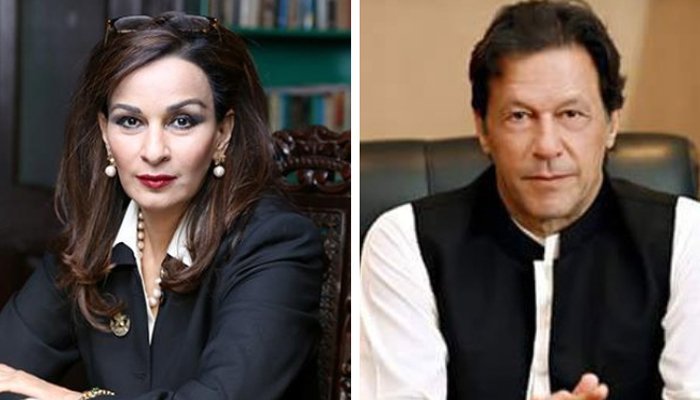
    Sherry Rehman, lashing out at Prime Minister (PM) Imran Khan, said, “We are friends of Afghanistan, not spokesmen for any particular group. We should not make decisions that hurt the country. The PM mentions sacrifice. Yes, that is correct, but why make fun of that sacrifice by saying we will give amnesty to outfits like Tehrik-i-Taliban Pakistan (TTP) that have martyred not just our twice elected PM Benazir Bhutto but also the children of Army Public School and many of our brave soldiers.”

    She said that national unity was missing and said the Pakistan Tehreek-e-Insaf (PTI) government was busy in their war narrative. The government is ignoring the Constitution and the parliament.

    “If we even try to help Pakistan, we are told our leaders are corrupt. How is that helping Pakistan? Our president Asif Ali Zardari also wrote op-eds in The Washington Post. He defended the whole of Pakistan, not just his party. Read the op-eds and see how parliament was conducted to unite in moments of danger.”

    “You need to pay attention to what’s going on in the Pakistan Senate, not just the US Senate. The PM of this country needs to respect the sanctity of the parliament and come here and discuss the situation instead of playing the blame game and disrupting unity. Is this how you defend the country?” she questioned.

    “While it is important to engage with all countries with self-respect, particularly angry superpowers like the US that itself is in turmoil over its 20 years occupation of Afghanistan, what are we doing to empower our own selves? Instead of trying to unite the parliament around a bipartisan foreign policy, the parliament has never met on the Afghan transition, the humanitarian crisis there, and the response. All over the world, joint meetings are being held in Afghanistan but Pakistan’s government is in a state of denial over dealing with the parliament”, said Senator Sherry Rehman.

  • ‘Spent millions of rupees to defame me, NAB-Niazi nexus is a fixed match’: Shehbaz Sharif

    Pakistan Muslim League Nawaz (PML-N) president Shehbaz Sharif, in a press conference, said that the National Accountability Bureau (NAB) and Niazi [Imran Khan] nexus is a fixed match and Federal Investigation Agency (FIA) is also working on the government’s directions.

    Talking about UK’s National Crime Agency (NCA) recent decision to unfreeze Sharif’s and his family account, he stated, “I was sent to jail twice during the last three years. The government failed to prove corruption against me and my children so they approached the agency.”

    He claimed that the PTI-led government has been levelling fake allegations against him and his family for last over three years and said that the rulers had only wasted the nation’s time. “Those who are pretending themselves to be Sadiq and Ameen spent millions of rupees to defame me” he added.

    According to him, the UK agency had asked the court that they wanted to end investigations and the UK court approved the request, as per Geo.

    Earlier, the UK court had ordered the unfreezing of bank accounts for lack of evidence of corruption and money laundering.

    Defamation case against Daily Mail

    About the defamation case against UK’s newspaper, he clarified that he lodged a defamation case against the Daily Mail and asked it to provide evidence against him. But the Daily Mail is yet to submit evidence in the case.

    In 2019, renowned media law firm Carter-Ruck sued British newspaper The Mail on Sunday, online news site Mail Online and its journalist David Rose on behalf of Shehbaz Sharif for publishing a “politically motivated” article. 

  • ‘Since 2001, I have repeatedly warned that the Afghan war was unwinnable’: Imran Khan

    ‘Since 2001, I have repeatedly warned that the Afghan war was unwinnable’: Imran Khan

    Prime Minister Imran Khan says he was surprised to see that no mention was made of Pakistan’s sacrifices as a US ally in the war on terror for more than two decades. “Instead, we were blamed for America’s loss,” he wrote in an op-ed for The Washington Post.

    “Since 2001, I have repeatedly warned that the Afghan war was unwinnable. Given their history, Afghans would never accept a protracted foreign military presence, and no outsider, including Pakistan, could change this reality,” wrote PM Khan.

    PM Imran Khan lashed out at successive Pakistani governments, saying that they had sought to please the US instead of pointing out the flaws of a military-driven approach in Afghanistan.

    “Pakistan’s military dictator Pervez Musharraf agreed to every American demand for military support after 9/11. This cost Pakistan, and the United States, dearly,” he stressed.

    “Those the United States asked Pakistan to target included groups trained jointly by the CIA and our intelligence agency, the ISI, to defeat the Soviets in Afghanistan in the 1980s. Back then, these Afghans were hailed as freedom fighters performing a sacred duty. President Ronald Reagan even entertained the mujahideen at the White House.”

    “Once the Soviets were defeated, the United States abandoned Afghanistan and sanctioned my country, leaving behind over 4 million Afghan refugees in Pakistan and bloody civil war in Afghanistan. From this security, vacuum emerged the Taliban, many born and educated in Afghan refugee camps in Pakistan,” read the opinion piece.

    “Fast forward to 9/11, when the United States needed us again — but this time against the very actors we had jointly supported to fight the foreign occupation. Musharraf offered Washington logistics and air bases, allowed a CIA footprint in Pakistan, and even turned a blind eye to American drones bombing Pakistanis on our soil. For the first time ever, our army swept into the semiautonomous tribal areas on the Pakistan-Afghanistan border, which had earlier been used as the staging ground for the anti-Soviet jihad. The fiercely independent Pashtun tribes in these areas had deep ethnic ties with the Taliban and other Islamist militants,” wrote Khan.

    The prime minister pointed out how, between 2005 and 2016, 16,000 terrorist attacks were conducted against Pakistan by over 50 militant groups, who saw the US and Pakistan as collaborators.

    “We suffered more than 80,000 casualties and lost over $150 billion in the economy. The conflict drove 3.5 million of our citizens from their homes. The militants escaping from Pakistani counterterrorism efforts entered Afghanistan and were then supported and financed by Indian and Afghan intelligence agencies, launching even more attacks against us,” he wrote.

    The premier lashed out at former president Asif Ali Zardari, referring to him as “undoubtedly the most corrupt man to have led my country”, accusing him of not worrying about the collateral damage caused by US drone strikes. He said former prime minister Nawaz Sharif was no different.

    “Tragically, instead of facing this reality, the Afghan and Western governments created a convenient scapegoat by blaming Pakistan, wrongly accusing us of providing safe havens to the Taliban and allowing its free movement across our border. If it had been so, would the United States not have used some of the 450-plus drone strikes to target these supposed sanctuaries?”

    “Surely Pakistan is not to blame for the fact that 300,000-plus well-trained and well-equipped Afghan security forces saw no reason to fight the lightly armed Taliban. The underlying problem was an Afghan government structure lacking legitimacy in the eyes of the average Afghan,” he wrote.

    The prime minister said the “right thing” right now for the world to do would be to engage with the new Afghanistan government, adding that if assured of constant humanitarian aid, the Taliban will have a greater incentive to honour the global community’s demands.

    “Providing such incentives will also give the outside world additional leverage to continue persuading the Taliban to honor its commitments,” he wrote.

    “If we do this right, we could achieve what the Doha peace process aimed at all along: an Afghanistan that is no longer a threat to the world, where Afghans can finally dream of peace after four decades of conflict. The alternative — abandoning Afghanistan — has been tried before,” warned the prime minister.
  • Roads for a truck driver

    Roads for a truck driver

    I am from a country where public transport has been in shambles since the time of dinosaurs. The sitting prime minister of my country won the elections by practically convincing the people that building roads and public transport was not important. So you can well imagine moving around the cities would be some sort of hell for most of us. Being a vehicle owner myself and driving for the past 15 years, I cannot explain the amount of hate I have for driving. But I was always fascinated by the traffic post-midnight that consisted mostly of trucks. It was a different time. A different world altogether. A big giant never-ending trucks, on to a long journey, a journey not particularly entertained by what you call “human companionship”. Probably it is the very lack of human interaction that made truck driving a very fascinating world for me. I couldn’t explore it the way I wanted to because I am a woman stuck in a country where being a woman is your first crime. The rest of the crimes follow automatically but are all committed by others. Despite never truly knowing what it’s like to be a truck driver or their problems, I continued to be fascinated by the expansive and isolated journeys, the tuck shops, tarkay wali chai, and desi breakfast on a chorpoi at some deserted dhaba. Romantic, no?

    This romantic trance was however broken by the movie “Milestone”. A ‘daish-drohi’ (traitor) like myself indulged in Indian cinema at the recommendation of a very dear friend. I didn’t know what I was getting into. “Milestone” reintroduced me to the word ‘melancholy’ in a way that no other tragedy of my life had. I didn’t realise I had that many feelings that I simply refused to acknowledge or feel. I often felt that even the abyss I looked into didn’t reciprocate and I kind of felt unwanted even by the abyss. Till I watched “Milestone”. This movie saw through me like no other thing or person. 

    Ghalib, the protagonist of “Milestone”, plays the role of a truck driver. In the quietest opening scenes of the movie, the resignation in the face of Ghalib, the expansive emptiness of his eyes, and his lingering backache, everything got me hooked to the movie in the first few minutes. Ghalib’s story slowly unrolls and makes the audience acquainted with his loneliness, not only in his personal life but professionally too. His loneliness has been depicted brilliantly through the vast emptiness of the roads, his empty apartment, and his lonely driving duties at night accompanied by nothing but melancholy. The film drops hints here and there about the circumstances of his wife’s death but mostly remains focused on Ghalib’s long journey to nowhere. But even those hints suggest that he blames his aloofness, which made his relationship bitter and then nonexistent. The feeling of homelessness that instills in the opening scenes remains with you throughout the movie. 

    Ghalib, a man of few words, can be witnessed getting further worn down in the movie as a young recruit threatens Ghalib’s job. The young intern was zealous about perfecting the art of truck driving but Ghalib was desperate to save the only enduring relationship he had, which was his relationship with the truck. A lot of people would comment on the commodification of labour class or discuss how capitalism traps you, especially when it comes to the labour class but for me, Ghalib saying: “I do this job because it is who I am. My misery lies in the fact that this is all I am,” was a punch in the gut. This was his entirety of life, a long road, a never-ending journey, the misery of being who he was, and the lingering feeling of being disposable. 

    Director Ivan Ayer has encapsulated the predicament faced by the labour class with so much melancholy. The attention to detail and the long uninterrupted scenes with fewer words keep you going as you explore layers and layers of emotions such as despair, paranoia, and loneliness. Ivan has done a tremendous job in portraying the diminishing value of human life by walking the audience through the protagonist’s life. 

    You might wonder if my fascination ended with the life of truck drivers? I don’t think so. I might never be able to romanticise it again but I have to say that the loneliness it offered was at the same frequency as mine. And I couldn’t thank Ivan enough for making this absolute masterpiece and giving such deep projection to the intricate emotions.