Tag: India

  • Back to the 40s?

    Back to the 40s?

    While violence against the Muslim community of India is no longer an internal secret of our neighbour, it would be nothing less than hypocrisy to turn a blind eye towards the quality of life of minorities in Pakistan where a majority of them is equally vulnerable due to intolerance rooted in religion or ethnicity.

    When Saadat Hasan Manto finally decided to leave India amid growing communal violence back in the 40s, Indian actor Sunder Shyam Chadda wasn’t very happy with his friend’s decision.

    “Are you going to Pakistan because you think you are a Muslim?” Shyam asked Manto as the former removed the bottle of alcohol from their table.

    “I am a Muslim enough to get killed here,” Manto replied.

    Seven decades later — in the year 2020 — the world’s most populous democracy, under fascist Narendra Modi’s Bharatiya Janata Party (BJP), witnesses similar circumstances as those belonging to India’s minority communities, flee their homes in order to save their lives.

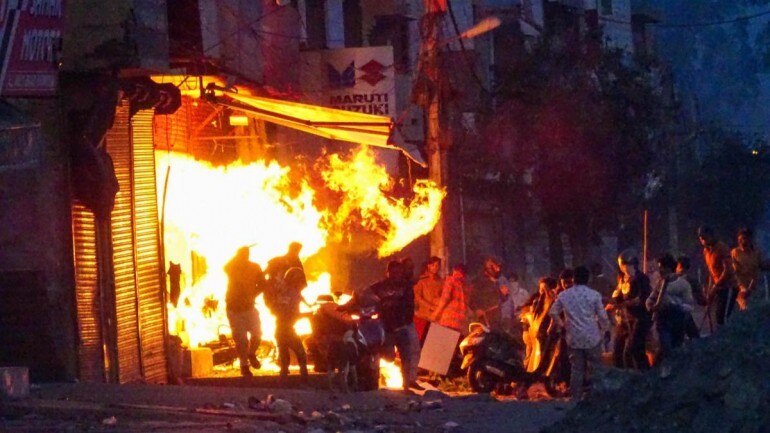
    The recent round of violence against Muslims in India by extremist Hindutva mobs has been the worst with over 40 innocent people losing their lives, mosques being set ablaze and properties of New Delhi’s Muslims being vandalised.

    The situation persisting across Pakistan’s eastern boundaries can be best explained through a mention of suzerainty, under which a single ideology asserts and maintains paramountcy or supremacy over the rest. But the problem in India is further accentuated by the fact that the state’s monopoly over violence has silently been delivered to the goons of the ruling BJP with the promise of targeting Muslims regardless of if they are at home or at a mosque.

    While violence against the Muslim community of India is no longer an internal secret of our neighbour, it would be nothing less than hypocrisy to turn a blind eye towards the quality of life of minorities in Pakistan where a majority of them is equally vulnerable due to intolerance rooted in religion or ethnicity.

    Although analyses suggest the factors that have led to the current upheaval in India are manifold, our focus, for now, will remain on religion since outside India, its importance has been rightly overshadowed by unfolding the neo-liberal agenda New Delhi is trying to implement; for which Hindutva serves as the best medium, and that too in disguise.

    It is nothing but Modi’s model from Gujarat, which is now expanding to Delhi and Ashoknagar.

    Nonetheless, the role of religion in itself cannot be undermined especially in the Indian subcontinent as both in Pakistan and India, religion has remained closely intertwined with politics since even before the partition. And from world-acclaimed statesman Gandhi to today’s fascist Modi, the combination has proved to be lethal while resulting in violence almost every time.

    The use of religion on state-level despite having a secular constitution is to achieve a purposive social order, which in other words is ‘national interest’ based on the exclusion of Muslims and inclusion of corporate and liberal values in society, surprisingly through the conservative ideology of RSS.

    Regardless of the intention behind employing religion in politics, its implications have not been desirable for the general masses, which brings into question the basic understanding of religion. Apart from politics, when religion is examined alone, the underlying principle of religion generally is expounded as that of peace and prosperity.

    Having said that, one inadvertently subscribes to the root word of religion as ‘lig’ and not ‘leg’ where the former means ‘to bind’ while the latter means ‘to gather.’

    Contrary to the broader agreement of religion to be in the greater interest of mankind by making people dependent on each other, the current predominant form of Hinduism in India is that of a certain mindset of people – the Rashtriya Swayamsevak Sangh (RSS) — coming together to serve a ‘holy purpose’ which in this case has become a national interest of BJP’s India.

    In this pretext, the use of religion on state-level despite having a secular constitution is to achieve a purposive social order, which in other words is ‘national interest’ based on the exclusion of Muslims and inclusion of corporate and liberal values in society, surprisingly through the conservative ideology of RSS, which ultimately benefits a handful of people in India by increasing their wealth and stay in power.

    Therefore, while mentioning the Citizenship Amendment Act (CAA), one should always mention its far-reaching effects in the lives of minorities other than Muslims, including Hindus with a working-class background.
  • Celebrities condemn violence against Muslims in Delhi

    Violent protests against the Citizenship Amendment Act (CAA) have been taking place in Delhi for months now but the situation appears to have worsened dramatically after shocking incidents of police brutality at universities emerged in the past couple of days.

    As per reports, over a dozen people were killed with over 200 people injured in the violence in North-East Delhi since Monday. It is pertinent to mention here that US President Donald Trump was in India during the time of these protests.

    With #DelhiBurning and #DelhiViolence trending on Twitter since Monday, many celebrities from Bollywood and Lollywood have come forward to speak out against the targeted brutality against Muslims in India.

     Hamza Ali Abbasi, who is among the most vocal actors, was the first to raise his voice.

    Hareem Farooq raised a very important question.


    Actor Mansha Pasha also wrote in a tweet, “So terrifying to see what is happening in India. Prayers for all minorities and all the people in India fighting and protesting against these bigots.”

    Sharing a picture of a burnt down mosque in India she wrote, “Secular India is going up in flames with this horrible act.”

    Armeena Khan, who has never shied away from voicing her concern on matters of public interest remarked, “We never learn, do we?”

    https://twitter.com/ArmeenaRK/status/1232387300069453826?s=20

    Many Bollywood celebrities also spoke out. Sonam Ahuja, Javed Akhtar and Swara Bhasker were among those who condemned the violence.

    A Muslim living in India gave an interview to the BBC Hindi, presenting an eyewitness account of the violence.

  • As Delhi burns, Gurdwaras open doors to Muslims fleeing violence

    As Delhi burns, Gurdwaras open doors to Muslims fleeing violence

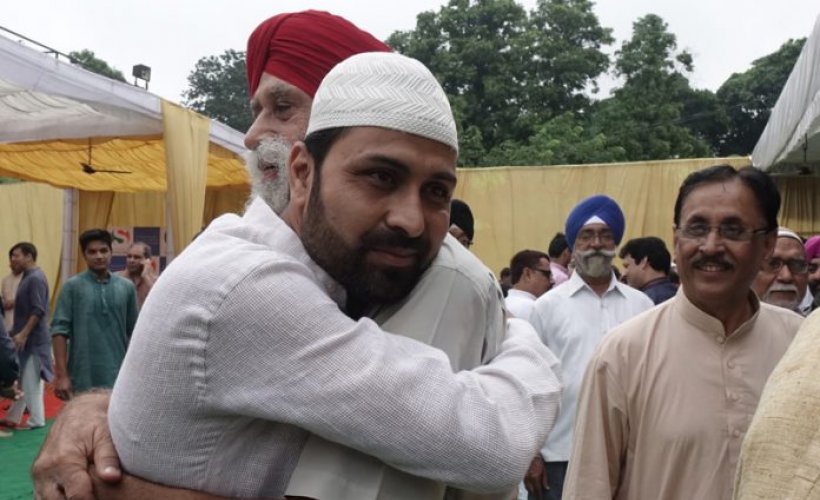
    As New Delhi Chief Minister (CM) Arvind Kejriwal suggests calling the army amid police’s failure to quell violent communal clashes that have so far claimed at least 20 lives and left hundreds of others injured, Gurdwaras are offering help to Muslim families fleeing violence in the Indian capital.

    According to a report in India Times, members of the Sikh community are not only patrolling with their neighbours of the Indian Muslim community to ensure that no one from outside attacks the latter’s homes, but many Gurdwaras — places of assembly and worship for Sikhs — are also giving shelter to the Muslims of riot-infested Delhi.

    Novelist Nilanjana Roy tweeted that she had come across news from one part of the city wherein a Gurdwara had opened its doors to anyone who needs shelter.

    https://twitter.com/nilanjanaroy/status/1232303148766617601

    Many other people shared similar stories.

    DELHI RIOTS:

    The riots — clashes between anti and pro Citizens Amendment Act (CAA) groups, which soon took a communal colour — that began earlier this week, are the worst Delhi has witnessed in recent years.

    The controversial citizenship law has been deemed discriminatory toward Muslims, against which the Muslim minority community of India has been staging protests across the country since December last year.

    With Hindu supremacist mobs running rampage in New Delhi earlier this week, things escalated quickly.

    Violence broke out in three Muslim-majority areas in north-east Delhi on Sunday and has continued since. Protesters are split along religious lines, and each side blames the other for starting the clashes.

    But the violence has been linked to a Bharatiya Janata Party (BJP) leader, Kapil Mishra, who had threatened a group of protesters staging a sit-in against the CAA over the weekend, telling them that they would be forcibly evicted once United States (US) President Donald Trump left India.

    It merits a mention that Trump had been in the country on a two-day maiden visit. When asked about the violence during a press briefing, Trump evaded the issue, saying the incident was “up to India” to handle.

  • Pakistan declared world’s most affordable country to live in

    Pakistan has been declared the world’s most affordable country to live in, while Bangladesh is the most expensive country in South Asia and Switzerland the most expensive in the world.

    CEOWORLD — one of the world’s leading business magazines for high-level executive professionals and business leaders — has declared Pakistan the world’s most affordable country to live in, followed by Afghanistan, India, Syria, Uzbekistan, Kyrgyzstan and Tunisia, Dhaka Tribune reported.

    Source: CEOWORLD

    Meanwhile, European countries were prominent on the list of most expensive ones. Of the top 20 nations, nine were in Europe, five in Asia, one in North America and Africa each, two in the Caribbean and two in Oceania. 

    Norway ranks second in the list of the world’s most expensive countries to live in, followed by Iceland, Japan, Denmark, Bahamas, Luxembourg, Israel, Singapore and South Korea.

    A little further down in the list, there is the United States (US) at the 20th position, the United Kingdom (UK) at 27th, Saudi Arabia at 57th and Russia at 82nd.

    The rankings are based on five major metrics — cost of living, rent, groceries, eating out and purchasing power. To identify the world’s most and least expensive countries to live in, the magazine collected and reviewed data from dozens of studies, numbers of consumer price index, cost of living index and numerous national and international media reports. 

    The data was then compiled into an index, using the notoriously expensive city of New York City (NYC) as a benchmark. New York was given an index score of 100. So a country with a score higher than 100 is more expensive than New York, while below signals less expensive.

  • ‘Women participation in economic activities on the rise in Pakistan,’ says IMF

    IMF’s new report “Women in the Labour force: The role of fiscal policies” highlights an average of 2pc rise of the female workforce in Pakistan and 1pc decrease in India, DAWN reported.

    According to the IMF’s staff report, women in most countries do not have the same opportunities to participate in economic activities as men have. This gender inequality has reduced to a good extent, but the average of female labour participation is below the male rate.

    Globally, about on-quarter of countries experienced a decline in female force participation. Countries such as India and Sri Lanka facing an average annual decrease of one per cent between 1990 and 2018, whereas Pakistan, Peru and Spain experienced an average annual increase of 2pc.

    READ: Want to know how much money the PSL winning team will take home?

    The report also says “Many countries have adopted fiscal policy measures to promote gender equality since the mid-1980s. Countries use tax and expenditure policies to address gender inequality and the advancement of women in areas such as education and economic empowerment. Fruthermore, in 2018, at least 80 countries have used gender-responsive fiscal policy interventions to reduce gender inequality.

    READ: Kaala Jadu: Jemima shares poster of herself, PM Imran and Bushra Bibi

    Women’s economic empowerment is the key to growth and productivity. Greater participation of women in the labour force also brings greater diversity that can foster new ideas for production and management, boosting aggregate productivity.

  • Muslim couple gets married at protest against India citizenship law

    Muslim couple gets married at protest against India citizenship law

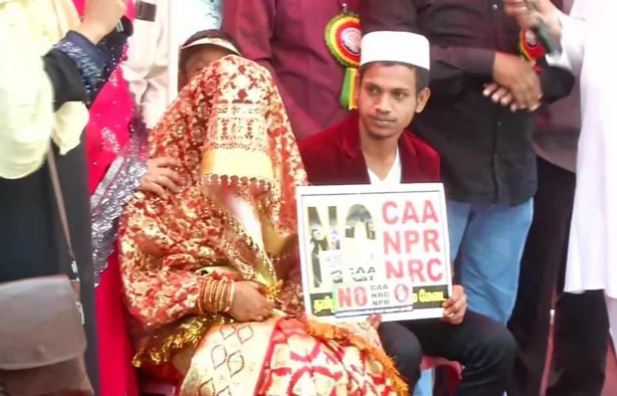
    Amidst the current protests in India, a Muslim couple tied the knot at the site of anti-CAA protest in Chennai on Monday, February 17.

    The couple had a unique wedding ceremony while holding anti-Citizenship Amendment Act (CAA) placards in hands that read: “No CAA, NPR, NRC.”

    Sumayya and Shahin Shah decided to get married at the site of a protest in the capital of Tamil Nadu. Their marriage was solemnized by an Imam among the crowd of protesters. Sumayya wore a bright red saree with heavy zari work while the groom, Shahin Shah, wore a maroon jacket.

    The couple received a warm welcome from the crowd and they received gifts and cash presents.

    https://www.youtube.com/watch?v=ZXXZcV0lkYM&feature=emb_title

    The Citizenship Amendment Act, 2019 was passed by the Parliament of India on 11 December 2019 and has caused an uproar in India and sparked protests across the country.

    Under the CAA 2019, religious minorities that have taken refuge in India till 2014 are eligible for citizenship. However, the Citizenship Amendment Bill (CAB 2019) makes it a point to exclude Muslims. The law requires Indian Muslims to prove their origins in India otherwise they stand to lose their citizenship.

  • ‘India offered to evacuate Pakistani students from coronavirus-hit China’

    ‘India offered to evacuate Pakistani students from coronavirus-hit China’

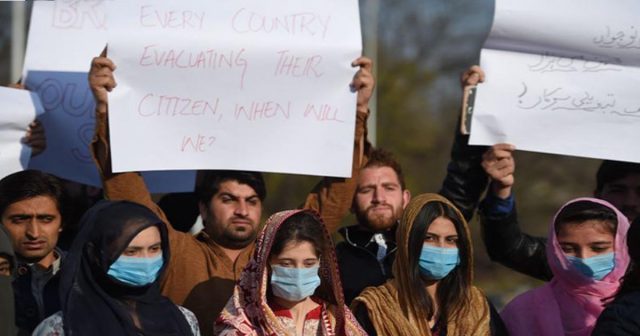
    India had offered to evacuate Pakistani students from China’s Wuhan — the epicentre of deadly coronavirus –, Minister of External Affairs S Jaishankar told Rajya Sabha [Upper House of Indian Parliament], India Today reported.

    According to reports, replying to a question posed by Bharatiya Janata Party (BJP)-nominated lawmaker Rupa Ganguly, S Jaishankar told the house that before the two Air India flights were sent in, India had offered ‘bring back all the people in our neighbourhood’.

    “At the time when two flights were going, we had told all the students and the larger community in Wuhan that we were prepared not only to bring back our own people but bring back all the people in our neighbourhood who would like to come back,” Jaishankar said.

    “This was an offer which was made to all our neighbours, but of them, seven nationals of Maldives chose to avail the offer. But the offer was made to everybody,” the minister clarified.

    Last week, two Air India flights had brought back 638 Indian nationals and seven nationals of Maldives. 80 Indian students left behind in Wuhan

    The minister of external affairs informed the fouse that despite an evacuation effort, 80 Indians — including 10 who were barred from boarding the evacuation flight as they showed symptoms of coronavirus — have remained back in Wuhan.

    Jaishankar said that the 70 Indians chose not to be evacuated, but the Indian Embassy is in constant touch with them all. “I want to assure the house and the families of those in Wuhan that the embassy is in touch with all students and is regularly monitoring their welfare,” he said.

    The minister also applauded the efforts of two embassy officials who risked their lives and traveled from Beijing to Wuhan to help in evacuation efforts.

  • Five-year-old raped inside US Embassy compound in Delhi

    Five-year-old raped inside US Embassy compound in Delhi

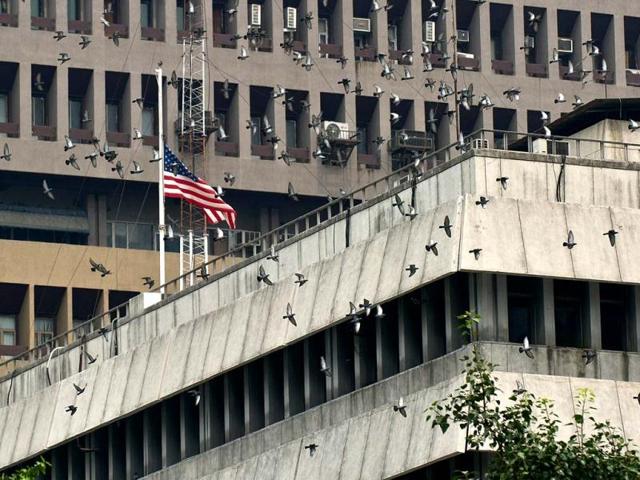
    A man has been arrested for allegedly raping a minor girl in the grounds of the United States (US) Embassy in New Delhi, CNN quoted police sources as saying.

    According to reports, the girl was playing outside the embassy’s staff quarters before she “was lured and raped by a neighbour”. Reports quoted Delhi Police Deputy Commissioner Eish Singhal as saying that the girl, who is the daughter of a housekeeper employed by the embassy, later identified the 25-year-old male suspect, who has been arrested and charged with rape.

    “She was able to identify him point blank and there is no doubt over this,” Singhal said, adding that the suspect remains in custody.

    The incident has appalled embassy staff. In a statement to CNN, a US Embassy spokesperson said they were deeply disturbed by the alleged misconduct. “We promptly took action when we were informed of the allegation, and brought this matter to the attention of the police. Of course, we are cooperating fully with them,” the spokesperson said.

    An investigation has been launched, and a court date is yet to be set. In the wake of the brutal 2012 Delhi gang rape — which brought worldwide condemnation and still haunts the collective memory of women in India’s capital –, lawmakers passed a series of amendments to the existing rape laws.

    The amended law lengthened prison terms and introduced the death penalty in cases in which the victim is younger than 12 years of age.

  • Indian police mistake wedding for anti-Modi protest, uproot tents

    Indian police mistake wedding for anti-Modi protest, uproot tents

    As anti-Citizens Amendment Act (CAA) and National Register of Citizens (NRC) protests against Prime Minister (PM) Narendra Modi’s government continue across India, Uttar Pradesh (UP) police have disrupted a wedding after mistaking it for a sit-in.

    According to India Times, UP police on Saturday uprooted a tent meant for a wedding in the Mohalla Mirdagan area of Bijnor city. The wedding was scheduled for February 4 and the bride’s father had set up the tent in a vacant land.

    All gifts and other items for the bride were kept in the tent. Police arrived on the spot and assuming that the tent was set up for anti-CAA/NRC protest without permission, started uprooting it. However, after realising the truth, they asked the family to reinstall the tent, reportedly not even helping them.

    The anti-CAA and NRC protests are ongoing protests taking place across India and overseas against the CAA that was enacted into law on December 12, 2019, and the proposals to enact a nationwide NRC. The protests began in Assam, Delhi, Meghalaya, Arunachal Pradesh and Tripura on December 4, and within a few days, spread across India, though the concerns of the protesters vary.

  • Woke students in ‘secular’ India

    The BJP coming to power has only removed the lid from the internal realities of the unsuccessful story of Indian democracy.

    Unlike Pakistan, where student unions were banned during the military rule of Ziaul Haq, in India, student unions on campuses have successfully sustained till date. In the past few years, Jawaharlal Nehru University (JNU) has been mentioned as a refrain in discussions on student politics — particularly in terms of burgeoning progressive politics — the spillover effect of which has reached not only Pakistan, but major parts of the globe as a good omen for the oppressed.

    The student union of JNU, better known as JNUSU, was recognised as a symbol of resistance, the voice of voiceless and a representative of the marginalised and vulnerable communities within India. JNUSU gained popularity across the world after its former president Kanhaiya Kumar was arrested from campus in 2016 due to his association with a protest gathering held at JNU.

    The protest was organised by some students of the varsity on February 9, 2016, in order to commemorate the judicial killing of Afzal Guru (hanged Feb 9, 2013) and also to question the violation of human rights by the Indian state in Indian occupied Kashmir (IoK).

    Consequently, the fascist Bharatiya Janata Party (BJP) government pressed charges against the students who had organised the protest, as well as Kanhaiya, who had addressed the protest gathering. Kanhaiya, Umar Khalid and Anirban Bhattacharya were the three students who were jailed following the registration of an FIR [First Information Report] against them.

    With already popular Azadi slogans taking a different tone following Kanhaiya’s arrest, students – especially Kashmiri — took a tone that went on to prove their courage at the forefront of the struggle against Indian Prime Minister (PM) Narendra Modi’s fascist regime.

    The recent wave of mass-mobilisation in India started in the aftermath of the controversial Citizenship Amendment Act (CAA) that grants the government the right to declare people, unable to produce citizenship documents, as “illegal immigrants” and allows any declared illegal immigrant, except Muslims, to become a citizen of India on the grounds of persecution in neighbouring Muslim states.

    CAA’s implementation, however, comes after forming a National Register of Citizens (NRC). NRC has been implemented in the Indian state of Assam where people, who have not made it to the register, have either already been detained in camps or are facing the threat of landing in the same since there is no way to prove which countries do these allegedly illegal immigrants belong to.

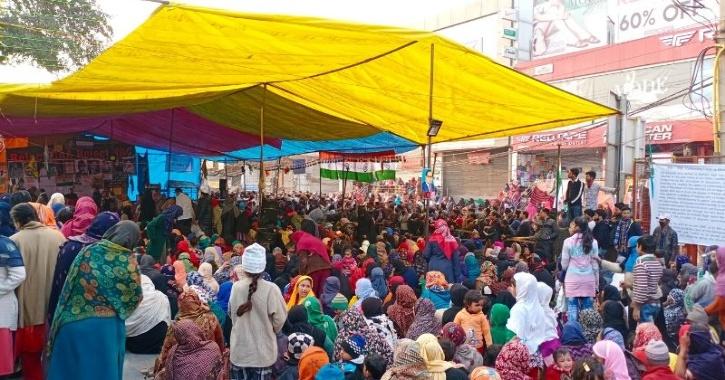
    The massive mass-scale protests in India against the discriminatory CAA law drew much attention after the December 15 protest led by students of Jamia Millia Islamia University in a Muslim locality of New Delhi. With police cracking down on these protesting students by not only baton-charging but also shooting them, and that too on campus, tables started to turn on the Indian state.

    With students of Aligarh Muslim University protesting on campus against the brutality met out to their peers from Jamia Millia Islamia University, a new wave of resistance took over India. Fierce confrontation meted out to the cops, especially by female students, in what turned out to be the defining moment for the anti-CAA movement, as more people, although largely Muslims, joined the protests, and the same still goes on.

    Outside their campuses, students of Jamia Millia and Aligarh University are much more involved in mobilising and organising the ongoing protests. However, they are subsumed by the grandiosity of JNU and its student leadership that has expressed solidarity to Jamia students by joining one of the protests outside JNU.

    Despite a huge communication gap and both Pakistan and India’s coercive forces employed to keep people away from each other, the engagement of student-political activists gives us hope that a broader united front to fight injustice and oppression will someday be built.

    While mass participation of students, youth and religious minorities in the protests against BJP’s plan of constructing a Hindu Rashtra, which according to their publicised map, is extended to Afghanistan, seems insufficient to deal with, it is important, as well as necessary, to demand that the newly-passed legislation by the parliament be rolled back.

    But would it ensure peace and security for Muslims and other marginalised communities like Dalits, who too are at risk after the promulgation of CAA and NRC? Or in other words, does the struggle for safeguarding Indian constitution in itself, guarantee protection to religious minorities?

    Apart from the popular discourse propagated around the Indian constitution that claims it is ‘secular’, the deployment of state apparatus against lower caste people within Hindus and other marginalised and religious minorities, tell a different story, which has become clearer under the BJP. The destitution of religious minorities in terms of poverty, employment, education and above all, political representation, stands in testimony to the fact that they were reduced to ‘second-class citizens’ in the largest democracy of the world even when BJP was not in power.

    The BJP coming to power has only removed the lid from the internal realities of the unsuccessful story of Indian democracy. Therefore, it becomes much more significant for the protesters from Asam to Uttar Pradesh and from Jamia Millia to Shaheen Bagh to consolidate these anti-BJP forces in one political project which possibly would push the current discourse beyond constitutionalism, instead of leaving the burden of saving constitution and secularism on the shoulders of already underprivileged Muslim community of India.

    Amid all the recent political developments in Pakistan and India, there has been a convergence of progressive ideas across the border which is largely manifested in the unconditional solidarity extended by the Progressive Students’ Collective (PSC) among other progressive student organisations in Pakistan to their counterparts in India.

    Despite a huge communication gap and both the states’ coercive forces employed to keep people away from each other, the engagement of student-political activists gives us hope that a broader united front to fight injustice and oppression will someday be built.