Tag: India

  • Indian university to investigate if Faiz’s poem ‘Hum Dekhenge’ is ‘anti-Hindu’

    Indian university to investigate if Faiz’s poem ‘Hum Dekhenge’ is ‘anti-Hindu’

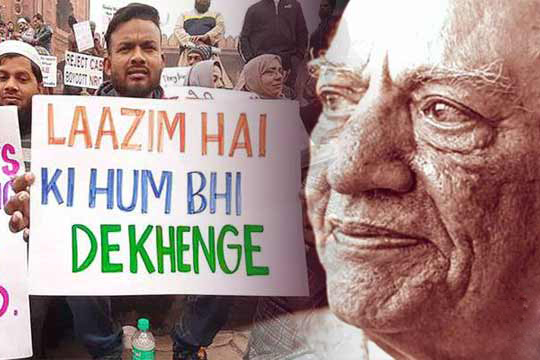
    A university in Indian state of Uttar Pradesh has set up a panel to investigate if Pakistani Marxist, poet, and author Faiz Ahmed Faiz’s iconic poem “Hum Dekhenge” is “anti-Hindu”, Scroll.in reported.

    According to reports, Indian Institute of Technology (IIT) in Kanpur has set up the panel after the poem was recited by students on campus on December 17 during a solidarity march held for their counterparts at Delhi’s Jamia Milia University.

    A police crackdown on the Jamia Milia Islamia campus on December 15 triggered nationwide protests as part of the campaign against passing of the Citizenship Amendment Act (CAA), the ongoing National Population Register (NPR) update exercise and the proposed pan-India National Register of Citizenship (NRC).

    During one such protest, about 300 students of the institute were not allowed to go out of the campus as large gatherings under Section 144 of the Code of Criminal Procedure were banned, the institute’s deputy director, Manindra Agarwal, was quoted as saying.

    A complaint was filed by temporary faculty member Vashimant Sharma and 16 others against the poem. “The written complaint filed by them with the IIT director states that the poem had some wordings that could hurt the sentiments of Hindus,” Agarwal said.

    “A committee of six members was established, headed by me, to investigate the matter. Some students have been questioned, while the others will be questioned after they return to the institution after the holidays.”

    The probe committee will investigate three areas – whether the students defied prohibitory orders, the social media posts they shared ahead of the solidarity march and if the poem of Faiz Ahmad Faiz is “anti-Hindu”.

    ‘HUM DEKHEINGE’:

    The popular revolutionary poem was written by Faiz in 1979 when he was in Honolulu for a writers’ conference.The poem was included in Faiz’s seventh poetry book titled “Mere Dil Mere Musafir” in 1981 and is known for its rendition by singer Iqbal Bano.

    The poem’s beginning deals with conventional themes such as injustice and oppression, then gives way to more overtly religious symbolism. Faiz writes that the idols will be lifted from the Kabah and goes on to describe a revolutionary inversion of power, where the pure-hearted, who were outlawed, or cast out, will be honoured.

    The crowns (of those in power) will be thrown up in the air (alluding to a celebration) and their thrones will be cast low. The final stanza of the poem is the most religious in tone, declaring that the only name (essentially on people’s lips) will that be of Allah and a great revolutionary cry of “I am Truth” will go up and people of faith will rule again.

    In recent times, the poem has become an anthem for rights activitsts taking to streets across the Indian subcontinent.
  • Indo-Pak war odds-on if soldiers are attacked in Kashmir again: report

    Indo-Pak war odds-on if soldiers are attacked in Kashmir again: report

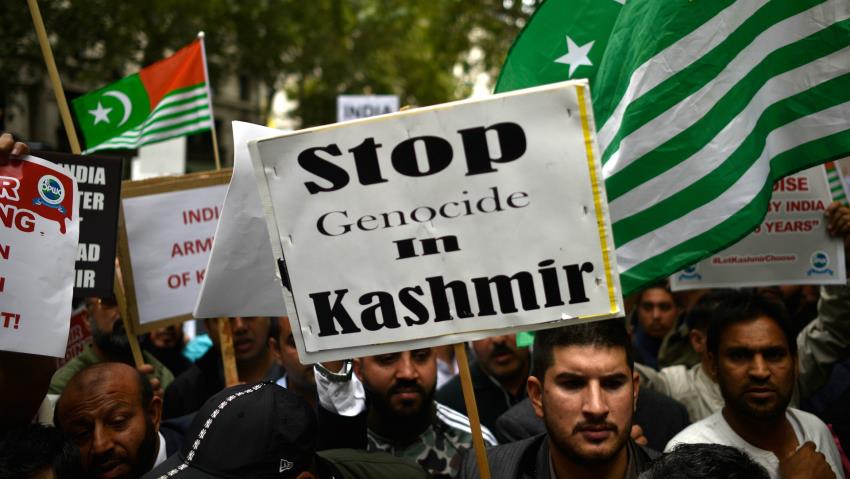
    A transnational non-profit organisation, International Crisis Group, has warned that any militant attack on Indian forces in held Kashmir could set off an escalation between Pakistan and India, saying that pro-freedom militants were lying low in the troubled vallet, but they were still active.

    “India’s heavy-handed military operations in Kashmir over the past few years have inspired a new homegrown generation, whose ranks are likely to swell further after the latest repression,” read its report titled “10 conflicts to watch in 2020”.

    Indian fighter planes had violated Pakistani airspace after a pro-freedom militant attack that killed at least 40 paramilitary soldiers in Pulwama on February 19, 2019. In retaliation, Pakistan had shot down two Indian jets over Kashmir on Feb 27, and captured an Indian pilot as well. He, however, was released by Prime Minister (PM) Imran Khan’s government as a “gesture of peace”.

    The Crisis Group, which describes itself as “working to prevent wars and shape policies that will build a more peaceful world” , has warned that any Pulwama-like attack on Indian forces in Kashmir would precipitate Indian action against Pakistan.

    “In a worst-case scenario, the two nuclear-armed neighbours could stumble into war,” the report said.

    The Crisis Group asked New Delhi to lift the communication blackout and release political prisoners in the occupied valley, and asked Pakistan to take action against militants allegedly operating from its soil.

    It further urged the international community to push Pakistan and India for talks “before it is too late”.

  • Facebook blocks Radio Pakistan’s live streaming of Indian atrocities in Kashmir

    Facebook blocks Radio Pakistan’s live streaming of Indian atrocities in Kashmir

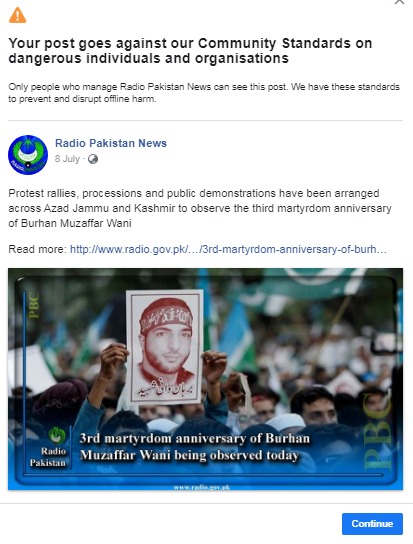
    Facebook has blocked Pakistan Broadcasting Corporation’s (PBC) live streaming of Indian atrocities and military lockdown in Indian occupied Kashmir (IoK), Radio Pakistan reported.

    According to the details, Radio Pakistan (RP) has shared screenshots of warning message from Facebook from back in May and July on its website, saying, “your post goes against our Community Standards on dangerous individuals and organisations.”

    According to the the screenshots shared by RP, the warning was given on posts that displayed the picture of Kashmiri freedom fighter Burhan Muzaffar Wani and in another post that mentioned Zakir Musa — a mujahid commander — in the headline.

    However, Radio Pakistan after the blockage its live streaming from Facebook has said on Monday that it has made “alternate arrangements on YouTube for live streaming for its viewers.”

    It is important to note that RP has been highlighting the voice of the people of IoK and exposing Indian atrocities and gross human rights violations at every major platform including social media.

    In addition to Facebook, the micro-blogging website Twitter had also suspended hundreds of accounts and removed multiple posts from Pakistan that were raising voice against Indian brutalities in Kashmir, reportedly under pressure from India.

    Pakistan Telecommunication Authority (PTA) had earlier approached both social media platforms and submitted complaints against their actions.

  • Saif Ali Khan mocked for being ‘ignorant’ about India’s citizenship bill crisis

    Bollywood bigwigs including the Khans and Kapoors have been a real disappointment as far as raising their voice against India’s controversial Citizenship Amendment Act (CAA) is concerned. The act has sparked nationwide protests resulting in police crackdown and more than a dozen people have lost their lives in the process.

    According to the Act, people from Hindu, Sikh, Buddhist, Jain, Parsi and Christian communities who have come to India till December 31, 2014, from Pakistan, Bangladesh and Afghanistan due to religious persecution there will be given Indian citizenship. The protesters say the legislation was unconstitutional and divisive as it excludes Muslims.

    When Saif Ali Khan was asked about his thoughts on the matter, the actor said that as a citizen he is concerned about the current situation in the country.

    “There are many things that give us a cause for concern, watching and wondering how where it will all end up,” Saif said.

    “It is everybody’s right to protest peacefully and everybody’s right not to,” he continued.

    “I would like the protest to be associated with exactly what I am protesting against. There might be a possibility that I will end up representing a different kind of protest. So I am not sure yet. Until I am sure what I am protesting against and whether it is going to be taken that way, I need to think more,” he added.

    The Nawab of Pataudi further said he trying to understand the situation better and will make up his mind after he is well-informed.

    “There is so much being written in the press, there are so many things that give us concern about what we are reading,” he concluded.

    Unsurprisingly, Twitter had a lot to say on the matter and people mocked Saif for being a confident person on screen and the complete opposite in real life.

    https://twitter.com/frcl99/status/1209971870386266117?s=20

    Even Saif’s Sacred Games co-star Aamir Bashir expressed his frustration and ace director Anurag Kashyap retweeted his tweet.

    While Shaan threw subtle shade by sharing a poster of the movie The Silence of the Lambs.

    On the other hand, several Bollywood celebrities such as Farhan Akhtar, Parineeti Chopra, Anurag Kashyap, Shabana Azmi, Javed Akhtar, Hrithik Roshan and Swara Bhasker among others have voiced their disappointment over the amended Citizenship Act.

  • Indian Muslim student rejects gold medal to protest against citizenship law

    Indian Muslim student rejects gold medal to protest against citizenship law

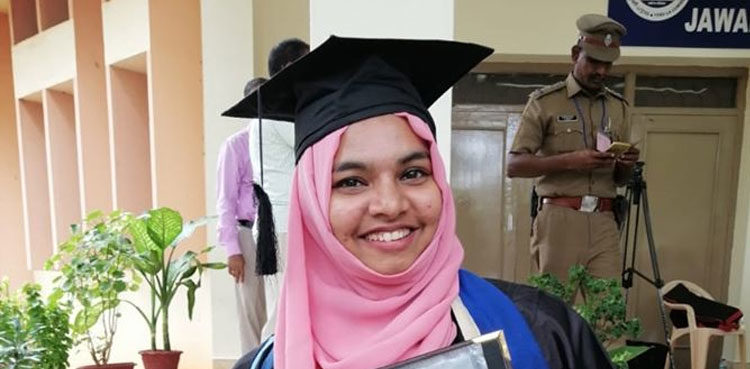
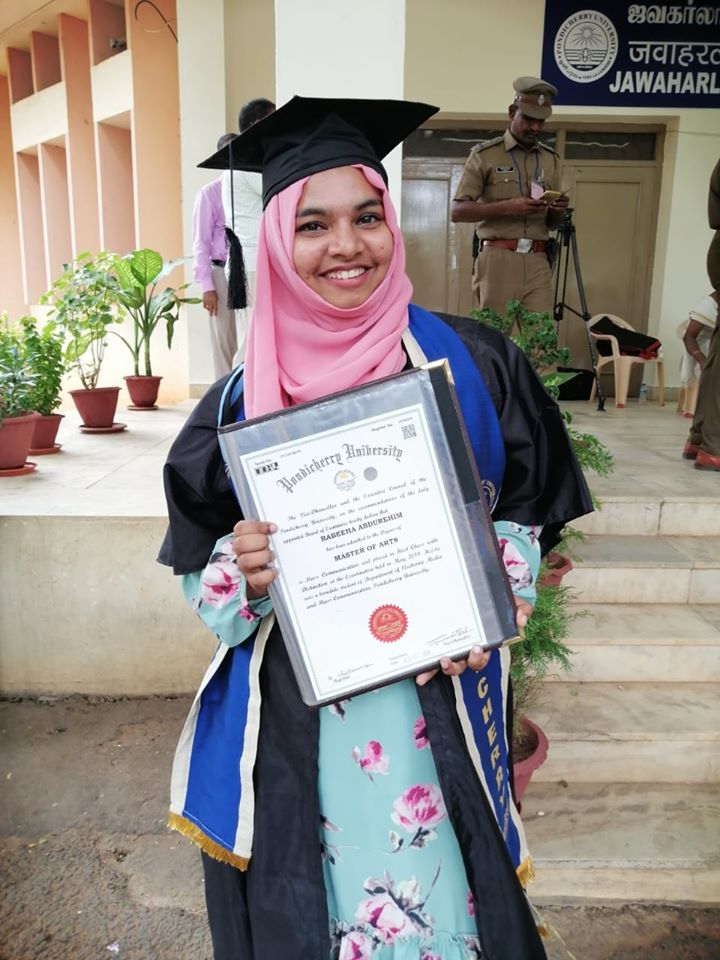
    An Indian Muslim student refused to accept the gold medal at the Pondicherry University to protest against the Citizenship Amendment Act (CAA) which has caused uproar in India and sparked protests across the country.

    Rabeeha Abdurehim, who secured the first position in the post-graduate department of Mass Communication, said she was asked to come out of the hall where the convocation was taking place. The special superintendent of police wanted to speak to the student.

    Rabeeha remarked that the police were worried about her viewpoint on the controversial citizenship law.

    “When I asked the police officers why was I not being allowed to take part in the event, they said they were not sure but the SSP wanted it this way,” she claimed.

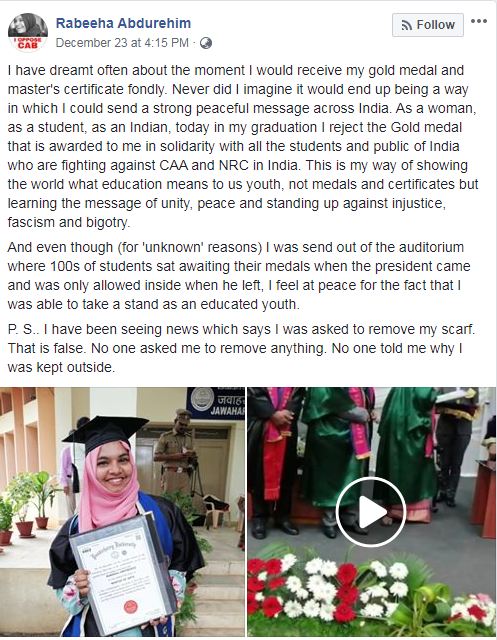
    Taking to social media Rabeeha wrote that while she often dreamt about the moment she would receive a gold medal, “never did I imagine it would end up being in a way in which I could send a strong peaceful message across India.”

    “As a woman, as a student, as an Indian, today in my graduation I reject the Gold medal that is awarded to me in solidarity with all the students and public of India who are fighting against CAA and NRC in India,” she wrote further.

    Under the CAA 2019, religious minorities that have taken refuge in India till 2014 are eligible for citizenship. However, the Citizenship Amendment Bill (CAB 2019) makes it a point to exclude Muslims. The law requires Indian Muslims to prove their origins in India otherwise they stand to lose their citizenship.

  • India decides to pull out troops from occupied Kashmir

    India decides to pull out troops from occupied Kashmir

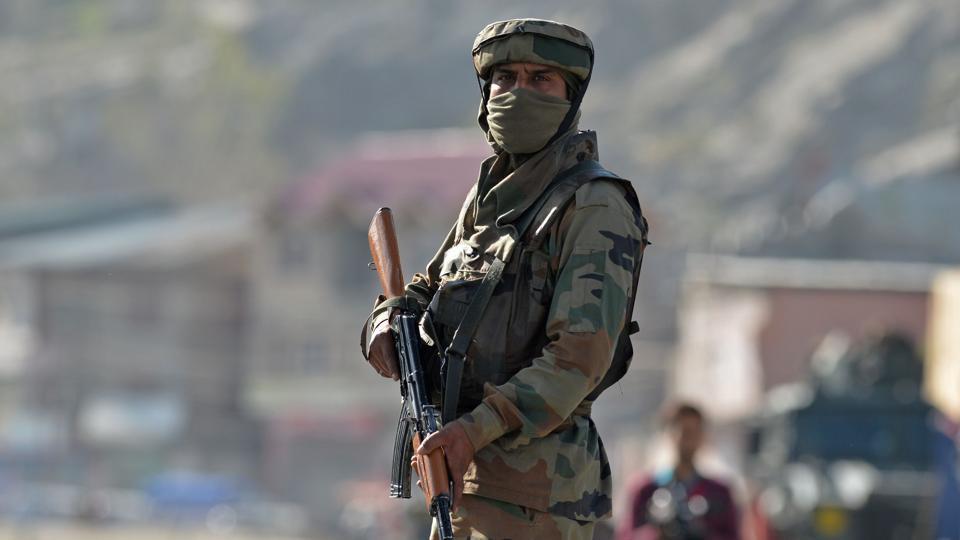
    The Indian government has decided to pull out over 7,000 para-military troops from occupied Kashmir on account of the improvement in law and order situation there and also because the troops were on short-term deployment, Times of India reported.

    According to reports, of the nearly 7,200 troops being called back from the disputed region, 2,400 are from the Central Reserve Police Force (CRPF) and 1,200 each from Border Security Force (BSF) SSB, CISF and ITBP. They were all deployed in the state in view of the government’s decision to abrogate Article 370.

    The development in August had paved way for ethnic cleansing of Muslims in Kashmir, drawing strong reactions from the international community, especially Pakistan, as Kashmiris faced isolation amid curfew.

    As widespread protests continued across the valley, Indian occupying forces had converted it into a garrison by deploying hundreds of thousands of troops and paramilitary personnel in every street, line and by-lane to stop people from staging demonstrations.

    WHAT IS ARTICLE 370?

    Article 370 was the basis of Jammu and Kashmir’s accession to the Indian union at a time when former princely states had the choice to join either Pakistan or India after their independence from the British rule in 1947.

    The article, which came into effect in 1949, exempts Jammu and Kashmir state from the Indian Constitution.

    It allows IoK to make its own laws in all matters except finance, defence, foreign affairs and communications. The article established a separate constitution, a separate flag and denied property rights in the region to the outsiders.

    That means the residents of the state live under different laws from the rest of the country in matters such as property ownership and citizenship.

    WHAT IS ARTICLE 35A?

    Article 35A is a branch of Article 370, which was introduced through a presidential order in 1954 to continue the old provisions of the territory regulations.

    The article permits the local legislature in IoK to define permanent residents of the region. It forbids outsiders from permanently settling, buying land, holding local government jobs or winning education scholarships in the region.

    While Article 35A has remained unchanged, some aspects of Article 370 have been diluted over the decades.

    WHY WERE THEY ABOLISHED?

    The ruling Bharatiya Janata Party (BJP) and its right-wing allies have challenged Article 35A which it calls discriminatory. Earlier this year, a senior BJP leader had hinted that the government was planning to form exclusive Hindu settlements in the region.

    With the special status repealed, people from the rest of India would have the right to acquire property in IoK and settle there permanently.

    Kashmiris fear the move would lead to a demographic transformation of the region from majority-Muslim to majority-Hindu, paving way for Prime Minister (PM) Narendra Modi’s hardliner BJP in the disputed territory.

  • Indian media mistakenly names Atif Aslam’s son as ‘Alhumdulilah’, apologises later

    Indian media mistakenly names Atif Aslam’s son as ‘Alhumdulilah’, apologises later

    Atif Aslam took to social media to announce the arrival of his baby boy with the caption ‘Ladies and gentlemen our new arrival Alhamdulilah. Both mother and baby are fine. Keep us in your prayers and don’t forget to say Mashallah’.

    Atif was thankful to God so he wrote Alhumdulilah. But someone who works in an Indian tabloid surely did not know what the term means.

    And soon people started trolling the post.

    However, the writer accepted the mistake and also corrected it.

    Desi Martini also posted an apology for the mistake.

  • Feroza Aziz is back with another hidden message

    Feroza Aziz is back with another hidden message

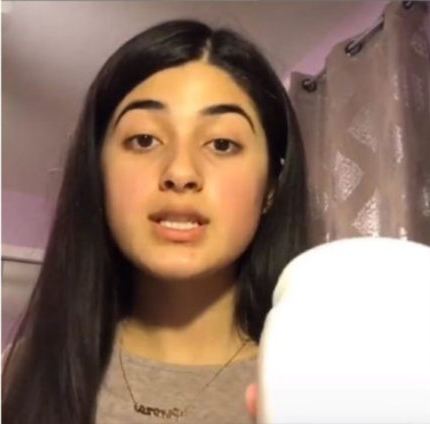
    A video by a beauty vlogger went viral on TikTok. Video of Afghan-American TikToker, Feroza Aziz has a hidden message about the Indian Citizenship Amendment Act (CAA 2109). The video starts with a skincare routine and then Feroza starts talking about Indian CAA that violates human rights.

    According to the Indian government, CAA 2019 is supposed to grant citizenship to religious minorities that have taken refuge in India till 2014. Except for the Citizenship Amendment Bill (CAB 2019) makes it a point to exclude Muslims. The law requires Indian Muslims to prove their origins in India otherwise they will lose their citizenship.

    This 17-year old TikToker made a video with the hidden message about China’s treatment of Xinjiang Uighur Muslims before.

  • ‘Pakistan has got its act together’: Indian cybersecurity praises DG ISPR Gen Asif Ghafoor

    ‘Pakistan has got its act together’: Indian cybersecurity praises DG ISPR Gen Asif Ghafoor

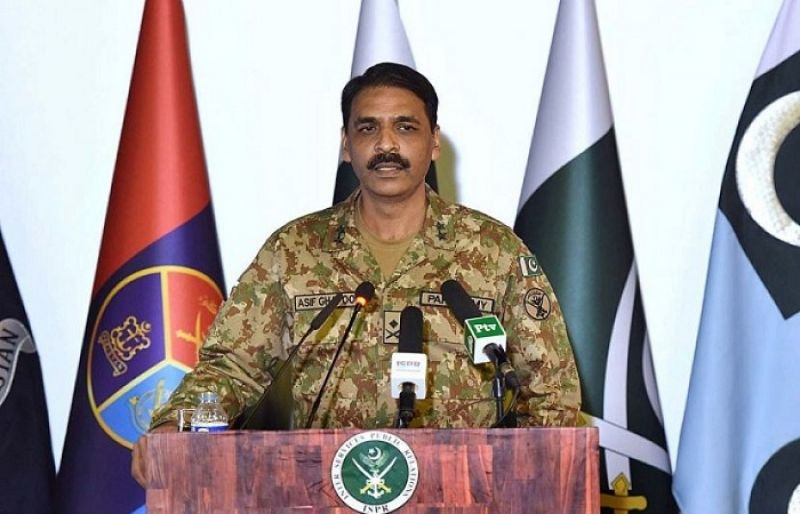
    India’s cybersecurity chief on Saturday stressed the need for a unified public relations command for the three wings of the armed forces to ensure an upper hand in the narrative warfare with Pakistan, which, he opined, has “got its act together” through its Director General Inter Services Public Relations (DG ISPR) Major General Asif Ghafoor.

    According to a report in India Today, National Cyber Security Coordinator Lieutenant General Rajesh Pant (retd) while speaking at a seminar said the three wings of the armed forces have their own public relations officers and “they are going in different ways”.

    “When are we going to have our own equivalent of the DGISPR,” he is reported to have said, adding, “The (Indian armed forces) services have their own PRs and they are going in different ways.”

    Pant remarked that Pakistan has got “its act together” in narrative warfare because of DG ISPR.

    Elaborating further Pant said, “When they (DGISPR) conduct narrative warfare, let’s say in the case of Kashmir, the message they send to Europe is that human rights are being infringed. When they engage with Islamic nations they tell them that Islam is under threat. And what they told Southeast Asia is that there is a regional instability.”

    “So, they seem to have got their act together,” he concluded.

    Meanwhile, General Asif Ghafoor also took to social media to share his reaction.

  • BJP offers Indian citizenship to Musharraf after death sentence

    BJP offers Indian citizenship to Musharraf after death sentence

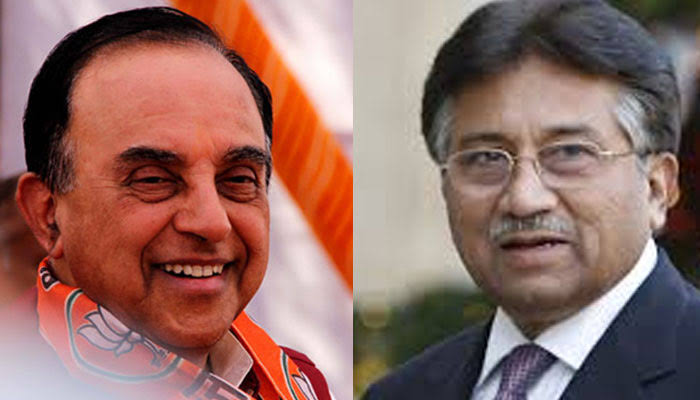
    Amid the ongoing protests across India against the controversial Citizenship Amendment Act (CAA), 2019, a senior leader of the ruling Bharatiya Janata Party (BJP) has tweeted on granting “fast track” citizenship to former Pakistan president Gen (r) Pervez Musharraf, who has been sentenced to death for treason.

    “We can give Musharraf fast track citizenship since he is from Daryaganj and suffering persecution. All self-acknowledged descendants of Hindus are qualified in a new CAA to come,” Subramanian Swamy tweeted Thursday.

    On Tuesday, a special court in Pakistan had sentenced the former military ruler to death in the long-drawn high treason case against him.

    Meanwhile, for the past one week, widespread protests are taking place across India over the newly enacted CAA that provides citizenship to Hindus, Sikhs, Buddhists, Jains, Parsis and Christians who face religious persecution in Pakistan, Bangladesh, and Afghanistan and arrived before December 31, 2014.

    The new law has been deemed anti-Muslim for being discriminatory.