Tag: Israel

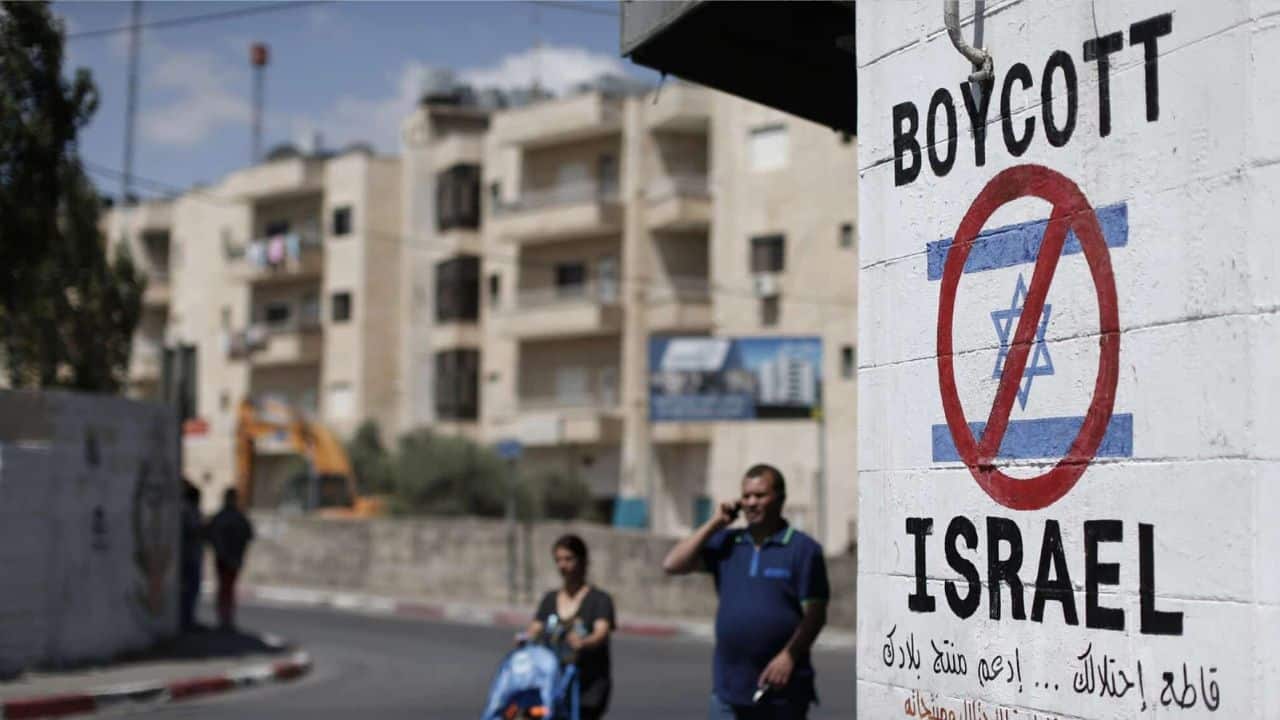
  • New survey: Large number of Pakistanis boycotting pro-Israel brands

    New survey: Large number of Pakistanis boycotting pro-Israel brands

    People across the world have been calling for a boycott of brands and companies affiliated with Israel as the onslaught on Gaza continues.

    The purpose of boycotting the Israel-affiliated brands is to economically hurt its government that is committing what many experts have now termed a genocide.

    Pulse Consultant conducted a survey to deduce the response of Pakistanis towards the boycott — to judge how many are willing to stop buying such products.

    Titled the ‘Consumer Sentiments Sway Towards Boycott’, the survey revealed that eight out of 10 respondents (83%) in the top 12 cities of Pakistan “agreed with the appeal of boycotting brands of those companies who are allegedly supporting the occupied army”.

    Amongst those who agreed to boycott, 79% claimed that they did it. Additionally, the females (85%) ratio is higher than males (78%).

    The survey is based on more than 1200 respondents, both genders, with age groups of 16-55+.

    The interviews were conducted through Computer Assisted Telephonic facility, from November 5th to 11th.

  • Three Arab countries refuse to cut off economic ties with Israel

    Three Arab countries refuse to cut off economic ties with Israel

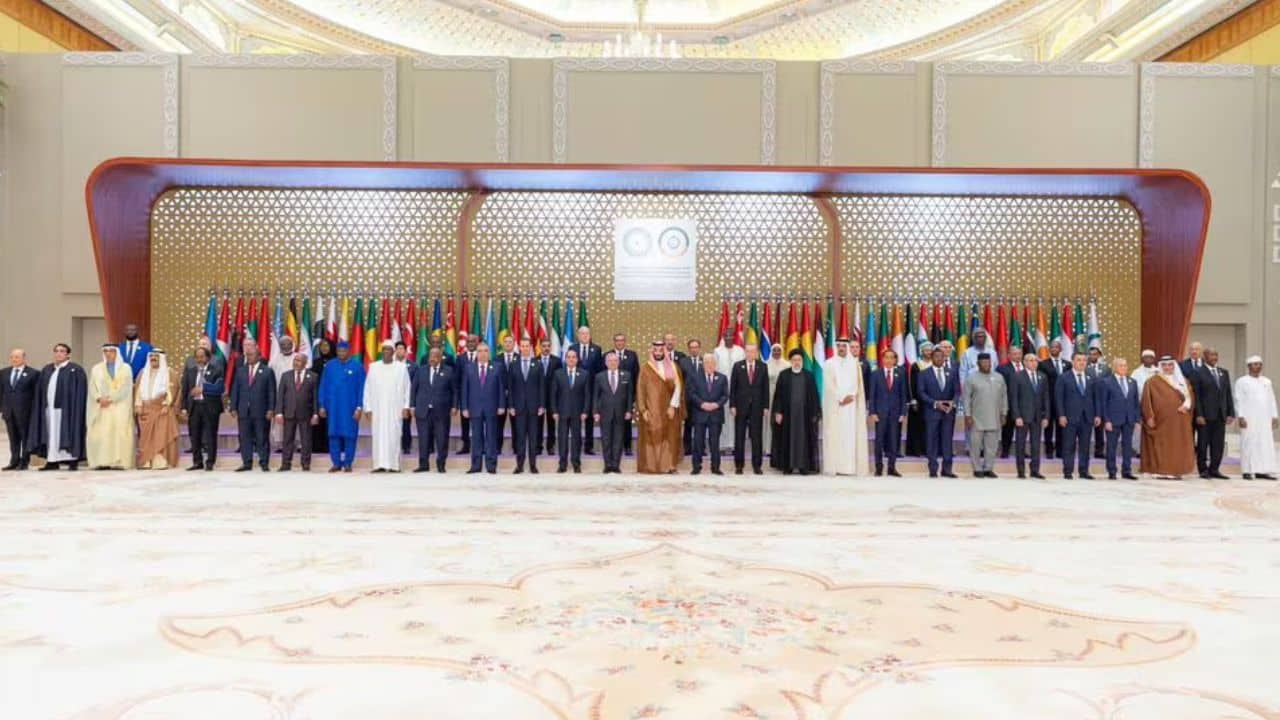
    Saudi Arabia hosted an Arab-Islamic summit on Saturday, calling to end Israeli attacks on Gaza and rejecting the justification of Israel’s actions against Palestinians as self-defence.

    The summit also asserted that Israel end the siege of Gaza and allow humanitarian aid into the enclave, ceasing arms exports to Israel.

    It further insisted that the United Nations Security Council adopt “a decisive and binding resolution” to halt Israel’s “aggression” and demanded that the International Criminal Court probe “war crimes and crimes against humanity that Israel is committing” in the Palestinian territories.

    Crown Prince Mohammed bin Salman stated that Saudi Arabia “confirms that it holds the occupation (Israeli) authorities responsible for the crimes committed against the Palestinian people.”

    “We are certain that the only way to guarantee security, peace and stability in the region is to end the occupation, siege and the settlements,” he added.

    A number of countries, including Algeria and Lebanon, suggested that the attacks on Gaza be responded by disruption of oil supply to Israel and its allies in addition to cutting off economic and diplomatic ties that some Arab League nations have with Israel.

    However, at least three countries rejected the proposal, according to the diplomats who spoke on condition of anonymity, reports Dawn.

    These countries included the United Arab Emirates and Bahrain, both of whom normalised ties with Israel in 2020.

    Syrian President Bashar al-Assad remarked that without any stern measures against Israel, the summit would not be effective.


    “If we do not have real tools for pressure, then any step we take or speech we give will have no meaning,” said Assad, who rejoined the Arab fold this year after a long conflict over civil war in his country.

  • France’s Macron calls for ceasefire

    France’s Macron calls for ceasefire

    French President Emmanuel Macron has become the first Western leader to call on Israel to cease attacks on Gaza and killing civilians.

    In an interview with the BBC, Macron said, “These babies, these ladies, these old people are bombed and killed,” he said. “So there is no reason for that,” he added. “So we do urge Israel to stop,” he added

    He stressed that France “clearly condemns” the “terrorist” actions of Hamas and recognises Israel’s right to protect itself, however, “we do urge them to stop this bombing” in Gaza.

    “I hope they will,” the French president said when asked if he wanted other leaders – including in the United States and Britain – to join his calls for a ceasefire.

    Israeli Prime Minister Benjamin Netanyahu responded to Macron’s comments with a swift rebuke, asserting that world leaders should condemn Hamas, not Israel.

    “These crimes that Hamas [is] committing today in Gaza will be committed tomorrow in Paris, New York and anywhere in the world,” Netanyahu said.

    Referring to the humanitarian conference on Gaza held in Paris, Macron said that all governments and agencies present at that summit had a clear conclusion that, “there is no other solution than first a humanitarian pause, going to a ceasefire to protect all civilians having nothing to do with terrorists”.

    Macron also remarked that “De facto – today, civilians are bombed – de facto. These babies, these ladies, these old people are bombed and killed. So there is no reason for that and no legitimacy. So we do urge Israel to stop,” he said.

  • More than 50 per cent of housing units damaged: What we know about day 35

    More than 50 per cent of housing units damaged: What we know about day 35

    Tens of thousands flee northern Gaza on Thursday

    The UN’s humanitarian office’s (OCHA) reported that more than 50,000 people fled Northern Gaza towards the south whereas in the north, hundreds of thousands are struggling to survive with minimal amounts of water and food.

    The UN agency for Palestinian refugees (UNRWA) has opened two shelters and is now hosting 582,000 displaced Palestinians in 92 facilities in the south amidst overcrowdedness.

    Israel does not ‘seek to govern Gaza’

    Israeli Prime Minister Benjamin Netanyahu gave an interview to Fox News in which he said that the Israeli army will proceed with its offensive in Gaza until Hamas is “eradicated”.

    “Nothing will stop that,” he added.

    He also asserted that there will be no ceasefire unless the hostages held in Gaza are freed. Instead, he announced four-hour “pauses” in fighting in Gaza.

    “The fighting continues against the Hamas enemy,” he said. “But in specific locations, for a given period of a few hours here, a few hours there, we want to facilitate the safe passage of civilians away from the zone of fighting.”

    Human rights groups, however, have asserted that the “pauses” are not enough, and that an immediate ceasefire for humanitarian aid is the need of the hour.

    243 more Palestinians killed in Gaza in 24-hour period

    The UN humanitarian affairs office reported that two Israeli soldiers were killed in Gaza between Wednesday and Thursday afternoon in addition to 243 Palestinians.

    More than 50 per cent of housing units wrecked

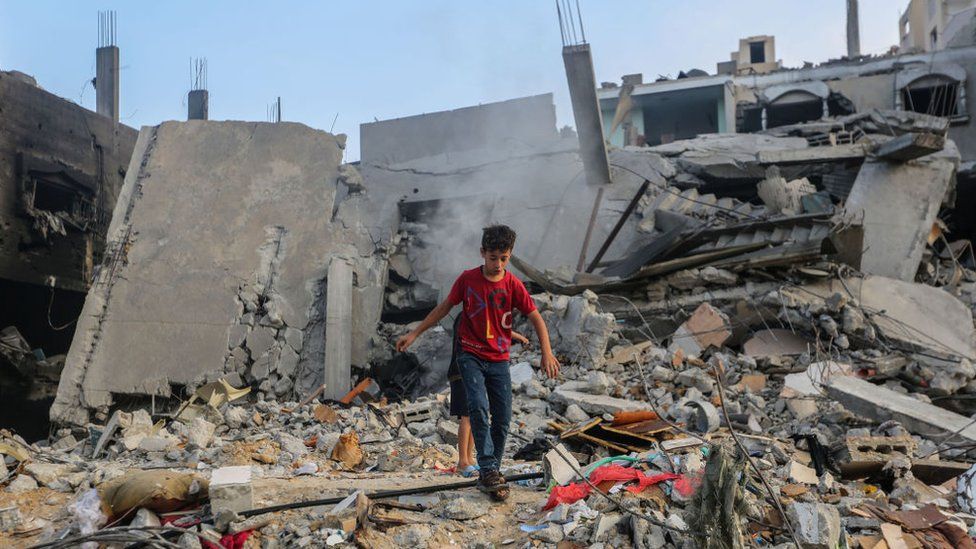
    The media office of Gaza has revealed that Israeli attacks have led to the destruction of more than 50 per cent of housing units across Gaza — around 40,000 housing units.

    Moreover, about 32,000 tons of explosives have dropped since October 7.

    Al Jazeera reports that according to the government media, the “estimated preliminary losses in the housing sector and infrastructure” are approximately $2bn each.

    War’s effect on Palestinian economy

    The UN Development Program has released a report revealing that as a month has passed since Israel began its attacks on Gaza, Palestinian gross domestic product (GDP) was expected to have declined by about 4.2 percent in contrast to pre-war estimates for 2023 — a loss of about $857m.

    It has been estimated that if the war continues for another month, the loss would increase to 8.4 percent of GDP, or $1.7bn whereas in third month it would rise to 12.2 per cent of GDP, or $2.5bn.

    Additionally, around 390,000 jobs have been lost — 182,000 in Gaza and 208,000 in the occupied West Bank.

    Poverty is also expected to rise 20-45 percent, depending on the duration of the war.

    Credits: Al Jazeera

  • Why the mass killings and exodus of Gazans from the North to the South is being called the second Nakba

    Why the mass killings and exodus of Gazans from the North to the South is being called the second Nakba

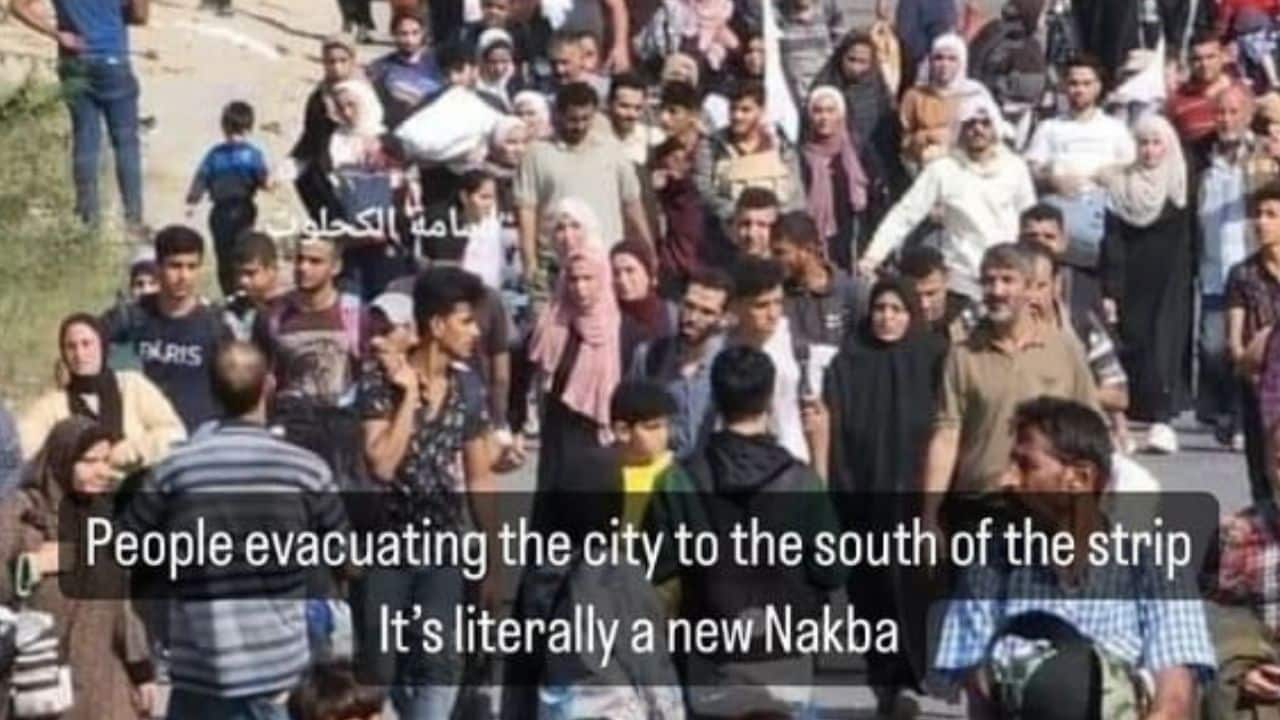
    On Wednesday, Motaz Azaiza, one of the journalists sharing details of Israeli atrocities in Gaza, shared a picture of Gazans walking on a highway in a long line. “People evacuating the city to the south of the strip. It’s literally a new Nakba.”

    Nakba is the most momentous event in all of Palestinian history, especially the history of the last century with Israelis. It literally means “catastrophe” and refers to the ethnic cleansing of Palestinians by the Israelis in 1948. It has been 75 years now that zionist forces took 78 percent of the historic land of Palestine and killed about 15,000 Palestinians in a series of 70 massacres. 7,50,000 Palestinians out of 1.9 million were made refugees in their own land as Israel established a Jewish majority state, fulfilling their Zionist motives.

    The official commemoration of this expulsion and ethnic cleansing by Palestinians around the world was done on May 15, 1948, but the facts reveal more than half of the displacement was already done by then.

    Since then, there have been many Arab-Israeli wars and many attempts to displace Palestinians. Israel, originally given 55 percent of the land by the UN, now owns 85 percent of it. However, it openly wishes to have control over all of it. In his address to the UN in September, Benjamin Netanyahu displayed two maps that showed the occupied West Bank, East Jerusalem, and the Gaza Strip as part of Israel. The repeated calls to move to the South after October 7, is actually more than revenge.

    In one of the videos posted by Motaz, it can be seen that tens of thousands of Palestinians are moving to the South- in front of the Israeli army- raising their hands to show that they are unarmed. In a number of incidents, these caravans have been bombed too.


    This has been confirmed as the Israeli government claims that some 50,000 people have fled Northern Gaza to the South.

    On the other hand, there are hundreds of thousands of people who are not obeying these orders because they believe there is no place safe from Israel’s bombings and that they would rather die at home.

    Palestinian journalist Ahmed Abu Artema in his message to The News International has already called for the world to take action as he firmly thinks “This is the second Nakba”.

  • Saudi Arabia will not use oil as a weapon to achieve ceasefire in Gaza

    Saudi Arabia will not use oil as a weapon to achieve ceasefire in Gaza

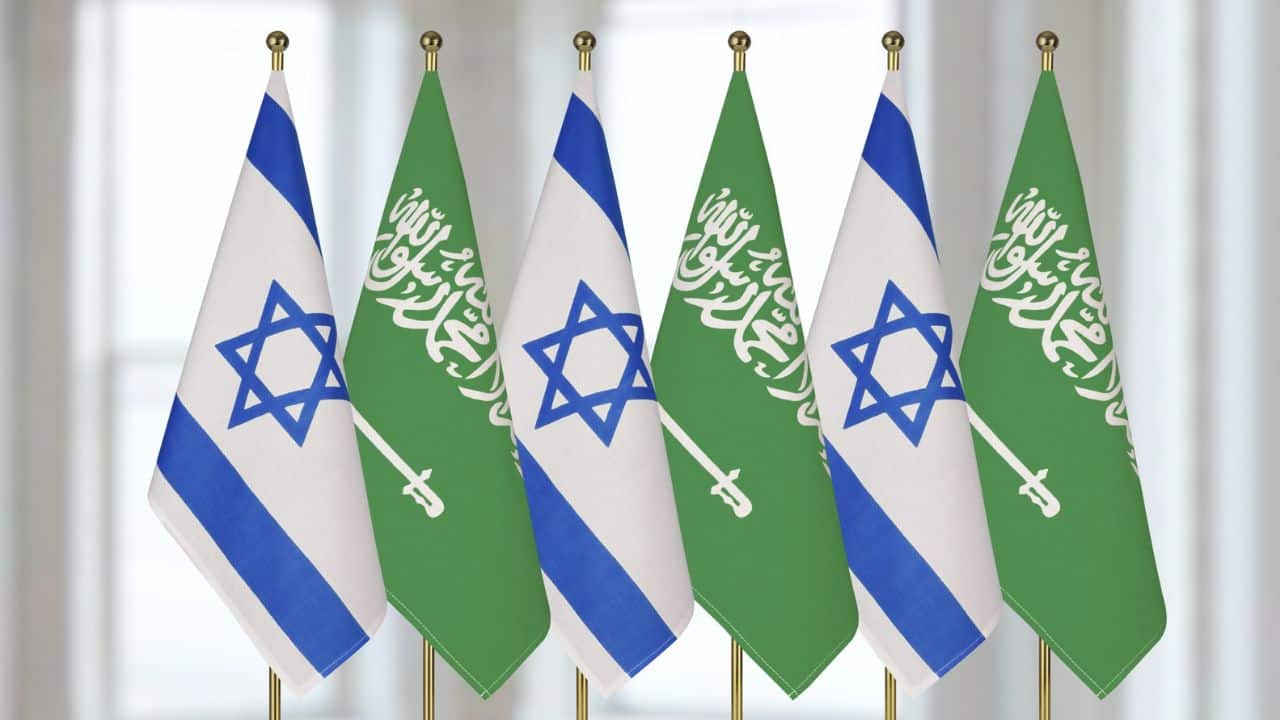
    Right before the October 7 attacks by Hamas on Israel followed by Israel’s declaration of war against the Palestinians resulting in a death toll of 10,5000+, Saudi Arabia and Israel were steering towards the establishment of ties despite their conflict of views over the Palestine issue.

    Saudi Crown Prince Mohammad bin Salman (MbS) reportedly asked the US for “security guarantees and access to civilian nuclear technology and advanced weapons in exchange for a deal.”

    Moreover, Saudi diplomats asserted that Israel must concur with the establishment of a Palestinian state as defined in the 2002 Saudi Peace Initiative. And while this particular demand was rejected by Israeli Prime Minister Benjamin Netanyahu and Jewish ministers in his government, a deal was almost at hand between the two countries.

    However, after October 7, people in support of Palestine across the world, particularly the Muslim world, have demanded from Saudi Arabia to take a stand against the atrocities committed by Israel on Palestinian soil — to use their power to put an end to the attacks.

    However, their concerns seem to have fallen on deaf ears.

    The Saudi Minister of Investment, Khalid bin Abdulaziz al-Falih, has remarked that the Kingdom is still willing to consider normalising relations with Israel, depending on a peaceful solution to the Palestinian issue.

    During a discussion session at the Bloomberg New Economy Forum held in Singapore, Falih responded to a question in regard to normalisation of ties between the two countries: “This matter was on the table, and it is still on the table, and it is clear that the recent withdrawal (from the talks) explains why Saudi Arabia is so determined to make a solution to the Palestinian conflict part of broader normalisation in [West Asia].”

    When asked if Saudi Arabia would use economic devices like oil to push for a ceasefire in the Gaza Strip, he reportedly laughed and replied: “This is not on the table today. Saudi Arabia is trying to achieve peace through talks that seek peace.”

    Falih also offered details of the three summits that Saudi Arabia is expected to host in the coming days which will be attended by Arab, African and Islamic countries, an effort to promote a “peaceful solution to the Israeli-Palestinian conflict”.

    In 1973, Saudi Arabia imposed an oil embargo on the United States and other countries for their support of Israel in the Yom Kippur War against Egypt and Syria.

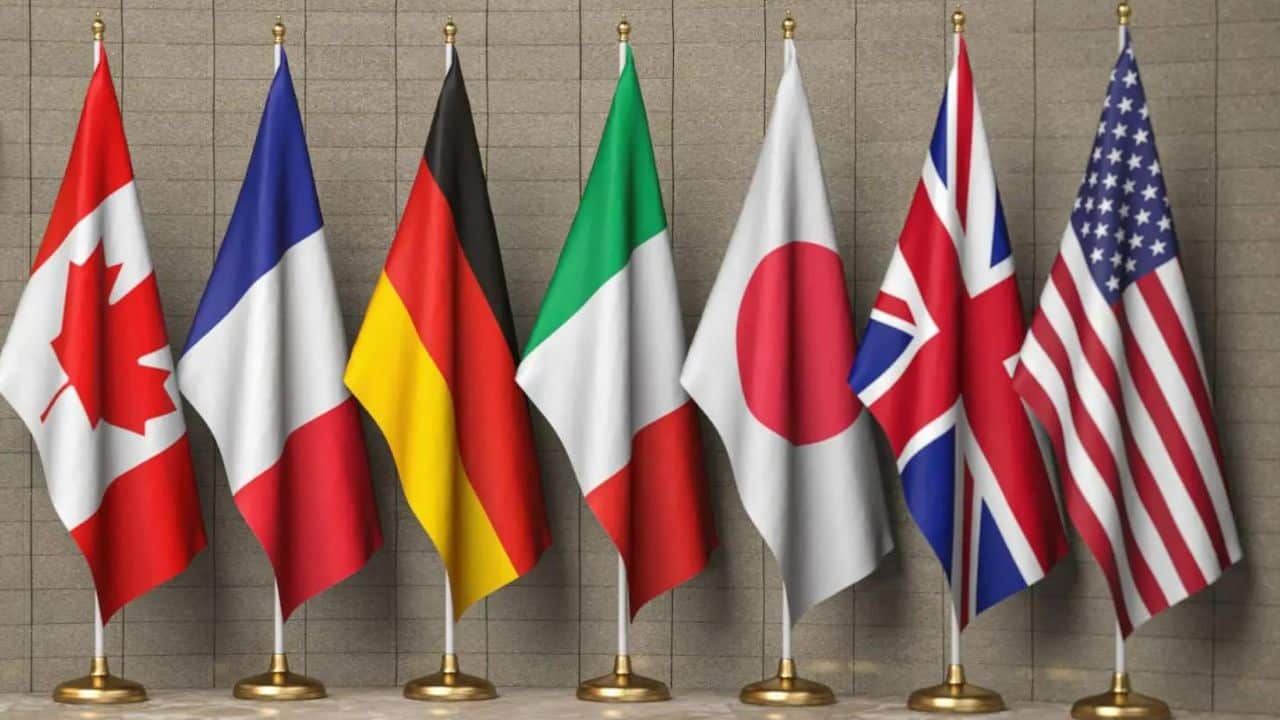
  • G7 backs ‘humanitarian pauses’ in Gaza, reaffirms Ukraine support

    G7 backs ‘humanitarian pauses’ in Gaza, reaffirms Ukraine support

    G7 foreign ministers said Wednesday that they supported “humanitarian pauses and corridors” in the Hamas-Israel war but refrained from calling for a ceasefire.

    The group also said after talks in Japan that their support for Ukraine in its war with Russia “will never waver” while calling on China not to support Moscow in the conflict.

    “We stress the need for urgent action to address the deteriorating humanitarian crisis in Gaza… We support humanitarian pauses and corridors to facilitate urgently needed assistance, civilian movement, and the release of hostages,” a joint statement said.

    The ministers also “emphasize Israel’s right to defend itself and its people in accordance with international law as it seeks to prevent a recurrence” of the Hamas attacks on Israel on October 7.

    It added: “We call on Iran to refrain from providing support for Hamas and taking further actions that destabilize the Middle East, including support for Lebanese Hezbollah and other non-state actors, and to use its influence with those groups to de-escalate regional tensions.”

    ‘Overall security’

    The Israeli military has relentlessly bombarded Gaza since October 7, when Hamas militants launched an attack that left 1,400 dead in Israel, most of them civilians, according to Israeli authorities.

    The Hamas-run health ministry says the death toll in Gaza has surpassed 10,300 people.

    Israeli Prime Minister Benjamin Netanyahu said Monday there would be no fuel delivered to Gaza and no ceasefire unless more than 240 hostages seized by Hamas were freed.

    He also said Israel would assume “overall security” in Gaza after the war ended, while allowing for possible “tactical pauses” before then to free captives and deliver aid to the besieged territory.

    However, Washington said Tuesday it opposed a new long-term occupation of Gaza by Israel.

  • One month of Israeli attacks, death toll crosses 10,000 in Gaza: What we know about day 32

    A month has passed since the declaration of war by Israel on Palestine. More than 10,000 people in Gaza have been killed including 4,104 children, while many are still trapped under the debris of destroyed infrastructure. Israeli blockades have led to scarcity of fuel, food and electricity.

    ‘Little pauses’, no ceasefire: Netanyahu

    Israeli Prime Minister Benjamin Netanyahu has asserted that there will be no ceasefire until the hostages being held in Gaza are released, adding that only “tactical little pauses” will be accepted.

    “An hour here, an hour there – we’ve had them before,” Netanyahu said in an interview with ABC News. “I suppose we’ll check the circumstances, in order to enable goods, humanitarian goods, to come in, or our hostages, individual hostages, to leave.”

    While many around the world are calling for a ceasefire, the US has urged for a “humanitarian pause” without specifying the duration of the pauses.

    Considering the casualties and destruction of Gaza, human rights groups and organisations are calling for an immediate ceasefire.

    On the contrary, Hamas has reportedly offered to set hostages free if Palestinian captives are released from Israeli jails.

    Netanyahu also told ABC News that Israel would have “overall security responsibility” after the fighting with Hamas is over “for an indefinite period”, implying a continued occupation of the territory.

    Job losses costing Palestinians $16m a day

    The UN’s labour agency has revealed that job losses in Gaza and the Occupied West Bank are costing Palestinians $16m a day.

    The International Labour Organization (ILO) reported on Monday that 182,000 jobs have been lost in Gaza (61 percent of total employment).

    An additional 208,000 jobs losses have been recorded in the occupied West Bank, (24 percent of total employment).

    Aid into Gaza

    The Palestinian Red Crescent teams received 93 trucks from the Egyptian Red Crescent through the Rafah crossing on Monday.

    The supplies consisted of food, water, relief items, medical equipment and medications.

    Since October 21, a total of 569 trucks have been sent whereas before October 7, 750 to 850 trucks used to enter Gaza daily.

    Israel, however, has still not allowed fuel into Gaza.

  • What is olive harvesting season in Palestine?

    You have probably come across posts about the olive harvest season in Palestine. But do you know what it is?

    A festive season in Palestine, olive harvest falls every year in the months of October and November.

    In 2021, Al Jazeera reported that about 80,000 to 100,000 Palestinian families financially depend upon the olive harvest which includes more than 15 percent women.

    Palestine Trade Center (PalTrade) reported that the olive sector was worth $160m and $191m.

    But over the years, strict Israeli control, settler attacks and a poor capitulation due to harsh climate has affected the festivity.

    ‘The olive season in Palestine is much more than an economic practice, it’s a palpable example of one of Palestine’s many “cultural ecosystem services.”’, writes Dr. Yara Dahdal, projects manager at Nature Palestine Society in a blog post.

    Cultural ecosystem services, as Dr. Dahdal explains, are the “intangible benefits that people gain from ecosystems through recreation, tourism, intellectual development, spiritual enrichment, reflection, and creative and aesthetic experiences”.

    These have “positive impacts on human health and social ties, and solid cultural connections to identity. In this sense, the olive harvesting season in Palestine is an integrated socio-ecological system, extending its benefits beyond the total number of tons of harvested olives each year”, she adds.

    History

    As Palestine has been harvesting olives for thousands of years, olives became a symbol of their resilience against Israeli occupation.

    In 2008, the United Nations revealed that almost half of all cultivated land in the occupied West Bank and Gaza is planted with approximately 10 million olive trees.

    Whereas in 2019, Palestinian Central Bureau of Statistics reported that about 177,000 tonnes of olives were pressed, producing 39,600 tonnes of olive oil – roughly 30,000 litres (7,925 gallons).

    Jenin, Tubas and Northern Valleys produced the highest quantity of olive oil, followed by Tulkarm and Gaza.

    Israeli attacks

    A 2012 study published by The Applied Research Institute Jerusalem (ARIJ) revealed that Israeli authorities have uprooted 800,000 Palestinian olive trees in the West Bank since 1967.

    Data by the International Committee of the Red Cross (ICRC) revealed that in a single year alone (August 2020 – August 2021), more than 9,300 trees were wrecked in the West Bank.

    In addition to the destruction, Palestinian farmers in the West Bank need Israeli permits to access their land in restricted areas near illegal Israeli settlements.

    Israeli settlements are Jewish communities built illegally on Palestinian land. Today, between 600,000 and 750,000 Israeli settlers live in at least 250 illegal settlements in the occupied West Bank and East Jerusalem.

    In most cases, Palestinian farmers are, in fact, prohibited to access most of their land close to settlements.
  • Seven water facilities ‘directly hit’ in Gaza: What we know about day 31

    In the month that has passed since Israel declared war on Gaza following the Hamas attacks in Israel on October 7, almost 9,800 Palestinians have been killed.

    200 people in Gaza killed in a night

    Palestinian Health Ministry revealed that last night’s Israeli air raids killed more than 200 people.

    Palestinian activist Saleh al-Jafarawi shared a video from one of the areas attacked by Israel.

    450 Hamas positions targeted, Israel claims

    Since October 7, Israel has claimed to have hit about 450 Hamas targets which include fighters, military compounds, observation posts, antitank missile launch posts and tunnels.

    According to Al Jazeera, the army has also claimed to have tracked down an opening to Hamas’s tunnels close to the Sheikh Hamad Hospital in Gaza.

    And while schools and hospitals have been targeted by Israel on assertion that Hamas is using these facilities and civilian infrastructure as a means to defend its underground operations, Hamas has, time and again, denied the claims.

    Thousands of civilian casualties have resulted in the attacks on UN-run facilities, refugee camps, schools, mosques and churches, resulting in the killing of civilians.

    Joint statement by humanitarian organisations

    The heads of 18 humanitarian organisations, including the UN, have issued a rare joint statement calling for an “immediate humanitarian ceasefire” in Israel and Palestine.

    “Enough is enough,” the statement said. “This must stop now.”

    The letter signed by the heads of the 18 organisations is known by Inter-Agency Standing Committee.

    175 medical staff killed since October 7

    Palestinian Health Minister Mai al-Kaila has reported that since October 7, 175 medical personnel and 34 civil defence workers have been killed in the Gaza Strip.

    Additionally, 16 out of 36 hospitals and 51 out of 72 clinics are no longer in service after they have either been attacked by Israel or they are out of fuel and medicine to keep the centres running.

    70 Palestinians arrested in occupied West Bank

    At least 70 Palestinians have reportedly been arrested during raids in the occupied West Bank, according to the Palestinian Prisoner’s Commission and the Prisoner’s Society.

    Since October 7, more than 2,000 people have been arrested including 49 women and 17 journalists.

    Water facilities destroyed

    The UN relief agency has revealed that seven water facilities in the Gaza Strip were “directly hit and sustained major damage” on Saturday and Sunday.

    Credits: Al Jazeera