Tag: meta

  • Zuckerberg defends Meta as addiction claims reach jury

    Zuckerberg defends Meta as addiction claims reach jury

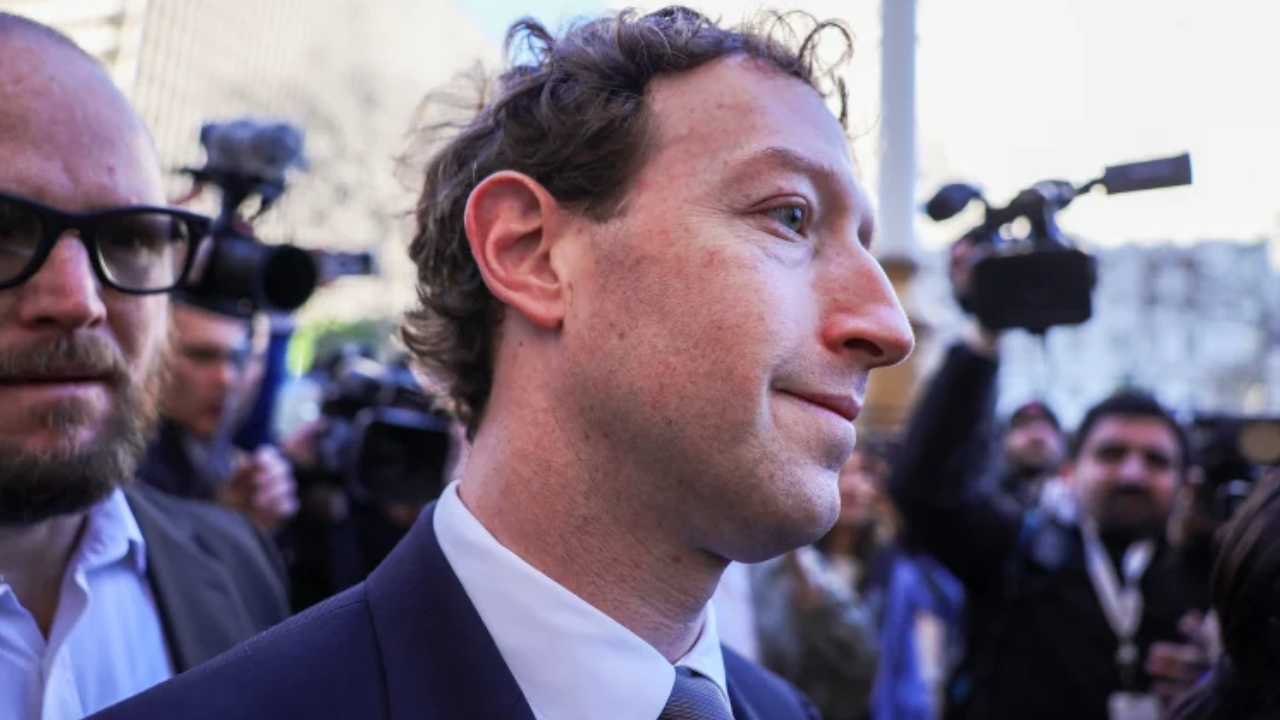
    Mark Zuckerberg has defended Meta Platforms during testimony in a social media addiction trial, rejecting claims that the company targeted young users and arguing that internal communications presented in court were being taken out of context.

    Appearing before a jury, Mark Zuckerberg said lawyers for the plaintiffs were “mischaracterising” emails, messages and research documents cited to support allegations that Meta’s platforms encouraged excessive use among children and teenagers. 

    The case focuses on whether social media services, including Instagram, are addictive for young users.

    The proceedings mark Zuckerberg’s first jury trial appearance and come amid legal challenges faced by Meta Platforms, which owns Instagram, WhatsApp and Facebook. YouTube is also named as a defendant. TikTok and Snapchat had been part of the lawsuit but reached settlements shortly before the trial began. The settlement terms were not made public.

    Meta has said it restricts users under 13 and has taken steps to address concerns related to younger audiences. During questioning, however, Mark Lanier, a lawyer for a woman who accuses Meta of harming her mental health when she was a child, presented internal documents showing discussions among senior Meta staff about teenaged and younger users.

    One email from 2019, addressed to Zuckerberg and other executives, raised concerns about what it described as “unenforced” age limits. The message stated this made it “difficult to claim we’re doing all we can,” according to the email sent by Nick Clegg, who previously served as the UK’s deputy prime minister.

    Lanier also cited a 2019 research report conducted by an external firm for Instagram. The report stated that teens felt “hooked despite how it makes them feel” and described what it called “an addicts’ narrative” around Instagram use. The findings noted that teen users said the platform could make them feel good or bad and that they wished they spent less time thinking about it. Zuckerberg responded that the research was not carried out internally at Meta.

    Under questioning by Meta lawyer Paul Schmidt, Zuckerberg said the same report also highlighted “positive” aspects of Instagram use. 

    Lanier presented a 2018 internal presentation referring to the retention of “tweens” on Instagram, despite company policies barring such users. Zuckerberg said he regretted not moving faster to identify users under 13 but said the company reached “the right place over time.” He added that teen users accounted for “less than one percent” of Meta’s advertising revenue and said the document had been taken out of context.

    Zuckerberg told the court that Meta had discussed building versions of its products for children under 13 “in a regulated way,” citing Messenger Kids, which he said he uses with his own children. “You’re mischaracterising what I’m saying,” he told Lanier. “I’m not surprised that people internally were studying this.”

    Schmidt referenced tools introduced by Instagram in 2018 that allow users to set daily limits, receive alerts about time spent and disable notifications at night. Lanier later cited an internal document showing that use of these tools among teens was limited, with 1.1 percent of teen users opting for daily time limits.

  • Meta secures AI patent to keep dead alive on social media

    Meta secures AI patent to keep dead alive on social media

    Meta Platforms, the parent company of Facebook, Instagram and WhatsApp, has been granted a patent for an artificial intelligence system capable of replicating a user’s social media activity, including posting, commenting and responding to messages after their death.

    Filed in 2023 and approved in late December, the patent outlines a system that trains a large language model on a user’s historical activity to recreate their online behavior.

    The filing, which lists Meta Chief Technology Officer Andrew Bosworth as the primary author, describes how the AI could generate posts, likes, comments and direct message replies using data such as past content, interactions and engagement history. 

    While it could also simulate video or audio calls, according to the patent, the system may maintain a user’s presence during long absences or after death, noting that inactivity has a lasting impact on the experience of followers who cannot interact with the user.

    Meta has stated the patent is conceptual and has no immediate plans to develop or deploy the system. A company spokesperson said that patents are often filed to protect ideas that may never be commercialised.

    However, the concept aligns with remarks made by CEO Mark Zuckerberg in 2023, when he suggested AI could help people interact with digital representations of loved ones, provided it operates with user consent.

    It merits a mention that the concept is not unique. Microsoft patented a chatbot in 2021 designed to simulate deceased individuals, public figures or fictional characters. Several startups have since launched services offering AI-driven memorial avatars. 

    The technology raises legal and ethical questions, particularly regarding post-mortem privacy, as noted by Edina Harbinja, a University of Birmingham professor specialising in digital rights.

    Public response to the news has been largely critical. Users expressed concern over the potential for AI to manipulate the digital identities of the deceased.

    “Imagine arguing with someone online and they’ve been dead for three years,” wrote one user, while another said, “That should be illegal. How can they co-opt the words and data and digital likeness of a dead person without that person’s permission or the permission of their family?” 

    Others highlighted risks to social networks, noting, “Imagine finding out months later that your friend who died was actually an AI chatbot. This isn’t about personal choice when it affects everyone in someone’s network.” 

    Comparisons to fictional scenarios also appeared, with one reaction stating, “So Black Mirror was a product roadmap.”

    One comment used the news to make a joke about politics, stating, “Oh my god. We’re never getting rid of Trump.”

  • Meta accused of withholding evidence linking Facebook use to mental health harm

    Meta accused of withholding evidence linking Facebook use to mental health harm

    Legal documents in the U.S. assert that Meta discontinued internal studies that indicated a connection between Facebook usage and negative mental health effects. 

    The documents were filed in a lawsuit initiated by school districts against Meta and other social media companies.

    The filing details a 2020 initiative called Project Mercury, which involved Meta’s researchers and the survey company Nielsen, measuring the impact of users deactivating Facebook for a week. Internal papers indicated that “individuals who stopped using Facebook for one week reported decreased levels of depression, anxiety, loneliness, and social comparison.”

    According to the filing, Meta ended the project rather than publishing the findings. The documents claim that Meta internally suggested that the results were affected by the prevailing media narrative concerning the company. 

    One researcher mentioned, “The Nielsen study does show causal impact on social comparison,” and included an unhappy face emoji. Another employee drew a parallel between remaining silent and the tobacco industry, stating it would be akin to “conducting studies and knowing that cigarettes were harmful, then keeping that information hidden.”

    The filing contends that Meta informed Congress it had “no ability to quantify whether its products were harmful to teenage girls,” despite possessing the internal findings. It also mentions that similar investigations focusing on Instagram were stopped.

    In response, Meta spokesperson Andy Stone stated that the study was terminated due to methodological issues, emphasizing, “The complete record will demonstrate that for over ten years we have heeded parents’ concerns, researched critical issues, and implemented meaningful changes to safeguard teens.”

    These allegations are part of a broader lawsuit filed by the law firm Motley Rice, which also includes Google, TikTok, and Snapchat on behalf of school districts in the U.S. The plaintiffs claim that these companies concealed the dangers of their products from users, parents, and educators.

    The filing alleges that the companies encouraged children under 13 to engage with their platforms, failed to tackle child sexual abuse material, and sought to boost student usage during school hours. 

    It also asserts that these companies endeavored to collaborate with child-focused organizations to promote public messages regarding product safety.

    TikTok, Google, and Snapchat have not responded to requests for comments. A court hearing on this matter is slated for January 26 in a district court in northern California.

  • ‘It’s not possible’; Reporting in internet-challenged Pakistan

    ‘It’s not possible’; Reporting in internet-challenged Pakistan

    With the primary shift from newspapers to television channels and now to digital media applications, the dissemination of information has become increasingly competitive for newsrooms, with the latest updates just a click away.

    “Delays can be managed with newspapers, but today everything is in your hands—specifically, mobile phones,” says Raees Ansari, Bureau Chief of Geo News in Lahore.

    “Every single second is crucial in reporting now; some footage needs to be sent and put on air instantly. But due to poor network conditions and slow WhatsApp, content is not being sent on time, which is affecting our professional activities,” he reveals.

    Over the past week, internet users across Pakistan have reported network disruptions, with WhatsApp, Facebook, and Instagram experiencing slowdowns, hindering online activities. The Pakistan Telecommunication Authority (PTA) has denied any connection between these issues and the alleged firewall installation.

    Since the ban on X (formerly Twitter) on February 17, 2024, many have turned to Virtual Private Networks (VPNs). The ongoing disturbances, however, have complicated internet usage, which is crucial for a number of professions.

    Sumaira Raja, an investigative reporter, who is mostly found out on the field, complains of encountering issues with not only the internet but also phone signals which often prevents her from conveying news on time.

    “I also experience delays with receiving beepers, as head office frequently reports that the number is not available due to poor signals. This situation makes it very difficult to do my job. I’ve tried using a VPN, but it hasn’t worked,” Raja says.

    Sports journalist Faizan Lakhani recalls when javelin champion Arshad Nadeem returned to Pakistan on August 17 after winning the gold medal at the Paris Olympics, all the visuals sent through WhatsApp by reporters were delayed, and they struggled to download them unless they used a VPN.

    “This situation is very challenging and affects our workflow. When reporters are working on a story or covering an event, they need to stay connected with the desk. We usually rely on voice notes to pass instructions, but since we started encountering this issue, we are struggling with that method too,” he says.

    “We have been told that the network disruption is because of the firewall installation. While things are becoming easier around the world, it has been getting harder for us. Everything is happening with the help of technology and the current situation is a major challenge.” says Ansari.

    What’s happening?

    A highly placed source in the IT industry identifies that filtering of content delivery networks (CDNs) through Firewall is causing content to be routed via internet backbone rather than CDNs.

    “This means that around 4 TBs of internet traffic previously served through CDNs, hosted in Pakistan, is becoming ineffective. When all traffic goes on backbone bypassing CDNs, it’s causing massive slowdown at many western destinations that’s happening now,” he explains.

    Recently, Fiverr, an online marketplace for freelance services, warned clients that Pakistani freelancers may experience delays due to internet issues and the use of VPNs to change their locations.

    “Brace for impact. God save the internet in Pakistan”, says the IT expert.

    Background

    It all started on February 17, 2024, about a week into the new government, when X (formerly Twitter) was banned.

    Initially, amid the uproar, the government remained silent on the matter while the Pakistan Telecommunication Authority (PTA) seemed aloof until the High Courts of Sindh and Islamabad intervened. The PTA eventually admitted that the ban on X was imposed on the orders of the Ministry of Interior based on reports from intelligence agencies.

    The government eventually justified the ban by attributing it to national security concerns, citing ‘digital terrorism‘ and online propaganda as among the threats.

    Earlier in August, Provincial Information Minister Azma Bokhari stated that the government is not against social media but wants to focus on rules and regulations, which, if enforced, could lead to the removal of the ban on X.

    The disruption has now extended beyond X, affecting other widely used apps along with the internet.

    Ironically, since the February 2024 election, the new government has emphasised the need to grow the tech industry in Pakistan.

    In March, Lahore Knowledge Park (a science park) was handed over to the Punjab Central Business District Development Authority with the approval of Chief Minister Punjab Maryam Nawaz, with the goal of establishing Pakistan’s largest IT city.

    In June, Prime Minister Shehbaz Sharif visited Shenzhen— the tech hub in China— in hopes of future collaboration. Ironically, he posted on X (Twitter), expressing how “impressed” he was by the “city’s skyline and development that symbolizes modern-day China.”

    Given the lack of proper infrastructure in the country amid burgeoning surveillance, how will Pakistan evolve in the rapidly transforming digital world? It remains to be seen – but likely we won’t be able to download it.

  • Meta lifts restrictions on Trump’s Facebook and Instagram accounts

    Meta lifts restrictions on Trump’s Facebook and Instagram accounts

    Meta said Friday it was lifting restrictions on US presidential candidate Donald Trump’s Facebook and Instagram accounts, ending measures put in place after his supporters violently stormed the US Capitol in 2021.

    It said that “former President Trump, as the nominee of the Republican Party, will no longer be subject to the heightened suspension penalties.”

    Trump’s Facebook and Instagram accounts were suspended indefinitely a day after his supporters attacked the US Capitol on January 6, 2021, and it was determined he had praised people engaged in violence on social media.

    His accounts were reinstated in February 2023 but with a threat of penalties for future breaches — an additional restriction that Meta lifted on Friday.

    “In assessing our responsibility to allow political expression, we believe that the American people should be able to hear from the nominees for President on the same basis,” Meta wrote in a blog post.

    It added that US presidential candidates “remain subject to the same Community Standards as all Facebook and Instagram users, including those policies designed to prevent hate speech and incitement to violence.”

    Trump, the first former president to be convicted of a crime, was also banned from Twitter and YouTube.

    While those restrictions were later lifted last year, Trump now mainly communicates on his own social media platform, Truth Social.

    His Facebook profile, which has 34 million users, includes messages originally published on Truth Social as well as invitations to rallies and videos from his campaign.

  • Meta shouldn’t force users to pay for data protection: EU watchdog

    Meta shouldn’t force users to pay for data protection: EU watchdog

    Brussels, Belgium – Facebook owner Meta and other online platforms must not force users to pay for the right to data protection enshrined in EU law when offering ad-free subscriptions, the European data regulator said Wednesday.

    “Online platforms should give users a real choice when employing ‘consent or pay’ models,” the European Data Protection Board (EDPB) chair Anu Talus said in a statement.

    “The models we have today usually require individuals to either give away all their data or to pay,” she said. “As a result, most users consent to the processing in order to use a service, and they do not understand the full implications of their choices.”

    Meta in November launched a “pay or consent” system allowing users to withhold use of their data for ad targeting in exchange for a monthly fee — a model that has faced several challenges from privacy and consumer advocates.

    Meta has long profited from selling user data to advertisers but this business model has led to multiple battles with EU regulators over data privacy.

    The latest announcement came after the data protection authorities of The Netherlands, Norway and the German state of Hamburg went to the EDPB for an opinion regarding the pay-or-consent model used by Meta.

    The Silicon Valley company allows users of Instagram and Facebook in Europe to pay between 10 and 13 euros (around $11 and $14) a month to opt out of data sharing.

    Meta pointed to an EU court ruling last year that it said opened the way for subscriptions as a “legally valid” option. “Today’s EDPB opinion does not alter that judgment and subscription for no ads complies with EU laws,” a Meta spokesperson said.

    Meta is waiting for a decision on its model by the data privacy regulator in Ireland where the company is headquartered.

    ‘Binary choice’

    All digital platforms must comply with the European Union’s mammoth general data protection regulation (GDPR), which has been at the root of EU court cases against Meta.

    The EDPB in its opinion argued that Meta’s model was at odds with the GDPR’s requirement that consent for data use must be freely given.

    “In most cases, it will not be possible for large online platforms to comply with the requirements for valid consent if they confront users only with a binary choice between consenting to processing of personal data for behavioural advertising purposes and paying a fee,” the opinion read.

    The EDPB also warned the type of subscription service put forward by Meta “should not be the default way forward” for platforms.

    It suggested that platforms should consider an alternative that would give users the right to reject being tracked for advertising purposes without the need to pay.

    Privacy defenders welcomed the opinion.

    “Overall, Meta is out of options in the EU. It must now give users a genuine yes/no option for personalised advertising,” said prominent online privacy activist Max Schrems.

    “We know that ‘Pay or Okay’ shifts consent rates from about three percent to more than 99 percent — so it is as far from ‘freely given’ consent as North Korea is from a democracy,” said Schrems.

    Tech lobby group CCIA however warned the EDPB risked “opening a Pandora’s Box”.

    “Forcing businesses to offer services at a loss is unprecedented and sends the wrong signals,” said CCIA Europe’s senior policy manager, Claudia Canelles Quaroni.

    “All companies should be able to offer paid-for versions of their services.”

    raz/gv

    © Agence France-Presse

  • Meta’s ban on word ‘shaheed’ restricts free expression: Oversight Board

    Meta’s ban on word ‘shaheed’ restricts free expression: Oversight Board

    Meta’s independent Oversight Board urged the company to revise its broad ban on the Arabic word “shaheed,” which translates to “martyr” in English.

    After a year-long review, the board found Meta’s current policy to be overly restrictive, silencing millions of users.

    The board, funded by Meta but operating autonomously, recommends keeping “shaheed” posts only if they directly promote violence or violate existing Meta content guidelines.

    This decision follows mounting criticism, particularly regarding Meta’s handling of content related to the Middle East.

    A 2021 study commissioned by Meta itself revealed a negative impact on the free expression rights of Palestinians and Arabic users.

    Criticism further intensified during the 2021 Israel-Hamas conflict, with accusations of content censorship on Facebook and Instagram.

    The oversight board’s report highlights Meta’s failure to consider the various meanings of “shaheed,” leading to the removal of harmless content.

    Co-chair Helle Thorning-Schmidt argues that Meta’s heavy reliance on censorship might unintentionally marginalise entire communities without effectively improving safety.

    Currently, Meta removes any post containing “shaheed” if it mentions someone on their “dangerous organisations” list. This includes Islamist groups, drug cartels, white supremacist organisations, and Hamas.

    Meta sought the board’s guidance after failing to reach an internal consensus on revising the policy in 2020. The board noted that “shaheed” was the most frequently removed term across Meta platforms.

    A Meta spokesperson confirmed they would review the recommendations and respond within 60 days.

  • Over 7.5 million WhatsApp accounts banned in India in one month 

    Over 7.5 million WhatsApp accounts banned in India in one month 

    In compliance with the Information Technology (Intermediary Guidelines and Digital Media Ethics Code) Rules, 2021, WhatsApp has released its monthly report detailing actions taken in response to user grievances and violations of Indian laws or WhatsApp’s Terms of Service. The report covers the period from October 1, 2023, to October 31, 2023. 

    The report from Meta’s instant messaging platform details the abuse detection mechanisms operating at various stages of an account’s lifecycle and emphasises the company’s focus on prevention. In the specified period, WhatsApp banned a total of 7,548,000 accounts in India, with 1,919,000 of these accounts being proactively banned before any user reports. 

       
    As per the instant messaging platform, the section on user grievances provides insights into the types of complaints received and the corresponding actions taken. 

       
    Reportedly, WhatsApp received a total of 9,063 reports during the reporting period. The majority of the reports were related to “Ban appeal” (4,771), while others covered topics such as “Account support,” “Other support,” “Product support,” and “Safety.” Out of the total reports, 12 accounts were actioned, with bans or account restorations based on the nature of the complaint. 

    Additionally, the report outlines the orders received from the Grievance Appellate Committee (GAC), indicating that WhatsApp received five orders during the same period, complying with all of them. 

    To recall, from September 1, 2023, to September 30, 2023, a total of 7,111,000 WhatsApp accounts were banned. Among these, 2,571,000 accounts were proactively banned prior to receiving any user reports, as mentioned in the WhatsApp report. 

    In the month of September, as per the report, the platform received six orders from the Grievance Appellate Committee, all of which were duly adhered to. 

       
    Moreover, WhatsApp mentioned receiving 10,442 user reports in various categories during September, including account support (1,031), ban appeal (7,396), other support (1,518), product support (370), and safety (127). 

  • Palestinian content leaves Israel miles behind on social media

    Palestinian content leaves Israel miles behind on social media

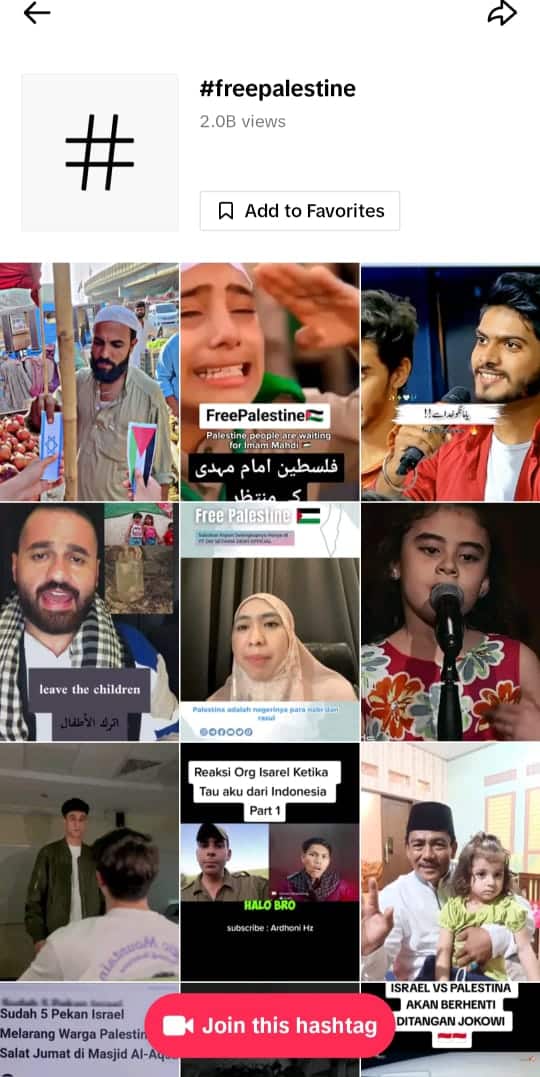
    While activists and civilians flood the streets across the world protesting for Palestine, social media is actively reflecting the changing tides. Currently, the hashtag #FreePalestine has over 2 billion views on TikTok, while in contrast the hashtag #standwithIsrael has over 162.8 million views.

    In a statement posted on Monday, the social media platform responded to US Representative (R) Mike Gallagher’s allegations that TikTok was “controlled by America’s s foremost adversary, one that does not share our interests or our values: the Chinese Communist Party (CCP)”, calling for America to ban the app.

    TikTok said the overwhelming support teens have for Palestine is dominating the app’s algorithm.

    “Support for Israel (as compared to sympathy for Palestine) has been lower among younger Americans for some time. This is evidenced by looking at Gallup polling data of millennials dating as far back as 2010, long before TikTok even existed. A March 2023 Gallup poll, before the war, shows young adults have rapidly shifting attitudes towards the Israeli/Palestinian conflict. While an Echelon poll from October 26, 2023 shows that US TikTok users under 40 are more likely to support Israel (33% vs 28% for Palestine), and the proportions broadly reflect the split in the general under 40 population (32% for Israel, 23% for Palestine).”

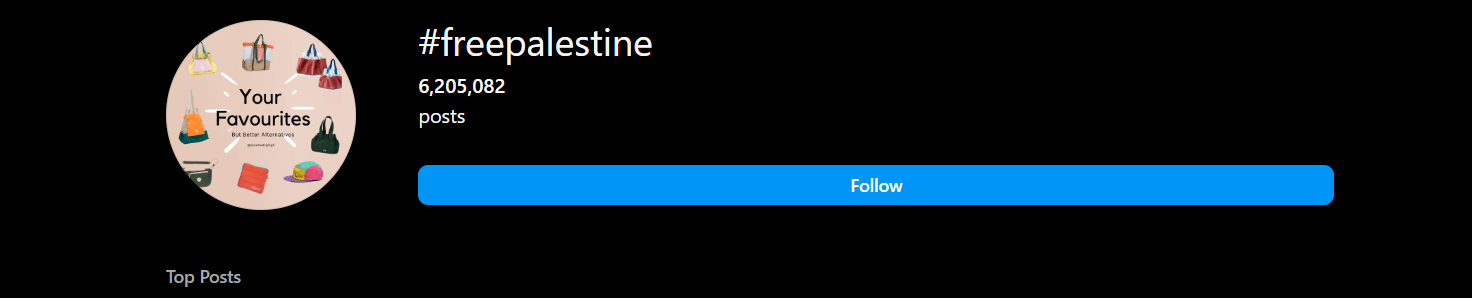
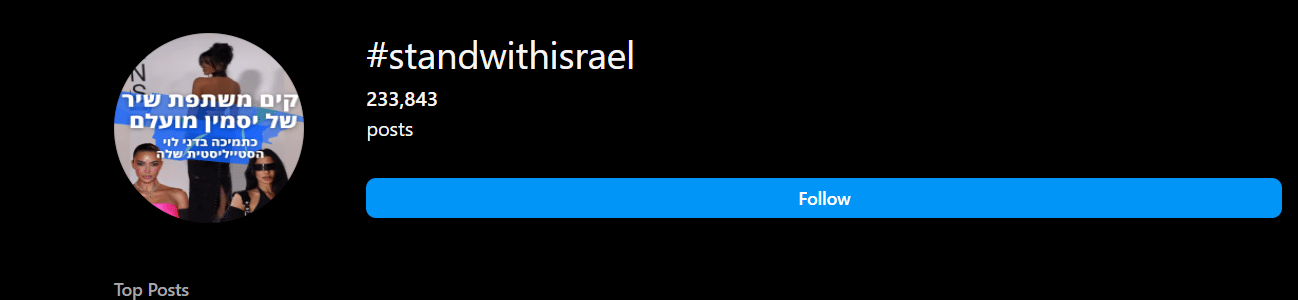
    Other social media platforms like Facebook and Instagram show more audiences engage with the pro-Palestinian content than with Israel’s. Instagram shows that the hashtag #FreePalestine has over 6 million views, while in comparison #IstandwithIsrael has gained only 233,000 views.

    Instagram was being taken to task by users for censoring and shadow banning prominent pro-Palestinian voices who were reporting on the ongoing genocide in Gaza. Freelance journalist Plestia Alaqad reported her Instagram account was hacked.

    Furthermore, journalist Ahmed reported he was locked out of his Instagram account and was warned it would be shut down for violating the company’s guideline.

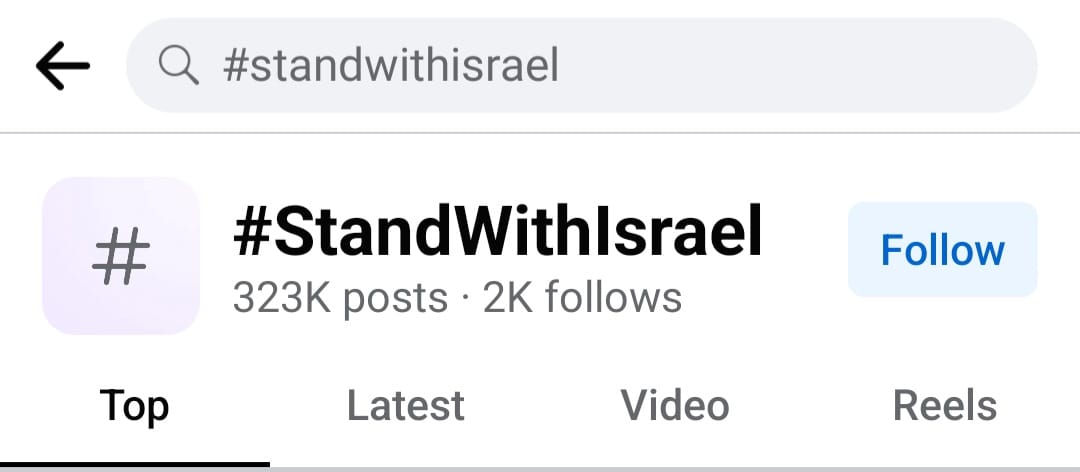
    On Facebook, the #FreePalestine hashtag has over 11 million views while in comparison the #IstandwithIsrael hashtag has over 323,000 views.

  • Instagram page, Eye on Palestine, restored

    Instagram page, Eye on Palestine, restored

    According to officials from Meta, the owner of Eye of Palestine has been given access to their account.

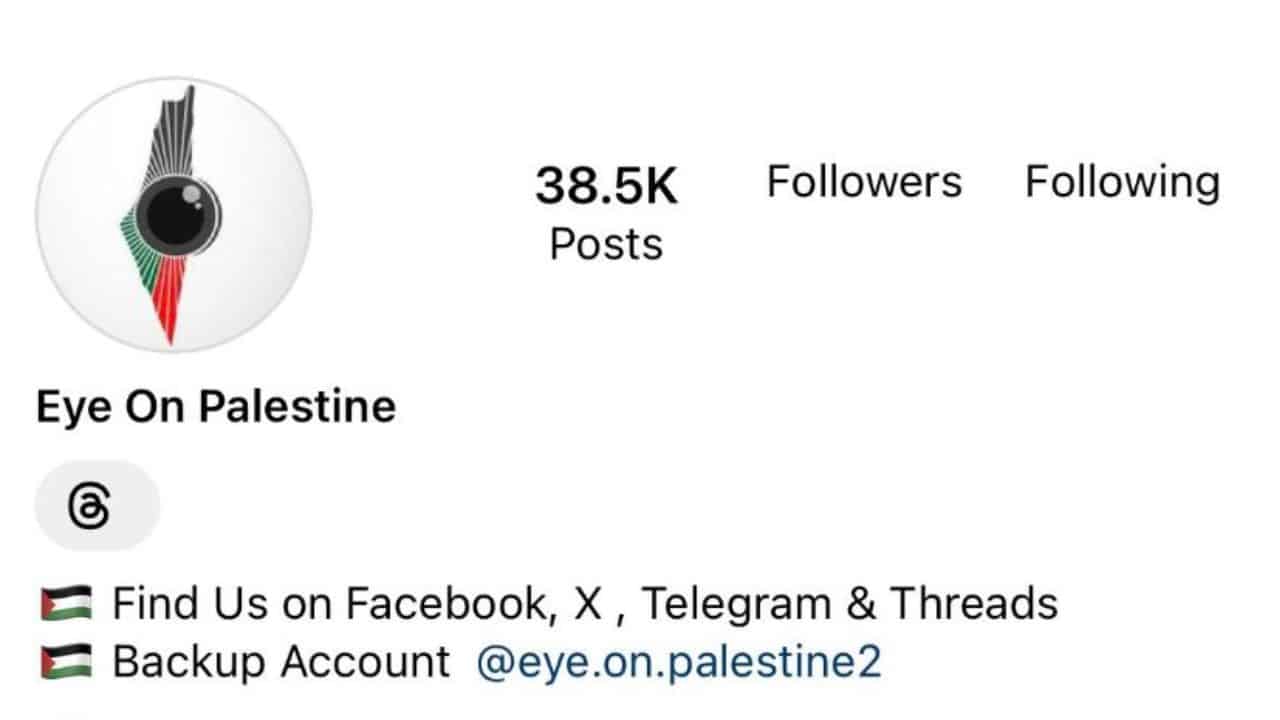
    Previously, the widely followed Instagram account Eye on Palestine (@eye.on.palestine), that had been extensively covering the situation in Gaza, has been removed by Meta.

    It reportedly had more than six million followers.

    It also had a second page created as a back-up which was also removed.

    People react:

    Here is how can make sure you are able to keep up with all the posts of other similar accounts that are being censored: