Tag: National Assembly

  • ‘Worst assembly’: PML-N’s Shahid Khaqan slams govt

    ‘Worst assembly’: PML-N’s Shahid Khaqan slams govt

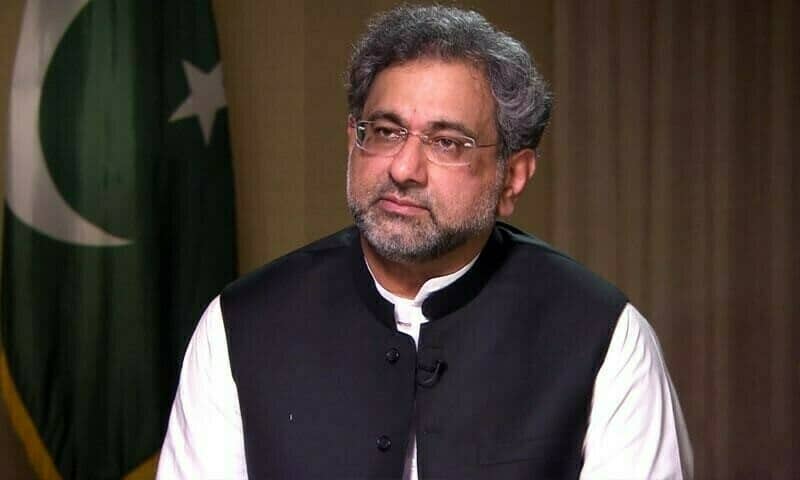
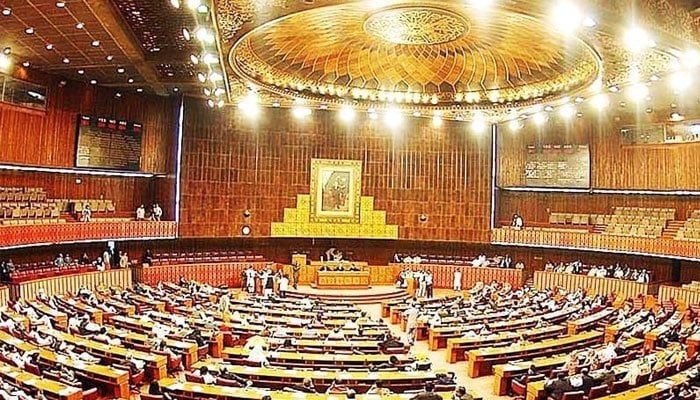
    Former Prime Minister Shahid Khaqan Abbasi has said in his farewell speech on Wednesday that the outgoing National Assembly was the worst because it did not provide relief to the public.

    The former Prime Minister, a stalwart of the ruling Pakistan Muslim League-Nawaz (PML-N), said that not a single legislation was passed by the Lower House in its five years. “You seek record of five years’ legislation and you will see all the government bills were not meant to provide relief to people,” he said, stressing that it was a matter of shame for all.

    He pointed out that the people have lost faith in the government, emphasizing that such matters cannot be fixed by legislation but with actions. He blamed everyone for the economic crisis in the country, adding that it would take at least ten years to fix the economy.

    People say that all members of the assembly are corrupt and we show that they are correct,” Abbasi said, pointing out that parliamentarians were surrounding the Interior Minister to get his signature for licenses.

  • National Assembly dissolved: hunt for caretaker PM underway

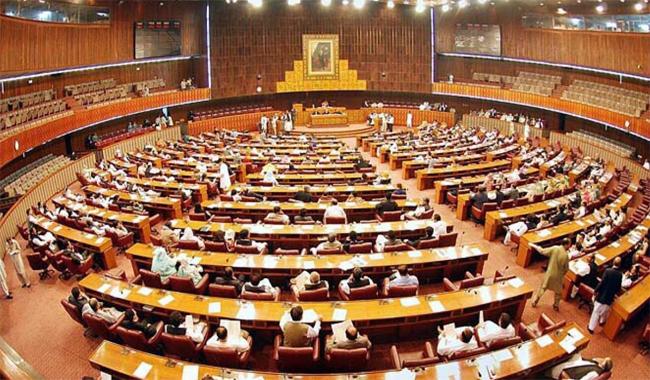
    President Dr Arif Alvi, late on Wednesday, dissolved the National Assembly on the counsel of Prime Minister Muhammad Shehbaz Sharif.

    The prime minister’s decision to dissolve the assembly was swiftly acted upon, with the president endorsing the summary earlier presented by PM Shehbaz Sharif for the dissolution.

    However, despite this dissolution, Shehbaz Sharif will remain at the helm of affairs as prime minister until the nomination of a caretaker premier.

    This dissolution now mandates the Election Commission of Pakistan (ECP) to organise general elections within the subsequent 90 days, as per constitutional requirements.

    Reinforcing this, the Senate, earlier in the day, passed a resolution urging the ECP to ensure preparations for the impending general elections occur within the constitutionally stipulated timeframe.

  • In last NA speech, Shehbaz says he’s not happy that leader of a party is in jail

    In last NA speech, Shehbaz says he’s not happy that leader of a party is in jail

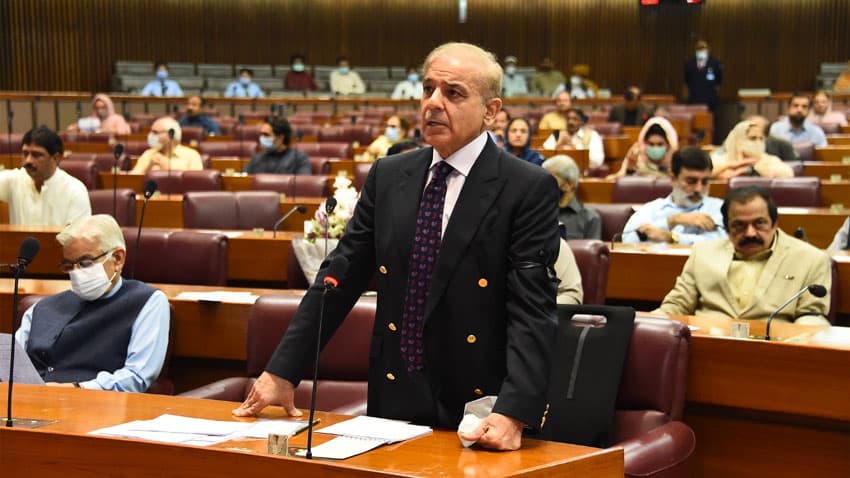
    In a poignant last speech on the floor of the National Assembly as Prime Minister of Pakistan, Shehbaz Sharif said that if the leader of a political party is jailed, “we are not happy about it”.

    “If someone has been distributing sweets [to celebrate], it is not right. This is not a good tradition,” the Premier said, in a thinly veiled reference to political rival, Pakistan Tehreek-e-Insaf (PTI) Chairman Imran Khan.

    Khan has been sentenced to three years imprisonment in the Tosha Khana case, and is currently at Attock jail.

    Talking about the severe economic crisis in the country, Shehbaz said that his government faced severe difficulties in its 16-month long tenure.

    He thanked legislators from all parties and both sides, including Mohsin Dawar and Ali Wazir, for showing confidence in him.

    Calling the assembly a “bouquet”, the Prime Minister said that such a bunch of Pakistanis has never been put together before and will never be put together again.

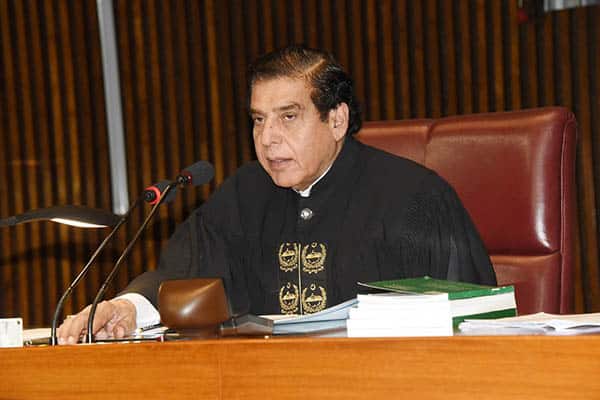
    In a lighter moment, he asked members to thump their desks with more force after he paid tribute to Speaker Raja Pervez Ashraf.

    He also singled out Bilawal Bhutto-Zardari for praise, thanking the outgoing Foreign Minister for keeping the coalition together and for his diplomatic prowess.

  • National Assembly set to dissolve after 5:30PM

    National Assembly set to dissolve after 5:30PM

    Prime Minister Shehbaz Sharif is preparing to advice President Arif Alvi to dissolve the National Assembly (NA) today, bringing an end to tumultuous five-year term for the Lower House. Today (Wednesday) might be the last day of the coalition government.

    In order to extend the interim period, which is legally within 90 days if an assembly is dissolved prematurely, the government will dissolve the Lower House of parliament earlier than its legal term, which expires on August 12.

    If the National Assembly gets dissolved prematurely, a caretaker government will be responsible for conducting elections in 90 days.

    According to Article 58 of the constitution, the prime minister can advise the president on the dissolution of the National Assembly, however, if the president doesn’t approve, the assembly is still dissolved within 48 hours.

    “The president shall dissolve the National Assembly if so advised by the prime minister; and the National Assembly shall, unless sooner dissolved, stand dissolved at the expiration of forty-eight hours after the prime minister has so advised,” the article reads.

    PM Shehbaz Sharif, after a joint session of Parliament today at 5:30 p.m., will request President Alvi to dissolve the Parliament. Shehbaz Sharif’s meeting with opposition leader Raja Riaz is scheduled for 4 p.m. today.

  • Bye bye National Assembly; Lower House to be dissolved on August 9

    At a dinner hosted for allies, Prime Minister Shehbaz Sharif has revealed that the National Assembly will be dissolved on August 9, three days before the end of its tenure, DAWN has reported.

    The dinner, held at the Prime Minister House on Thursday, was in honour of the parties that were allies in the ruling coalition.

    If the National Assembly is dissolved before the end of its tenure, general elections will be held in 90 days.

    Shehbaz Sharif informed his guests that a final round of consultation with other members of the ruling alliance on Friday to finalize the caretaker setup.

    A source has revealed to DAWN that Pakistan People’s Party (PPP) head and current Foreign Minister Bilawal Bhutto-Zardari held a long meeting with the Prime Minister on Thursday to discuss the interim setup.

    The reception was attended by Senate Chairman Sadiq Sanjrani, Speaker National Assembly Raja Pervaiz Ashraf, PPP leaders Yousuf Raza Gilani, MQM Convener Khalid Maqbool Siddiqui, JUI-F leader Asad Mehmood, Balochistan Awami Party leaders Khalid Magsi and Senator Ahmed Khan, Jamhoori Watan Party (JWP) Chairman Shahzain Bugti, Aslam Bhootani, Mohsin Dawar and others.

  • NA continues hasty legislation despite outrage

    NA continues hasty legislation despite outrage

    According to the report filed by Amir Wasim in Dawn, the National Assembly (NA) approved 12 more bills on Wednesday.

    Along with debates over legislation, the NA saw a verbal altercation between Speaker Raja Pervez Ashraf and South Waziristan MNA Ali Wazir when the legislator accused Pakistan’s intelligence agencies of “installing” the Taliban government in neighboring Afghanistan and demanded that those responsible for bringing the Taliban back to Pakistan be held accountable.

    The angry speaker warned the MNA not to talk about sensitive matters related to Pakistan’s security forces, and then switched off the mic for Ali Wazir, declaring his words “anti-Pakistan”.

    During the passage of the bills, members of different allied parties in the coalition government complained that the PML-N didn’t take them into confidence in the matter of the bills.

    Some members were also concerned about a bill passing amendments to the Secrets Act, granting powers to intelligence agencies to raid and detain common citizens without warrants.

    Federal Minister for Science and Technology Agha Hassan Baloch has also said that BNP-M doesn’t want to be part of this hasty legislation. PPP lawmaker Shahida Rehmani and JUI-F’s Aliya Kamran were also against the passage of the bill.

  • NA passes bill proposing up to three years jail for involvement in anti-state activities

    NA passes bill proposing up to three years jail for involvement in anti-state activities

    The National Assembly has on Tuesday passed amendments to the Official Secrets Act Amendment Bill 2023 which suggests a three year jail sentence for involvement in anti-state activities.

    Murtaza Javed Abbasi, Parliamentary Affairs Minister, presented the bill named “Official Secrets (Amendment) Bill, 2023”.

    According to the bill, a person who creates a problem of public order or intentionally acts against the policies of the state would be guilty of the offence.

    Action will also be taken against the person who will try to gain unauthorised access to documents or information to act against the security interests of the state within or outside the country.

    These offences are punishable with three years in jail and a fine of Rs10 lacs or both.

    According to the bill, intelligence agencies can enter any place without a search warrant. The investigation officer will be the officer of FIA.

    Under the Official Secrets Act, the accused will be tried in a special court, and the special court will give it’s verdict after completing the hearing within 30 days.

  • Swift approval of 24 universities without proper discussion sparks debate

    Swift approval of 24 universities without proper discussion sparks debate

    In an unusual move that contradicts customary legislative protocol, the National Assembly of Pakistan has sanctioned the establishment of twenty-four new universities across various cities within a single session. These approvals, though hailed as a massive boost to the nation’s educational infrastructure, have ignited debates over the abruptness of the process.

    The approval of the bills occurred in an unusually sparse session, without the traditional discourse within respective Standing Committees, raising questions about the abrupt nature of the process.

    Critics are questioning the urgency that bypassed the usual deliberations associated with such significant decisions.

    The newly approved institutions include Metropolitan International Institute of Science and Technology, Askari Institute of Higher Education, Federal Ziauddin University, The Indus University of Science and Technology, The Institute of Management and Technology, and Pak China Gwadar University.

    Other notable approvals were for Lahore, University of Shaheed Benazir Bhutto, Institute of Health and Professional Studies, Sheikhupura Institute of Advanced Studies, Cosmic Institute of Science and Technologies, Balhe Shah International University, The Ravi Institute, and The International Islamic Institute for Peace.

    Also given the green light were Shah Bano Institute Jardanwala, International Memon University, Umm Abiha Institute of Health Sciences, Mufti Azam Islamic University, Islamabad International University, Islamabad Institute of Modern Sciences, Al Biruni International University, National University of Health Emerging Sciences and Technologies, National Institute of Technology, Pakistan Institute of Management Sciences and Technology, and The Horizon University.

    As the debate continues, it remains to be seen how these newly approved universities will contribute to the country’s higher education landscape.

  • Raja Riaz rejects Dar for caretaker PM, sees no need for immediate elections

    Raja Riaz rejects Dar for caretaker PM, sees no need for immediate elections

    The leader of the opposition in the National Assembly, Raja Riaz, said on Tuesday that Finance Minister Ishaq Dar is not a suitable candidate for the position of caretaker PM. He has also said that there is no need for an immediate election in the country.

    The tenure of the National Assembly is going to expire on August 12. Members of the government are holding consultations over the matter of the interim government.

    Speaking on the matter of the caretaker setup, Raja Riaz said that the idea of appointing Ishaq Dar as caretaker PM is not good. “Elections will not be held for two years if Ishaq Dar becomes the interim prime minister,” he said.

    Asking the PML-N to reveal a name in media, Raja Riaz said that there is no need for him to consult on it. “As the opposition leader, I have to give my three names. I will meet the Prime Minister by August 1 on the caretaker government issue,” he added.

    The leader of the opposition has also dismissed the idea of an immediate election in the country. “The problems of the country and the people are more important. The solution to the challenges faced at this time is most important”.

    Raja Riaz was appointed as the leader of the opposition in May 2022 by the speaker of the National Assembly, Raja Pervez Ashraf.

  • Painful IMF compliance, but no new taxes on agriculture and real estate, clarifies Dar

    Painful IMF compliance, but no new taxes on agriculture and real estate, clarifies Dar

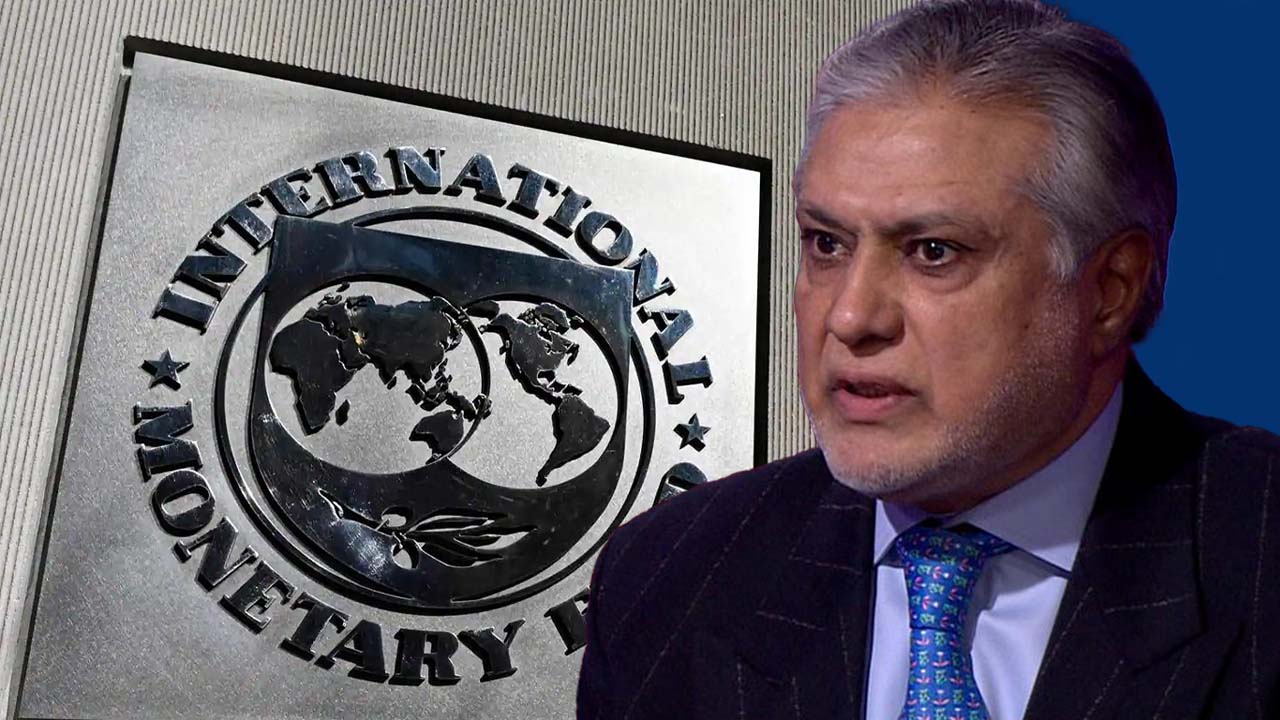
    Finance Minister Ishaq Dar made a resolute declaration on Thursday, assuring the public that the coalition government, despite having taken stern measures that burdened the masses, has no intentions of imposing additional taxes on the agriculture and real estate sectors.

    Speaking passionately on the floor of the National Assembly, Dar firmly stated, “I want to state categorically […] that no new tax will be imposed on agriculture or real estate. We have endured much pain in meeting the IMF’s conditions.”

    This assurance comes in the wake of the International Monetary Fund (IMF) approving a $3 billion bailout program for Pakistan, with $1.2 billion already disbursed to help stabilise the nation’s struggling economy.

    Media reports had indicated that the IMF requested a plan from the government to impose taxes on the real estate and agricultural sectors as a condition to release the remaining funds. The news caused concern among those associated with the agriculture sector, especially since the government had expanded the loan volume to support it in the budget.

    Dar emphasised that all prior actions demanded by the lender had been successfully completed, and the agreement with the IMF was carried out in a transparent manner. He reassured the public, “No further burden will be passed on to the people. All the commitments made with the IMF are available on the finance ministry’s website.”

    The positive effects of the deal are already evident, with investors in the country experiencing relief in the stocks, exchange rate, and bonds markets. Additionally, longstanding allies Saudi Arabia and the United Arab Emirates have recently deposited $3 billion in Pakistan’s central bank, while China rolled over $5 billion in loans over the past three months to prevent the country from defaulting.

    In light of the IMF’s observation that both agriculture and construction sectors are under-taxed in Pakistan, economist Khaqan Hassan Najeeb stressed their significance in broadening the tax base and promoting progressivism.

    Regarding the real estate sector, Najeeb advocated for a genuine capital gains tax, levied at the marginal income tax rate of the individual making the capital gains over the years, to encourage investment from unproductive real estate to more productive sectors like manufacturing.

    Read more: Pakistan’s petroleum dealers temporarily postpone nationwide petrol pump shutdown

    However, Najeeb acknowledged that such reforms would be better suited for implementation by a long-term new government after the upcoming elections. Moreover, he highlighted that provincial governments hold authority over agriculture income tax, which presently contributes only insignificantly. He urged provinces to contemplate a progressive income tax on agriculture, considering the size of farm holdings.

    With Minister Dar’s assurance and the IMF’s support, Pakistan’s economic prospects seem brighter, but the road ahead calls for careful consideration and judicious decision-making to ensure a sustainable and progressive financial future.