Tag: pakistan economy

  • SBP data reveals 23.5% YoY decline in auto loans

    SBP data reveals 23.5% YoY decline in auto loans

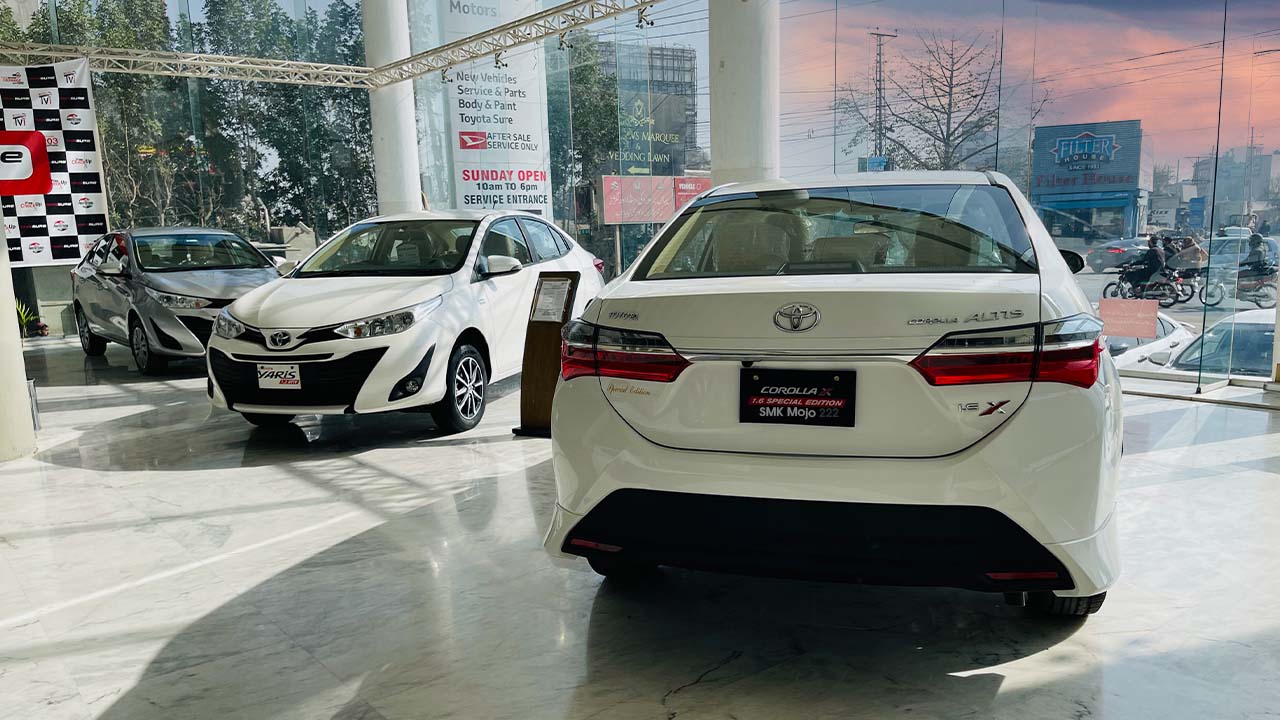
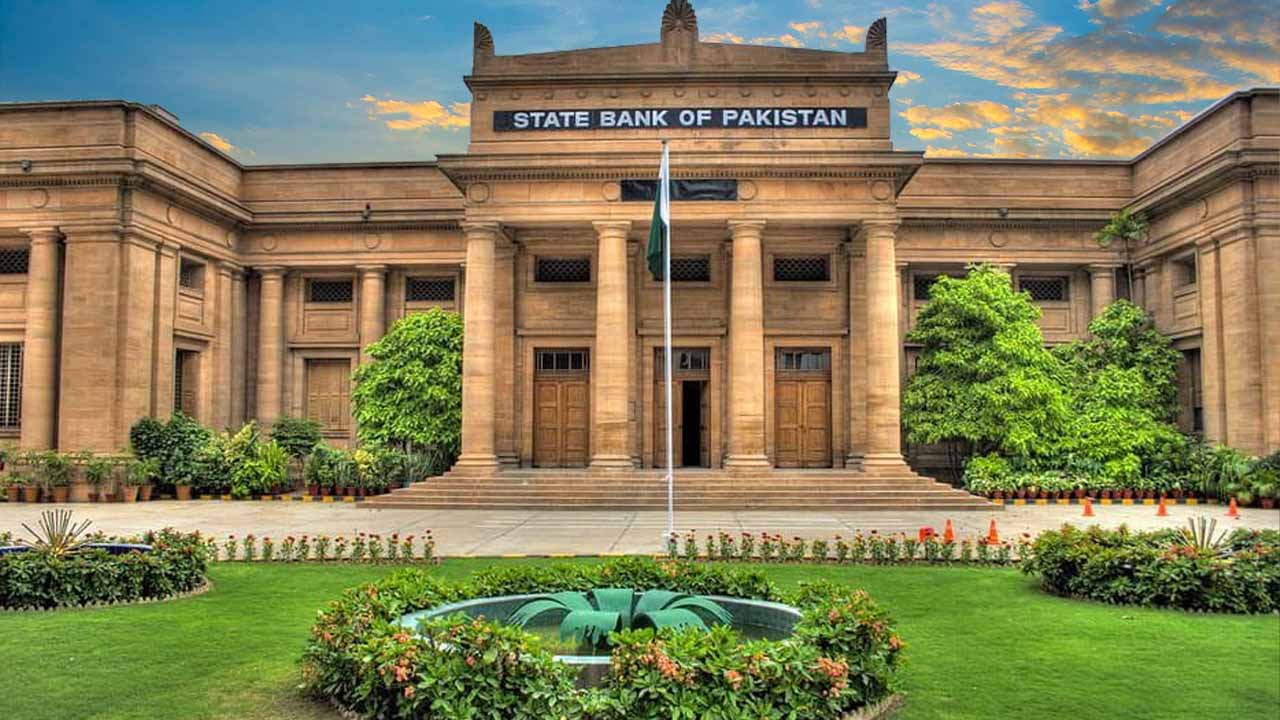
    In October, auto loans faced a decline for the 16th consecutive month due to high interest rates and inflation, as per data released by the State Bank of Pakistan (SBP).

    According to the SBP, auto loans witnessed a year-on-year drop of 23.5 per cent, amounting to Rs264 billion, and a month-on-month decrease of 3 per cent, down from Rs272 billion in September.

    While auto loans had peaked at Rs368 billion in June 2022, a subsequent decrease of Rs104 billion, or 28 per cent, occurred. This decline followed the SBP’s implementation of tighter monetary policies to address inflation and external imbalances.

    Financial analysts attribute this trend to the SBP’s measures, including elevated interest rates and the rupee’s significant depreciation against the dollar.

    These factors have led to increased costs in car financing and higher car prices, rendering them unaffordable for many consumers. The surge in inflation has further diminished consumer purchasing power.

    An analyst stated, “The auto sector bears the brunt of high interest rates and currency devaluation, rendering car financing and prices prohibitively expensive.”

    Despite recent price reductions by some car manufacturers, the anticipated boost in demand has not materialized. Consumers continue to grapple with high inflation and limited disposable income.

    Data from the Pakistan Automotive Manufacturers Association (PAMA) reveals a 44 per cent decline in car sales, totaling 27,163 units in the first four months of the current fiscal year, commencing in July.

    The SBP has aggressively increased its policy rate by a cumulative 15 percentage points to 22 per cent since September 2021, marking one of the world’s highest rates.

    Speculation suggests that the SBP will initiate a monetary policy easing in the first half of 2024, anticipating a relief in inflationary pressures and an improvement in foreign inflows to enhance the country’s external position.

    SBP data indicates a 0.8 per cent decrease in bank loans to the private sector, amounting to Rs8.10 trillion in October.

    Consumer loans, including an 8 per cent drop to Rs829 billion, witnessed personal loans declining by 4 per cent to Rs246 billion and housing loans falling by 2.7 per cent to Rs207 billion.

    Analysts predict an upswing in credit to the private sector in the coming months, as decreasing interest rates, fiscal consolidation, reducing crowding out, and improved foreign inflows are expected to alleviate liquidity constraints.
  • SBP reports second consecutive weekly decline in forex reserves

    SBP reports second consecutive weekly decline in forex reserves

    During the week ending on November 17, 2023, the State Bank of Pakistan (SBP) experienced a decline of $217 million in its foreign exchange reserves, settling at $7,180.0 million, as revealed by data released on Thursday.

    The total liquid foreign reserves for the country amounted to $12.3 billion, with commercial banks holding net foreign reserves of $5.1 billion.

    The central bank attributed this reduction in reserves to debt repayments. In a statement, the SBP explained, “During the week ended on November 17, 2023, the SBP’s reserves decreased by US$ 217 million to US$ 7,180.0 million due to debt repayments.”

    This marks the second consecutive week of a decline in the dollar stockpile, following a $115 million decrease in the previous week.

    It’s noteworthy that in July of this year, the central bank’s reserves received a significant boost as Pakistan received the initial tranche of approximately $1.2 billion from the International Monetary Fund (IMF).

    This followed the approval of a new $3 billion stand-by arrangement (SBA). Additional inflows were received from Saudi Arabia and the UAE.

    However, the SBP’s reserves have been facing pressures due to ongoing debt repayments, increased import payments following the relaxation of restrictions, and a lack of fresh inflows.

    In a positive development, the IMF announced last week that its staff and Pakistani authorities had reached an agreement on the first review of the SBA.
    The staff-level agreement is pending approval by the IMF Executive Board.

    The IMF stated, “The IMF team has reached a staff-level agreement (SLA) with the Pakistani authorities on the first review of their stabilisation programme supported by the IMF’s US$3 billion (SDR2,250 million) SBA.”

    Upon approval, approximately US$700 million (SDR 528 million) will become available, bringing the total disbursements under the programme to nearly US$1.9 billion.

    Caretaker Finance Minister Dr Shamshad Akhtar, speaking to the media after the SLA with the IMF, expressed confidence that external financing would not be an issue, anticipating increased inflows in December 2023, which would contribute to boosting the foreign exchange reserves.

  • IMF recommends gas price hike, subsidy cuts for Pakistan

    IMF recommends gas price hike, subsidy cuts for Pakistan

    The International Monetary Fund (IMF) has reportedly urged Pakistan to address the growing concerns surrounding the power sector’s circular debt, which now stands at 4 per cent of the gross domestic product (GDP).

    Despite initial targets for debt reduction not being met, the IMF has not yet made a final decision on its recommendations.

    Sources suggest that the IMF is advocating for an additional hike in gas prices and a reduction in energy sector subsidies, aligning with its persistent calls for such measures.

    It’s noteworthy that no official decision has been reached on these proposals. Simultaneously, Pakistan and the IMF have collaborated on a comprehensive privatisation plan, focusing on state-owned entities (SOEs) that have incurred significant losses.

    This strategic move aims to address the financial challenges faced by these institutions. The Central Monitoring Unit will meticulously evaluate the extent of losses, with findings submitted to the IMF.

    A crucial aspect of the privatization plan involves transferring control of power distribution companies to the private sector. This shift is expected to mitigate losses and improve efficiency in the power sector, aligning with the IMF’s overarching demand for comprehensive reforms in the energy sector.

  • Global market impact: Gold price in Pakistan drops by Rs2,400 per tola

    Global market impact: Gold price in Pakistan drops by Rs2,400 per tola

    On Thursday, gold prices in Pakistan experienced a decline, mirroring the global market trend.

    The value of the yellow metal reached Rs211,800 per tola, marking a decrease of Rs2,400. 

    The 10-gram gold was traded at Rs181,584, reflecting a Rs2,058 drop, as reported by the All Pakistan Gems and Jewellers Sarafa Association (APGJSA). 

    In the preceding session, gold prices had risen by Rs200, settling at Rs214,200 per tola.

    The international gold rate, accompanied by a $20 premium, was established at $1,968 on Thursday, indicating a $20 reduction in the global market, according to APGJSA. 

    In the midst of these changes, silver rates remained steady at Rs2,580 per tola in Pakistan.

  • Caretaker government approves 45 percent pay raise for bureaucracy’s top brass

    The federal caretaker government has just approved a hefty pay rise of 45 percent for top bureaucrats in management positions. These are distinct from career diplomats and are the ones typically drawn from the private sector because of their expertise in a relevant field.

    In a notification released by the Ministry of Finance, the increase would apply to all MP-I, MP-II, and MP-III positions, including basic salaries, house rents, and utilities as approved by the caretaker prime minister.

    The ministry said the monthly remuneration of officers on the MP-I scale used to begin from Rs554,600, including basic salaries, house rent, and utilities with a terminal amount of Rs699,250 per month. The minimum and maximum remunerations would now be Rs804,180 and Rs1,013,920 per month, respectively. The officers in this grade would also be drawing Rs95,910 per month for transport monetisation allowance, taking the revised monthly package to between Rs900,090 and Rs1,109,830.

    Likewise, the minimum and maximum monthly package of MP-II scales was Rs255,750 and Rs413,600 per month. This will now range from Rs370,850 to Rs599,740. The monthly monetisation allowance for this scale will be Rs77,430.
    The officers in the MP-III grade used to get Rs165,855 to Rs233,750 per month. The amount has now been revised to Rs240,460 and Rs338,960, apart from a monetisation allowance of Rs65,060.
    The rumenarations were last viewed in July 2017 and the current rise is effective from October 1.

  • State Bank of Pakistan set to announce policy rate decision today

    State Bank of Pakistan set to announce policy rate decision today

    The State Bank of Pakistan (SBP) will soon unveil its latest monetary policy for the upcoming two months.

    In an official statement, the central bank declared that the Monetary Policy Committee (MPC) of SBP will convene on Monday, October 30, 2023, to determine the monetary policy. SBP will then issue the Monetary Policy Statement via a press release on the same day.

    Currently, the State Bank’s policy rate stands at 22 per cent. Since October 2021, the central bank has increased its policy rate by a cumulative 1,500 basis points in an effort to combat rising inflation and bolster the external balance. This rate has remained unchanged since July 2023.

    The forthcoming policy rate announcement is poised to exert a substantial influence on Pakistan’s industries and inflation rate.

    In the most recent meeting held in July, the State Bank of Pakistan (SBP) resolved to maintain the interest rate at 22 per cent.

    The Monetary Policy Committee of the central bank meticulously assessed economic data and the prevailing inflation situation before opting to retain the interest rate. It’s worth noting that substantial progress has been achieved in the current account, thanks to government initiatives.

    This decision comes against the backdrop of Pakistan contending with a high inflation rate, currently pegged at 29.65 per cent.

  • IMF team to visit Pakistan next week for crucial $3 billion SBA assessment

    IMF team to visit Pakistan next week for crucial $3 billion SBA assessment

    A delegation from the International Monetary Fund (IMF) is scheduled to visit Pakistan on November 2 to initiate discussions pertaining to the inaugural assessment of the nation’s ongoing $3 billion standby arrangement (SBA). 

    Pakistan is currently navigating a complex journey towards economic recovery, operating under an interim government. 

    This endeavour follows an IMF loan programme sanctioned in July, which was instrumental in averting a potential sovereign debt default. As part of this programme, Pakistan received an initial disbursement of $1.2 billion from the IMF in July.

    Esther Perez Ruiz, the IMF’s resident representative in Pakistan, has disclosed that a delegation led by Mr Nathan Porter from the International Monetary Fund will embark on a mission to Pakistan commencing on November 2, with the primary objective being the evaluation of the current Stand-By Arrangement.

    Additionally, the finance ministry has exerted significant efforts to maintain the budget deficit within the predefined limits agreed upon with the IMF. They issued warnings to the provinces, urging them to curtail their expenditures. Recent provisional estimates indicate that both Punjab and Sindh have made notable strides in this direction.

    However, a notable challenge in the quest to contain the overall fiscal deficit lies in the escalating debt servicing requirements. These obligations are projected to surpass Rs8.3 trillion and reach Rs8.5 trillion for the current fiscal year 2023–24. This surge is attributed to the central bank’s heightened policy rate, a departure from the initial target of Rs7.3 trillion.

  • IMF-backed gas price hike in Pakistan aims to tackle rising circular debt

    IMF-backed gas price hike in Pakistan aims to tackle rising circular debt

    The Economic Coordination Committee (ECC) recently made a decision to raise gas prices, a move that financial experts at Topline Securities, a brokerage firm, believe is a crucial step in Pakistan’s efforts to reach an agreement with the International Monetary Fund (IMF). This agreement is set for review in November.

    The decision to increase gas prices is seen as a necessity due to the alarming escalation of gas circular debt, which has now reached a staggering Rs2.1 trillion.

    Unfortunately, this debt is increasing at a rate of Rs350–400 billion annually, as stated by the Energy Minister.

    The IMF has consistently advocated for reducing circular debt by raising gas tariffs, as it places a substantial burden on Pakistan’s fiscal accounts. We anticipate that this, in conjunction with the rationalisation of power tariffs, will pave the way for Pakistan to secure a staff-level agreement during the November review.

    Notably, the ECC approved the proposed tariff schedule submitted by the Ministry of Energy, which will come into effect on November 1, 2023, instead of the initially proposed date of October 1, 2023.

    According to the approved schedule, there will be an increase of up to 173 per cent for non-protected domestic consumers, 136 per cent for commercial consumers, 86 per cent for export, and 117 per cent for non-export industries.

    Looking ahead, Pakistani authorities are gearing up for discussions with the IMF during the upcoming review of the $3 billion loan programme scheduled for November.

    Analysts predict that the rise in gas tariffs will help to minimise the disparity in gas tariffs for Sui Southern Gas Company (SSGC) and Sui Northern Gas Company Limited (SNGPL), resulting in a positive impact on their cash flow.

    The combined revenues of both Sui companies, which totaled around Rs1.6 trillion, are expected to experience significant improvement following this gas price hike as the tariff differential narrows.

    Furthermore, the increase in gas prices will have a positive impact on exploration companies like the Oil & Gas Development Company (OGDC) and Pakistan Petroleum (PPL) as it aids in reducing gas circular debt.

  • Govt approves massive gas tariff hike, raising concerns of growing financial hardship

    Govt approves massive gas tariff hike, raising concerns of growing financial hardship

    The government’s recent decision to approve a substantial increase in gas tariffs, set to take effect from November 1, 2023, has significant implications for the public and the country’s economic situation. 

    This decision was made during a meeting of the Economic Coordination Committee (ECC) of the Cabinet, led by Finance Minister Dr Shamshad Akhtar. The gas tariff increase, reaching up to 193 per cent, will have a profound impact on the already inflation-weary masses.

    This decision comes in anticipation of an impending review by the International Monetary Fund (IMF), scheduled for later in the month, which had urged Pakistan to address the escalating circular debt in the energy sector.

    The approved plan involves various changes to gas tariffs. For protected consumers, the fixed monthly charges will increase from Rs10 to Rs400, while non-protected consumers will witness a rise from Rs460 to Rs1,000, with higher slabs potentially reaching up to Rs2,000. 

    Additionally, the government has raised local gas tariffs for different consumer groups, with non-protected domestic consumers facing a 173 per cent increase, commercial users a 136.4 per cent hike, exports an 86.4 per cent increase, and non-export industries a 117 per cent tariff rise. 

    Exporters will experience an 86 per cent tariff increase, effective November 1, 2023. It’s worth noting that the tariff hike was initially proposed to begin on October 1, 2023, but it has now been scheduled for implementation in November 2023.

    The meeting also addressed other significant issues. The Ministry of Industries and Production presented a proposal to meet urea requirements for the Rabi season 2023–24, which was approved by the ECC. The committee also emphasised the need for uninterrupted gas supply to the fertiliser industry and urged provinces to play a more proactive role in sharing the importation cost.

    Additionally, the ECC reviewed a summary from the Earthquake Reconstruction and Rehabilitation Authority (ERRA), which sought approval for a Technical supplementary grant of Rs484 million. 

    This grant aims to cover pay and allowances for 415 contract and project employees from July 2023 onwards. The ECC directed the Ministry of Planning, Development, and Special Initiatives to identify sources for financing ERRA employees’ salaries.

    Lastly, the ECC approved a summary from the Ministry of Finance regarding the establishment of the National Credit Guarantee Company Limited. 

    This company will play a crucial role in supporting credit enhancement for Small and Medium Enterprises (SMEs), contributing to the development of these businesses.

    In summary, the government’s decision to increase gas tariffs significantly will impact various consumer groups and is a response to economic challenges, especially the circular debt issue. 

    The ECC meeting covered multiple important topics, including measures to address urea requirements, financial support for earthquake reconstruction, and initiatives to boost SMEs through the National Credit Guarantee Company.

  • Winter chills and rising bills: Govt may hike gas tariff by up to 200%

    Winter chills and rising bills: Govt may hike gas tariff by up to 200%

    The interim government is in the process of preparing a significant gas tariff increase proposal, set to be presented to the Economic Coordination Committee (ECC) tomorrow. 

    According to ARY News, the Petroleum Division will lay out a plan for a 200 per cent hike in gas tariffs for various consumer categories, with domestic consumers facing a 172 per cent increase in anticipation of the upcoming winter season.

    The proposal encompasses a broad spectrum of changes, including a 200 per cent price hike for different consumer categories and a staggering 3,900 per cent surge in monthly fixed charges for protected consumers, soaring from Rs10 to Rs400.

     For non-protected consumers, the plan suggests an increment of Rs100 for those using 0.25 cubic metres per month, Rs300 per mmBtu for those using 0.60 cubic metres, and up to Rs1,900 per mmBtu for consumers utilising 300 cubic metres per month.

    Export units may see their rates rise from Rs950 to Rs2,050 per mmBtu, while non-export units might face an increase from Rs1,400 to Rs2,600 per mmBtu. The CNG sector could experience a hike of Rs2,595 per mmBtu.

    For other industries, the suggested rates are Rs2,900 per mmBtu for the cement sector and Rs4,400 per mmBtu for the CNG sector. However, the current rates for power generation units and tandoors are expected to remain unchanged.

    Sources indicate that the caretaker finance minister has called for an ECC session at 4:00 pm on Monday, proposing the implementation of these gas tariff adjustments starting on October 1. 

    Earlier, there were reports from within the finance ministry that the International Monetary Fund (IMF) had urged Pakistan to promptly increase gas tariffs by 100 per cent to address the losses and circular debt in the country’s gas sector.

    The IMF, during a virtual meeting with Pakistan’s finance ministry officials, expressed concerns over the failure to raise gas tariffs on July 1, emphasising that this was a violation of their standby agreement. 

    The IMF further advised the recovery of a Rs46 billion loss incurred by gas companies from July to September. It should be noted that caretaker Finance Minister Dr Shamshad Akhtar is currently in China.