Tag: pakistan economy

  • Pakistan’s forex reserves surge by $67 million to reach $7.7 billion

    Pakistan’s forex reserves surge by $67 million to reach $7.7 billion

    The State Bank of Pakistan (SBP) reported a notable weekly surge in foreign exchange reserves, with an increase of $67 million, reaching $7.7 billion as of October 13, as per the latest data release on Thursday.

    In total, the nation’s readily available foreign reserves amounted to $12.9 billion, with commercial banks holding $5.2 billion in net foreign reserves. The central bank did not provide a specific explanation for this increase.

    During the week concluding on October 13, 2023, the SBP’s reserves climbed by $67 million, reaching a total of $7,714.0 million, according to the SBP’s statement. This follows a previous week’s increase of $31 million.

    Notably, in July of this year, the central bank’s reserves received a significant boost when Pakistan received an initial disbursement of approximately $1.2 billion from the International Monetary Fund (IMF), following the approval of a new $3-billion stand-by arrangement. Additionally, inflows from Saudi Arabia and the UAE contributed to this increase.

    Nevertheless, the central bank’s reserves have faced pressure due to ongoing debt repayments, increased import expenditures following the easing of restrictions, and a lack of fresh inflows.

  • Bureaucracy costs Rs.8 trillion to treasury: Survey

    Bureaucracy costs Rs.8 trillion to treasury: Survey

    Pakistan Institute of Development Economics (PIDE) has released a detailed study titled as “LifeTime Cost Of Public Servants” on its website.

    The state-run institute headed by economist Nadeemul Haque, has said that the study reveals that the federal government pays a total of Rs. 8 trillion to its Rs. 1.92 million government servants. Along with this expense come pensions for retired staff with six dozen kinds of privileges to the serving lot.

    It states that “The combined ratio of salaries, perks, and operating expenses is much higher for BPS-22 employees, earning 32.52 times from BPS-1 employees. This suggests that perks and benefits and operating expenditure are highly compressed, with a large gap between the highest and the lowest salaries.” Added to this disparity is the use of vehicles for personal use by officers from Grade 20-22 which costs more than 1.2 percent of the basic pay and the reimbursements of health allowances and medical bills cost the budget over Rs. 2.5 to 3 billion. The housing facility that has never been accounted for in the total cost of living.

    It has been pointed out very clearly that political hirings and promises by politicians to provide jobs for their voters is a big issue since their role is to create more opportunities and not offer jobs.

    A public servant of Grade-1 hired in July 2023 will be costing Rs.8.17 million including the salary, pension, perks and benefits that come with it for a period of thirty years. This goes on to increase for all the officers till Grade 17.

    The PIDE report suggests long-term planning, keeping in check all the major expenses spent on Government servants and before hiring a new one. Immediate job creation is good but rapid job creation may have negative effects on the economy in the longer run. It is important to strike a balance between short-term benefits and sustainable fiscal goals.

  • Eggs and tomatoes lead weekly price hikes in latest SPI inflation report 

    Eggs and tomatoes lead weekly price hikes in latest SPI inflation report 

    The latest data from the Pakistan Bureau of Statistics (PBS) reveals that, for the week ending on October 12, the Sensitive Price Indicator (SPI) reflected a notable weekly inflation uptick of 0.30 per cent.

    During this period, the SPI for this particular category surged to 282.86 points, marking a distinct rise from the preceding week’s 282.00 points.  

    Among the 51 items tracked, the price dynamics exhibited a balanced distribution, with 17 items experiencing upward price movements, 17 witnessing price declines, and 17 remaining stable throughout the week. 

    Some of the commodities that observed a decline in prices encompassed sugar (4.47 per cent), pulse gramme (2.75 per cent), bananas (2.47 per cent), pulse moong (2.44 per cent), gur (1.93 per cent), chicken (1.69 per cent), rice irri-6/9 (1.46 per cent), and pulse masoor (1.26 per cent). 

    Conversely, there was a noticeable surge in the prices of several items during the same week, including tomatoes (6.28 per cent), eggs (3.48 per cent), salt powdered (2.75 per cent), cooked beef (1.06 per cent), garlic (1.04 per cent), tea prepared (0.73 per cent), beef (0.39 per cent), potatoes (0.35 per cent), electricity charges for Q1 (8.59 per cent), energy server (0.55 per cent), shirting (0.47 per cent), and LPG (0.31 per cent). 

    For a broader perspective, when evaluating these price changes on a year-on-year basis, it becomes evident that certain commodities have shown significant variations.  

    For instance, tomatoes witnessed a substantial year-on-year decline of 43.53 per cent, while onions experienced a decrease of 16.67 per cent.  

    Furthermore, pulse gramme recorded a drop of 4.01 per cent, and mustard oil saw a more modest decline of 1.19 per cent. These statistics provide valuable insights into the evolving economic landscape and the relative stability of various consumer goods. 

  • Pakistan’s foreign exchange reserves increase by $31 million, reaching $7.64 billion

    Pakistan’s foreign exchange reserves increase by $31 million, reaching $7.64 billion

    The State Bank of Pakistan (SBP) reported an increase of $31 million in its foreign exchange reserves on a weekly basis, reaching a total of $7.64 billion as of October 6, according to data released on Thursday.

    The overall liquid foreign reserves of the country amounted to $13.03 billion, with commercial banks holding net foreign reserves of $5.39 billion.

    The central bank did not provide a specific explanation for the increase in reserves.

    In its report, the SBP stated, “During the week ending on October 6, 2023, the SBP’s reserves rose by $31 million, reaching $7,646.7 million.”

    Notably, the previous week witnessed a decrease of $21 million in Pakistan’s central bank reserves.

    In July of this year, the SBP’s reserves received a significant boost when Pakistan received the first tranche of approximately $1.2 billion from the International Monetary Fund (IMF) after the approval of a new $3-billion stand-by arrangement. Additionally, inflows from Saudi Arabia and the UAE contributed to the growth of reserves.

    However, it’s worth mentioning that the central bank’s reserves have been under pressure due to ongoing debt repayments, an increase in import expenditures following the relaxation of restrictions, and a lack of fresh inflows.
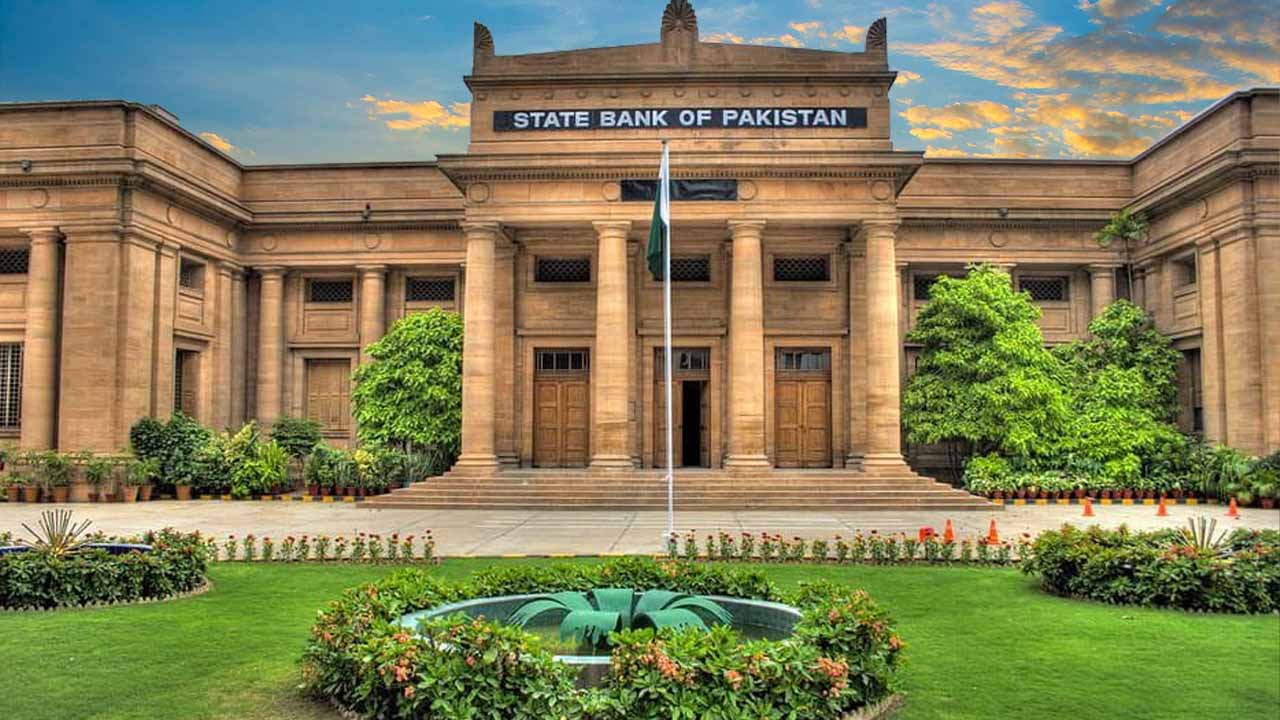
  • Gold price drops by Rs15,500 to Rs199,500 per tola

    Gold price drops by Rs15,500 to Rs199,500 per tola

    The All-Pakistan Sarafa Gems and Jewellers Association (APSGJA) resumed its bullion rate updates after an approximate month-long hiatus, revealing a substantial decline in the value of precious metals.

    According to APSGJA’s data, the price of 24-carat gold plummeted by Rs15,500 per tola and Rs13,546 per 10 grammes, reaching new levels of Rs199,500 and Rs171,039, respectively.

    The last bullion rate report was issued on September 12, when the per-tola price of gold stood at Rs215,000.

    However, escalating uncertainties in the economic landscape led to increased speculation. Consequently, the government intervened with a crackdown on speculators, resulting in the temporary suspension of bullion rate updates.

    During this 28-day period of rate suspension, gold traders resorted to arbitrary pricing as no standardised rates were available. Simultaneously, in the international market, the price of gold experienced a notable decline, dropping by $55 to reach $1,891 per ounce.

    Furthermore, APSGJA’s data also revealed a decrease in silver prices, with a Rs50 per tola and Rs42.87 per 10 grammes reduction, bringing silver’s rates to Rs2,500 and Rs2,143.34, respectively.

  • PM Kakar pushes for speedy privatisation of financially troubled state-owned enterprises

    Caretaker Prime Minister (PM) Anwaar-ul-Haq Kakar, in a meeting held on Monday, directed the relevant authorities to expedite the privatisation process of state-owned enterprises (SOEs) that are experiencing financial losses.

    Stressing the importance of this privatisation effort, the Prime Minister emphasised its role in safeguarding the national treasury from further deficits.

    During this meeting, Minister for Privatisation Fawad Hasan Fawad provided a detailed update on the progress made in the privatisation of these enterprises.

    PM Kakar also commended the Special Investment Facilitation Council (SIFC) for its commendable contributions to this endeavor. 

    It’s worth noting that the caretaker Premier had previously issued similar directives to accelerate the privatisation process of Pakistan International Airlines (PIA), a loss-making entity.

    This development comes in response to reports suggesting that unless emergency funding is secured, PIA’s flight operations could face suspension.

    A senior PIA director revealed that the operational fleet had been reduced from 23 to 16 aircraft, resulting in the cancellation of numerous flights.

  • Pakistan’s economy to recover, but challenges remain: World Bank

    Pakistan’s economy to recover, but challenges remain: World Bank

    Pakistan’s economic outlook, as per the World Bank’s ‘Pakistan Development Update,’ is challenging. The report projects a gradual recovery in real GDP growth, expecting it to reach 1.7 per cent in FY24 and 2.4 per cent in FY25. However, it warns that this recovery is contingent on implementing IMF measures, securing external financing, and maintaining fiscal discipline.

    The report highlights the dire poverty situation in Pakistan, with an estimated 39.4 per cent of the population living below the Lower-Middle Income Country poverty threshold in FY23, compared to 34.2 per cent in FY22. Factors contributing to this include economic slowdown, floods in 2022, import restrictions, political uncertainty, rising global commodity prices, and reduced investor confidence.

    The fiscal deficit remains a concern. While some easing of import restrictions may widen the current account deficit, a weaker currency and higher domestic energy prices could sustain inflation. The report emphasizes the importance of comprehensive fiscal reforms, including reducing tax exemptions, broadening the tax base, improving public expenditure quality, reforming the energy sector, and managing public debt more effectively.

    The World Bank stresses that addressing these challenges is crucial for long-term recovery and recommends strengthening institutions and systems to achieve fiscal and debt sustainability. The report echoes concerns about external shocks, political instability, and debt servicing challenges, underlining the need for prudent economic management and reforms.

    The Asian Development Bank (ADB) predicts a modest GDP growth recovery to 1.9 per cent in FY24, following a contraction of 0.3 per cent in FY23, with persistent price pressures. Overall, Pakistan faces a complex economic landscape that demands immediate attention to fiscal reform, poverty alleviation, and resilience to external shocks.

  • Pakistan’s forex reserves decline by $59 million to $7.64 billion due to debt payments

    Pakistan’s forex reserves decline by $59 million to $7.64 billion due to debt payments

    The State Bank of Pakistan (SBP) reported a weekly decrease in foreign exchange reserves, with a decline of $59 million, bringing the total to $7.64 billion as of September 22, according to data released on Thursday.

    The overall liquid foreign reserves of the country amounted to $13.16 billion, with commercial banks holding net foreign reserves of $5.52 billion.

    The central bank attributed this reduction in reserves to debt repayments, stating, “During the week ending on September 22, 2023, SBP’s reserves decreased by $59 million to $7,636.7 million due to debt repayments.”

    Notably, Pakistan’s central bank reserves had increased by $56 million the previous week, following four consecutive weeks of decline, during which SBP reserves had dwindled by a cumulative total of $416 million.

    In July, SBP’s reserves received a boost when Pakistan received approximately $1.2 billion as the first tranche from the International Monetary Fund (IMF), following approval of a new $3-billion stand-by arrangement. Additionally, inflows from Saudi Arabia and the UAE contributed to the increase.

    Despite these positive developments, the central bank’s reserves have come under pressure due to ongoing debt repayments, increased import payments following the easing of restrictions, and a lack of fresh inflows.

  • Are you a woman looking to start your own business? State Bank of Pakistan has an interest-free loan for you

    Are you a woman looking to start your own business? State Bank of Pakistan has an interest-free loan for you

    In pursuit of fostering both economic stability and enhanced female workforce participation, the State Bank of Pakistan (SBP) has initiated a noteworthy endeavor. It involves extending interest-free loans to unemployed women, empowering them to embark on substantial entrepreneurial ventures.

    During a seminar titled ‘Women Bankability and Banking on Equality’ at the Government Polytechnic Institute for Women in Dera Ismail Khan, Fazal Muqeem, Deputy Chief Manager of SBP in Dera Ismail Khan, articulated this pivotal announcement.

    Muqeem underscored that women, through the establishment of their own businesses, would not only be able to provide for their families but also confront the pervasive impact of the current inflationary trends that affect every echelon of society. He highlighted the financial difficulties faced by economically disadvantaged individuals in meeting their daily expenses due to limited income avenues.

    In light of the restricted employment opportunities within the country, the pursuit of self-employment emerges as the most viable option in such circumstances, according to Muqeem. He elucidated that these initiatives are the result of collaborative efforts between the Prime Minister and the central bank, aimed at cultivating productive citizenship among unemployed women.

    These policies have facilitated the opening of bank accounts for unemployed women on an equitable basis with men, thereby enabling them to access interest-free loans of up to Rs0.5 million.

    Muhammad Zubair, Assistant Director, asserted that the contemporary era is characterised by digital mobility, and citizens should harness this resource to their advantage. He encouraged citizens to become income tax filers, which would help them reduce their tax liabilities.

    Sara Khan, Principal of GPI for Women, expressed her gratitude to the SBP for their support and highlighted their institution’s dedication to equipping students with skills that empower them to be self-sufficient and valuable contributors to society.

    According to Geo News, she envisioned that numerous women would benefit from SBP’s policy in the future and hoped that such insightful seminars would continue to be organised, enabling the underprivileged and eligible women of Dera Ismail Khan to reap the benefits.

    The event also saw the presence of key figures such as Muhammad Amir Ejaz, Assistant Chief Manager of SBP in Dera Ismail Khan, Rizwanullah Shah, Zafar Awan, Placement Officer at GPI (Women), and a substantial gathering of teachers and female students.

  • IMF urges Pakistan to increase taxation on the rich and ‘protect the poor’

    IMF urges Pakistan to increase taxation on the rich and ‘protect the poor’

    International Monetary Fund (IMF) Managing Director (MD) Kristalina Georgieva has urged Pakistan to increase taxation for the rich and safeguard the well-being of the less privileged. She said that these actions align with the desires of the people in Pakistan. 

    According to Geo News, speaking on the sidelines of the 78th United Nations General Assembly (UNGA) session in New York, she stated, “What we are asking in our programme is that you please collect more taxes from the wealthy and please protect the poor people of Pakistan. I do believe this is in line with what people in Pakistan would like to see for the country.”

    In a separate social media post after a meeting with Pakistan’s caretaker prime minister, Anwaar ul Haq Kakar, Georgieva stated, “Very good meeting with Pakistan’s PM today on Pakistan’s economic prospects. We agreed on the vital need for strong policies to ensure stability, foster sustainable and inclusive growth, prioritise revenue collection, and provide protection for the most vulnerable in Pakistan.”

    Furthermore, the Prime Minister’s Office (PMO) released a statement expressing gratitude for the IMF’s approval of a $3 billion stand-by agreement (SBA) to support Pakistan’s economy. The arrangement, approved by the IMF’s Executive Board in July, is set for its second review in November.

    The statement mentioned that Kakar briefed the MD IMF on various measures taken by the Government of Pakistan to stabilise and revive the country’s economy, with a focus on creating a stable environment for sustainable economic growth and investment, particularly for vulnerable segments of society.

    Kristalina Georgieva commended Pakistan’s concerted efforts in implementing policies and reforms to revive the economy and assured continued engagement with Pakistan.

    Read more: UAE bans fresh meat imports from Pakistan 

    In July, Pakistan secured a last-minute SBA with the IMF, providing relief to its economy, which had long grappled with a boom-and-bust cycle due to the absence of meaningful structural reforms. High inflation and a balance-of-payments crisis have led to economic distress, prompting the Asian Development Bank (ADB) to revise its growth outlook for the country.

    Low foreign exchange reserves have resulted in import restrictions as debt payments remained high and avenues for dollar inflows were limited.

    Anwaar-ul-Haq Kakar also called upon the international community to find a lasting solution to the debt issues faced by 59 countries in debt distress, emphasising the need for global and regional cooperation to achieve sustainable development goals. 

    He highlighted the importance of resources for developing countries and reiterated Pakistan’s commitment to supporting the Global Development Initiative. Kakar also noted the significance of China’s Belt and Road Initiative (BRI) and China-Pakistan Economic Corridor (CPEC) in achieving sustainable development goals.