Tag: Pakistan

  • Despite Pakistan’s objections, Andy Pycroft returns as match referee for Super 4 India clash

    Despite Pakistan’s objections, Andy Pycroft returns as match referee for Super 4 India clash

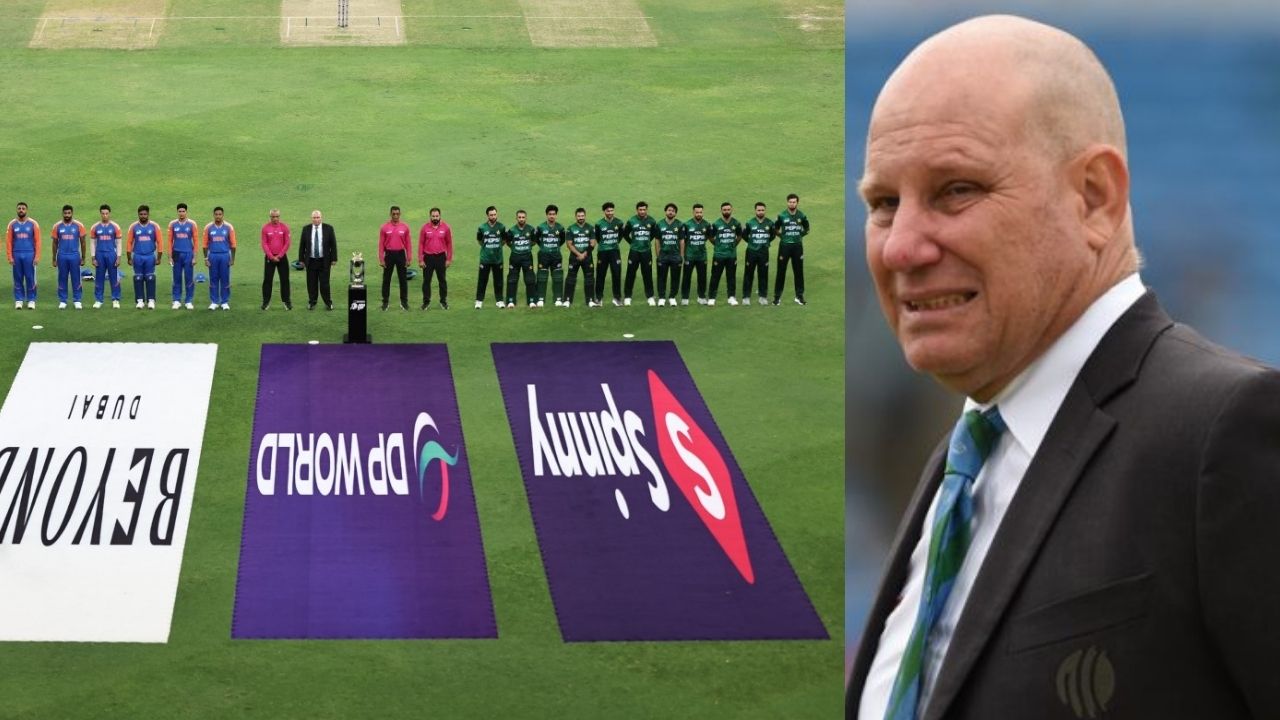
    Andy Pycroft, the match referee at the centre of the controversy during the Pakistan-India clash on September 14, will once again officiate Sunday’s high-voltage Super Four encounter between the two arch-rivals.

    The Sept 14 Asia Cup clash had sparked a storm when Pycroft requested both captains, Salman Ali Agha and Suryakumar Yadav, to skip the customary handshake at the toss. It was a move that infuriated the Pakistan Cricket Board (PCB), which promptly demanded his “immediate removal”.

    The fallout continued into Pakistan’s next match against the United Arab Emirates (UAE), with the team delaying their arrival and the match start time amid behind-the-scenes negotiations with the International Cricket Council (ICC).

    Tensions only eased after a last-minute meeting between Pycroft and Pakistan’s team management ahead of that match — a meeting that itself stirred further controversy over conflicting reports of an alleged apology by the referee.

    Now, with Pycroft officially retained as match referee for the upcoming clash, the high-octane rivalry resumes in a charged atmosphere. India, however, are steering clear of the off-field drama.

    “We’re just focused on our game,” Indian skipper Yadav said on Saturday. “Preparations have been good, and we’re sticking to our strengths. Past results don’t give us an edge… it’s a fresh game, and both teams will need to start strong.”

    India arrived back in Dubai early Saturday after their game against Oman, and will have an optional practice session. Pakistan are scheduled to have a full training session at the ICC Academy today.

    The match will be played at 7:30 pm, Pakistan Standard Time.

  • First Pakistan-India collab since May conflict is breathtakingly beautiful

    First Pakistan-India collab since May conflict is breathtakingly beautiful

    In a landmark moment for cross-border cultural exchange, Pakistani singer Zeeshan Ali has released his latest track Ishqa Ve, marking the first Indo-Pak collaborative music video since the armed conflict between the two nuclear-armed nations in May 2025.

    The video, which beautifully bridges the emotional and cultural landscapes of India and Pakistan, was shot across Amritsar and Lahore, two cities steeped in history and shared heritage. The Amritsar segment was directed by renowned Indian filmmaker Gurpal Singh, while the Lahore portion was helmed by acclaimed Pakistani director Abu Aleeha.

    Zeeshan Ali, known for his soulful voice and versatile singing style, has once again delivered a bewitching song. With a background in classical music, Zeeshan has made a name for himself by fusing traditional South Asian melodies with contemporary sounds. Ishqa Ve continues this trend, blending rich vocals with poignant storytelling and visuals that symbolise love beyond borders.

    The release of Ishqa Ve is being hailed as a cultural breakthrough, with fans and critics alike praising the message of peace and harmony. In a time of heightened political tensions, this musical effort shines as a beacon of hope, proving once again that art knows no boundaries.

  • SCO member states ‘strongly condemn’ terrorist attacks on Jaffar Express, school bus

    SCO member states ‘strongly condemn’ terrorist attacks on Jaffar Express, school bus

    In a major diplomatic achievement for Pakistan, member states of the Shanghai Cooperation Organisation (SCO) have strongly condemned the recent terrorist attacks on the Jaffar Express and the school bus attack in Khuzdar.

    “SCO Member states strongly condemned the terrorist attacks on Jaffer Express on 11 March 2025 and in Khuzdar on 21 May 2025,” read an excerpt from the Tianjin Declaration, as quoted by journalist Anas Mallick in a post on X (formerly Twitter) on Monday.

    On March 11, 2025, Jaffar Express, with over 400 passengers on board in nine bogies, was en route from Quetta to Peshawar when it came under attack by terrorists in the Dhadar area of Bolan Pass.

    A day later, Inter-Services Public Relations (ISPR) Director General Lt. Gen. Ahmed Sharif Chaudhry made an appearance on a private media outlet, saying that the Jaffar Express clearance operation was completed and all terrorists, 33 in total, at the site of the attack had been killed, with 21 passengers and four Frontier Corps (FC) personnel martyred by the terrorists.

    On 21 May, a terrorist suicide attack at the school bus of Army Public School (APS) near Zero Point in Khuzdar on the Quetta-Karachi highway martyred eight children, including two adults.

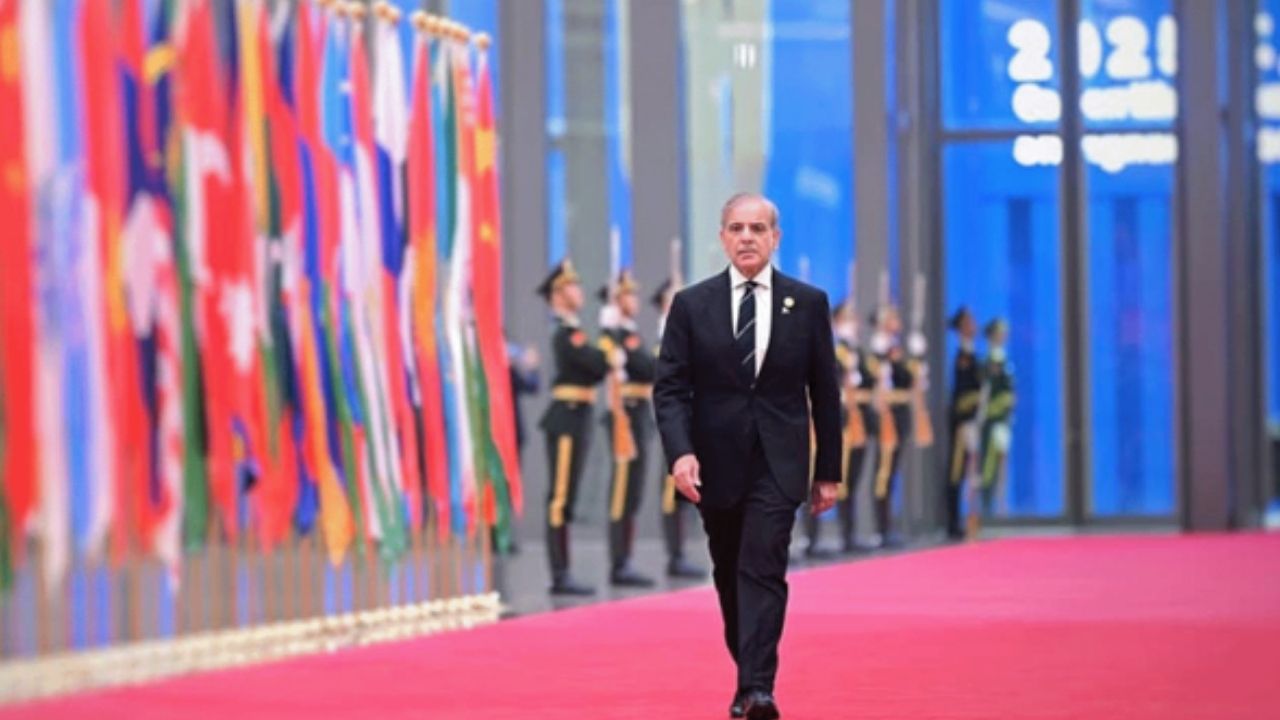
    Meanwhile, Prime Minister (PM) Shehbaz Sharif, during his SCO speech on Monday, said that “Pakistan condemns terrorism in all its forms and manifestations, lincluding state terrorism”. 

    In the presence of Indian PM Narendra Modi, PM Sharif highlighted that those who have long used terrorism to advance their “political interest” must know that the world no longer buys this “fictitious narrative”.

    He noted that Pakistan has “irrefutable evidence” of some foreign nations being involved in terrorism in the Jaffer Express attack as well as terrorism in Khyber Pakhtunkhwa and Balochistan.

    The premier further stated Pakistan expects SCO member countries to follow all bilateral treaties, adding that the country has advocated for dialogue and diplomacy and consultation over confrontation.

    He emphasised that Pakistan supports and respects the sovereignty and integrity of all SCO members and their neighbours, respects all international and bilateral treaties, and expects similar principles to be followed by all member nations.

  • Flood money spent on ceremonial events, refreshments, souvenirs: NDMA audit report reveals unauthorised expenditure

    Flood money spent on ceremonial events, refreshments, souvenirs: NDMA audit report reveals unauthorised expenditure

    The audit report of the National Disaster Management Authority (NDMA) for FY 2023-24 reveals unauthorised expenditure of Rs. 23.254 million from the National Disaster Management Fund (NDMF) on ‘unauthorized’ event management services, with large payments processed on a single day. The money was reportedly spent on ceremonial events such as inaugurations, post-rescue events, and simulation exercises, including payments for refreshments, souvenirs, printing, and related services.

    According to reporters, these expenses were not aligned with the NDMA Act, which restricts the fund’s use to “emergency preparedness, response, mitigation, relief, and reconstruction”. NDMA management defended the spending as part of a shift from “reactive” to “proactive” disaster management, but the audit rejected this explanation. The matter was not regularised as no DAC meeting was held.


    But this is not the only area where authorities fell short.


    Similarly, locals and analysts have criticised the government for having poor radar systems that would not timely forecast heavy rains. In 2018, $210 million were allotted for the Pakistan Hydromet and Climate Services Project, including $188 million worth of World Bank credit, to improve weather forecasting and disaster management with new radar systems. However, the funds have not been utilised effectively to date, with experts reportedly citing bureaucratic failures.

    After the 2022 floods, Pakistan got over $10 billion in pledges at a Geneva donor conference for recovery and climate resilience. But by mid-2024, most of that money still had not reportedly reached communities.

    This year, in 2025, eastern Pakistan is on high alert as floodwaters from Punjab are flowing down towards Sindh and are expected to hit by September 2 to 3, according to Senior Minister Sharjeel Inam Memon.

    Floods 2025

    On June 26 began the spells of torrential rains and flash floods. By August 15, heavy rains and increased flash floods in Khyber Pakhtunkhwa wreaked havoc, killing at least 460 people and injuring over 245 others, according to the Provincial Disaster Management Authority (PDMA).

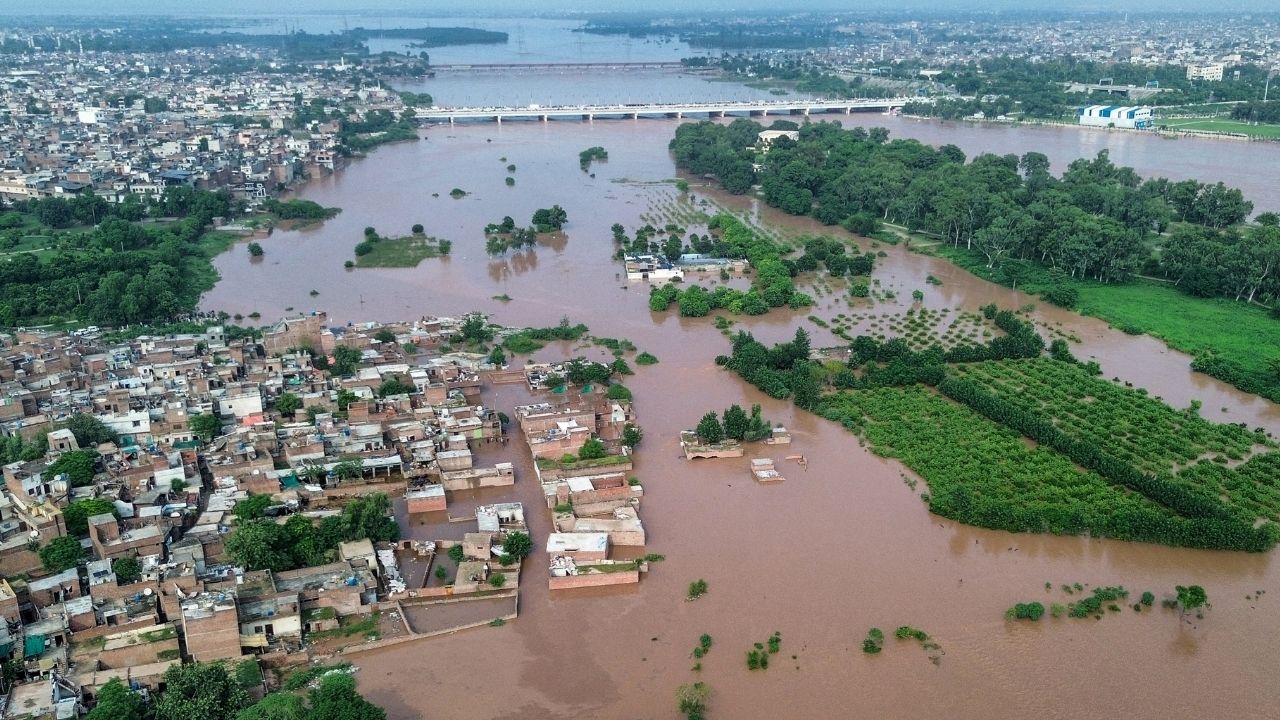
    In Punjab, where around 1.5 million lives are at risk, at least 30 people have died after India opened major dams, including the Salal and Baglihar dams on the Chenab River, releasing water into Pakistan and worsening levels in the Sutlej, Ravi, and Chenab rivers.

    The Current reached out to Idrees Mahsud, Member of Disaster Risk Reduction at the National Disaster Management Authority (NDMA), who stated that “All preparations to facilitate victims and animals are in place,” adding that “obviously it can’t be an ideal situation.”

    “Our main priority is to evacuate people. Camp management is very important; it has its own SOPs, and we are trying our best within the given resources to provide all facilities to the affectees, including medical relief camps, which are available everywhere and largely staffed by volunteers. This is a disaster situation; nothing can be ideal,” he said.

    Flooding in the Chenab river has submerged 991 villages, Sialkot flooding has affected 395 villages, 127 in Jhang, 124 in Multan, 48 in Chiniot, 66 in Gujrat, 51 in Khanewal, 45 in Hafizabad, 41 in Sargodha, 35 in Mandi Bahauddin, and 19 villages in Wazirabad.

    According to Relief Commissioner Nabeel Javed, more than 2,308 villages across Punjab had been underwater, and 481,000 people have been evacuated to safer areas. 511 relief camps have been set up by the provincial administration where flood affectees are being provided food and shelter, along with 351 medical camps and 321 veterinary camps. Moreover, more than 405,000 animals have also been moved to different places.

    Iterating that over 1.4 million people have been rescued and are in relief camps, Mahsud said: “Which government on this earth has been responding better than this government?”

    He clarified that the NDMA is not claiming to provide “two-star or four-star hotel facilities” in these camps. “Relief camps mean you save a human being and help them sustain for a few days, until they are able to return to their homes once the water recedes, with whatever means are available.”

    Mahsud further said that if any camp faces issues, people are encouraged to inform the authorities so they can verify and resolve the problems. “We try to facilitate people in every way, from camps and shelter to medical treatment and medicines.”

    So far, this year, at least 800 people have died across Pakistan in the flooding, while 1,018 have been injured, 6,630 houses damaged, and 5,548 livestock killed, according to the National Disaster Management Authority (NDMA).

    What’s next?

    These floods are yet to hit Sindh, where Guddu Barrage will receive inflows of 700,000–800,000 cusecs early next week. The province’s Senior Minister Sharjeel Inam Memon warns that around 1.6 million people across 1,657 villages could be at risk.

    Meanwhile, Chief Minister Syed Murad Ali Shah, over 52,000 families along the Indus are under threat. He has directed authorities to set up over 500 relief camps along embankments to safeguard people and livestock, while more than 30,000 personnel of Rescue-1122 and 178 boats have been deployed in northern and southern districts.

    Previously, the 2022 floods had affected 33 million people in Pakistan and destroyed 897,014 houses and damaged another 1,391,467. The climatic disaster also killed 1,164,270 livestock, primarily in Balochistan, while access to flood-hit areas was severely hindered by damage to 13,115 kilometres of roads and the destruction of 439 bridges.

  • Pakistan, Bangladesh agree on visa free travel for diplomats, officials

    Pakistan, Bangladesh agree on visa free travel for diplomats, officials

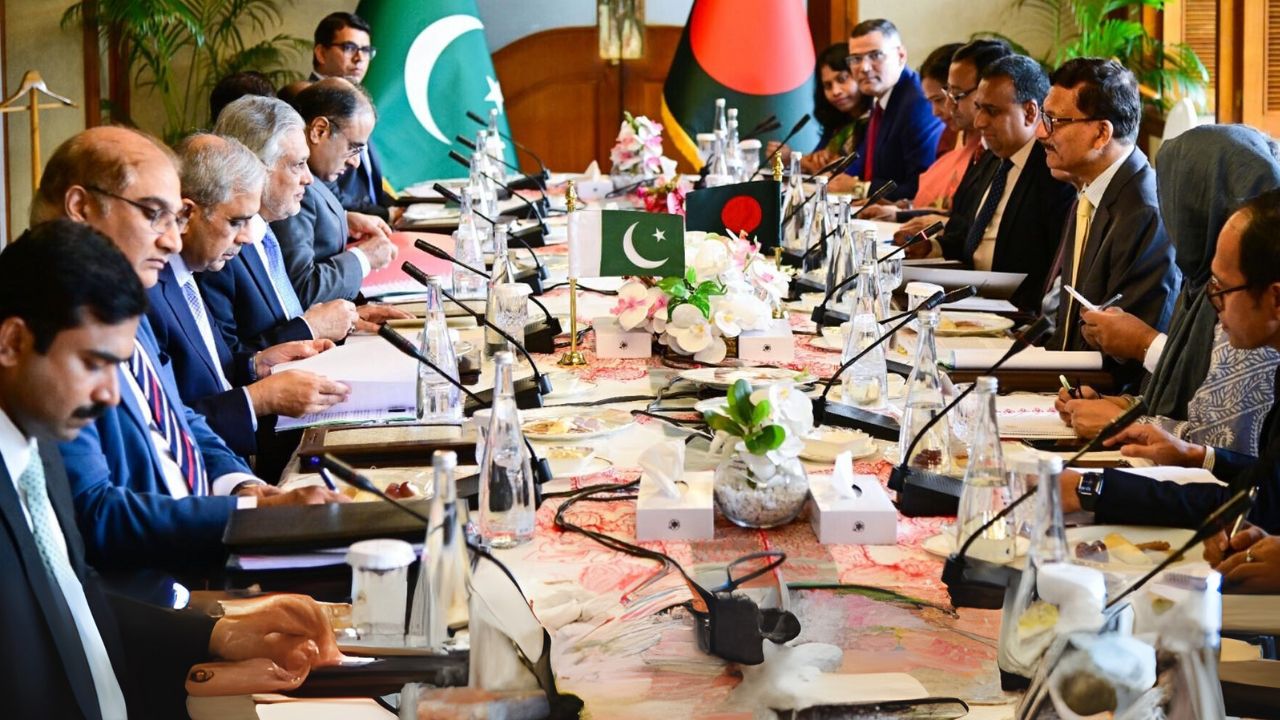
    Ishaq Dar, the Deputy Prime Minister and Foreign Minister, concluded a historic visit to Dhaka on Sunday, the first by a Pakistani foreign minister in 13 years, signing six agreements Memorandums of Understanding (MoUs) regarding trade, diplomacy, media, education, and cultural cooperation.

    During his stay, Dar met Bangladesh’s Chief Adviser Professor Muhammad Yunus, Foreign Policy Adviser Touhid Hossain, senior political leaders, and trade officials. The visit, widely described as a “milestone,” reflects Islamabad and Dhaka’s renewed efforts to reset relations following years of strained ties.

    The agreements signed included visa abolition for diplomatic and official passport holders, MoUs between the two countries’ foreign service academies and think tanks, a media cooperation accord between Associated Press of Pakistan (APP) and Bangladesh Sangbad Sangstha (BSS), a cultural exchange programme for 2025–2028, and the establishment of a joint working group on trade.

    In his meeting with Chief Adviser Yunus, Dar conveyed Prime Minister Shehbaz Sharif’s greetings and reiterated Pakistan’s commitment to strengthening bilateral relations. Both sides discussed trade, economic cooperation, youth exchanges, and regional security.

     According to the Foreign office, Yunus stressed the importance of revitalising Saarc, saying: “I encourage Saarc, and I see our relationship with Pakistan and other Saarc countries as one of the highest priorities.”

    Dar also announced the launch of the “Pakistan-Bangladesh Knowledge Corridor,” which will lead to 500 scholarships given by Pakistan to Bangladeshi students over the course of the following five years, with a quarter going to medical school.

    Training programmes for 100 Bangladeshi civil servants were also offered, while scholarships under the Pakistan Technical Assistance Programme were raised from five to 25.

    The foreign minister met with Dr. Shafiqur Rahman, the emir of Jamaat-e-Islami, and Begum Khaleda Zia, the chairperson of the Bangladesh Nationalist Party.

     At Zia’s house, Dar recalled her 2006 trip to Pakistan and wished her a speedy recovery. Dar praised Rahman’s “lifelong positive contribution in the fields of politics, education, and social welfare” when paying him a visit while he recovered from heart surgery.

    Foreign Policy Adviser Touhid Hossain, speaking to reporters after his meeting with Dar, said: “We have raised unresolved issues such as an apology or expression of regret for 1971, claims over assets, and the matter of stranded Pakistani citizens. It would be wrong to expect problems of 54 years to be solved in a single day.”

     Dar emphasized, however, that the issue had already been addressed. “As far as unresolved issues are concerned, this matter was first settled in writing in 1974, and this historic document is available to both countries. Later, General Musharraf came here and addressed this matter in a very open and explicit manner,” he told journalists.

    He continued: “In my view, once this matter has been settled between brothers, Islam also instructs us to keep our hearts clean. Therefore, we should move forward and work together, because our future is bright. In line with our Islamic teachings, the Quran, and the Sunnah, we must keep our hearts pure and move forward. We are one family, and we must work together to do the best for the people of both countries.” 

    Dar described his discussions in Dhaka as “excellent,” saying: “There was no disagreement on any matter, which is a very positive sign. We are working together to take economic and trade relations between our two countries to new heights.” 


    At a reception hosted by Pakistan’s High Commissioner in Dhaka, Dar noted the deep-rooted cultural and religious connections between the two nations. “The relations between the two countries are anchored in centuries-old shared traditions, Islamic heritage, social norms and literary expressions,” he remarked, adding that the people of Pakistan hold “fraternal sentiments” toward the people of Bangladesh.

    Both sides agreed to look into measures to improve connectivity and economic cooperation during the visit, which also included discussions with trade and commerce officials. Two decades after its last session, reports in Dhaka indicate that Pakistan and Bangladesh intend to call a new meeting of the long-stalled Joint Economic Commission later this year.

    Dar’s trip has been hailed as a major turning point in Pakistan-Bangladesh ties, indicating cautious optimism about the future with the signing of new agreements, strengthened political engagement, and commitments for educational and cultural exchanges.

  • Bangladesh approves visa-free entry for Pakistani officials for first time since 1971

    Bangladesh approves visa-free entry for Pakistani officials for first time since 1971

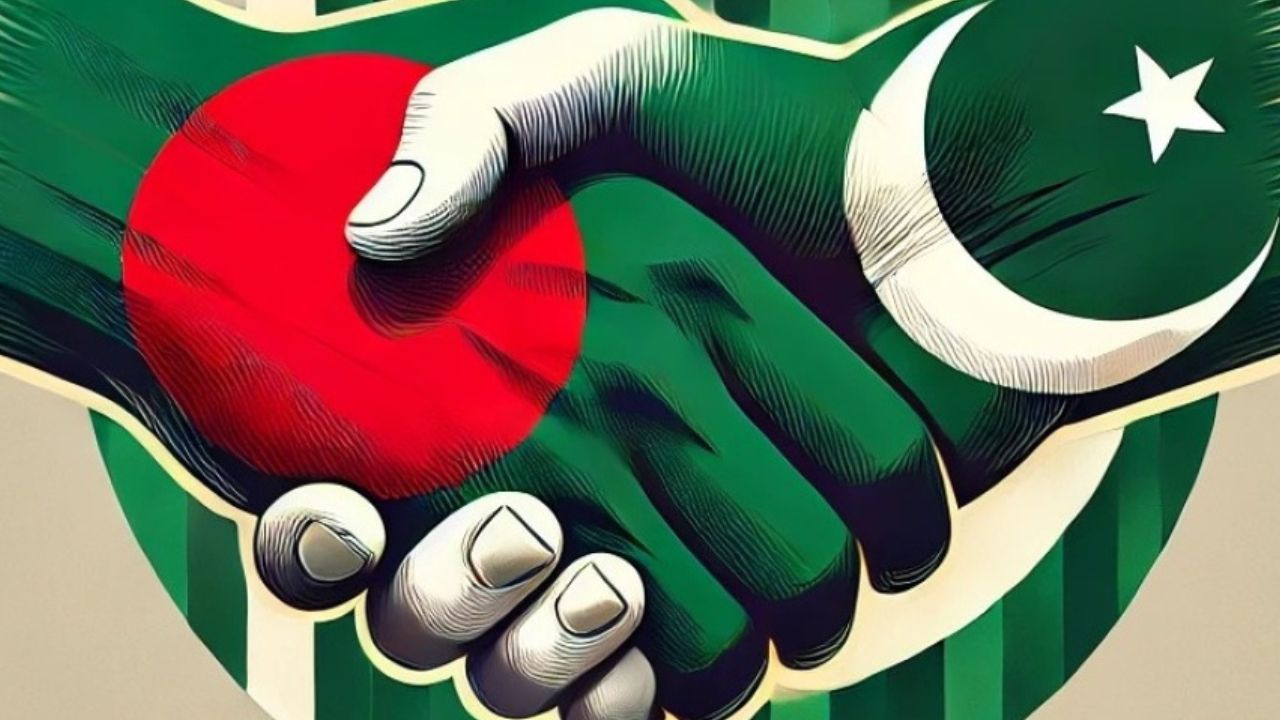
    Bangladesh has approved visa-free entry for Pakistanis holding diplomatic and official passports, a facility that had remained suspended since the country’s independence in 1971, media reports have confirmed. 

    In a conference held in Dhaka on Thursday, Press Secretary Shafiqul Alam stated that a mutual visa exemption agreement was approved by the Advisory Council of Bangladesh’s interim administration.

    “The agreement will be for five years. Those who have diplomatic and official passports will be able to travel to Pakistan without a visa,” Alam said, adding that Bangladesh already has similar arrangements with 31 other countries.

    The development comes after Bangladeshi Home Adviser Jahangir Alam Chaudhary and Pakistan’s Interior Minister Mohsin Naqvi held a meeting in Dhaka last month during which the two sides maintained they were finalising a Memorandum of Understanding (MOU) for visa-on-arrival for official passport holders.

    Pakistan’s Commerce Minister Jam Kamal Khan arrived in Dhaka on Wednesday night for a four-day official trip. According to an official statement, the purpose of the visit is to enhance bilateral trade relations and promote economic cooperation.

    Following the August 2024 uprising that toppled Sheikh Hasina’s government, which had a pro-India stance, ties between Dhaka and Islamabad were improved.

    On November 13 last year, a cargo vessel from Karachi docked at Bangladesh’s Chittagong port, marking the first direct maritime link between Pakistan and Bangladesh since 1971.

  • Pakistan, Afghanistan fans to be seated separately for Sharjah tri-series matches

    Pakistan, Afghanistan fans to be seated separately for Sharjah tri-series matches

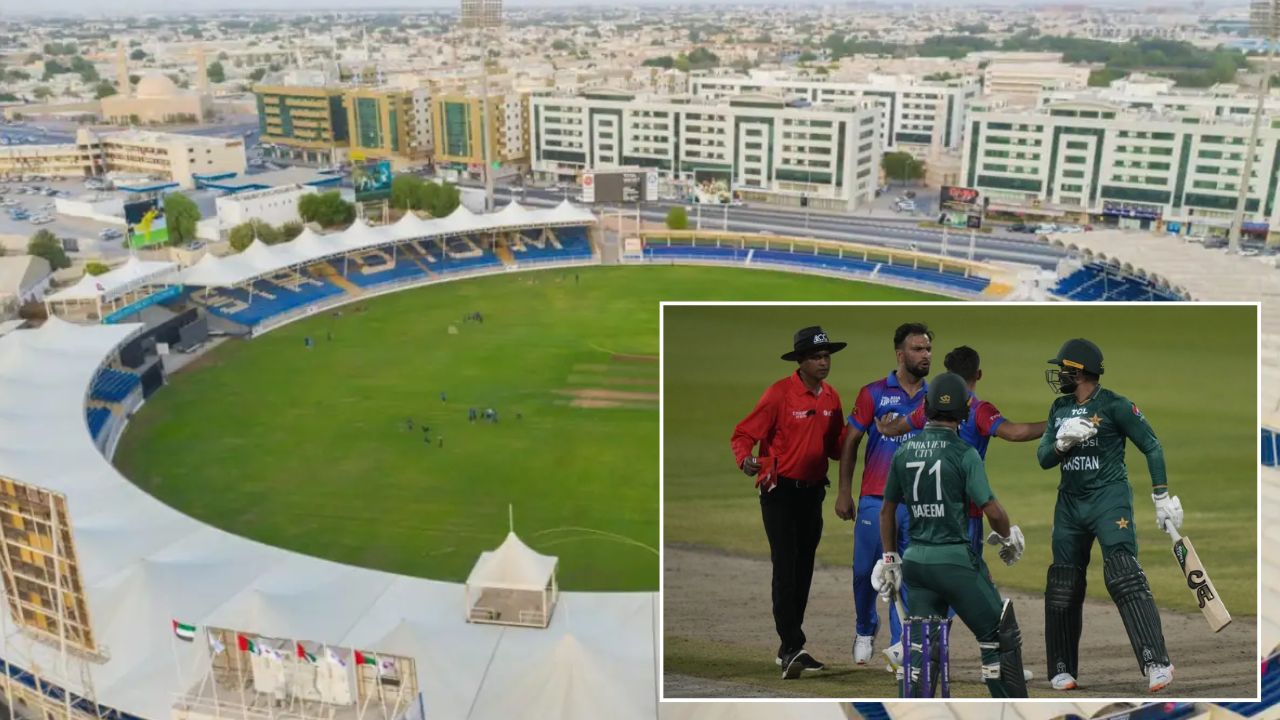
    Organisers of the upcoming tri-nation cricket series in Sharjah have decided to allocate separate seating enclosures for Pakistani and Afghan fans in a bid to ensure crowd safety.

    The move comes ahead of highly anticipated matches between Pakistan and Afghanistan, whose cricketing rivalry has intensified in recent years.

    According to reports, the decision to separate fan sections follows previous incidents where matches between the two nations saw clashes and disorder among spectators.

    The Sharjah Cricket Stadium, with a capacity of 16,000, is expected to see a large turnout of both Pakistani and Afghan fans. If implemented, the policy will restrict ticket sales to designated seating areas for each group throughout the tournament.

    The tri-series also features the UAE as the third team and will serve as a preparatory event ahead of the 2025 Asia Cup. Officials are expected to make a formal announcement regarding the crowd management plan soon.

    The tri-nation series is set to begin on August 29, with the opening match between Pakistan and Afghanistan.

  • Islamabad rejects Ukraine’s claim of Pakistani ‘mercenaries’ fighting for Russia

    Islamabad rejects Ukraine’s claim of Pakistani ‘mercenaries’ fighting for Russia

    The Government of Pakistan has categorically rejected the “baseless and unfounded” allegations regarding the involvement of Pakistani nationals in the Ukraine conflict.

    In a statement issued on Monday, the Ministry of Foreign Affairs (MOFA) said the government would raise the matter with Ukrainian authorities, “and seek clarification in this regard”.

    “Pakistan reaffirms its commitment to the peaceful resolution of the Ukraine conflict through dialogue and diplomacy, by the principles of the UN Charter,” the statement added.

    In a post on X (formerly Twitter), Ukrainian President Volodymyr Zelensky claimed that his troops in northeastern Ukraine were fighting ‘mercenaries’ from various countries, including Pakistan.

    “We spoke with commanders about the frontline situation, the defence of Vovchansk, and the dynamics of the battles.”

    “Our warriors in this sector are reporting the participation of mercenaries from China, Tajikistan, Uzbekistan, Pakistan, and African countries in the war. We will respond,” wrote Zelenskyy.

    Earlier in 2023, media reports suggested that Pakistan had provided Ukraine with ammunition, a claim Islamabad had officially denied.

    In February 2023, France 24 reported that “run-down ammunition supplies are one of Kyiv’s most pressing concerns, with Ukraine and its partners resorting to far-flung countries like South Korea and Pakistan as sources of artillery munitions”. Many reports had also alleged that the ammunition was sent to Ukraine through a European country.

    The then MFO spokesperson Mumtaz Zahra Baloch rebuffed the reports, claiming that Pakistan maintains a policy of non-interference in military conflicts.

    “Pakistan only exports defence stores to other states based on strong end-use and non-retransfer assurances. And this is the case of Pakistan’s position in the Ukraine-Russia conflict,” she maintained.

  • Pakistan to receive one million barrels of US oil in October

    Pakistan to receive one million barrels of US oil in October

    Pakistan’s largest oil refiner, Cnergyico, is set to import one million barrels of crude oil from the United States (US) in October this year, marking the country’s first-ever purchase of American oil following a landmark trade agreement. The shipment will be supplied by global energy trader Vitol.

    On Friday, Reuters quoted Cnergyico Vice Chairman Usama Qureshi as saying that a cargo of West Texas Intermediate (WTI) light crude will be loaded from Houston this month and is expected to arrive in Karachi in the second half of October.

    “This is a test spot cargo under our umbrella term agreement with Vitol. If it is commercially viable and available, we could import at least one cargo per month,” Qureshi stated, adding that Vitol has been a long-term trading partner of the company. 

    The deal was reached after months of negotiations that began in April this year, following US President Donald Trump’s threat to impose a 29 percent tariff on Pakistani goods.

    In response, Pakistan’s finance and petroleum ministries encouraged local refiners to diversify their sourcing and explore US-origin crude.

    On Thursday, Pakistan praised a trade deal with the US, its top export market, and asserted that the agreement would boost investment.

    According to an executive order detailing the tariffs, the US announced that Pakistan would face a 19 percent tariff on its exports.

    Oil is Pakistan’s largest import item, with shipments valued at $11.3 billion in the fiscal year ending June 30, 2025, accounting for nearly one-fifth of the country’s total import bill.

    “Gross refining margin is on par with Gulf grades, and no blending or refinery tweaks are required,” Qureshi said, adding Cnergyico could consider buying at least 1 million barrels of oil a month from the US after it evaluates the first shipment, given its current monthly demand stands at 4.6 million barrels.

    “It aligns well with domestic market requirements. Demand typically strengthens in the October–November period,” he stated.

    Cnergyico can process 156,000 barrels of crude per day and operates the country’s only single-point mooring terminal near Karachi, enabling it to handle large tankers, unlike other refiners in Pakistan.

    According to Qureshi, the company plans to install a second offshore terminal to allow larger or more frequent shipments and to upgrade its refinery over the next five to six years

    On Wednesday, President Trump said that the United States would also cooperate with Pakistan to develop the South Asian country’s “massive oil reserves”, though he did not provide further details.

    Vitol is yet to respond to the development.

  • Pakistan, Afghanistan, UAE tri-nation T20I series schedule revealed

    Pakistan, Afghanistan, UAE tri-nation T20I series schedule revealed

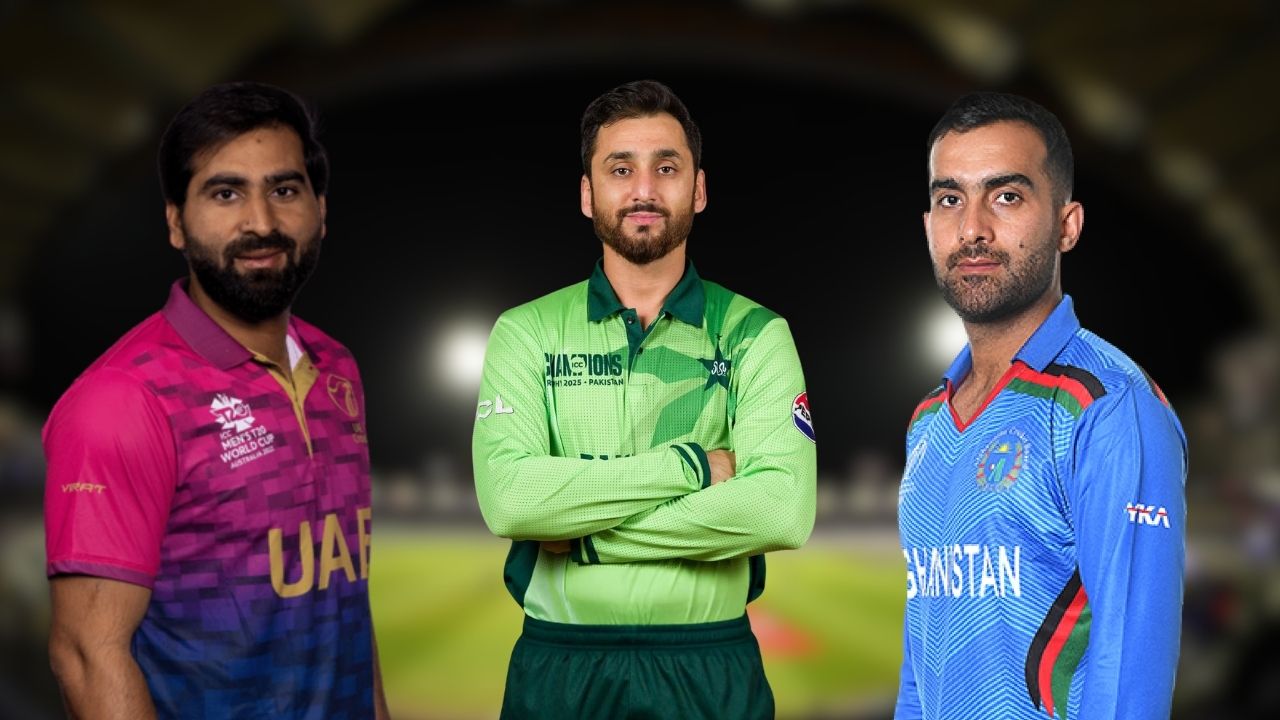
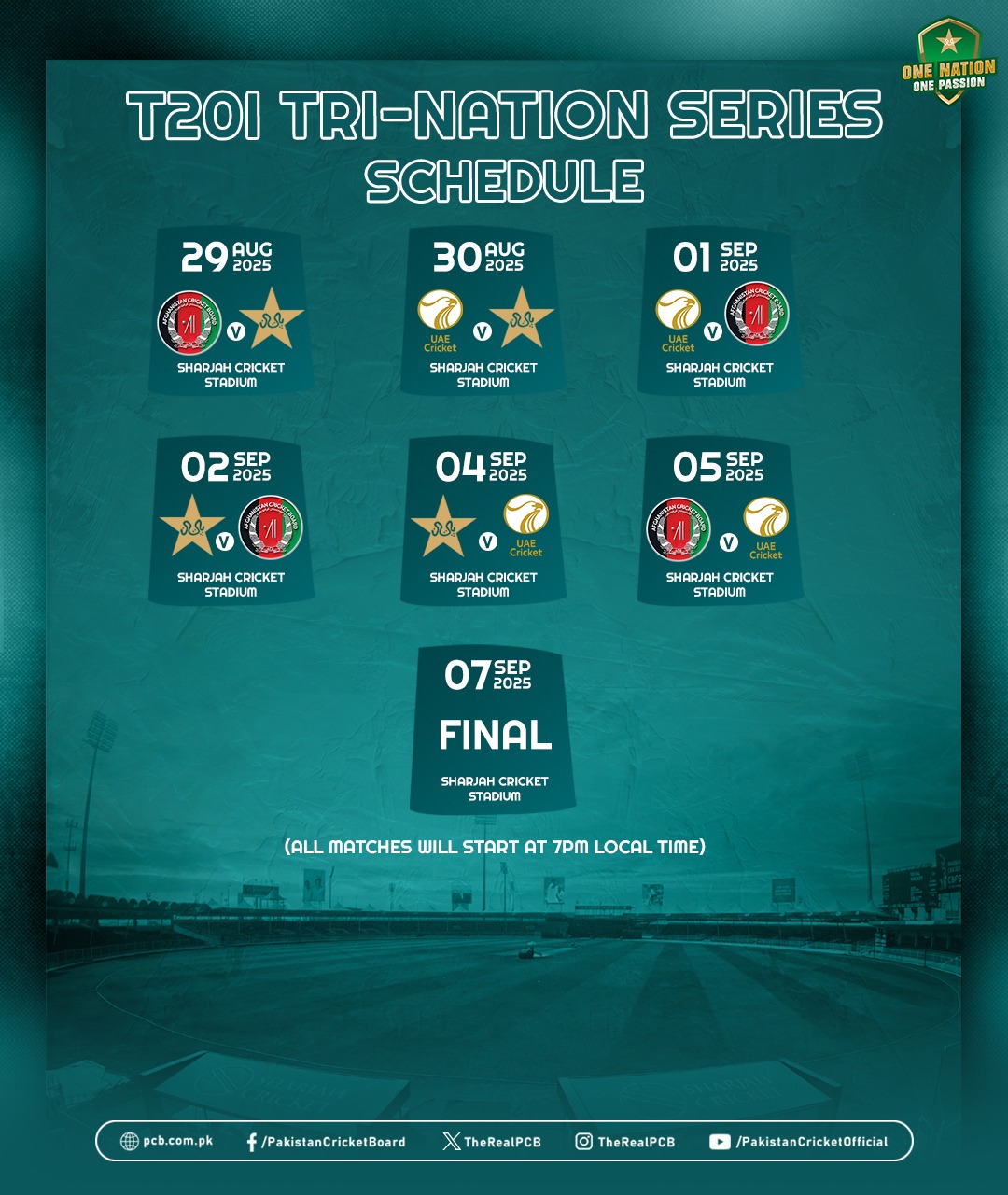
    The schedule for a T20 tri-nation series between Pakistan, Afghanistan, and the United Arab Emirates (UAE) has been officially announced. 

    The tournament will take place from August 29 to September 7 in Sharjah.

    Each team will play the others twice in the round-robin stage, with the top two sides qualifying for the final.

    The tournament will kick off on August 29 with the opening match between Pakistan and Afghanistan. Pakistan will then face UAE on August 30.

    UAE and Afghanistan will clash on September 1, followed by another Pakistan vs Afghanistan encounter on September 2.

    Pakistan will meet UAE again on September 4, and UAE will play their final group game against Afghanistan on September 5.

    The final of the tri-nation series is scheduled for September 7.