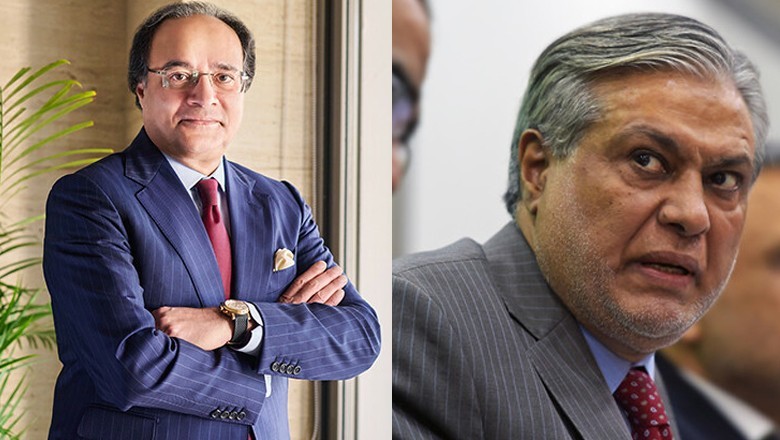
In a surprising move, the Finance Minister of Pakistan finds himself cut from two major financial decision-making committees, while paving the way for a much bigger role in financial matters for Ishaq Dar, Express Tribune has reported.
Prime Minister Shehbaz Sharif has reshuffled four cabinet committees. As a result, Finance Minister Aurangzeb now heads only one committee instead of three. PM Shehbaz kept the chairmanship of the very important Economic Coordination Committee (ECC) of the cabinet instead of giving the Finance Minister the portfolio.
Meanwhile, the PM has given Foreign Minister Ishaq Dar the chairmanship of Cabinet Committee on Privatization (CCOP) – a post normally headed by the Finance Minister of the country.
Tribune reported that there was some apprehension within the ruling party Pakistan Muslim League (PML-N) regarding the appointment of Aurangzeb as the Finance Minister and it was decided within the party leadership that Dar would stay in charge of economic affairs but in a different capacity.
Finance Minister Muhammad Aurangzeb now chairs only the Cabinet Committee on State-owned Enterprises (CCoSOEs).
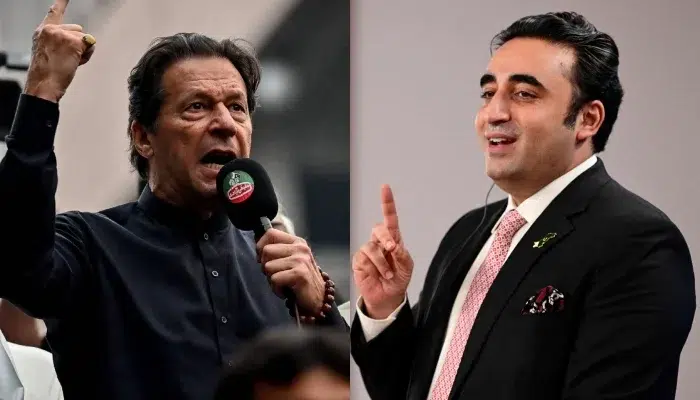
PPP’s top leadership has prevented its provincial chapter from attempting to persuade Pakistan Tehreek-e-Insaf (PTI) to form a non-political alliance in the upcoming Senate election.
PPP Punjab chapter suggested forming an electoral alliance with PTI for women and technocrat seats in Punjab.
The PTI proposed it to the special committee of the PPP after receiving a conditional offer. They asked the PPP to vote for Yasmin Rashid.
Sources told SAMMA that in return, the PPP offered to support Faiza Malik in women’s seats.
PPP instructed the party leadership in Punjab to form an alliance with the political allies Pakistan Muslim League Nawaz (PML-N) instead of PTI.
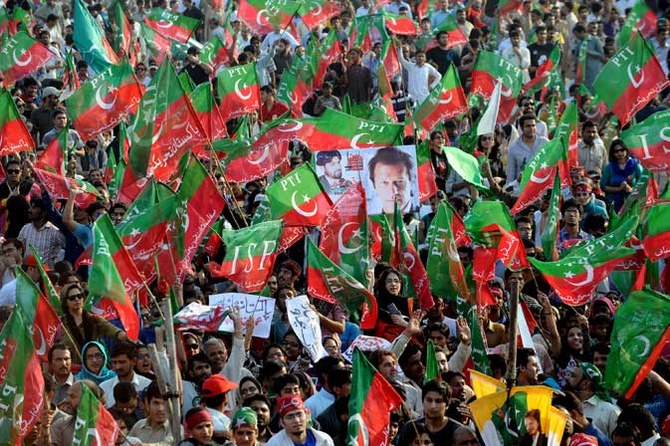
The Pakistan Tehreek-e-Insaf (PTI) has announced to stage a protest against the alleged rigging in the 2024 general elections. The incarcerated founder of the party Imran Khan believes that the mandate was stolen from people and post-poll rigging was rampant.
According to them, election results were changed in the Form 47s compared to Form 45s to benefit the current ruling party Pakistan Muslim League-Nawaz (PML-N) and the Pakistan Peoples Party (PPP). PTI member and the Chief Minister of Khyber Pakhtunkhwa (KPK) also said “The incumbent government at the Centre has been formed after stealing PTI’s 180 seats.”
Previously, the party had sought permission from the Deputy Commissioner of Islamabad to lawfully stage a protest in the capital city but received no reply. After this, they reached the Islamabad High Court (IHC) to be allowed to hold a rally. It is believed that they wanted to stage the protest on Pakistan Day but later decided against it and set the date to March 30.
Imran Khan’s party is also set to hold a press briefing on the impacts of upcoming International Monetary Fund (IMF) package on the general public on March 25.
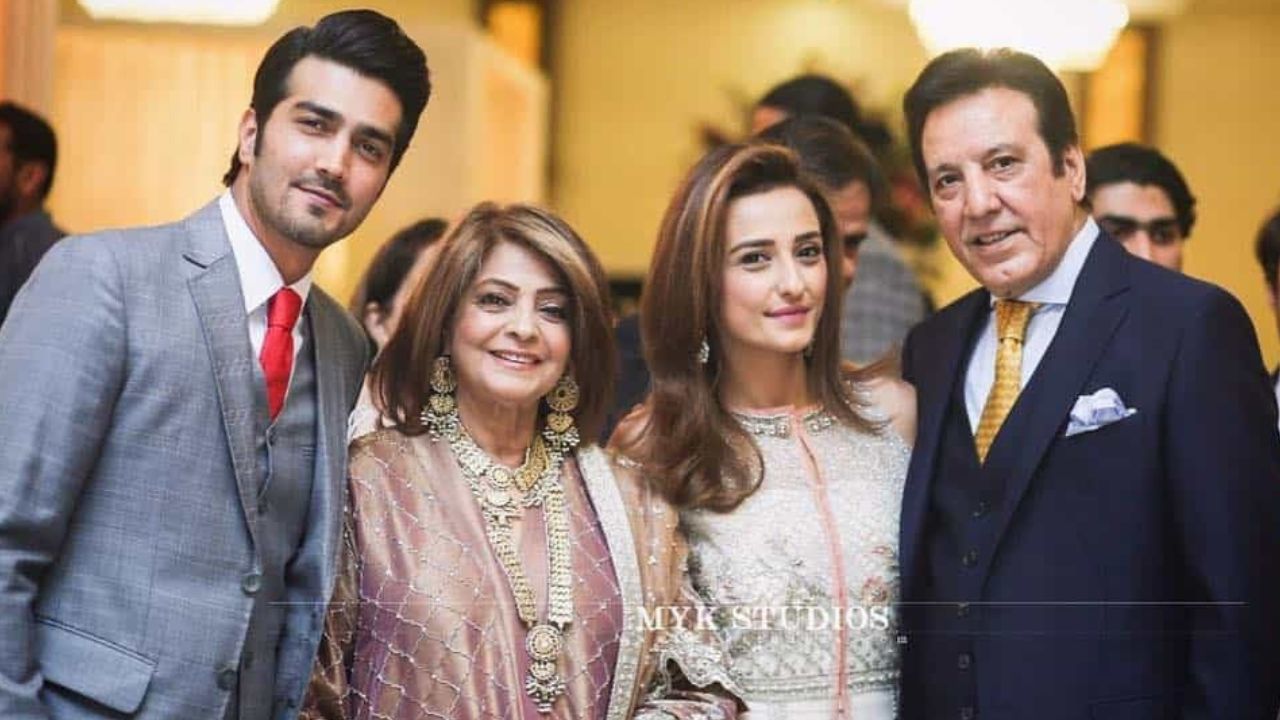
Veteran film star Javed Sheikh has talked about his past marriage with singer Salma Agha and called it the ‘bad period’ of his life. The two were married in the 90s, becoming one of the most glamorous couples of the time. The marriage ended on a sour note.
Javed Sheikh finally opened up about the marriage, stating feeling guilty and regretful about it, during a recent appearance on ‘Subh Ka Samaa’ Madeha Kay Sath.
The A-lister discussed his first marriage to Zeenat Mangi and how his children, actors Momal and Shehzad Sheikh, were affected by the separation until he got remarried to Salma Agha. “I didn’t want to separate from my first wife, but it happened. My children, Shehzad and Momal, went through a lot because of it. They were away from me for three years while I was married to Salma Agha,” Sheikh explained sadly.
Calling his divorce his biggest regret, Sheikh said, “It shouldn’t have happened, and I wish it didn’t. Even though our family was broken, my kids stayed strong, thanks to their mom. She deserves credit for keeping our family close, despite the separation. She made sure the kids spent time with me on family days.”
“My kids, Saleem’s kids, Behroz, and my other siblings’ kids would gather at my house in Lahore,” the veteran remembered fondly.
Gauahar Khan and Zaid Darbar have shared their son Zehaan’s picture from the Holy city of Makkah, Saudi Arabia. The couple shared a post together where they’re holding their son in the Holy Kaaba. They also posted a video of Zehaan smiling at the holy site. In the caption, they wrote: “Just wanted to give our little prince’ first Salaam to the world from the house of the Almighty! May he be pleased with our SonShine! Ameen. Our Zehaan. Request for continued positivity, love and blessings for him. Lots of love.”
They continued, “The emotions you feel when you arrive, no matter how many times you visit, only comes from the imaan in your heart . But how do you explain the feeling of watching your baby ,an infant flapping his hands in a calling action to masjid al nabawi for the first time that he has ever seen it. Subhan Allah.”
A district and sessions court approved a request on Friday to bring Pakistan Tehreek-e-Insaf (PTI) founder Imran Khan and party leader Shah Mahmood Qureshi to court. The court directed authorities to make sure that the politicians appear in court on April 20th.
Judicial Magistrate Mureed Abbas heard the petition for the production of evidence in the Parliament attack case involving Imran Khan and others. During the hearing, Naeem Panjotha, the lawyer representing the former prime minister, presented his arguments.
The lawyer argued that the Superintendent of Adiala jail does not obey the order of any court. He insisted the court ensure that jail officials adhere to the orders and produce Khan.
He also said that jail authorities come up with excuses and don’t even arrange for a video link hearing for the PTI founder.
The judicial magistrate, following Panjotha’s arguments, said Khan is in Adiala jail and the situation is different, and while the option of video link is there, the attendance takes place in the e-court.
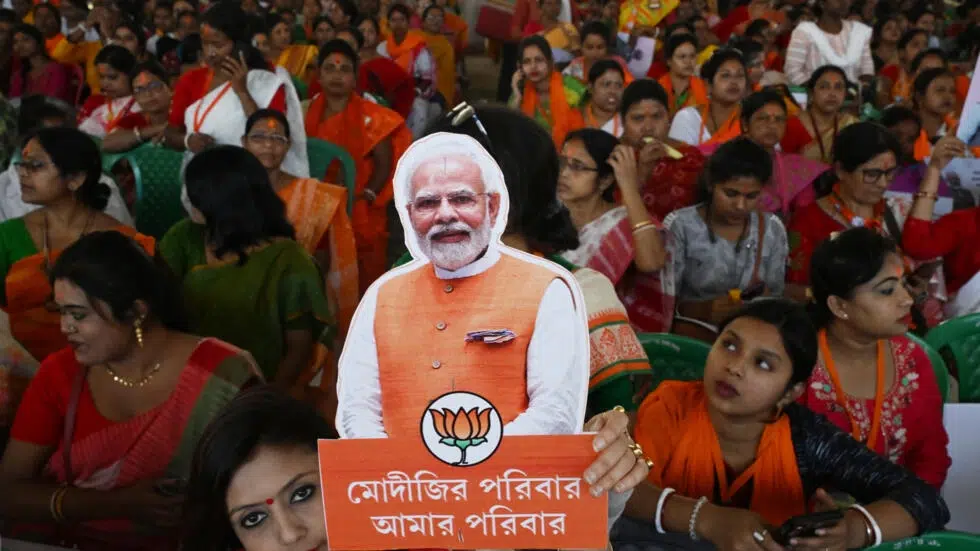
Last week, India’s election commission published a list detailing buyers of electoral bonds, a contentious funding scheme that has helped Prime Minister Narendra Modi’s party build an immense campaign war chest dwarfing rivals.
Electoral bonds account for more than half of all political donations and were anonymous until India’s top court ruled them illegal weeks before the start of national elections next month.
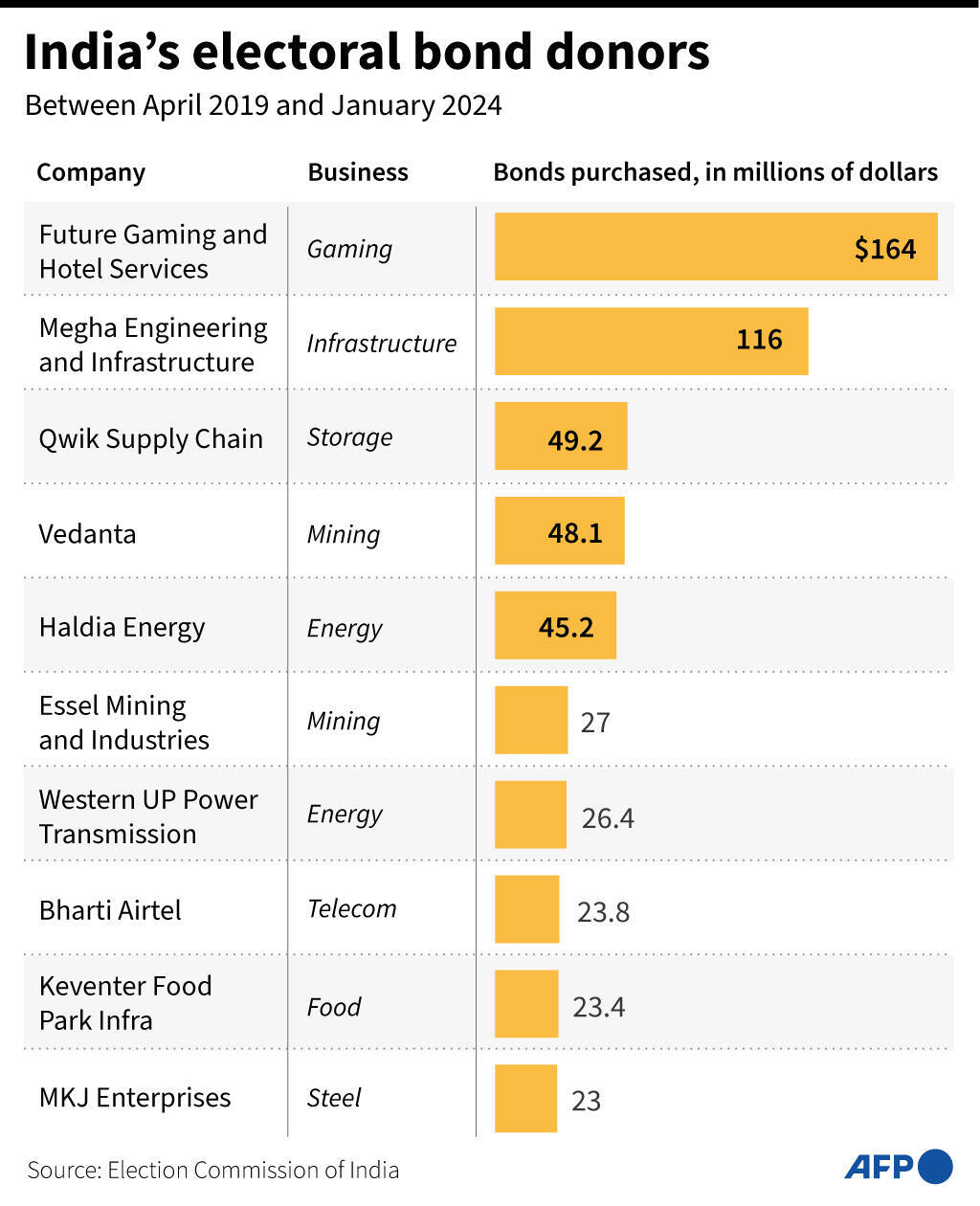
An AFP review of the list found that of the $1.5 billion donated through the scheme, at least $94 million was donated by 17 companies after they faced — either directly or through their subsidiaries — investigations for tax evasion, fraud or other corporate malfeasance.
“The electoral bond scheme was sinful in conception, faulty in design and intended to prevent transparency,” lawmaker Abhishek Singhvi of the opposition Congress party told AFP.
“Each of these vices stand exposed… by the huge disclosures tumbling out of the closets.”
‘Knocked at their doors’
Opposition party lawmakers claim the electoral bonds list shows that firms were donating to Modi’s ruling Bharatiya Janata Party (BJP) in the hopes of influencing the outcome of criminal probes.
The BJP was far and away the single biggest beneficiary of the scheme, receiving $730 million or around 47 percent of total bonds cashed since April 2019.
Its main competitor Congress received around $171 million over the same period.
Among the companies named as donors are Hero MotoCorp, the country’s biggest motorbike maker by sales. It donated $2.4 million to the BJP seven months after confirming its finances were being investigated by the tax department.
Glenmark Pharmaceuticals, a top drug firm, bought $1.17 million worth of electoral bonds for the BJP eight months after Indian media reported an investigation for alleged tax evasion.
Indian miner Vedanta, whose parent company was once listed on the London Stock Exchange, donated more than $40 million spread across half a dozen parties over the past five years.
Local media reported in 2022 that the country’s main financial crime agency began investigating the company in 2018 for allegedly paying bribes to facilitate Indian visas for Chinese technicians.
Hero, Glenmark and Vedanta did not respond to requests for comment.
No definitive proof of such a quid pro quo has surfaced. Authorities have also not publicly announced whether investigations against donor companies have been closed or withdrawn.
Nirmala Sitharaman, Modi’s finance minister, said last week that any allegation of a link between criminal investigations and political donations was based on “huge assumptions”.
“What if the companies gave the money, and after that, we still went and knocked at their doors?” she told a panel hosted by television channel India Today.
The BJP was not the only party to receive electoral bonds from companies facing legal investigation.
Among the several parties funded by lottery company Future Gaming — the biggest single donor under the scheme with a spend of $164 million — were the government and opposition of southern Tamil Nadu state.
Future Gaming has since 2011 been the subject of several investigations on suspicion of unpaid income tax, money laundering and fraud, according to media reports.
‘Black money’
Ties between corporate India and the country’s political class have previously blown up into public scandal — including to the benefit of Modi, who was swept to office a decade ago on a wave of public discontent over corruption.
Modi made hay from a number of corporate bribery accusations directed against his opponents, including allegations that ministers and bureaucrats had taken money from telecom companies in return for favourable licensing deals.
His government introduced electoral bonds in 2017, pledging the scheme would clear up the illicit “black money” donated to parties in return for political favours.
But the new scheme did not close off other avenues of funding, including anonymous cash donations or tax-deductible electoral trusts in which multiple companies can pool money together for parties without public scrutiny.
Indian media also identified several other irregularities with the electoral bond scheme, reporting that several companies donated amounts far in excess of their annual profit or revenue.
Others were loss-making or had been freshly incorporated, suggesting they had been used as front companies to make donations on behalf of an unidentified third party.
Milan Vaishnav, of the Carnegie Endowment for International Peace, said the donation list vindicated the election commission’s objections to the scheme when it was first unveiled.
“This is precisely what the EC had warned, (that) the creation of this opaque instrument could allow for shell companies, foreign firms, and unknown third parties to give to parties without detection or outside scrutiny.”
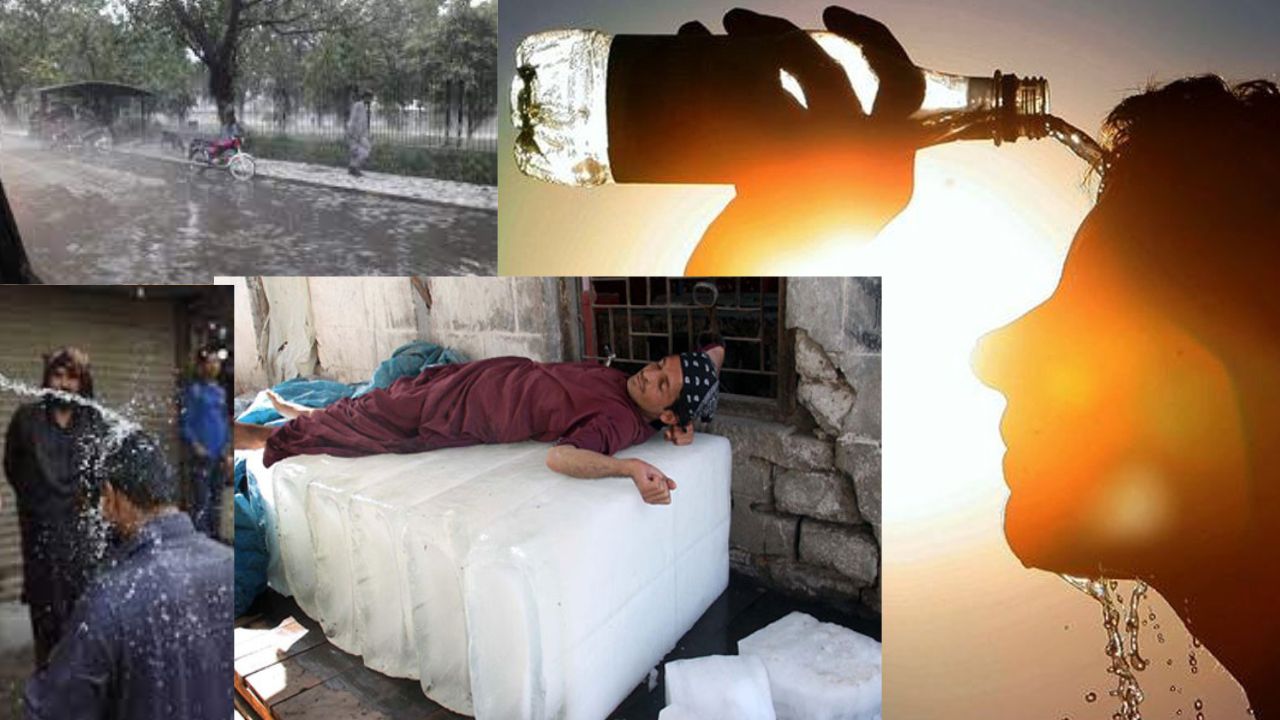
The Department of Meteorology has indicated the possibility of an increase in hot temperatures in Sindh and Balochistan while hailstorms are expected in some parts of Punjab, reports Geo News.
There is a possibility of a gradual increase in temperature during the day in the southern districts of Sindh and Balochistan, as per the Meteorological Department.
However, in Karachi, there is a chance of clear weather in the upcoming weekend. The minimum temperature recorded was 24.4 degree celsius in the last 24 hours.
The minimum temperature is expected to be 21 to 23 degrees Celsius and the maximum temperature is expected to be 33 to 35 degrees during the next 24 hours. Humidity is 76 percent while winds are blowing at a speed of 15 km per hour.
Simultaneously, heavy rain was reported in Muzaffarabad city and its surroundings and snowfall on the mountains made the weather beautiful.
The Meteorological Department says that there is a possibility of rain in various cities of Punjab, including Khushab, Jhelum Murree, Guliyat, Rawalpindi, Chakwal, Gujarat, Sialkot and Hafizabad. Meanwhile, there is a possibility of hailstorm in a few places.
In Khyber Pakhtunkhwa, Chitral, Dir, Swat, Kohistan, Shangla, Buner, Malakand, Abbottabad, Mansehra and Haripur will experience thunder and lightning along with the rain.
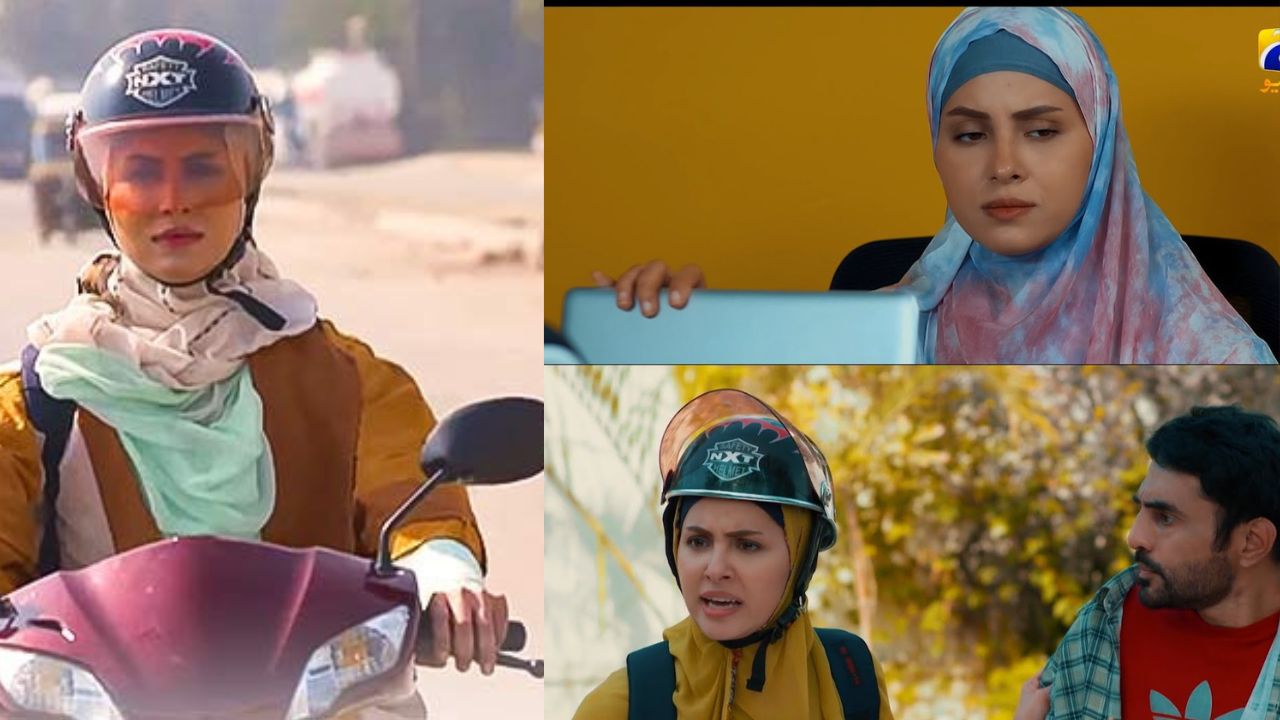
‘Umm-e-Ayesha’ is a TV show made by 7th Sky Entertainment for Ramzan. It’s on Geo channel every evening at 6 pm, starting on the first day of Ramzan. The show tells a story meant to inspire young girls who want to follow their faith and also achieve their dreams in real life.
The story is about a girl named Ayesha, played by Nimra Khan. Saleem Ghanchi directed the serial, and Hina Huma Nafees wrote it. The cast includes Omer Shahzad, Mehmood Akhtar, Nida Mumtaz, Tara Mahmood, and others.
The drama serial focuses on the teachings of Islam while keeping the dreams, lifestyle and challenges of the new generation in perspective. No doubt Umm-e-Ayesha is a notable effort in that direction.
Here’s why you should watch the show:
Normalising girls wearing hijab driving scooters
Ayesha wears a hijab and drives a scooter. Seeing a young girl do both might seem unusual in shows, but this drama aims to make it normal. While we’ve seen girls driving scooters in dramas before, seeing a girl in a hijab do it is refreshing.
Breaking old tropes
When Ayesha’s father gives her a scooter for her birthday, her mother doesn’t like it. She thinks it would’ve been better if he gave her gold jewelry instead. This happens a lot in our communities. People often think it’s better to invest in property or gold for a girl’s future, rather than giving her the chance to get an education or live independently.
Father standing up for his daughters
It’s heartwarming to see the show portray the bond between fathers and daughters without the usual restrictions we often see. Ayesha’s father is her biggest supporter. Even though their relationship is made up, it reflects the real-life stories of many women who have succeeded with the help of a supportive male family member. ‘Umm-e-Ayesha’ shows these kinds of relationships and changes the way father-daughter relationships are usually shown on TV.
Girls working while wearing hijab
Ayesha gets treated unfairly because of her hijab. She almost doesn’t get a job because of it, and later, she faces criticism for it too. Ayesha represents many girls who struggle to keep wearing their hijab despite facing bias at work or pressure to look modern. But Ayesha doesn’t give up. She shows that girls can wear hijab and still do well at work. She dresses neatly and professionally, proving that her hijab doesn’t stop her from fitting in or doing her job well.
In ‘Umm-e-Ayesha,’ we see a girl who has to prove herself not just outside her family, but also within it. Her mother wishes she was married and wants her to dress up nicely when there’s a potential match visiting. There’s also pressure on her to send pictures without her hijab to impress potential husbands’ families.
What’s interesting is that her sister doesn’t wear hijab, which many families can relate to. Despite their differences, they have a good relationship and don’t force each other to change.
In summary, ‘Umm-e-Ayesha’ is worth watching during Ramzan, especially if you’re tired of regular Ramzan dramas. Its messages are relevant to both young and old viewers.Top of Form
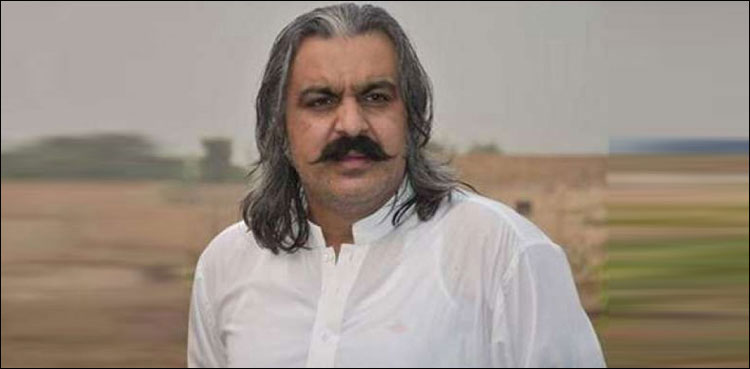
An Anti-Terrorism Court in Islamabad has given permission for Khyber Pakhtunkhwa Chief Minister Ali Amin Gandapur to be granted pre-arrest bail in the judicial complex vandalism case. Meanwhile, the Sessions Court has stopped his arrest warrants in cases filed at Bani Gala and Golra police stations in Islamabad.
The ATC granted Gandapur interim bail until April 17, approving his pre-arrest bail request.
Gandapur’s lawyer Raja Zahoorul Hassan told the court his client was named in the first information report (FIR), but he had no role in the vandalism incident as he was not present on the scene. The lawyer further revealed that despite facing 50 FIRs, Gandapur was not even being allowed to reach the court.
However, Gandapur turned himself in to the Sessions Court in Islamabad, which led to the cancellation of the arrest warrants issued against him in cases filed at Bani Gala and Golra police stations.