Tag: Pakistan

  • More than 60 government officials close to PPP added to stop list

    More than 60 government officials close to PPP added to stop list

    The names of more than 60 Sindh government officials close to the Pakistan People’s Party (PPP) have been out on the stop list, Azaz Syed has reported for The News. The name of Mukesh Chawla, a PPP leader and former provincial minister, is also on the list.


    According to the report, the National Accountability Bureau (NAB) is conducting an investigation against Sindh PPP leader Mukesh Chawla, asking that he be added to the stop list.

    These officials will be investigated by NAB Karachi, Azaz Syed has said.

    On the other hand, according to a report filed by Hasnaat Malik in The Express Tribune, the gap between PPP and the security establishment has grown after the dissolution of Sindh Assembly.
    PPP was unhappy to see that government officials on prominent posts were being transferred during the caretaker government, the report said.

  • No country has raised concerns regarding polls delay, says Foreign Office

    Following reports of senior diplomats expressing reservations regarding the delay in polls in Pakistan, while mentioning that it could have negative effects on Pakistan’s relationships with democratic nations, the Foreign Office said it has not yet received any such communication from any capital, sources told The News.

    If a country raises any doubts and concerns, the authorities can address them, the Foreign Office said.

    If elections are delayed beyond February next year, then that might invoke serious consequences for the country. “Frankly, if elections are delayed beyond February, it will be extremely difficult for us to maintain the same level of bilateral engagement with Pakistan as we are doing now,” a source told Express Tribune.

    It is believed that in case of delay in elections, western countries, might revisit their cooperation with Pakistan. This could negatively impact Pakistan’s engagement with US-led financial institutions, including the International Monetary Fund (IMF).
    Not only Western countries want timely elections but they also want a level playing field for all the political parties. “This is something we will be keeping a close eye on,” said another diplomatic source, referring to media restrictions and crackdown against certain political parties.

    Meanwhile, FO Spokesperson Mumtaz Zahra Baloch clarified that she has no knowledge of any messages from any capital on this matter, as the positions of Pakistan and other countries on the issue are already known.

    The sources revealed that the government is well aware of the European Union’s (EU) stance and the International Monetary Fund’s (IMF) perspective on the matter. If parliamentary elections are deferred without valid reasons, the Generalised System of Preferences Plus (GSP+) trade facility could come under scrutiny.

    It has been reported that United States Ambassador to Pakistan, Donald Blome, and some other senior Western diplomats had held meetings with high-ranking officials in Pakistan, including caretaker Prime Minister Anwaar-ul-Haq Kakar and Chief Election Commissioner (CEC) Sikandar Sultan Raja.

    These meetings were aimed at gaining first-hand assessments of the situation. It is understood that these countries have closely followed the developments in Pakistan regarding election preparations and maintained communication with relevant parties to emphasise the preservation of a democratic environment.

    The sources noted that Pakistan has adequately briefed important capitals on the post-dissolution developments in national and provincial legislatures. The government has assured these capitals that the action will strictly adhere to the Constitution and law. The restriction to hold elections within 90 days following assembly dissolution, as stipulated in the Constitution, has been communicated.

    The sources highlighted that the ECP had recently clarified that there are no intentions to delay elections once the delimitation process concludes. Speculation arose that updating electoral rolls based on new delimitations could lead to further delays.

    The electoral body dismissed the concerns, explaining that updating electoral rolls and delimitation can proceed concurrently, as this is not an uncommon practice and would not cause any delay in elections. The ECP has already set December 14 as the deadline for completing the constituency delimitation process, and the enrollment of new voters will also be completed by this deadline.

  • Air pollution in South Asia can cut life expectancy by more than five years per person

    Air pollution in South Asia can cut life expectancy by more than five years per person

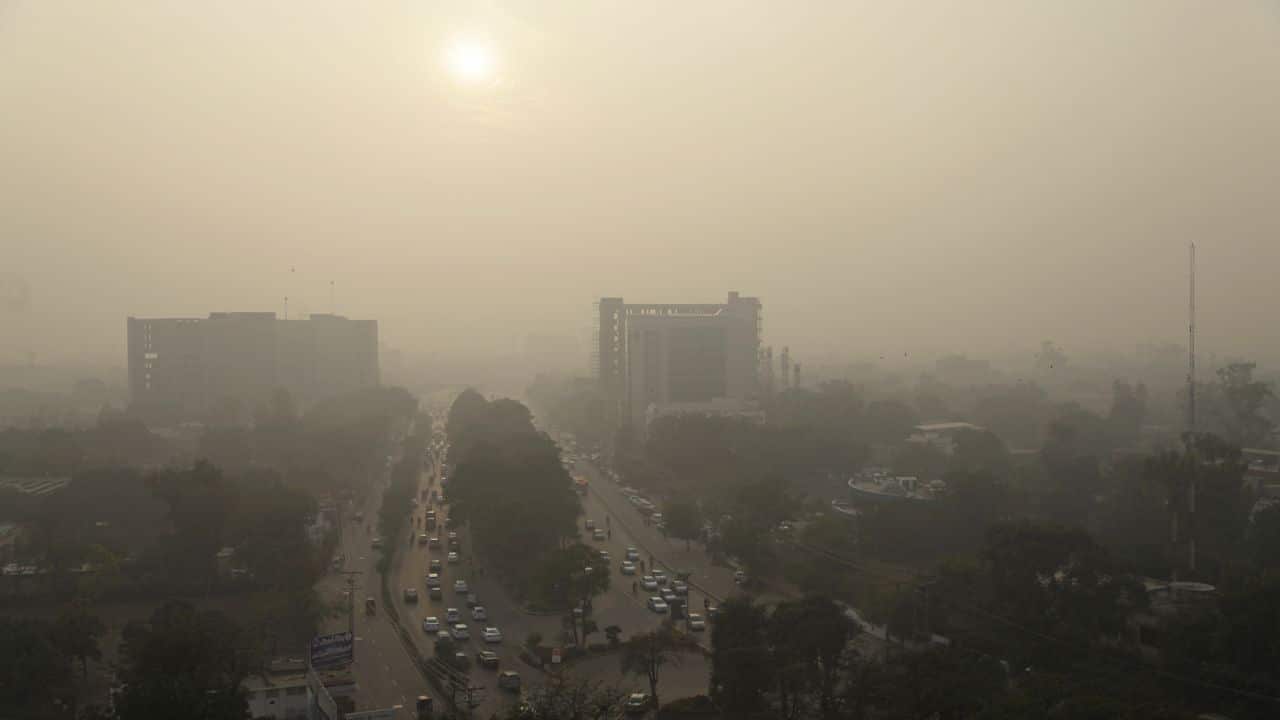
    University of Chicago’s Energy Policy Institute (EPIC) has published its latest report about Air Quality Life Index on Tuesday. The report deduced that rising air pollution can cut life expectancy by more than five years per person in South Asia which is currently one of the most polluted places in the world.

    Primary contributors in the region’s declining air quality are increasing industrialisation and population growth. The particulate pollution levels are resultantly more than 50 percent higher in comparison to the century’s start, posing a much greater health threat.

    What does the report say about Pakistan?
    According to the report, 98.3% of Pakistan’s population lives in areas exceeding the national air quality standard of 15 micrograms per cubic meter.

    From 1998 to 2021, average annual particulate pollution increased by 49.9% in Pakistan and reduced life expectancy by 1.5 years.

    In Punjab, Islamabad, and Khyber Pakhtunkhwa 65.5 million citizens reside (69.5% of Pakistan’s population), with the country’s people potent set to lose between 3.7 to 4.6 years of life expectancy on average relative to the World Health Organization (WHO) guideline and between 2.7 to 3.6 years relative to the national standard if the current pollution levels persist.

    Moreover, if Pakistan is able to meet WHO’s guideline, Karachi residents would gain 2.7 years of life expectancy whereas residents of Lahore would gain 7.5 years and people in Islamabad would gain about 4.5 years of life expectancy.
    Pakistanis would gain 3.9 years by meeting the WHO guidelines of limiting average annual PM 2.5 concentration to 5 micrograms per cubic meter.

    Others in South Asia

    The study further expounds upon other countries in the region.

    In light of the current pollution levels, Bangladeshis can lose 6.8 years of life on average per person compared to 3.6 months in the United States.

    A Nepali would live 4.6 years longer by meeting the WHO guidelines of limiting average annual PM 2.5 concentration to 5 micrograms per cubic meter.

    It is also highlighted that India is responsible for about 59 percent of the world’s increase in pollution since 2013, threatening to reduce lifespan in some of the country’s polluted regions.

    The average lifespan in New Delhi, a heavily populated and the world’s most polluted megacity, is down by more than 10 years.

    The report added that by reducing global levels of lung-damaging airborne particles, known as PM 2.5, to levels recommended by WHO could raise average life expectancy by 2.3 years.

    China has put in work to reduce pollution by 42.3 percent between 2013 and 2021. The report suggested the governments generate accessible air quality data in order to help bridge global inequalities in accessing tools to combat pollution.

  • Imran Khan rearrested in cypher case

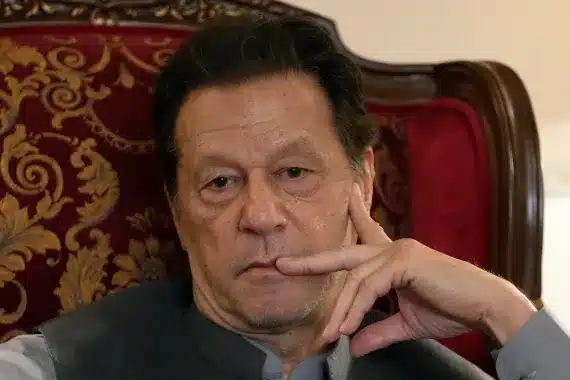
    Imran Khan rearrested in cypher case

    The Islamabad High Court (IHC) has on Tuesday suspended PTI Chairman Imran Khan’s conviction and three-year sentence in the Toshakhana case.

    Imran Khan was rearrested again in the cypher case right after getting bail in the Toshakhana case.
    According to the judgment of Judge Abul Hasnat Zulqarnain, Khan will remain in police custody until August 30.

    Imran Khan was sentenced to jail for three years on August 5 in the Toshakhana Case. As a result of the sentence, the Election Commission of Pakistan (ECP) also banned Imran Khan for five years from contesting elections.

    Imran Khan has to sumbit a surety bond of Rs 100,000 to get bail, as per Geo.

    The former Prime Minister had challenged his sentence in the high court, with today’s verdict coming as a major legal victory.

    Earlier, Judge Humayun Dilawar of a sessions court in Islamabad found former Prime Minister Imran Khan guilty in the Toshakhana case.

    Khan had been disqualified for five years and given a prison sentence of three years.

    He had also been fined Rs 100,000. The judgement also said that if the fine is not paid, the imprisonment can be increased by six months.

  • Imaan Mazari handed to police on three day physical remand

    Imaan Mazari handed to police on three day physical remand

    An anti-terrorism court has handed over Imaan Mazari, the daughter of former federal minister Shireen Mazari, to the police on a three-day physical remand.

    Anti-Terrorism Court Judge Abual Hasanat heard the case against Imaan Mazari in which prosecutor Raja Naveed appeared in court while Zainab Janjua appeared on behalf of Iman Mazari.

    During the hearing, prosecutor Raja Naveed argued that a case had been registered against Imaan Mazari in Bara Kahu police station. The plaintiff accused Imaan Mazari of inciting the youth and instigating them against the state, alleging that he received threats when he broke away from Imaan Mazari’s party.

    Prosecutor Raja Naveed requested the physical remand, which was opposed by her lawyer, saying that a new case was made on the same day that Imaan was supposed to get bail. He asked how can three cases be registered on the same incident.

    She said that a drama is being constructed against Imaan Mazari, while the real purpose of the prosecution against her is something else.

    Imaan’s lawyers requested to discharge her from the case.

    After listening to the arguments of the parties, ATC judge Abual Hasnat reserved the decision, after which she was handed over to the police on a three-day physical remand.

  • After protests, people going to court against LESCO

    After protests, people going to court against LESCO

    After a sharp hike in electricity bills, an increasing number of cases are being filed against LESCO in courts, as people turn towards legal recourse as a last option.

    More than 400 cases were filed against WAPDA within a week.

    The court, taking immediate action, ordered the department to divide the bills into installments.

    Consumers have said that they do not have any other option but to go to court. They have rejected the increase in electricity bills and appealed to the government to provide immediate relief.

  • ‘Psychiatrist told me I had manic depression’, Mahira opens up about mental health

    ‘Psychiatrist told me I had manic depression’, Mahira opens up about mental health

    Superstar Mahira Khan was a guest on Frieha Altaf’s podcast where she opened up about learning to face her mental health struggles, especially after stepping into Bollywood with the Shah Rukh Khan starrer ‘Raees’, and the 2017 incident where pictures of her smoking with Ranbir Kapoor emerged online. She also talked about the 2016 Uri attack, after which Pakistani actors were banned from working in Bollywood.

    Reflecting on that time, the actress revealed she dealt with immense backlash, calling it “unexpected”.

    Mahira said she was getting scary calls, hateful messages to the point that she couldn’t travel to India to promote ‘Raees’, which was heartbreaking and it began creating anxiety and depression. The ‘Hum Kahan Kay Sachay Thay’ actress revealed she was constantly seeing her image on television screens, and getting hateful messages telling her to leave India, and it escalated to the point that her faith broke.

    “I developed severe anxiety to the point that one day I had a panic attack and fainted’ recalled Mahira. “That’s the first time I went for therapy.”

    “But that didn’t work out, as I went to several therapists. But either I was not opening up, or the therapist sitting across me would be looking at me with awe thinking ‘what would she have to complain about’?”

    Raees released in 2017, the same year Mahira’s Pakistani film ‘Verna’ released across Pakistan, and at the same time, the picture scandal happened.

    “I couldn’t sleep, my hands would shake,” the ‘Bin Roye’ actress confessed.

    Mahira said she eventually visited a psychiatric hospital, where she was informed that she had manic depression. The actress said for the past six or seven years she has been on anti-depressants. She once tried quitting the meds in the middle which put her in a dark hole.

    “I did understand that there is something beyond me. Beyond the prayers i will do, beyond the friends that will cheer me up, beyond work and success. There is something not right, and it’s okay.”

    The ‘Superstar’ actress said that by talking about her mental health struggles and breaking the stigma surrounding the topic, she hoped more people would learn to approach others for help rather than treat it with shame.

    “I talk it every chance I get. This is the first time I’m opening up about the fact that I’ve been taking medicine for so many years. And when I tried leaving it like I said it was bad… And I was again in and out of hospitals trying to get help. But yes, everybody has ups and downs, bad times and happy times, but clinical depression is real like any other mental illness or physical illness.”

  • PTI files a petition in court to conduct elections within 90 days of National Assembly dissolution

    PTI files a petition in court to conduct elections within 90 days of National Assembly dissolution

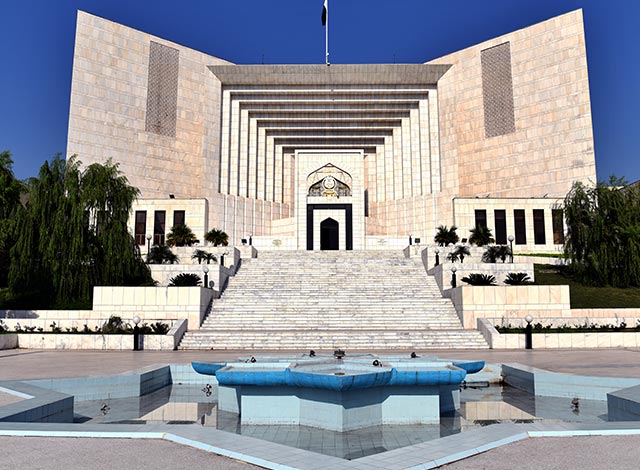
    Pakistan Tehreek Insaaf (PTI) has filed a petition in the Supreme Court (SC) asking for general elections to be conducted in Pakistan within 90 days of the dissolution of the National Assembly (NA), Geo has reported.

    The petitioner, Omar Ayyub, who is also PTI’s Secretary General, requested the court to direct President of the country Dr Arif Alvi to announce a date for the elections and the Election Commission of Pakistan (ECP) to issue an election schedule accordingly.

    On the other hand, the Jamaat-e-Islami (JI) has asked the electoral body to issue an election schedule along with the delimitation schedule in order to avoid any confusion. On Monday, the Muttahida Qaumi Movement-Pakistan (MQM-P) supported the Election Commission of Pakistan (ECP) in holding elections after the delimitation of constituencies.

    According to the ECP’s official statement issued after the meeting, both parties made their stances clear in front of Chief Election Commissioner (CEC) Sikander Sultan Raja, who was also part of the meeting.

  • ‘I am upset’ Maryam Nawaz worried about public’s high bijli bills, says father can save everyone

    ‘I am upset’ Maryam Nawaz worried about public’s high bijli bills, says father can save everyone

    Chief Organiser and Senior Vice President of Pakistan Muslim League-Nawaz (PML-N) Maryam Nawaz Sharif has stated that just as the country was saved from the risk of default within 16 months, similarly, her party under the leadership of former prime minister Nawaz Sharif, will also lessen public burden of inflation and skyrocketing electricity bills.

    “We saved Pakistan from default within 16 months, and now we will shield the people from inflation. It’s upsetting that the public has to face challenges like inflation and increased electricity charges,” she said during a meeting with leaders and officials of the party’s Punjab Women Youth Wing in Lahore.

    “If the process of development had not been halted, there would not have been any tears in the eyes of the common man today. The issues of today have emanated from the four-year era of project Imran,” she added in reference to arch-rival Imran Khan who was deposed through a Vote of No Confidence in April 2022.

    Maryam stated that only an elected government will be capable of curbing the demon of inflation and of initiating a period of progress and contentment.

    “InshaAllah, just as we eradicated load-shedding, terrorism, and lawlessness in Karachi, we can also control inflation. Nawaz Sharif is the guarantee of Pakistan’s progress, and he alone can liberate us from all these issues,” she said.

    She also reviewed the performance of the women youth wing and said that she feels pride in seeing the active participation of many women in political activities.

    Maryam said that it is her desire that more party tickets should be given to the youth in the next election because the youth have the ability to make Pakistan a strong country.

    She claimed that female students like the PMLN leadership because of their performance, claiming that her party had become the largest youth and women’s party in the country.

    “PMLN leadership has always empowered the youth, they were provided with laptops and interest-free loans for decent employment,” she said.

  • Who are the people using free electricity in Pakistan?

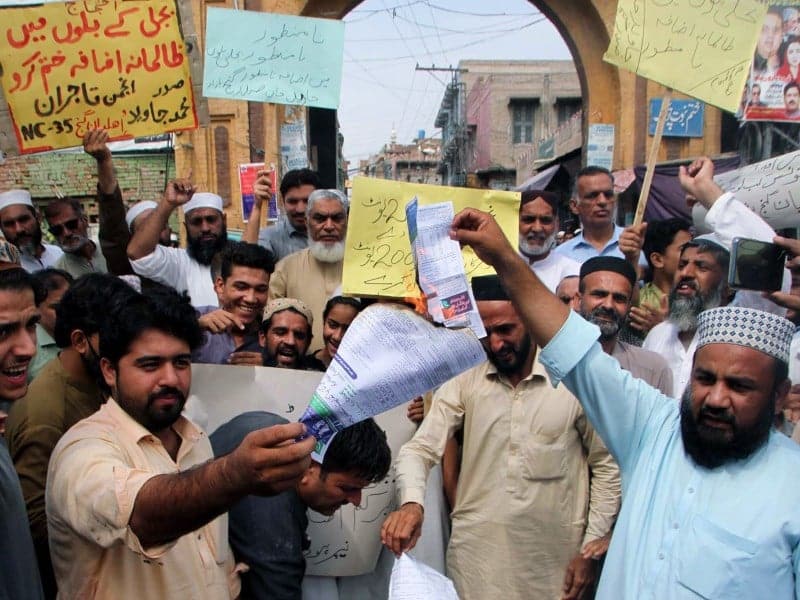
    A sharp hike in electricity bills has led to public protests across the country with consumers burning electricity bills collectively to express their objection to the exorbitant sums. The protesters are demanding that free electricity is not given to WAPDA employees and other officials because it is the general public who has to bear its burden — something they can no longer do.

    We News’ reporter, Bilal Abbasi, has investigated the amount of electricity being used every month by individuals like the Prime Minister, President, Supreme Court and High Court Judges, Federal Ministers, Chairman NAB, Governor State Bank, Senior Bureaucrats and senior government officials.

    Here are the details that We News has uncovered:

    During presidency, unlimited power unit; after retirement, 2000 units per month

    According to the President’s Salary, Allowances and Privileges Act 1975, unlimited electricity units will be provided to the President and after their retirement, the President will be able to use 2000 units per month for free.

    After the death of the president, 2000 units of free electricity will be provided to his widowed wife.

    Similarly, the Prime Minister of Pakistan is also provided unlimited free electricity.

    The Chief Justice of the Supreme Court and other judges have the right to use 2000 units of electricity during and after their service.

    A High Court Judge is provided 800 units of free electricity after retirement.

    22 thousand rupees for utility bills to the Federal Minister

    As per public perception, electricity provided to federal ministers and members of assembly is free of charge; but that isn’t so. Federal Ministers are paid 22,000 rupees in monthly salary to pay all utility bills, while Members of the Assembly are not paid any amount for any utility nor for their official residence ‘Parliament Lodges’.

    Similarly, senior bureaucrats also pay their own electricity bills.

    Chairman NAB 2000 units, Governor State Bank unlimited electricity units

    Chairman NAB is also provided with free electricity units equal to judges of the Supreme Court. They are provided with 2000 units of electricity per month for free.

    The Governor State Bank, however, is provided with unlimited electricity free of cost and the amount is paid by the State Bank. The officers of government institutions are also provided free electricity, but the relevant department/institution pays their bills to WAPDA.

    How many billions of rupees of electricity did WAPDA employees use for free in a year?

    Heavy units are provided free of charge to WAPDA employees and those working in power generation and transmission.

    According to statistics presented by the Ministry of Energy in the Senate Committee, 189,000 WAPDA employees were provided with 34 crore units of electricity for free in a year, using electricity worth 8 billion rupees for free.

    How many electricity units are provided free to WAPDA officers?

    WAPDA earning officers start getting free electricity units from 16th grade onwards. 16th grade officers are provided with 300 units per month, 17th grade officers with 450 units per month, 18th grade officers with 600 units, 19th grade officers with 880 units per month, 20th grade officers with 1100 units while 21st and 22nd scale WAPDA officers are provided with 1300 per month. These power units are provided free of charge. The perks are provided after retirement as well.