Asad Umar, former secretary-general of Pakistan Tehreek-e-Insaf (PTI), has stirred a hornet’s nest by stating in an interview with ARY’s Kashif Abbasi that he does not agree with party Chairman Imran Khan’s strategies. Umar also criticised the former Prime Minister for not negotiating with the Pakistan Democratic Movement (PDM). “I had told Khan, things are not going in the right direction,” he remarked.
“I told Chairman PTI to not close the doors for talk with other stakeholders but he didn’t listen and it is the fundamental reason for me resigning from my party position,” the former Finance Minister told Abbasi.
During the interview Kashif asked Umar if he had gotten any deal offers, to which Asad said that he is getting invitations from the Istehkam-e-Pakistan party.
PTI took exception to Asad Umar’s statement, condemning what he said. The party spokesperson asked Asad Umar that if he had issues with the party’s strategy then why didn’t he leave his position at that time.
“Ambiguity and confusion are evident in Asad Umar’s thoughts; Asad Umar’s claims that he stepped down from the duties of secretary general due to disagreements over the chairman’s strategy appear to contradict reality,” the statement read.
It is further mentioned in the party’s statement that Asad Umar left the party alone in difficult times.
The statement further added that Asad Umar is well aware of the efforts made by PTI to talk to other political parties about national interest.
In a recent report, the International Monetary Fund (IMF) expressed criticism of Pakistan’s latest budget, increasing the likelihood that the lender may withhold the much-needed aid before the bailout programme concludes at the end of June.
According to Bloomberg, this development could lead to a severe dollar shortage in the first half of the upcoming fiscal year, potentially resulting in a higher chance of default, lower growth, and increased inflation and interest rates.
The IMF’s critique of the budget stems from its belief that it does not adequately address the need to broaden the tax base and includes a tax amnesty. The current foreign currency reserves of Pakistan stand at $4 billion. However, with approximately $900 million in debt repayment due this month, the reserves will deplete by the end of June unless the expected IMF aid materialises.
The country faces the challenge of repaying an additional $4 billion between July and December, which cannot be rolled over. Given the projected reserves falling below $4 billion at the start of fiscal year 2024, default seems highly probable, according to the report titled “Pakistan Insight.”
The absence of an IMF programme would significantly limit the options for obtaining fresh external funding. The report suggests that negotiations for a new bailout agreement with the IMF are unlikely to commence until after the elections in October. Furthermore, even if an agreement is reached, actual aid disbursement under a new programme would not occur until December.
In the meantime, Pakistan must focus on conserving dollars by restricting import purchases and maintaining a surplus in its current account balance to fulfill its obligations. To avert default in the first half of fiscal year 2024, the country will also need to seek assistance from friendly nations.
The report warns of severe consequences for Pakistan’s economy if the anticipated IMF aid is not received by the end of June. Import restrictions will need to remain in place, and the State Bank of Pakistan is expected to raise interest rates above the current level of 21 per cent to further reduce demand for imports and preserve foreign exchange reserves.
The report’s base case assumes that the State Bank of Pakistan will maintain its current policy stance until December, but that prediction relies on the assumption of IMF aid arriving by the end of June.
Continued import restrictions and a weaker Pakistani rupee are likely to contribute to higher inflation in fiscal year 2024 compared to current forecasts. It is projected that inflation will average around 22 per cent, while increased borrowing costs and limitations on importing raw materials will further hamper production and dampen consumption.
In addition, if the expected IMF aid does not materialise this month, the report predicts that Pakistan’s growth in fiscal year 2024 will be much weaker than the current forecast of 2.5 per cent.
Furthermore, the higher interest rates resulting from the aid shortfall will lead to increased debt servicing costs for the government. The report reveals that approximately half of the fiscal year 2024 budget is allocated to debt servicing, exacerbating the country’s fiscal challenges.
With the IMF aid hanging in the balance, Pakistan faces a critical period in its economic trajectory, where strategic financial decisions, reliance on friendly nations, and stringent economic measures will be essential to avoid further complications and ensure stability in the future.
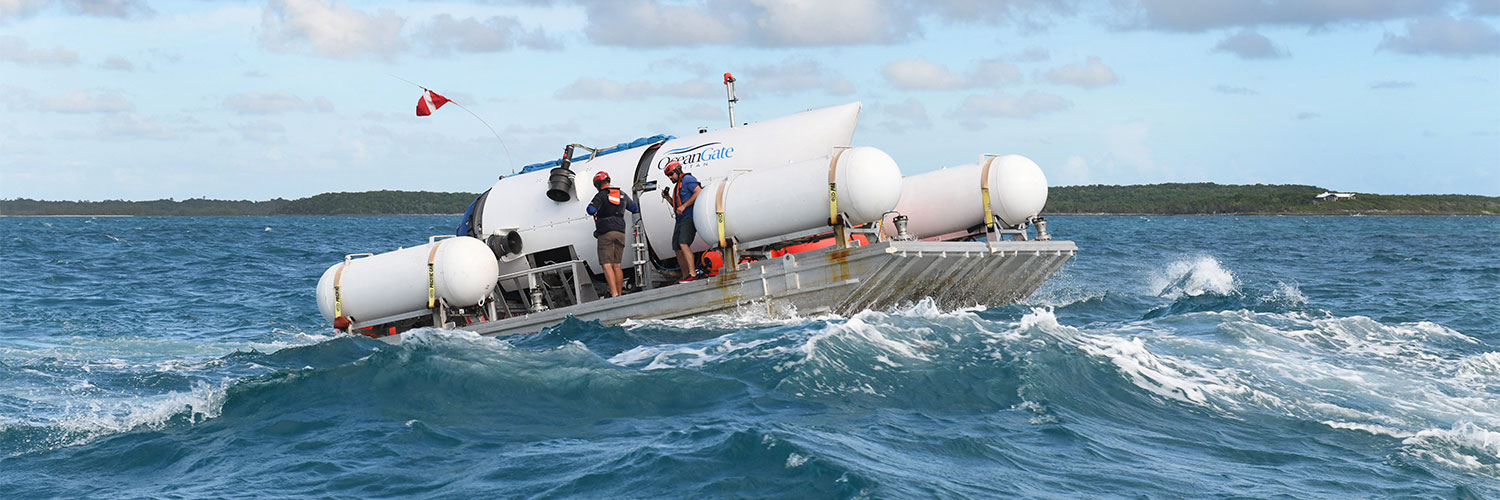
Pakistani businessman Shahzada Dawood and his son Sulaiman Dawood are currently onboard a missing OceanGate tourist submersible vessel that was carrying five people to see the wreck of the Titanic at the bottom of the North Atlantic Ocean.
The Dawood family has released the following statement:
“As of now, contact has been lost with their submersible craft and there is limited information available. A rescue effort that is being jointly led by multiple government agencies and deep-sea companies is underway to reestablish contact with the submersible and bring them back safely,” read the statement.
“We are very grateful for the concern being shown by our colleagues and friends and would like to request everyone to pray for their safety while granting the family privacy at this time. The family is well looked after and are praying to Allah for the safe return of their family members,” it added.
Shahzada Dawood is a trustee of the SETI Institute in California and vice chairman of Dawood Hercules Corporation, part of the Dawood Group.
The OceanGate Titan craft submerged Sunday morning, and its support vessel lost contact with it about an hour and 45 minutes later, The Independent has said.
OceanGate Expeditions is a company that offers eight-day missions to see the Titanic debris at a cost of $250,000 per person. The organisation confirmed its submarine was lost at sea with crew members on board, and that it is exploring all options to rescue the five people onboard. The company’s chief executive is also believed to be on the craft.
Officials confirmed government agencies, the US and Canadian navies and commercial deep-sea firms are helping in the rescue operation, as reported by the BBC.
The craft they were on board dives with a four day emergency supply of oxygen. Addressing a news conference, Rear Adm John Mauger of the US Coast Guard said there is somewhere between 70 and the full 96 hours of oxygen available at this point
British billionaire explorer Hamish Harding and renowned French diver Paul-Henri Nargeolet are also among the passengers onboard.
Federal Minister for Climate Change and Environmental Coordination Senator Sherry Rehman has confirmed on Tuesday that Pakistan Peoples Party (PPP) will oppose the The Chairman Senate (Salaries, Allowance and Privileges) Act, 2023 in the National Assembly.
“Decision taken by PPP leadership to oppose it. So it will be blocked in NA etc,” she wrote in a tweet.
Decision taken by PPP leadership to oppose it. So it will be blocked in NA etc https://t.co/H02YLWcI0F
The bill is being widely criticized for aiming to give special perks and privileges to current chairman and ex-chairman of the Upper House.
Here are some of the privileges listed on the bill:
-Every chairman of the Senate after completing his tenure (post-retirement) will have 12 employees for life, along with six permanent guards and VVIP security wherever he goes. -He can request an airplane for himself and his family for domestic and international travel.
-He will get additional benefits, not mentioned in the bill, or whatever he desires from the finance committee, which he handpicks.
-Every person who has held the office of Chairman for a full term of three years, shall be entitled for life to full security detail, that is to say, six sentries at the declared residence, four personnel of police, anti-terrorism force, rangers, frontier corps or frontier constabulary in one squad vehicle, for which the federal government in Islamabad, or a provincial government in the respective province, shall make the required arrangements.
-The Finance Committee of the Senate may grant the chairman and the person who has held such office for a full term of three years, such additional privileges as it may deem fit
Pakistan Cricket Board (PCB) Management Committee Chairman Najam Sethi announced on Monday night via his Twitter account that he was withdrawing from the race for the board’s chairmanship as he did not wish to be a “source of contention” between the political partners in the coalition government.
Referring to the atmosphere of uncertainty and instability as unsuitable for the board, he stated that he was going to step aside from the race for the PCB’s chairmanship. “I don’t wish to be a source of contention between Asif Zardari and Shehbaz Sharif,” he tweeted on Tuesday.
“Such instability and uncertainty are not conducive to the PCB. Given the circumstances, I am not a candidate for the Chairmanship of the PCB. Good luck to all stakeholders.”
Sethi expressed similar sentiments a few days ago, emphasising his reluctance to be involved in the controversy.
“I have heard speculation surrounding the PCB chairmanship. I do not involve myself in this matter as it depends on the patron,” he said while speaking to media in Lahore on Friday. He also mentioned that he would accept any decision made by Prime Minister Shehbaz Sharif, who is also the PCB’s patron.
“Our responsibility was to restore the 2014 constitution. At this point, we are prepared for elections with regional and departmental representatives on board. We are awaiting two nominees, after which I will announce the election.
“If you ask me, I do not want a mess. If the patron and Zardari sahab want me to continue, I will be okay with it. If they want Zaka sahab to become the chairman, I would welcome their decision and step down,” he added.
The appointment of the PCB chairman has become a point of contention between the ruling coalition government’s two main political partners.
The Pakistan People Party (PPP) desires the return of former PCB chairman Zaka Ashraf to the post, while the Pakistan Muslim League-Nawaz (PML-N) wishes for Sethi to continue his role at the PCB.
The PPP’s stance on the matter is that since its minister heads the Inter-Provincial Coordination Division and the PCB is related to the ministry, its chairman should be appointed by the party.
When Cyclone Biparjoy was hurtling towards the Sindhi coastline, many heard the name ‘Keti Bandar’ repeatedly on television, as well as talk of the existential threat the port-town faced due to the tropical storm. Many only recognised Keti Bandar as the part of coastal Sindh that Biparjoy was initially predicted to make landfall on.
Yet Keti Bandar is the remnant of a practically ancient community that has long suffered the systematic destruction of the Indus delta. What many don’t realise is that, before Biparjoy even began stirring in the Indian Ocean, Keti Bandar had sank under the Arabian sea and reemerged three times.
This is the story of a community that is fighting against a disappearing delta. A community that still stands after being swallowed by the sea. A community that may not survive another submergence.
The lords of the sea
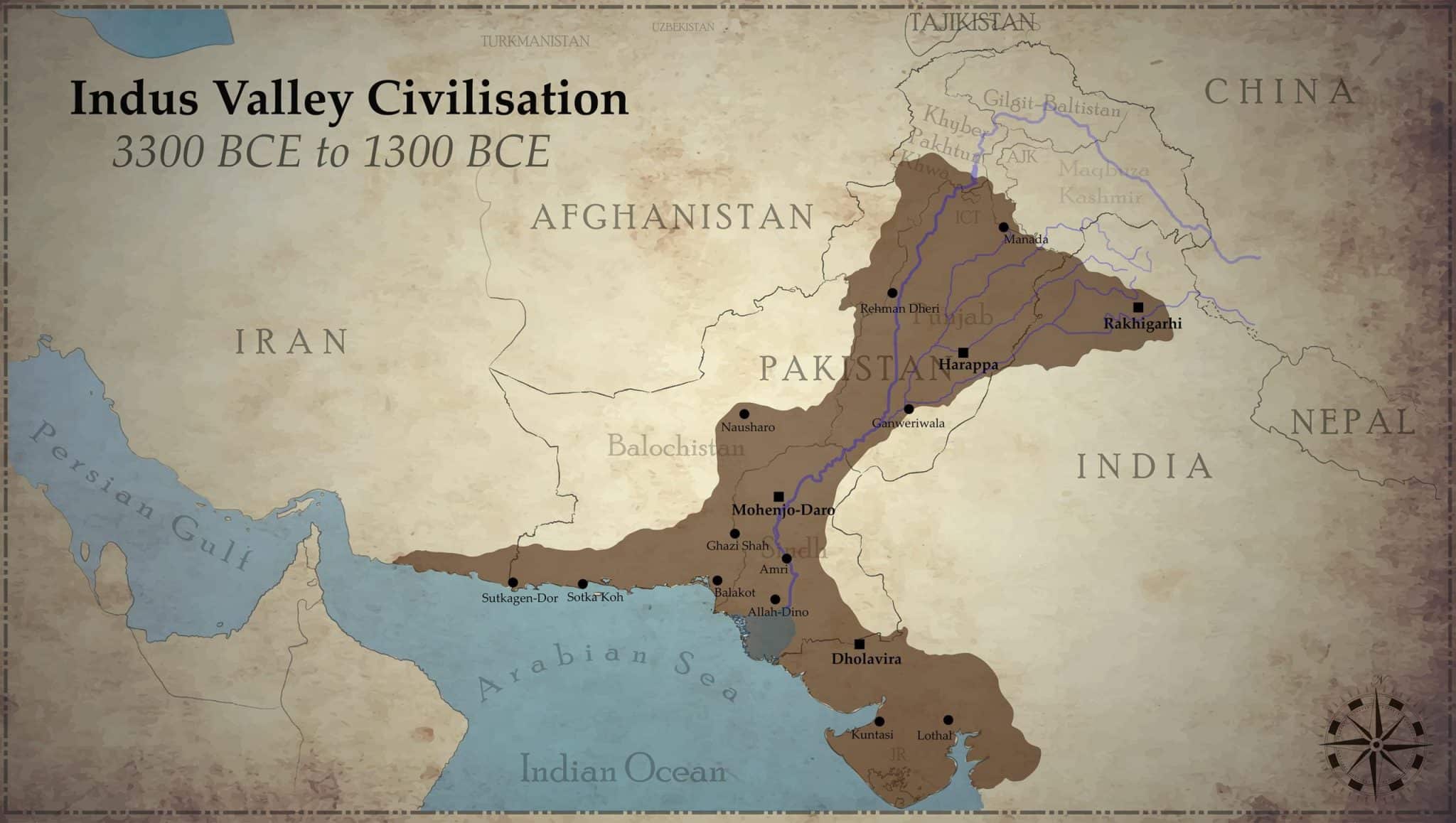
The residents of Keti Bandar are part of the Mohana tribe, descendants of the first inhabitants of the Indus valley. The remains of the original Mohana settlement can still be seen at the archeological site of Mohenjo-daro, which once stood on the banks of the Indus before the mighty river changed its course.
The Mohana refer to themselves as ‘Mir Bhar’, an Arabian word which means ‘kings of the sea’. They are historically a boat and river folk, engaged in the business of fishing and transport along the sea and river. The Mir Bhar are one of the oldest castes that have existed in Sindh. It is one of the few cultures dating back to the ancient Indus Valley Civilization that has remained continuous in the region.
Much of lower Sindh lay beneath the Arabian Sea 3000 years ago. Part of a rivers’ natural process is the deposit of silt. A river is as much mud as it is water, a fact that is often forgotten. Over time, the Indus deposited so much silt that the sea water receded, creating the mud flats that comprise much of lower Sindh. The mudflats that house communities such as Keti Bandar.
Keti Bandar exists solely because of its connection to the river. There are so many subtribes of the Mohana fishermen community that live across lower Sindh, which shows the crucial part the Indus played in its creation and livelihood.
It was a thriving port once – in fact, the inhabitants of Keti Bandar were once far more affluent than those of Karachi. Rich fishermen and farmers that cultivated red rice would lend money to aspiring businessmen in the bustling city. The fresh river water of the delta allowed the Mir Bhar to live well and prosper.
Keti Bandar sank three times due to hurricanes and sea advances: once in 1857, then in 1877, and the last known submergence was in 1910. When Cyclone Biparjoy came around, the sea swallowed many homes along Keti Bandar again, but the water receded fairly quickly as the storm moved along its course.
Yet the persisting Mohanas were damned long before Cyclone Biparjoy, long before the current throes of climate change. The deposit of silt, that was so instrumental to the creation and preservation of Keti Bandar, was halted when the Kotri Barrage was finished in 1955.
The Gradual Death of the Delta
The construction of the Kotri Barrage began during the British Raj in 1932. Environmental activist Zulfikar Ali Bhutto Jr. reflected on his visit to Keti Bandar in 2015. He shared how Kotri Barrage (also known as the Ghulam Muhammad Barrage), as well as other barrage systems built by The World Bank and IMF post partition, were the ‘final nail in the coffin’ on what we knew once as the mighty Indus delta.
“It’s as though Keti Bandar has suffered 15 – 16 years of dehydration,” Zulfikar said. Indeed, there can be no development with no fresh water. The excessive damming and redirecting of the Indus has drastically decreased the water flow from the river to the mudflats of lower Sindh. As a result of resource degradation, the Indus delta has seen a mass exodus.
According to a study by Altaf Memom published in 2005, an estimated 90, 000 had been displaced and about 120 villages depopulated. One can only imagine the state of things now: the lack of fresh water and the encroaching Arabian Sea has rendered Keti Bandar practically unlivable. And yet, the community persists. While we are hearing the term ‘climate refugees’ now more than ever – especially considering the devastation of the 2022 floods – Pakistan has technically had climate refugees since the 50s.
Due to the various irrigation systems along the Indus, 43% of land in Northern Sindh has been left saline. Because of this, the entire delta system has seen catastrophic changes. The locals of Keti Bandar primarily complain of ‘kaala paani’: no fresh water. Without fresh water, there can be no development. And with the now obstructed deposition of silt, Keti Bandar and other coastal regions that lie atop mud flats are facing the existential threat of being swallowed by the sea.
When asked about the recent floods and their potential benefit to the arid region, Zulfikar said, “Even if there is a good summer monsoon, so much of it is still drained out. Whatever’s left behind after crossing through Sukkur Barrage is just seepage and not enough silt.”
The Decline of Keti Bandar
The Mohanas, once one of the oldest and wealthiest tribes of Sindh, has now become one of the poorest. The entire province of Sindh is part of the Indus delta, and because of it shrinking, the locals of Keti Bandar have gone from living in the abundance of the rich river to living in sheer poverty.
As lords of the sea, Keti Bandar’s community is mostly comprised of fishermen. They rely solely on fishing for sustenance. However, this stream of income is not only threatened by extreme weather events such as Cyclone Biparjoy. The fishermen of Keti Bandar have been ruined by loans with astronomical interest rates, endowed on them by Middlemen that orchestrate business between the fishermen of Keti Bandar and the fish markets of Karachi.
They buy the catch at low prices, and sell them to traders in Karachi and other cities for a 200-500 percent profit. Since the poor fishermen owe them money, they have no choice but to sell their catch to these people, otherwise risking the seizure of their boats and fishing nets.
The locals are very cognizant of the decline of wealth and prosperity in Keti Bandar. Some of the oldest members of the community were still alive when Keti Bandar’s municipality was loaning to the growing metropolis of Karachi. Since its steady decline, the government has made empty promises to provide for the community, but to no avail.
On a visit to Keti Bandar in 2011, Moin Khwaja shared the frustration of a local fisherman: “The government is literally pushing us into the sea. Loan sharks visit us every single day while the politicians come to us once in five years to beg for our votes”.
While the climate crisis worsens, communities such as the Mohanas along Keti Bandar have already been facing the brunt of drastic environmental changes and lack of governmental support. One can only imagine the magnitude of the threat they face now, as extreme weather events such as Biparjoy will only increase in frequency.
Special thanks to Zulfikar Ali Bhutto Jr. for giving The Current his insights regarding the environmental degradation of the Indus Delta and Keti Bandar.
Altaf A. Memon (May 14–19, 2005). “Devastation of the Indus River Delta”. World Water & Environmental Resources Congress 2005. Anchorage, Alaska: American Society of Civil Engineers. World Wildlife Fund.
A fruit vendor from Attock, Pakistan has become the new darling of Indian publications for his extraordinary singing skills and his knack for bringing a hilarious twist to Shakira’s popular song ‘Waka Waka’.
A video of the man was posted by a meme account with the name Hamza Choudhary, amassing more than 400,000 likes, with fans writing down all sorts of hilarious captions.
Pashtun Tahafuz Movement (PTM) leader and Member of National Assembly (MNA) from Waziristan, Ali Wazir, has been rearrested months after his release from Karachi Central Jail.
Lawmaker Mohsin Dawar has said that there is still no confirmation on what charges the legislator was arrested.
The way @Aliwazirna50 was arrested from North Waziristan earlier today shows that there is no rule of law. He has been abducted. His whereabouts remain unknown. Speaker NA was not notified of his arrest. pic.twitter.com/4Fg6u3rojq
Ali Wazir was behind bars for almost 2 years, releasing from Central Jail Karachi on February 14, 2023. He was taken into custody in Peshawar in December 2020 after a sedition case was registered against him in Sohrab Goth police station.
However, Ali Wazir had faced more arrests in the same case as multiple FIRs are registered against him in KPK and Karachi.
Social media users are condemning the arrest.
Have a look at twitter reactions:
MNA Ali Wazir has been arrested again. Those sitting in PDM govt, used his name against Khan so much, that Khan has put Ali in jail. Now what? Is Khan the PM now or Shahbaz Sharif? This is going to be another challenge for the most unpopular & un-accepted govt. pic.twitter.com/Jiy4saIA14
Lawmaker Mohsin Dawar tells the National Assembly that parliamentarian Ali Wazir has been arrested from North Waziristan, adding that no one knows under what charge.
MNA Ali wazir once again arrested illegally in north waziristan, The demand for peace in this country is a crime, while the killers like rawr anwar and Ahsanullah Ahsan are walking around openly. pic.twitter.com/mOYw7bbOLW
— Naimat Ullah wazir (@naimatwazir563) June 19, 2023
In a setback for Pakistan, the International Monetary Fund (IMF) Executive Board has excluded the country from its upcoming meetings, raising concerns about the completion of the 9th review under the Extended Fund Facility (EFF) programme. The IMF’s executive board calendar reveals that Pakistan is not on the agenda for the scheduled meetings until June 29, leaving little time to restart the $6.7 billion bailout programme before the end of the current financial year on June 30, 2023.
Pakistan is currently facing challenges in securing fresh loans to bridge its $6 billion refinancing gap. Despite the impending expiration of the current programme, the Finance Ministry is still striving to reach an agreement with the IMF. However, the lender has raised concerns about Pakistan’s budget for the fiscal year 2023-24, particularly regarding non-tax revenue and the need to broaden the tax base.
Last week, the IMF questioned the credibility of Pakistan’s budgetary numbers, which has cast a shadow of doubt over the country’s ability to meet the conditions for the bailout programme. In response, the Ministry of Finance issued a press statement on Friday, attempting to address these concerns. However, the statement failed to dissipate the doubts surrounding Pakistan’s economic situation.
The IMF and Pakistan may now consider combining the pending ninth review with the tenth review in the new fiscal year. Such a move would likely require Pakistan to implement more stringent tax collection measures in exchange for a larger bailout package.
The delay in completing the 9th review and the exclusion of Pakistan from the upcoming IMF Executive Board meetings have intensified the challenges faced by the country’s economy. As the June 30 deadline approaches, the Pakistani government and the IMF will need to work diligently to resolve their differences and pave the way for the resumption of the bailout programme.
Pakistan’s ability to secure the IMF’s support is crucial for stabilising its economy, attracting foreign investments, and addressing the refinancing gap. The outcome of the negotiations and the subsequent decisions taken by both parties will have far-reaching implications for Pakistan’s financial stability and economic growth in the coming months.
According to video accounts of Pakistani survivors, Greek authorities deliberately sunk the vessel and provided no rescue efforts.
According to the survivors they were delibrately not rescued before the incident while cargo ship and boats were there. The incident occurred when ship was tied up.#GreeceBoatDisasterpic.twitter.com/Mcqg482s92
In the video, survivors can be heard saying: “They have done this [on purpose]. They have sunk it themselves.” The other added, “We did not sink for five days, so why would we sink now?”
They recounted that the ship’s engine had broken down, leaving them still for almost a week. “We did not drown even though our engine had [completely] shut down. [the boat] sunk because of the one-maund-rope they threw into the boat.”
In an investigation conducted by the BBC, many discrepancies were found in the statements released by the Greek authorities. For one, the coastguard claims that in the hours before the boat capsized, it was on a “steady course to Italy and not in need of rescue.”
However, analysis of the movement of other ships in the area suggests that the migrant boat was not moving for at least seven hours before the disaster. This corroborates eyewitness accounts of Pakistani survivors.
The UN has called for an investigation into Greece’s handling of the disaster. Greek authorities have not yet responded to the BBC’s findings.
FIA arrests 10 alleged traffickers
Calamity struck a migrant boat that capsized off the south-eastern coast of Greece last week on Wednesday, leaving hundreds of Pakistani migrants dead. On Sunday, Prime Minister Shehbaz Sharif announced a high-level investigation to trace the human traffickers behind the incident. So far 10 alleged traffickers have been arrested in connection to the tragedy.
The Federal Investigation Agency (FIA) arrested the suspected human traffickers from Azad Jammu and Kashmir, and another one from Karachi airport who was attempting to flee abroad, Geo News has reported.
The 10 suspected traffickers are “presently under investigation for their involvement in facilitating the entire process” according to Chaudary Shaukat, an official from Pakistan-administered Kashmir.
Condemned Pakistanis
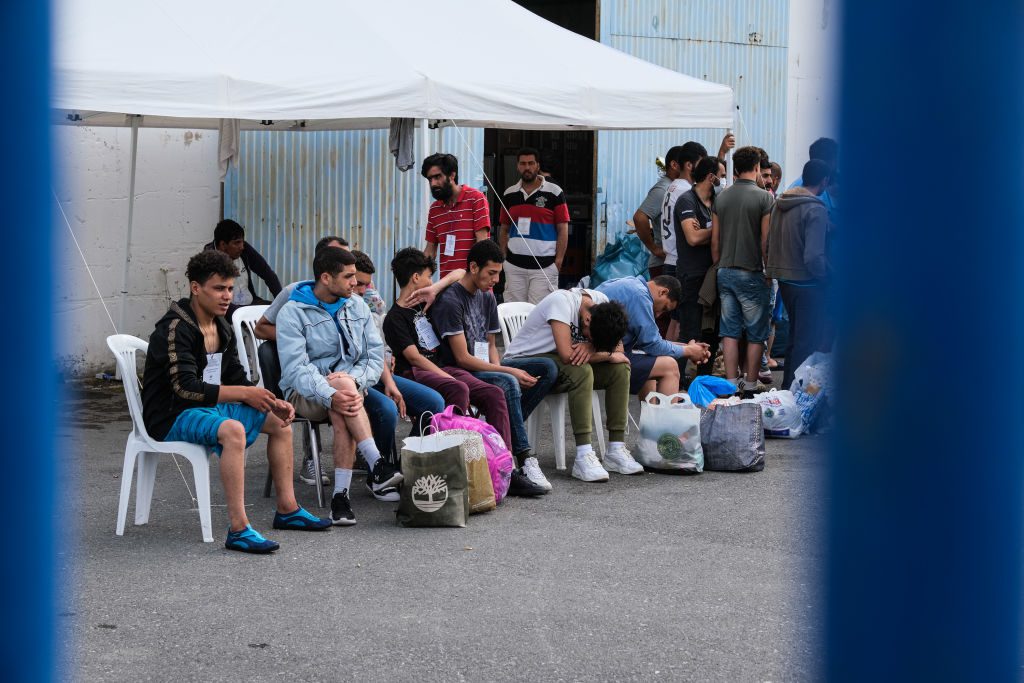
Last week in the early hours of Wednesday morning, a migrant boat capsized off the Southern Peloponnese while on its course to Italy from the Libyan town of Tobruk. The Guardian reported most of the victims were men from Pakistan and Afghanistan. More sinister details have since emerged from witness accounts.
According to witnesses, the Pakistanis onboard were ‘forced below deck’ where they had far less chance of surviving a capsize. The Observer also reported that crew members were maltreating the Pakistanis below deck when they would appear in search of fresh water or tried to escape.
The number of Pakistani lives lost is estimated to be around 298. 135 of them are reported to be from the Kashmir region. Greek authorities have yet to release a confirmation on Pakistan’s death toll.
Mismanagement and alleged cover-up
Many questions have been raised since witness accounts spread across global news, specifically about the role of Greek authorities in the tragedy.
On Friday, two days after the accident, a spokesperson of the Greek government claimed that their assistance had been refused by the migrant boat after they threw a rope to the vessel to “stabilize and check if it needed help.” This contradicted the coastguard’s earlier statements that it had kept a ‘discreet distance’ from the boat.
According to a witness interviewed by CNN, Greek authorities were seen towing the vessel with ropes, but since the ropes were tied in the “wrong places”, the boat capsized.
The witness, Tarek Aldroobi, had three relatives on board. He told CNN, “Their boat was in good condition and the Greek navy tried towing them to the beach but the ropes were tied in the wrong places,” Aldroobi said. “When the Greek navy tried pulling them it caused the boat to capsize.”
Nikos Alexiou, a spokesman for the coastguard, defended their response. He said their patrol boat only used a small rope to stabilize itself while it was close to the migrant boat, and that they were unable to tow it.
In an interview with CNN, Alexiou explained: “Regretfully there was movement of people, a shift in weight probably caused by panic and the boat capsized. As soon as we got there, we started our rescue operation to collect those who were in the water.”
In a report by The Guardian, Maurice Stierl, from the Institute for Migration Research and Intercultural Studies at Osnabrück University in Germany, responded to the coastguard’s defense: “What caused the sudden shift in weight? Was there a panic on board? Did something happen during the attempt to provide them with something? Or was it towed? And due to this towing, did the boat go down?”
According to Stierl, EU countries ‘weaponise time’ by delaying rescue as long as they can. “They have managed to build in delays into European engagement at sea. They’re actively sort of hiding, in fact, from migrant boats, so that they are not drawn into rescue operations. We can see how a strategy is being created, that slows down –actively and consciously slows down – rescue efforts,” Stierl explains.
Questions arose over whether the Greek coastguard should have intervened earlier, as government officials confirmed patrol boats and cargo ships had been shadowing the migrant vessel since Tuesday afternoon.