Tag: Pakistan

  • Not in contact with Tareen, Fawad stays in touch: Asad Umar

    Not in contact with Tareen, Fawad stays in touch: Asad Umar

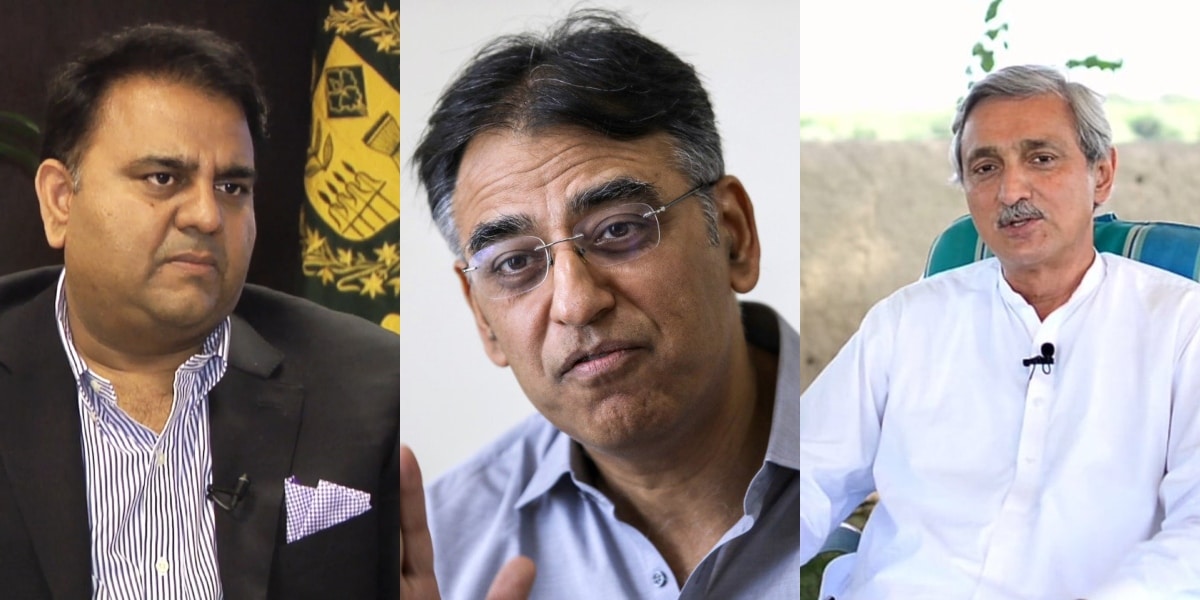
    Former Secretary General of Pakistan Tehreek-e-Insaf (PTI) Asad Umar has said that he has no contact with Jahangir Tareen but does stay in contact with former colleague Fawad Chaudhry.

    Talking to journalists outside a court in Islamabad, Asad Umar said that Tareen, who is rumoured to be forming a political party, has not contacted him.

    However, he did say that Fawad Chaudhry “remains in touch with me from time to time.”

    Asad Umar is one of the few central leaders who have not quit PTI. But, on May 24, he did resign from his post and from the core committee of the party.

  • May 9 targets were pre-determined, strong evidence against PTI leaders: IG Punjab

    May 9 targets were pre-determined, strong evidence against PTI leaders: IG Punjab

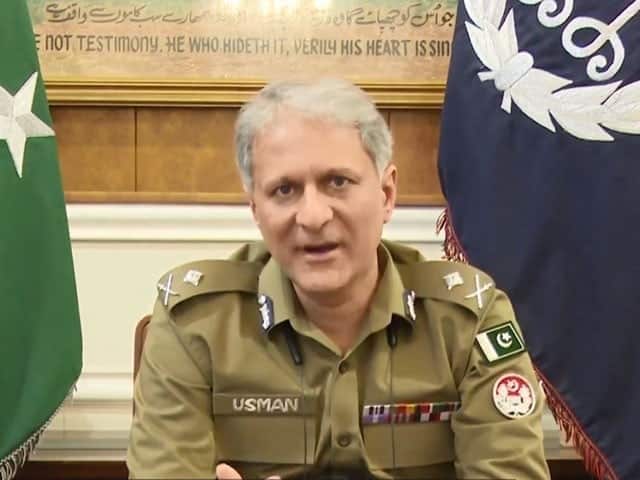
    The Inspector General Police (IGP) Punjab, Dr Usman Anwar, said in a press conference on Sunday that the police have data of the calls of March 8 and 9 May, adding that the call data shows similarities between both events, helping police in arresting those responsible for the riots.

    PTI claimed that Ali Bilal (Zillay Shah) died during police custody when he was captured during a crackdown on party workers and supporters protesting near Imran Khan’s Zaman Park residence on March 8.

    “We have records of each call made during these incidents and we are presenting them as evidence in court,” he added.

    He further said that law enforcement agencies had solid evidence that PTI leaders, in­cluding Dr. Yasmin Rashid, were in­volved in May 9 attacks and the tar­gets were pre-determined. “The May 9 incidents were carried out at a specific time as planned, the targets for the attacks were pre-determined”.

    While denying the accusations of PTI women being mistreated in jail, the IG said, “only lady police officers had interrogated women in custody.”

  • ‘Polls in October’; Khwaja Asif rules out delay in general elections

    ‘Polls in October’; Khwaja Asif rules out delay in general elections

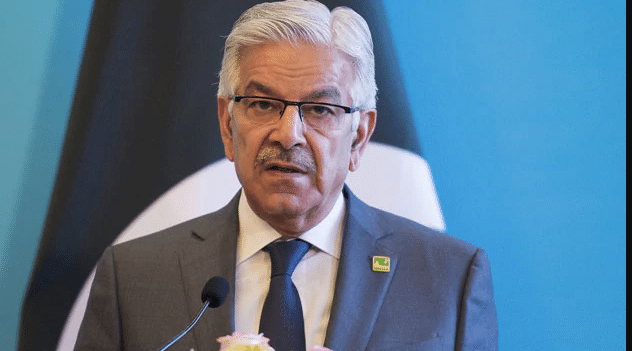
    Defence Minister Khawaja Asif has rejected any possibility of a delay in general elections, stating that polls will be held in October.

    “The assemblies will complete their five-year term in August and polls will take place within the next 60 days. Elections will be held on time,” Asif said on Sunday while talking to The Express Tribune.

    When asked what he meant by “on time”, the minister clarified that he meant October.

    The federal government is readying up to present the budget for the next fiscal year, scheduled to be tabled on June 9 before the National Assembly.

  • Tried to contact military for talks, got no response, Asim Munir has a grudge against me: Imran Khan

    Tried to contact military for talks, got no response, Asim Munir has a grudge against me: Imran Khan

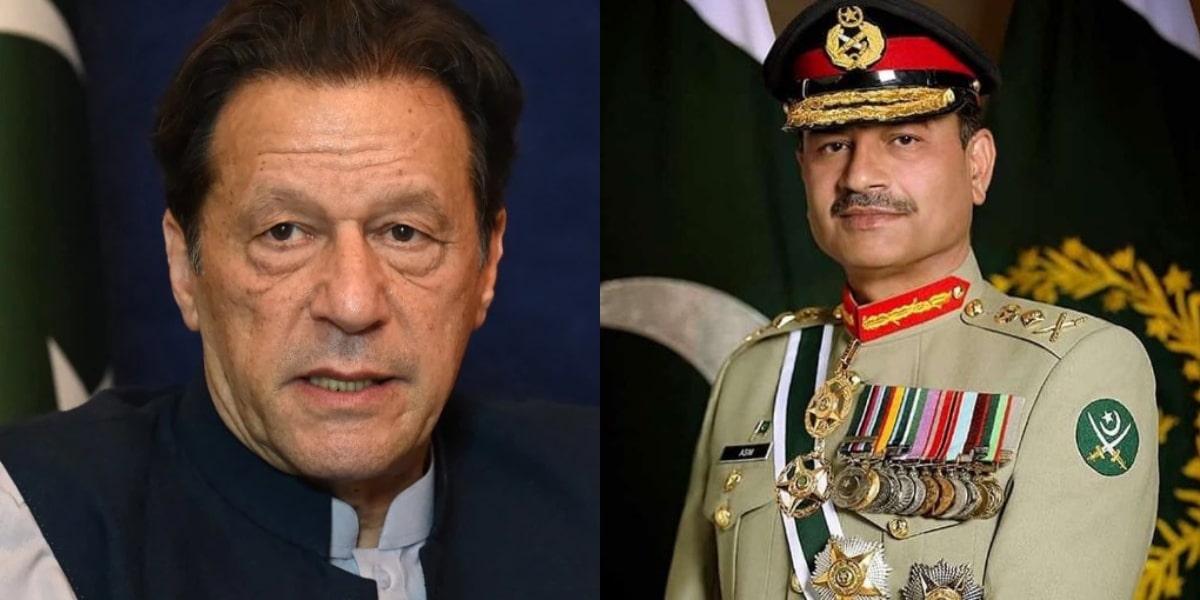
    Pakistan Tehreek-e-Insaf (PTI) Chairman Imran Khan, while talking to Reuters on Saturday, said that he tried to contact the military for talks but got no response. He further said that he did not know why Chief of Army Staff (COAS) General Asim Munir is ‘fixated’ on sidelining him.

    Khan said that he thinks that Asim Munir has a grudge against him because he asked him to resign as the head of Inter Services Intelligence (ISI), adding, “I don’t know.”

    “He shouldn’t have issues with that now because he is the army chief,” Khan said, wondering, “So why would he harbour that grudge?”

    Talking about the crackdown on his party, Imran said, “It is completely the establishment,” adding that “They are really now openly – I mean, it’s not even hidden now – they’re just out in the open.”
    While talking about the events of May 9, Imran Khan said that it was a false flag operation that was meant to target him. “That’s the only way they are going to get me into prison,” he added.
    “So their only hope, and because they are determined to get me out of the way, I think they will, their whole charade of military courts is to imprison me.”
    Stating that he has no doubt that the military courts are meant for him, the former Prime Minister said that ISI was involved in the crackdown against his party.

    Earlier, in an interview with Independent Urdu, Imran said, “A semi-martial law is already in place in the country” and “everything is happening on the wishes of those in power”. He passed the remarks while talking about the use of the Army Act against civilians.

  • 18 years after 2005 earthquake, survivor reunites with family

    18 years after 2005 earthquake, survivor reunites with family

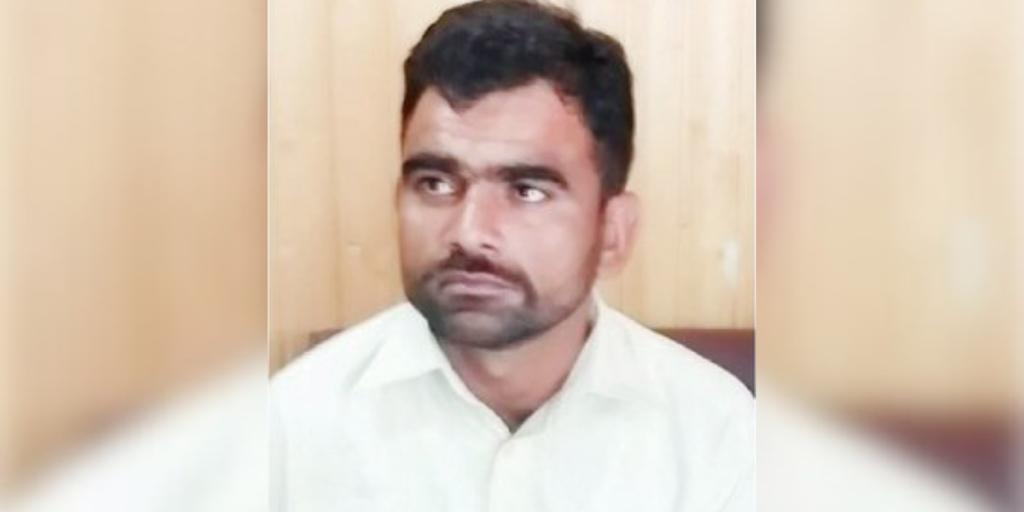
    A ‘survivor’ of the devastating earthquake of 2005 has returned to Balakot to search for his family, DAWN has reported.

    On Sunday, Ijaz Ahmed contacted local police to ask for their help in searching for his family.

    He said that his school was razed in the 2005 earthquake when he was a child. Injured by the collapse of the building, he was shifted to Rawalpindi for treatment.

    Ahmed claims he was abducted and sold to people linked to brick kilns. “I was sold four times in different cities and worked as a bonded labourer at brick kilns,” he told DAWN.

    He told the police that his father’s name was Anwar while his mother’s name was Naseem Akhtar.

    A large number of people showed up at the police station upon hearing the news. Miraculously, Anwar was among the crowd.

    The father and son had a tearful reunion. Police have said they will carry out DNA tests to ascertain paternity.

  • Govt expected to present Rs13-15 trillion budget for FY23-24 amidst economic uncertainties

    Govt expected to present Rs13-15 trillion budget for FY23-24 amidst economic uncertainties

    The government is anticipated to present a budget ranging from Rs13-15 trillion for the fiscal year 2023-24, according to a budget preview report by Topline Securities. This substantial increase is attributed to the record-high markup cost caused by the soaring interest rates. The proposed budget target of Rs9-9.2 trillion marks a 21 per cent surge compared to the current fiscal year’s target of Rs7.5 trillion.

    Notably, if implemented, the tax target for the upcoming financial year would be 29 per cent higher than the projected tax collection for the outgoing FY23. However, the brokerage house highlights the challenging nature of formulating a budget amidst stagflation and uncertainties surrounding the upcoming elections and Pakistan’s ability to bridge its external account funding gap.

    The report emphasises the prevailing nervousness in currency, bond, and stock markets due to the uncertainty surrounding the financing of the US dollar funding gap. Furthermore, it states that revenue targets have historically deviated by an average of 8 per cent from the actual targets in the past five years, and a similar trend is expected in FY24 due to the economic slowdown.

    The non-tax revenue target for FY24 is estimated at Rs2.5 trillion (2.4 per cent of GDP), compared to Rs1.6 trillion (2 per cent of GDP) for FY23. The report predicts several taxation measures, including tax on undistributed reserves, continuation of the super tax, a shift from the final tax regime to the minimum tax regime, asset/wealth tax, higher tax on non-filers, tax on rental income, and taxes on banks, tobacco, and beverages.

    Regarding development spending, the Federal Public Sector Development Programme (PSDP) is projected to amount to Rs0.9 trillion for FY24. However, due to fiscal constraints, significant cuts are expected in this area. The consolidated PSDP (federal and provincial) is anticipated to reach Rs2.6 trillion (2.5 per cent of GDP) in FY24.

    With the Pakistan Tehreek-e-Insaf (PTI) party being sidelined, there is a possibility of a weak coalition government coming to power in the upcoming elections. The report highlights the importance of an aggressive and competent new setup to tackle the ongoing economic crisis.

    To create a favorable perception, the government may set unrealistic revenue targets in order to allocate more spending in the budget. The report suggests that it is unlikely for the government to complete the current International Monetary Fund (IMF) program on time and urges Pakistan to enter another, potentially larger, IMF program.

    In light of the economic slowdown and high inflation, the government may introduce expansionary policies in the budget to appease the public, such as direct cash subsidies for the underprivileged and an increase in minimum wages. However, the brokerage firm warns against excessive spending without substantial tax collection measures.

    In terms of its impact on the stock market, the upcoming budget is expected to be neutral to positive. Sectors such as oil and gas exploration, chemicals, pharmaceuticals, consumers, tobacco, technology and communication, textile, cement, fertilizers, and oil marketing companies may experience a neutral effect. Conversely, the budget might have a neutral to negative impact on banks and autos, while steel and independent power producers could experience a neutral to positive effect, according to the research.

    As the budget is unveiled, stakeholders and citizens alike will closely monitor the government’s strategies to address the economic challenges and promote stability and growth in Pakistan.

  • No, divorces are not rising because of Aurat March, but because women are recognising their right to live

    On Saturday, actress Nazish Jahangir set social media ablaze when during a podcast with controversial YouTuber Nadir Ali, the model turned actor claimed that she did not identify as a feminist, because apparently “not all crying women are truthful.”

     “…l believe in equality, and I still confidently say that not all crying women are truthful. I am always standing with the right person whether it is a woman or a man.”

    The abysmal part of this conversation begun when Nazish Jahangir went on to address Aurat March, saying that the movement is responsible for the rise of divorces in the country, adding that it was not a solution to any problem:

    “I don’t believe in these Aurat Marches. It’s not benefiting the women for whom we are fighting. They are not reaching the women they’re standing up for. Such poor women would be sitting in villages and making food while they chant slogans on the streets here. I think these fake feminist movements will never get you justice,”

    “I wonder who they are protesting for then. Are they protesting for us? Because our league knows everything about it. We know our rights and we know the value of equality. The ratio of khula has also increased after these marches,” The ‘Thays’ actor claimed. “I’m not asking women to bear cruelties or abuse. They can leave their houses if they like but at least give it a shot. Our parents are the biggest example of sacrificing and surviving relationships with patience and love. Because now women are getting divorced only after one month.”

    Yes this is a deeply messed up argument, there is a lot to unpack and a lot of myths to dissect which are once more churning up harmful stereotypes towards organisations working for women’s rights. Perhaps the worst statement was about Aurat March encouraging divorces in Pakistan. A sweeping statement Jahangir gave without any proof that it is true.

    In reality, Aurat March is not the reason why women are choosing divorce Aurat March is the solution to a long term issue: the limited support and neglect shown towards women in a patriarchal society that demands that everything be sacrificed for the sake of a marriage.

    Since Ms Jahangir is from the acting profession, and our dramas claim to know best about what women should want from a marriage, can we all collectively recall one drama that has portrayed a healthy marriage? Can we say that ‘Tere Bin’, which features a man stalking and slapping his wife was what women should look up to in order to understand how to keep their marriages intact?

    Furthermore, if Ms Jahangir is claiming that women who break away from their marriages do not understand sacrifice and hard work because Aurat March tells them to be less tolerant, then she needs to be aware that more women in Pakistan have died trying to stay married. Sara Inam was murdered by her husband in Islamabad after three months of marriage, was the murder her own fault? Qandeel Baloch‘s murderer, her brother, was pardoned by the court despite confessing his crime to authorities, only because his parents pardoned him. Just five days ago, another man walked free from a court in Karachi after murdering his daughter, because he was once again pardoned by his family. Another man in Lahore murdered his wife and then sent her body back to her family via a rickshaw.

    All these nameless women, the countless ways they were let down by the law and society in Pakistan. How is that we know about them, Ms Jahangir? It’s definitely not because of the family system, which continues to hide predators, and pardon them after unforgivable crimes. This heroic act solely belongs to Aurat March, which has time and time again raised placcards for countless women you claim it does not protect.

    You claim to say that Aurat March cannot help the women in villages because they’re too busy shouting slogans, but it is through Aurat March that we know these women’s names. Working class women like Dua Zehra, whose parents couldn’t make an announcement at a mosque because she was a Shia, and who was slammed by media organisatons, who claimed she had disohonored her family. It was local activists who pressurised authorities to take child abduction seriously, helping her come back home.

    Claiming that you’re unaware about a topic is one thing, but making sweeping generalisations about women’s rights, especially during a time when laws seek to further restrict women’s access to escaping abusive marriages, and more feminist activists are being trolled onine, it is incredibly disheartening to see a public figure as yourself talking without properly fact checking yourself.

    If you are still confused about how to be a well informed and articulate public figure, then take an example from Ayesha Omar and Kiran Malik, who carefully broke down why watching the rise in divorce rates is a good sign that more women are learning to stand up for themselves and escape their abusive marriages.
  • A desi adaptation of Jane Austen’s ‘Persuasion’? Here’s who we want in the cast

    A desi adaptation of Jane Austen’s ‘Persuasion’? Here’s who we want in the cast

    Period dramas are all the rage now days, with Queen Charlotte becoming Netflix’s biggest hit this year, and more film adaptations like ‘Lady Chatterley’s Lover’, ‘Macbeth’ releasing in the last few years. But what we have yet to see, and are patiently waiting for, is Pakistani writers picking up their pen and writing a desi adaptation of a popular period book.

    Because as we all know, there is literally no difference between societies during the Victorian era, and how women in Pakistan are treated today. We’re still told that marriage is our biggest accomplishment, restricted to our homes and only allowed to visit relatives rather than travel independently on our own.

    So this idea flouted around the internet, when a twitter user Aimun asked how in the world has there not been a good Pakistani adaptation of Jane Austen’s popular novel ‘Persuasion’.

    “So much discourse on Pakistani dramas but imagine a desi adaptation of Persuasion,” she wrote.

    If you’re living under a rock and have poor reading taste, let us treat you to some culture. Persuasion revolves around a woman, Anne, who is in her late twenties and living with her family. When she was 18, she had rejected the marriage proposal of her true love, Frederick Wentworth, because of her family’s elitist assumptions that he wasn’t fit to marry into their family, a decision that breaks her heart and because of which she decides to remain single. But years later, when Wentworth becomes rich and comes back in town in search for a bride, both of them chose to avoid each other, yet cannot deny that they’re in love with each other.

    And like the rest of Twitter, we are down with the idea, infact we are pitching in our own idea about who we feel should direct, write and act in this adaptation.

    Marina Khan is the perfect choice for directing the project.

    Why? Because Marina Khan knows how to play powerful, independent and strong-minded women from dramas like ‘Tanhaiyaan’ and ‘Tum Se Kehna Tha’. So who better than her to take on Jane Austen and give the book the justice it deserves?

    For screen writing: Sarah Majeed

    For someone who wrote such a compelling and gorgeous drama like ‘Fairy Tale’, we would be anticipating the project with glee if she decided to take on this drama and rewrite it for the Pakistani audience.

    For our broody and lovelorn Wentworth, we think no one but Ahad Raza Mir can capture the character.

    As for the leading lady, we think Dur-e-Fishan Saleem would capture the tenderness and warmth of Anne so well.

    When it comes to Anne’s father, Sir Walter Elliot, who would capture his snobbery and entitled attitude better than Behroze Sabzwari?

    As for Anne’s confidant and best friend, Lady Elliot, who helps her navigate coming out of her shell and becoming brave enough to go after what she wants, we think Saba Qamar would do this character justice.

    As for the villain, William Elliot, who aspires to marry Anne in order to steal her wealth, Bilal Abbas would be a great choice.

  • Fairytale, Tanhaiyaan, Hum Tum: Here are some of our favourite men written by women

    Fairytale, Tanhaiyaan, Hum Tum: Here are some of our favourite men written by women

    If you’re chronically online like us, then you’ve heard the phrase floating around on this internet a lot – “written by a woman”.

    This phrase is used to describe a male character from a book or a drama who is not toxic or misogynistic. He does not pass degrading remarks about women; instead, he is kind and supportive towards them. Which means he was written by a woman.

    There are a lot of beloved characters from our television screens that could fit this description, like the Hot Priest from ‘Fleabag’, Otis from ‘Sex Education’ and King George from ‘Queen Charlotte’. But in Pakistan, can we say that male characters written by women are non-problematic and wholesome?

    There are female screenwriters like Nooran Makhdoom and Umera Ahmed who seem to be in a competition to see who can horrify their audience the most with the most unbearable male character.

    However, very rarely, women screenwriters in Pakistan have written some of our favorite, wholesome and well-rounded male characters who won audiences with charm and attention to female characters.

    Farjaad Bahadur from ‘Fairytale’

    Farjaad starts off as a warning flag in ‘Fairytale’ as a grumpy businessman who is dismissive of people unimportant to him, sticks to a strict routine. That means when he and Umeed meet, he comes of as a jerk who dismisses her as ‘spoilt’ and not capable of meeting his standards. However, when he starts falling in love with Umeed, we come to see how much Farjaad is a green flag because of the way he immediately reforms to help empower and never wants to tame or control her. Mr I-can’t-come-to-my-own-birthday-because-I’m-working to following the love of his life around and giving her flowers. He drives to a police station in the middle of the night because Umeed is stuck there, then successfully gets her out of there without complaining? Settles arguments without gaslighting or demeaning Umeed, but instead takes her on a chai date?

    Who were we before Sarah Majeed introduced this absolutely wholesome character in our lives? We’re glad we don’t know either.

    2 Zain from ‘Tanhaiyaan’

    No one can talk about the phrase ‘written by a woman’ without mentioning the beloved writer Haseena Moin, who set high standards for men with her beloved dramas like ‘Tanhaiyaan’ and ‘Ankahi’. A key token of her dramas were the strong, empowered women who took destiny in their own hands, refused to sit around and wail to be saved, and the men in their lives respected their power rather than shunning them. Zain from ‘Tanhaiyaan’ was a beloved male character because he respected Zara’s ambition, was caring and considerate to her sister Suniya, and chose not to impose his love on her but respectfully walk away until she was ready to love him back.

    3 Maahir from ‘Doobara’

    There is a settled notion within Pakistani dramas that a romance must take place between some balding dude who is a self-declared bad boy and some sheltered, naive girl who is barely in her twenties, who must shift between being a full-time therapist, punch bag and mommy to her lover. But rarely do we see this toxic trope switched and audiences are given a beautiful love story like Mehrunnisa and Mahir’s in ‘Dobara’.

    Although he is younger than her, Maahir works hard to prove that despite the setback he receives from Mehrunnisa’s family, he is worthy to be her husband. He works hard to get a job, empowers Mehru to start taking life in her own hands and do the things she was always restricted from doing, never standing in the way of her dreams. Kudos to Sarwat Nazir for giving us this absolute gem of a character

    4 Adam from ‘Hum Tum’

    Saima Akram Chaudhry already won hearts with ‘Suno Chanda’, but we feel that it was ‘Hum Tum’ that was one of her best works and also her most feminist drama because of how it introduced us to empowered female characters, and men who are more ‘female-centric’. We have women who have impressive careers like working in psychology, chemistry and computer science, but it is the men like Adam (played by Ahad Raza Mir) who take care of the chores around the house, is attentive and kind to his little sister and his elder brother Sarmad is a successful chef, a trait mostly associated with women.

  • PM Shehbaz urges Turkish business community to boost investments in Pakistan

    PM Shehbaz urges Turkish business community to boost investments in Pakistan

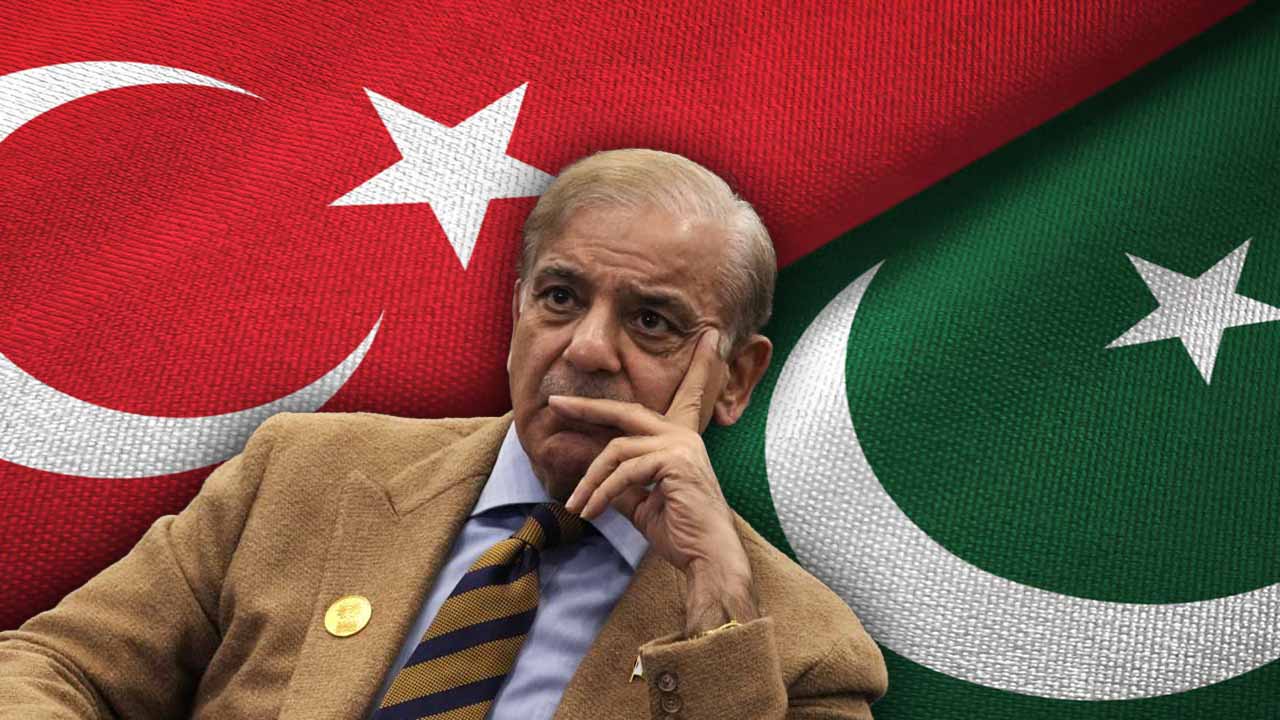
    Prime Minister (PM) Shehbaz Sharif, amid increasing debt burden and declining foreign exchange reserves, has invited Turkish investors and businessmen to expand their investments in different sectors of Pakistan. The premier is currently in Ankara on a two-day official visit to attend the inauguration ceremony of President Recep Tayyip Erdogan.

    During a meeting with a delegation from the Anadolu Group, which included Coca Cola CCI CEO Karim Yahi, Chief Strategy Officer Atilla Yerlikaya, and Head of Public Policy Taylan Coban, the PM expressed his encouragement for the Anadolu Group to invest in Pakistan and provide job opportunities to the people.

    Minister for Information and Broadcasting Marriyum Aurangzeb, Special Assistant to the Prime Minister Tariq Fatimi, and Pakistan’s Ambassador in Turkey Dr Yousuf Junaid were also present at the meeting.

    Prime Minister Shehbaz Sharif’s visit to Turkey is a result of an invitation from Turkish President Erdogan, who emerged victorious in the second round of elections held on 28 May. Upon his arrival at Ankara airport last night, the Prime Minister was received by senior officers of the Turkish Foreign Ministry and Pakistan’s ambassador in Turkey, emphasising the significance of the visit.

    Pakistan, facing economic challenges, is actively seeking foreign investments to alleviate its debt burden and stabilize its foreign exchange reserves. The Prime Minister’s appeal to Turkish investors and businessmen reflects the government’s commitment to attracting international investment and fostering economic partnerships.

    By engaging with the Anadolu Group and inviting increased investment, Prime Minister Shehbaz Sharif aims to leverage Turkish expertise and capital to drive economic growth and create employment opportunities in Pakistan.

    During the ongoing visit, it is anticipated that discussions between Pakistani and Turkish officials will focus on exploring potential areas of collaboration, identifying investment opportunities, and strengthening bilateral ties. The outcome of these engagements may play a pivotal role in shaping Pakistan’s economic trajectory, leading to increased foreign investment and a revitalized economy.

    In a time of economic challenges, Prime Minister Shehbaz Sharif’s proactive approach and diplomatic outreach to Turkish investors send a clear message of Pakistan’s commitment to enhancing economic cooperation and attracting much-needed investment.