Tag: Pakistan

  • Loving ‘Kuch Ankahi’? Then you should check out PTV drama ‘Tum Se Kehna Tha’

    Loving ‘Kuch Ankahi’? Then you should check out PTV drama ‘Tum Se Kehna Tha’

    ‘Kuch Ankahi’ has made an indelible mark on the Pakistani entertainment industry, for tackling sensitive issues like marriage pressure, body shaming, as well as infidelity. However, many audience members won’t know that the writer as well as the actor who plays the dad in the drama, Syed Mohammad Ahmed, has written countless scripts for film and television, including the iconic PTV drama ‘Tum Se Kehna Tha’ which was his debut effort.

    Directed by the brilliant Sahira Kazmi, the drama is an adaptation of the Hollywood rom-com ‘While You Were Sleeping’ which is about a young woman, who is accidently mistaken to be the fiancée of a man in a coma. The drama is incredibly funny, with powerful performances by actors Marina Khan and Ali Haider, and if our audiences are hung up on the fact that there are no good dramas out there that outshine the way ‘Kuch Ankahi’ did, here are some reasons why they should definitely check out this cult classic.

    1 The powerful chemistry between Hira (played by Khan) and Bilal (played by Haider)
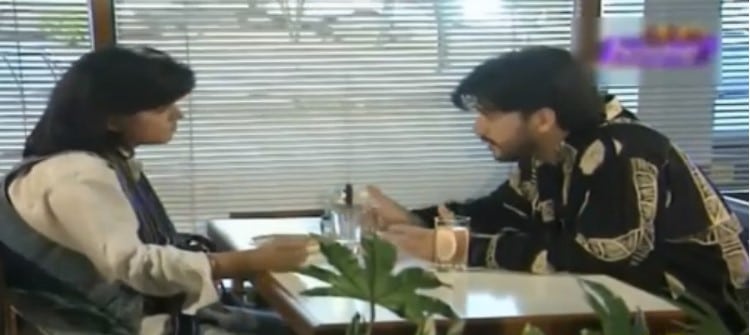
    Hira and Bilal are feuding opposites in the beginning of the drama, because the family completely takes her in once they find out she was Saad’s (played by Farhan Ali Agha) fiancee, but Bilal opposes this because he suspects that she is telling a lie. As the episodes progress, their rivalry turns into friendship and then in to love, giving us a healthy and meaningful relationship.

    2 Powerful women lead the drama

    Powerful, witty Hira immediately captures the hearts of the audience, especially due to the exceptional acting shown by Marina Khan. Hira works in a travel agency under her boss who was her late father’s best friend, and is like father figure to her. She has everything that any woman would want: friends, an apartment and lots of wealth, but deep down, Hira longs for a family so she won’t remain alone. If fans of ‘Kuch Ankahi’ love the sisters and their fierce devotion and dedication to each other, then they will love the way Hira loves and defends her family members, helps her sister in law tackle with the grief from divorce, and especially how drama refuses to pit women against each other.

    3 Debunks the stereotype that divorced women can never find happiness
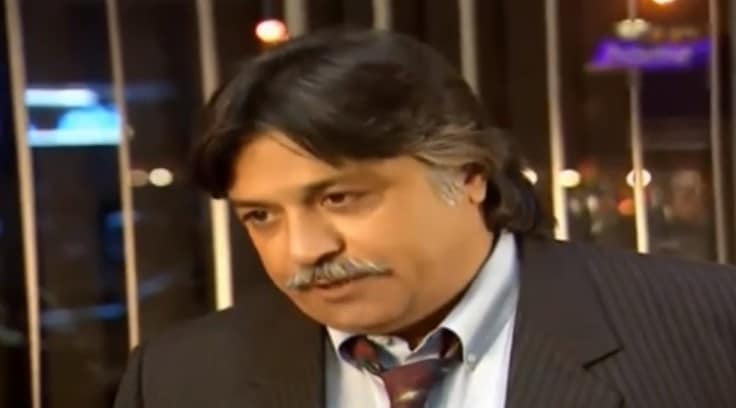
    ‘Kuch Ankahi’ has definately engaged Pakistani audiences with its refreshing script that provided us with complex female characters who refuse to be dictated around by patriarchal expectations, then they would also find ‘Tum Se Kehna Tha’ addictive because in the same manner, it engages with the societal disgrace that divorcees often face. Through the journey of Meher (played by Seemi Pasha), a divorced woman who is still recovering from the betrayal of her first marriage, she learns to empower herself through becoming friends with Hira, and forming a friendship with Sajjad, another divorcee who encourages her to keep living her best life.

    4 Humorous and engaging side characters
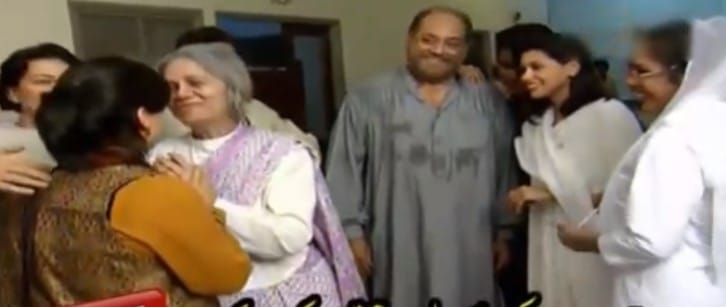
    A lot of times one of the biggest criticisms of Pakistani dramas has been that the side characters are incredibly dense, and limited to only showing up to push the main lead’s story forward. However the brilliance of Syed Mohammad Ahmed is that in his scripts, each character is interesting and keeps us engaged with the show. In ‘Kuch Ankahi’, fans are in love with the Tiktok star Neeha who is the househelp’s daughter, or Shakeel, the clumsy nephew. In a similar way, in ‘Tumse Ye Kehna Tha’ side characters like the neighbour Gringo or Buwa who add to the humor of the drama.
  • From dream boy to bad boy: Twitter shares why certain Pakistani dramas have aged badly

    If you’re a citizen of Pakistani Twitter, then you would be familiar with cult dramas like ‘Zindagi Gulzar Hai’, ‘Humsafar’ and ‘Tere Bin’, that have dominated social media with swoon worthy romances as well as dreamboats like Fawad Khan and Wahaj Ali. We’ll admit it, we have been obsessed too.

    But it might turn out that all that is old is not gold? And sadly, our fav heroes might not actually be the shehzada of our dreams but actually toxic men who needs to be re examined again.

    A Twitter user shared a tweet of the main leads from the most popular Pakistani dramas: ‘Tere Bin’, ‘Zindagi Gulzaar Hai’, ‘Humsafar’ and ‘Mere Humsafar’, and in the caption she shared that arranged marriage might not be such a bad idea if it were with men like them.

    But in today’s climate when more women are asking for better representation on television screens, a man like Ashar or Zarrun won’t sit well with audiences, regardless of how good looking Fawad Khan is. With that, more twitter users began sharing the ways audiences had overlooked how regressive and sexist these male leads actually were, and should not have been projected as the standard kind of man women should look for.

    Users shared that in ‘Humsafar’, Khan’s character Ashar, kicks his wife Khirad (played by Mahira Khan) out of the house while she was pregnant because he suspects her to be cheating on him with her friend, Khizar.

    https://twitter.com/aamnarazzaq_/status/1643360369526571008?s=20

    Twitter users shared how toxic Murtasim was in ‘Tere Bin’ because he slapped Meerab in episode 5, and in the most recent episode he asks her to jump to prove she wasn’t having an affair behind his back.

    https://twitter.com/sweetnsouridc/status/1642422913017036802?s=20

    We hope that the entertainment industry takes a note of this and works on improving their scripts to stop romanticizing toxic men, who can only offer the bare minimum to the women in their lives.

  • Weekly inflation in Pakistan spikes above 44%

    Weekly inflation in Pakistan spikes above 44%

    The Pakistan Bureau of Statistics (PBS) has reported that for the week ending on April 6, 2023, the Sensitive Price Indicator (SPI) based inflation has increased by 0.92 per cent. This rise is mainly due to an increase in the prices of food items such as chicken (15.87 per cent), sugar (13.48 per cent), potatoes (5.11 per cent), bananas (4.95 per cent), wheat flour (3.10 per cent), gur (2.12 per cent), eggs (1.26 per cent), fresh milk (1.24 per cent), and non-food item long cloth (1.95 per cent).

    The year-on-year trend indicates an increase of 44.49 per cent, which is primarily due to a surge in the prices of cigarettes (165.88 per cent), wheat flour (131.72 per cent), gas charges for q1 (108.38 per cent), diesel (102.84 per cent), eggs (98.34 per cent), Lipton tea (97.63 per cent), broken basmati rice (84.92 per cent), bananas (82.23 per cent), petrol (81.17 per cent), irri-6/9 rice (80.61 per cent), moong (68.14 per cent), potatoes (65.95 per cent), maash (56.70 per cent), and onions (55.75 per cent). However, a decrease in prices has been observed for tomatoes (50.39 per cent) and powdered chillies (6.48 per cent).

    The SPI for the week under review has been recorded at 252.06 points compared to 249.75 points in the previous week, as per the latest data released by PBS on Friday. During the week, out of 51 items, prices of 27 (52.94 per cent) items increased, seven (13.73 per cent) items decreased, and 17 (33.33 per cent) items remained stable.

    The average prices of commodities that have increased during the week over the previous week include chicken (15.87 per cent), sugar (13.48 per cent), potatoes (5.11 per cent), bananas (4.95 per cent), wheat flour (3.10 per cent), gur (2.12 per cent), long cloth 57” Gul Ahmed/Al Karam (1.95 per cent), eggs (1.26 per cent), fresh milk (1.24 per cent), irri-6/9 rice (0.80 per cent), shirting (0.75 per cent), beef with bone (0.71 per cent), broken basmati rice (0.69 per cent), curd (0.60 per cent), toilet soap Lifebuoy (0.56 per cent), lawn printed Gul Ahmed/Al Karam (0.55 per cent), prepared tea (0.44 per cent), powdered salt (0.39 per cent), Georgette (0.36 per cent), Sufi washing soap (0.31 per cent), mutton (0.18 per cent), moong (0.16 per cent), masoor (0.15 per cent), maash (0.09 per cent), cooked beef (0.04 per cent), cooking oil Dalda or other similar brand (sn), 5 litre tin each (0.04 per cent), and cooked daal (0.02 per cent).

    The commodities that have recorded a decrease in their average prices are tomatoes (14.96 per cent), onions (12.66 per cent), LPG (3.73 per cent), pulse gram (1.20 per cent), vegetable ghee Dalda/Habib 2.5 kg tin each (0.71 per cent), garlic (0.16 per cent), and mustard oil (0.03 per cent).

    CommodityYear-on-Year ChangeWeek-on-Week Change
    Cigarettes165.88 per centN/A
    Wheat flour131.72 per cent3.10 per cent
    Gas charges for q1108.38 per centN/A
    Diesel102.84 per centN/A
    Eggs98.34 per cent1.26 per cent
    Lipton tea97.63 per centN/A
    Broken basmati rice84.92 per cent0.69 per cent
    Bananas82.23 per cent4.95 per cent
    Petrol81.17 per centN/A
    Irri-6/9 rice80.61 per cent0.80 per cent
    Moong68.14 per cent0.16 per cent
    Potatoes65.95 per cent5.11 per cent
    Maash56.70 per cent0.09 per cent
    Onions55.75 per cent12.66 per cent
    Tomatoes-50.39 per cent-14.96 per cent
    Powdered chillies-6.48 per centN/A
    ChickenN/A15.87 per cent
    SugarN/A13.48 per cent
    GurN/A2.12 per cent
    Long cloth 57” Gul Ahmed/Al KaramN/A1.95 per cent
    Fresh milkN/A1.24 per cent
    ShirtingN/A0.75 per cent
    Beef with boneN/A0.71 per cent
    CurdN/A0.60 per cent
    Toilet soap LifebuoyN/A0.56 per cent
    Lawn printed Gul Ahmed/Al KaramN/A0.55 per cent
    Prepared teaN/A0.44 per cent
    Powdered saltN/A0.39 per cent
    GeorgetteN/A0.36 per cent
    Sufi washing soapN/A0.31 per cent
    MuttonN/A0.18 per cent
    MasoorN/A0.15 per cent
    Cooked beefN/A0.04 per cent
    Cooking oil Dalda or other similar brand (sn), 5 litre tin eachN/A0.04 per cent
    Cooked daalN/A0.02 per cent
    LPGN/A-3.73 per cent
    Pulse gramN/A-1.20 per cent
    Vegetable ghee Dalda/Habib 2.5 kg tin eachN/A-0.71 per cent
    GarlicN/A-0.16 per cent
    Mustard oilN/A-0.03 per cent
  • ‘Party ka secretary-general’: Sherry Rehman lashes out at Alvi for returning SC bill to parliament for review

    President Dr Arif Alvi has sent back the Supreme Court bill for revision.

    The Supreme Court (Practice and Procedure) Bill 2023, which aims to clip the powers of the chief justice of Pakistan, sailed through both houses of parliament and was sent to the president to be signed into law.

    However, the president sent the bill back to parliament for revision under Article 75 of the Constitution.

    In his detailed reply, which he also posted on Twitter, the president said that he thought it fit and proper to return the bill, in accordance with the Constitution, with “the request for reconsideration in order to meet the scrutiny about its validity (if assailed in the court of law)”.

    Alvi pointed out several aspects that need consideration after an in-depth consideration.

    President Alvi said that SC Rules 1980 had been “made and in force duly validated and adopted by the Constitution itself” under enabling provisions such as Article 191 of the Constitution which empowers the top court to make rules regulating the practice and procedure of the court.

    “These time-tested rules are being followed ever since the year 1980 —any tinkering with the same may tantamount to interference with the internal working of the Court, its autonomy and independence,” the letter stated.

    The purpose of the proposed bill is to provide a procedure for exercising preliminary jurisdiction and appealing.

    “It may be admirable, but can it be done without a constitutional amendment?” President Alvi questioned.

    He further said it is a settled law that constitutional provisions cannot be amended by ordinary legislation. “The Constitution is the supreme law; the father of all laws,” he added.

    The president further maintains that the Constitution is not a general law, but an embodiment of laws above fundamental principles, supreme law and other laws.

    Article 191 of the Constitution empowers the Supreme Court to make rules to regulate judicial proceedings and procedure.

    Calling out the President, Federal Minister for Climate Change, Sherry Rehman tweeted, “President Arif Alvi sent the bill back to the Supreme Court for review and proved that he is not the President of the country but is still the Secretary-General of Tehreek-e-Insaaf. He has seen every decision of Parliament from Tehreek-e-Insaaf’s point of view. Even before receiving the bill, he had given his stand on it in an interview.”

    “He is following his party policy, not the constitutional position of the President. The President is saying that this bill is beyond the power of the Parliament. For three and a half years, he has been running the President’s House like an ordinance factory. How can he know the powers of the parliament? President, do not teach the Parliament how to legislate,” tweeted Rehman.

  • Govt increases profit rates on national saving schemes following record policy rate hike

    Govt increases profit rates on national saving schemes following record policy rate hike

    In response to increasing policy rates, the Pakistani government has announced significant raises in profit rates for all national savings schemes (NSS) from April 10, 2023. This decision follows the State Bank of Pakistan’s (SBP) considerable increase in the policy rate to a record 21 per cent in its recent Monetary Policy Committee meeting to combat inflation.

    The Finance Division announced on Friday, through a notification issued under Rule-II of the Pensioners’ Benefit Accounts Rules, 2003, that the rate of profit on deposits made in Pensioners’ Benefit Accounts and Behbood Savings Certificates will be 16.56 per cent per annum from April 10, 2023, until further notice.

    Additionally, the rate of profit on deposits made in Shuhada’s Family Welfare Account will be 16.56 per cent per annum from April 10, 2023, until further notice.

    The Central Directorate of National Savings (CDNS) has also increased the profit rate on Defence Saving Certificates from 9.29 per cent to 14.87 per cent. The profit rate on Regular Income Certificates has been raised to 12.84 per cent of the total investment.

    Similarly, the profit margin on the three-year Special Saving Certificates and Special Savings Account has been increased to 17 per cent for the first five profits and to 17.8 per cent for the sixth profit. Furthermore, the return on Saving Accounts (running accounts) has been raised to 18.5 per cent. However, it’s worth noting that there will be a deduction of Withholding Tax and Zakat as per the rules.

  • PM Shehbaz congratulates ISI for arresting BNA founder

    Prime Minister (PM) Shehbaz Sharif has congratulated the Inter-Services Intelligence (ISI) Agency for carrying out a brilliant operation that resulted in the arrest of Baloch National Army’s (BNA) founder, Gulzar Imam alias Shambay.

    Taking to Twitter, the premier wrote, “This operation speaks of outstanding professionalism of our institutions. The arrest will help suppress militancy in Balochistan & usher in a new era of peace.”

    The ‘high-value target’ has been a “hardcore militant as well as founder and leader of the banned outfit BNA which came into being after the amalgamation of Baloch Republican Army (BRA) and United Baloch Army (UBA)”, read a statement released by the military media wing,  Inter-Services Public Relations (ISPR).

    ISPR elaborated that the BNA has been responsible for many violent terrorist attacks in Pakistan, including attacks on installations of law enforcement agencies (LEAs) in Panjgur and Noshki.

    ISPR further stated that the “apprehension of a militant leader of this stature demonstrates the capability and resolve of LEAs to uproot the menace of terrorism,” emphasizing that it speaks volumes about the successes garnered through supreme sacrifices of unsung heroes.

    It is pertinent to mention here that the National Security Committee (NSC) on Friday approved a multi-pronged comprehensive operation with the support of the government and the nation to eradicate the menace of terrorism from the country with a new resolve, determination and valour.

  • Hadiqa Kiani writes moving tribute to fellow cast as ‘Pinjra’ airs last episode

    Actress and singer Hadiqa Kiani wrote a moving tribute to her fellow cast members and fans of the drama ‘Pinjra’ as the last episode aired on Friday.

    “Our beautiful family “, wrote the ‘Dupatta’ singer. “Grateful to be a part of such an important experience. The cast, the crew, these talented children, the story, the great late writer Asma Nabeel, the wonderful @shaziawajahat, our amazing director @najafbilgrami…just feeling so grateful. Thank you to all of those who connected with the drama  @arydigital.tv.”

    Pinjra revolved around a family where the father Javed (played by Omair Rana) and the mother Khadija (Kiani) are both strict parents, demanding their son Abaan to stay away from his interest in art and music, and to focus more on his studies. The pressure to succeed has an impact on Abaan -along with being bullied by his siblings due to his poor grades- he begins doing drugs and even harming another child.

    Twitter users praised the series for carefully discussing issues like societal pressures, bullying, and helping parents understand how to be kinder to their children.

    Kiani was previously praised for her powerful performance in ‘Dobara’ as a newly widowed middle-aged woman, who takes stand for herself after being restricted by her husband through out her marriage, and in the process she falls in love with a man who is ten years younger than her.

  • All-out comprehensive operation so Pakistan can get rid of terrorism: NSC

    All-out comprehensive operation so Pakistan can get rid of terrorism: NSC

    A National Security Committee (NSC) meeting on Friday agreed to launch an “all-out comprehensive operation” so the country can get rid of terrorism.

    The moot agreed to initiate the operation with [the participation of] the entire nation and government to rid the country of the menace of terrorism with renewed vigour and determination.

    The operation is to eliminate the scourge of terrorism in all its forms from Pakistan and would incorporate measures at political, diplomatic, security, economic and social levels.

    The participants of the meeting emphasised the need for “comprehensive national security”, with a focus on relief for the people. They were informed that the government is taking necessary steps in this regard.

    The NSC concluded that the recent spate of terrorism in the country is a consequence of a “soft corner” for the banned militant group Tehreek-e-Taliban Pakistan and a “thoughtless policy” towards the terror outfit, both of which were “contrary to the public’s expectations”.

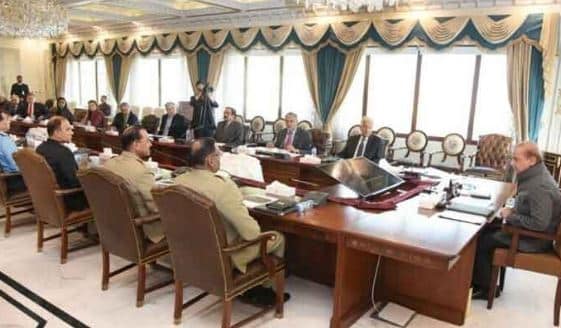
    PM Shehbaz chairs NSC meeting amid political chaos and security issues

    Prime Minister (PM) Shehbaz Sharif chaired a two-hours-long of NSC on Friday.

    The meeting takes place at a time when pressing security issues and heightened political tensions between the government and its rival political parties are reaching a crescendo.

    According to media reports, the meeting was attended by Chief of Army Staff General Asim Munir, chairman joint chiefs of staff committee (CJCSC), heads of armed forces, federal ministers for defence, finance and information and senior military leadership. Director General of the Inter Services Intelligence (ISI) Lt Gen Nadeem Anjum gave a detailed briefing on the ongoing operations against terrorism and the security situation of the country.

    According to Dawn, the government once again asked the top brass for a briefing on potential threats from militants in case elections were held in Punjab on May 14 as per the Supreme Court’s order.

    The news outlet also reported that military authorities had given a detailed briefing to the government that terrorist outfits have regrouped in tribal districts bordering Afghanistan due to which conditions were not conducive for electioneering.

    Finance Minister Ishaq Dar also briefed the NSC on the economic situation of the country. 

    The detailed statement on the NSC meeting is yet to be issued.

  • Pakistan’s energy transition gets a boost with $240 million loan from Saudi Fund for Development

    Pakistan’s energy transition gets a boost with $240 million loan from Saudi Fund for Development

    On Friday, the Saudi Fund for Development (SFD) signed a loan agreement worth $240 million to support Pakistan’s energy transition through the Mohmand Multipurpose Dam Project.

    The project, which is co-financed by the SFD, OPEC, the Islamic Development Bank, and the Kuwait Fund for Arab Economic Development, is expected to contribute to Pakistan’s energy security, increase sustainable water supply for agriculture and human consumption, and improve resilience to floods.

    The agreement was signed by the SFD CEO, Mr Sultan Abdulrahman Al-Marshad, and the Federal Secretary for the Ministry of Economic Affairs, Dr Kazim Niaz. According to a statement from the Ministry of Economic Affairs, the loan aims to promote sustainable development in Pakistan and achieve the Sustainable Development Goals (SDGs).

    The statement further highlighted that the Mohmand Multipurpose Dam Project will be of great assistance to the people of Khyber Pakhtunkhwa (KP), where almost 80 per cent of the population resides in rural areas. The project will enhance water and food security, improve the standard of living for people, and boost the region’s socioeconomic development by creating employment opportunities and reducing poverty levels.

    The project will also generate 800 MW of electricity production capacity by using renewable energy sources, contributing to Pakistan’s energy security. Additionally, the storage of 1.6 million meter cube of water will support sustainable agricultural practices, enable irrigation of 6,773 hectares of new land, and increase the total cropping area from 1,517 hectares to 9,227 hectares in the province, facilitating agricultural activities.

    During the agreement-signing ceremony, the SFD CEO emphasised the strong developmental ties between Saudi Arabia and Pakistan and highlighted the significance of joint cooperation between development funds.

  • Crisis in SC deepens as Athar Minallah says that election suo motu case was dismissed by 4-3

    Crisis in SC deepens as Athar Minallah says that election suo motu case was dismissed by 4-3

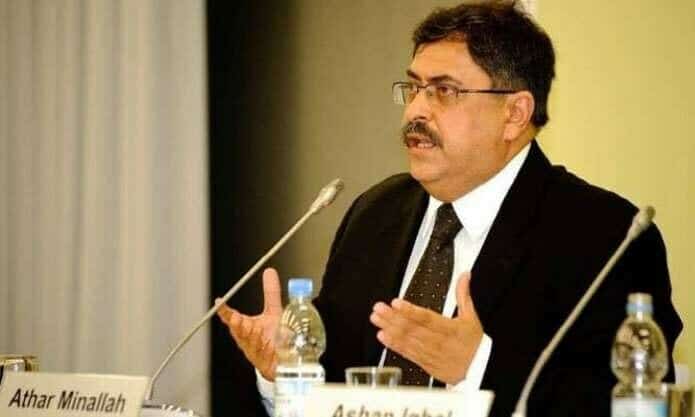
    The crisis in the Supreme Court of Pakistan has deepened after another judge said that the suo motu case of delayed polls in Punjab and Khyber Pakhtunkhwa (KP) was dismissed by 4-3.

    Former Islamabad High Court (IHCJ) Chief Justice (CJ) Justice Athar Minallah released a detailed note, agreeing with Justice Jamal Khan Mandokhail and Justice Mansoor Ali Shah “particularly regarding the final outcome of the petitions and the suo motu assumption of jurisdiction by a majority of 4 to 3 because this was the understanding in the meeting held in the anteroom on 27.02.2023. It is noted that I had not recused nor had any reason to dissociate myself.”

    Justices Shah and Mandokhail had argued against the decision of taking suo motu by Chief Justice of Pakistan (CJP) Umar Ata Bandial.

    Following are the main points given by Minallah in his note:

    • He said that he read Mansoor Ali Shah and Mandokhail’s notes and agreed that the SC verdict was 4-3.
    • Referring to Munib Akhtar’s own judgment saying CJP’s power to take suo motu and form benches has “created imbalance, which ought to be corrected,” he noted that CJP’s power to form benches under SC Rules must be exercised transparently and fairly.
    • He pointed out that Pakistan Tehreek-e-Insaf (PTI) itself went to Lahore High Court (LHC) first, which allowed petitions and directed election in 90 days. So then why should SC wade into dispute, he asked.
    • Justice Minallah wrote that the court is being dragged into a political crisis, emphasising that the crisis escalated when PTI chose to resign from National Assembly instead of sitting in Opposition. He further said that the dissolution of the provincial assemblies was part of a political strategy.
    • Says SC has the duty to inspire public trust and not appear politically partisan. Everyone (including SC) has to take a step back and not stand on ego.
    • He called the political climate in the country “toxic”, saying that “it is inconceivable that political parties will even agree to have a dialogue, let alone arriving at a consensus.”
    • He said: “It is the duty of the Court to ensure that political stakeholders are not encouraged to bring their disputes to the courts for judicial settlement by bypassing the institutions and forums created under the Constitution. It weakens the Majlise-Shoora (Parliament) and the forums meant for political dialogue and, simultaneously, harm the judicial branch of the State by prejudicing public trust in its independence and impartiality.”
    • “When politicians do not approach the appropriate forums and bring their disputes to the courts, the former may win or lose the case, but inevitably the court is the loser”, he ended the note.