Tag: Pakistan

  • Pakistan to receive first-ever shipment of low-cost oil from Russia in May

    Pakistan to receive first-ever shipment of low-cost oil from Russia in May

    Minister of State for Petroleum, Musadik Malik, announced on Sunday that Pakistan will receive its first-ever shipment of low-cost oil from Russia next month, which is expected to benefit the general public.

    In an interview with a private news channel, the minister confirmed that the government had finalised a deal with Russian authorities following successful dialogues. The shipment is expected to arrive in May via cargo. The minister also ensured that the government will pass on the cost savings to consumers.

    Regarding power and gas tariffs, Malik stated that the government is planning to introduce different tariffs for the poor and elite classes. He stated that the government has already made progress in this regard and hopes to issue separate billing for the underprivileged and elite class. The new tariff structure is expected to provide relief to the poor segment of society.

    Last month, officials from the Petroleum Division had disclosed that Pakistan was in talks with Russia to procure crude oil at around $50 per barrel, which is $10 per barrel lower than the price cap imposed by the G7 countries on oil imports from Russia due to its conflict with Ukraine.

    The officials had shared that Moscow was keen on completing all the prerequisites, such as the mode of payment, shipping cost with premium, and insurance cost, before signing the agreement with Pakistan.

  • The high cost of not automating healthcare records can be death

    The high cost of not automating healthcare records can be death

    Shafiq* is a middle-aged Pakistani man, working as a driver for a household in Lahore. His son has just been diagnosed with early-stage lung cancer. He finally manages to take time off to take his son to an oncologist in a government hospital. The oncologist asks for all the lab reports of the patient. Shafiq hands over a heavy file. It turns out, one of the reports has been misplaced. The doctor tells Shafiq to come back after getting his son’s lab work done again. Shafiq now has to find the money to pay for more testing and also has to plead with his boss to give him another day off. Meanwhile, his son’s condition is only getting worse.

    When a healthcare system has no proper infrastructure for medical record keeping, the result is waste and medical errors. For example, the cost of repeat lab work will either be borne by Shafiq if he goes to a private lab or by the taxpayer if he opts for a government one. Repetition of tests will also use up limited laboratory resources and delay the test results of other patients. Shafiq’s story also points out another avenue of concern: medical misdiagnoses. Generally, a primary care physician, or family doctor, ensures an individual’s health through keeping family histories, doing annual health screenings and ensuring immunisations. These doctors maintain all this information is the form of electronic medical records. Shafiq’s son had no such family doctor to track his smoking habits or note the prevalence of cancer in his family history. In fact, the first doctor he saw gave him antibiotics for what he diagnosed as a bacterial infection of the lungs.

    In a country with less than 125,000 government hospital beds for more than 200 million people, there is little room for such errors. According to the World Health Organisation (WHO), Pakistan has one of the lowest per capita current health expenditures among Eastern Mediterranean countries, second only to Afghanistan. Because of our chronic debt issues, our healthcare spending will likely remain dismal. In such an environment, technology is a relatively inexpensive tool that can be used to improve efficiencies and better population health.

    Pakistan’s larger cities are home to a select few secondary and tertiary care hospitals, which are meant to provide inpatient care, ambulatory services and specialist care. The major swathe of the country, however, does not have access to these hospitals. In rural areas, the major public health facilities are small establishments called Basic Health Units (BHUs). In the more than 5,500 BHUs across Pakistan, outpatient facilities are provided to ordinary citizens. Contrastingly, the private sector is dominated by specialist care with doctors running their own independent clinics. Here, primary care is seen as neither lucrative nor prestigious. Patients do their own guesswork at diagnosing their problems and then decide which specialist they should see.

    But be it private or public, most doctors in Pakistan are reliant on pen and paper for record keeping. Patients like Shafiq* are meant to keep these physical records safe in a folder and bring them to each appointment. According to one doctor practicing in a government-run tertiary hospital in Lahore, the only records their hospital keeps is the patient’s admission date, discharge date and what kind of operation was performed. Any blood tests, imaging or other notes go into a black hole of patient data. 

    This is all set to change in the province of Punjab. The government is in the process of completing its transition from physical registers to electronic medical records in BHUs across the province.

    Khalid Sharif is Manager MIS in the government’s Health Information and Service Delivery Unit (HISDU). His unit aids the primary and secondary health department in developing and running health dashboards, inventory management systems and mobile applications.

    “Electronic Medical Records (EMR) came about because we wanted to be able to assess our performance as a department,” he said. “Before this, we had no credible way of knowing any metrics like doctor-patient ratios or the number of daily births.”

    The process began in around 2017, when they began testing out earlier versions of EMR in select BHUs. Now, they are running the multi-module application across more than 2,500 BHUs.

    “We expect to be fully paperless in about one and a half month’s time,” he said.

    Each employee at a BHU logs in using their computerised national identity card (CNIC) number and has access to a different module of the system. When a patient comes in, they are registered using their CNIC number. The receptionist takes the patient’s vitals and adds them to their profile. Then, when the patient goes to the doctor’s office, the doctor select a diagnosis and prescribes medicine. Finally, the medicine dispenser checks off the prescription he/she is filling, which automatically updates inventory records.

    “If someone doesn’t have a CNIC we have created another option,” Sharif said. “They can use a relative’s CNIC and we can select their relationship to the CNIC holder.”

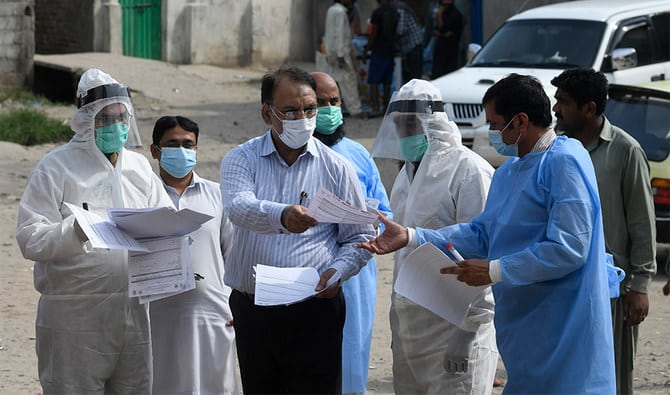
    Dr. Faiza Ahmed* has been practicing as a health officer at a BHU near Faisalabad for the last couple of years. When I visited her, they were partially using the EMR system. Out of the 150 patients that had been to the BHU that day, they had electronically registered around 90 of them.

    Most of her patients, especially women, don’t bring along CNICs. But she has made it a point to especially encourage expectant mothers to bring along their own or a relative’s CNIC so that she can track the health of mothers and babies. “This way, I can see a patient’s data even if she had her baby six months ago,” she said. “I can see if she was hypertensive or diabetic back then and how her child was doing back then.”

    Dr. Ahmed has not received instructions to go paperless and she is skeptical of the idea.

    “It’s practically impossible to register all 200 patients because of resource limitations,” she told me. “Internet speed in this area is also very slow.”

    When I asked Khalid Sharif about this, he said that they had already address this issue by creating an offline version of the software which automatically uploads the data when the internet reconnects. However, Dr Ahmed said that the offline version is not functional yet.

    Another reason why the system might feel tedious to Dr Ahmed is because they are currently running two parallel systems. The EMR system has been designed with the idea of print receipts. When the midwife sends the patient off to the doctor, they are supposed to bring their registration slip along. Similarly, the doctor is supposed to print out a prescription slip and hand it to the patient. However, Dr. Ahmed contended that the BHU cannot afford to thermally print slips for every patient. So currently they are both logging data online and writing all the information manually on pieces of paper to give to the patients.

    “I think there’s always resistance to change — everyone gets used to a certain system and doesn’t want to get out of it,” Zara Ansari, a consultant for the government, said. “As with any new data system, it takes time, but this is definitely the future.”

    Zara Ansari is a senior consultant at ACASUS, a management consultancy firm that is assisting the health department with the rollout of electronic medical records. Ansari and her team have been giving trainings to doctors to make them comfortable with the new system. They have also been analysing data for the government to monitor the level of compliance that each BHU is showing.  

    “We started off by assigning lax targets so people can be onboard with actually doing this and then progressively over time making it more strict,” she said. “As of recently, we will be monitoring to see which facilities are doing completely paperless entry.”

    There are of course caveats to this new age technology. There is not a lot of clarity around the privacy of the date being collected and how it will be kept safe. There seem to be no conversations happening around data privacy or patient confidentiality in government halls. 

    Caveats and all, Punjab is making a step forward into modern healthcare. How successful they will be is something only time can tell.

    (*Names have been changed to protect privacy)

  • Nawaz to visit Saudi as royal guest

    Nawaz to visit Saudi as royal guest

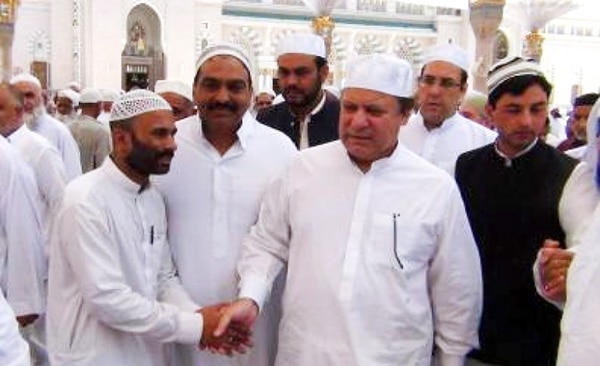
    Pakistan Muslim League-Nawaz (PML-N) supremo Nawaz Sharif will perform Umrah in the last days of Ramzan on the invitation of the royal family.

    Nawaz is set to visit the Kingdom on the invitation of the Saudi ruler, with the former Prime Minister being a royal guest in the country.

    The news of Sharif’s planned visit to Saudi Arabia has led to speculation that he may use the opportunity to return to Pakistan. However, there has been no official confirmation from Sharif or his party about his plans to return.

    The PML-N supremo was granted an eight-week bail on medical grounds in October 2019, and, he was allowed to travel to London for treatment for four weeks. However, Nawaz has not returned since then.

  • Pakistan’s inflation rate surges to an all-time high, reaching 38.9% in rural areas

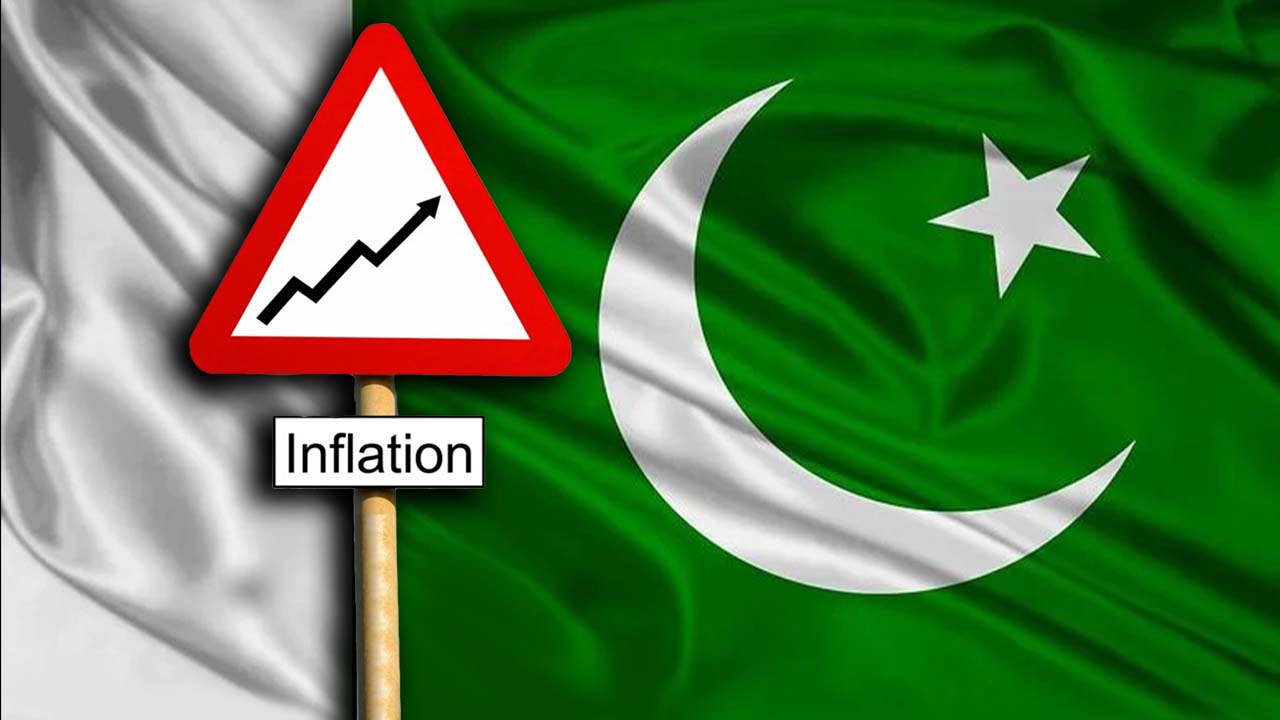
    Pakistan’s inflation rate surges to an all-time high, reaching 38.9% in rural areas

    According to recent reports, the finance ministry’s expectations of high inflation were met due to market frictions caused by the relative demand and supply gap of essential items, exchange rate depreciation, and recent upward adjustment of administered prices of petrol and diesel. However, there was a monthly decline in the inflation rate, which dropped to 3.7 per cent in March compared to February.

    Despite this, the inflation situation has worsened significantly over the months, causing mass distress due to the high prices of almost every edible item. The core inflation rate, which excludes volatile energy and food prices, increased in March to 18.6 per cent in urban areas and 23.1 per cent in rural areas. Experts believe that Pakistan is now heading towards hyperinflation, where prices are out of control and expected to surge by 50 per cent.

    The Pakistan Bureau of Statistics (PBS) reported that the inflation rate in rural areas reached 38.9 per cent, while it surged to 33 per cent in the cities. Food inflation rose sharply to 50.2 per cent in rural areas and increased to 47.1 per cent in urban areas last month. Supply chain disruptions and weak checks have led to a substantial rise in the food inflation rate.

    Unfortunately, both the federal and provincial governments are unable to provide steady essential food supplies, and the prices of most consumer goods remain out of reach for the people. This surge in prices coincides with a significant economic slowdown, and poverty and unemployment levels are rising.

    A majority of the surge in prices was seen in rural areas where income levels were already low. The food group prices rose by 47.15 per cent in March compared to the same month last year. Both perishable and non-perishable food items witnessed unprecedented increases in prices.

    The Wholesale Price Index (WPI), which monitors prices in the wholesale market, also rose sharply to 37.5 per cent in March compared to 23.8 per cent in the same month last year. The inflation rate has remained above 20 per cent since June after the coalition government curtailed imports.

    The overall inflation rate recorded an increase in both urban and rural areas, with urban areas surging to 33 per cent in March, while rural areas soared to 38.9 per cent over the same month last year. In March last year, the inflation rate in urban areas was 11.9 per cent, while in rural areas, it stood at 13.9 per cent.

    The non-food inflation rate increased to 24.1 per cent in urban areas and 28.5 per cent in rural areas compared to 10.4 per cent and 12.5 per cent in the same month last year. Prices of non-perishable food items surged by 46.44 per cent on an annualized basis, and the prices of perishable goods surged by 51.81 per cent year-on-year.

  • Proposed French bill will require influencers to disclose filters used on their pictures

    A new law proposed by the French Finance Minister Bruno Le Maire will soon ban social media influencers from uploading photos without mentioning re-touches or filters they have added to them.

    The new law seeks to curtail cosmetic surgery, keeping in mind its ill effect on the mental health of teenagers. The law states that any new picture or video uploaded will also include the filters added to it in the caption or description, while all promotions of cosmetic surgery will be banned.

    Penalty for revoking this law could include up to two years in prison and $32,525 in fines, while the influencer responsible for breaking the law would also be banned from using social media or profiting from being an influencer.

    Speaking to a French website, Le Maire said that the law was not an attempt to restrict influencers. It was to create a system that protects them as well as consumers.

    This is not the first time France has taken strict measures to tackle the rise of inaccessible beauty standards. In 2017, the country passed a law requiring any commercial photo that has been re-touched to change the model’s body to be labeled as ‘photographie retouchée’ (retouched photograph).

  • PDM moot meets today to discuss future strategy for the government

    PDM moot meets today to discuss future strategy for the government

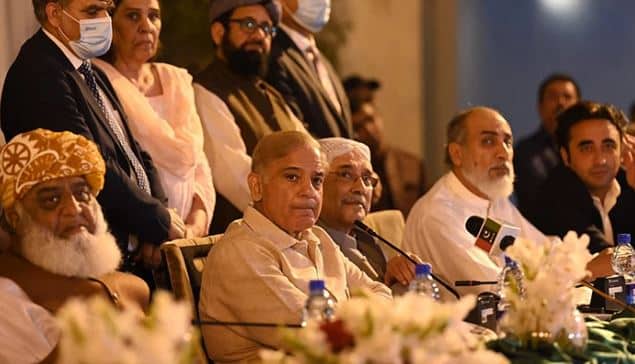
    Leaders of the Pakistan Democratic Movement (PDM) will meet today to discuss future strategy for the government.

    Chairing the meeting from via a video link, Prime Minister (PM) Shehbaz Sharif will discuss the “overall political situation of the country” while Law Minister Azam Nazir Tarar will brief the members on legal issues, Radio Pakistan said.

    The current political situation, the upcoming elections in line with the Election Commission of Pakistan’s (ECP) decision, and the SC proceedings, as well as the role of the CJP and the top court, will all be under discussion.

    Earlier, Pakistan Muslim League-Nawaz (PML-N) supremo, Nawaz Sharif, had spoken out against the decision to disqualify him as prime minister, stating that it hurt the future of the country.

    Speaking at a press conference in London on Friday evening, Nawaz said, “I appeal to my people, open your eyes. This is a cruel joke. In 2017, weren’t you happy? You had full stomachs, your families were content. After 2017, what was the situation?”

    Hitting out at the judiciary, Nawaz criticised incumbent Chief Justice of Pakistan (CJP) Umar Ata Bandial and former CJP Saqib Nisar and said there was consensus “among all” that a full court should hear the elections case.

  • Jalsa attend karein Khan ka magar reply sirf Bilawal ko, Humza Yousaf ignores Imran after becoming Scotland’s leader

    Humza Yousaf has made history by becoming Scotland’s first Muslim First Minister.

    Yousaf has ignited considerable curiosity in Pakistan as to his roots and political inclinations.

    Digging deep, we found a very old tweet of Humza and it seems like he had been an admirer of Pakistan Tehreek-e-Insaf (PTI) Chairman Imran Khan. In 2012, the newly-elected Scotland leader attended Khan’s jalsa and met him.

    He wrote: “Great rally amazing energy at Imran Khan rally and very good meeting with him afterward.”

    Recently, when Imran congratulated Humza on being elected, Scotland’s First Minister ignored the tweet, however, he replied to current Foreign Minister (FM) Bilawal Bhutto-Zardari instead.

    The minister wished him well saying, “Wishing you all the best for your term in Bute House and looking forward for strong partnership in the domains of trade, investment, culture and education.”

    In response, Humza mentioned that “Pakistan will always have a special place in his heart”.

    “Scotland’s relationship with Pakistan is a friendship that has blossomed through many generations, I look forward to it growing stronger, ” he added.

  • PM Shehbaz orders two free flour bags instead of one for citizens

    PM Shehbaz orders two free flour bags instead of one for citizens

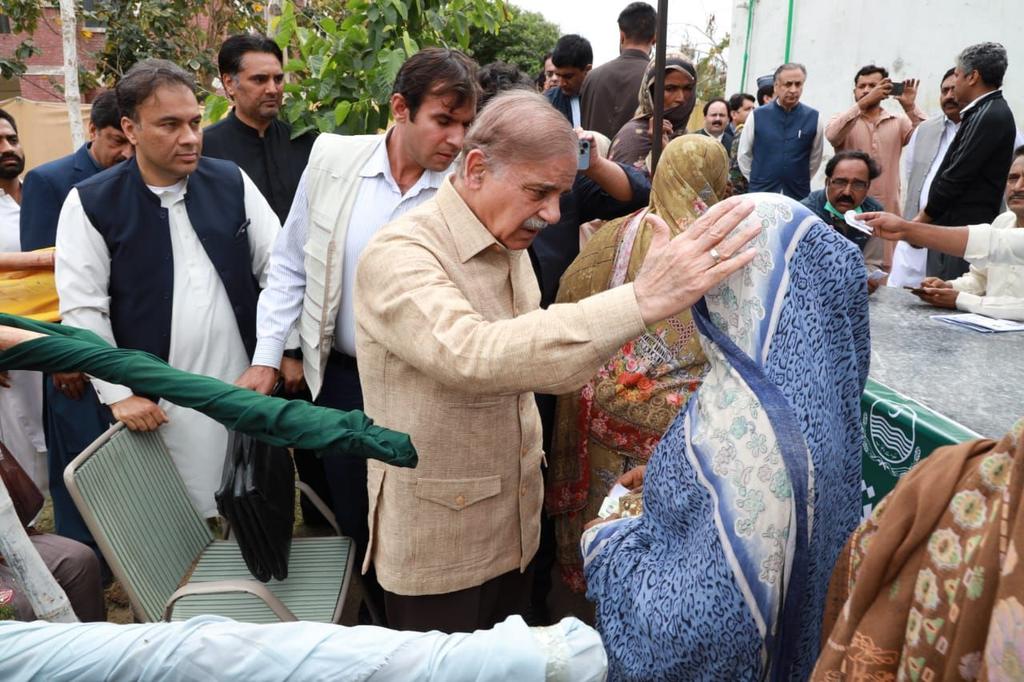
    Prime Minister (PM) Shehbaz Sharif paid a visit to a flour distribution centre in Islamabad on Friday to oversee the work.

    During the visit, the premier directed authorities to give priority to the distribution of flour bags to aged persons and women.

    He also decided to provide two flour bags instead of one so that the people do not need to visit the distribution centres frequently.

    He asked relevant authorities to chalk out a facilitatory mechanism for the person who can only present the photocopy of CNIC in case the original card is missing.

    Under the Ramzan package jointly initiated by the prime minister and the Punjab government, 20 million bags of free flour have been distributed among deserving citizens by the 10th day of the programme.

  • ‘Are all decisions and benches only for Imran Khan?’: Nawaz raises questions on judiciary

    ‘Are all decisions and benches only for Imran Khan?’: Nawaz raises questions on judiciary

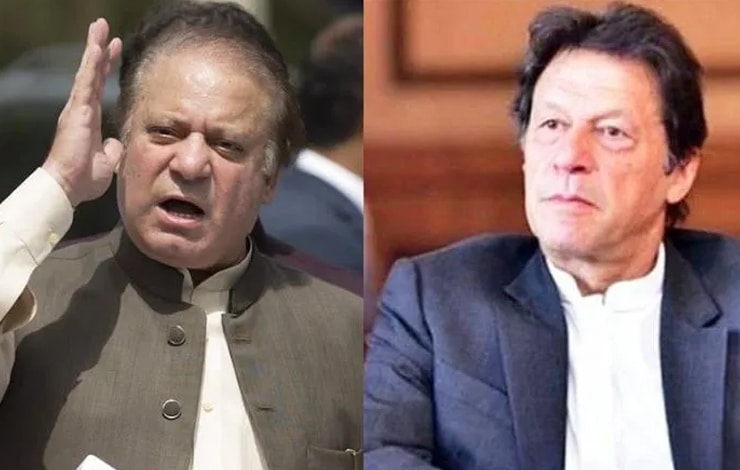
    Pakistan Muslim League-Nawaz (PML-N) supremo, Nawaz Sharif, has spoken out against the decision to disqualify him as prime minister, stating that it hurt the future of the country.

    Speaking at a press conference in London on Friday evening, Nawaz said, “I appeal to my people, open your eyes. This is a cruel joke. In 2017, weren’t you happy? You had full stomachs, your families were content. After 2017, what was the situation?”

    Hitting out at the judiciary, Nawaz criticised incumbent Chief Justice of Pakistan (CJP) Umar Ata Bandial and former-CJP Saqib Nisar and said there was consensus “among all” that a full court should hear the elections case.

    “Then why this zid [stubbornness]? Why the insistence that only three judges will be on the bench? This is a national issue, not the issue of one truck, cart or of vacating a plot. Why just these three judges?” he questioned.

    “All political parties have said this, the government wants this, bar associations want this, parliament has expressed its will and even passed its bill. It is now with the president… parliament is the country’s major institution, its sanctity should be respected,” he elaborated.

    Justice Bandial has been criticised for forming what critics have called a “like-minded bench” to hear major cases, ignoring senior judges, most notably Justice Qazi Faez Isa.

    “For one man, you [the judges] are giving decisions? Have you ever taken a suo motu on things said by Justice Shaukat Siddiqi? Or what ex-COAS Gen Bajwa said? Doesn’t this warrant a suo motu that Nawaz Sharif was treated unjustly,” Nawaz Sharif asked, who was disqualified for life by a Supreme Court bench.

    “Are all decisions and benches for Imran Khan?” questioned the former Prime Minister, adding “I also heard that the chief justice had tears in his eyes, if these are from fear of God then that is welcome news. I cannot say more.”

    Furthermore, Nawaz called for a full court to be formed to hear a petition by the Pakistan Tehreek-e-Insaf (PTI) against the delay in Punjab elections.

  • Pakistan’s inflation expected to rise due to policy decisions and economic uncertainty, warns Finance Ministry

    Pakistan’s inflation expected to rise due to policy decisions and economic uncertainty, warns Finance Ministry

    Finance Ministry has warned that inflation in Pakistan is set to rise further due to a second-round effect of policy decisions made earlier this year to raise energy and fuel prices, the central bank’s policy rate, and the depreciation of the rupee to secure IMF funding.

    The recent political and economic uncertainties in the country are causing inflationary expectations to rise. The short-term rate of inflation measured by the Sensitive Price Indicator (SPI) hit a record 46.65 per cent last week, while monthly inflation recorded by the Consumer Price Index (CPI) reached 31.6 per cent in February – the highest in six decades.

    The ministry expects inflation to stay at an elevated level due to market frictions caused by the relative demand and supply gap of essential items, exchange rate depreciation, and recent upward adjustments of administered prices of petrol and diesel. Production losses due to floods have not yet been fully recovered, especially those of major agricultural crops. The shortage of essential items has persisted due to these factors.

    Moreover, the delay of stabilisation program has exacerbated economic uncertainty, due to which inflationary expectations have remained strong. The Economic Adviser’s Wing of the finance ministry has also conceded ineffective policy measures and the haplessness of the authorities in containing the inflationary spiral.

    A report from ministry warns that bulk buying during Ramzan might cause the demand-supply gap and result in escalation of essential items prices, although the government is taking steps to ensure a smooth supply of essential items. The report also warned that being largely dependent on prevailing climatic conditions, as witnessed last year, the delay in rains and early heatwave forecast by the Pakistan Met Office in April and May could adversely impact wheat production.

    On a positive note, the report said that despite challenges and uncertainties, the economy was showing continuous signs of resilience as depicted through contained fiscal and current account deficits during the current fiscal year.