Tag: Pakistan

  • PMDA: Why all the secrecy?

    PMDA: Why all the secrecy?

    The mystery shrouding the elusive proposed draft of the Pakistan Media Development Authority (PMDA) is quite intriguing. Some consultations have been held with journalists, civil society members, and parliamentarians but without a copy of the proposed draft. Members of the National Assembly (NA) Standing Committee on Information and Broadcasting on Thursday demanded that the draft be shared instead of verbal briefings by the Information Ministry. Chairman of the NA standing committee Mian Javed Latif then formed a sub-committee, which will be headed by Marriyum Aurangzeb with Nafisa Shah and Kanwal Shozab as its members. Let’s see if the proposed draft will now be shared with the sub-committee. 


    Last month, representatives of media organisations issued a joint statement that rejected the proposed media authority. They said that it was unconstitutional and deemed it as a draconian law. It seems that this is yet another tactic by the government to curb media freedom. Human Rights Watch (HRW) recently also issued a statement on the PMDA saying that the Pakistani government is “seeking broad new powers to control the media as part of its crackdown on freedom of expression. Journalists, human rights activists, and political leaders across that country have raised the alarm about proposed legislation that would bolster powers of the government to censor and restrict the media.” The government reacted to HRW’s statement by issuing a rejoinder through the Pakistan Embassy in the US challenging the human rights organisation’s assertions on PMDA. Patricia Gossman, HRW’s associate director for the Asia division, asked for a draft, which has so far not been shared with anyone. 

    It is quite worrying that in a country where media freedom is already quite curtailed, where interviews have been stopped from going on air or stopped mid-way, where anchors have been taken off-air, where there are now so many red lines that media organisations have to tread very carefully, where attacks on journalists have become frequent and culprits are still at large, where online trolling of journalists has become a norm, where the government issues reports of social media trends and hashtags it deems anti-state, where government officials keep on targeting journalists and media organisations without any shred of evidence, a new media authority with immense powers is being proposed without sharing the details of the proposed law and/or taking the main stakeholders on board.


    We hope that the government will share the proposed draft with all stakeholders so that the mystery shrouding this media authority ends once and for all. There is already a lot of mistrust between the government and the media. We hope the government will listen to the legitimate concerns of media organisations and not dismiss them. A free and independent media is essential for any democracy. Pakistan is a democracy and we hope the government will not undermine it in any way. 
  • Is Ramiz Raja a good fit for PCB?

    Is Ramiz Raja a good fit for PCB?

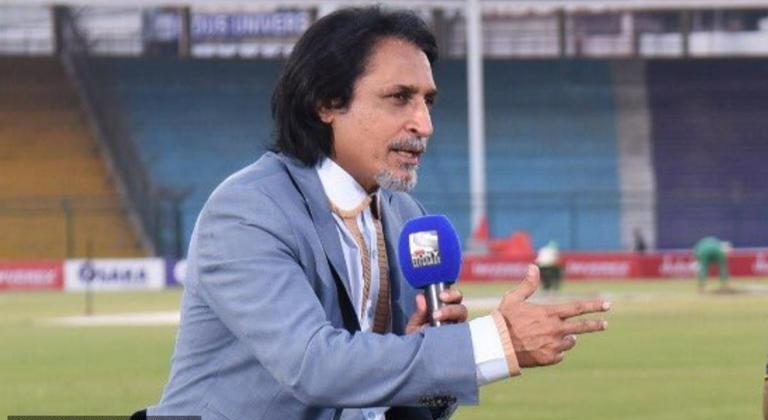
    “My aim is to reset Pakistan cricket’s GPS,” Ramiz Raja was quoted as saying after being nominated to succeed Ehsan Mani as Chairman Pakistan Cricket Board (PCB). As it sits, long-time commentator and former Pakistan captain Ramiz is primed to edge past Asad Ali Khan in the Board of Governors (BoG) meeting on September 13 and seems to be the front-runner to nab the slot of the chairman. To ascertain whether or not he is a good fit for this role, one needs to examine his administerial credentials and how he fared in his previous reign when he served PCB in a similar capacity.

    A grand total of just more than a year (July 2003 to August 2004) is all the administerial experience that Ramiz has under his belt when he replaced Chishty Mujahid as PCB’s chief executive. This ephemeral reign was nothing short of a colossal debacle in more ways than one and peppered with controversies, ultimately forcing Ramiz to tender resignation from the role, which begs the question: why has he accepted the role in the first place?

    To begin with, Ramiz had an acrimonious relationship with several players throughout his tenure. While on the one hand, he was cutting his teeth as the chief executive, on the other hand, he was criticising the national team in his commentary at the same time, which did not go down well with the players who lambasted him for dual standards.

    Things kept going sideways for Ramiz and India’s tour of Pakistan in 2004 proved to be the final nail in the coffin of his administerial career. A multitude of controversies popped up in this woeful series where Pakistan lost the 3-match Test series 2-1 and 5-match ODI series 3-2; players were alleged to be involved in match-fixing against India in the fourth ODI, Shoaib Akhtar’s injury saga was handled irresponsibly and the media ripped the team to shreds and lamented the disastrous showing.

    In his column ‘Pakistan cricket’s blackest day’, Omar Kureishi wrote that Pakistan’s batsmen competed against one another on who was more irresponsible.

    “It was a sad day as the last rites of Pakistan cricket was performed at Pindi Cricket Stadium. Indian spinner Anil Kumble and paceman Laxmipathy Balaji nailed the coffin in front of handful mourners,” Dawn’s match report read.

    Agha Akbar, in his column ‘Pakistan was overawed and outplayed’ for The Nation, wrote: “It might hurt the pride of the Pakistanis, but the fact is that this Indian team has shown them the way they once used to play cricket.”

    “Pakistan just threw in the towel. It is for the PCB to find out what went wrong, for something went horribly wrong,” Akbar added.

    As if that was not enough to demonstrate his inability to deliver the goods, Ramiz’s reputation suffered a blow when several board officials and players also filed a case against him after he was convicted by the National Accountability Bureau (NAB) for marketing match tickets in black.

    Nevertheless, one can argue that Ramiz has been commentating on Pakistan cricket for about two decades and probably knows the ins and outs of Pakistan cricket but it is worth bearing in mind that commentating on a game and administering it requires an entirely different set of skills.

    The chairman role requires one to be well-versed with business administration. Although Ramiz received his master’s degree in business administration, his credentials in that field are not impressive enough to warrant him a chairman role if you compare them to the qualifications of chairpersons of other teams. Also, if his previous stint is anything to go by, it is safe to say that Ramiz Raja is not a good fit for the role of Chairman PCB.

  • US embassy announces additional 700 scholarships for Pakistani women to curb gender gap

    US embassy announces additional 700 scholarships for Pakistani women to curb gender gap

    The US embassy in Pakistan announced that it will award 700 additional graduate-level scholarships for Pakistani women in partnership with the Higher Education Commission (HEC).

    The program targets young people from remote and rural areas of Pakistan includes Interior Sindh, Balochistan, Khyber Pakhtunkhwa, and Federally Administered Tribal Areas (FATA).

    The two-year scholarships will begin this year and last until 2023. The students can earn master’s degrees in agriculture, business, engineering, health sciences, and social sciences.

    “These additional 700 fully-funded graduate-level scholarships will be awarded to some of the most talented Pakistani women to help meet their higher education goals,” said USAID Deputy Mission Director Michael Nehrbass.

    United States Agency for International Development (USAID) has increased the number of scholarships and allocated 50 percent of scholarships to women. Today’s announcement brings the total of Merit- and Needs-Based Scholarship Program (MNBSP) scholarships awarded to Pakistani students to 6,000.

    Since 2003, the US had granted 5,300 merit and need-based scholarships to financially disadvantaged but academically successful students throughout Pakistan.

  • Bahawal Victoria Hospital bans jeans, bangles, rings in hospital premises

     Newly hired medical superintendent of the Bahawal Victoria Hospital (BVH) Dr Muhammad Younus Warraich has banned jeans in the hospital and made dupatta or scarf mandatory for the women medical officers (WMOs) and paramedics, Majeed Gill reported for Dawn.

     The new dress code has been introduced reportedly by the new head of the hospital to ‘preach Islam and reform the society’.

    A notification signed by Mr Warraich, titled as, DRESS CODE RULES IN B.V. HOSPITAL BAHAWALPUR PREMISES consisted of two categories of ‘ALLOWED’ and ‘NOT ALLOWED’.

    The letter gives the list of the dresses, which are not permitted in the hospital. It includes “jeans/tights (but only with knee-length shirt), high-up trousers/capri above ankle, tight fitted clothes, see-through clothes, heavy/tacky bangles or rings, sleeveless/half sleeves clothes, heavy make-up (especially dark lipsticks), untied long hair, high heels (making loud sounds and turning heads of everyone), extreme hairstyles (especially high buns like the hump of camels), low neckline (front and back), nail paint on long nails, slippers and anklets (Pazaib)”.

    The “ALLOWED” category includes, “shalwar kameez or trousers with long shirts, dupatta/scarf, minimal jewelry like studs/tops, simple ring, or a chain with locket, sleeves below the elbow, lab coat (compulsory in hospital premises), maternity gowns/suitable dresses (during antenatal period) and scrubs with long sleeves that can be folded for females”.

    It is notable that the code looks to be mostly women-centric.

    Talking to Dawn, Mr Warraich confirmed that lab coats and maternity gowns during operations are now necessary on the hospital premises along with dupatta/scarf with minimum jewellery for women medical officers. Explaining the move, he said the step had been taken to preach Islam, promote religious values and reform society.

  • Fawad Chaudhry condemned for saying Dawn is part of international conspiracy against Pak

    Fawad Chaudhry condemned for saying Dawn is part of international conspiracy against Pak

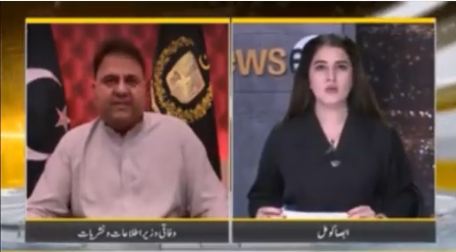
    Federal Minister for Information and Broadcasting Fawad Chaudhry accused Dawn media group of being part of an international conspiracy against Pakistan.

    When anchorperson Absa Komal asked Fawad about media freedom in Pakistan and for an update on the investigation related to recent attacks on journalists in Islamabad, Fawad dodged the question and said, “Your institution [Dawn] is an active participant of an international conspiracy theory which works against Pakistan.” Fawad appeared on ‘News Eye with Absa Komal’ on Dawn News.

    “Your institution propagates an environment that works against the country, trying to take things out of context.”

    “Human Rights Watch (HRW) has written an entire article on PMDA and it says that there is five-year prosecution. When we inquired about it from HRW, they said it was entirely based on [Dawn’s] editorial,” said Fawad.

    Twitter reacted to the minister’s statement against Dawn.

    Journalist Benazir Shah tweeted, “The Info. Minister accuses Dawn of being part of an ‘international conspiracy’ to defame Pakistan, without presenting a shred of evidence to support his claim. On the other hand, there is enough evidence of increasing censorship against media.”

    Lawyer Aftab Alam questioned, “If govt is serious about media regulatory reforms, why is it keeping the process secret? Why not putting ‘Bill’ on the official page of @GovtofPakistan and sharing with stakeholders?”

    Another Twitter user wrote, “A journalist has a genuine concern? – Instead of addressing it just accuse them of being anti-state and dodge the question. This way you save yourself the embarrassment of giving a proper clarification which you clearly don’t have.”

  • ‘A physically challenged girl doesn’t need anyone,’ three Pakistanis on solo trip to Egypt

    ‘A physically challenged girl doesn’t need anyone,’ three Pakistanis on solo trip to Egypt

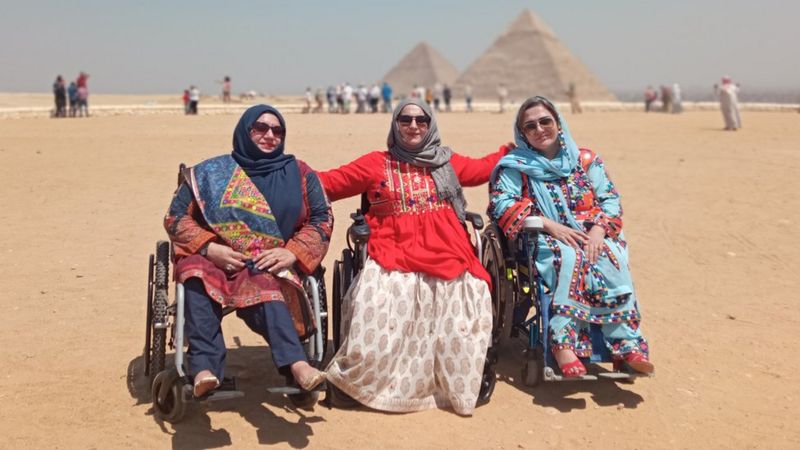
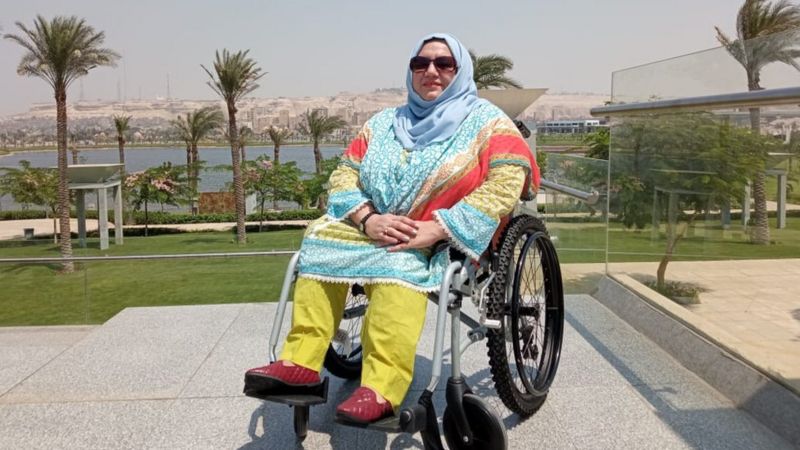
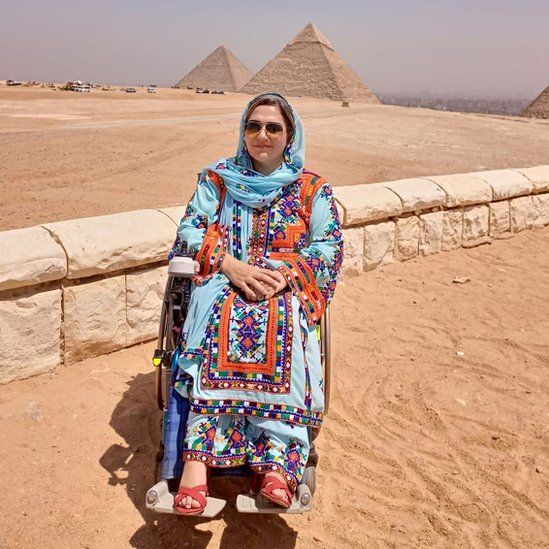
    Pictures of three physically challenged Pakistani friends on a tour to Egypt are doing the rounds on social media. The three women are Tanzeela, Afshan and Zarghona. Tanzeela is from Lahore, Afshan hails from Peshawar and Zarghona lives in Quetta.

    Talking to BBC Urdu, Tanzeela said that she is physically challenged since her childhood. She says, “I have no legs below the knees and I have been in a wheelchair all my life,” but so far she has travelled 20 countries in a wheelchair.

    “I wanted to prove that a disabled girl doesn’t need anyone, she can be independent, she can make her own decisions,” she said talking about travelling alone.

     Tanzeela said, “Allah has created us all independent, but in our country, a differently-abled person is made dependant on others and he cannot go anywhere without the help of anyone, from restaurants to public washrooms.” She added that there are no facilities for physically challenged persons to go anywhere alone. They have to ask for someone’s help to go to the restaurants or public washrooms. There is no privacy and if there is no privacy, then your self-confidence is completely destroyed.

    “I thought I would take a step forward and set an example for other people.”

    The other friend, Afshan told BBC Urdu that 75 per cent of her body was paralysed because she was not vaccinated against polio when she was a child. Physiotherapy has made her healthy enough that she can now sit in a wheelchair.

    Sharing her feelings about travelling alone, she said that women with disabilities are often looked upon with pity. “It is a common notion about them that they cannot go anywhere so I decided to show the world that when you have the courage, then nothing is impossible.”

    Afshan said that we used to see girls travelling outside Pakistan but never saw anybody mentioning facilities provided to the physically challenged people who want to travel to other countries. “Nobody mentioned whether the conditions are the same in foreign countries as in Pakistan or better for people like us.”

    Zarghona was seven months old when she contracted polio and was unable to walk.

    “I have never travelled from Quetta to Islamabad or Karachi alone before this and I used to have some attendant with me. Even if I go somewhere in Quetta, I have to take someone with me,” she said.

    This is her first trip alone. She has previously travelled with different groups to three countries. “I was very excited to see Tanzeela and Afshan and I dared to travel alone,” she added. “If they can travel alone, why can’t I?”

  • Mohsin Dawar launches political party with members of Pashtun Tahafuz Movement

    Member National Assembly (MNA) Mohsin Dawar on Wednesday launched a new political party called the National Democratic Movement (NDM). The new party includes some members of the Pashtun Tahafuz Movement (PTM).

    NDM’s central organising committee was announced at its first formal meeting in Peshawar. Mohsin Dawar will be the central organiser, Muzamil Shah general secretary and Jamila Gilani information secretary. Abdullah Nangyal, Ibrahim Khan, Haroon Bazai, Anwar Sulemankhel, Aijaz Aslam and Tariq Wazir Khan are also part of the central organising committee.

    NDM’s first press conference was attended by former senator Afrasiab Khattak, former MNA Bushra Gohar and several others. The manifesto of the new political party was also unveiled at the launch. It says that the party’s basic principle is the promotion of a secular federal democratic parliamentary system, among other things. It also states that the NDM believes in upholding civilian constitutional supremacy.

    Talking to The Current, Mohsin Dawar said the NDM will speak for the oppressed and the marginalised from every part of Pakistan. “We believe in supremacy of parliament and we believe in providing space to the youth to lead this movement. We want to steer the country towards equality and progress and will also resist growing militarisation, which is dominating every sphere.”

  • K-electric responds to power outage in different parts of Karachi

    K-electric responds to power outage in different parts of Karachi

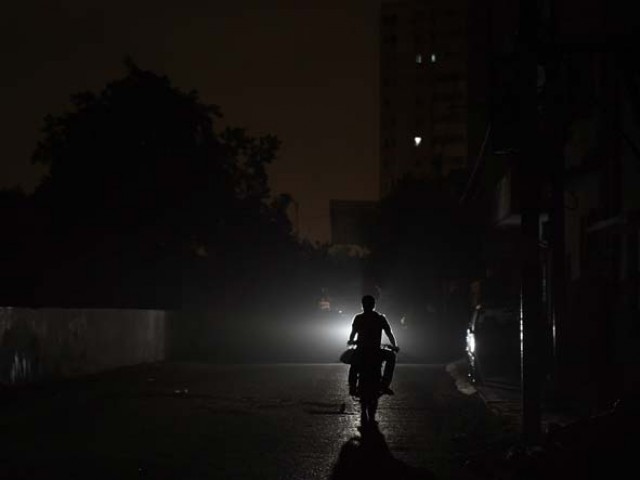
    A power outage is reported in several parts of Karachi on Wednesday, the city’s power utility K-Electric reported.

    According to Geo News, the areas facing power outages are Nazimabad, North Nazimabad, Federal B Area, Gulshan-e-Iqbal, Gulistan-e-Jauhar, Clifton and Defence. 

    K-electric, while responding to the complaints, stated on Twitter that it is “actively monitoring the situation and will keep updating this space”.

    Read More: How to save on your electricity bill?

    A resident told Geo News that just before the outage, there was pronounced fluctuation in the power supply.

    A lot of the areas where a power outage was reported were areas where it drizzled today, leading to people hoping that the rains expected this month will not cause havoc in the city like before.

  • Two girls kidnapped, gang-raped in a Lahore factory

    Two girls kidnapped, gang-raped in a Lahore factory

    Two girls were allegedly kidnapped and gang-raped in a factory in Lahore, ARY news reported.


    As per details, two girls were abducted from Lahore’s Shahdara area and were moved to Gujjarpura.

    The girls were gang-raped by three men in the Karol Khatti factory in Gujjarpura, the police said and added that the rapists later escaped the crime scene.

    The police claim that they have arrested the factory owner while a search operation is underway to arrest the rapists.

    Community Verified icon
  • Karachi police arrest watchman’s son for raping four-year-old boy

    Karachi police arrest watchman’s son for raping four-year-old boy

    Karachi police have arrested a suspect for assaulting a four-year-old student of a private school in Karachi’s North Nazimabad, Geo News reported.

    A case has been registered at the Taimuria police station on the complaint of the child’s father.

    Sameer, the son of the school’s watchman, was arrested after the victim child identified him.

    The complainant stated that his son went to get a ball from inside the school when the watchman’s son assaulted him.

    The police said that the child’s medical examination confirmed that he was assaulted.