Tag: Pakistan

  • What’s wrong with CSS Exams?

    What’s wrong with CSS Exams?

    Do you know the meaning of the words ‘deracinated’, ‘bericloge’ and ‘hegiographic’? Probably not. I don’t either. And it doesn’t matter. (One of them perhaps is not even a word.)

    But it does matter to Federal Public Service Commission, as evident from a recently leaked question on social media, taken from the CSS 2021 English paper.

    CSS is the sought-after competitive exam, a gateway to the central superior services of Pakistan. A good result can potentially land you into a socially lucrative civil service job, while a bad result can waste years of hard work.

    Thousands appear for the exam every year and about 300 lucky individuals get through and get allocated across twelve service groups. These thousands of candidates often spend years preparing for the exam. While it is understandable that an exam of this level should be difficult, it doesn’t necessarily have to be unreasonable.

    I also appeared for CSS about 22 years ago and landed amongst top ten positions. Yet I’m not embarrassed to admit that had I been given this question, I would have failed. Probably many deserving candidates did this year.

    And for what? The answer to this question is by no means a measure to assess someone’s competence. But one unreasonable question can play havoc with years of hard work and it probably did.

    Why FPSC would do that is best known to them but one can speculate that it’s either the result of poor-quality control or manifestation of a decades-old mindset. The latter seems more plausible as indicated by many other leaked papers and questions.

    After seeing these baffling questions, I picked up the phone and called a retired federal secretary. I asked him about his own experience when he appeared for the competitive exam 53 years ago. What he told me was not very different from what I had experienced in my own exam. And when I looked at more recent CSS question papers, it dawned on me that they have hardly evolved.

    But these unreasonable question papers are only one of the things wrong with how CSS exams are conducted. There are many others.

    Firstly, they are inefficient. About 18,000 candidates appear for a total of 12 papers, out of which only 300-400 clear this written exam.

    Secondly, besides the outdated and complex structure, the pattern of exams is such that candidates can often game the system or get an undue advantage based on disparity in how different subjects are scored.

    Thirdly, these exams, even including a psychological test, do not sufficiently reveal the personalities of these candidates.

    With all the developments in technology and recruitment practices, why has the government failed to reform the CSS exams? And more importantly, how should these be reformed?

    Let’s first look across the border at Indian civil service, which like Pakistani civil service, was inherited from a British system. About 1.1 million candidates apply for superior services in India. They take about 500,000 to an initial screening test called ‘prelims’. Most of the candidates are left behind at this stage and approximately 1 out of every 50 candidates taking prelims is taken to the full-scale competitive exam called ‘mains’ comprising nine papers. The last stage is the interview, after which about 750 candidates are selected for various services.

    Although Indian system is better than us, since they have a much more efficient screening system, it is also not ideal. But for starters, it does indicate that Pakistan should also embrace screening to save costs and make the whole process much more efficient. Similar to a standardized test like SAT or GMAT, the results can remain valid for three to five years.

    But let’s also look for a better system. UK perhaps is a good example to see, since we have essentially inherited this system from them. But they did not remain frozen in the 1940’s and have moved on.

    The UK civil service follows a four-stage recruitment process. The first stage is the ‘application sift’ to screen the applicants. UK civil service requires writing a personal statement, a standard practice for international undergraduate and graduate admissions, unlike the CSS application that is limited to biographical and academic information.

    The second stage consists of standardized tests taken to narrow down the applicants’ pool to about 20 per cent of the candidates, through a simple, efficient, automated and low-cost process. The test includes questions on functional knowledge of contemporary issues or on standard IQ.

    The third and the most critical stage in the UK civil service recruitment is a two-day assessment center. The assessment center method has gained immense popularity in recent years and has been widely adopted by public and private sectors. The method includes a standardized evaluation of behavior based on simulations, interviews, group activities, etc. to help in revealing various aspects of a candidate’s personality. Since this is a resource-intensive method, very few candidates are taken to this stage.

    Pakistan’s CSS recruitment excludes this most important stage altogether and instead relies on a primitive psychological evaluation that leads to suitability restrictions on a handful of candidates.

    The fourth stage is the panel interview, which is very similar to the final CSS interview, but by then it can hardly compensate for the critical weaknesses in the first three stages of the CSS exam.

    Why are we living in the past? Why are we making it difficult for people to qualify for the competitive exams? And why are we employing arbitrary measures to narrow down the pool? It’s time to answer these questions and change the way CSS exams are conducted.

    Note: A shorter and partially different version of this article originally appeared in Express Tribune on 23rd February, 2021.
  • Food wars begin after Pooja Bhatt says Karachi has the best biryani

    The Biryani war does not seem to be settling down anytime soon and Pooja Bhatt has sparked a new one on social media after she commented that Karachi has the best biryani in South Asia.

    It all started when a Twitter user Sameer Chishty tweeted: “Truth. Karachi is the undisputed food champion of Pakistan. Don’t bother coming at me on this.”

    Replying to his tweet, Faisal Rafi, a Pakistani producer, added: “Of South Asia, I dare say.”

    Responding to Rafi’s tweet, Bollywood actor Pooja Bhatt said: “I second that.”

    Bhatt’s tweet sparked a food war on social media with users jumping in to list their city’s best food.

    https://twitter.com/KehRahaHai/status/1364491955565133824?s=20
    https://twitter.com/Sabbandkardo/status/1364551899773558785?s=20
    https://twitter.com/ZaryaabKhan24/status/1364580577370775560?s=20
    https://twitter.com/HaroonSidd/status/1364863990443241475?s=20

  • Despite ‘serious progress’, Pakistan fails to exit FATF grey list

    Despite ‘serious progress’, Pakistan fails to exit FATF grey list

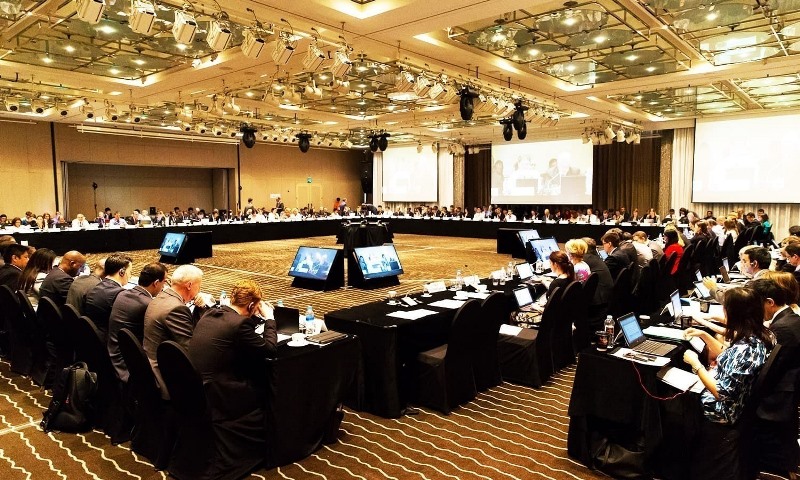
    Pakistan was retained in the “grey list” of the Financial Action Task Force (FATF), which examined its efforts to counter terror financing and money laundering. The decision was taken at the meeting of the multilateral watchdog on Thursday.

    “Pakistan should continue to work on implementing the three remaining items in its action plan to address its strategically important deficiencies, namely by: demonstrating that TF investigations and prosecutions target persons and entities acting on behalf or at the direction of designated persons or entities; demonstrating that TF prosecutions result in effective, proportionate and dissuasive sanctions and demonstrating effective implementation of targeted financial sanctions against all 1267 and 1373 designated terrorists, specifically those acting for or on their behalf,” the FATF said in a statement.

    The anti-terror financing organisation noted that Islamabad has largely addressed 24 of the 27 action items and gave Islamabad time till June 2021 to complete the full action plan.

    FATF president Marcus Pleyer said that Pakistan has made “significant progress” but “some serious deficiencies remain” and all these deficiencies are “in the realm of terror financing”. Pleyer added that Pakistan “remains under increased monitoring”.

    Reacting to the FATF decision, Federal Minister Hammad Azhar said Pakistan had completed “almost 90 per cent” of its current FATF action plan with 24 out of 27 items rated as ‘largely addressed’ and the remaining three items ‘partially addressed’.

    “FATF has acknowledged Pakistan’s high-level political commitment since 2018 that led to significant progress. It was also noted by FATF member countries that Pakistan is subject to perhaps the most challenging & comprehensive action plan ever given to any country,” he tweeted, saying the country was also subject to dual evaluation processes of FATF with differing timelines.

    MOROCCO, SENEGAL ON GREY LIST:

    The FATF during its plenary kept North Korea and Iran as the only two countries on its blacklist but added four new places to its watch list for increased monitoring, according to Pleyer.

    The countries added to the grey list are Morocco, Burkina Faso, Senegal and the Cayman Islands.

    With the four additions, the list now has 19 countries and territories that FATF said were only partially fulfilling international rules for fighting terrorism financing and money laundering.

  • FATF grey-listing has cost Pakistan $38bn since 2008: report

    FATF grey-listing has cost Pakistan $38bn since 2008: report

    The Financial Action Task Force’s (FATF) decision to place Pakistan on the grey list three times since 2008 has cost Islamabad $38 billion, reported Express Tribune.

    The newspaper quoted a report published by an independent think-thank, Tabadlab, stated that grey-listing events spanning from 2008 to 2019, may have resulted in cumulative GDP losses worth $38 billion.

    According to the report, the losses are worked out on the basis of reduction in consumption expenditures, exports, and foreign direct investment (FDI). The report has attributed most of these losses to the reduction in household and government consumption expenditures.

    “The author of the research paper argued that the data suggested that Pakistan’s removal from the grey list has at times led to the revival of the economy, as evident from an increase in the level of GDP for the years 2017 and 2018 when Pakistan was not on the grey-list,” Tribune reported.

    Pakistan was first placed on the list in 2008 for one year. In 2012, Islamabad was penalised by the FATF again and this time it was removed from the list after three years. In 2018, the country found itself on the FATF list again and has been trying to get off it ever since.

    France and some other European countries have recommended the Financial Action Task Force (FATF) to continue to keep Pakistan on the grey list, saying Islamabad has allegedly failed to comply with the conditions set by the global watchdog, according to a report in Dawn newspaper.

    The decision on whether Pakistan will remain or remove from the list will be announced on Feb 25 (today) after a three-day-long plenary meeting of the global watchdog.

  • Open ballot in Senate polls: What do legal experts have to say?

    While the government continues to stress the need for open ballot/show of hands in the forthcoming Senate election to curb horse-trading marring the process of induction of lawmakers into the upper house of the parliament, the opposition is continuing to allege that it is meant to serve the political interests of the ruling party as it “loses control over its own legislators”.

    The judiciary, on the other hand, has observed that matters related to ballot secrecy had been left to the parliament and would be decided by it.

    Chief Justice of Pakistan (CJP) Gulzar Ahmed, during the hearing of the presidential reference on holding Senate elections through open ballot on Wednesday, said that the judiciary was not the parliament and neither could it reduce its authority.

    According to Dawn, the CJP observed that it has to be seen how parties decide who to vote for. “Do parties have minutes of their meetings?” he asked.

    He said the court had three questions in front of it:

    • Is Article 226 applicable to the Senate elections or not?
    • Can proportional representation be done through single transferable vote?
    • Are elections conducted according to the Constitution secret?

    But with the verdict on the procedure to hold the election likely to come out soon, what do legal experts have to say?

    In this regard, The Current reached out to lawyers Reema Omer and Muhammad Ahmad Pansota…

    REEMA OMER:

    This is exactly the question before the Supreme Court (SC): if SC opines Senate elections are “under the constitution”, Article 226 says they shall be by secret ballot. Any change, therefore, will require a constitutional amendment and amending the Elections Act (EA) either by an Act of Parliament or an ordinance won’t be enough.

    In 2003, the Indian Parliament introduced open ballot in Rajya Sabha elections through amending the Representation of People Act (India’s equivalent of their Elections Act). However, this was possible because unlike the Pakistani constitution, the Indian constitution identifies which elections will be by secret ballot and leaves this question open for all other elections.

    In my view, in Pakistan’s context, this change cannot be done without a constitutional amendment. The government’s argument is that the procedure for Senate election is in the EA and Election Commission of Pakistan (ECP) conducts this election (unlike speaker and Senate chairperson).

    This is why Senate elections fall under the elections act and not the constitution.

    The logical extension of this argument is that the general election where we all vote by secret ballot isn’t under the constitution either as that too is conducted by the election commission. This raises the possibility that the government could through an ordinance even make voting in the general election open. Surely, allowing such a scenario is deeply troubling.

    It’s also important to note the question before the SC is not whether Senate elections should be by open ballot or not: the desirability or necessity of this move is not being determined by the SC. The court is only clarifying the procedure through which this can be done — whether by constitutional amendment or amendment of the EA.

    Since the reference is under the court’s advisory jurisdiction, there are also limitations on how far the court can go in such proceedings.

    Reports from SC proceedings, in this case, suggest the court is also looking at the possibility of reinterpreting “secret ballot” to allow votes to be identifiable. This would in effect be equivalent to the SC amending the constitution itself, which goes against the very foundation of our constitutional framework and separation of powers.

    Let’s hope the SC sticks to the question in the reference before it and allows parliament to decide questions of desirability.

    MUHAMMAD AHMAD PANSOTA:

    The government’s uncertainty about the conduct of Senate elections through an open ballot adopting three different routes has ignited a constitutional and political debate across the country.

    Referral of issue to the SC invoking its advisory jurisdiction under Article 186 of the Constitution for an opinion, tabling of constitutional amendment seeking amendment in Article 226 of the Constitution and then finally the passing of an ordinance on the subject by the president has certainly added to the already existing confusion on the subject.

    Article 59 (2) of the Constitution states that the election of the Senate has to take place through a system of proportional representation and the members of the Senate should hold office for a term of 6 years. Article 218 (1) of the Constitution further states that the ECP is empowered to conduct elections of both houses: Senate and the National Assembly and Article 218 (3) embodies a duty on the ECP to conduct the elections in the best possible manner; in a fair, just and honest exercise–in accordance with the law. Confusion appears as a result of article 226, which says that the Constitution stipulates that all elections which are conducted “under the constitution”, except for the positions of Prime Minister and Chief Minister shall be by a secret ballot.

    Chapter VII of the EA, section 122(6) provides that “poll for election of members of Senate shall be held by secret ballot”.

    This gives rise to a million-dollar question i.e. whether the Senate is an election under the constitution and, if not, can the government amend section 122(6) of the EA?

    Recently through a presidential ordinance, section 122(6) of the EA has been amended so as to allow for open and identifiable ballot subject to the outcome of the Reference No.1 0f 2021 pending before the SC to determine whether the election of the Senate falls under the Constitution or not?

    Supreme Court through its judgment bearing CAS No.760-765 of 2016 titled as “Province of Sindh vs. MQM etc.” declared local government elections could be conducted through either secret or open ballot so long as the applicable law stated its legislative preference.

    The government, in light of the above judgment, could have either amended the law through an ordinance or an act of parliament. The government chooses to promulgate the ordinance which, in my view, appears to be legal and constitutional, however, should not have been passed before the decision of the reference.

    Dragging the courts into politics is not an appreciable move when the same could have been achieved without filing the said reference.

  • Sindh MPAs to be suspended over dog bites, says SHC

    Sindh MPAs to be suspended over dog bites, says SHC

    A circuit bench of the Sindh High Court has come up with a rather novel solution to curb dog biting incidents in Sindh.

    According to Justice Aftab Ahmed, the lawmakers of the respective area will be suspended in case of a dog biting incidents.

    Responding to the judge’s remarks, the public prosecutor said that MPAs have nothing to do with dog biting incidents. To which the judge replied that it is the job of the MPAs to protect their constituents.

    The judge went on to add that the MPAs would also be barred from voting in the Senate election over the dog biting incidents. It also warned that the concerned officers would be penalised and their salaries would be suspended if such incidents continued to happen.

    During the hearing, the government officers also presented reports on which the court expressed discontent. The high court adjourned the hearing till March 16.

    In October, the SHC bench expressed displeasure over rising dog-bite incidents in the province and ordered that FIR be registered against the concerned municipal officer if any case would be reported.

  • Punjab Police joins ‘Pawri Horai Hai’ trend

    Punjab Police joins ‘Pawri Horai Hai’ trend

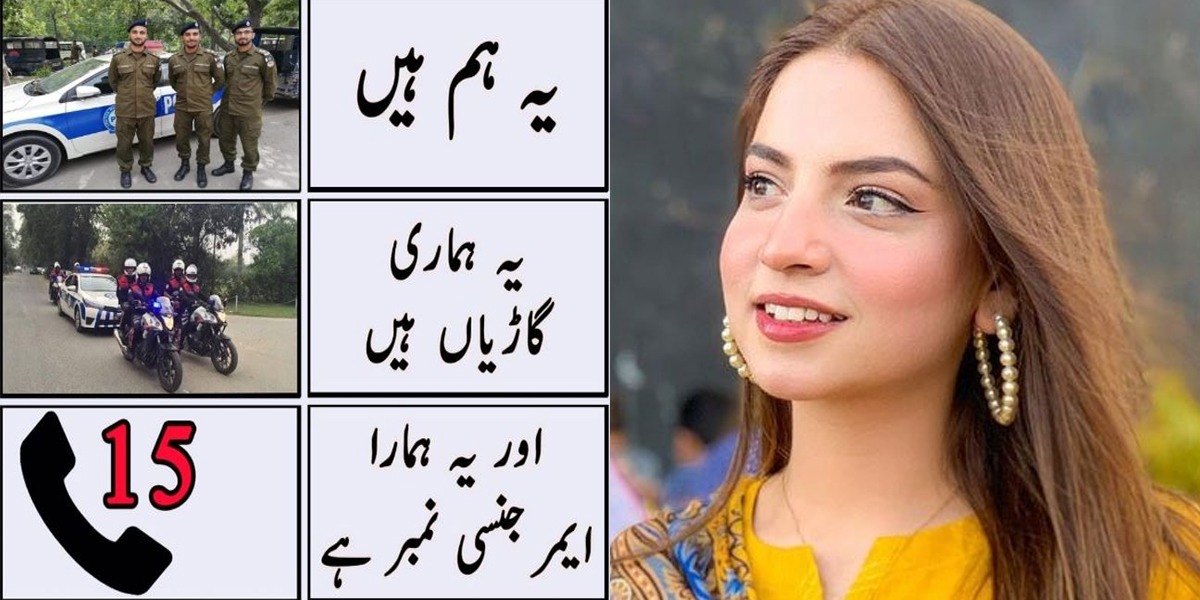
    Punjab Police has recreated the ‘Pawri Horai Hai’ meme with their own twist.

    As per the details, Punjab Police tweeted a collage and wrote, “Yeh hum hain, Yeh humari gaaryian hain, Aur yeh humara emergency number hai [This is us, these is our cars, and this is our emergency number).”

    While the tweet was appreciated by many who lauded Punjab Police for raising awareness with a fun twist, others criticised the cops for not efficiently responding to emergency calls.

    Also Read: Indian police join #PawriHoRahiHai trend, ask citizens to report late night parties

    The trend started after an influencer, Dananeer Mobeen, shared a video clip partying with her friends in front of a car. In the video, she was heard saying: “Yeh hamari car hai, yeh hum hain, aur yeh hamari pawri ho rai hai” (This is our car, this is us, and this is our party).

    Soon after the video went viral, ‘Pawri Ho Rai Hai’ became a major meme trend in Pakistan and also across the border. Many celebrities from Pakistan and India recreated the ‘Pawri Horai Hai’ meme.

    The original video has crossed six million views on Instagram and Dananeer’s followers have also reached one million on Instagram.

  • Police arrest man for posing as judge to give relatives possession of shops

    Police arrest man for posing as judge to give relatives possession of shops

    Police have arrested a man who ordered cops to give his relatives the illegal possession of some shops while posing as an additional sessions judge.

    According to reports, the accused man, namely Iqbal, called up Garh Police Sub-Inspector Akhtar Abbas as one Additional Sessions Judge Shehryar.

    He then told the cop to take possession of a few shops and hand it to his relatives.

    It was later revealed that the phone SIM was in the name of a person named Iqbal. The police then arrested the man and interrogated him.

    The suspect confessed to calling the policeman as a fake judge during the investigation, after which a case was registered against him.

  • Is Spotify finally coming to Pakistan?

    Swedish-based audio streaming and media services provider Spotify is finally coming to Pakistan. The biggest music streaming services provider confirmed the news on their official Twitter handle.

    “We launch in 80+ new markets over the next few days. See you soon Bangladesh, Pakistan and Nigeria,” the post read.

    Official Instagram account of Spotify Pakistan also hinted at the possibility of launching their services soon in Pakistan by sharing a post with the caption: “Check it out, a new way to discover and play music is coming your way.”

    According to a report, Spotify’s CEO Daniel Ek at a Spotify ‘Stream On’ event said: “This move will make Spotify available to more than a billion people in new markets around the world, with nearly half of them already using the internet.”

    As per Spotify, “Spotify is embarking on a sweeping expansion that will introduce the world’s most popular audio streaming subscription service available to more than a billion people in 80+ new markets around the world, and add 36 languages to our platform.

    “By reaching even more countries across Asia, Africa, the Caribbean, Europe, and Latin America, we’re giving millions of new creators the opportunity to create, discover, and build a career in audio creation—and giving a billion new fans the opportunity to hear it.”

    Last year in November, Spotify created a verified Instagram account for Pakistan, which has gained 24K followers already. However, no official statement was made at the time.

    Spotify is the world’s biggest music streaming platform in terms of the number of subscribers. Users of the service simply need to register to have access to one of the biggest-ever collections of music in history, plus podcasts, and other audio content.

    Spotify, launched in 2008, has grown to be one of the biggest streaming platforms in the world.

  • IN PICTURES: Celal Al welcomes Humayun, Adnan and Reema to Turkey

    IN PICTURES: Celal Al welcomes Humayun, Adnan and Reema to Turkey

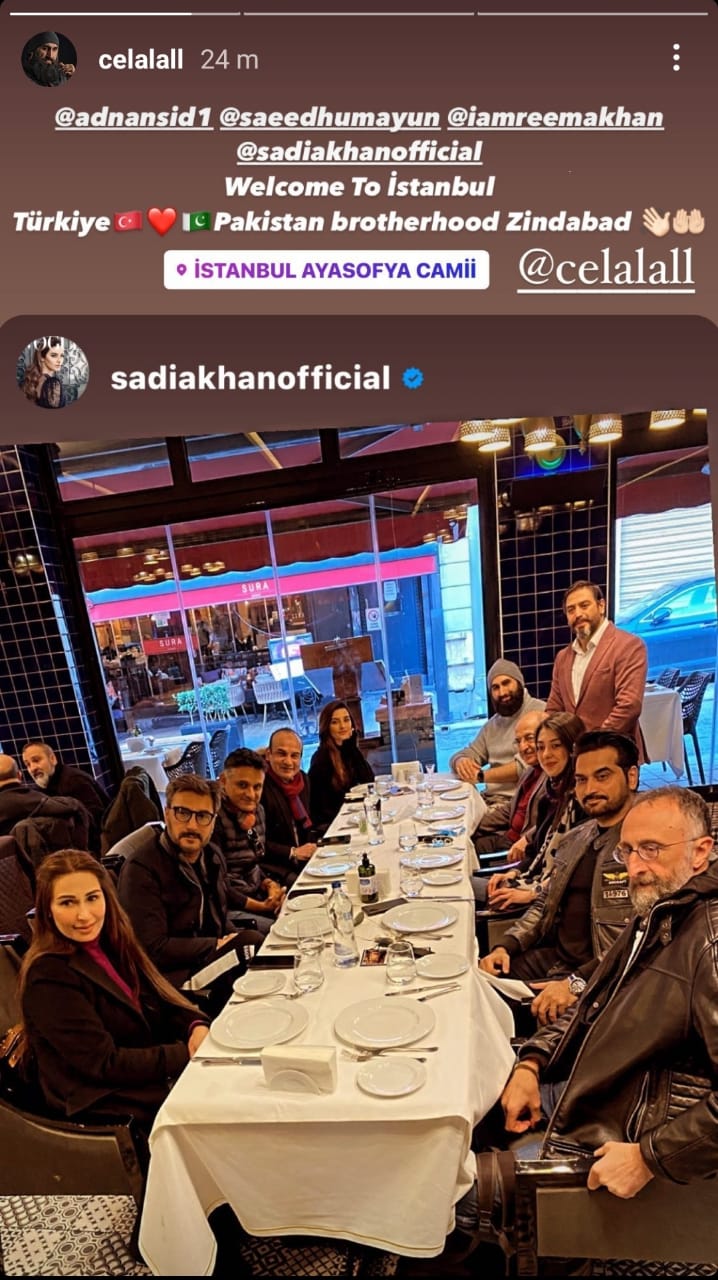
    Turkish actor Celal Al on Sunday welcomed Pakistani actors Humayun Saeed, Reema Khan, Sadia Khan and Adnan Siddiqui in Turkey.

    Sharing a picture of Pakistani celebrities enjoying their meals together in his Instagram stories, Celal wrote: “Adnan, Humayun, Reema and Sadia welcome to Istanbul. Turkey-Pakistan brotherhood zindabad.”

    Earlier, Humayun Saeed and Adnan Siddiqui left their fans excited when they informed them of their visit to Turkey.

    Reema also shared a picture with the production team of Diriliş: Ertuğrul on her Instagram account.

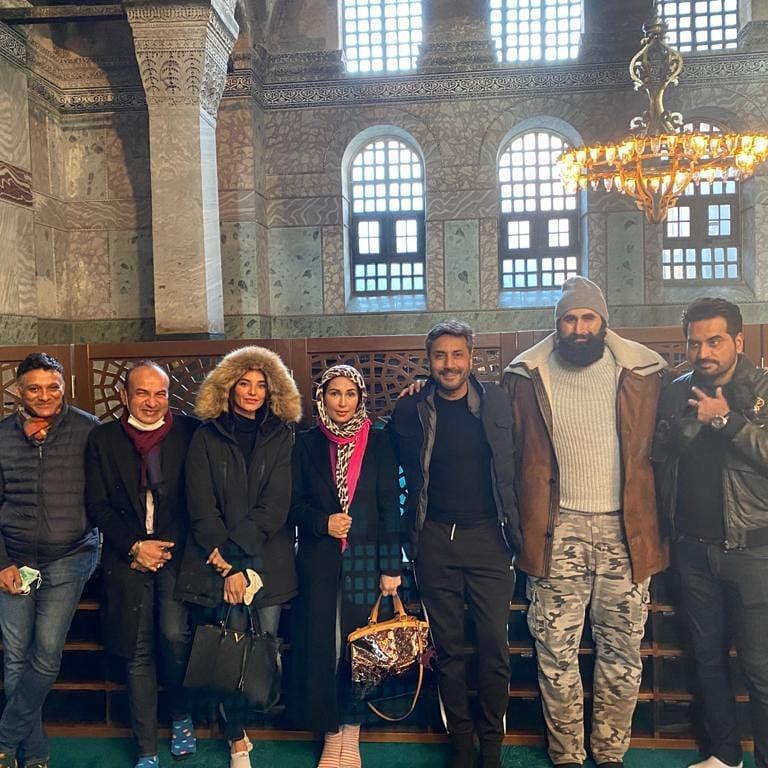
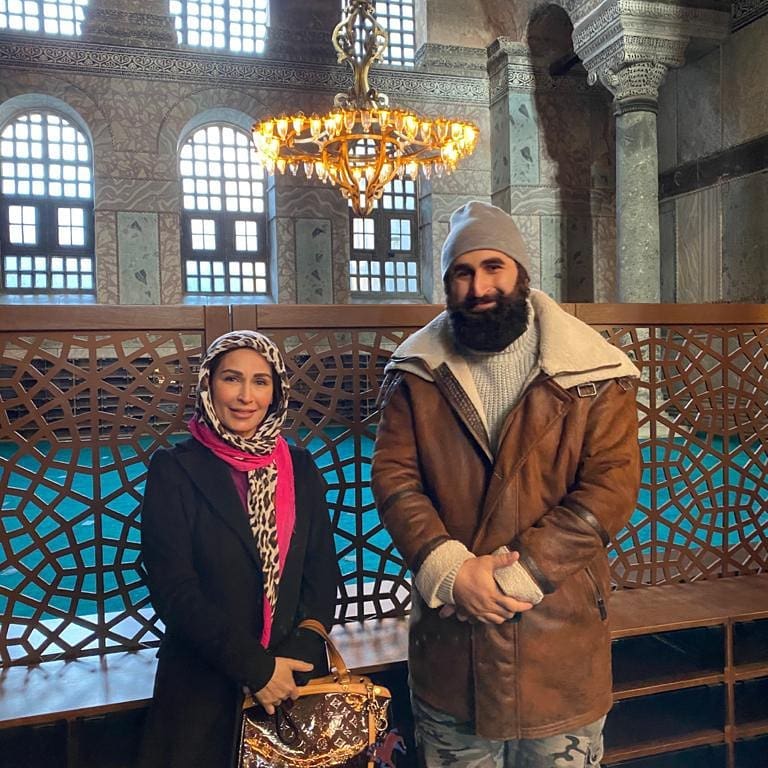
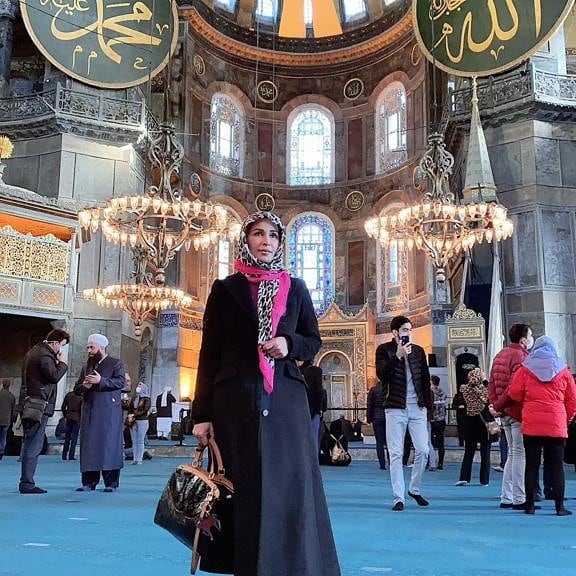
    Later Reema shared some fascinating pictures and video of their tour to Hagia Sophia Mosque. Posting a video on Instagram, she also shared the history of this Mosque and wrote: “The world-famous Hagia Sophia mosque ( Which has converted into museum also in Istanbul. A world Heritage site, was originally built as a cathedral around 1,500 years ago by the Bazantine Empire.”

    She also shared some pictures of the meetup with Kamal Tekdin, the famous series’ executive producer and other participants.

    Adnan Siddiqui also took to Instagram and shared a video of their tour. Sharing how he felt, the actor wrote: “It was spellbinding to offer prayer at the iconic Hagia Sophia Holy Grand Mosque. It is grand in ever sense of the word—history, beauty, political significance.”

    “A little lesson in history for those who may not be aware. The world-famous Hagia Sophia museum in Istanbul, also a UNESCO World Heritage site, was originally built as a cathedral around 1500 years ago by the Byzantine empire. The architectural marvel was converted into a mosque after the Ottoman conquest in 1453. In 1934, it became a museum,” he added.

    “Only in July last year, it became a mosque again and opened for prayer and worship,” he wrote.

    Earlier this year, a Turkish delegation comprising Diriliş: Ertuğrul executive producer Tekdin and actor Celal visited Pakistan where they met Prime Minister Imran Khan, Minister for Information and Broadcasting Shibli Faraz, Shehryar Afridi, Humayun and Adnan. It was reported that the two countries are working together on a joint production to strengthen ties and people-to-people contact. This tour of Pakistani celebrities to Turkey depicts that something very interesting is coming our way.