Tag: Pakistan

  • Joint opposition in Gujranwala: Hit or flop?

    Joint opposition in Gujranwala: Hit or flop?

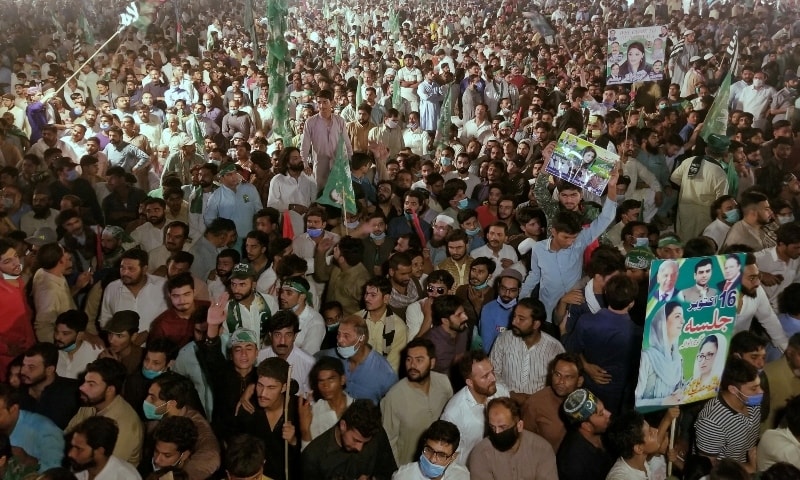
    The first rally of the Pakistan Democratic Movement (PDM) turned out to be “resounding success” for the joint opposition that claimed over 50,000 people took to streets against the government on Friday.

    The gathering held in Gujranwala — the stronghold of the Pakistan Muslim League-Nawaz (PML-N) — was attended by the PML-N workers in thousands, followed by the members the Pakistan People’s Party (PPP) and the Jamiat Ulema-e-Islam-Fazl (JUI-F), who made their presence felt.

    The flags belonging to the Awami National Party (ANP), National Party (NP) and Pakhtunkhwa Milli Awami Party (PkMAP) dotted the venue; however, their participation paled compared to the three aforementioned major parties.

    By 6 pm, the venue was jam-packed and the tailback affected all the roads leading to Jinnah Stadium — a fact that corroborates the opposition’s claims.

    The day, however, belonged to the PML-N, whose supporters thronged the venue in thousands to record their protest against the government. Maryam Nawaz led a massive rally from Lahore to the city, where all national and provincial seats are held by her party, and her father Nawaz Sharif made a hard-hitting speech that showed he was in no mood for reconciliation.

    The PPP also managed to rally its supporters who followed their chairperson Bilawal-Bhutto Zardari to Gujranwala from Lala Musa in a caravan, whereas Maulana Fazlur Rehman, with his white and black JUI-F flags, entered the venue with a bang.

    But the government downplayed the PDM jalsa, as its ministers pointed out lack of coordination among the opposition parties and also claimed that the number of the participants was no more than 18,000, as per Radio Pakistan.

    COVID-19 GUIDELINES FLOUTED:

    The massive gathering also blatantly flouted the anti-coronavirus measures, especially at a time when the second wave is in the offing. It is understandable that social distancing was not possible in a small stadium, but face masks — an effective precautionary measure — were also conveniently ignored.

    Out of the party leaders, only some were covering their faces, but they too removed them once they started addressing the gathering. PML-N’s Maryam Nawaz and JUI-F chief Fazlur Rehman and his party leaders did not wear masks at all.

    As for the crowd, a negligent number of people bothered to wear face masks as a measure to contain the spread of COVID-19.

    In a comment on the state of anti-coronavirus measures at the venue, a Dawn report said, “It was both sad and comical to watch the policemen insisting that people [who were not wearing masks] enter the stadium via the so-called senitising gates that were fitted with sprinklers spraying some kind of miracle water on those who walked through.”
  • WHO fears spike in deaths after COVID-19 cases surge

    WHO fears spike in deaths after COVID-19 cases surge

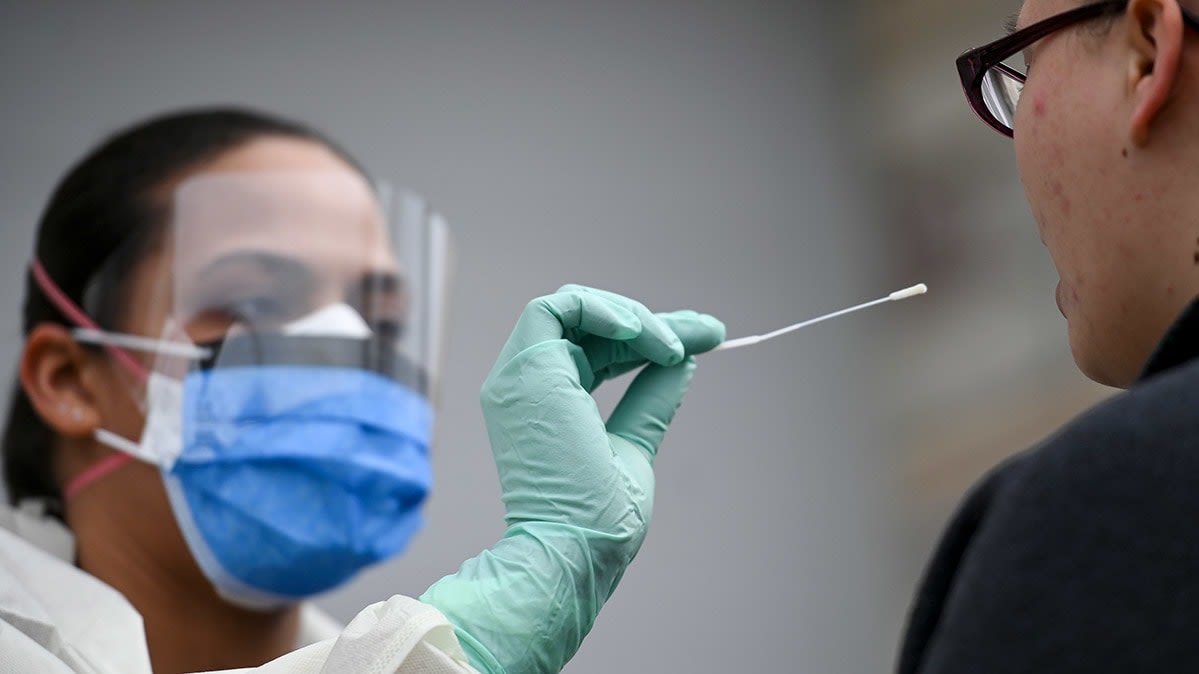
    The World Health Organisation (WHO) warned against any complacency in the coronavirus death rate, saying with the increasing number of cases, the death rate would also increase.

    New cases are hitting 100,000 daily in Europe. Nearly 20,000 infections were reported in Britain, while Italy, Switzerland and Russia were among nations with record case numbers.

    While deaths globally have fallen to around 5,000 per day from April’s peak exceeding 7,500, WHO Chief Scientist Soumya Swaminathan said caseloads were rising in ICU (intensive care units).

    “Mortality increases always lag behind increasing cases by a couple of weeks,” Swaminathan said during a WHO social media event. “We shouldn’t be complacent that death rates are coming down.”

    More than 38 million people have been reported infected globally and 1.1 million have died.

    Despite the global push for a COVID-19 vaccine, with dozens in clinical trials and hopes for initial vaccinations this year, Swaminathan reiterated that speedy, mass shots were unlikely.

    “Most people agree, it’s starting with health care workers, and front-line workers, but even there, you need to define which of them are at highest risk, and then the elderly, and so on,” Swaminathan said.

    “A healthy young person might have to wait until 2022.”

    The WHO has said letting infection spread in hopes of achieving “herd immunity” is unethical and would cause unnecessary deaths. It urges hand-washing, social distancing, masks and — when unavoidable, limited and targeted restrictions on movements — to control disease spread.

    “People talk about herd immunity. We should only talk about it in the context of a vaccine,” Swaminathan said. “You need to vaccinate at least 70% of people … to really break transmission.”

    Minister for Planning Development and Special Initiatives Asad Umar, who also chairs the National Command and Operations Centre (NCOC) to deal with COVID-19 in the country, has highlighted the rise in the number of infections in Pakistan. The Minister urged people to take COVID-19 SOPs seriously.

  • Hardliners smear portrait of Nobel laureate Dr Abdus Salam outside National Science College

    A group of youngsters, allegedly science students, has smeared a portrait of the only Nobel laureate physicist from Pakistan and champion of science in the developing world, Dr Abdus Salam.

    A video doing rounds over the internet showed the group, consisting of State Youth Parliament Pakistan members, painting the portrait black while raising slogans against the minority Ahmadiyya community, of which Dr Salam was a member, outside Gujranwala’s National Science College.

    “They are students of so-called science colleges, what a shame,” read a strongly-worded post by Facebook page ‘The Hoodbhoyist’ that describes itself as a “social club for liberal, secular, humanists and progressive”.

    When he won the Nobel prize in 1979, Dr Salam became the very first Pakistani to achieve this distinction, and only the fourth from the subcontinent.

    Born in 1926 in a remote village in Punjab, British India, Salam was a child prodigy. He came from humble beginnings, growing up in a small brick house with a large family of eleven. While Salam’s legacy looms large in the world of physics, he is largely forgotten in Pakistan because of his faith.

    “Salam — The First ****** Nobel Laureate” — a feature-length film on Dr Salam’s life — was released on Netflix in October last year.

    It has won accolades on the international film festival circuit, including DFW South Asian Film Festival, South Asia Human Rights Festival, South Asian International Film Festival and the South Asian Film Festival of Montreal, among others.

  • Police find Rs 85,000 in beggar’s bag in Quetta

    The police found Rs 85,000 in a beggar’s bag in Quetta who lost his consciousness after a vehicle hit him on Wednesday.

    As per reports, the incident happened on Quetta’s Saryab road, where a motorcyclist allegedly hit the beggar, leaving him unconscious.

    He was taken Civil Hospital by police. While he was being treated for his wounds, his bag was checked to find out his identity., The beggar had been carrying Rs85,000 and some change. The bills were kept in a very organised manner, sorted by denomination and bound in separate bundles.

    Police said that the amount has been kept “safe” and will be returned to the beggar when he recovers.

  • Imran’s national security aide terms Chinese persecution of Muslims a ‘non-issue’

    Imran’s national security aide terms Chinese persecution of Muslims a ‘non-issue’

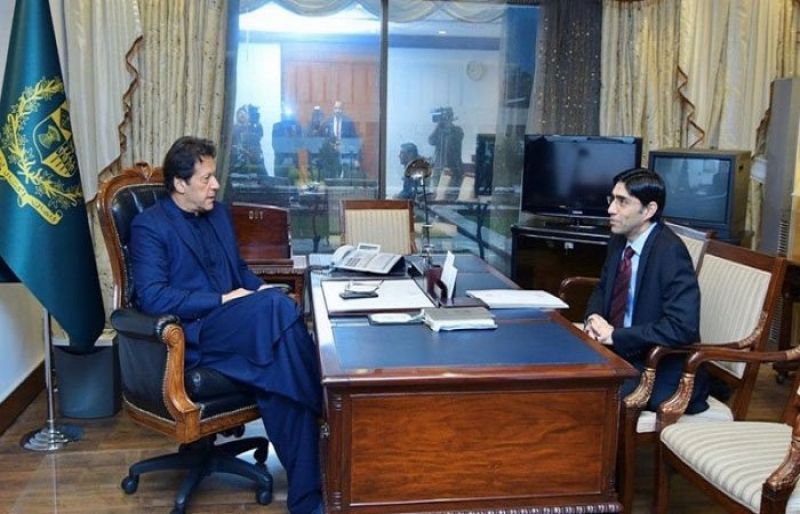
    Special Assistant to the Prime Minister (PM) on National Security aide Dr Moeed Yusuf has termed the Chinese persecution of Uyghur Muslims a “non-issue”.

    In an interview with Indian media outlet The Wire, Yusuf on Tuesday revealed that India had expressed a “desire for conversation” but said that Pakistan’s agreement to talks would be conditional.

    While his statements and Pakistan’s pre-conditions for the resumption of “meaningful dialogue” with India to resolve all outstanding issues have made headlines, the details less reported are of what he had to say about Chinese persecution of Muslim minority Uyghurs in its Xinjiang region.

    Even though China is facing growing criticism over its crimes against the said minority group, huge numbers of whom are allegedly being held in internment camps, Pakistan has been accused of turning a blind eye towards the same.

    READ: In a first since Kashmir’s 2019 siege, Imran’s national security aide gets interviewed by Indian journalist

    On Tuesday, when asked why PM Imran Khan had never raised his voice for the Uyghur community in China, the SAPM said, “China and Pakistan are friends like no other. We have a completely transparent relationship; virtually everything under the sky, we discuss.

    “Uyghurs is a non-issue […] Our delegations have visited, we’ve seen and we are a 100 per cent satisfied that it’s a non-issue. The West can say what it wants. I am telling you as a responsible official: we know everything we need to know about the Uighurs and everything else in China as they do about us.”

    Thapar quoted an interview PM Imran gave to the Financial Times last year, where the premier had said: “Frankly, I don’t know much about” the Uyghur issue. Yusuf, however, continued to insist that the matter was a non-issue and said that he had briefed the premier about it.

    YUSUF UNDER FIRE:

    Among the many prominent persons who reacted to Yusuf’s remarks was Omar Waraich, who is the South Asia deputy director of global rights group Amnesty International.

    Here’s what he had to say:

    Several others also called Imran’s aide out.

  • Motorway rapist wasn’t arrested, he surrendered: father

    After the arrest of the prime suspect in the motorway rape incident, Abid Malhi, his father claimed that the suspect had turned himself in after having escaped the Punjab police for a month.

    The father released a video Tuesday stating the above after police arrested Malhi a day ago from Faisalabad.

    Reportedly, the Intelligence Bureau (IB), Special Branch of the police, and other agencies had tipped off Punjab police about the whereabouts of the suspect before the arrest was made, but the father’s video alleges that Malhi had called the police himself and that the arrest was made from Lahore’s Manga Mandi area in front of a person named Khalid Butt.

    Furthmore, as the arrest has been made, the father demanded that the female members of their family be released. Some of Abid’s relatives had been apprehended by police shortly after the incident took place.

    “Abid had expressed his wish to come home. At 6:30 pm, he returned,” his father said. “Abid was sent to the Crime Investigation Agency’s (CIA) [office] in Khalid Butt’s car,” he claimed.

    On the contrary, Punjab Inspector-General Police (IGP) Inam Ghani said that the suspect had been arrested by police.

  • In a first since Kashmir’s 2019 siege, Imran’s national security aide gets interviewed by Indian journalist

    In a first since Kashmir’s 2019 siege, Imran’s national security aide gets interviewed by Indian journalist

    In a first, Special Assistant to the Prime Minister (SAPM) on National Security Dr Moeed Yusuf has been interviewed by an Indian journalist.

    During his interview with Karan Thapar, Yusuf set five pre-conditions for the resumption of “meaningful dialogue” with India to resolve all outstanding issues, including the longstanding dispute of Indian occupied Jammu and Kashmir (IoK).

    While he said that Pakistan desired peaceful ties with India and wanted to resolve all issues through dialogue, Yusuf asserted that for any meaningful dialogue to take place between the two neighbours, India has to release all political prisoners in Kashmir, end inhuman blockade and restrictions, rescind domicile law that allows non-Kashmiris to settle in the disputed territory, stop human rights abuses and end state terrorism in Pakistan.

    This is the first time Pakistan put forward its pre-conditions for resumption of talks with India since the Modi government revoked the special status of IoK.

    Interestingly, he did not mention the restoration of the special status of Kashmir as one of the pre-conditions for restarting talks with India, which Pakistan has been condemning since August 5, 2019, when New Delhi had revoked Article 370 and 35-A of the Indian Constitution to rob the troubled valley of its autonomy.

    “Pakistan would be ready for dialogue with India if Modi government accepts those preconditions,” Yusuf said and also spoke of the involvement of Indian intelligence agency, the Research and Analysis Wing’s (RAW), in terrorism in Pakistan.

    “Pakistan had evidence that the mastermind of December 2014 APS terrorist attack in Peshawar was in contact with RAW,” he said.

    WATCH VIDEO:

    The SAPM added that India used its missions in one of the neighbouring countries of Pakistan to facilitate and sponsor terrorist attacks at a five-star Hotel in Gwadar, the Chinese Consulate in Karachi and the Pakistan Stock Exchange.

    He maintained that Islamabad, under the leadership of PM Imran Khan, wanted a peaceful neighbourhood but India’s Hindutva policies were obstructing the path to attain regional peace.

  • Bajwa’s resignation amid political uncertainty affects stock market

    Bajwa’s resignation amid political uncertainty affects stock market

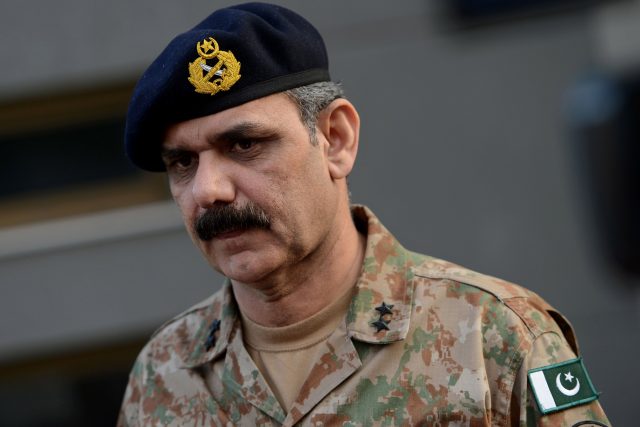
    Pakistan’s stocks reversed gains on Monday as Prime Minister (PM) Imran Khan’s Special Assistant on Information (SAPM) Lt Gen (r) Asim Saleem Bajwa resigned ahead of protests planned by opposition parties, raising concerns of increased political uncertainty, foreign media reported.

    “Imran Khan approved my request to relinquish the additional post,” Asim Bajwa tweeted Monday.

    The resignation of Imran’s key spokesperson comes amid increasing challenges to his about two-year-old government as he struggles to contain inflation and revive the country’s economy. Meanwhile, an alliance of 11 opposition parties is planning on holding its first protest rally this week, which is the start of a series of such meetings aimed at ousting Imran Khan.

    The benchmark KSE-100 index closed down 1.4%, reversing earlier gains of as much as 0.6%. The stocks have advanced 48% since touching this year’s low on March 25. “The investors are being cautious and booking profits after recent events including Bajwa’s resignation and the opposition’s planned protest add to the uncertainty,” said Qasim Shah, head of international sales at JS Global Capital Ltd in Karachi.

    The premier had turned down Bajwa’s earlier request to resign.

  • Face masks ‘helping criminals escape arrest’ in Islamabad

    Face masks ‘helping criminals escape arrest’ in Islamabad

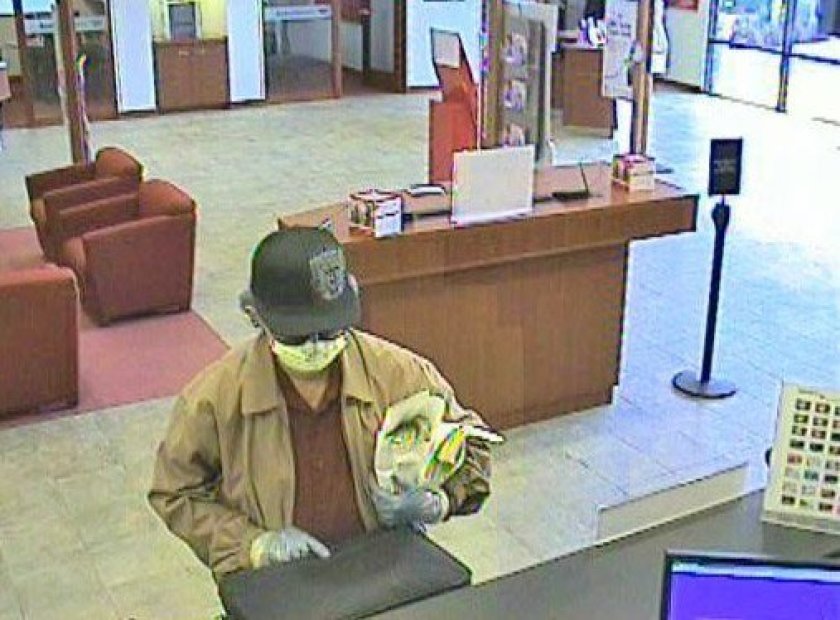
    With face masks becoming the norm in these COVID-19 times, criminals are misusing them to hide their identity while carrying out their crimes.

    According to reports, criminals are making use of face masks to easily blend in with customers at malls or banks. Because of these masks, they are also able to evade CCTV cameras.

    “If it were pre-COVID 19, I could have averted the happening by finding veiled people chasing me. But now it is normal. They looted me and sped away. One had face mask while the other wore a helmet,” shared APP senior reporter Ishtiaq Ahmed who was robbed of Rs800,000 in Islamabad on September 23 in broad daylight.

    He said the mask provided a perfect cover to the robbers, adding that they can hold up any bank or shop with their covered faces and escape unchecked as the police rarely bother to confiscate the bikes carrying no or non-standard number plates.

    In another robbery of Rs1.5 million in Islamabad on September 30, a masked man was seen inside a bank who apparently intimated his assistants on phone having witnessed a man leaving the bank with a cash bag.

    “Earlier the bandanna or mask was a risky proposition for criminals. Nowadays it is normal but scary too. We can’t distinguish between customers and criminals,” a bank employee said.

    Talking to APP, a senior police officer, who did not want to be named, said though the crime increase had nothing to do with face mask. However, he agreed that it made it easier for the criminals to blend in.

    He agreed that under anti-COVID SOPs, a provision could be created to allow security staff outside banks or malls to ask visitors to remove face mask at the entrance to allow cameras to capture the face.

    He also said that other than face coverings, criminals or suspected people could also be singled out through their body language, movement or confidence when questioned.

    Not only in Pakistan, criminals’ wearing surgical masks is an issue getting global attention with some countries also pondering to revise SOPs or making specialised security arrangements to keep the criminals from entering establishments.

    The installation of vestibules, the use of high-quality cameras and identification software are being used to identify the face behind masks. In America, police have directed people, to note some special sign of the masked criminals like shoes or jacket brand, belt, socks color, face scars, or tattoos to make identification easier.

  • Sheikh Rasheed foresees ‘assassination of some prominent personality’

    Sheikh Rasheed foresees ‘assassination of some prominent personality’

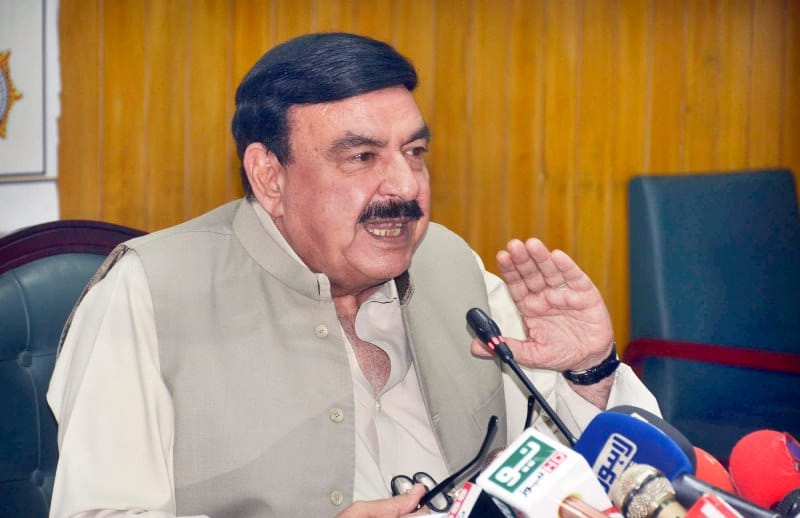
    Federal Minister for Railways Sheikh Rasheed has made headlines for reportedly saying that anything can happen over the next four months, including an attempt on his life or that of some other prominent person.

    “Anything can happen within the next four months… February 20 is the date… everything will be sorted…” reports quoted Rasheed as saying.

    “Some terrorist attack could happen, coronavirus could spread again, the [Pakistan] People’s Party (PPP) could break away from the [opposition] alliance, I could get killed or so could some other prominent person,” the minister reportedly said, adding that if something of the sort happens, it could lead to a civil war in the country.

    “Plans to ignite a sectarian fire were foiled when law enforcement acted promptly ahead Chehlum of martyrs of Karbala last week as well,” he said.

    The minister also spoke at length about the possibility of a terrorist attack and how every person’s life was in danger.

    The minister’s statement comes while investigators remain clueless about the perpetrators of the high-profile targeted killing of prominent religious scholar Maulana Adil Khan, who along with his driver, was shot dead in Karachi on Saturday.

    According to police, the scholar was sitting in a Toyota Vigo parked outside Shama Shopping Centre when suspects on motorcycles came up to him and opened fire. He succumbed to the wounds on his way to the hospital.

    While authorities claim foreign powers were at play, Prime Minister (PM) Imran Khan has described it as “an attempt by India to create sectarian conflict across the country”.

    The premier, while strongly condemning the targeted killing of Maulana Adil of Jamia Farooqia in Karachi, said that India is attempting to target religious scholars to fan sectarian rift in the country.

    In a series of tweets on Sunday, he stressed upon the religious scholars from all sects to ensure that people do not fall prey to nefarious Indian designs to destabilise Pakistan by fuelling a sectarian conflict.

    “We have prevented a number of such attempts pre-emptively in the last few months. Our intelligence organisations and law enforcement agencies will nab culprits of this murder also,” he said.