Tag: Pakistan

  • ‘PCB owes me Rs40-60 million,’ report quotes Younis Khan as saying

    Former national cricket team captain Younis Khan has claimed that Pakistan Cricket Board (PCB) owes him Rs40 million [Rs4 crores] to Rs60 million [Rs6 crores], but he is ready to join forces with them and work towards the betterment of the sport in Pakistan.

    Khan, who is the country’s all-time leading run-getter in Tests, also said that he had never asked for money from the board as “it had never been an issue”. “In terms of money, PCB owes me 4-6 crore rupees if you look back. But I have never demanded money, money is never an issue,” he reportedly said.

    “It’s destiny from Allah, you get what is destined for you so you should never run after money, I never ran after money and have always been willing to work with PCB. I was one of the few players who retired and left, players rarely do that. I have 17-18 years of services for Pakistan and PCB.”

    “I don’t know why we can’t come on board together. I played cricket so I want to help in the field of cricket. Why we don’t come on board… perhaps PCB doesn’t change or Younis Khan doesn’t change.”

    “I don’t think anyone in Pakistan would be so personal that he wouldn’t want to work with Younis Khan. Even if I was a big critic of Younis Khan, I would like to still work with Younis Khan. What things are there with my demeanour or what is it with PCB that doesn’t allow us to come on one page,” he added.

     The statement was also tweeted by renowned sports journalist Saj Sadiq, who is also the editor of the media outlet that reported it.

    Younis also reportedly gave his thumbs up to the work done by head coach cum chief selector Misbahul Haq, whom he claims has gotten Pakistan cricket team back on track.

  • Chitral man booked for spreading coronavirus rumours

    Chitral man booked for spreading coronavirus rumours

    Amid growing fears of the deadly coronavirus in Pakistan, a man in Chitral has been booked on charges of spreading misinformation on social media.

    An FIR has been registered against Irshad Mukarer, a resident of the Darosh area of Chitral district, in Khyber-Pakhtunkhwa.

    According to Wali Khan, the SHO of Darosh Police Station, a Chinese citizen working on the Lawi Hydro Power Project in Chitral visited a local hospital for having pain in his stomach where doctors prescribed him some medicines.

    Irshad took his picture at the hospital and posted it on social networking websites saying the Chinese man was infected with coronavirus, medically named ‘2019-nCoV’, SHO Khan added.

    The wrong information circulated spreading fear among the locals. Authorities took serious notice of the incident and the police registered FIR against Khan, who managed to get pre-arrest bail.

    While Irshad denied sharing any post on social media. “I was visiting the hospital to meet an ailing relative where I saw the Chinese man who was in severe pain and I asked for his proper diagnosis. ”Irshad went on to add that the charges against him were baseless and that the police twisted his words and registered the FIR against him.

    The coronavirus originated in the Chinese city of Wuhan has claimed many lives and the World Health Organization (WHO) also declared a global health warning.

  • ‘Thank you for being there as we live yet die every day,’ Love, Kashmir

    Dear Pakistan,

    Over six months ago, we woke up like it was yet another day for caged birds that sing to the deaf in a dark and lonely corner of a pet shop. It wasn’t that bad. You get used to never feeling free, able to be outside, go to school, get groceries with soldiers watching your every move. We were used to it but we would always wish to get what we deserve.

    We deserve to live and breathe as freely as you… yes you… dear Pakistan.

    We would like to thank you for standing up for us when we need it the most. And also for not limiting your support to what you call ‘Kashmir Solidarity Day’.

    We pray that you never have to live through the pain of losing a loved one, but do you have any idea how it feels to lose one when you aren’t even sure if they’re gone forever? Do you have an idea what it feels like to lose touch indefinitely?

    We had woken up to a bright August morning. It was just another Monday, and like the rest of the world, Mondays are hard for us too. Little we knew, that this Monday was going to rob us of even the paltry autonomy we had struggled to achieve for decades.

    The government led by fascist Narendra Modi announced abrogating Article 370 of the Indian Constitution, revoking the special status of this troubled heaven, spelling misery for us yet again. We weren’t sure what would follow, some of us had no idea what even it meant, but it wasn’t later that we realised how it was the beginning of the end.

    As protests gripped the valley, Indian forces stooped to a new low. While activists and political leaders were arrested, kids were tortured; communication blackouts were set in place and certain parts of the disputed territory still remain under lockdown.

    Of the 4,000 people, one of the 144 children picked up by Indian occupying forces between August 5 and September 23 last year, was a nine-year-old. His mother had passed away and he was abandoned by his father. He was detained when he went out to get a loaf of bread, and had to spend two days in detention until he was set free by the sweet relief of death.

    In a village in southern Kashmir, a 22-year-old was picked up in a midnight raid and tortured for more than an hour along with a dozen other Kashmiris. He was beaten with sticks, rifle butts and they kept asking him why he went for a protest march. He kept telling them he didn’t, but they didn’t stop. After he fainted, they used electric shocks to revive him.

    While some mothers have lost their children to Indian brutality, others have lost their unborn babies to the lockdown. Besides that, pellet guns being shot in abdomens of pregnant women and eyes of infants, is but the terrible tale of every other Kashmiri family.

    Within minutes of the abrogation, the internet was blocked. People were expecting mobile networks to be shut by the government as well in order to restrict communication in the valley. Our social media accounts have been deactivated due to inactivity, and our loved ones we managed to send out of Kashmir for a better life, don’t even know if we’re dead or alive.

    Don’t take us wrong, dear Pakistan, we’re not scared. We never were. Death, torture or detentions are not new to us. Tens of thousands of us have been killed since the rebellion erupted 30 years ago. But we just want you to know what it means to us when you express your support.

    We just want you to know what it means for us, knowing that you are not forgetting us like many others.

    We have not lost hope, but only because neither of us has lost each other.

    Here’s to a new life… here’s to our love for you and your support for us…

    Here’s to freedom…

    Love,
    Kashmir

  • Doctor ‘beats up nurse for refusing to be photographed’

    Doctor ‘beats up nurse for refusing to be photographed’

    A doctor at the Tehsil Headquarters Hospital in Jhang, Punjab allegedly beat up one of the nurses for not allowing him to take pictures of her. An FIR has been registered against the doctor for the attack.

    The closed-circuit television (CCTV) footage of the incident shows the doctor getting angry at the nurse and then slapping her repeatedly.

    An FIR has been registered against the doctor at the Shorkot Police Station on the request of the nurse. In her complaint, the nurse claimed that the doctor in question entered the nursing room at night when she was on duty and asked her to accompany him on rounds.

    She added that when she paused to collect medical files for the rounds, the doctor started taking pictures of her. When she tried to stop him from taking her pictures, he started beating and slapping her.

    Meanwhile, the doctor has reportedly secured a pre-arrest bail till February 14th from a local magistrate.

    https://www.youtube.com/watch?v=UGovY20_gOM
  • Pakistani girl chops off man’s penis for trying to rape her

    Pakistani girl chops off man’s penis for trying to rape her

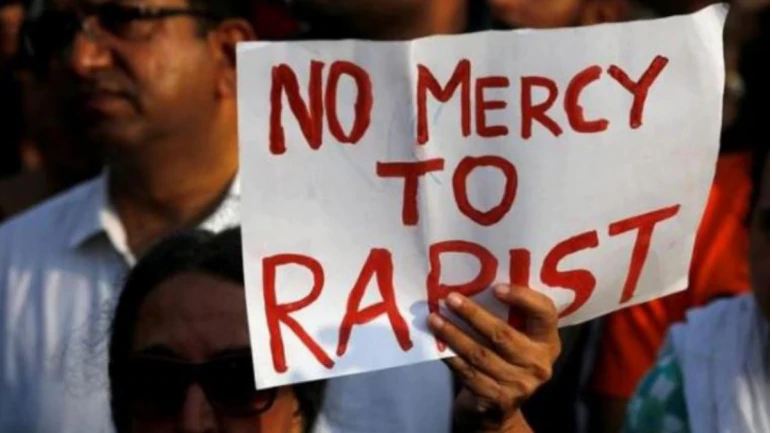
    A man’s penis was cut off after he attempted to rape a woman in Punjab’s Jaranwala.

    As per reports, a 24-year-old woman chopped off the 30-year-old man’s genitals when he tried to rape her on January 30. The FIR was registered on the complaint of the survivor’s father at the Jaranwala City police station.

    Her father’s statement reads that his daughter told him that the suspect broke into her house with a knife. He threatened to kill her and attempted to rape her. On getting a chance, the woman grabbed the knife from him and chopped off his penis after which the man ran off screaming.

    The police say the man is in police custody and under treatment at a hospital. The case is being investigated.

    In an initial statement to the police, the suspect has not only denied the accusations against him but also alleged the woman of calling him to her house and of attacking him, the police said. 

    The FIR has been registered under Article 376 of the Pakistan Penal Code, which states:

    1. Whoever commits rape shall be punished with death or imprisonment of either description for a term which shall not be less than ten years or more, than twenty-five years and shall also be liable to fine.
    2. When rape is committed by two or more persons in furtherance of the common intention of all, each of such persons shall be punished with death or imprisonment for life.
  • Pakistani doctor wins hearts for volunteering to treat coronavirus patients in Wuhan

    A Pakistani doctor from Jhelum has won appreciation for volunteering to treat coronavirus patients in Wuhan, China.

    Dr Usman, a Pakistani teacher at Changsha Medical College, is the first foreign doctor who stepped forward to volunteer to treat infected people in Wuhan.

    The Chinese Embassy thanked the doctor saying, “We appreciate Dr Muhammad Usman Janjua, a foreign doctor to join the fight against coronavirus in China as a volunteer. He is a teacher from Changsha Medical University, China and hails from Deena, Jhelum, Pakistan”.

    On January 27, Usman formally applied to the Foreign Experts Service office of the Hunan Science and Technology department, hoping that he could go to the Wuhan for medical assistance.

    Usman told media that when the outbreak of pneumonia caused by the new coronavirus began in China, he kept an eye on the continuously updated figures and situations every day.

    “The staff of the foreign expert service sent me the methods of epidemic prevention every day asking me to protect myself and solving many difficulties for me.”

    Usman, 29, had dreamed of becoming a doctor since he was a child. He graduated from Hunan University of Traditional Chinese Medicine with a bachelor’s degree in 2012 and returned to Pakistan to practice medicine for four years.

    During the four years of stay in his hometown, he had always been unable to forget China and Changsha. He said that China had provided him with good opportunities for education and employment.

    In 2016, he returned to China and began studying for a Master’s degree in medicine at Central South University in Changsha. After graduation, he became a foreign teacher at Changsha Medical College.

  • Man files petition to remove conditions on second marriage

    Man files petition to remove conditions on second marriage

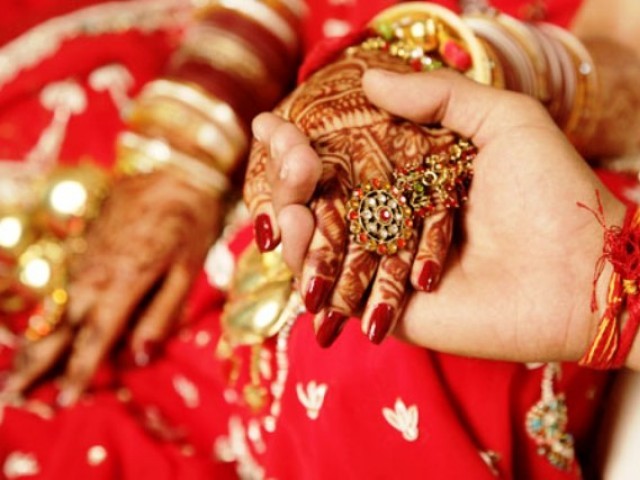
    A man has registered a case in the Lahore High Court asking for the elimination of the condition in which he is required to get his first wife’s permission for a second marriage.

    Dr Muhammad Mudassir, who was sentenced for marrying another woman without his wife’s (now ex-wife’s) permission, has named the Punjab Law Ministry and provincial law secretary as respondents.

    He has appealed the Punjab government to make changes to the Muslim Family Laws Ordinance, 1961.

    A man doesn’t need the permission of his first wife to get married again in other provinces, the petitioner said, adding that such complaints could only be registered at union councils in Balochistan, Sindh, and KP. He claimed that Punjab has a higher fine too.

    On May 17, 2019, Dr Mudassir was sentenced to jail for one month and fined Rs500,000 for his second marriage by a special judicial magistrate in Sialkot.

    He was found guilty of violating the laws of the Muslim Family Laws Ordinance, 1961. As per law a man must submit written permission from his first wife if he wants to marry another woman. If a man is found guilty of violating the law, he may be imprisoned for a year.

    The petitioner has asked for more time to submit additional documents. The case has been postponed till February 10.

  • Aurat March releases Urdu version of anti-rape anthem

    Aurat March releases Urdu version of anti-rape anthem

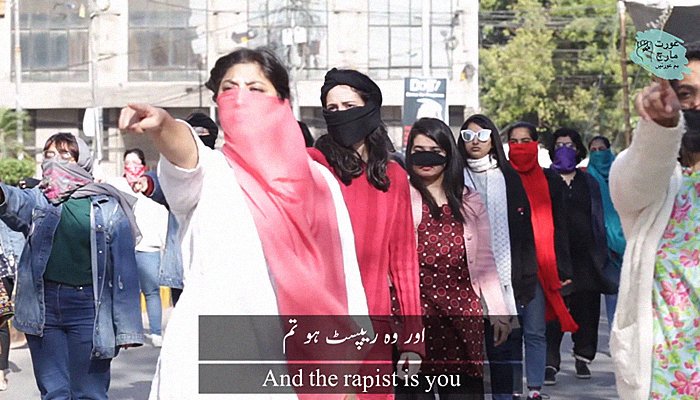
    The Aurat March has released an Urdu version of the Chilean protest song A Rapist in Your Path that talks about rape culture and victim-shaming.

    A Rapist in Your Path is based on the work of Argentinian theorist Rita Segato, who debates that sexual violence is a political problem, not a moral one. The anthem has been performed in Latin America, the United States and Europe.

    According to a statement by the Aurat March, the song condemns the judicial system’s failure to protect women and their rights and raises awareness about the culture of violence in society. It says this culture is growing, with acts of violence being normalized and women being shamed and often blamed after reporting such acts.

    The lyrics of the song explain how institutions, the police, the judiciary and political power structures uphold systematic violations of women’s rights.

    “The rapist is you. It’s the cops. The judges. The state. The president. The law. The feudal. The clerics”.

    The Aurat March has made some additions to the original lyrics to include feudal and clerics in the song.

    Another part of the song describes the ways how women are blamed for falling victim to sexual violence. 

    “And it’s not my fault / nor where I was / nor what I wore. The rapist is you”.

    With its message, the song calls on people to do this anthem against rape during the Aurat March on March 8.

  • Coronavirus: PM’s assistant reaches airport to screen passengers himself

    Coronavirus: PM’s assistant reaches airport to screen passengers himself

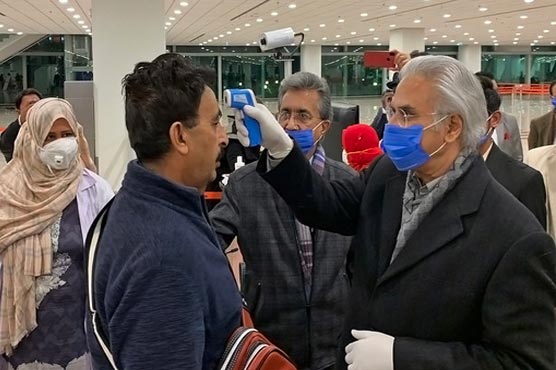
    Special Assistant to Prime Minister (SAPM) on National Health Services, Regulations and Coordination Dr Zafar Mirza on Monday paid a visit to Benazir International Airport in Islamabad to screen passengers arriving in Pakistan, himself.

    According to reports, the special assistant monitored the screening process of passengers from different countries in the wake of deadly coronavirus. Dr Zafar reportedly said that a strong screening system has been installed at all airports across the country.

    “We are ready to deal with any kind of emergency,” he added.

    Earlier, Dr Zafar Mirza had expressed satisfaction over the protective measures taken by the Chinese government to curb the spread of Wuhan novel Coronavirus (2019-nCoV).

    This came as three flights carrying passengers from China arrived in Islamabad on Monday as government resumed flight operations to the virus-hit country. Meanwhile, the coronavirus death toll in China soared past 360, with deepening global concern about the outbreak and governments closing their borders to people from China.

    The fresh toll came a day after China imposed a lockdown on a major city far from the epicentre and the first fatality outside the country was reported in the Philippines.

    Authorities in Hubei province reported 56 new fatalities, with one reported in the southwestern megalopolis of Chongqing. That took the toll in China to 361, exceeding the 349 mainland fatalities from the 2002-3 SARS outbreak.

  • Woke students in ‘secular’ India

    The BJP coming to power has only removed the lid from the internal realities of the unsuccessful story of Indian democracy.

    Unlike Pakistan, where student unions were banned during the military rule of Ziaul Haq, in India, student unions on campuses have successfully sustained till date. In the past few years, Jawaharlal Nehru University (JNU) has been mentioned as a refrain in discussions on student politics — particularly in terms of burgeoning progressive politics — the spillover effect of which has reached not only Pakistan, but major parts of the globe as a good omen for the oppressed.

    The student union of JNU, better known as JNUSU, was recognised as a symbol of resistance, the voice of voiceless and a representative of the marginalised and vulnerable communities within India. JNUSU gained popularity across the world after its former president Kanhaiya Kumar was arrested from campus in 2016 due to his association with a protest gathering held at JNU.

    The protest was organised by some students of the varsity on February 9, 2016, in order to commemorate the judicial killing of Afzal Guru (hanged Feb 9, 2013) and also to question the violation of human rights by the Indian state in Indian occupied Kashmir (IoK).

    Consequently, the fascist Bharatiya Janata Party (BJP) government pressed charges against the students who had organised the protest, as well as Kanhaiya, who had addressed the protest gathering. Kanhaiya, Umar Khalid and Anirban Bhattacharya were the three students who were jailed following the registration of an FIR [First Information Report] against them.

    With already popular Azadi slogans taking a different tone following Kanhaiya’s arrest, students – especially Kashmiri — took a tone that went on to prove their courage at the forefront of the struggle against Indian Prime Minister (PM) Narendra Modi’s fascist regime.

    The recent wave of mass-mobilisation in India started in the aftermath of the controversial Citizenship Amendment Act (CAA) that grants the government the right to declare people, unable to produce citizenship documents, as “illegal immigrants” and allows any declared illegal immigrant, except Muslims, to become a citizen of India on the grounds of persecution in neighbouring Muslim states.

    CAA’s implementation, however, comes after forming a National Register of Citizens (NRC). NRC has been implemented in the Indian state of Assam where people, who have not made it to the register, have either already been detained in camps or are facing the threat of landing in the same since there is no way to prove which countries do these allegedly illegal immigrants belong to.

    The massive mass-scale protests in India against the discriminatory CAA law drew much attention after the December 15 protest led by students of Jamia Millia Islamia University in a Muslim locality of New Delhi. With police cracking down on these protesting students by not only baton-charging but also shooting them, and that too on campus, tables started to turn on the Indian state.

    With students of Aligarh Muslim University protesting on campus against the brutality met out to their peers from Jamia Millia Islamia University, a new wave of resistance took over India. Fierce confrontation meted out to the cops, especially by female students, in what turned out to be the defining moment for the anti-CAA movement, as more people, although largely Muslims, joined the protests, and the same still goes on.

    Outside their campuses, students of Jamia Millia and Aligarh University are much more involved in mobilising and organising the ongoing protests. However, they are subsumed by the grandiosity of JNU and its student leadership that has expressed solidarity to Jamia students by joining one of the protests outside JNU.

    Despite a huge communication gap and both Pakistan and India’s coercive forces employed to keep people away from each other, the engagement of student-political activists gives us hope that a broader united front to fight injustice and oppression will someday be built.


    While mass participation of students, youth and religious minorities in the protests against BJP’s plan of constructing a Hindu Rashtra, which according to their publicised map, is extended to Afghanistan, seems insufficient to deal with, it is important, as well as necessary, to demand that the newly-passed legislation by the parliament be rolled back.

    But would it ensure peace and security for Muslims and other marginalised communities like Dalits, who too are at risk after the promulgation of CAA and NRC? Or in other words, does the struggle for safeguarding Indian constitution in itself, guarantee protection to religious minorities?

    Apart from the popular discourse propagated around the Indian constitution that claims it is ‘secular’, the deployment of state apparatus against lower caste people within Hindus and other marginalised and religious minorities, tell a different story, which has become clearer under the BJP. The destitution of religious minorities in terms of poverty, employment, education and above all, political representation, stands in testimony to the fact that they were reduced to ‘second-class citizens’ in the largest democracy of the world even when BJP was not in power.

    The BJP coming to power has only removed the lid from the internal realities of the unsuccessful story of Indian democracy. Therefore, it becomes much more significant for the protesters from Asam to Uttar Pradesh and from Jamia Millia to Shaheen Bagh to consolidate these anti-BJP forces in one political project which possibly would push the current discourse beyond constitutionalism, instead of leaving the burden of saving constitution and secularism on the shoulders of already underprivileged Muslim community of India.

    Amid all the recent political developments in Pakistan and India, there has been a convergence of progressive ideas across the border which is largely manifested in the unconditional solidarity extended by the Progressive Students’ Collective (PSC) among other progressive student organisations in Pakistan to their counterparts in India.

    Despite a huge communication gap and both the states’ coercive forces employed to keep people away from each other, the engagement of student-political activists gives us hope that a broader united front to fight injustice and oppression will someday be built.