Tag: petrol prices

  • Petrol prices likely to increase by Rs5.90 per litre

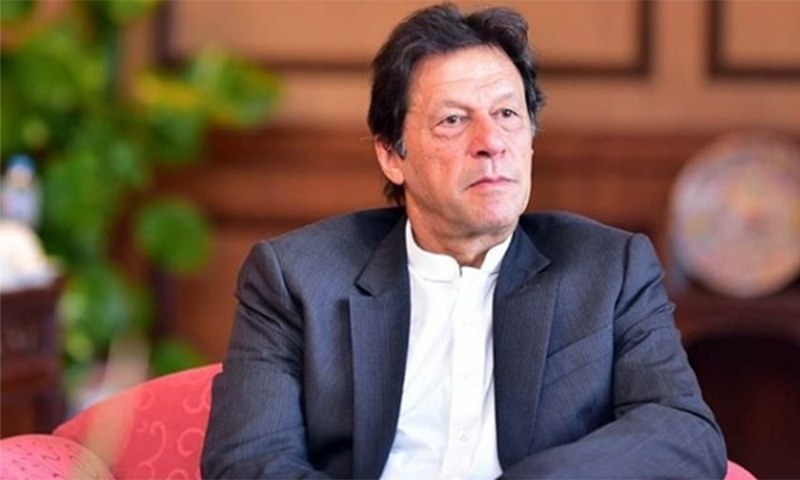
    The Oil & Gas Regulatory Authority (Ogra) has sent a summary to Prime Minister Imran Khan for the approval to increase the price of petrol by Rs5.90 per litre, Geo News has reported. The petrol prices are likely to be increased on October 16, 2021 as per sources of Geo News.

    If approved, The petrol prices can reach up to Rs133.2. In addition, Ogra has recommenced an increase in high-speed diesel price by Rs10.

    In early October, the government had increased the price of petrol by Rs4 per litre taking its price to a record level of Rs127.30 per litre.

  • #PetrolPrice: Memes break the internet

    The government on Thursday, increased the price of petrol by Rs 4 per litre and that of high-speed diesel (HSD) by Rs 2 per litre.

    The prices of kerosene oil and light diesel oil (LDO) were increased by Rs 7.05 and Rs 8.82 per litre, respectively.

    From Oct 1, the price of petrol will be Rs 127.30 per litre, high-speed diesel will be Rs 122.04 per litre, kerosene oil will be Rs 99.31 and light diesel oil will be Rs 99.51 per litre.

    Social media users did not lose the opportunity to start a meme fest following the news.

    https://twitter.com/Haroonikram10/status/1444001135073894402?s=20
  • Twitter reacts to hike in petroleum prices, Fawad defends

    Twitterati reacted to the hike in petroleum prices in Pakistan, using the hashtag #PTIPetrolBomb, which is currently in the top trends.

    Musician and politician Jawad Ahmad tweeted: ”Petrol price is up by Rs 5/litre.It won’t affect the elite & ruling class whichever party they belong to. Youth of Pakistan! These people have so much money that their next many generations would live comfortably with it. They fight on TV & social media but actually, they’re all one.”

    Former anchorperson Gulmeenay tweeted, “My husband and I run a small food delivery service. We cannot currently afford a rider so he does the deliveries himself. This petrol price increase (and all the previous increases) literally impacts our income and our ability to pay bills and feed ourselves.”

    Apart from this, some people had hilarious responses to the petrol price hike.

    Senior journalist Mansoor Ali Khan quote-tweeted Punjab Police’s tweet about abandoned cars picture and said, “As petrol becomes more expensive, you will find most cars have been abandoned.”

    A parody news page tweeted: “The PM could not sleep all night as petrol was increased by Rs 5 per litre, say sources.”

    Minister for Information and Broadcasting Fawad Chaudhry, while responding to a journalist on Twitter, has defended the hike in petroleum prices by the government.

    “Oil prices in Pakistan are still the lowest in the region. If we had oil wells, things would have been different but we have to buy it from abroad, so the price is bound to go up if it increases in the oil market. This is the case for the rest of the imports. The real achievement is that the income of 75 per cent of the population has also increased significantly,” tweeted Chaudhry.

    The government on Wednesday notified an increase in the price of petrol by Rs 5 per litre and diesel by Rs 5.1 per litre.

  • No petrol for unvaccinated people from September 1

    District government Lahore placed banners in petrol stations across the city saying that only fully vaccinated people will be able to get the petrol from September 1. The decision came amid the sharp increase of Covid-19 cases in the country.

    “From September 1, only customers with coronavirus vaccine certificates will be able to buy petrol,” a banner placed on a petrol pump read.

    Earlier this week, Federal Minister for Planning Asad Umar has said those who have not been fully vaccinated will not be allowed to use public transport from October 15.

    As per the National Command and Operation Centre (NCOC), Pakistan has recorded 4,016 new cases of coronavirus in the last 24 hours.

  • Petrol price to be raised Rs1.71 per litre on Aug 1

    Petrol price to be raised Rs1.71 per litre on Aug 1

    Prime Minister Imran Khan’s aide on political communication, Dr Shahbaz Gill, announced that the government has raised the price of petrol by Rs1.71 per litre, starting August 1.

    According to Gill, the decision was made as per the recommendation of the Oil and Gas Regulatory Authority (OGRA). Petrol will consequently cost Rs119.80 per litre.

    Gill said that it was decided that the rate of high-speed diesel be kept constant, as a hike in this commodity impacts the “common man and farmers more”. Thus, diesel will continue to be priced at Rs117.53 per litre.

    Similarly, no change has been made to the price of light diesel oil.

    Meanwhile, Kerosene, starting August 1, will cost Rs0.35 dearer, at Rs85.75 per litre.

    It was rumoured that OGRA recommended a Rs1.71 per litre increase in the price of petrol and a Rs2.27 per litre increase in the price of diesel.

    Gill asked the nation to “bear in mind” that the majority of the 27 countries that have petrol prices lower than the rate in Pakistan are “self-sufficient in petroleum products”.

    “At this time, the government is collecting a nearly zero per cent tax on petroleum products,” Gill said, adding: “Right now, the whole world is in the grip of inflation due to corona.”

  • Govt okays Rs16/kg hike in LPG prices; petrol prices also up by Rs2.31

    Govt okays Rs16/kg hike in LPG prices; petrol prices also up by Rs2.31

    The government has approved a hike of Rs2.31 and Rs1.80 in the prices of petrol and diesel, respectively, for the month January, while the price of the Liquified Petroleum Gas (LPG) has also been increased by Rs16 per kg.

    “While considering relief for the people, Prime Minister Imran Khan approved the minimum possible increase in prices of petroleum products against OGRA’s [Oil and Gas Regulatory Authority] recommendations,” a Prime Minister’s Office (PMO) press release said.

    OGRA had sought an increase of Rs10.68 in petrol price and Rs8.37 in diesel price, whereas it asked the government to increase the price of kerosene oil by Rs10.92 and light diesel oil (LDO) by Rs14.87; the government however reduced it by Rs3.36 and Rs3.95, respectively.

    Meanwhile, OGRA notified a hike of Rs16 per kilogramme in the prices of Liquefied Petroleum Gas (LPG), effective from today, which comes as another blow for the public already facing high inflation.

    According to OGRA’s notification, the LPG prices are raised by Rs16/kg. With the increase, the LPG cylinder for domestic users will be up by Rs188 and commercial users by Rs722.

    It may be noted here that the consumers are already facing a shortage of gas nationwide and have to rely on LPG cylinders instead.

  • ‘Shameful’: Yet another old tweet comes back to haunt Imran after fuel prices hike

    ‘Shameful’: Yet another old tweet comes back to haunt Imran after fuel prices hike

    With Prime Minister (PM) Imran Khan approving a Rs25 hike in petrol price, yet another tweet from the past has come back to haunt the ruling Pakistan Tehreek-e-Insaf (PTI).

    The premier on Friday approved a summary of recommendations to increase the prices of petroleum products “in view of the rising oil prices trend in the global market”, with a notification issued to announce the new rates.

    The notification stated that the new petrol prices would come into effect immediately.

    Petrol prices, according to the recommendation, were to be bumped up Rs25.58 per litre. Similarly, the per-litre prices of high-speed diesel (HSD), kerosene oil, and light diesel were recommended to be increased Rs21.31, Rs23.50, and Rs17.84, respectively.

    The new per-litre prices of petrol, HSD, kerosene oil, and light diesel, therefore, would respectively be Rs100.10, Rs101.46, Rs59.06, and Rs55.98.

    With the hike drawing a strong reaction from the general public as people expressed frustration over the development that could result in yet another inflation bomb amid the coronavirus outbreak, some took to Twitter to retweet a statement by the premier from back when he sat in the parliament on opposition benches.

    “Absolutely shameful how the govt has dropped a petrol bomb on the poor nation at the start of 2018. Instead of undertaking tax reforms and cracking down on money laundering, the govt continues to burden the masses — this time with a big increase in petroleum products’ prices,” the tweet read.

    “Petrol should be sold at Rs58 per litre, demands @ImranKhanPTI [sic],” another tweet from 2015 by PTI’s official handle read.

    This isn’t the first time an old tweet has come back to bite the PTI government.

    While the same tweets were used to criticise the government after a fuel prices hike in July 2019, a separate tweet from August 2014 read, “All over the world, just on an incident of railway accidents, minister resigns. This is real democracy, says Imran Khan [sic].”

    It had started making rounds last month after the tragic train accident in Sadiqabad, which claimed over 20 lives.

    Prior to this, as PM Imran reached China amid Tehreek-e-Labbaik Pakistan’s (TLP) nationwide protests last year, a 2012 tweet of his, went viral. In the tweet, he had criticised the then premier for traveling abroad as the country “burned”.

    It was aimed at criticising former prime minister Yousaf Raza Gillani, who had traveled to China for the Boao Forum while violence linked to sectarian, ethnic and political tensions continued in different parts of the country.
  • Amid shortage, govt likely to allow petrol stations to set their own prices

    Amid shortage, govt likely to allow petrol stations to set their own prices

    As consumers across the country face difficulties due to petrol shortage, the government is currently contemplating completely deregulating pricing and marketing of petrol. 

    According to a report published in Dawn,  the government is considering doing away with uniform pricing of petrol and deregulating it in line with other petroleum products like hi-octane blending component (HOBC) which are already deregulated. 

    Recently oil marketing companies (OMCs) have come under severe criticism for their alleged collusive behavior that has seen the price of HOBC, to increase to Rs148-160 per litre. 

    While the government slashed petrol prices to Rs74 per litre in line with the decrease in international oil prices, no such reduction was seen in the price of HOBC. 

    According to the report, the government has also decided to deregulate the Inland Freight Equalisation Margin (IFEM) that currently ensures uniform prices throughout the country. As a result, consumers that are close to ports and refineries will be able to buy petroleum products at a cheaper price that may differ anywhere from Rs1 to Rs5 depending on the transportation cost.

    Earlier, on June 4, the Competition Commission of Pakistan (CCP) had taken notice of public concerns and complaints about the shortage of petroleum products in the country and had initiated an inquiry to see whether such a shortage is the result of any anti-competitive activity.

    The CCP’s inquiry will determine the possibility of the existence of any anti-competitive practices causing the shortage of fuel in the country and the undertakings involved in it.

    The inquiry will further examine why the impact of the reduction in the prices of oil have not resulted in the corresponding reduction in the prices of the lubricants and other oil-based products, including the prices of hi-octane, which are primarily deregulated products.

    Similarly, the Oil and Gas Regulatory Authority (OGRA) had also expressed its reservations last week regarding high prices of HOBC and had asked OMC’s to set prices at reasonable levels keeping in view the interests of the consumers. 

  • New fuel taxes burden masses with additional Rs25 billion

    New fuel taxes burden masses with additional Rs25 billion

    The taxes imposed by the Federal government has burdened people with additional Rs25 billion per month who are already burdened with inflation, Pakistan Today reported.

    In comparison with a decline in global oil prices, the government did not provide any relief to the masses. They said the government had reduced per litre prices of petroleum products by Rs 5 instead of Rs15 litre. The government had fixed petroleum levy (PL) — imposed tex — on high-speed diesel at Rs25 per litre, which had failed to provide relief to the masses.

    Tax on petrol has increased by 106pc, if the taxes weren’t increased, petrol prices could have decreased by Rs 9 per litre. Instead of giving any relief, the government has imposed an additional tax of Rs6 per litre on kerosene oil.

    Furthermore, the government was likely to earn Rs60 billion per month from the taxes imposed on different petroleum products.

    According to the report, the government has increased taxes to meet the demand of the International Monetary Fund (IMF)

  • OGRA to drastically cut down petrol prices

    OGRA to drastically cut down petrol prices

    The prices of petroleum products are expected to decrease substantially for the month of March, DAWN reported.

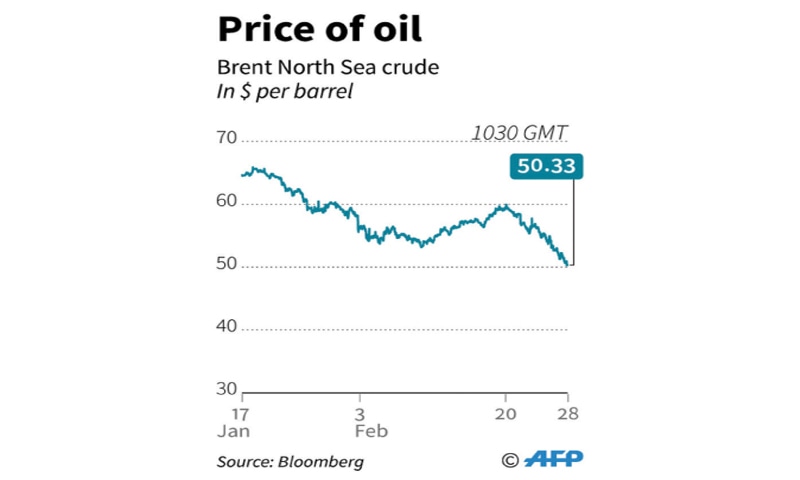
    According to reports, the price of Dubai Crude — a medium sour crude oil extracted from Dubai — came down from $62 per barrel to $50 on Friday.

    READ MORE: Pakistan, US trade negotiation failed.

    Similarly, the benchmark International Brent price reduced from $60 a barrel to $51 a barrel. 

    As per existing tax rates, the Oil & Gas Regulatory Authority (OGRA) calculated about Rs15 per litre reduction in the prices of high-speed diesel (HSD) and petrol. 

    READ MORE: Coronavirus in Pakistan: Prices of face masks increase by 900%

    The authorities concerned have proposed different rates but Prime Minister’s Delivery Unit (PMDU) had proposed scaling down the price of HSD from Rs127 to Rs100 per litre. 

    The officials reportedly advised PM Imran Khan that reduction in HSD price would go a long way in bringing down the rate of inflation because it was the primary source of transportation and agriculture in the country.

    READ MORE: FBR to regulate real estate, jewellers trade to comply with FATF agenda

    Moreover, the price of diesel is lower than petrol in many countries because of its inflationary impact. A drastic reduction in pricing structures to comply with PM’s directives will be problematic and certainly not an easy task.