Tag: PSX

  • Profit taking grips PSX after early rally

    Profit taking grips PSX after early rally

    Following optimism regarding the upcoming federal budget, the Pakistan Stock Exchange (PSX) continued its upward trend to cross 120,000 points during intraday trading. However, despite investor confidence surging in the early hours of the day, the market closed in the red on Monday.

    The KSE-100, the benchmark index of the PSX, reached an intraday high of 120,590.77 points. The index peaked at 9:56 AM after which significant profit taking took hold of the market, causing the market to close at a lower, yet respectable, 118,877.80 points.


    For reference, the KSE-100 closed at 119,691.09 points on Friday, after which the index recorded a shrinking of 0.68 percent during trading hours on Monday, leading to an 813.29 point rise. The market displayed a slowdown around 3:25 PM as the KSE-100 hit its intraday trading low of 118,672.84 points, closing the day lower than when trading hours started.

    Of the 17 indexes listed on the exchange, 14 remained in the red with the All-share index (ALLSHR) shrinking by 0.4 percent, which translates into a 302.57 point loss for the index. Unlike the KSE-100, which tracks the performance of the 100 largest and most liquid companies, the ALLSHR index records the performance of all publicly listed companies on the PSX.

    A vast array of companies witnessed a rise in share prices with Invest Capital Investment Bank Limited (ICIBL) and TPL Trakker Limited (TPLT) winning big, to the tune of growth rates that sat at 57.14 percent (ICIBL) and 15.97 percent (TPLT). 

    However, not every publicly listed stock witnessed an improvement as many companies witnessed sharp declines. Of these declining companies, the one that fared the worst during intra-day trading was Idrees Textile Mills Limited (IDRT), which posted a 10.01 percent decline in its position.

    Recent reports have suggested that the KSE-100 index could cross 165,000 points by December 2025, owing to a drop in interest rates and an improved state of the wider economy. These factors are responsible for creating a business-friendly environment, lending weight to analysts’ claims.
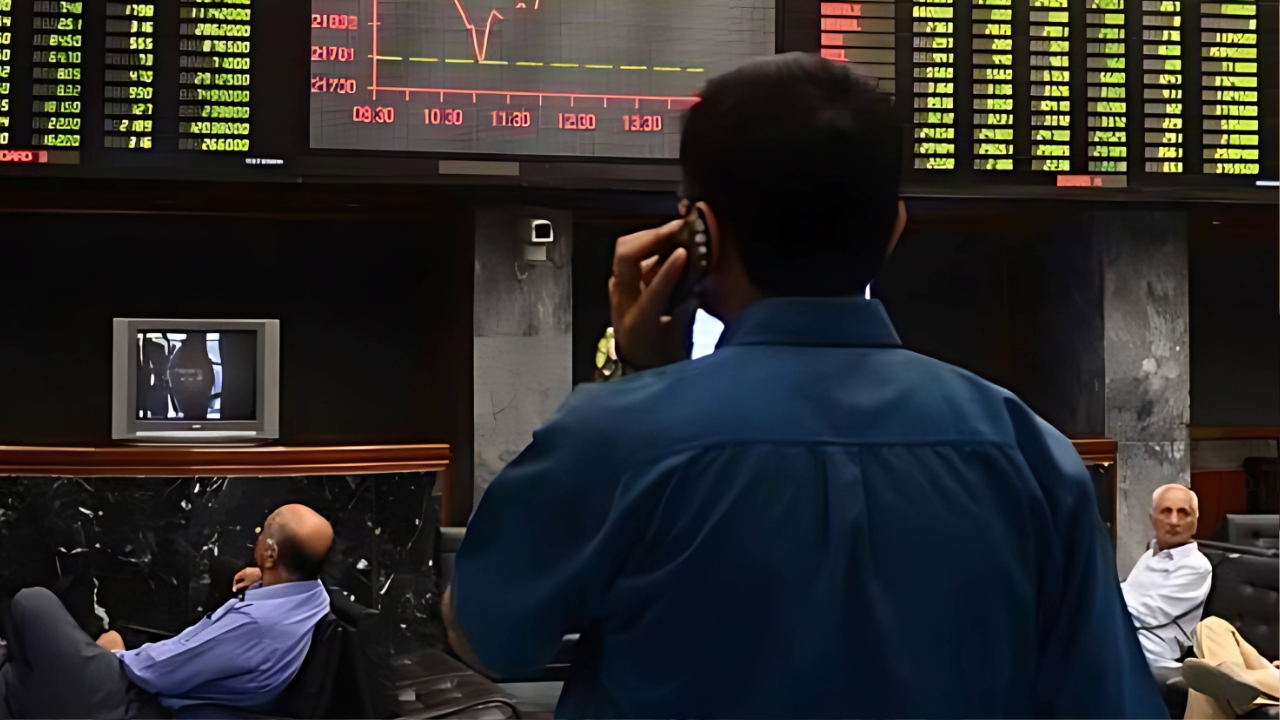

  • Profit taking grips PSX after early record-breaking rally

    Profit taking grips PSX after early record-breaking rally

    Following exchanges with the International Monetary Fund (IMF) and the cessation of hostilities by India, the Pakistan Stock Exchange (PSX) continued its upward trend to cross 120,000 points during intraday trading. Reports have confirmed that surging investor confidence allowed the exchange to reach its highest point in history on Monday, setting a new record.

    The KSE-100, the benchmark index of the PSX, reached an intraday high of 120,285.54 points. The index peaked at 9:33 AM after which significant profit taking took hold of the market, causing the market to close at a lower, yet respectable, 119,649.14 points.

    For reference, the KSE-100 closed at 119,689.63 points on Friday, after which the index recorded a growth of 0.03 percent during trading hours on Monday, allowing for a 40.49 point rise. The market displayed a slowdown around 11:37 PM as the KSE-100 hit its intraday trading low of 119,250.67 points before recording a recovery to close the day marginally higher than when trading hours started.

    Of the 17 indexes listed on the exchange, 7 remained in the green with the All-share index (ALLSHR) being in the red, shrinking by 0.03 percent, which translates into a 20.99 point loss for the index. Unlike the KSE-100, which tracks the performance of the 100 largest and most liquid companies, the ALLSHR index records the performance of all publicly listed companies on the PSX.

    A number of companies witnessed a rise in share prices, with First Paramount Modaraba (FPRM) and Dost Steels Limited (DSL) winning big, to the tune of growth rates that sat at 12.08 percent (FPRM) and 11.99 percent (DSL).

    However, not every publicly listed stock witnessed an improvement as many companies witnessed sharp declines. Of these declining companies, the one that fared the worst during intra-day trading was J.K. Spinning Mills Limited (JKSM) which posted a 16.85 percent decline in its position.

    Analysts have pegged the boom in the KSE-100 to the Pak-India ceasefire, outlining how the index witnessed a staggering 12,474-point rally in the last week to settle just under 120,000 points. Moreover, the IMF has given its green light to the first review of the country’s loan program along with the approval of a climate fund, reportedly resulting in the disbursement of $1 billion.

    Analysts have reportedly projected that the KSE-100 index could cross 165,000 points by December 2025, owing to a drop in interest rates and an improved state of the wider economy. These factors are responsible for creating a business-friendly environment, lending weight to analysts’ claims.
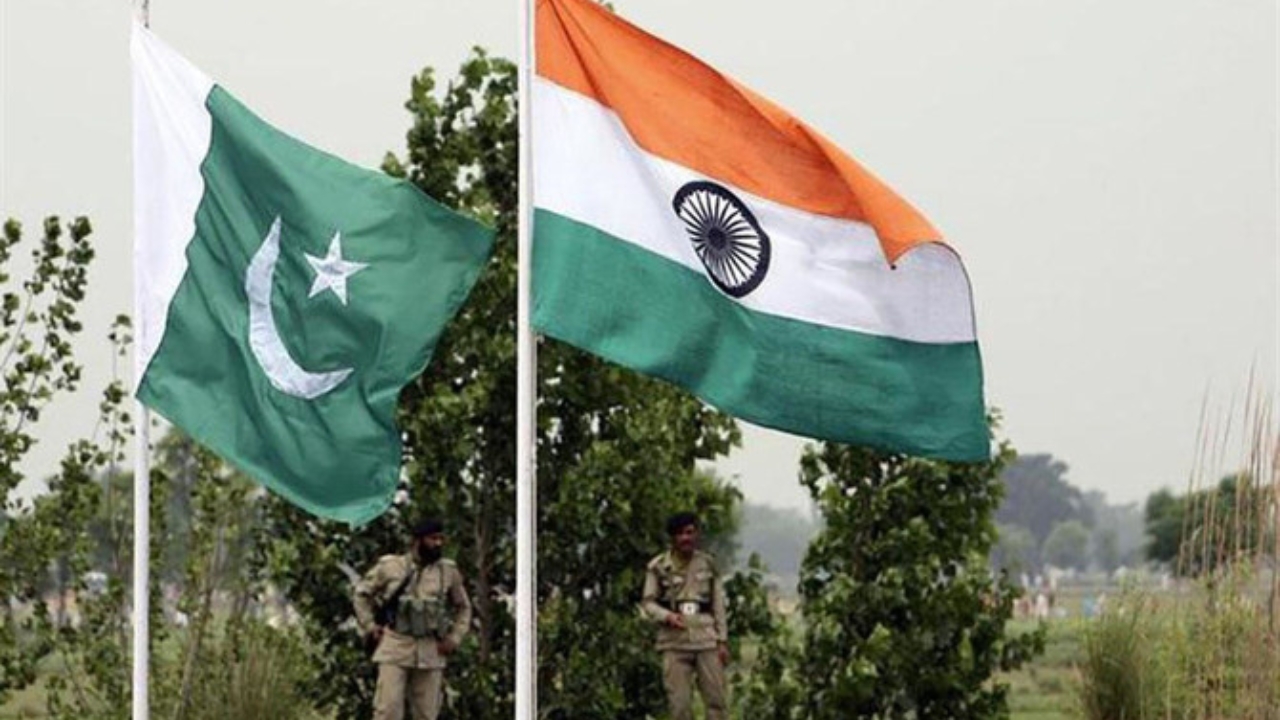
  • PSX rebounds as Pak-India tensions ease, interest rates expected to fall

    PSX rebounds as Pak-India tensions ease, interest rates expected to fall

    The Pakistan Stock Exchange (PSX) has recorded a respectable bull run as the benchmark index of the exchange, the KSE-100, witnessed an early rally that maintained its momentum throughout the day. According to reports, the rebound was driven by a surge in investor confidence amid signs that tensions between Pakistan and India may soon de-escalate.

    The US State Department revealed that Secretary of State Marco Rubio was in contact with both Prime Minister Shehbaz Sharif and Indian Foreign Minister Subrahmanyam Jaishankar on Wednesday to smooth things over between both nuclear-armed nations. With Thursday, May 1 being a public holiday marking Labour Day, trading at the PSX remained suspended; however, the effects of the de-escalation were felt on Friday.  

    The KSE-100 index hit an intraday low of 112,820.07 points at approximately 9:38 AM, after which bullish sentiments took hold of the market, causing the index to rally to an intraday high of 114,546.87 points.

    However, a marginal drop was witnessed in the index before trading hours ended, causing it to close the day at a respectable 114,113.93 points. For reference, the KSE-100 closed at 111,326.57 points on Wednesday, after which the index recorded a growth of 2.50 percent during trading hours on Friday, allowing for a staggering 2,787.36 point rise. 

    Every single index remained in the green with the All-share index (ALLSHR) experiencing a 2.18 percent growth rate, which translates into a 1,516.25 point gain for the index. Unlike the KSE-100, which tracks the performance of the 100 largest and most liquid companies, the ALLSHR index records the performance of all publicly listed companies on the PSX.

    The PSX has displayed great average returns for its investors over the past year, and with the International Monetary Fund’s (IMF) board approval scheduled for May 9, indexes on the exchange continue to climb. 

    Moreover, investors expect a policy rate cut ranging from 50 basis points (bps) to 100 bps. A drop in interest rates could allow investors to pour in a greater amount of funds into the domestic capital market, owing to lower rates offered by local financial markets.

    Data from the PSX reveals that the ALLSHR index has shot up by a staggering 53.71 percent over just one year, with the KSE-100 recording an even greater rise of 61.50 percent over a one-year period – a growth rate which many would categorise as nothing short of meteoric.

    A vast array of companies witnessed a rise in share prices with Kohinoor Power Company Limited (KOHP) and Dewan Mushtaq Textile Mills Limited (DMTM) winning big during trading hours, to the tune of growth rates that sat at 16.07 percent (KOHP) and 14.37 percent (DMTM). 

    However, not every publicly listed stock witnessed an improvement, as many companies witnessed sharp declines. Of these declining companies, the one that fared the worst during intra-day trading was The Pakistan General Insurance Co. Ltd (PKGI), which posted a 10.07 percent decline in its position.

    Trading volume of regular stocks stood at an impressive 372,363,708 shares, translating into a total value of over 23.2 billion rupees.

  • Bloodbath at PSX amid rising Pak-India tensions

    Bloodbath at PSX amid rising Pak-India tensions

    Bearish sentiments gripped investors on Wednesday as the Pakistan Stock Exchange (PSX) recorded a sharp decline owing to escalating tensions with India. Data from the PSX suggests that the KSE-100, the benchmark index of the PSX, declined by over 3,500 points during intraday trading.

    The market witnessed a sharp sell-off at 9:30 AM that gradually intensified over time, causing the KSE-100 index to witness a 3,646.17-point drop, which translates into a 3.17 percent decline. This caused the index to fall to 111,226.01 points, with many anticipating the freefall to continue.

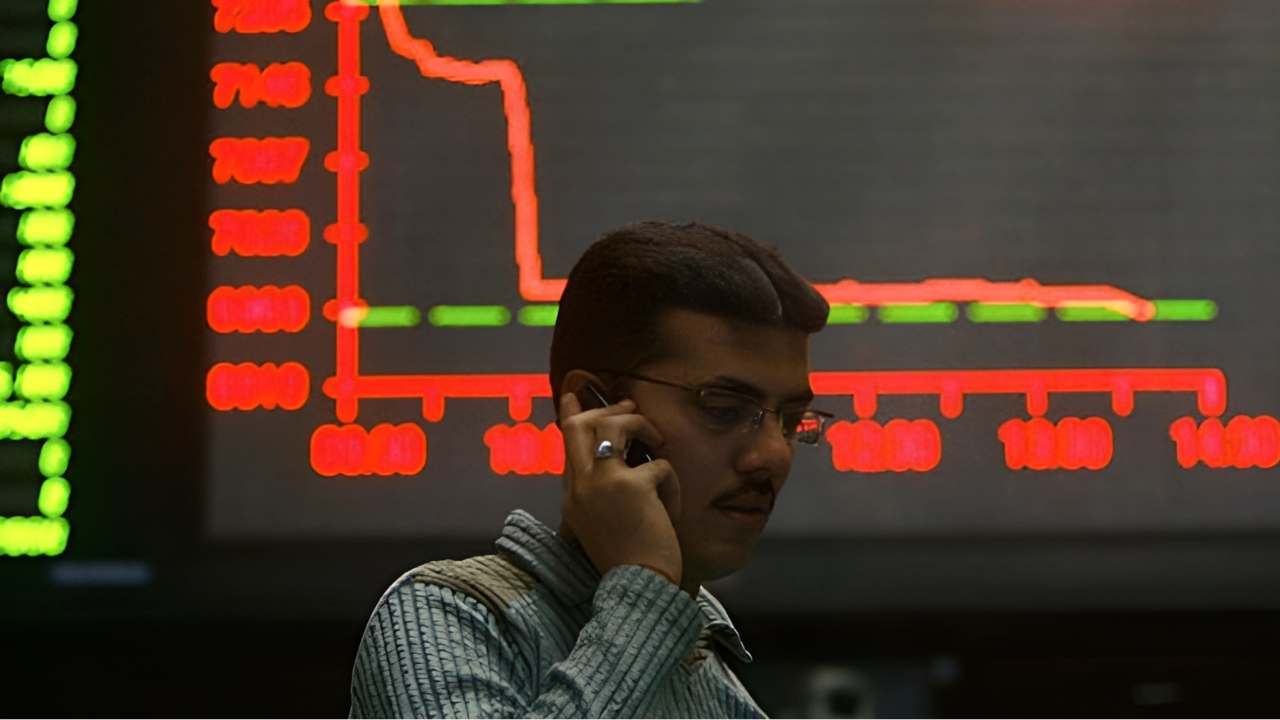
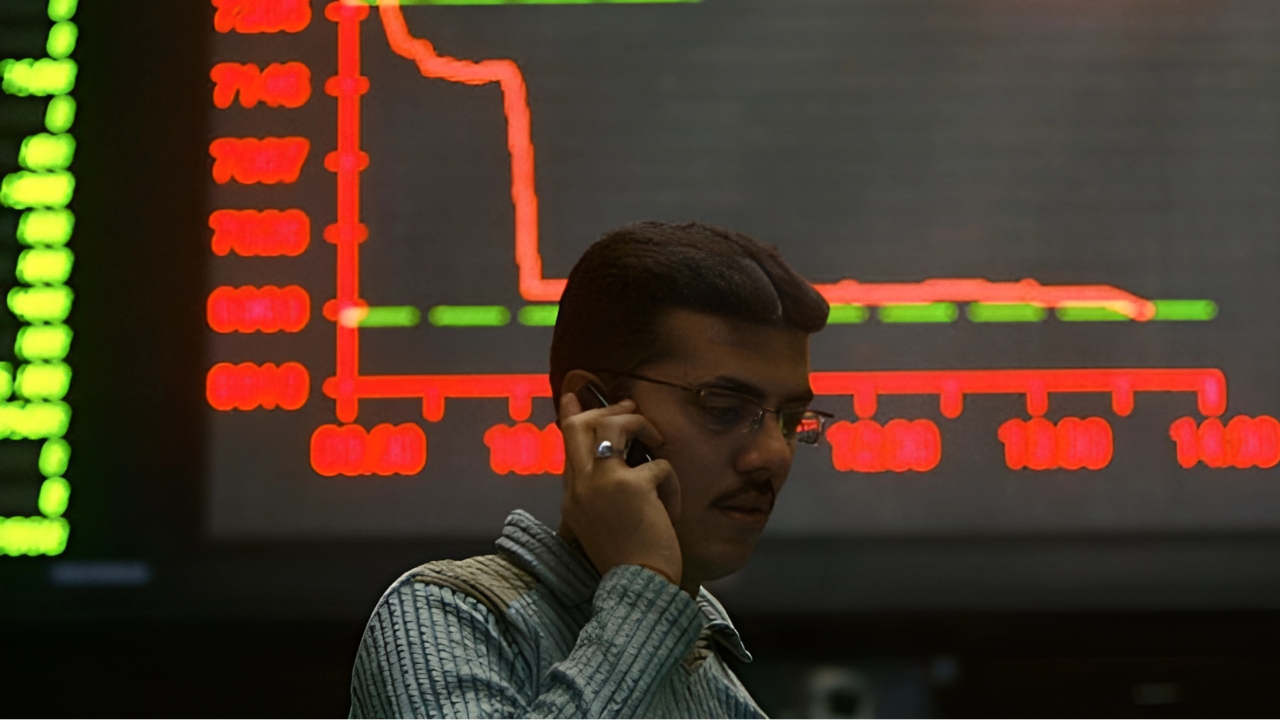
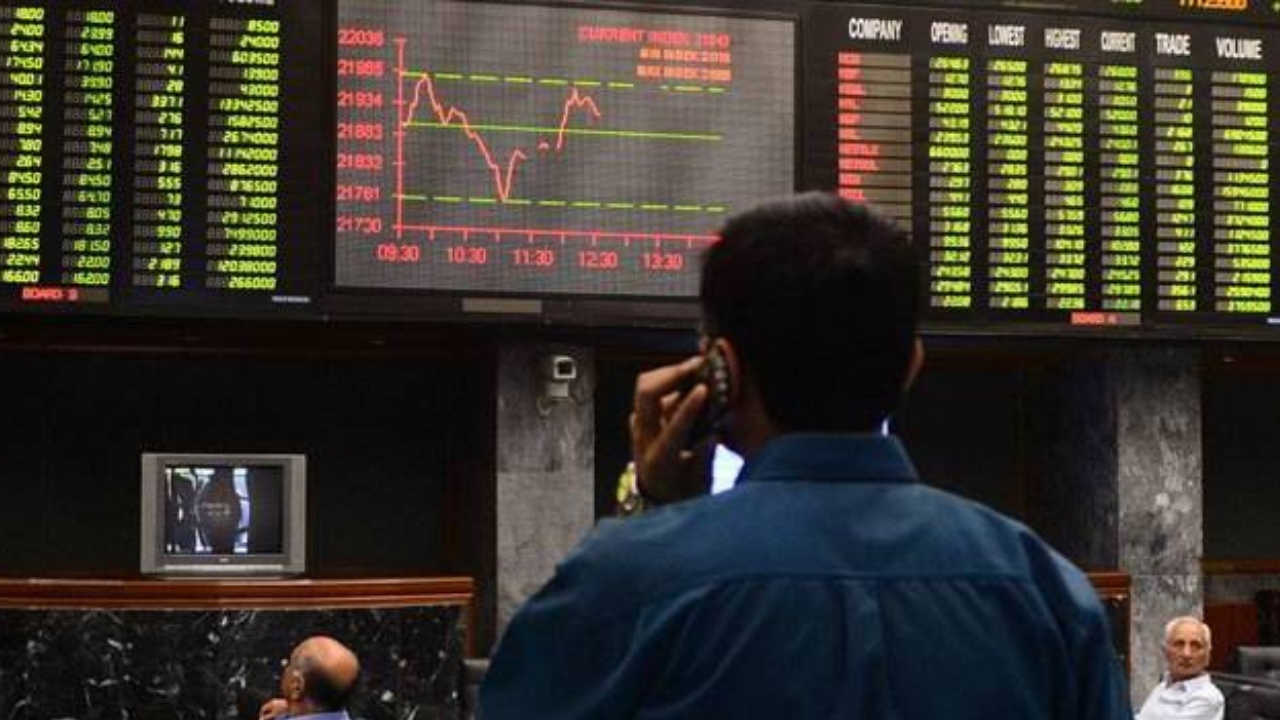
    Pakistani stock brokers see red pixels across their screens as all 17 indices remain in the red. At the height of the fall, the All Share (ALLSHR) index fell to 69,482.98 points after starting the session at 71,509.46 points. Unlike the KSE-100, which tracks the performance of the 100 largest and most liquid companies, the ALLSHR index records the performance of all publicly listed companies on the PSX.

    However, the damage isn’t limited to Pakistan, as the National Stock Exchange of India Limited (NSE) is also subdued. Reports indicate that a “bearish bias” is forming in India’s capital market, as the Put-Call ratio has fallen from 1.17 to 0.84.

    According to a senior official at a reputable brokerage, the PSX is in freefall as a full-scale conflict with India could erupt in the coming days. These claims are not unsubstantiated, however, as Information Minister Attaullah Tarar announced the possibility of India pursuing military action against Pakistan.

    This has severely shaken investor confidence, who continue to pull their funds out of the PSX. According to reports, the director of research at one of Pakistan’s largest brokerages outlined how fears have grown after the information minister’s press briefing.

    A multitude of analysts believe that investor confidence remains shaky, especially after the information Minister revealed that India could attack Pakistan “within the next 24 to 36 hours”.  If the anticipated attack does not occur, the PSX could witness a revival; however, analysts speculate that investors will likely make investment decisions based on the state of Pak-India relations at the time.

    According to reports, India has granted “operational freedom” to its military in response to the Pahalgam attack. For reference, the Pahalgam attack took place in Indian occupied Kashmir (IOK) – which Indian authorities believe was supported by Pakistan.

  • PSX continues to climb despite Pak-India tensions

    PSX continues to climb despite Pak-India tensions

    Despite rising tensions with neighbouring India, the Pakistan Stock Exchange (PSX) on Friday closed in the green as an early bull run allowed the KSE-100, the benchmark index of the PSX, to reach an intraday high of 115,844.88 points. 


    Data from the PSX revealed that the KSE-100 index peaked at approximately 9:22 AM after which a large sell off was recorded in the market that lasted until 2:46 PM, causing the market to hit an intraday low of 113,716.60 points before recording a swift recovery to close at 115,469.34 points.


    For reference, the KSE-100 closed at 115,019.81 points on Thursday after which the index recorded a growth of 0.39 percent during trading hours on Friday, allowing for a 449.53-point rise.


    According to reports, the index plummeted by over 2,200 points during trading hours on Thursday, owing to tensions with India.

    Of the 17 indexes on the PSX, 14 remained in the green with the All-share index (ALLSHR) being one of the four indexes that were in the red. The index shrank marginally by 0.01 percent, which translates into a 9.08 point decline. Unlike the KSE-100, which tracks the performance of the 100 largest and most liquid companies, the ALLSHR index records the performance of all publicly listed companies on the PSX.

    While recent global and regional geopolitical issues have caused a pullback in the PSX, data from the exchange reveals that the ALLSHR index has shot up by a staggering 52.87 percent over just one year, with the KSE-100 recording an even greater rise of 60.44 percent over a one year period.


    A vast array of companies has witnessed a rise in share prices with First Capital Equities Limited (FCEL) and PICIC Insurance Limited (PIL) winning big – to the tune of growth rates that sat at 24.24 percent (FCEL) and 18.94 percent (PIC). 


    However, not every publicly listed stock witnessed an improvement as many companies witnessed sharp declines. Of these declining companies, the one that fared the worst during intra-day trading was Ghani Chemworld Limited (GCWL), which posted a 11.11 percent decline in its position.


    Trading volume of regular stocks stood at an impressive 471,072,967 shares, translating into a total value of over Rs27.3 billion.

  • Pakistan, Malaysia eye stronger Islamic finance ties as PSX hosts Shariah experts

    Pakistan, Malaysia eye stronger Islamic finance ties as PSX hosts Shariah experts

    In a bid to enhance collaboration across Shariah-compliant capital markets, a team from Malaysia visited the Pakistan Stock Exchange (PSX). According to credible reports, the team comprises a number of Shariah scholars and industry professionals. 

    Dr Shamshad Akhtar, Chairman of the PSX, outlined the importance of joint efforts in Islamic Finance between Pakistan and Malaysia. Reports suggest that the general public is calling for a transition to ‘Islamic’/Shariah-compliant investment opportunities, which can provide investors with Shariah-compliant income streams.    

    Currently, approximately half of all publicly listed companies in Pakistan are Shariah-compliant. For clarification, a company is Shariah-compliant if its debt ratio is below a certain threshold, it avoids excessive uncertainty, and its core business activities are not haram, such as the sale of firearms and pork.

    The PSX caters to the needs of its faith-based investors by providing Islamic mutual funds and sukuk (Islamic financial certificates). According to data from reports, well over Rs6.5 trillion worth of Ijarah Sukuk have been issued to date.

    Shariah compliance in the capital market is on the rise in Pakistan as a result of regulatory frameworks that favour faith-based investments. However, the same cannot be said for international capital markets. 

    During discussions, both parties outlined the possibility of joining hands to promote Islamic finance on an international level. If done correctly, a vast influx of funds could be recorded into both the PSX and domestic Islamic mutual funds, as faith-based investors from around the world may be attracted to invest in Pakistan. 

    Reports reveal that the Head of Islamic Finance at the Securities and Exchange Commission of Pakistan (SECP) has engaged in high-level discussions with the Malaysian team, highlighting Pakistan’s achievements in the realm of Islamic finance. 

    However, the hosts remained eager to learn from the Malaysian delegation as PSX’s CEO and managing director outlined how the meeting was an opportunity to gain insights from their counterparts. Information sharing could lead to improvements within the PSX structure, especially for services that cater to shariah-compliant stocks. 

    The meeting also brushed over shortcomings of the domestic capital market, as reports claim that only 0.14 percent of Pakistanis have capital market investment holdings. Industry experts and regulators could help expand the domestic investor base by removing barriers to entry.

    Many believe that officials from the PSX could gain insights from the visiting team and implement changes, which could potentially boost investment figures.

  • PSX records partial recovery after largest single-day drop

    PSX records partial recovery after largest single-day drop

    The Pakistan Stock Exchange witnessed a historic downturn as the benchmark index of the exchange, the KSE-100, recorded its single largest fall in intraday trading history after falling by a staggering 8,400 points during trading hours.

    The KSE-100 index plummeted to an intraday low of 110,103.97 points at approximately 1:15 PM, triggering widespread concern across trading floors. The steep drop was driven by aggressive sell-offs largely because of China’s response to the tariffs that the US levied on it by slapping substantial tariffs of its own through “retaliatory levies” on all goods imported from the US.

    This move resulted in the KSE-100 index closing at a much lower level of 114,909.48 points. For context, the index had closed at 118,791.66 points the day before. As today’s trading session came to a close, the index had suffered a staggering decline of 3,882.18 points, marking a sharp 3.27 percent drop in a single day.

    The market continued its downward trajectory till around 1:30 PM, after which it attempted a major rally but failed to make a comeback that could allow it to claw out of the red.

    All major indices on the PSX closed in the red, with the broader All-share index (ALLSHR) also facing a significant contraction. Unlike the KSE-100, which tracks the top 100 performing companies, the ALLSHR index reflects the overall performance of all publicly listed companies and also showed a 3.31 percent decline.

    Despite previous signs of recovery in the PSX, the current fall has wiped out significant gains made over the past year. Trading data revealed a marked increase in panic selling in all sectors as the selloff indiscriminately ravaged all areas of the economy listed on the PSX.

    Multiple companies saw their share prices plunge sharply, with First IBL Modaraba (FIBLM) experiencing the largest drop of the day – falling by 15.67 percent during intraday trading.

    Overall, the volume of regular stock trading stood at 710,788,421 shares, translating into a total value of approximately 43 billion rupees – a reflection of the heightened activity driven by uncertainty and sell-offs.

  • Global bloodbath: PSX suffers historic decline as markets crash amid US-China tariff war

    Global bloodbath: PSX suffers historic decline as markets crash amid US-China tariff war

    The Pakistan Stock Exchange (PSX) Monday experienced a meltdown as the benchmark KSE-100 Index fell by a staggering 6,287.22 points, representing a decline of 5.29 percent; whereas the ALLSHR index lost 3700.05 points to now sit at 70,171.43.

    The carnage was followed by trading activities being suspended for 30 minutes, giving time to both regulators and investors to assess the situation.

    While Pakistan’s KSE-100 tracks the performance of the 100 largest and most liquid companies, the ALLSHR index records the performance of all publicly listed companies on the PSX. However, the bloodbath was not limited to the PSX as capital markets across the globe reel from the effects of the trade war between the United States (US) and China.

    According to reports, China has retorted to the US by slapping substantial tariffs of its own through “retaliatory levies” on all goods imported from the US. This levy has been accompanied with China restricting its exports on seven rare elements.

    The trade war has left many investors to believe that a recession is on the horizon, prompting massive sell-offs in international capital markets. Despite being the one to issue the retaliatory tariffs, China’s own capital markets have witnessed large selloffs, causing the Shanghai Stock Exchange Composite Index to fall by 7.34 percent. 

    The effects have reached US shores too as the New York Stock Exchange (NYSE) composite has recorded a sharp decline of 6.12 percent after falling by an alarming 1,148.58 points in 24 hours and currently sits at 17,618.61 points.

    The National Association of Securities Dealers Automated Quotations (NASDAQ) has plummeted by a whopping 5.82 percent as it fell by 962.82 points during trading hours to settle at 15,587.79. For reference, the NASDAQ is the second largest US based stock exchange by market capitalisation — second only to NYSE.

    The Saudi stock market hasn’t fared well either, as the imposition of tariffs coupled with falling oil prices have wiped out large sums of investments causing a loss of 500 billion riyals. As of publishing, the Saudi benchmark index, Tadawul All-Share Index (TASI) has declined by 3.05 percent after falling by 337.72 percent. As per reports, this has caused a loss of $90.5 billion to Saudi Aramco alone. Notable companies such as the Saudi National Bank have also recorded substantial losses.

  • Pakistan, Bangladesh and Sri Lanka ink tripartite agreement to strengthen capital markets

    Pakistan, Bangladesh and Sri Lanka ink tripartite agreement to strengthen capital markets

    In a bid to enhance regional capital market integration, the national stock exchanges from Pakistan, Bangladesh and Sri Lanka have decided to collectively sign a memorandum of understanding (MoU). 


    The Pakistan Stock Exchange (PSX), Dhaka Stock Exchange (DSE) and Colombo Stock Exchange (CSE) inked this agreement on Thursday in Sri Lanka’s capital city Colombo. As per a press release by the DSE, if concerned parties follow the agreement correctly, it could greatly boost human resource collaboration, investor protection, human resource collaboration, and the development of technology and new products.


    Chairman Akif Saeed of the Securities and Exchange Commission of Pakistan (SECP) attended the signing ceremony along with DSE Chairman Mominul Islam and CSE Chairman Dilshan Wirasekara. Key officials and directors from concerned institutions were reportedly also present at the high profile event to facilitate the process. 


    Reports suggest that knowledge sharing across capital markets will be another byproduct of the agreement. This could result in a vast movement of investment funds between the three nations, allowing for investors to purchase stocks of the publicly listed companies they believe will rise — regardless of which of the three countries the firm calls home. 


    A key official present at the meeting commented on the developments, claiming that the tripartite agreement could allow for the development of ‘strong and efficient capital markets’. This can be achieved via combined investments in technology and experience-sharing. 


    According to reports, Chairman Akif Saeed, accompanied by senior executives from the PSX, held meetings with officials from the DSE and CSE. Aside from official meetings, executives also found other avenues of collaboration. For instance, DSE’s chairman joined a panel discussion regarding the effect of market regulation on the development of capital markets. 


    In an official statement, DSE’s Chairman expressed concerns regarding the small size of the stock exchanges in South Asia which causes them to face serious operational and technological constraints. Barring India’s stock exchange, these challenges that exchanges must face in South Asia hinder markets, holding them back from reaching their ‘full capacity’.


    However, the PSX has been on a tear over the past year. Data from late March 2025 reveals that the ALLSHR (All shares) index has shot up by a staggering 67.77 percent over just one year, with the KSE-100 index recording an even greater annual growth of 78.70 percent – a growth rate that many would categorize as nothing short of meteoric.

  • Bull run at PSX as IMF nod adds to investor confidence

    Bull run at PSX as IMF nod adds to investor confidence

    The Pakistan Stock Exchange has recorded a respectable bull run as the benchmark index of the exchange, the KSE-100, posted a 1300-point improvement at its intraday trading peak. As per credible reports, the International Monetary Fund’s (IMF) staff-level agreement, set to disburse $2.3 billion to Pakistan, has been the reason for the surge in market optimism.

    The KSE-100 index hit an intraday high of 118,220.88 points at approximately 9:20 AM, after which profit-taking took hold of the market, causing the market to decline slightly but still close out at a respectable 117,772.31 points.

    For reference, the KSE-100 closed at 116,633.16 points on Tuesday, after which the index recorded a growth of 0.98 percent during trading hours on Wednesday, allowing for a 1,139.15-point rise. The market displayed a significant slowdown around 10:51 AM as the KSE-100 hit its intraday trading low of 117,178.23 points before recording a swift recovery to its current position.

    Every single index remained in the green, with the All-share index (ALLSHR) experiencing a 1.05 percent growth rate, which translates into a 761.71 point gain for the index. Unlike the KSE-100, which tracks the performance of the 100 largest and most liquid companies, the ALLSHR index records the performance of all publicly listed companies on the PSX.

    The PSX has displayed great average returns for its investors over the past year and with the staff-level agreement reaching its conclusion, regarding the second disbursement of the Extended Fund Facility (EFF) program, indexes on the exchange continue to climb.

    Data from the PSX reveals that the ALLSHR index has shot up by a staggering 67.77 percent over just one year, with the KSE-100 recording an even greater rise of 78.70 percent over one year – a growth rate that many would categorize as nothing short of meteoric. Moreover, the Year-to-Date (YTD) change for the ALLSHR and KSE-100 index recorded improvements, sitting at 1.55 percent and 2.30 percent, respectively.

    A vast array of companies witnessed a rise in share prices. However, reports suggest that a large volume of buying was seen in the automobile, banking, cement, chemicals, oil and gas exploration and power generation sectors. Mughal Iron Steel Industries Limited (MUGHALR2) and Security Investment Bank Limited (SIBL) won big during trading hours – to the tune of growth rates that sat at 49.75 percent (MUGHALR2) and 11.12 percent (SIBL). 


    However, not every publicly listed stock witnessed an improvement, as many companies have seen sharp declines. Of these declining companies, the one that fared the worst during intraday trading was Paramount Spinning Mills Limited (PASM), which posted a 12.03 percent decline in its position.

    The trading volume of regular stocks stood at an impressive 356,729,109 shares, translating into a total value of approximately 37.5 billion rupees. According to reports, the government has approval for the first review of the EFF program and requires only the IMF’s executive board’s approval. Some believe that the PSX will notice further improvements upon final approval by the IMF, which will unlock $2 billion for cash-strapped Pakistan.