Tag: PSX

  • Bitcoin falls to lowest since January after stock market

    Bitcoin falls to lowest since January after stock market

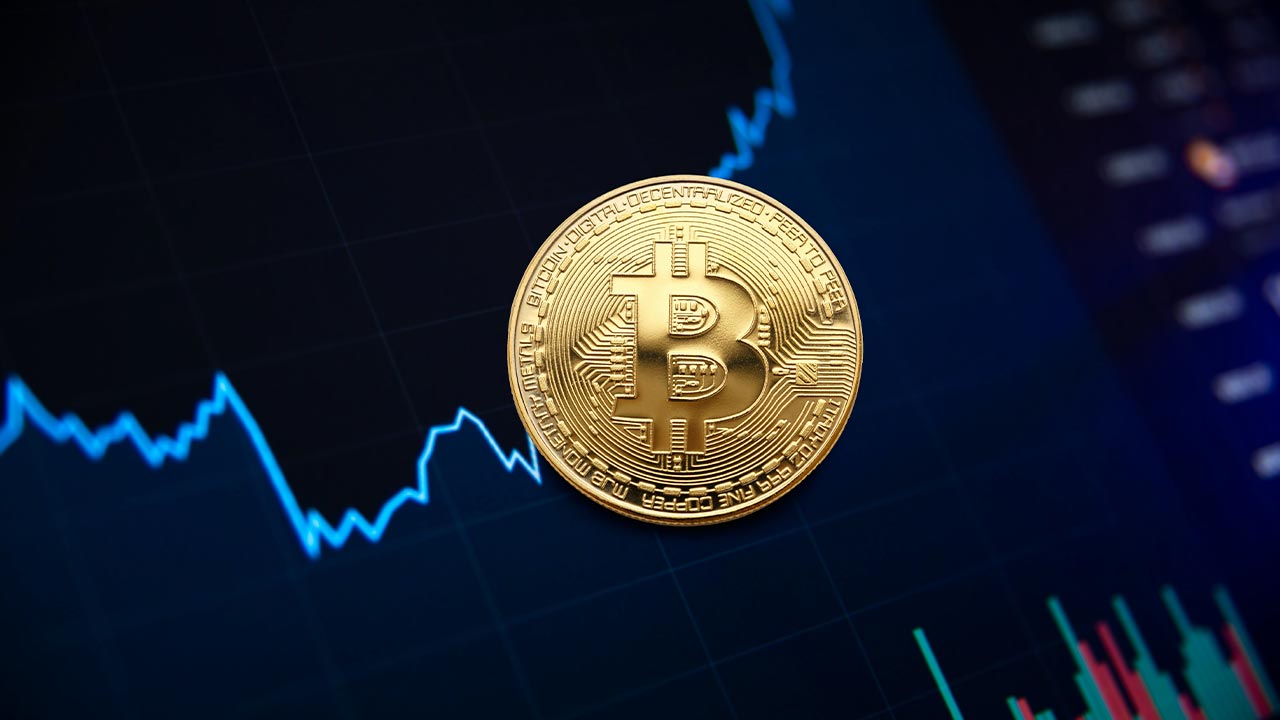
    Bitcoin on Monday, May 9 fell to its lowest level since January 2022, as falling equity markets weighed on cryptocurrencies, which are now trading in line with riskier assets like tech stocks.

    In early trade, bitcoin fell as low as $33,266 to test the January low of $32,951. If it drops below that level, it will be at its lowest since July of 2021. The price then settled at roughly $33,500, down 1.4 per cent.

    A Singapore-based crypto platform, Stack Funds said that everything in crypto is still classified as a risk asset, and most cryptocurrencies are pummelling in the same way that the Nasdaq has been.

    The Nasdaq, which is heavily weighted in technology, plummeted 1.5 per cent last week and is down 22 per cent year to date, as persistent inflation forces the US Federal Reserve to raise rates despite slowing GDP.

    On Monday morning Nasdaq futures were down another 0.8 per cent.

    Other factors in bitcoin’s weekend slide were the crypto market’s notoriously low liquidity on weekends, as well as short-lived fears that an algorithmic stablecoin dubbed Terra (UST) could lose its stability against the US dollar.

    Read more: Pakistan’s foreign currency reserves down by $328 million

    The crypto world is keeping a close eye on UST because of its unique method of maintaining a 1:1 dollar peg, as well as its founders’ aspirations to construct a $10 billion bitcoin reserve to support the stablecoin, implying that UST volatility might potentially leak over into the bitcoin markets.

    On Monday, Ethereum, the world’s second-largest cryptocurrency, plummeted to $2,421, its lowest level since late February.

  • Pakistan’s foreign exchange reserves dropped by $115 million

    Pakistan’s foreign exchange reserves dropped by $115 million

    Pakistan’s liquid foreign reserves were depleted by $115 million in the week ending April 30, 2022, a 0.7 per cent drop from the previous week.

    According to the SBP weekly report unveiled on Friday, Pakistan’s total liquid foreign exchange reserves declined by $115 million (-0.7 per cent) to $16.553 billion on April 30, 2022, from $16.668 billion the previous week.

    Due to external debt payments, the SBP reserves fell by $59 million to $10.499 billion (-0.6 per cent) from $10.558 billion a week earlier.

    Read more: Dr Murtaza Syed assumes charge as the new Governor State Bank of Pakistan

    Furthermore, commercial banks’ net foreign reserves stood at $6.05 billion, down $56 million (-0.9 per cent) on a weekly basis.

  • Pakistan’s cotton fabric trade climbed by 28.23 per cent

    Pakistan’s cotton fabric trade climbed by 28.23 per cent

    In the first eight months of the fiscal year 2021-22, Pakistan’s textile and garment exports grew to $1.65 billion. The Pakistan Bureau of Statistics (PBS) estimates that the textile and apparel sector brought in $12.607 billion this time, compared to $ 9.999 billion in exports from July to February 2020-21.

    Knitwear exports surged by 33.86 per cent to $3.302 billion on a year-over-year (YoY) basis, while non-knit readymade clothes trade increased by 25.11 per cent to $2.516 billion. Additionally, cotton yarn exports increased by 34.40 per cent to $815.375 million, up from $606.690 million the previous year.

    Cotton fabric trade climbed by 28.23 per cent in 2022, reaching $1.584 billion in value. Also, over the eight months of 2021-22, the distribution of bed clothing jumped by 20.34 per cent.

    The industry has engaged in synthetic fiber imports, which increased by 31.65 per cent from July to February 2021-22, and the cost of artificial silk yarn soared by $ 569.256 million.

    Consequently, the value of textile machinery in Pakistan has climbed dramatically over the last eight months, reaching $577.249 million.

    Read more: SBP determined to curb inflation, improve foreign exchange reserves

    For those unaware, Pakistan’s textile sector has the capacity to generate $30 billion in annual revenue. The country’s leaders and economic experts should assess the existing economic situation and devise an effective economic strategy to boost textile exports.

    To summarise, the industry has tremendous potential and can significantly contribute to the country’s economic success by providing job opportunities. Which could help the country’s GDP and GNP grow even more.

  • US Dollar continues to slide, reaches Rs183

    US Dollar continues to slide, reaches Rs183

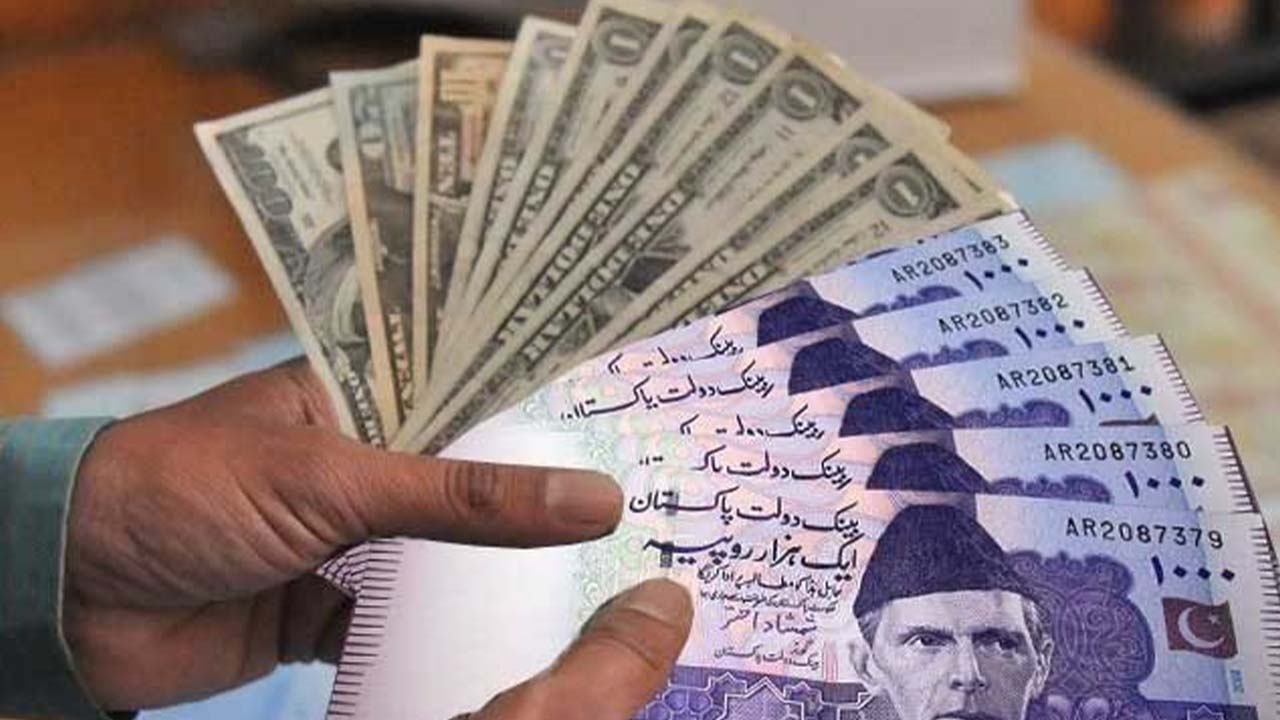
    The US Dollar fell by Rs1.43 shortly after the interbank market opened, and is now being traded at Rs183.25.

    Following days of depreciation, the Pakistani rupee (PKR) rebounded against the US dollar in the interbank market on April 11, signaling that the currency value is stabilizing.

    On Friday, the Pakistan Stock Exchange (PSX) index KSE-100 reversed course and experienced an uptrend, adding 657.75 points, or 1.50 per cent, to close at 44,444.58 points, up from 43,786.83 points the previous working day.

    The KSE-100 index began on Monday morning to strong investor optimism, following a historic weekend in which Imran Khan became the first prime minister in Pakistan’s history to be removed by a vote of no confidence, putting an end to the country’s ongoing political crisis.

    According to foreign currency dealers, the greenback is now selling at Rs183.20, after weakening Rs1.83 versus the PKR in early trade.

  • SBP determined to curb inflation, improve foreign exchange reserves

    SBP determined to curb inflation, improve foreign exchange reserves

    In a recent interview, the Governor of the State Bank of Pakistan (SBP), Dr. Reza Baqir expressed concern over the continuous deterioration in foreign exchange reserves but remained optimistic that a renewal of loans will be witnessed in the near future, which, coupled with SBP’s initiatives, will enhance market confidence.

    He claimed that the decline in reserves is “clearly alarming, but we are convinced that the central bank’s initiatives will prevent further deterioration”.

    According to data issued by the central bank on April 7, the reserves massively declined by $728 million to $11.32 billion as of April 1.

    The decline, according to SBP, is primarily attributable to debt repayment and government payments linked to the settling of an arbitration judgment.

    In addition to this, the currency even hit new lows in the week, forcing the SBP to intervene by boosting the policy rate, declaring a 100 per cent cash margin on 177 commodities with instant effect, and hiking the markup percentage by 2.5 per cent for borrowing under the Export Finance Scheme (EFS).

    In response to the Monetary Policy Committee’s (MPC) recent rate hike, Baqir stated that the move was made to tackle growing inflation and lessen external pressures. “The foreign exchange market has been under a lot of pressure for more than a month. A number of factors contributed to it: first, there was political uncertainty; second, our reserves were drained due to debt payments”.

    Consequently, the Pakistani rupee ended its devaluation run on April 8, and the KSE-100 Index witnessed positive sentiment, ending the day with an impressive gain of 658 points.

    The SBP Governor also discussed the skyrocketing petrol prices, which remain elevated because of the Russia-Ukraine conflict, adding more pressure on the local currency.

    The central bank made a determined decision after analyzing the statistics to lower inflation, improve foreign exchange reserves, and boost business confidence.

  • Surprisingly high profitability in corporate sector despite pandemic

    Surprisingly high profitability in corporate sector despite pandemic

    The results for corporate profitability are pleasantly surprising as the aggregate profitability shown by listed companies amounted to Rs 213.9 billion.

    The year-on-year growth rate for the recent quarter is 38 per cent. In sector-wise profitability: commercial banks have contributed to the highest sum of Rs48 billion earning in the quarter.

    The oil and gas exploration and production sector also yields the highest profits and contributed Rs41bn tax for the quarter.

    Furthermore, the sector that has reported surprising growth in profit is technology and communications. Put together the total earnings are Rs5.9bn, which is 27.6 times higher from Rs207m in the same quarter of 2019.

    Software companies like Avanceon Ltd, Systems Ltd, TRG Pakistan and Netsol Technologies saw their share prices grow during the year.

    TRG Pakistan shares were at Rs12.87 on March 25, 2020. It is now trading at Rs143, which is 11 times higher in one year. Netsol Technologies surged from Rs27.16 a share to Rs285, up ten times in one year.

    Analysts said that technology companies even in the United States (US) challenged the worst economic downturn and reported robust financial growth during the pandemic.

    Engineering sectors mainly comprising steel companies also outperformed most sectors with earnings of Rs5.1bn, recording a growth of 18.7 times from Rs257m a year ago.

    The Cement sector has benefitted from the government’s great incentives to the construction industry. They have reported 570 per cent growth, a total profit of Rs11.7bn which was Rs1.7bn in 2019.

    “The strong corporate profitability provides strong support to the market and should be a key driver for the KSE-100 index once political noise dies down,” said Raza Jafri, head of equities at Intermarket Securities.

    The food sector’s earnings were satisfactory but were dragged down by the poor profitability of FrieslandCampina Engro.

  • Stocks hold gains to cross 45,000 points threshold for first time since May 2018

    The Pakistan Stock Exchange (PSX) gained over 500 points on Wednesday to cross the 45,000-point threshold for the first time since May 2018.

    Global equity markets also showed a positive trend. Profit reported that the buying activity was observed across the board. According to the newspaper, “Exploration & production and oil & gas marketing sectors rebounded strongly, whereas cement and fertilizer sectors continued with previous day’s positive momentum.”

    “International crude oil prices jumped significantly on the conclusion of agreement among OPEC+ countries, which became the basis for an uptick in E&P stocks. Cement sector leaped on the expectation of an increase in cement price in the northern region, while banking sector contributed positively in anticipation of annual results.”

    Express Tribune reported that the trading volumes lifted to 664.5million shares due to strong investors’ interest. The market outlook also remained positive due to the government’s decision to settling circular debt with the independent power producers (IPPs), though partially.

    Moreover, the petroleum product sales that rose in double digits also helped the bullish trend. “Oil sales were up 16% to 1.59 million tons in December 2020 compared to 1.37 million tons in the same month of 2019,” the report said.

    It further stated that the State Bank of Pakistan’s report on the Pakistani economy also played a role in rallying the stock market. According to the central bank, the economic activity in the country has been largely restored to pre-coronavirus levels in the first quarter of the current financial year.