Tag: PTI

  • FIA Cybercrime Wing summons Sher Afzal Marwat over March 9 tweet

    FIA Cybercrime Wing summons Sher Afzal Marwat over March 9 tweet

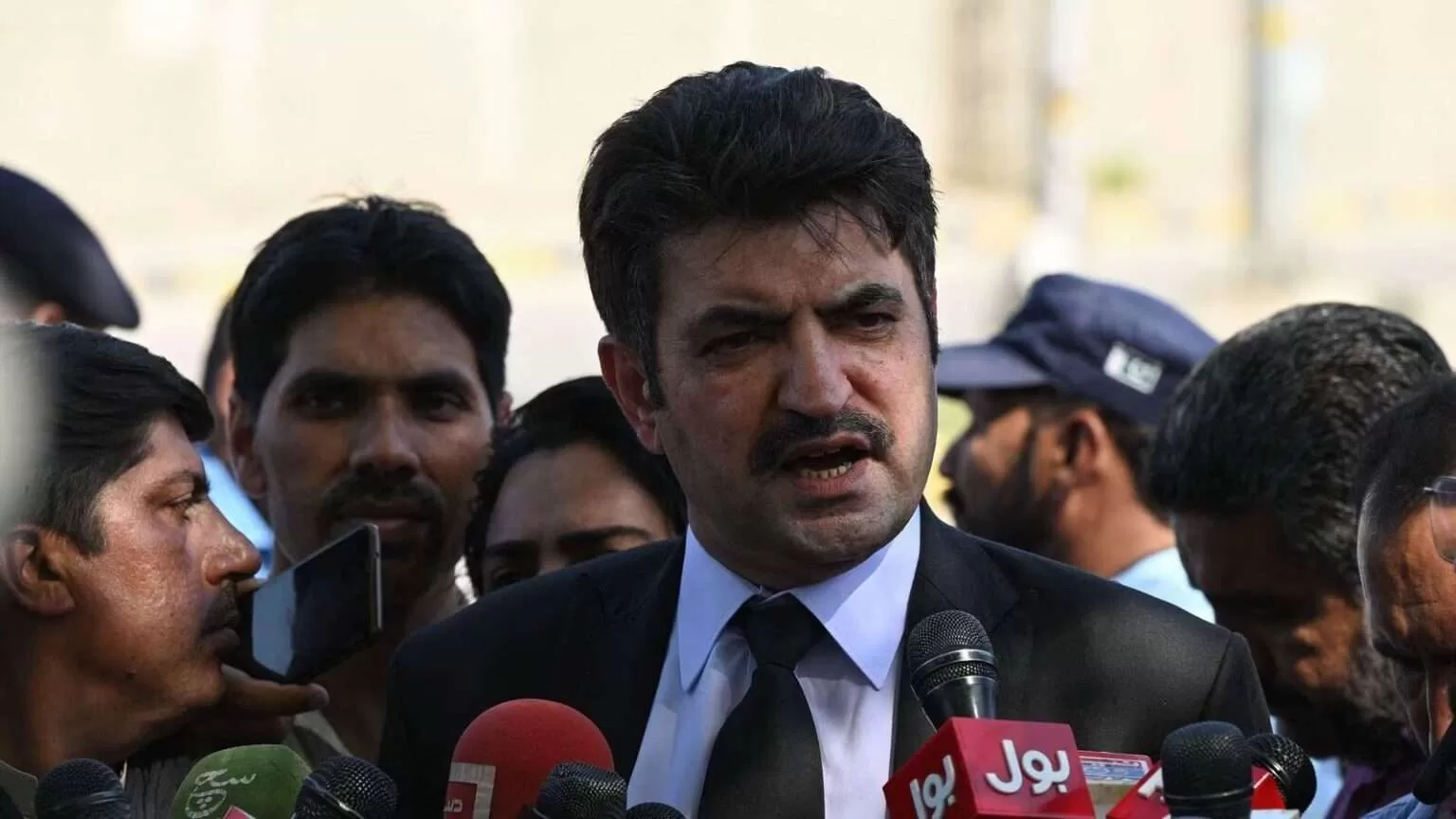
    Pakistan Tehreek-e-Insaf (PTI) leader and newly-elected MNA Sher Afzal Marwat has been summoned by the Federal Investigation Agency’s (FIA) Cybercrime Wing on Friday.

    The agency summoned the politician on March 18 for questioning on a tweet he posted on March 9. Pakistan Muslim League-Nawaz (PML-N) MNA Barrister Aqeel Malik filed a complaint against Marwat in FIA.

    The prominent lawyer has made several posts on X (previously Twitter), but it’s not clear on which specific tweet he has been summoned.

    One of his tweets was about claims of being assassinated by paid assassins at Punjab Chief Minister Maryam Nawaz’s behest.

    “It is imperative to publicly acknowledge that ‘Maryam Nawaz Sharif’ poses a threat to my life, as she has orchestrated an ‘assassination attempt against me,’ which can take place at any time,” Marwat wrote in his post on the aforementioned date.

    He added: “An amount of $100,000 has been allocated by Maryam Nawaz Sharif to these assassins for the “execution of my murder.”

  • PTI instructs leaders to boycott five political talk shows

    PTI instructs leaders to boycott five political talk shows

    PTI’s core committee has barred party leaders from taking part in political talk shows hosted by five news anchors belonging to four different media channels in the country.

    According to a circular issued by PTI’s central media department, party leaders have been instructed to boycott the following anchors and shows:

    Kamran Shahid, Dunya News (Off The Front)

    Adil Shahzeb, Dawn News (Live with Adil Shahzeb)

    Muneeb Farooq, Samaa TV (Mera Sawaal with Muneeb Farooq)

    Shahzab Khanzada, Geo News (Aaj Shahzeb Khanzada Kay Saath)

    Saleem Safi, Geo News (Jirga)

  • PTI paying cost of two wrong decisions: Sher Afzal Marwat

    PTI paying cost of two wrong decisions: Sher Afzal Marwat

    PTI leader Sher Afzal Marwat has said the party is paying the cost of two wrong decisions.

    Speaking on Geo News show Aaj Shahzeb Khanzada Kay Sath, he said the first major mistake was committed when party founder Imran Khan gave instructions for a political alliance with the Jamiat Ulema-i-Islam Sherani.

    He said the second major mistake was the announcement of the inclusion into the Majlis Wahdat-i-Muslimeen, adding that some people gave a sectarian colour to the issue and gave threatening messages to the PTI leadership.

    Later, Marwat said, the PTI suddenly decided to join the Sunni Ittehad Council.

    “These are two wrong decisions and their culprits should be determined because we lost more than 80 seats due to them.”

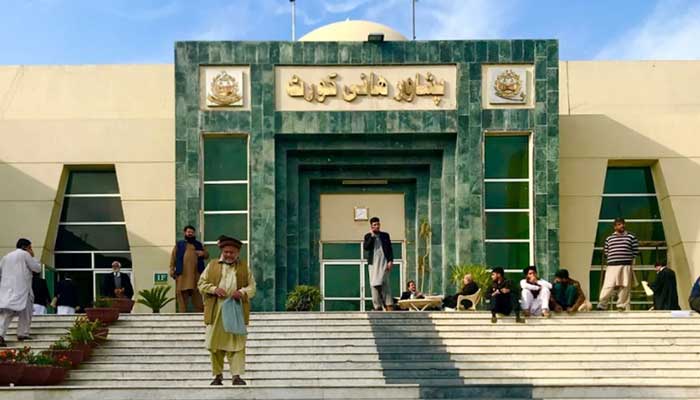
  • Peshawar High Court rejects SIC’s plea regarding reserved seats

    Peshawar High Court rejects SIC’s plea regarding reserved seats

    The Peshawar High Court (PHC) has rejected a petition of Pakistan Tehreek-e-Insaf (PTI)-backed Sunni Ittehad Council (SIC) against the Election Commission of Pakistan’s (ECP) verdict on reserved seats.

    “Petitions are unanimously rejected,” the court maintained.

    Earlier today, PHC chief justice Mohammad Ibrahim Khan resumed the hearing and five members of the bench, including Justice Ijaz Anwar, Justice Ishtiaq Ibrahim, Justice Shakeel Ahmad, and Justice Arshad Ali, heard the petition.

    SIC’s lawyer, Barrister Ali Zafar, argued during the hearing that it’s not mentioned in the constitution that a party should submit any list to the ECP for reserved seats.

    “It is not written anywhere that you cannot resubmit the list or when it has to be submitted,” the barrister argued, adding that there is no restriction on providing a second list and that the ECP could have issued a second schedule, as it did for the general elections.

    “As per the law, those who participate in elections will get seats,” Justice Anwar remarked.

    The court then questioned Barrister Zafar if it wasn’t clearly stated anywhere that the second schedule cannot be issued.

    “The law does not prevent the Election Commission from issuing another schedule,” the lawyer responded.

    Justice Arshad remarked that Section 104 explains the mechanism for reserved seats as it states that when a list is submitted then another list can be given.

    “Section 104 says that if a political party participates in an election, it will give a list,” the lawyer argued.

    He earlier argued that whoever wins the number of seats, they get reserved seats in the same proportion. 

    “Their seats cannot be increased.”

    “If these seats are not given, the parliament will not be complete,” remarked the chief justice, responding to which the lawyer requested the court to interpret the Constitution in a way that there remains no gap in its interpretation.

    Barrister Ali Zafar also told the court that the ECP has authority to maintain justice, adding that there should be transparency in the election for reserved seats.

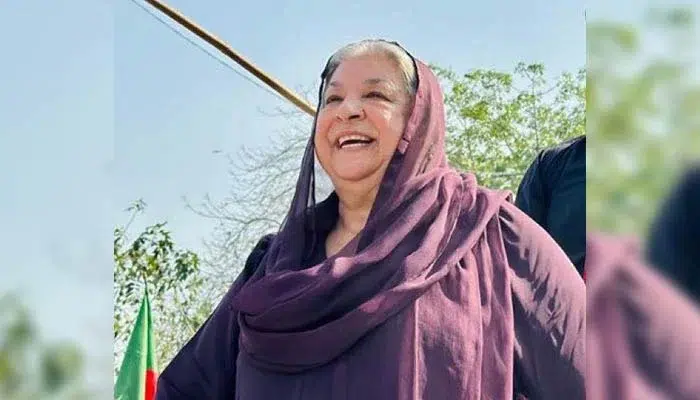
  • Dr Yasmin Rashid will be PTI’s senate candidate from Punjab

    Dr Yasmin Rashid will be PTI’s senate candidate from Punjab

    Pakistan Tehreek-e-Insaf (PTI) has decided to field senior leader Dr Yasmin Rashid for Senate seat in Punjab for the upcoming polls set to take place on April 2, The News reported on Thursday.

    PTI’s senior leader Mian Aslam Iqbal disclosed on his X (previously Twitter) account that Yasmin Rashid will be the party’s candidate for the senate seat in Punjab.

    Mian Aslam Iqbal also said that Zulfi Bukhari and Hamid Khan are the party’s candidates for general seats. However, Brigadier (retd) Musadiq will be the PTI’s candidate for the technocrat seat.

    The development comes as the senior politician’s earlier bid to secure a place in the National Assembly failed after she lost to Pakistan Muslim League-Nawaz (PML-N) supremo Nawaz Sharif on Lahore’s NA-130 seat in the February 8 polls.

    Dr Yasmin Rashid is currently in Adiala jail in cases pertaining to the violent incidents of the May 9 riots last year. 

    52 seats are vacant in the Senate after the expiration of the six-year term of senators. However, senate election will be held on 48 seats, as the four reserved seats for Federally Administered Tribal Areas (Fata) had been abolished after the 25th Constitutional Amendment.

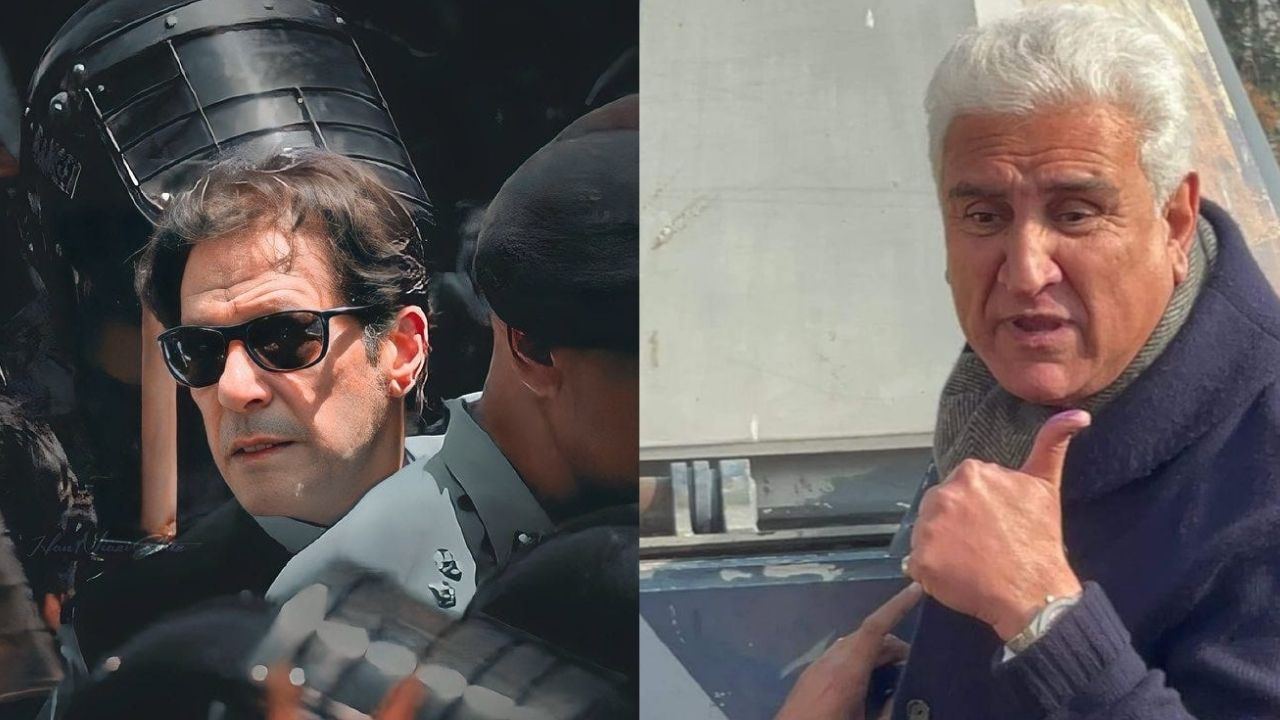
  • ‘Imran Khan and Shah Mahmood have right to appeal in cipher case,’ says Islamabad High Court

    ‘Imran Khan and Shah Mahmood have right to appeal in cipher case,’ says Islamabad High Court

    Islamabad High Court (IHC) has ruled that the appeals of former Prime Minister Imran Khan and former Foreign Minister Shah Mahmood Qureshi against their convictions in the cipher case are maintainable.

    The court invited both the prosecution and defense counsel to present their arguments starting Monday.

    Chief Justice Aamer Farooq and Justice Miangul Hassan Aurangzeb, comprising the IHC division bench, resumed the hearing on the appeals concerning Mr. Khan and Mr. Qureshi’s convictions and 10-year sentences each in the cipher case.

    During the previous hearing, special prosecutor Hamid Ali Shah raised objections regarding the maintainability of the appeals filed by Mr. Khan and Mr. Qureshi. Mr. Shah highlighted that the Official Secrets Act, enacted in 1923, did not provide the right of appeal except during the trial proceeding. He contended that since the trial court had already convicted the two leaders, the conviction should be considered final, as there was no provision for the right of appeal.

    However, Barrister Salman Safdar, representing Imram Khan, argued that if the law did not grant the right of appeal against conviction, the court should consider this as a case of first impression.

    He emphasized that the former prime minister and former foreign minister were convicted under the law used to prosecute espionage suspects. Mr. Safdar pointed out that superior courts had ruled in numerous cases that convicts could not be left without a remedy.

    He added that while the high treason case did not provide the right of appeal, the Criminal Law (Amendment) Act, 1976, designated the Supreme Court as the forum for appeal.

    The bench ultimately concluded that the appeals were maintainable and decided to proceed with hearing the case on its merits.

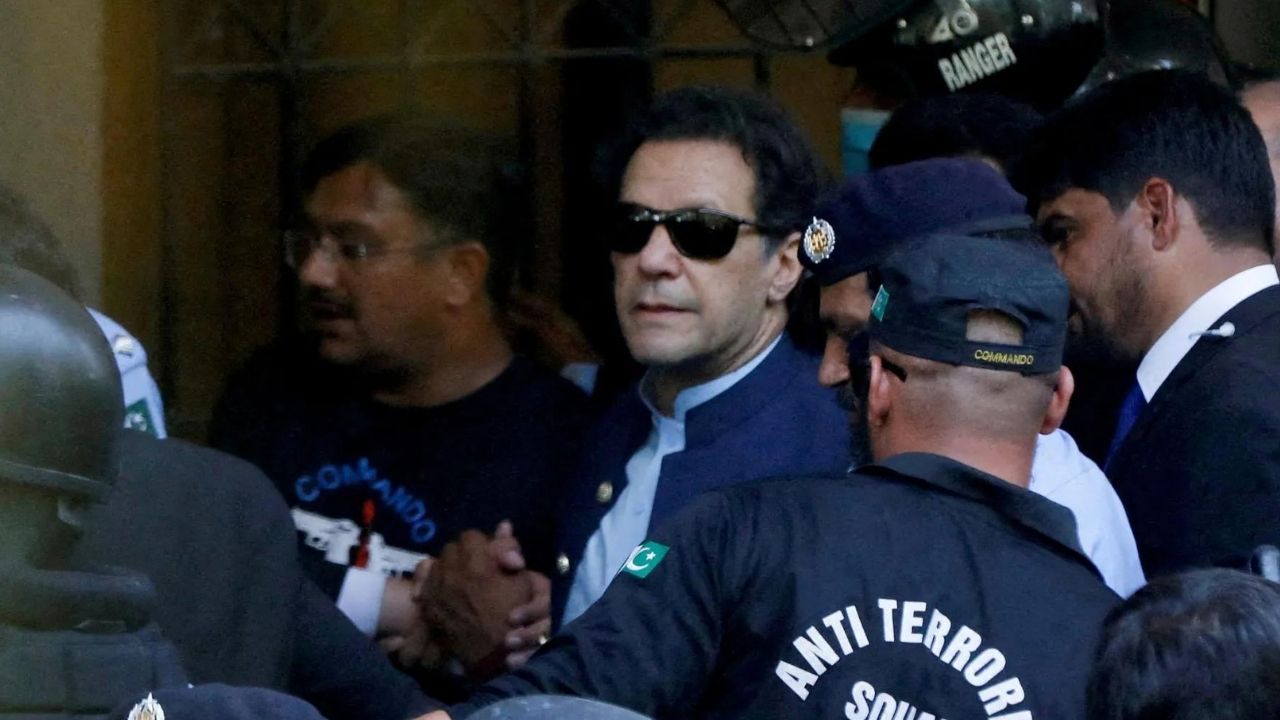
    Imran Khan and Shah Mahmood have been jailed for 10 years in a case where they were charged with leaking state secrets.

    What is Cipher case

    Cipher is a classified cable, which in this case, was sent to Islamabad by Pakistan’s ambassador in Washington in 2022.

    Immediately after his removal as prime minister in April 2022, Khan said that the United States had a hand in his removal. He also raised a paper during a jalsa and claimed it to be Cipher. Washington and the Pakistani military have denied his accusations. Khan later toned down his rhetoric against the US.

    But a US-based news outlet, The Intercept, in August 2023 published what it claimed to be a “cipher” that hinted the US administration wanted to remove Khan from power. Khan maintains his ouster in April 2022 was orchestrated by the country’s powerful military and his political opponents.

    The Intercept published purported details of a conversation between Pakistan’s former ambassador to the US, Asad Majeed Khan, and Donald Lu, the assistant secretary of state for the US Bureau of South and Central Asian Affairs, on March 7, 2022.

    The conversation took place under two weeks after Khan visited Moscow, on the day Russia invaded Ukraine. In the exchange, Lu raised concerns about Khan’s visit to Russia and Pakistan’s neutral stance on the Ukraine war.

    “I think if a no-confidence vote against the prime minister succeeds, all will be forgiven in Washington,” Lu allegedly told Asad Majeed Khan, who sent the details of the conversation to Islamabad through a secret diplomatic cable.
  • EU denies receiving any communication from PTI regarding GSP+

    EU denies receiving any communication from PTI regarding GSP+

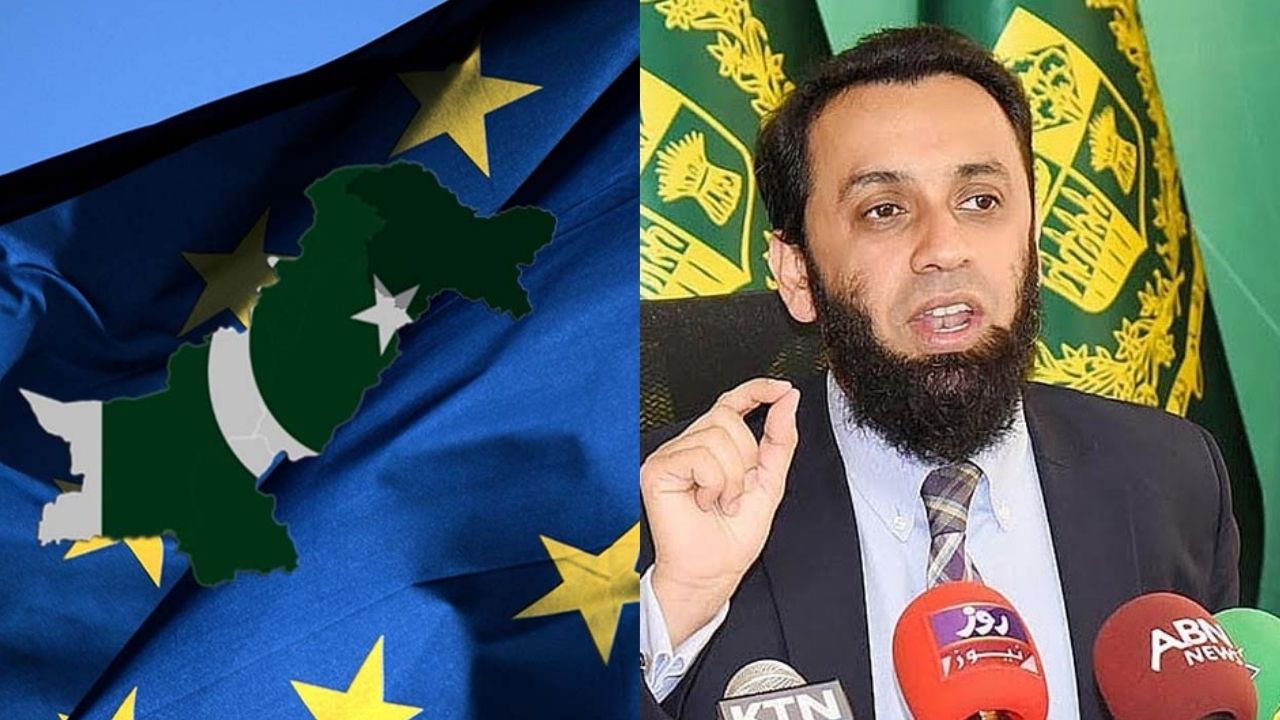
    European Union’s delegation has expressed that they have not yet received any official communication from the Pakistan Tehreek-e-Insaf (PTI) about the Generalized Scheme of Preferences Plus (GSP+) trade status currently held by Pakistan.

    Samar Saeed Akhtar, the Press Officer for the EU Delegation, clarified the EU’s stance to Dawn, stating, “We have not received any official communication from PTI regarding GSP+.”

    In a press conference held on Wednesday, Information Minister Attaullah Tarar alleged that PTI spokespersons, purportedly receiving directives from incarcerated party members, are orchestrating a scheme to undermine Pakistan’s GSP+ status. He claimed that PTI’s criticism of the government’s treatment of its founder, Imran Khan, in prison serves as a pretext for their efforts to jeopardize the country’s trade privileges.

    Furthermore, Tarar accused PTI of engaging in a conspiracy to destabilize Pakistan’s economy, citing PTI’s alleged correspondence with the International Monetary Fund (IMF) as evidence. He emphasized the incumbent government’s commitment to economic recovery and lambasted PTI for purportedly prioritizing political gain over national interests.

    In response to Tarar’s claims, a PTI spokesperson categorically denied any intention of petitioning the EU to revoke Pakistan’s GSP+ status, dismissing the allegations as baseless and accusing Tarar of disseminating falsehoods. The spokesperson highlighted PTI’s dedication to national prosperity and defended Imran Khan’s role in facilitating the IMF program, attributing delays to the incompetence of previous administrations.

    Pakistan has been benefiting from the GSP+ program since 2014. This initiative, devised by the EU, aims to incentivize developing countries to uphold human rights principles, labor rights, environmental conservation, and good governance through trade incentives, including reduced tariffs for exports to the EU market. However, this preferential status is contingent upon the country demonstrating significant progress in implementing 27 international conventions covering various rights and governance issues.

    The EU meticulously monitors compliance with these conventions, relying on reports from the UN and other international bodies, and conducts regular assessments through on-ground missions. These evaluations are then reflected in reports to the European Parliament and the Council of the EU, with biennial reviews conducted in 2016, 2018, 2020, and 2022. The latest review highlighted ongoing concerns regarding enforced disappearances and declining media freedom.

    In October, the European Parliament extended Pakistan’s GSP+ status until 2027, allowing duty-free exports on 66 percent of product tariff lines to the European market.

    However, the EU retains the authority to withdraw the GSP+ status if a beneficiary country fails to meet the program’s stringent criteria. This withdrawal process typically involves a period of dialogue aimed at rectification but may result in the suspension of benefits if issues are not adequately addressed, as evidenced by the case of Sri Lanka in 2010 over human rights concerns.

    The European Parliament, in April 2021, adopted a resolution urging a review of Pakistan’s GSP+ status due to an “alarming” increase in blasphemy allegations and mounting attacks on journalists and civil society.

    Read more: Understanding GSP+ status: What it means for Pakistan’s trade relations

  • Voting in progress on six senate seats

    Voting in progress on six senate seats

    Polling for six vacant senate seats from Sindh, Balochistan, and Islamabad is underway on Thursday, scheduled to continue till 4:00 pm.

    Lawmakers can’t hold dual membership, so these six seats became vacant under Article 223 of the Constitution.

    Sub-section 4 of article states: “Subject to clause (2), if a member of either House or of a Provincial Assembly becomes a candidate for a second seat, which, in accordance with clause (1), he may not hold concurrently with his first seat, then his first seat shall become vacant as soon as he is elected to the second seat.”

    However, in Sindh, two major opposition parties, including the Muttahid Qaumi Movement-Pakistan (MQM-P) and Jamat-e-Islami (JI), have boycotted senate elections in Sindh, Geo has confirmed.

    Polling to fill two general seats in the upper house in Sindh is underway, where Pakistan Peoples Party’s (PPP) Jam Saifullah Khan Dharejo and Muhammad Aslam Abro are contesting against Nazeerullah and Shazia Sohail of the Sunni Ittehad Council (SIC).

    Meanwhile, a total of seven candidates have been in the running for three general seats of the Senate from Balochistan on which the by-polls are underway.

    These candidates are Syed Mahmood Shah (Independent), Abdul Shakoor Khan (Independent), Abdul Qudoos (PPP), Kauda Babar (Balochistan Awami Party), Muhammad Mobeen Khilji (Balochistan Awami Party), Mir Hair Bayar Khan Domki (Independent) and Mir Dostain Khan Domki (PML-N).

    On the other hand, the National Assembly (NA) will elect only one senator, and former Prime Minister Yousaf Raza Gillani is a joint candidate of the ruling coalition of six parties on the seat, with SIC’s Ilyas Mehrban contesting against him.

  • Understanding GSP+ status: What it means for Pakistan’s trade relations

    Understanding GSP+ status: What it means for Pakistan’s trade relations

    The Pakistan Tehreek-e-Insaf (PTI) has vehemently dismissed accusations levelled by Federal Information Minister Attaullah Tarar, labelling them as unfounded and baseless.

    In a statement issued today, the PTI refuted claims made by Tarar, asserting that they are nothing but a concoction of falsehoods and rhetoric aimed at maligning the party’s reputation.

    Earlier, Tarar had accused the PTI of plotting to undermine Pakistan’s Generalised Scheme of Preferences Plus (GSP+) status.

    He alleged that the party’s spokespersons were actively engaged in activities detrimental to the country’s interests under the directives issued from confinement.

    Understanding GSP+ and its significance for Pakistan’s economy

    The GSP+ status, a cornerstone of Pakistan’s trade relations with the European Union (EU), holds significant importance for the nation’s economy.

    Under this scheme, selected developing countries, including Pakistan, receive extensive trade concessions aimed at fostering sustainable development and good governance practices.

    The European Union’s GSP+ Scheme is founded on the effective implementation of 27 United Nations conventions covering various aspects such as human rights, labour rights, climate change, narcotics control, and corruption.

    Once granted GSP+ status, beneficiary countries are subject to rigorous monitoring to ensure compliance with the stipulated conventions and reporting requirements.

    The dialogue on GSP+ compliance involves various stakeholders, including international monitoring bodies, civil society, trade unions, and businesses.

    Regular monitoring visits are conducted by the EU to assess the progress of beneficiary countries in addressing the outlined issues.

    The significance of GSP+ for Pakistan’s economy cannot be overstated, particularly for its textile industry and workforce.

    Over the past decade, Pakistan has witnessed a notable increase in exports to the EU, accompanied by a surge in EU imports, owing to the preferential treatment offered under the GSP+ scheme.

  • Is Imran Khan living a ‘luxurious’ life in jail? Atta Tarar explains

    Is Imran Khan living a ‘luxurious’ life in jail? Atta Tarar explains

    In a press conference held on Wednesday, Information Minister Attaullah Tarar asserted that incarcerated founder of Pakistan Tehreek-e-Insaf (PTI) Imran Khan is living a luxurious life in jail.

    The former Prime Minister has three rooms, a kitchen, and access to exercise equipment, among other amenities desired by the detained leader, Tarrar elaborated.

    The minister said that PTI has been actively seeking the revocation of the country’s Generalized System of Preferences (GSP) Plus status from the European Union (EU). The GSP+ status, initiated in 2014 and recently extended until 2027, grants Pakistan favorable trade terms, including duty-free or minimal-duty exports to the European market, to foster good governance and sustainable development.

    Minister Tarar alleged that PTI spokespersons, purportedly receiving directives from incarcerated party members, are orchestrating a scheme to undermine Pakistan’s GSP+ status. He claimed that PTI’s criticism of the government’s treatment of its founder, Imran Khan, in prison serves as a pretext for their efforts to jeopardize the country’s trade privileges.

    Furthermore, Tarar accused PTI of engaging in a conspiracy to destabilize Pakistan’s economy, citing PTI’s alleged correspondence with the International Monetary Fund (IMF) as evidence. He emphasized the incumbent government’s commitment to economic recovery and lambasted PTI for purportedly prioritizing political gain over national interests.

    In response to Tarar’s claims, a PTI spokesperson categorically denied any intention of petitioning the EU to revoke Pakistan’s GSP+ status, dismissing the allegations as baseless and accusing Tarar of disseminating falsehoods. The spokesperson highlighted PTI’s dedication to national prosperity and defended Imran Khan’s role in facilitating the IMF program, attributing delays to the incompetence of previous administrations.

    The exchange underscores escalating tensions between the ruling government and the opposition party, with both sides trading accusations amid mounting economic challenges. As Pakistan navigates through critical issues, including inflation and unemployment, political discord continues to cast a shadow over efforts to steer the nation towards stability and growth.

    When asked about the ban on X (former Twitter) in Pakistan, the information minister claimed that there is no ban on the platform and people are using it.

    We counter-checked his claim and X is still not accessible in Pakistan without a virtual private network (VPN).