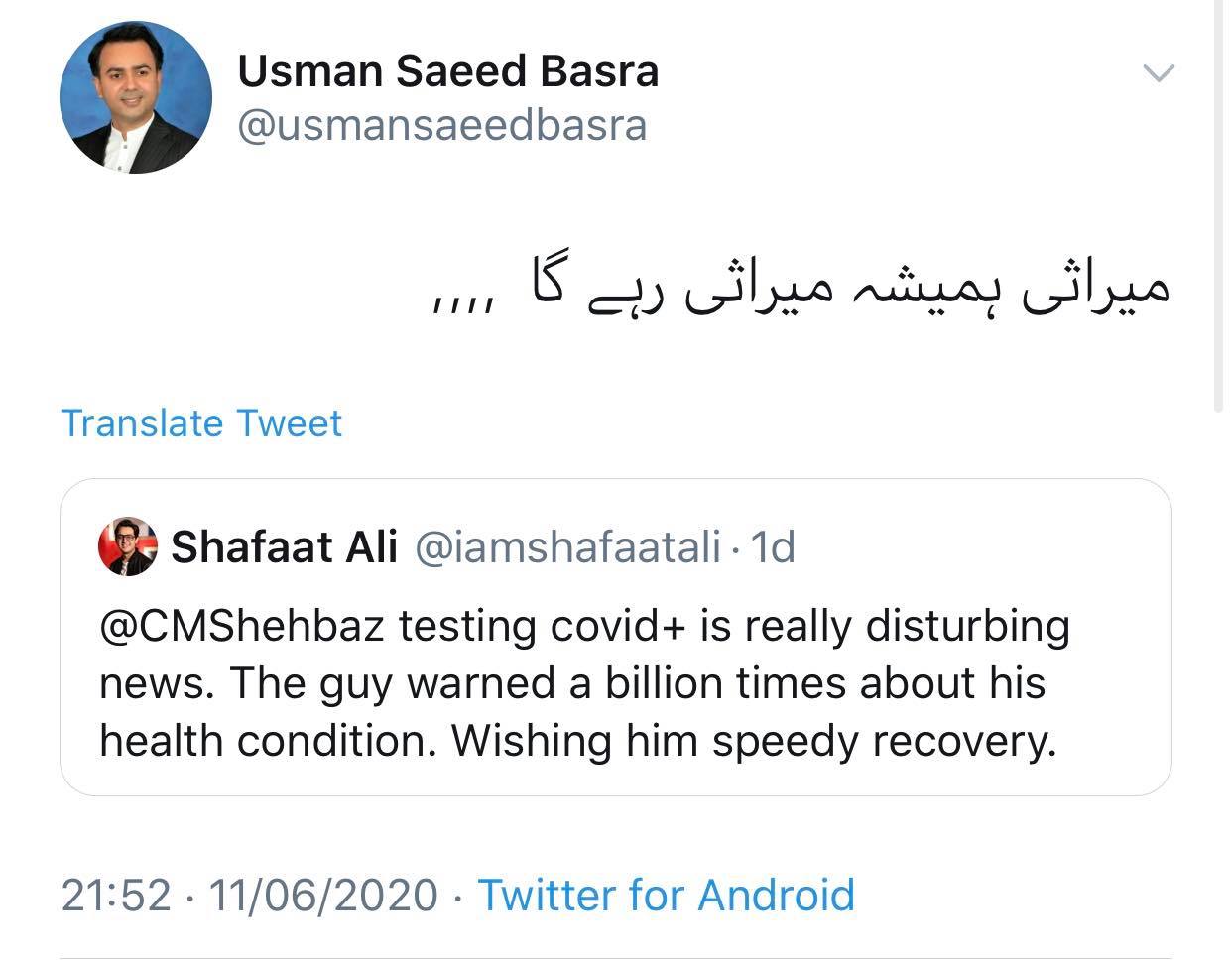
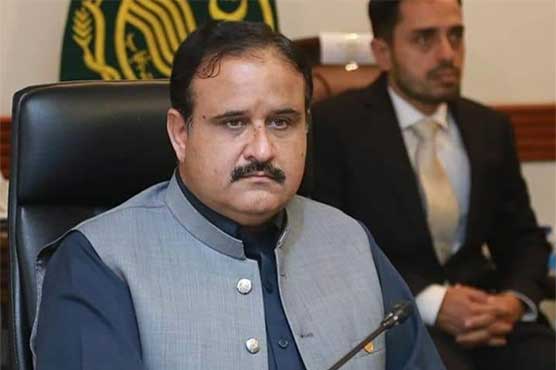
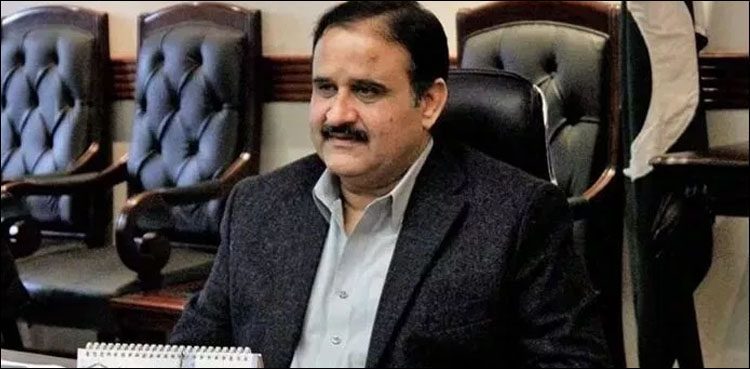
A member of the Punjab government Usman Saeed Basra called Shafaat Ali a marasi (a derogatory term used to refer to artists) after the comedian prayed for PML-N President Mian Shehbaz Sharif’s – who recentlytested positive for COVID-19 – good health. Basra’s Twitter bio says he is a spokesperson of the Punjab govt and Secretary Information PTI Punjab.
Basra’s derogatory remarks irked Vasay Chaudhry, Omair Rana and Ali Zafar, who slammed him for it and urged Chief Minister Punjab Usman Buzdar to look into the matter.
Aur agar TARJUMAN app kay jaisa tu LANAT aisi tarjumani pay 🙂@iamshafaatali
@UsmanAKBuzdar SB. If such people are the spokesperson for your Govt then shouldnt the ministery of culture be renamed as ministry of Marasees with the appointed minister being the HEAD MARAASI ? …Shame on this Gentleman. https://t.co/hKqXnF4nq8
Vasay added that it is not just about one person but is about the entire entertainment fraternity.
Not at all Arshad sb and right now its NOT abt 1 person.Its abt a Derogatory remark towards my whole fraternity,legends that are no more,my seniors,my collegues,students studying media in Colleges..Basically everyone. And that too from a Govt spokesperson,not just any Random guy.
I once corrected a lawyer/politician who came from a family of that vocation that my father is a businessman, making him the meerasi not me. For Meerasi means one who inherits something, esp line of work. I see your Mens Rea @usmansaeedbasra Pls explain your Intent or apologise. https://t.co/kBBNWzLXfA
@iamshafaatali its sad that people of such creepy mindset still exist in our country and running the state affairs … @ImranKhanPTI its high time you must filter the burden like @usmansaeedbasra and show him where he belongs before pointing others @falamb3@AliZafarsays
Before any debate starts here, let me point out that the word “Meerasi” means someone who has inherited something including an Art form in “Meeras” (Inheritence). Though this term is often used to contascend someone due to ignorance, for a public office holder to use it like this
Fellow journalists and anchors also stood up for Ali.
.@usmansaeedbasra we will not take it from you. @iamshafaatali is a fellow colleague and comedy/acting is a respectable profession. Your comment is showing disgrace for the entire artist community. What if this community refuses to vote PTI next time ? pic.twitter.com/nzkqBYql7h
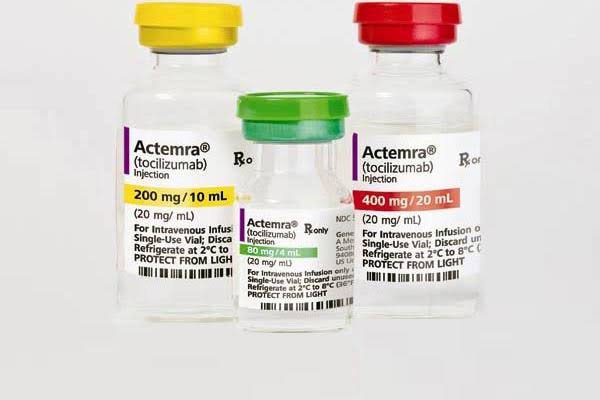
The provincial authorities in Punjab have imposed a complete ban on the sale of Actemra injection in the open market as they mull treating critical COVID-19 patients with it.
The Corona Experts Advisory Group has issued standard operating procedures (SOPs) with regard to the use of the Actemra injection.
According to the SOPs, Actemra injection will be used on trial basis at some hospitals, initially for 500 critically ill patients admitted in ICUs.
The experts advisory group will approve the hospitals that will treat patients with Actemra injection. The group will witness the trial of the injection in government hospitals.
The Punjab Healthcare Commission will monitor the use of the injection at private hospitals and a committee of the hospital will approve the use of Actemra injection.
A private company will issue this injection after approval of a specific profarma, sources said. The needy patients will be issued this injection 24 hours. The hospital and the company will keep the record of the use of injection.
The data of recoveries and deaths after use of Actemra injection will also be compiled, sources said.
The Punjab Healthcare Commission will be competent authority to audit the company and the hospital over usage of the injection. And this record will be submitted to the experts advisory group.
The Punjab government has recently approved the use of Actemra, a life-saving drug, for treating critically ill Covid-19 patients in the wake of a sudden rise in the death rate reported by state-run hospitals across the province.
The 400mg injectable drug — an interleukin-6 inhibitor which goes by the generic name of tocilizumab — will be prescribed to patients who develop lung complications and an abnormal level of IL-6 in the blood. The IL-6 is an endogenous chemical which causes inflammation.
Actemra injections had reportedly given encouraging results in highly critical coronavirus patients.
An additional burden has been placed on hospitals due to the sharp increase in confirmed COVID-19 cases across the country, including Punjab where the number of coronavirus cases is way past 38,000 and is likely to cross the 40,000 mark by tomorrow (Tuesday).
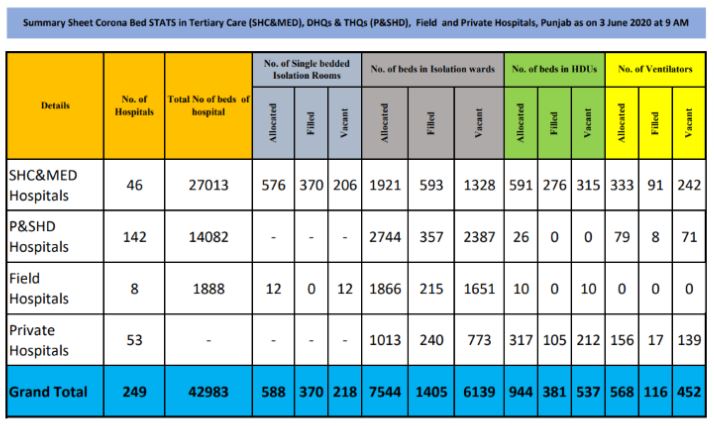
But while Punjab Health Minister Dr Yasmin Rashid says the “situation is still not alarming” and Special Assistant to the Prime Minister (SAPM) on Health Dr Zafar Mirza says authorities have “ample resources to deal with coronavirus patients so far”, here’s what the situation in the country’s most populous province looks like:
No. of Hospitals
No. of Beds
No. of HDUs (High Dependency Units)
No. of Ventilators
249
9644
944
568
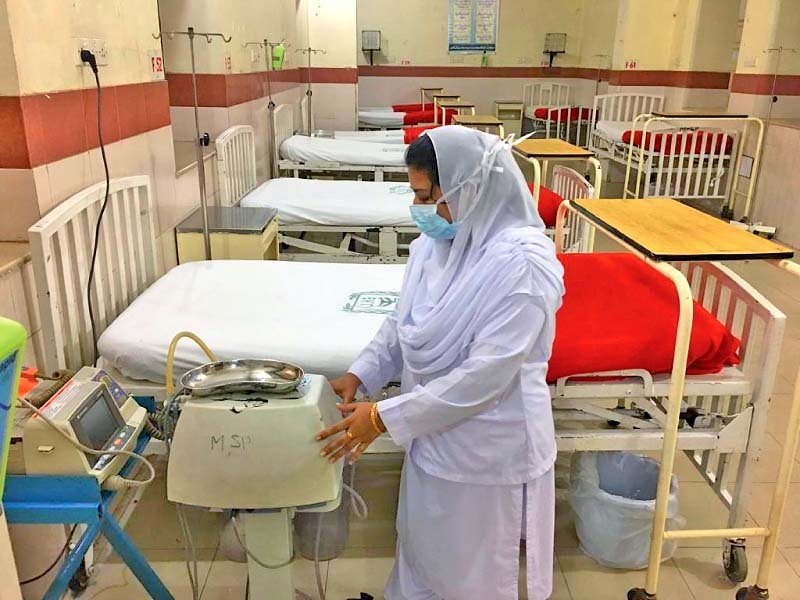
The Punjab government has allocated 249 hospitals for COVID-19 patients with 9,644 beds, of which 53 hospitals (21.2%) are private. According to data provided to The Current by Punjab Health Department, 7,346 beds are vacant so far across the province as most people are choosing to quarantine themselves at home amid reports of the dreadful conditions at government facilities.
While the availability of beds is not yet an issue, other necessities do not seem up to the mark.
As per estimated stats, almost 2,272 (7.3%) patients in the province are admitted to different hospitals. Of the total 2,272, at least 497 (21.8%) patients are in Intensive Care Units (ICUs) or HDUs, which means they are in a critical condition.
Almost 1,500 beds were allocated by the government for ICUs and HDUs, of which 473 (30%) are at private hospitals, or so the authorities claim.
When contacted by The Current, Lahore’s Shalamar Hospital, which according to official claims is supposed to be treating at least five coronavirus patients, refused to share any details pertaining to treatment or costs, saying no infected persons were being treated by the hospital. The response received from Sargodha’s Central Hospital was not that different either, even though the government claims to have mandated it to treat at least three patients.
By the time this report was filed, 21% of patients admitted to hospitals were reported to be critically ill. If a mere 5% of patients visiting hospitals need HDUs or ventilators, within the next two weeks, the healthcare system of the country’s most populous province could collapse, suggests the current number of life-saving facilities available in Punjab.
Following an ease in lockdown, cases of coronavirus have reached an all-time high in Pakistan. Despite the government urging the public to follow the standard operating procedures (SOPs), which include wearing a mask and glove, the public continues to ignore their appeals.
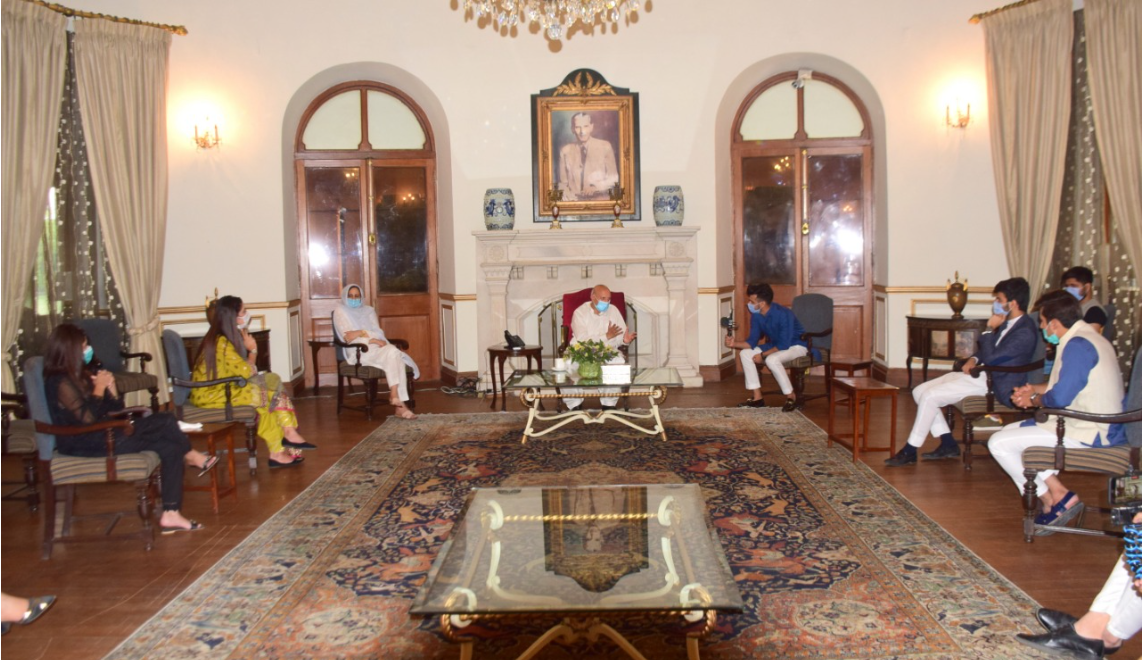
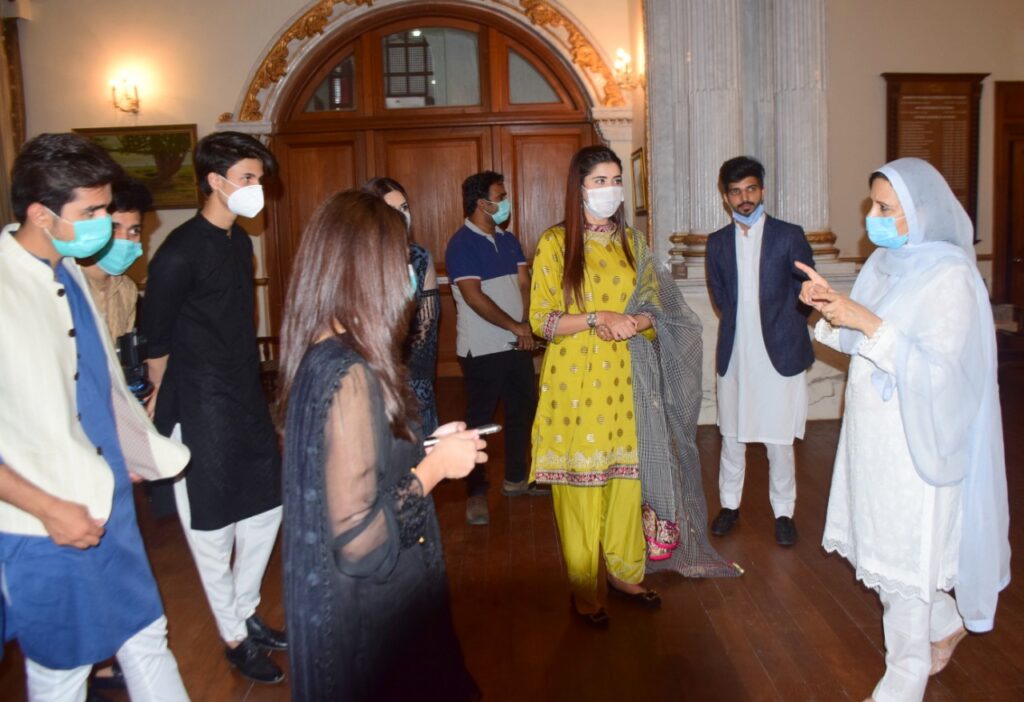
In order to educate and create awareness among the masses, the Government of Punjab has decided to engage Tiktokers. In this regard, Governor Punjab Chaudhry Muhammad Sarwar and his wife held a meeting with top Pakistani TikTok stars and discussed how they can help create awareness about the virus. Those invited to the meeting included Kanwal Aftab, Zulqurnain Sikandar, Sehar Hayat, Warda Javaid, Daniya Sohail and Haider Ali.
Focal Person on Digital Media to CM Punjab, Mashwani Azhar said that Tiktok is just like any other social media platform with approximately 800 million users.
When the news of the meeting broke on social media, it had the internet divided. While some people heavily criticised the decision, others thought it was a good idea given the reach of the social media platform.
Governer of Punjab met tiktok stars. You know what? 👎👎👎👎👎
Also Munnu Bhai, Ashfaq Ahmed, Bano Qudsia, Intizar Hussain, Mushtaq Ahmed Yusufi, Colonel Mohd Khan, Mujtaba Hussain, Patras Bukhari, Shafiq ur Rehman, Shaukat Thanvi, Shan ul Haq Haqqee among others. Those were the Golden days of Pakistani literature. Sigh!
In fact this is the FIRST amazing step taken by Punjab govt regarding Corona communication and I think it deserves appreciation from everyone across the board 👏👏👏
— Disgruntled Cyber Warrior (@lilmisskhawaja) June 4, 2020
What exactly is wrong in this? TikTokers have their viewership. If they can help spread the message among those who follow them, how exactly is it a bad thing?
If brands can hire influencers for marketing, why can't they be put to public service?
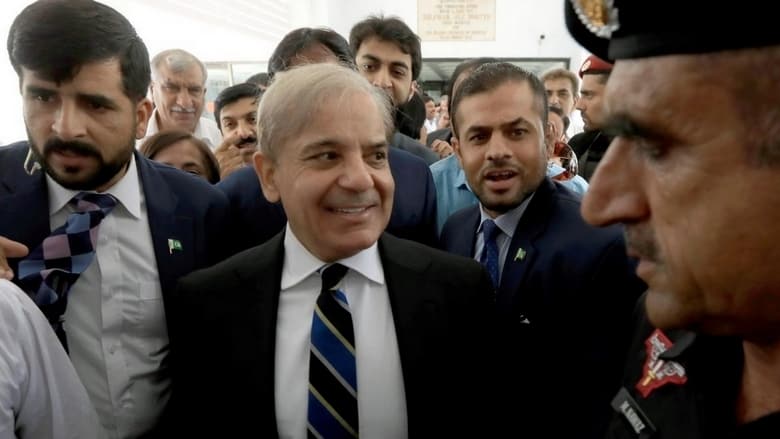
A team of the National Accountability Bureau (NAB) accompanied by police on Tuesday reached the residence of Pakistan Muslim League-Nawaz (PML-N) President Shehbaz Sharif to once again arrest him, this time in the assets beyond means case.
Videos available with The Current showed a contingent of police’s anti-rioting force also reaching the PML-N chief’s Model Town residence in Lahore to make the arrest that comes after Shehbaz, being a cancer survivor, once again avoided appearing before the anti-graft watchdog amid the coronavirus outbreak.
The teams, however, had to return empty-handed as the leader of opposition in the National Assembly (NA), who has also sought pre-arrest bail in the case, was not at home.
The teams were headed to the Sharif family’s Jati Umra residence near Raiwind by the filing of this report.
PRE-ARREST BAIL AND THE CASE:
Earlier in the day, Shehbaz filed a bail plea in the Lahore High Court (LHC) to avoid arrest in the assets beyond means and money laundering cases against him, which is to be taken up by the court tomorrow (Wednesday).
NAB had summoned the PML-N president to record his statement in both cases today (June 2) as the bureau needs Shehbaz’s statement to bring the cases to their logical conclusion.
It had also provided the ex-Punjab chief minister (CM) with a detailed questionnaire as per its standard operating procedure (SoPs), which the PML-N says was submitted by the younger Sharif’s lawyers.
However, Shehbaz on Monday filed a petition in the LHC requesting the court to grant him bail before arrest in both the cases “in the interest of justice”. He requested that he might also be admitted to ad-interim pre-arrest bail till the decision of the petition.
The petitions said the power to arrest was permissive and not obligatory and the arrest was not desirable even in most heinous offences so long as the accused cooperated and kept joining the investigation.
According to The Express Tribune, The PML-N president contended that on October 31, 2017, a complaint was made to various authorities including NAB chairman against management of the public limited companies in Punjab. The complaint claimed that the companies were incorporated and operated in violation of the Constitution and law.
On November 15, 2017, NAB director general (DG) ordered an inquiry into the complaint “in a slipshod and mechanical manner, without application of judicious mind”.
On January 10, 2018, the director general passed an order under section 18(C) of NAO 1999 for an inquiry into against management/officers/officials of Punjab Land Development Company (PLDC), management /owners of M/s Lahore CASA Developers (JV) and officers/officials of the Lahore Development Authority (LDA) in Lahore’s Ashiana housing scheme.
Shehbaz said the above-said order was passed on the basis of an anonymous complaint and neither the complaint nor the order for inquiry mentioned the name of the petitioner or his office “yet under its cover”, NAB officials embarked upon “a fishing and sniffing expedition” against him.
On October 5, 2018, when Shehbaz appeared before a NAB team in response to call up notice in the matter of Saaf Paani Company but he was arrested in Ashiana case.
During his 64 physical remand, the PML-N chief was also arrested in Ramzan Sugar Mills/Construction of Sullage Carrier case. He was still in NAB’s custody when NAB authorized yet another inquiry against the petitioner and others in assets beyond means case.
Later, the petitioner was granted bail after arrest in both the above said cases but just after one week’s time of his bail, NAB put his name in the Exit Control List (ECL) – the country’s no-fly list.
“The petitioner assailed the above said memorandum February 21, 2019 before this court and his petition was allowed.” He contended that NAB served him another call up notice requiring his appearance before the CIT on April 17, 2020.
Shehbaz said he did not appear before NAB team in view of his ill health and the lockdown. Later NAB again issued call up notice requiring his presence on April 22, 2020.
“However, hectic efforts were made and a comprehensive reply was submitted within time with an assurance of personal appearance after the holy month of Ramazan subject to lifting of the lockdown.”
Later, the petitioner appeared before the CIT whereupon he was interrogated for about 2 hours, however, he could not be confronted with any evidence worth name on record to show any act of commission or omission by him to attract the mischief of any offence under NAO 1999.
“That now the petitioner has again been served with a call up notice for June 2, 2020 requiring his personal appearance and written reply before CIT,” it added.
A summary forwarded to Punjab Chief Minister (CM) Usman Buzdar by Primary & Secondary Health Secretary Captain (r) Usman last month estimated that there could be 670,000 cases of the new coronavirus — COVID-19 — in Lahore alone.
The summary was forwarded to Buzdar on May 15, Geo quoted the secretary as saying, and reported that it contained results of samples collected from hotspots, residences and offices in Lahore.
As per the summary, 6 per cent of the total samples collected, tested positive for COVID-19. In some towns, the percentage of positive cases went up to 14.7 per cent. The report said that there wasn’t a single area in Lahore where the infection had not reached.
Members of the Technical Working Group — formed to ascertain the number of coronavirus affected persons in the city — have recommended imposing a complete lockdown for four weeks and quarantining persons aged above 50 years. The group has also advised the government to declare it essential for people to stay inside their homes.
Lockdown restrictions have, however, only been eased since before Eidul Fitr last month.
Amid soaring cases, the Punjab government has decided to further ease lockdown restrictions that were imposed to contain the outbreak. Buzdar last week chaired a meeting of the Cabinet Committee on Anti-Coronavirus Measures, wherein it was agreed that recommendations for the opening of the different departments and institutions, according to the standard operating procedures (SOPs) defined by the government, would be forwarded to the federal government.
In the meeting, Buzdar said that a request would be made to the federal government to provide 1,500 ventilators. He added the instructions of the federal government regarding opening of restaurants, cafes etc, would be followed by the provincial government.
The Cabinet Committee allowed the Punjab Public Service Commission to conduct interviews of one thousand lady doctors. It was also decided in the meeting that the Drug Regulatory Authority Of Pakistan (DRAP) would be approached for permission to prepare ventilators and respirators at the local level.
It was decided the National Command and Operation Centre ( NCOC ) would take final decision to reopen the parks’ proposal, new working hours for the commercial enterprises and two-day holidays.
As coronavirus cases continue to surge across the country, the Punjab government has decided to allow restaurants to reopen.
The decision was taken during a cabinet committee meeting on coronavirus which was convened on the directives of Punjab Chief Minister (CM) Usman Buzdar.
Reportedly, recommendations in this regard have been sent to the federal government and would be presented before the National Coordination Committee (NCC) for final approval.
The committee also decided that markets and shopping malls would be allowed to open from 9 am to 5 pm on Monday, Tuesday, Wednesday and Thursday, while on the remain three days, they would remain closed.
The provincial government also recommended opening recreational sites and tourist destinations such as Murree.
The meeting was attended by Law Minister Raja Basharat, Senior Minister Abdul Aleem Khan and Commerce Minister Mian Aslam Iqbal.
Officials of the health department also briefed the meeting about the coronavirus situation while administrative agencies presented a report on the implementation of the standard operating procedures (SOPs).
Earlier, Lahore Restaurants Unity (LRU) and Lahore Super Markets Association (LSMA) sought help from the Lahore Chamber of Commerce and Industry (LCCI) for reopening their businesses with implementation of SOPs.
LCCI President Irfan Iqbal Sheikh, along with Senior Vice President Ali Hussam Asghar and Vice President Mian Zahid Jawaid Ahmad, met the delegations of the LRU and LSMA and listened to their grievances.
LRU Chairman Amir Rafiq Qureshi and LSMA President Ahmad Nawaz and Marriage Halls Association Chairman Mian Muhammad Ilyas said that the lockdown had destroyed their businesses to such an extent that they were no heading towards a point of no return.
They said that restaurants and marriage hall owners were ready to follow the SOPs set by the government to contain the coronavirus outbreak.
Sheikh said that the LCCI was well aware of the miseries of traders and had already taken up the issues at the highest level. He said that a number of countries, including Turkey, had allowed hotels to open up. “We have to live with coronavirus like various other diseases, therefore, the government should manage and allow businesses to reopen,” he said.
The LRU representatives demanded relief in rents of restaurants located in buildings of government and semi-government departments. They demanded a 100 per cent waiver in utility bills of small restaurants and 50 per cent waiver in utility bills of large restaurants for the next three months.
The secret behind the sudden drop in number of new coronavirus cases being reported in Punjab has been revealed as journalist Amber Rahim Shamsi quoted Punjab Minister for Industries, Commerce, Investment and Skill Development Mian Muhammad Aslam Iqbal as saying that lab workers had been given Eid holidays, resulting in less testing.
Mian Aslam just said in his press conference that lab personnel had been given Eid holidays so less testing.
After easing lockdown restrictions, Punjab has generously announced six Eidul Fitr holidays from May 22 to May 27, which means the rate of increase in the number of cases in Punjab started going down Friday as lab personnel, who had been working tough shifts since the outbreak began, started getting off work and heading home to celebrate Eid with their families.
For last 3 months Punjab's labs staff is working non-stop due to workload of #COVID19 testing. No days-off.
Punjab Health Department has decided to allow them Eid holidays, to give much needed rest to these frontline heroes.
Labs might function at lower capacity during Eid days
The number of COVID-19 infections in Punjab, which increased from 13,914 to 14,584 from May 16 to May 18 and then 16,685 on May 20, stood at 18,455 on Friday with over a thousand cases being reported every day since May 17-18.
However, the same number on Saturday stands at 18,730 with an increase of just 275 cases — unlike what trends had suggested.
“It is true that labs have started working at a lower capacity that is leading to the number of cases going unreported as of yet,” a provincial health official told The Current on the condition of anonymity. They refused to comment on the government’s decision of allowing Eid holidays to lab personnel, but said it was a much-needed relief.
“Things will get back to normal and the testing capacity will be restored after… or maybe even during Eid,” the official added.
By the time this report was filed, the total number of coronavirus infections in Pakistan stood at 52,437 with 1,101 deaths. Sindh topped the chart with 20,883 cases, followed by Punjab with 18,730 infections, Khyber Pakhtunkhwa (KP) with 7,391 and Balochistan with 3,198. Islamabad had reported 1,457 cases while Gilgit-Baltistan (G-B) and Azad Kashmir had 607 and 171 infections, respectively.
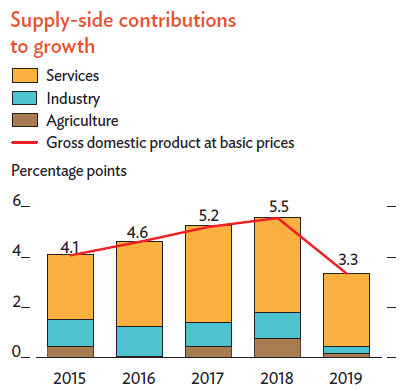
In the previous two years, Pakistan had started to pick its pace at a slightly high point and the economy had started to improve. Both the current account along with the non-oil current account had continued to improve after exchange rate reforms while sectors with the highest forward linkages i.e cement, iron and steel, had started to show an upward spike in production.
The fiscal side also seemed to strengthen over a period of time while growth in revenue collections at all levels, especially direct taxes, was also witnessed.
However, with the ongoing coronavirus pandemic raising its ugly head, the meager growth achieved is now threatened.
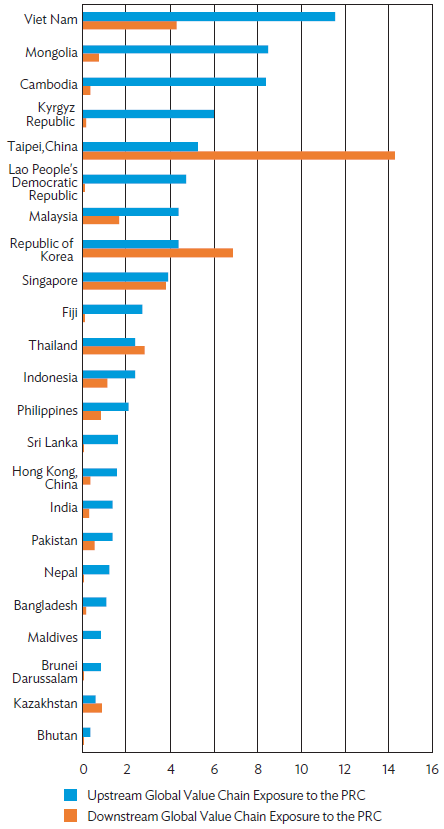
According to a World Bank (WB) assessment, the global impact of COVID-19 can reach $347 billion (0.4 per cent of Global GDP). Nearly all regions suffer a double-digit decline in trade volumes in 2020, with exports from North America and Asia hitting the hardest. But it is important to note that this hit was majorly experienced by countries with sizable exports due to trade problems while Pakistan has a low global value chains (GVC) exposure to the world, especially to People’s Republic of China (PRC), which means it has suffered lesser trade disruptions so far.
Trades have fallen steeper in sectors with complex value chains, particularly electronics and automotive products.
According to Urban Unit’s spatial industrial data, currently, 18 per cent of the industries in Pakistan are operational. These include the fertilizer industry, agriculture, agriculture spare parts and export industry, all of which are operating under conditions of following certain standard operating procedures (SOPs) developed by the Punjab government. However, strict monitoring from the government will also be required as an exemplary practice of these SOPs which will further encourage the authorities to open up other capital-intensive sectors.
On the monetary side, there are several efforts made by the government. Under a federal package, a Rs100 billion relief package has been provided to small and medium-sized enterprises (SMEs) and the agriculture sector along with concessional loans. Money is allocated to lower the input cost for farmers along with a Rs12,000 monthly package with facilities of panagahs [shelter homes] and langar centers [soup kitchens].
The Punjab government has also implemented tax reductions as all forms of GST have been removed from online platforms, businesses and services related to HR; deferment of tax has been implied for properties and CVT & stamp duties have been reduced to 2 per cent on property transactions, construction industries, hospitals and medical consultants. In addition to these, the State Bank of Pakistan (SBP) has provided relaxation in export schemes (EFS & LTFF) and has enhanced liquidity for exporters while providing extensions in the time period to ship and import goods against advance payment.
The central bank has also reduced its interest rate from 13.5 per cent to 9 per cent.
However, there are some further actions that the government can take in order to improve the current economic situation. A regulatory framework can be adopted keeping in view some of the best international practices from where many risk management practices can be learnt to determine the best price discovery (for example, the United States has dropped the interest rate to 0 per cent).
Secondly, allowing ease of entry for institutional capital in order to broaden the depth of the market i.e. attracting FDIs in newly established special economic zones in Faisalabad, Bhalwal, Vehari and Rahim Yar Khan by simplifying provincial and federal procedures. Thirdly, the role of aggregators, producers and organisations can be improved for better price negotiations for SME’s.
Fourth, access to foreign capital should be made easier and distortions should be minimised by developing linkages with the international markets. That means ease of doing business index, logistic performance index and reduced lead time for exports should be commenced. Lastly, e-markets should be developed where participants can access both international and domestic markets. An e-commerce policy at the provincial level must be put in place with incentives to increase documentation of economy and online trade at B2B B2C and C2C levels.
It is to be noted that Pakistan is not alone in this economic downfall. It is vital to have a positive outlook on the situation and prepare for the future with better resilience. Effective policies and active preparedness can give impetus to the post-pandemic industrial revival.
Punjab Chief Minister (CM) Sardar Usman Buzdar has given his permission for coronavirus patients with mild symptoms to quarantine themselves at home rather than being admitted to a government facility.
According to a notification issued by the Punjab Primary and Secondary Healthcare Department, the Punjab chief minister, on the directions of corona expert advisory group and technical working group, has advised for following standard operating procedures (SOPs), devised by the International Health Organisation (IHO) for home isolation.
He said that the patient would be kept in isolation under the supervision of the district health authority concerned in his or her house where all necessary facilities were available.
He said that such hotels, school buildings, mosques, hostels and community centres could also be used for isolation where all necessary facilities were provided by the government which would also take the responsibility to disinfect the buildings on a daily basis.
“However, buildings, where cooling and heating systems can cause the spread of the virus, cannot be used for isolation,” he made it clear.
Buzdar said that solid waste of patients would be disposed of according to the given guidelines.
The CM said that food would be provided to the patient in only disposable packs. He said that decision of home isolation of any patient would be made by home isolation committee, formed by the assistant commissioner of the area and assistant commissioner or his representative, DDO Health and chief officer of the area concerned would be members of the committee.
“Population Welfare, Livestock, Excise and Taxation staff would monitor and report about the isolation committee and three isolation committees would be formed in one union council in which at least one doctor would also be a member of the committee, whereas one committee would be constituted in a rural union council with one doctor in it,” the CM said.
The chief minister said that the committee would also review space for keeping patients in home isolation according to the number of family members whereas the family would be informed about the SOPs before allowing any patient home isolation.
“The patient would be bound to inform the authorities about his condition on a daily basis and testing protocol would be mandatory for the patient,” he said.
The chief minister said that the period of home isolation would be for 10 days and for removal of home isolation conditions, the patient had to show at least two negative corona tests and after the termination of home isolation, another test would be conducted after five days.
In case of non-availability of the test, the patient would have to stay in quarantine for more than two weeks.