Tag: Saba Qamar

  • Muamma is the best drama on TV right now

    Muamma is the best drama on TV right now

    Muamma, Saba Qamar’s latest drama is a psychological thriller with all the elements that a Pakistani drama needs.

    In Episode 9 and 10, Jahan Ara’s (Saba Qamar) new tenants are right where she wants them. Junaid (Ali Ansari) has expressed his love for Jahan Ara despite his wife, Maira (Anoushay Abbasi) being pregnant and oblivious to his night-time conversations with Jahan Ara.


    We also see flashbacks of Jahan Ara’s life. A controlling, viscious, cheating husband who is in jail for murder, a father who literally threw her out and a helpless mother. A greedy brother and a father who, even if he realises that he did his daughter wrong, would never admit it. She’s had a tough life and she took ownership of it in the most twisted of ways.


    And that is the beauty of Muamma. Jahan Ara is the villain of the drama, the breaker of marriages because she initiates the ‘firnedship’ between the men and then watches their lives unfold. But we feel bad for her as well and find her well, relatable. 


    Relatable, how? She had a bad childhood with an overbearing father, fell in love but was unable to marry the love of her life (Usman Mukhtar) for reasons that we still don’t know and was treated horribly by her husband, who met with women and made her serve them. 


    It is surprising that Jahan Ara turned out to be a woman who wants to see if men break from their marriages, sets up situations to make them chase her and then supports the wives when their marriages are in trouble. She seems to have a twisted saviour syndrome, wanting to save women from bad marriages which she is instrumental in breaking.


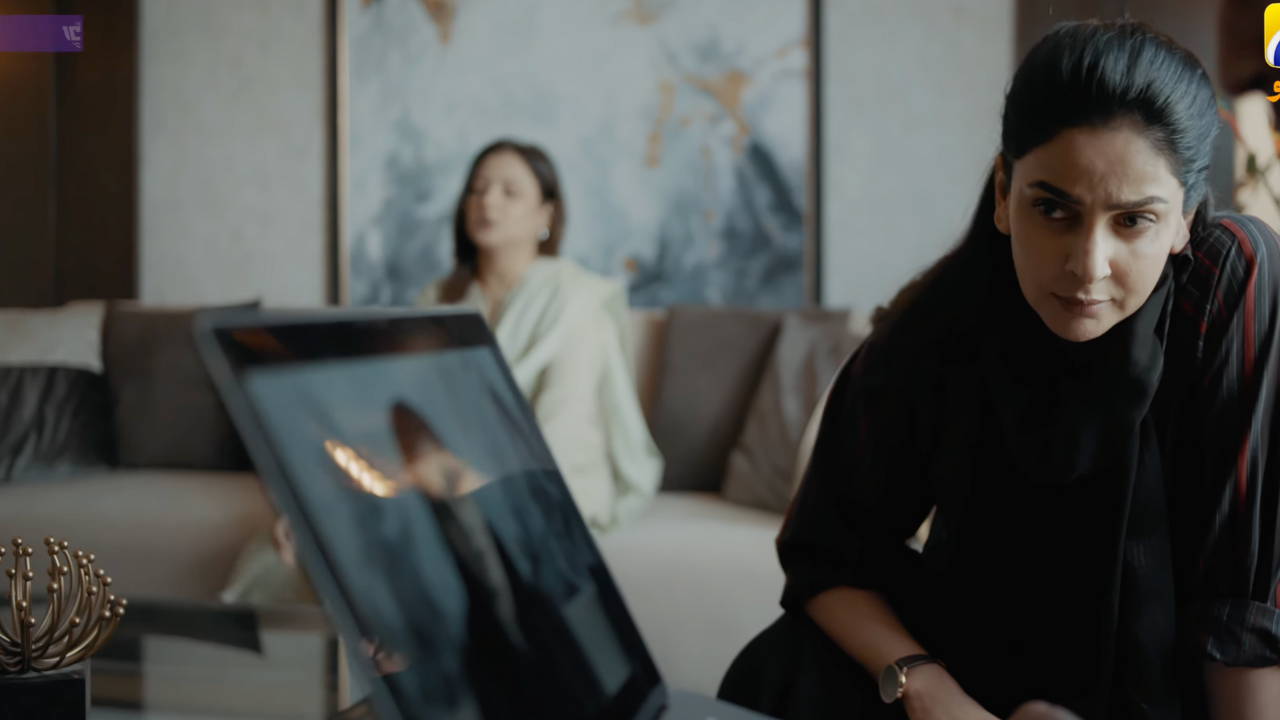
    At the end of episode 10 we see the glass crack after Junaid accidentally throws a ball at it and Jahan Ara’s secret is at risk of being exposed. What will happen if it is, although at this point of the show it likely isnt. But it’s important to show that while Jahan Ara now lives in her own world where nothing she does has consequences, like sending Zeeshan to prison and her staff member for spying on her. How she managed to do so in such little time with the police is not explained but it does show the power she now weilds and the contrast between her past and present is striking. We want to know more and more about how she became the twisted convoluted person she is and can’t wait for the next episode to find out.

  • Saba Qamar turns Muamma into a slow-burn obsession

    Saba Qamar turns Muamma into a slow-burn obsession

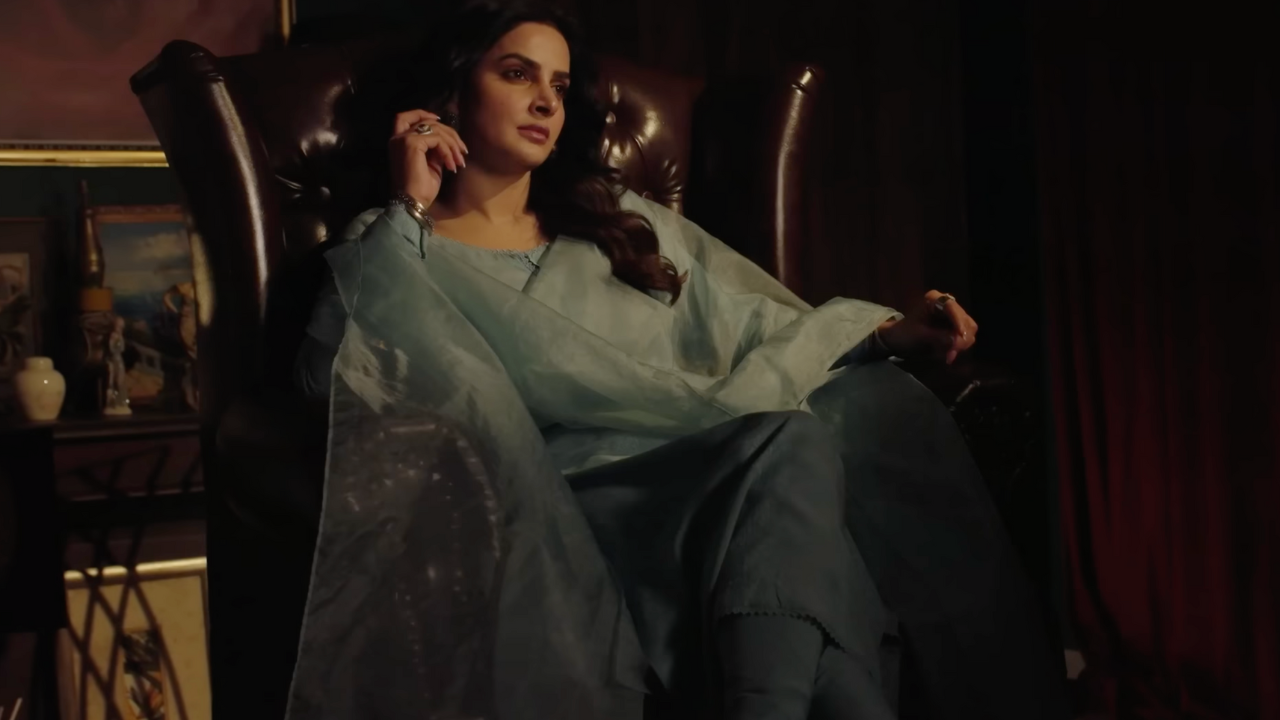
    Eight episodes in, Muamma is a suspenseful thriller that revolves around the versatility that is Saba Qamar’s acting. It’s a series that will keep you guessing, and you can almost feel the drag coming on and then it speeds back up.


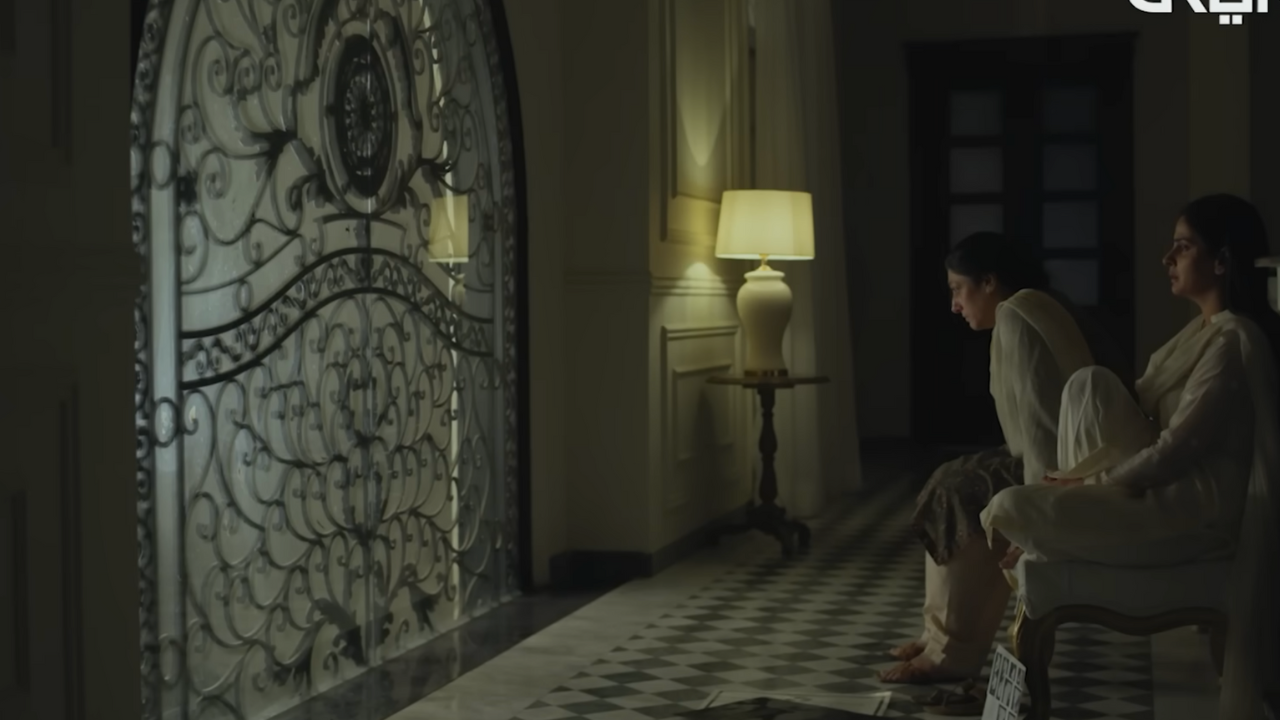
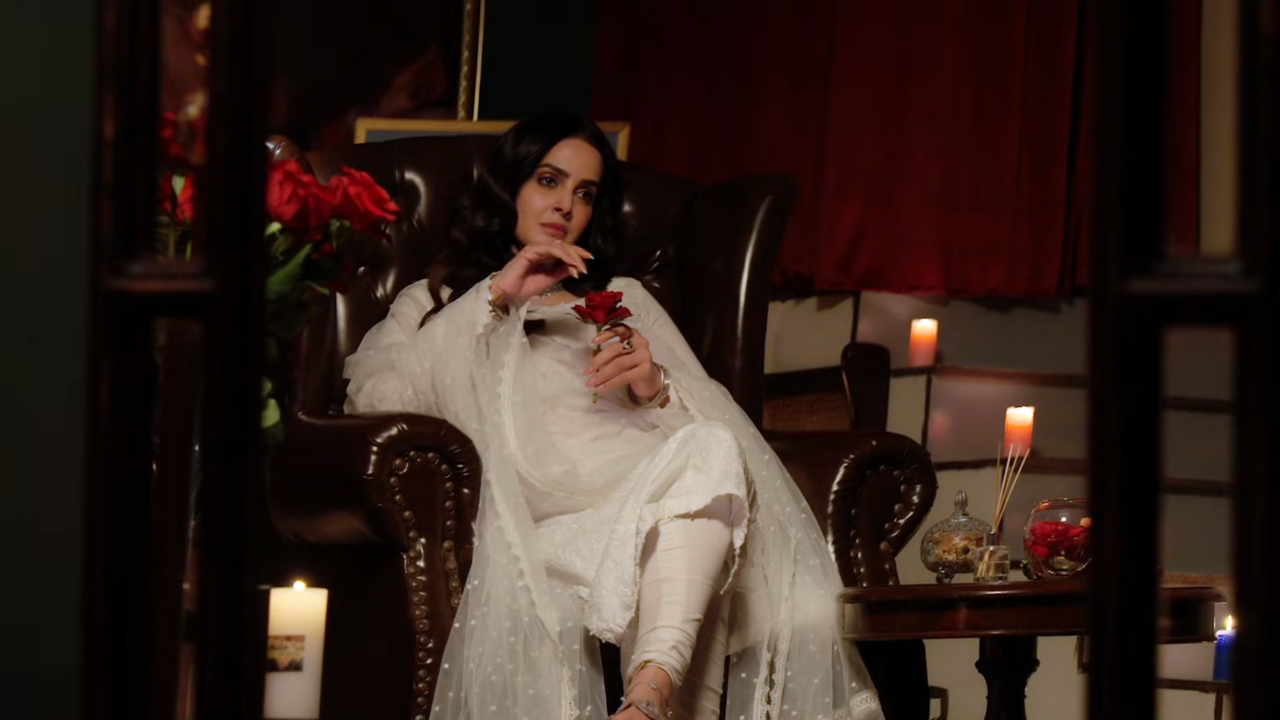
    Muamma is the story of Jahan Ara (Saba Qamar) who rents out a portion of her house to married couples. She gets close to the husbands, coyishly flirting with them, getting close to the wives and the best part: she has a secret window into their lounge where she can watch them and they can’t see her. She becomes part of their lives and they don’t even know it. 


    The drama opens with Jahan Ara’s first hit, Zeeshan (Nabeel Zuberi) who is her tenant and in a stupor, declares his love for Jahan Ara in front of his pregnant wife and neighbours. The marriage ends in divorce and a new couple moves in and Jahan Ara’s next target.


    The drama highlights how every betrayal starts with a lie. Jahan Ara lies to her tenants to get close to the men, they lie to their wives to stay in Jahan Ara’s presence and the lies wrap up happy marriages and then ultimately tear them apart. And it’s reflective of Jahan Ara’s (also known as Gigi in the show) marriage. She loves another (we know that the love of her life will be played by Usman Mukhtar) and marries a brutal man instead. The void in her life is filled by creating trouble for others, almost like she wants everyone to suffer just as she did. She lands in the lives of the wives as their saviour, listening to them, helping them, taking care of them, all the while she’s tearing them apart and watching them as it all breaks down.


    It will be interesting to see how the drama develops and the twists it is bound to take as we meet Jahan Ara’s husband who is in jail and find out how he got there. It’s all going to be unveiled and it’s a treat to watch as it gets there.

  • ‘I have won both cases’: Saba Qamar shares powerful message on respect for women

    ‘I have won both cases’: Saba Qamar shares powerful message on respect for women

    Actress Saba Qamar has shared a strong message about women’s dignity and respect following the conclusion of drama serial ‘Case No. 9’ and a public apology from journalist Naeem Hanif over baseless allegations.

    Qamar shared a clip from the final episode of ‘Case No. 9’ on Instagram, featuring a powerful monologue encouraging women to speak up for their rights and justice. The post included a detailed message addressing recent events and broader societal issues.

    “I have won both cases Case No. 9 and Case No. 0 (Baseless),” Qamar wrote in her Instagram post.

    The actress emphasised her intention to share a meaningful perspective rather than criticize anyone.

    “I am not here to criticise or accuse anyone. I simply wish to share a thought that matters deeply to me,” she stated.

    “As a society, we must learn to be kinder and more responsible. Women should be supported in their success, not questioned, disrespected, or brought down by false stories and unverified claims. True progress lies in lifting each other up, not in diminishing one another.”

    Qamar referenced the false allegations made against her, acknowledging the apology that followed while raising important questions about accountability.

    “There was a time when false statements were made about me, followed later by an apology. While apologies are important, I believe we must ask ourselves: should a woman’s dignity ever be compromised in the first place, without facts or verification? This awareness is essential,” she wrote.

    The actress concluded her message with a firm stance on women’s respect and the importance of standing by truth.

    “I say this with grace and sincerity: respect for women is non-negotiable. I stood by the truth, and that is why justice prevailed. May we all choose truth, empathy, and fairness. This message comes from a place of positivity, integrity, and authenticity,” Qamar stated.

    In November, journalist Naeem Hanif made an unverified claim about Qamar during a podcast appearance, falsely alleging the actress was in a live-in relationship in Lahore.

    Hanif later issued a public apology, admitting his statement was unverified and contrary to facts.

  • Emotional and Powerful: The Finale of Case No. 9

    Emotional and Powerful: The Finale of Case No. 9

    It’s very hard to make a drama about social issues, especially a courtroom drama, and get it to become a smash, viral hit. 

    Case No.9 became just that, not only because of the storyline but also because of the supreme acting by everyone in the drama. A huge shoutout to Saba Qamar, Faysal Quraishi and Gohar Rasheed who embodied their characters so well, it was like watching the case in real life. Chilling performances with emotional return. 


    The last few episodes of the drama focused more on a media trial rather than the court. And with a lot of cases, that is what happens. Real-life cases of Zainab, the little girl who was raped and murdered, Noor Mukkadam and others first played out on the media, generated pressure and then came to their favourable ends. One question is that would Noor Mukkadam’s killer still be in jail had it not been for constant media pressure? It’s sad that the question arises but unfortunately it does.


    We have heard actual police officials tell people in meetings that Case No. 9 is a drama that everyone should watch because of how the law and police proceedings are covered in the drama. It’s fact and anchor Shahzeb Khanzada shows it as much in the finale of the drama.


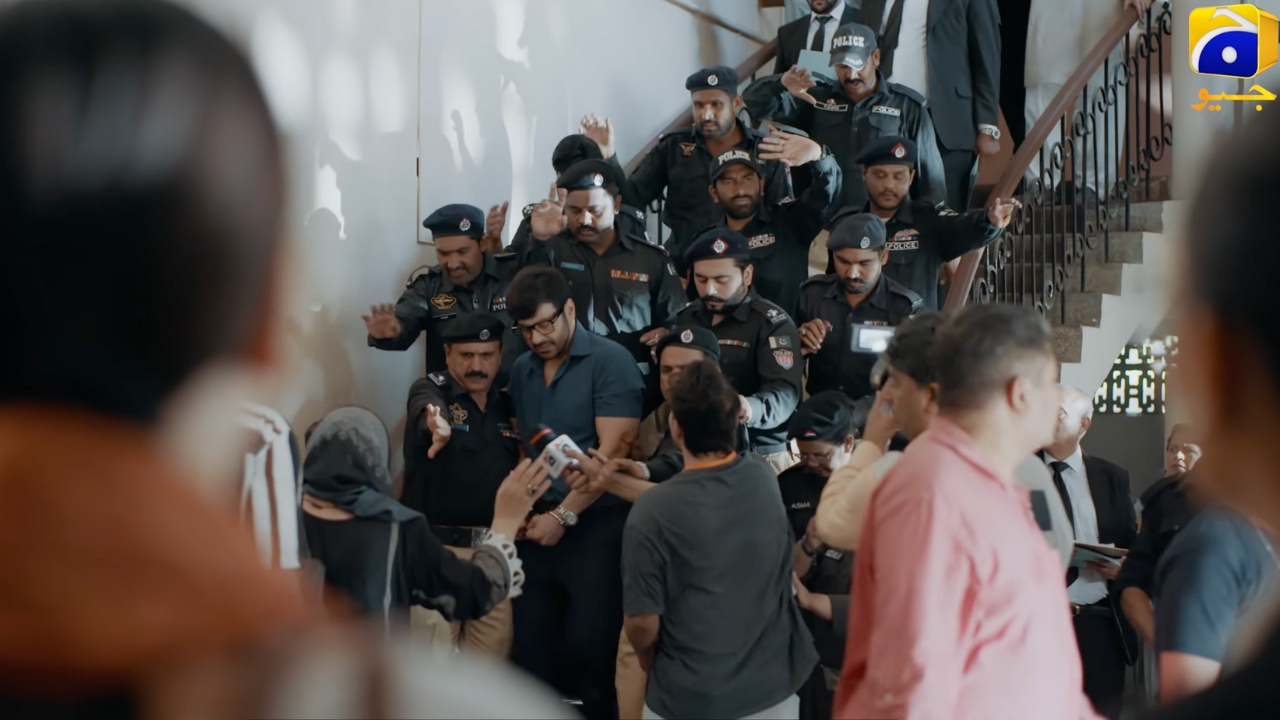
    But the blurring of real life and a drama was a bit too pronounced at the end of Case No. 9. Perhaps, it might have been better that a ‘drama anchor’ had done the media trial because the shift between the real show and the one in the drama was a bit disconcerting. The ending as well, it might have been better if an actor from the drama (read Saba Qamar) had read off the stats on rape cases in Pakistan. The uneasy feeling lingered near the end of the drama but then perhaps that’s what the writer was going for. To make you feel uneasy that real life and drama, in this particular case, are very comparable. 


    Whether you agree with the drama or not, it is true that media trials, in a lot of cases trump actual courtroom proceedings. We have seen it many times and we will continue seeing it, and it’s a global phenomenon, perhaps more pronounced in Pakistan. 


    Case No.9 became a drama that will remain in the list of the best social issue dramas in Pakistan and hopefully, we sincerely hope, that the positive effect it had and presented lasts for a very long time. Will a rape victim watch it and feel hopeful and fight for justice? We hope so. Will society watch it and think that should a woman be judged if she comes out and says a crime has been committed against her? We hope not. Would this play a big role in women empowerment? It better.

  • Petition filed against Saba Qamar for wearing police uniform

    Petition filed against Saba Qamar for wearing police uniform

    A petition has been filed in a Lahore sessions court seeking the registration of a criminal case against actor Saba Qamar over the use of a Punjab Police uniform in a behind-the-scenes video and photographs that circulated on social media two years ago.

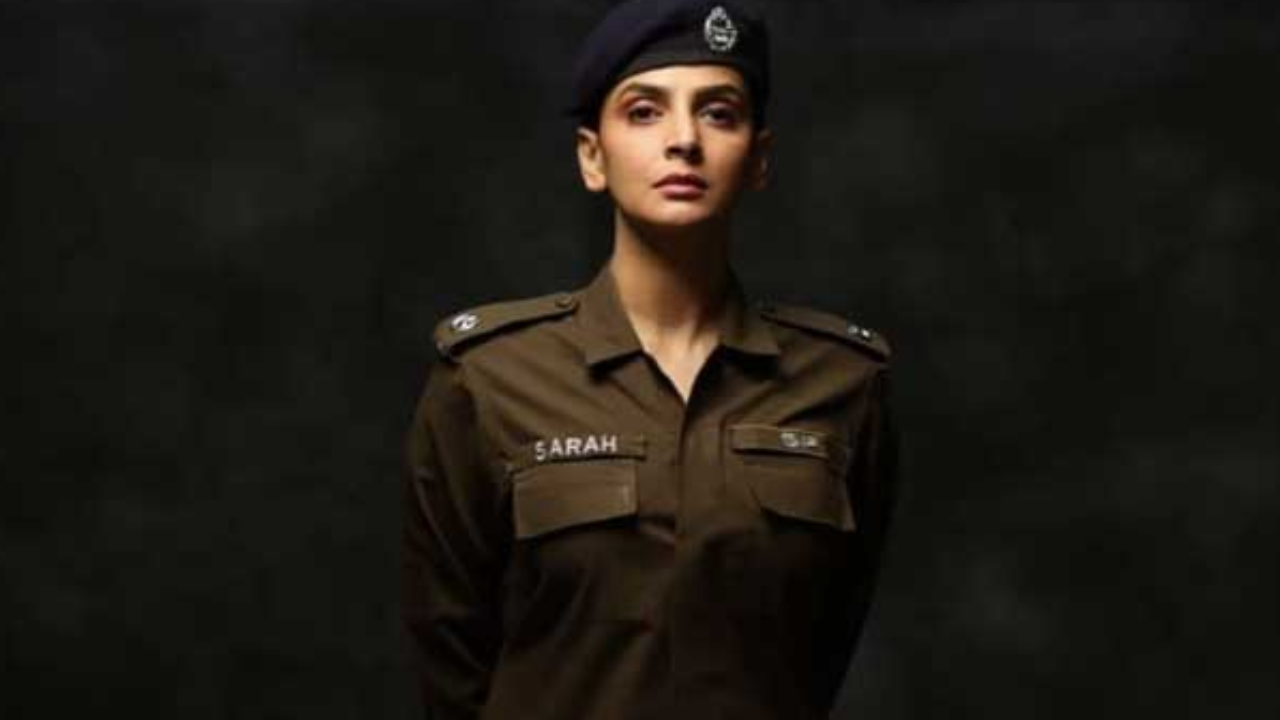
    The petition relates to content shared around the time Qamar’s 2023 drama Serial Killer aired on Green Entertainment. In the drama, Qamar portrayed Superintendent of Police Sarah Sikander and wore the police uniform as part of her on-screen role. The production had obtained a valid no-objection certificate (NOC) for the use of the uniform in the show, a point acknowledged in the petition.

    However, the application raises objections to a behind-the-scenes video and two photographs that showed Qamar wearing the Punjab Police uniform with an SP badge in what the petitioner describes as a non-fictional setting. The video reportedly showed the actor in a dressing room while her hair was being styled. 


    The content later circulated on social media but is no longer available on Qamar’s official accounts.

    According to the petition, wearing a police uniform outside a fictional production without permission violates the law. The petitioner argues that no individual is allowed to wear official police attire or insignia without prior authorisation from the relevant authorities. By appearing in uniform in off-screen content, the petition claims, Qamar breached provisions of the Pakistan Penal Code related to impersonation and the misuse of official symbols.

    The application further states that the display of such content could mislead members of the public and affect trust in the Punjab Police. It maintains that the use of the uniform and badge outside the drama’s narrative amounted to an unlawful act and showed disregard for the police institution.

    The petitioner told the court that an earlier request to register a criminal case at the Old Anarkali Police Station was not acted upon. 


    Following the alleged inaction by the police, the petitioner approached the sessions court seeking directions for the registration of a case.

    Additional Sessions Judge Ilyas Rehan heard the petition, which was filed by Waseem Zawar and argued by Advocate Mujaddid Bajwa. 

    After a preliminary hearing, the court sought comments from the police authorities on the matter.

    The court adjourned further proceedings until January 14, directing the police to submit their response before the next hearing.

  • Pamaal’s big twist undercuts its own message and women deserve better

    Pamaal’s big twist undercuts its own message and women deserve better

    The major twist in Pamaal is here and it’s really not the one we wanted. The bad guy turns good because surprise, surprise the only way  an emotionally abused woman can leave a man is if the man dies, that too an early death with stage 4 cancer. Gone in 40 days, quite conveniently. 

    It’s just not the trajectory we hoped for, especially for Malika (Saba Qamar) who was supposed to find strength on her own, not because the pain was ‘tragically’ taken from her. We now have to feel bad for this guy who turned her into a beychari, albeit a rich beychari and she should be happy with that (right), and now he’ll have to die for her to find herself.

    Exactly the lesson we do not want women to learn. It is very, very clear in episodes 18-19 that Malika would’ve never left Raza (Usman Mukhtar), if fate had not given him cancer (that is also so advanced, he’s only got a few days to live).

    Would we want a Malika who will now make it on her own because of a dead husband or did we want the one who found herself even if he was alive?

    Obviously, the latter but it’s clear that we won’t get that because it is now emotional abuser Raza who is telling Malika that she needs to be stronger, more independent to take care of her child since he won’t be around anymore.

    Malika’s mother is no less obstinate, talking about how life ends when the husband dies and its almost like the first 15 episodes were a joke compared to what we are seeing now.

    It makes little sense that Saba Qamar would pick a drama that was going on a very different trajectory and is now turning into an entirely new one. Initially when we saw this drama it prompted women to relate to Malika, telling their own stories or stories of other women they knew who were feeling trapped in their marriages to controlling men.

    And all of a sudden the drama flips, Raza is a great guy with troubles not of his own making, Malika is the loving wife, and it’s such a contrast that we actually feel let down. 

    What remains to be seen is how Pamaal will recover from making Raza, the clear villain, the tragic hero and if women will now be able to relate because what we refuse to relate to is that to get out of an emotionally abusive marriage, it has to be fate that will help you – not yourself.

  • Case No. 9: the double-cross no one saw coming

    Case No. 9: the double-cross no one saw coming

    Episode 19-20 of Case No.9 was full of suspense and a twist that no one expected.


    Kamran (Faysal Quraishi) bribes Inspector Shafeeq (Gohar Rasheed) to figure out a way to ruin Sehar’s (Saba Qamar) reputation and case online and Shafeeq makes a killer good plan by getting a woman Shazia, to pretend she is Kamran’s earlier victim and gain Sehar’s trust. He figures out that Sehar and her team will want to use the victim’s story and he’s banking on them using social media to do it. Once they do, Shazia will release a video of herself saying Sehar and her team bribed her to lie.


    It did feel like Shazia was shady. The way she randomly got in touch and randomly had a thing with Kamran when he was single without showing any form of proof. It seemed strange from the start and it was also strange that Manisha (Navin Waqar) was so pushed to get her statement on social media. It wasn’t very clear what kind of information Ali (Ali Rehman Khan) Sehar’s ex-husband was going to gather from Kamran’s workplace but this is the episode that shows exactly why he was needed, at the right place at the right time.


    Without a doubt the most stellar performance in the series is by Inspector Shafeeq. It is hard to hate a character as much as you learn to hate Shafeeq and credit goes to Gohar Rasheed for really playing the part of the greedy, corrupt police officer to the T. 


    Even though Sehar finds out in time that the woman has been planted by Kamran, it is Beenish (Amina Shaikh) that becomes a soft voice of reason where she, when talking to Manisha, says that maybe it’s not a good idea to use social media – almost because it’s a tool that was used and abused by Kamran as well. Beenish realises the value and sanctity of the case and even though Manisha does too, Manisha knows the power that social media holds. The point being that there is no quick fix to cases like this and that maybe it’s best to let things off social media, no matter how tempting it is to take a battle on that front as well. 


    But things are bad when Bukhari (Noor-ul-Hasan) is also trying to convince Kamran to use his underhanded ways to help them gain sympathy in the case. The lawyer, who was so arrogant and sure of himself in the past, now seems shaky, which shows where things are going.


    Even though Kamran figures out that Ali is in fact, Sehar’s husband and now Ali’s cover is blown, the more telling part is how everyone expects that a divorce is the woman’s fault. Kamran and Bukhari wanted to find Ali to prove Sehar was a bad wife (a point inadmissible in court) but Ali clearly shows us how it is – it was him and he is man enough to admit it.


    But the biggest point is that it is now crystal clear that Rohit (Junaid Khan) will have to take the stand. Beenish explains that even if Rohit doesn’t want to, the court can force him to and it’s something that will either make or break the case for Sehar. Watching Rohit go through his moral struggle, with his marriage and family on the line, is the real suspense and Junaid Khan doesn’t disappoint. 


    We will definitely be seeing more of him and his internal struggle in the next few episodes and also Beenish poking holes in the testimonies of Kamran’s staff. Things aren’t looking good for him as he realises that money can’t buy everything.

  • Pamaal: after losing everything, will Malika finally find herself?

    Pamaal: after losing everything, will Malika finally find herself?

    Episode 15 and 16 of Pamaal are the beginning of the revival of Malika (Saba Qamar), however slow it might seem. In these two episodes, we see how completely she has lost herself in the roles of wife and mother. Emotionally controlled and abused, she no longer recognises her own power that she held in the beginning of the show, before she met Raza (Usman Mukhtar). Although, she is going through a tough time, you cannot help but mourn how lost she now is, how sad you feel when she tells Raza that she wished she knew how to drive so her daughter didn’t have to take the school van, how happy and relieved she is when Raza comes home from jail on bail. You can’t help but hate the fact that he has been released because he is the impediment, the reason why she cannot own herself in the way we know she will and well, it feels like its taking too long. 


    Malika realises how she is helpless. No money, no job, no ability to rely on herself, she turns to others for help. Raza’s brother and wife do not help, despite Raza’s conviction that his brother would not leave him and the only ones that support the couple and their daughter are Malika’s mamoo and mother. As a fellow inmate in jail tells Raza, it’s the bad times that determine who is with you and who isn’t and in Malika’s case, it’s her own family that has always been there for her marriage – not necessarily for her in particular (remember when her mother was shattered that Malika might get divorced). 


    Maybe that was the turning point for the heroine of this show: when her mother made her realise that she might be nothing without her husband – and in episode 16 that’s exactly what she says to the man who has brought her to the time in her life where she literally has nothing.


    In terms of society, it also makes you realise that a woman, who is controlled by a man or her and his family, will only discover herself and her own worth when she is pushed in a corner – when nothing can be worse, when she’s at the bottom of the pit. Only then can she pull herself up and become who she was born to be – a woman for herself and herself first and then others.

    When she can rely only on herself.


    Thankfully, we know Malika makes it through and she rises to the top all on her own accord. Otherwise, the drama would be the sad life that many women lead until they are old. The concept of community above all and not individual, a classic in this case that the woman must sacrifice herself and when times get tough, she has to ask others to help her. 


    The beauty of Pamaal is that it doesn’t care what you think. It is enraptured and entrenched in Malika’s story, it doesn’t push itself just because the viewer wants it to, and it will show you really, really, how hard it is for a woman to find herself after she’s been lost. Saba Qamar’s stellar performance will always keep you guessing to the point that you want to yell at the scream that hello, it’s time to learn to drive, time to get a job, time to take care of yourself, make something of yourself, and really, leave this guy. 


    We wait for that moment and until it comes, we suffer with her because every woman knows how hard it is to put herself first. 

  • Saba Qamar rises as the star of the year with new upcoming drama

    Saba Qamar rises as the star of the year with new upcoming drama

    Can anyone stop Saba Qamar? With two concurrently running super hits, Pamaal and Case No.9, Hum Entertainment has revealed the teaser of her new drama, Muamma. 


    The teaser shows Jahan Ara (Saba Qamar),  as someone who is in love with Ali Ansari’s character, and looks like a story of obsessive love. 


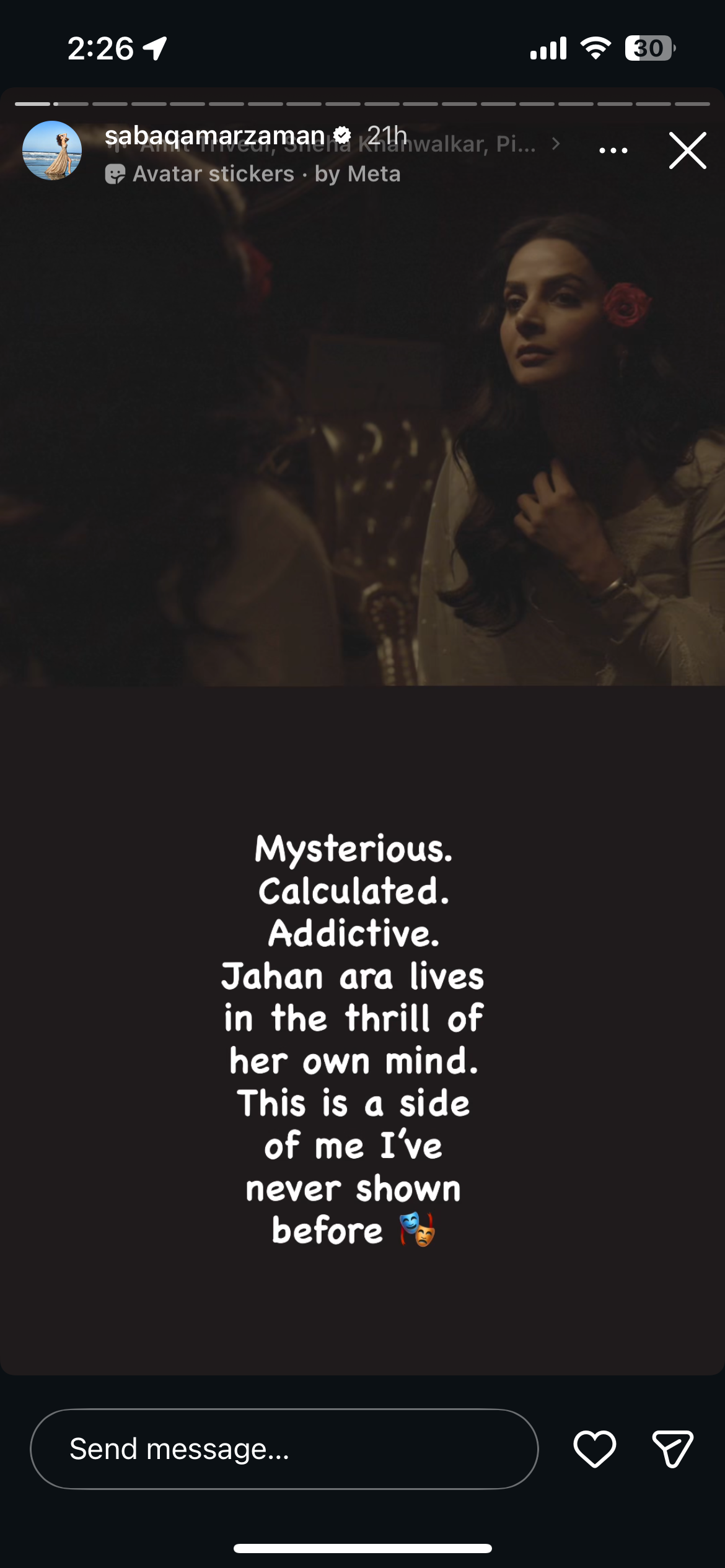
    Saba took to Instagram stories to share the teaser, saying that, “this is a side of me I’ve never shown before,” in a “mysterious calculator and addictive” drama. She says that her character Jahan Ara lives in the ‘thrill of her own mind’, revealing that the character is complicated and calculated. 


    The teaser starts off with Jahan Ara holding a rose and walking down the stairs with Saba’s voice saying, “Zindagi guzarne mai aur Muhabbat karne mai zaida mushkil kya hai,”.


    We then see scenes of Ali Ansari’s character getting ready and fighting with another woman, as Saba’s voice continues, “magar yeh kumbakht muhabbat na jeenay deyti hai na marne.”

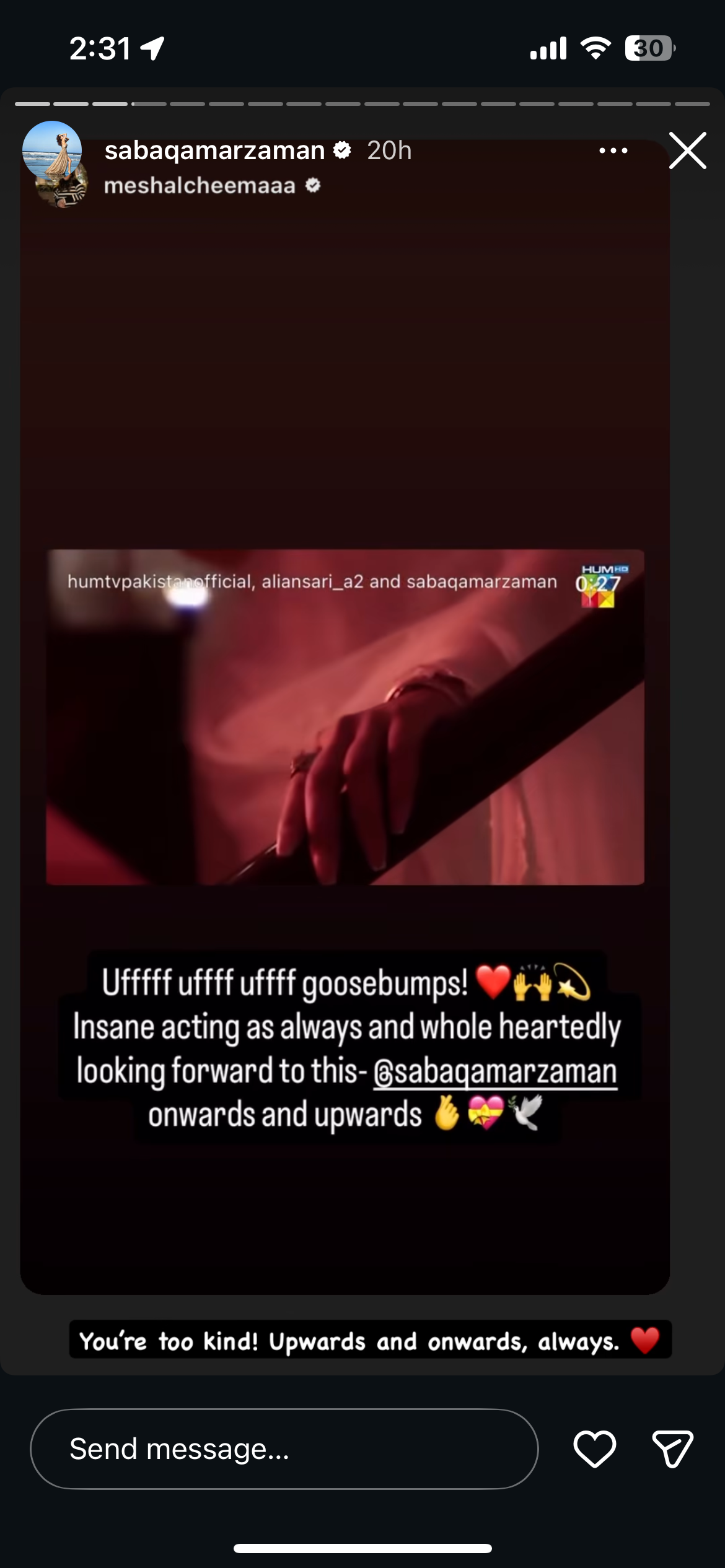
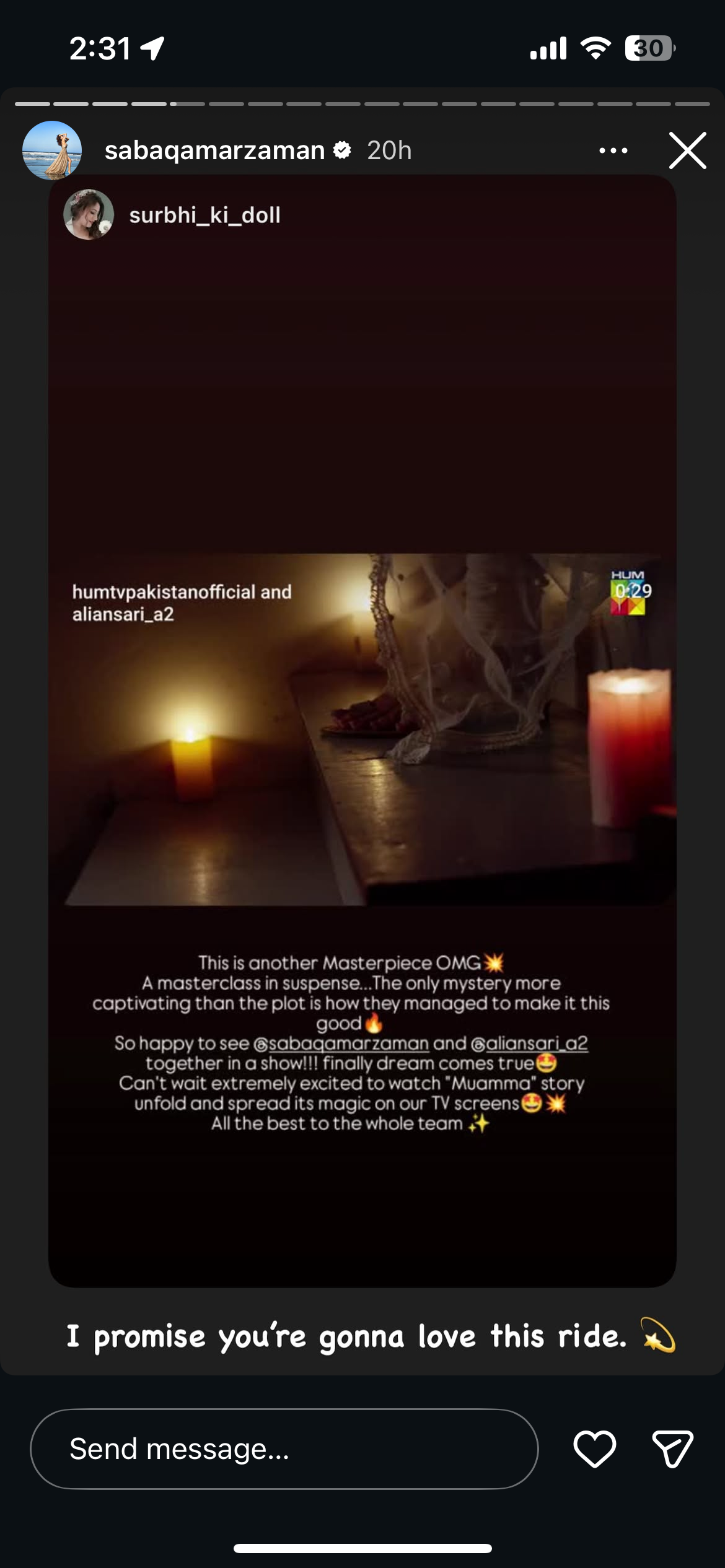
    Fans are already loving the teaser, lauding Qamar for being an actor that can play so many different roles and at the same time, saying that she is the reason why people watch dramas and can’t wait for the new drama she’s about to show them. She promised another fan that they would love the drama and thanked her fans for the love she was getting.

    Qamar was always one of Pakistan’s most loved actors but she has truly risen in the past year with two super hit dramas and one on the way. She plays a rape survivor in Case No.9 and in Pamaal she plays an emotional abused and battered wife, who finally finds her way through. 


    Qamar chooses dramas that made a social and dramatic impact and in Muamma, it seems like she is playing the villain and there is no one who could make such a drastic impact. 

  • Episodes that give every Pakistani woman her voice: Case No.9 makes history

    Episodes that give every Pakistani woman her voice: Case No.9 makes history

    It was episode 17 of Case No.9 that totally blew up Pakistani television. An episode that said things with such clarity and force that have never been said before, an episode that made women feel empowered by law, highlighted the struggle rape victim’s deal with with such legal force that you couldn’t help but thank Pakistan’s law on rape and in particular Justice Ayesha Malik. Beenish (Amina Shaikh) delivered the performance of a lifetime, her best yet, and it was goosebumps on screen. Her counterpart Bukhari (Noor-ul-Hasan) also was the perfect contrast to her as Beenish laid down facts vs. fictions, truth vs. stereotypes. 


    She mentions a rape case verdict that says a woman’s past cannot be called into question if shes been raped. The background doesnt matter: the rape does. It doesnt matter if the woman is a virgin or not, it doesn’t matter if she is divorced or not, all that matters is that she is raped – or not. It is these true, landmark cases that we need our society and its women to be aware of and Beenish does a stellar, stellar job.  She quotes statistics that are hard, and scary truths about Pakistan: Eight children are sexually abused in the country everyday, women, regardless of what they wear are harassed on a daily basis and you also see Bukhari trying to find stats to counter her, but unable to do so.


    This was Beenish’s moment, every Pakistani woman’s moment too. Hope is here in Case No.9 and here to stay.


    That’s not it. In a day-dream sequence we see Sehar (Saba Qamar) getting up in the courtroom and confronting her attacker, her rapist regardless of court decorum. She faces him with the strength we know she possesses but is unable to show given court decorum and in that moment, we are happy for her as she is mentally able to face her worst nightmare. Hope is here to stay for Sehar too.


    And Kiran (Rushna Khan) is not far behind either. In episode 18, Kiran finally leaves Kamran (Faysal Quraishi), as she is finally convinced, after confronting Rohit (Junaid Khan) that her husband has done ‘something wrong’ when he admits that he flirted with Sehar – unknowingly admits it, of course. We see her leaving with her little baby girl, a very scary thing to do for a new mother, but she takes the stand nonetheless. There is hope of freedom for Kiran too.


    And we also hear of an older rape survivour, who was raped by Kamran before, who contacts Sehar and says that she finally as the guts to speak up after hearing Sehar did too. Hope that others will also have hope to speak up and get justice.


    Case No.9 is the breakthrough drama we didn’t know we needed, where women come together to support each other in life and in its struggles. Be it a wife, a survivor or a lawyer, they are all connected and lets not also forget that the words used are also so important. Sehar calls herself a rape survivor and she proves that she truly is not a victim. She has survived and that’s why there is hope.