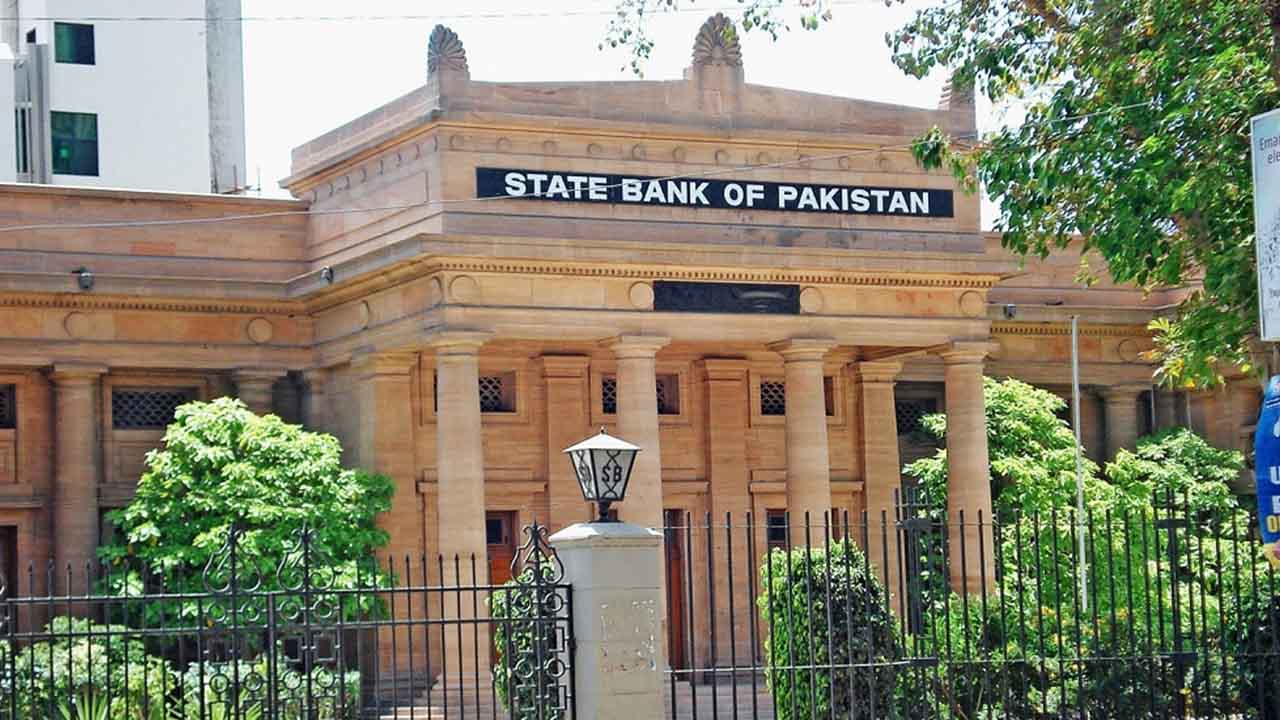
Foreign exchange reserves held by the State Bank of Pakistan (SBP) increased by $16 million on a weekly basis to $16.07 billion as of January 9, 2026, data released by the central bank showed.
Per the data, Pakistan’s total liquid foreign exchange reserves stood at $21.25 billion during said week. Of this amount, net foreign reserves held by commercial banks were recorded at $5.18 billion.
In its weekly statement, the SBP said that during the week ended January 9, its foreign exchange reserves rose by $16 million.
The data also showed that reserves held by the central bank accounted for the bulk of the country’s total liquid foreign reserves.
According to the figures, commercial banks maintained net foreign reserves of $5.18 billion, taking the combined liquid reserves of the country to $21.248 billion as of January 9.
The latest data also showed that the central bank’s foreign exchange reserves had posted an increase in the previous week, indicating a continuation of modest weekly movements in reserve levels.
Pakistan intends to digitize all payments made by federal, provincial, and local governments as well as state-owned enterprises by June 2026, a parliamentary committee has been informed on Thursday.
During a briefing to the National Assembly Standing Committee on Finance and Revenue, State Bank of Pakistan (SBP) Governor Jameel Ahmad outlined the government’s strategy for a cashless economy. He indicated that the central bank has also decided to link Raast, Pakistan’s instant payment system, with the Arab Monetary Fund’s Buna platform to enhance the speed and security of remittances from expatriate Pakistanis, though this arrangement will not facilitate outward remittances.
Buna, which was established in 2020, functions as a multi-currency cross-border payment system under the Arab Monetary Fund. It currently accommodates currencies such as the Saudi Riyal and Emirati Dirham and plans to incorporate the Chinese Yuan to boost regional commerce.
Governor Ahmad pointed out that the digital payments framework in Pakistan has experienced swift adoption. He mentioned that the annual transaction volumes for Raast, which used to be recorded over a year, are now processed within a mere nine days. Furthermore, he stated that the system currently supports 226 million accounts, 46 million Raast IDs, and more than 95 million active users of mobile banking.
SBP officials informed the committee that all payments at the federal and provincial levels are set to be digitized by June 2026, with state-owned enterprises expected to transition by December 2026. This initiative encompasses salaries, pensions, taxes, and utility payments. Finance Secretary Imdadullah Bosal explained that the process will be gradual, with the government bearing the costs to promote adoption.
The central bank is also implementing measures to enhance security, which will include a liability framework making banks responsible for losses arising from fraud or system errors, provided complaints are lodged within two hours. Additionally, a two-hour cooling-off period will be enforced on certain transactions to mitigate risk.
Ahmad emphasized the recent introduction of Mashreq Bank’s digital operations in Pakistan, which was completed in just 12 months, significantly quicker than the international average of five years. The bank has also established its global middle office in Pakistan.
Furthermore, five additional digital banks have received in-principle approval to start operations.
Deputy Governor Saleem Ullah stated that the digital ecosystem includes 19,000 bank branches, 20,000 ATMs, and 850,000 QR-enabled merchants. He added that offline transactions will also be available, with no fees imposed on consumers.
Committee members expressed concerns regarding low financial literacy rates, regulatory gaps, and unreliable internet connectivity. MNA Hina Rabbani Khar raised the issue of whether the system could function effectively while a significant portion of Pakistan’s economy remains undocumented.
The State Bank of Pakistan (SBP) has reportedly transferred a staggering Rs2.7 trillion to the government as a dividend payout for the fiscal year (FY) 2024-25. According to reports, this marks the largest-ever dividend payout by the SBP and comes amidst a 27 percent decline in the bank’s profit level.
Data released by the SBP reveals that profits fell to just Rs2.5 trillion for FY 2024-25, which indicates that the bank paid out more money than it earned to the federal government. As per the details, the SBP paid out Rs200 billion in addition to its total profit for FY 2024-25 to Islamabad.
The reason behind the decline in SBP’s profit is tied to the fall in the benchmark interest rate. Reports suggest that the SBP’s revenues have dropped significantly and could possibly fall further if the bank slashes interest rates again in upcoming monetary policy discussions.
According to reports, the SBP’s transfer to the federal government is 180 percent higher than in FY 2023-24. It merits a mention that the SBP’s financial performance remained exceptional during FY 2024-25, as the central bank successfully built up its reserves through its interventions in the currency market.
Data from reports indicates that the SBP’s holdings of foreign exchange jumped to a respectable $14.274 billion after it logged an increase of $18 million to its reserves last week. This allowed Pakistan’s liquid foreign reserves to balloon to $19.618 billion, after accounting for commercial bank reserves, which reportedly stand at $5.343 billion.
A leading domestic securities company outlined the improvement in the SBP’s position, highlighting how import cover now rests at 2.7 months after the jump in reserves. While this sits below the 3 months of import cover considered “adequate” by the SBP, the improvement is still a welcome relief for the economy.
The SBP was able to boost its reserves by heavily carrying out foreign exchange interventions, which reports suggest amount to $7.8 billion during the period June 2024 to May 2025. Details from reports suggest that the SBP has kept the rupee from appreciating because of its heavy dollar purchases to build reserves.
Another reason for the jump in reserves is linked to the increase in gold prices, which allowed the value of the SBP’s gold reserves to spike up to $6.8 billion in FY 2024-25. As per the data, SBP’s gold reserves recorded a 41 percent increase in value on a year-on-year basis.
Former finance minister and economist Dr Hafeez Pasha described the State Bank of Pakistan’s (SBP) foreign exchange interventions as unsustainable in an interview on private television. He explained that the SBP purchases dollars entering the system through informal money transfer systems to ensure that the rupee does not depreciate too much against the dollar, while also building foreign reserves.
Currently, the rupee operates under a managed float regime relative to the dollar, effectively trading within a range of Rs278 to Rs280 per dollar. For reference, a managed float regime is a system in which a currency’s value is loosely pegged to another currency, allowing it to fluctuate within set limits.
However, Pasha has outlined how this will serve to the detriment of domestic exports as artificially inflating the value of the rupee reduces export competitiveness. If the SBP moves from a managed float regime to a purely floating system, the rupee may depreciate significantly. Experts, on the other hand, believe that it could cause export growth to skyrocket.
He further critiqued the policy against exporters, highlighting how they now face a 29 percent income tax, which sat at just one percent prior to the International Monetary Fund’s (IMF) austerity measures. Reports quoting Pasha indicate that the government has rescinded its support for exporters while countries such as Bangladesh and India are granting tax cuts to their exporters.
He outlined how economic growth will likely remain below two percent for fiscal year (FY) 2024-25 despite the federal government’s efforts. However, projections from the World Bank indicate that Pakistan’s economy is expected to grow by 2.7 percent during the current FY.
According to Pasha, the reason for the abysmally low growth rate lies in the shrinking of sectors such as large-scale manufacturing and cotton. As per reports, cotton production has witnessed a 28 percent fall, which spells bad news for a textile exporting nation, as cotton is a major input material in textiles.
The decline in cotton production could stem from the domestic textile sector’s increasing reliance on imported cotton. Recent reports indicate that millers and ginners were opting to buy imported cotton, which, up until recently, would arrive duty-free into the country, while local cotton farmers were subjected to an 18 per cent General Sales Tax (GST).
However, reports from April 2025 suggest that the federal government withdrew the GST on the sale of domestically produced cotton. Analysts believe that the government will have to reshuffle its policies to witness economic revival.
The Pakistani rupee (PKR) experienced a slight decline against the US dollar on Thursday, depreciating by 0.05 per cent in the inter-bank market.
The currency closed at Rs278.67, marking a decrease of Rs0.15 from the previous day’s rate of Rs278.52, according to the State Bank of Pakistan (SBP).
In comparison with other major currencies, the rupee faced mixed outcomes today:
Currency
Previous rate
Today’s rate
Change (PKR)
Euro
309.59
310.65
1.05
British Pound
362.60
365.10
2.50
Swiss Franc
325.44
328.04
2.60
South Korean Won
—
0.21
—
Japanese Yen
1.9063
1.9165
1.02 paisa
Chinese Yuan
39.03
39.06
3.1 paisa
Saudi Riyal
74.23
74.27
3.87 paisa
UAE Dirham
75.87
75.83
4.06 paisa
PKR vs other currencies
Euro to PKR: The rupee lost Rs1.05, closing at Rs310.65, compared to the previous rate of Rs309.59.
British Pound to PKR: The rupee depreciated by Rs2.50, ending the day at Rs365.10, up from Rs362.60.
Swiss Franc to PKR: The rupee fell by Rs2.60, closing at Rs328.04, compared to Rs325.44 from the previous session.
Won to PKR: The Pakistani rupee was reportedly trading at Rs0.21 paisa against Won
Japanese Yen to PKR: The rupee saw a slight decline of 1.02 paisa, closing at Rs1.9165 versus Rs1.9063.
Chinese Yuan to PKR: The rupee gained 3.1 paisa, closing at Rs39.06, up from Rs39.03.
Saudi Riyal to PKR: The rupee increased by 3.87 paisa, closing at Rs74.27, compared to Rs74.23.
UAE Dirham to PKR: The rupee appreciated by 4.06 paisa, closing at Rs75.83, up from Rs75.87.
Over the current financial year, the rupee has depreciated by 32.82 paisa or 0.12 per cent against the US dollar, while it has appreciated by Rs3.19 or 1.15 per cent since the beginning of the calendar year.
In the money market, the benchmark 6-month Karachi Interbank Bid and Offer rates fell by 63 basis points to 17.69 per cent and 17.94 per cent, respectively.
The domestic currency has remained relatively stable in recent months, hovering around the Rs277-279 range against the dollar, as traders monitor positive economic indicators and await the approval of a new $7 billion Extended Fund Facility from the International Monetary Fund (IMF).
On Wednesday, Pakistan’s Finance Minister, Muhammad Aurangzeb, stated that the IMF Executive Board meeting on Pakistan is scheduled for September, noting that “good progress” is being made with the IMF.
It is worth noting that this is the third consecutive decline witnessed in the ongoing week.
Additionally, regarding the Pakistani currency, the central bank plans to introduce newly designed currency notes across all denominations next year to enhance security features, according to SBP Governor Jameel Ahmad.
Speaking to a parliamentary body in Islamabad on Wednesday, Ahmad stated that the central bank aims to finalise the new designs by December, with the notes to be issued in phases. Notably, one of the denominations will be a polymer note, he added.
In July 2024, the United States emerged as Pakistan’s leading export destination, with shipments totalling $476.02 million, marking an 8.2 per cent increase compared to the $439.89 million recorded in the same month last year, according to data released by the State Bank of Pakistan.
The United Kingdom followed as the second-largest market for Pakistani goods, with exports reaching $183.3 million. This represents a 6.1 per cent rise from the $172.72 million exported to the UK in July 2023.
The United Arab Emirates, specifically Dubai, ranked third, with export revenue amounting to $176.18 million—a significant 41.1 per cent surge from the $124.82 million earned during the same period last year.
China stood as the fourth-largest export destination for Pakistan, with goods worth $160.1 million shipped, reflecting a 5.8 per cent year-on-year (YoY) growth.
Germany also saw an increase in Pakistani exports, with shipments totalling $135.46 million, a 9.5 per cent YoY rise. Similarly, exports to the Netherlands grew by 15.9 per cent YoY, reaching $124.55 million.
However, not all markets saw growth. Exports to Spain decreased by 14.4 per cent YoY, with revenue standing at $106.71 million.
On a month-on-month (MoM) basis, exports to the United States saw a 7.3 per cent increase compared to June 2024, while exports to the UK rose by 20.9 per cent MoM. Exports to Dubai also saw a MoM increase of 6.9 per cent.
The State Bank of Pakistan (SBP) is anticipated to reduce its key interest rate once more during its upcoming policy meeting on Monday.
This will be the first meeting following the recent staff-level agreement with the International Monetary Fund (IMF) and the announcement of a new state budget, according to analysts.
Earlier this month, Pakistan and the IMF reached an agreement on a 37-month loan programme. The deal has introduced stringent measures, including increased taxes on agricultural incomes and higher electricity prices, which have sparked concerns among lower and middle-income citizens already struggling with inflation and the potential for increased taxes.
In June, the SBP lowered its key interest rate by 150 basis points, reducing it from a historic high of 22 per cent. This marked the central bank’s first rate cut in nearly four years, aimed at stimulating economic growth amid a significant decrease in retail inflation. Inflation had dropped to 12.6 per cent in June, down from 38 per cent in May 2023.
Out of 14 analysts surveyed, only one predicted that the SBP would maintain the current rate of 20.5 per cent. The majority forecast a rate cut, with seven analysts expecting a reduction of 100 basis points, five anticipating a 150 basis points cut, and one predicting a 200 basis points decrease.
Mustafa Pasha, Chief Investment Officer at Lakson Investments, noted that the anticipated inflationary surge following the budget has not occurred. The central bank had previously cautioned about potential inflationary pressures from the budget, citing insufficient progress on structural reforms to expand the tax base.
To compensate, the government set a demanding tax revenue target of Rs13 trillion ($47 billion) for the current fiscal year, representing a nearly 40 per cent increase from the previous year, and aims to reduce the fiscal deficit to 5.9 per cent of GDP from 7.4 per cent in the previous year to secure essential IMF funding.
Pasha added that the clarity on the IMF programme, currency market stability, and steady foreign inflows into domestic debt and equities provide “ample comfort to the SBP to continue easing the policy rate in July and beyond.”
In a media briefing held today in Karachi, Deputy Governor of the State Bank of Pakistan (SBP), Salimullah, announced that the central bank is currently evaluating the introduction of a digital currency.
This project is being pursued with technical support from the World Bank, in collaboration with the International Monetary Fund (IMF).
Salimullah highlighted that efforts are underway to link Pakistan with 60 countries, including those in the Middle East, to enhance remittance flows.
Looking ahead, the governor revealed that the Raast payment system will be integrated with the Arab Monetary Fund’s cross-border payment platform, Buna, by next year.
Buna facilitates secure, cost-effective, and transparent transactions for financial institutions and central banks across the Arab region and beyond, enabling payments in both Arab and major international currencies.
The integration with Buna is expected to provide 60 million Pakistanis living abroad with the capability to transfer funds instantly and at minimal costs, significantly boosting economic and financial connectivity.
The latest figures from the State Bank of Pakistan (SBP) reveal a slight increase in the country’s foreign exchange reserves. During the week ending July 12, 2024, SBP’s reserves grew by $18.6 million, marking a 0.20 per cent rise to reach $9.42 billion.
In parallel, Pakistan’s overall foreign reserves, including both SBP and commercial banks, increased by $58.8 million, or 0.40 per cent, totaling $14.7 billion.
Commercial banks in Pakistan also saw a rise in their reserves, which grew by $40.2 million, or 0.77 per cent, reaching $5.28 billion.
Since the start of the fiscal year, SBP’s reserves have grown by $34.2 million, reflecting a 0.36 per cent increase. Notably, in the current calendar year alone, reserves have surged by $1.2 billion, representing a notable 14.63 per cent rise.
These developments signify positive momentum in Pakistan’s foreign exchange reserves, contributing to a more stable economic outlook for the nation.
Foreign exchange reserves held by the State Bank of Pakistan (SBP) fell by $239 million, reaching $8.896 billion as of June 21, according to data released by the central bank on Thursday.
The total liquid foreign reserves held by Pakistan stood at $14.207 billion, with net foreign reserves held by commercial banks at $5.311 billion. The central bank attributed the decline to external debt repayments.
“During the week ended on June 21, 2024, SBP reserves decreased by $239 million to $8.896 billion due to external debt repayments,” the SBP stated.
This comes after a $31 million increase in the central bank’s reserves the previous week. In May, the SBP’s reserves had surged by $1.114 billion, surpassing $9 billion for the first time in nearly two years.
This increase was primarily due to the disbursement of the last $1.1 billion tranche from the International Monetary Fund (IMF) under its $3 billion Stand-By Arrangement.
The fluctuating reserves highlight the ongoing financial challenges faced by Pakistan, particularly in managing its external debt obligations and maintaining a stable economic outlook.