Tag: SBP

  • PM directs banks to ease loan procedure for people under Naya Pakistan Housing Scheme

    PM directs banks to ease loan procedure for people under Naya Pakistan Housing Scheme

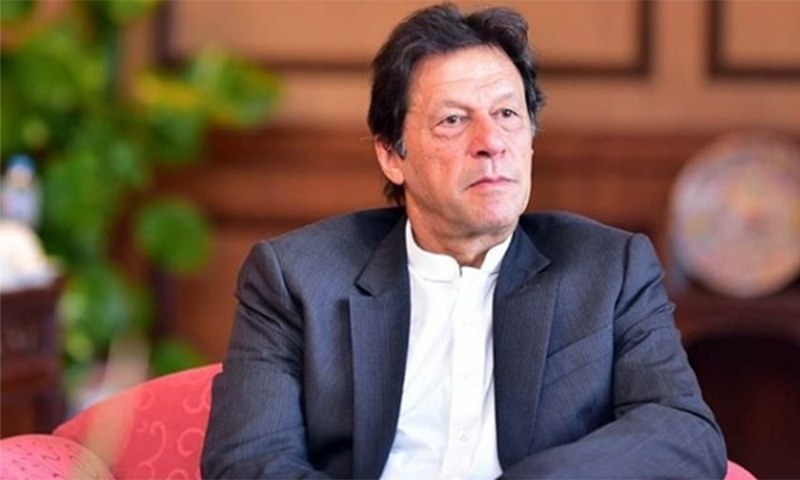
    Prime Minister (PM) Imran Khan virtually directed the National Bank of Pakistan (NBP) to simplify loan procedures so that the masses can get loans to own a house under Naya Pakistan Housing Programme.

    PM Imran’s telethon was attended by Senator Shibli Faraz, chairman of Naya Pakistan Housing and Development Authority, Lt. General (r) Anwar Ali Hyder, Governor of State Bank of Pakistan (SBP) Raza Baqir, NBP President Arif Usmani, and SBP Executive Director Samar Hasnain.

    PM also said that NBP should direct its staffers to facilitate the loan applicants now as bankers have never been helpful towards cashless people in Pakistan.

    He further added that the European countries have facilitated their people to own a home. However, it will be a new practice for our country.

    “Once people start building homes, there will a boom in the construction industry which will bring about a revolutionary change in Pakistan. The construction of homes, besides revenue generation, will lead to job creation,” he said.

    The PM further added that the rent that the buyers would pay will be considered as instalments of the total cost of the flat as per the new model of this mortgage system, and the markup rates have been reduced to a maximum of five per cent.

    So far, 3,000 labourers have registered while 1,500 got housing based on open balloting. The project aims at providing accommodation to people with an annual income of less than Rs500,000.

  • Roshan Digital Account attracts $671m in six months

    Roshan Digital Account attracts $671m in six months

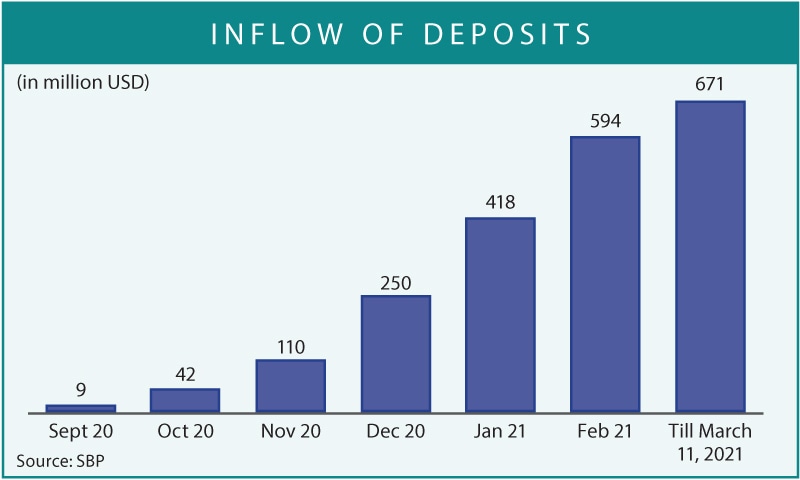
    More than 100,000 Overseas Pakistanis have created accounts on the Roshan Digital Account (RDA), attracting almost $671 million, the State Bank of Pakistan (SBP) has announced.

    As per details, overseas Pakistanis from almost 100 countries have opened accounts which indicates the increasing reach of the RDA, helping the government and the central bank to improve the external account of the country.

    Overseas Pakistanis have been providing large amounts of foreign exchange in terms of remittances and now the RDA has attracted $671m. At the same time, long-term domestic Pakistan Investment Bonds attracted $150m foreign investment over the past four months.

    The State Bank said that half of the total deposits of $671m came over the last eight weeks, reflecting the growing interest of Pakistanis abroad.

    The purpose of the RDA is to attract millions of Pakistanis living abroad by giving them high returns on deposits in comparison to developed economies. Besides, they can also remotely open bank accounts in Pakistan through online digital portals without physically visiting branches.

    Non-resident Pakistanis (NRP) can now avail digital banking facilities, including access to online banking, domestic funds transfer, utility bills and tuition fee payment in Pakistan, as well as investments in the stock exchange and real estate with an option of full repatriation.

    On September 10, 2020, Prime Minister (PM) Imran Khan inaugurated the project and appreciated the joint venture between the federal government, SBP and commercial banks operating in Pakistan.

  • PM says no money for development due to ‘lowest tax collection rate’

    PM says no money for development due to ‘lowest tax collection rate’

    Prime Minister Imran Khan has said that Pakistan cannot spend money on its infrastructure development, such as hospitals and schools, because it has the “lowest tax collection rate” in the world.

    The PM was addressing the inaugural ceremony of the State Bank of Pakistan’s digital payment project, Raast, in Islamabad when he made these remarks.

    The PM said the cash economy has badly affected tax collection, which is directly proportional to the lower tax rate. “Out of 220 million people, only two million people are filers,” said the PM, adding that only 30,000 people account for 70 per cent of the total tax collection.

    However, the digital payment programme would help Pakistan transition from cash economy to a digital economy, said the PM.

    The PM said: “Our biggest problem is the informal economy that’s so big that we could not collect taxes to develop Pakistan.”

    “This is an obstacle in tapping our true potential is because we can’t build our infrastructure, we can’t educate children, we can’t improve hospitals, the fastest growing country in the region 50 years ago can’t move forward because it does not have that much money for the development of the country,” he added.

    As per the PM, the news SBP initiative will allow the government expand the scope of the development to the lower classes.

    He also congratulated the SBP for efficient dealings with the overseas Pakistanis that led to capital growth at an unprecedented rate.

    “Our Pakistanis abroad sent money in an official manner due to which the current account deficit, which had been going on for years went into surplus for five months and the people did not care how much benefit was gained from it,” he added.

  • ‘Good news for market’: IMF programme to restart soon, says SBP chief

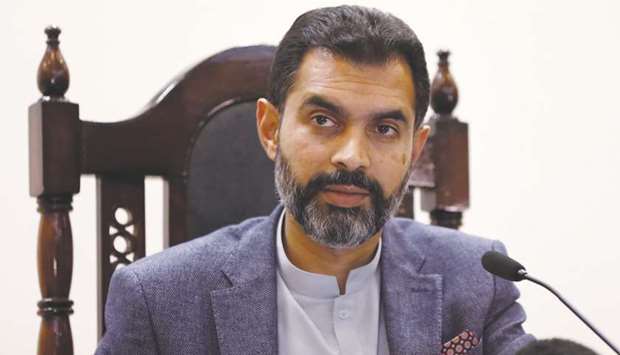
    Pakistan is in talks with the International Monetary Fund (IMF) to put the fiscal support programme back on track, State Bank of Pakistan Governor Dr Reza Baqir said on Monday.

    Baqir said he was optimistic about the economic outlook despite the fallout from the coronavirus pandemic and the central bank was eyeing 1.5pc to 2.5pc GDP growth in the current fiscal year.

    With dwindling foreign exchange reserves and a struggling economy, Pakistan entered a three-year $6 billion IMF bailout programme in 2019, but is yet to have its second review approved, which has been pending since early last year.

    “We hope to have good news for the market and the world that we are putting the programme back on track,” Baqir said in an interview on Monday at the Reuters Next conference.

    Last year, staff from the IMF and Pakistani authorities reached an agreement to pave the way for a disbursement of $450 million in IMF funds pending approval from the global lender’s executive board, which is yet to take place.

    Baqir said there was no disagreement on the end goal between the two sides, and that Pakistan needs to increase its low tax-to-GDP ratio.

    Pakistan and the IMF have been working to implement IMF-supported economic reforms, in particular tax collection, aimed at stabilising the economy and shoring up a yawning fiscal deficit.

    Though the bailout programme is still pending, Pakistan received $1.4 billion in emergency financing from the IMF to allow it to fund targeted and temporary spending increases aimed at containing the pandemic and mitigating its economic impact.

    Authorities are counting on the IMF bailout package to bolster Pakistan’s fiscal position and increase global confidence in its economy.

    “Pakistani authorities and the IMF team remain closely engaged, discussions are going on, both teams are working very hard and non-stop to bring the programme review to positive conclusion,” IMF’s Resident Representative to Pakistan, Teresa Dabn Sanchez, told Reuters.

    Baqir also said he is more optimistic about the outlook even as Pakistan battles a second wave of the coronavirus outbreak.

    “We are prepared for the challenges that may come about. We are already in the middle of Covid without any vaccine and once the vaccine comes, it will only makes this better,” he said.

    Baqir added that an economic recovery is underway and the bank’s job is to support the rebound until a vaccine is available.

    1.5 to 2.5% GDP GROWTH:

    Pakistan is aiming to achieve 1.5pc to 2.5pc GDP growth in the current fiscal year, Baqir said. “I think the next two or three years should bring some good news on the economic front.”

    Pakistan’s economy contracted 0.4% in the last fiscal year ended June 30, 2020, as the pandemic hit. Baqir added that an economic recovery was under way and the bank’s job was to support the rebound until a vaccine was available.

    “I think the next two or three years should bring some good news on the economic front,” he said.

    Baqir said Pakistan’s growth in its foreign exchange reserves from $7 billion to $13 billion in recent months was not due to borrowing.

    He said Pakistan needed “a rollover of the support” of friendly countries that had parked money in the bank to shore up reserves, but did not need new loans.

    Among those countries is Saudi Arabia, which recently asked Pakistan to repay $2 billion of its loan. Islamabad returned $1 billion to Riyadh in December last year and was to pay another $1 billion this month.
  • ‘IMF putting Pakistan on path of stability’ says Dr. Reza Baqir

    ‘IMF putting Pakistan on path of stability’ says Dr. Reza Baqir

    Dr Reza Baqir, the governor of State Bank of Pakistan (SBP) has said that the International Monetary Fund (IMF) is the government’s partner in reforming the country’s current economic system, Pakistan Today reported.

    In a briefing of the Public Accounts Committee (PAC) on Tuesday, chaired by Rana Tanvir Hussain, the SBP governor said that the relationship of Pakistan and the IMF was based on common interests.

    However, he assured the house that “inflation will go down and the general public will feel the relief.”

    Baqir says that the SBP’s monetary policy committee had decided to keep the policy rate unchanged at 13.25 per cent. “The monetary policy committee stance is appropriate to bring inflation down to the medium-term target range of 5-7pc over the next six to eight quarters.”

    Right now, reducing the interest rate would affect the people who have kept their savings in the banks. However, he admitted that higher interest rate created difficulties for the borrowers.

    “The national savings rate is already very low and if the people are discouraged, then the country will have to borrow the required money from international agencies, and that will raise our current account deficit,” he further added.

    “The main focus of the SBP is to maintain foreign exchange reserves in the country.”

    Baqir also noted that if the foreign reserves would grow, Pakistan would not have to approach international agencies for borrowing.

    The SBP governor said due to higher interest rates in the past, manufacturing had almost ended, but after reforms carried out by the incumbent government, manufacturing activities were once again on the rise despite higher policy rates.

    “The present government did not take loans from the SBP due to which inflation is now being controlled. However, the state bank, at the same time, is making efforts to restore the confidence of foreign and local investors.”

  • Freelancers payment limit raised to Rs. $25,000: State Bank of Pakistan

    Freelancers, who provide services in information and communication technology, can now receive payments worth up to $25,000 (Rs 3.9 million) per month, which, earlier, stood at a mere $5,000 (Rs 0.7 million).

    The decision has been made by the State Bank of Pakistan (SBP) to broaden the scope of remittances in Pakistan. This will facilitate freelancers to bring a greater value of funds through more economical and efficient channels of home remittances and help in receiving foreign exchange flow through formal banking.

    Read more – Pakistan’s first manmade island to be built in Gwadar at a cost of $10 billion

    According to SBP, “this would enable freelancers to expand their services and engage new individuals to join the workforce that will inevitably create more employment opportunities in Pakistan”.

    Read moreLargest gas reserve in 20 years discovered in Balochistan

    The concept of freelancing is the emerging trend in Pakistan. Freelancing is a term used commonly for people who are self-employed. Mostly, they are not committed to a particular employer for the long term. They provide services in the local and international market.

  • ‘Pakistan ready to boost tech-enabled financial inclusion,’ says Queen Maxima

    ‘Pakistan ready to boost tech-enabled financial inclusion,’ says Queen Maxima

    United Nations (UN) Secretary General’s Special Advocate for Inclusive Finance for Development (UNSGSA) Queen Maxima has said that Pakistan is in a good position for a boost to the technology-enabled financial inclusion, Express Tribune reported.

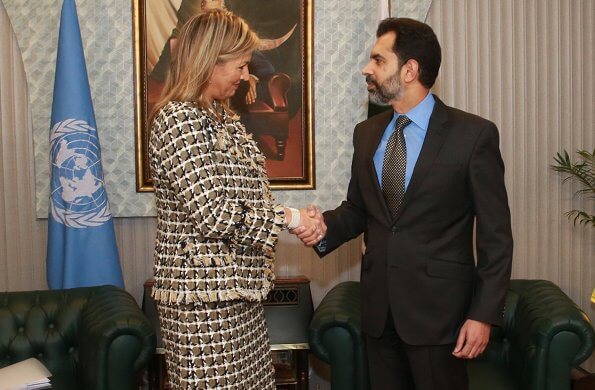
    According to the details, Queen Maxima in a meeting with State Bank of Pakistan (SBP) Governor Reza Baqir said that in the last five years, the country’s start-up tech and fintech ecosystems had made some notable progress in relation to improving their supporting networks.

    She also appreciated the progress made by the SBP and Pakistan with respect to financial inclusion while focusing on gender mainstreaming and digital financial services.

    The queen said it could be helpful to establish a pro-poor gateway for the wider acceptance of micropayment methods and introduce consumers to micropayments on a large scale and supported the steps taken by the SBP for creating a micropayment gateway in 2020.

    She, however, added that while resolving the technical issues was important, it was more challenging to encourage people to engage in digital modes of payment.

    The UNSGSA emphasised that in this regard the inclusion of new players was important, whereby they should not only be competing but also participating in expanding the delivery of services as well.