Tag: Sindh

  • 10-year-old Fatima case: Suspect Asad Shah appears in court

    10-year-old Fatima case: Suspect Asad Shah appears in court

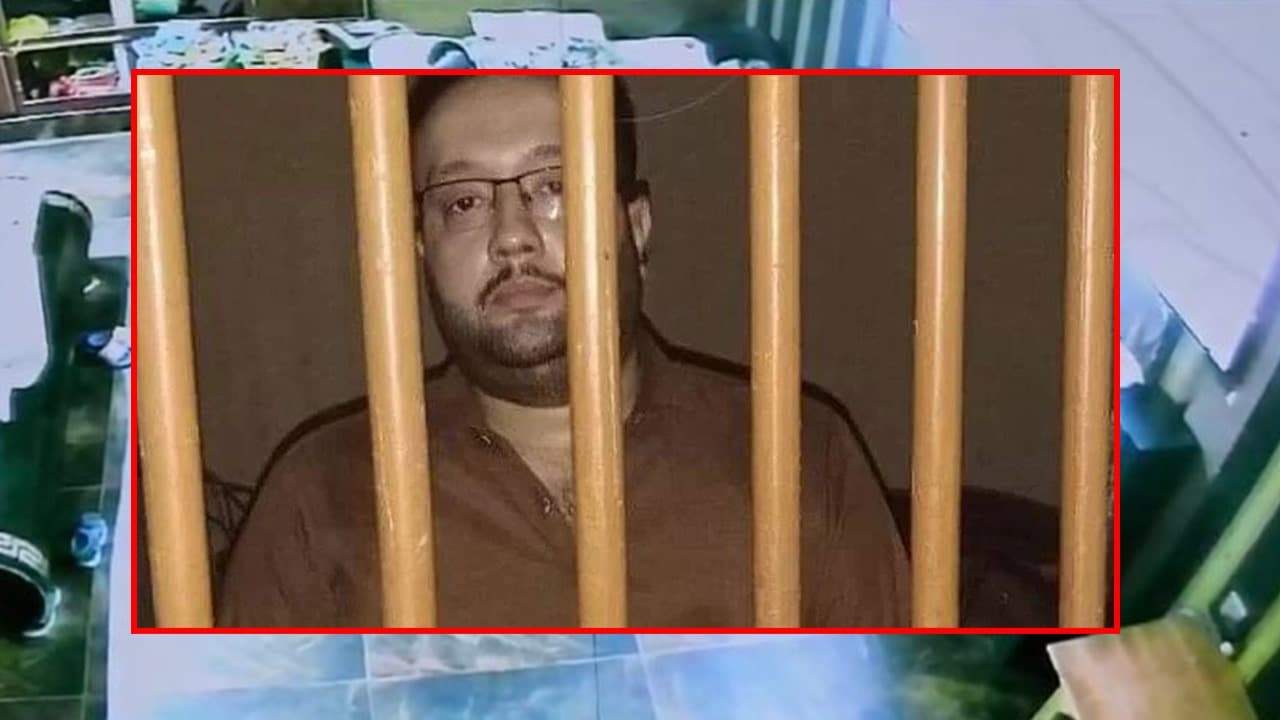
    Pir Asad Shah, compounder Imtiaz and driver Ijaz were produced in an Anti-Terrorism Court (ATC) in the rape and suspicious death of 10-year-old Fatima in Ranipur Haveli, Khairpur.

    The suspects were produced in the court after the completion of seven day physical remand.

    According to the Khairpur police, the investigation has not been completed yet, so they will seek further remand.

    Khairpur police has also said that Hina Shah and father Fayaz Shah, also accused in the case, are still on the run.

    Fatima’s case

    A domestic maid, 10-year-old child Fatima Phuriro, was found dead under suspicious circumstances in Ranipur.

    The child had been working as a domestic worker at a haveli owned by an influential local, Pir Asad Shah Jilani.

    Fatima’s mother, Shabana, was informed about the death by the employer who asked her to remove the body from the premises where two of Fatima’s sisters were also employed.

    According to DIG Sukkur Javed Jiskani, the parents initially did not share the facts of the case with the police and claimed that the girl was suffering from gastroenteritis. While her diagnosis was also confirmed by Dr Abdul Fatah Memon who treated her, the DIG revealed that Fatima was taken to the hospital either by the Pir or his staff and that the SHO was present at the time she was pronounced dead.

    It was not until videos of the child were leaked by an unknown source and circulated in social media that the case caught media’s eye. By then, the family had buried Fatima on August 15.

    The body was later exhumed and sent for an autopsy which revealed that the girl had been raped both vaginally and anally.
  • Sindh’s caretaker Interior Minister clarifies statement on mobile snatching

    Sindh’s caretaker Interior Minister clarifies statement on mobile snatching

    Earlier this month, while talking to the media, Sindh’s caretaker Interior Minister Brigadier (R) Haris Nawaz said that people should keep their mobile phone in a place where it cannot be stolen, or keep the mobile phone in an inner pocket.

    His comment led to trolling across social media as people deemed his statement absurd.

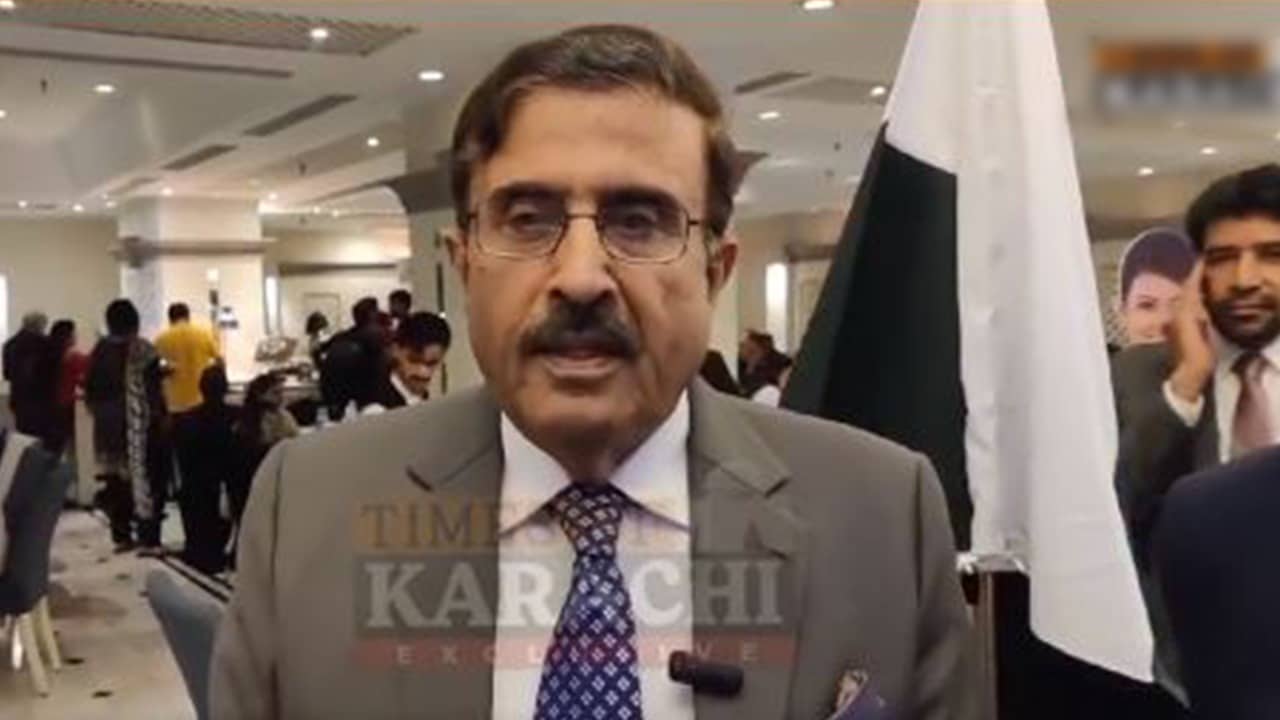
    The interior minister has now clarified his statement in a short video comment published by Times of Karachi.

    He stated that he meant a mobile phone can easily be snatched if it is in one’s hand instead of the pocket.

    Nonetheless, he added that no one should resist when someone tries to snatch the phone at gunpoint, and ensure the safety of one’s own family.

  • New HRCP report reveals human rights violations in Northern Sindh

    New HRCP report reveals human rights violations in Northern Sindh

    Human Rights Commission of Pakistan (HRCP) has released a fact-finding report titled “Northern Sindh: In Search of Solutions”, detailing violations of human rights in the region.

    The report is based upon a mission conducted by HRCP in February 2023 in which the team conducted interviews and consultations in Ghotki, Mirpur Mathelo, Kandhkot, Jacobabad, Larkana and Karachi where they met human rights defenders, lawyers, journalists, students, workers, political leaders, government representatives and law enforcement authorities.

    The report reveals the lack of law and order, inaccessibility of education and healthcare, and other barriers on basic rights.

    Due to lack of shelters for survivors, the conviction rates in gender-based violence including physical and sexual assault, abductions, premature burials and murders, cases are low and hence, violence is high. Many cases, in fact, remain unreported. Existing shelters lack medical care and legal assistance, where victims are kept in unpleasant conditions. The rooms are few while the management and staff lacks sensitivity as they are untrained.

    Similarly, religious minorities are at a threat due to discrimination, arbitrary blasphemy accusations and faith-based conversions.
    People of the province, especially those residing in kachi abadis, are vulnerable to organised crime, enforced disappearances, extrajudicial killings and exploitative feudal power systems. This too, is linked to poor governance and lack of accountability.

    Conflicts are further topped by tribal feuds, stagnating the socio-economic development.

    And then, the rehabilitation of flood victims and long-term climate sustainability measures are issues still unaddressed.

    Over and above, law enforcement personnel and fake FIRs against journalists are used a weapon to stop coverage of human rights violations.

  • Sindh’s caretaker Interior Minister has unique solution for mobile snatching

    Sindh’s caretaker Interior Minister has unique solution for mobile snatching

    With an increase in street crimes, the caretaker Interior Minister Sindh, Brigadier (R) Haris Nawaz, has suggestions for locals as to how they should protect their valuables.

    Thefts and robberies are a major problem for the people of Karachi. The most common of the street crimes is mobile snatching.

    While talking to the media, Haris Nawaz said that people should keep the mobile phone in a place where it cannot be stolen, or keep the mobile phone in an inner pocket.

    He stated that citizens should look out for themselves by staying safe as well as help the government and the police.

    His statement led to social media asking what would the government do, if citizens are supposed to do its job.

    People react

    https://twitter.com/HishamKhan1998/status/1698970013867049247?s=20
  • Love online: Yet another foreign woman marries Pakistani man

    Love online: Yet another foreign woman marries Pakistani man

    It looks like sirf KPK kay paani mein kuch khaas nahi hai, Sindh main bhee potent paani hai.

    Yet again, foreign women are meeting Pakistani men on social media apps and marrying them a year later. Humein bhi kuch samajh nahi araha. A Filipino woman named Mikona, has married a Larkana man, Oshaq, via video call, after meeting him on Facebook where they became close friends. According to ARY, the nikah ceremony took place at a local hotel where friends and family members were present.

    Speaking to the media, Oshaq said he will secure a visa and fly out to Philippines to be with his wife.

    The wedding follows a string of online romances where foreign women flew to Pakistan to marry men they formed connections with online. KPK was leading the race with more marriages held in the month of July than all the December shaadi seasons compiled. On 30 July, Rosa flew from Mexico to Buner, KPK, to marry Izaz Ali, whom she had met on Facebook.

    Read more: Ye KP mein kya ho raha hai: Mexican woman flies to Pakistan to marry Facebook lover

    Previously, a woman from Chile developed a relationship on Tiktok with Ikramullah from KP, and then flew to the province in July to marry him.

    Read more: Humaray paani mein kuch hai? In third love story this month, Chile woman flies to marry Pakistani lover

  • More than 60 government officials close to PPP added to stop list

    More than 60 government officials close to PPP added to stop list

    The names of more than 60 Sindh government officials close to the Pakistan People’s Party (PPP) have been out on the stop list, Azaz Syed has reported for The News. The name of Mukesh Chawla, a PPP leader and former provincial minister, is also on the list.


    According to the report, the National Accountability Bureau (NAB) is conducting an investigation against Sindh PPP leader Mukesh Chawla, asking that he be added to the stop list.

    These officials will be investigated by NAB Karachi, Azaz Syed has said.

    On the other hand, according to a report filed by Hasnaat Malik in The Express Tribune, the gap between PPP and the security establishment has grown after the dissolution of Sindh Assembly.
    PPP was unhappy to see that government officials on prominent posts were being transferred during the caretaker government, the report said.

  • Gold price reaches Rs234,000 per tola, nearing new record high

    Gold price reaches Rs234,000 per tola, nearing new record high

    Gold prices in Pakistan continued to rise on Tuesday, influenced by the Pakistani rupee’s decline against the US dollar and an uptick in global prices. 

    According to the All Pakistan Gems and Jewellers Sarafa Association, the cost of 24-carat gold settled at Rs234,500 per tola, marking a substantial increase of Rs4,600. Similarly, the price of 10 grammes of gold rose by Rs3,944 to reach Rs201,046.

    It is expected that the price of gold might reach unprecedented levels due to the relentless and rapid decline of local currency against the greenback.

    The movement of gold prices in Pakistan closely follows the path of the US dollar due to the country’s reliance on gold imports. 

    The Pakistani rupee saw a notable decrease, falling to a new all-time low against the US dollar. It ended at Rs299.01 rupees per dollar, reflecting a decline of Rs1.88, as reported by the State Bank of Pakistan.

    Currency experts attribute the surge in gold prices to the recent depreciation of the rupee. 

    With growing concerns about the country’s economic situation, investors are turning to gold as a safe-haven asset. This shift has resulted in a significant increase of Rs12,700 per tola in just one week.

    Read more: PKR to USD rate

    Notably, the hike in gold prices coincided with political turmoil and a decrease in the local currency’s value, leading to an all-time high valuation of Rs240,000 per tola on May 10, 2023. On the international front, the price of gold saw a $10 increase, reaching $1,901 per ounce on Tuesday.

  • Zulfikar Jr forms Sindh’s first locally initiated wildlife foundation

    Zulfikar Jr forms Sindh’s first locally initiated wildlife foundation

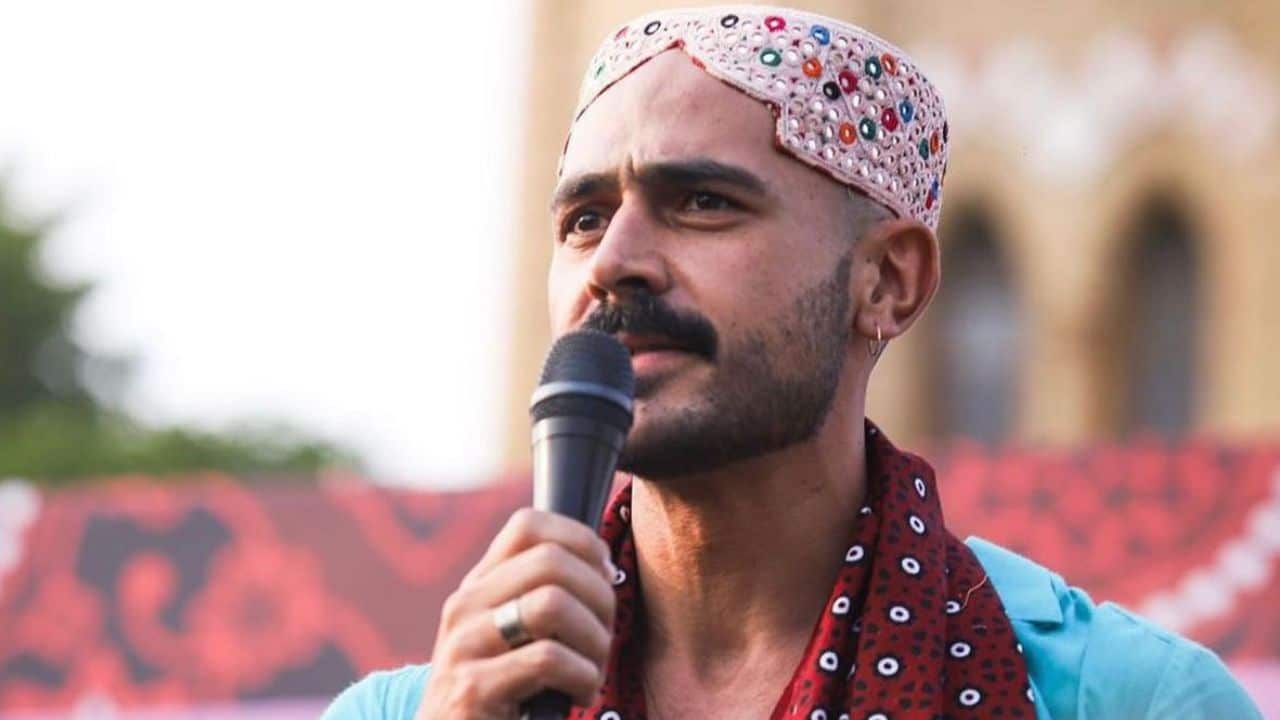
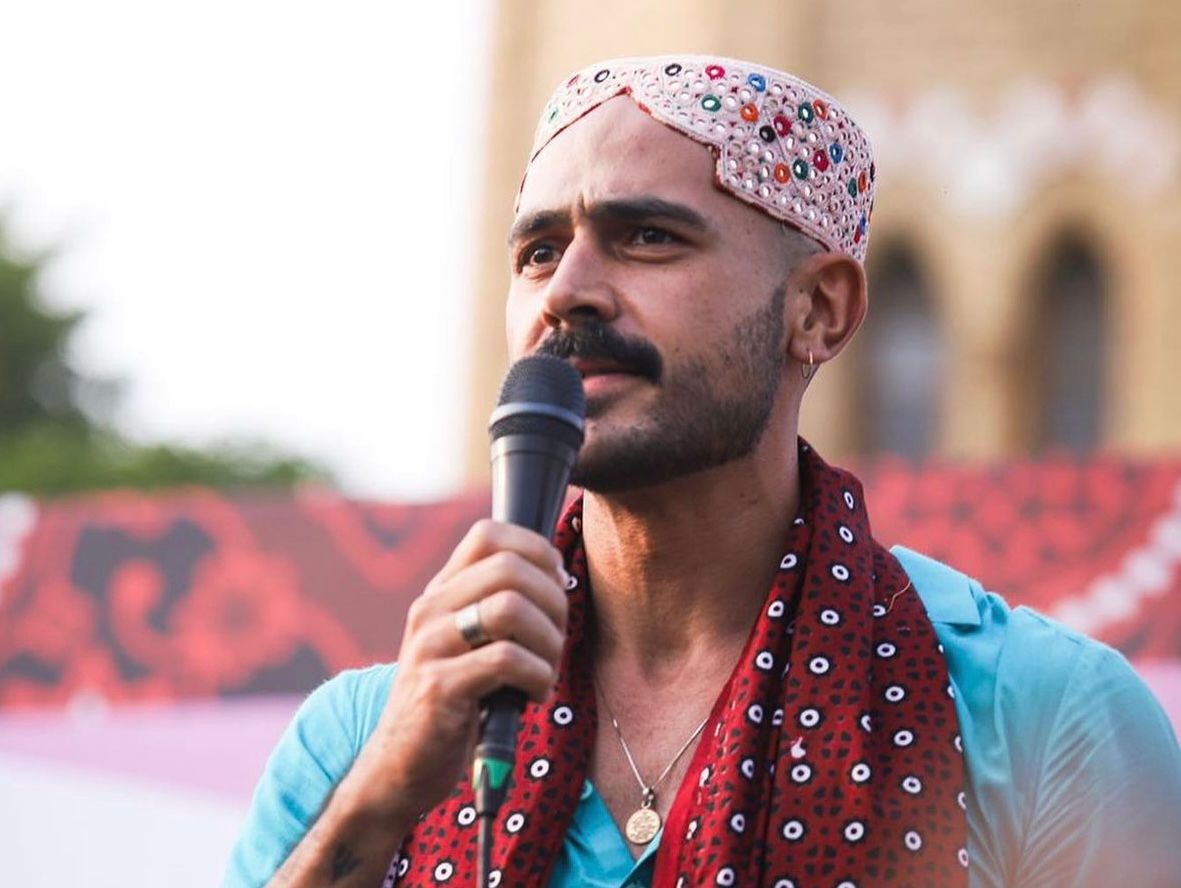
    Zulfikar Ali Bhutto Jr., grandson of former Pakistani President and Prime Minister, Zulfiqar Ali Bhutto, has taken a step forward with advocacy for wildlife and climate justice. In his latest Instagram post, he has announced the launch of Bulhan Foundation.

    Bulhan Foundation aims to “foster a culture of care and compassion for all living beings”. Further details have been given on the foundation’s official Instagram page where they highlight their vision. Their goal is to “operationalize and implement pro-nature and pro-people laws”. Under this ambit, they look forward to the preservation of wildlife as well as indigenous visual cultures.

    Acknowledging that Pakistan is one of the world’s most vulnerable countries to climate change, the foundation also intends to be one of the “first responders providing on-the-ground relief” to humans and animals during natural calamities like floods, drought, possible economic-induced famine etc.

    With a solutions-oriented approach, Bulhan Foundation will be Sindh’s first locally initiated wildlife foundation. Bhutto’s sister, author Fatima Bhutto and friend, Menaal Munshey, are the co-founders.

    The mascot for the foundation is the Indus River Dolphin, known locally as Bulhan.

    Zulfikar Ali Bhutto has been working for wildlife protection for a long time now, especially when it comes to dolphins. Earlier this year, at his art exhibition at Como Museum Lahore, he dedicated an entire section to the blind dolphins of river Indus.

  • Retired Justice Maqbool Baqar becomes Interim CM Sindh

    Retired Justice Maqbool Baqar becomes Interim CM Sindh

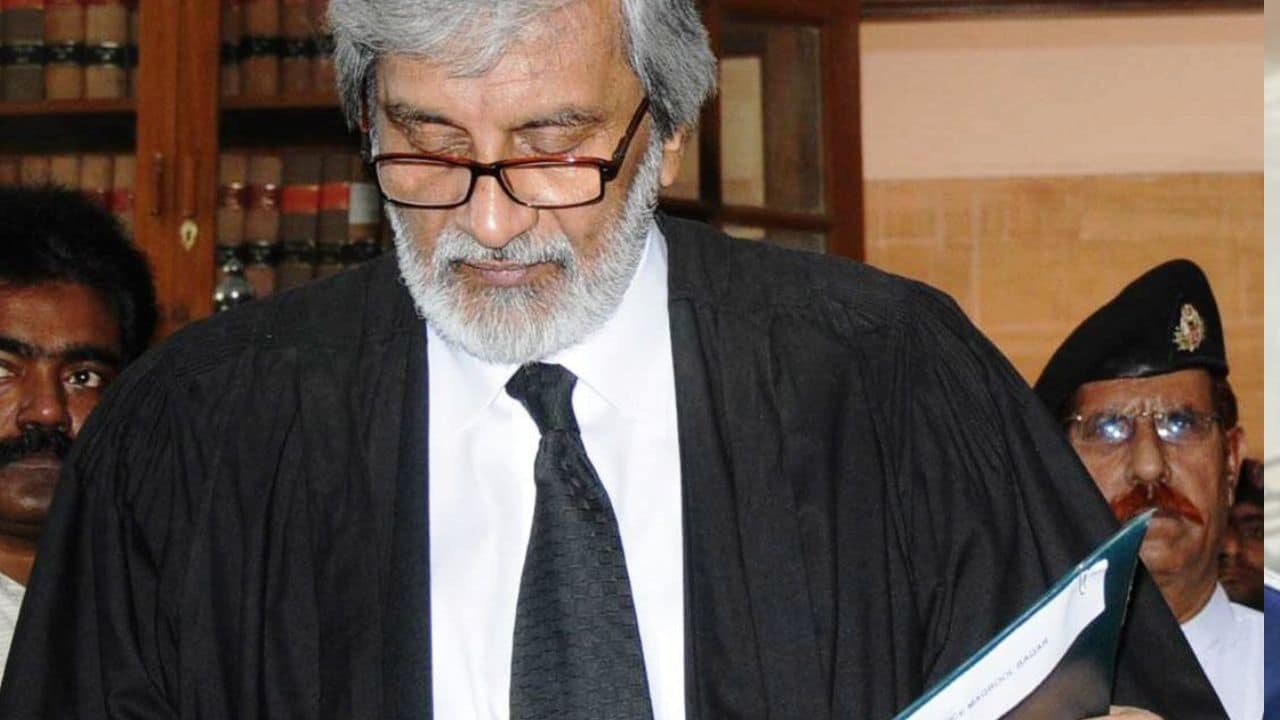
    On Monday evening, Sindh’s Chief Minister (CM) Murad Ali Shah, and the Leader of the Opposition in the dissolved Sindh Assembly, Rana Ansar, agreed on appointing Justice (retd) Maqbool Baqar as the eighth interim CM of Sindh. He will be taking his oath tomorrow.

    Around midnight yesterday, Mayor Karachi Murtaza Wahab Siddiqui posted on X (former Twitter), “I would like to inform you that the consultative process between CM Sindh & Opposition Leader under Article 224(1A) took place on 12th, 13th & 14th of August. Both leaders have concurred to nominate Justice Maqbool Baqar as the interim Chief Minister of the Sindh Government.”

    Sindh CM House issued a brief statement that said, “After three-day consultations between Sindh Chief Minister Syed Murad Ali Shah and Leader of Opposition in the dissolved provincial assembly Rana Ansar, the two have agreed on the appointment of retired justice Maqbool Baqar as caretaker chief minister.”

    “The summary for the formal appointment of Justice Baqar has immediately been forwarded to the Sindh governor Kamran Khan Tessori,” the statement added further.

    The ruling party in Sindh, PPP, proposed Justice Baqar’s name for the interim CM position.

    Who is Justice Baqar?

    Justice Maqbool Baqar is a retired judge of the Supreme Court of Pakistan. Born in Karachi on April 5, 1957, Justice (retd) Baqar did his LLB from the University of Karachi in 1979. He became the Chief Justice of the Sindh High Court on September 20, 2013, and was elevated to a Judge of the Supreme Court of Pakistan on February 17, 2015. Justice Baqar retired as a Supreme Court judge on April 4, 2022. His name was also under consideration in 2022 for the position of Chairman of National Accountability Bureau (NAB).

    During his service at the SHC, Justice Baqar’s decisions in terrorism cases infuriated terrorist organizations, leading to an attack by Lashkar-e-Jhangvi in a bombing incident on June 26, 2013, in Karachi. He, along with law enforcement personnel, sustained injuries during the attack. He returned to work after undergoing months of restorative surgery.

    One of his notable judgments is in the case of the Baldia factory fire, which resulted in significant compensation for the victims of the incident.

    Justice (retd) Baqar has also frequently highlighted shortcomings within the judiciary. Even in his farewell address at the Supreme Court, he admitted, “I believe that despite our efforts, we have not met expectations. Backlogs and pending cases remain exceedingly high across all courts in the nation. This reality should concern all stakeholders. It is vital that we eliminate obstacles to swift and affordable justice and take steps to prevent unnecessary delays in adjudication with genuine dedication and a focused approach to fulfilling our constitutional role.”

  • Zulfikar Ali Bhutto Junior speaks out against killing of endangered Indus River Dolphin

    Zulfikar Ali Bhutto Junior speaks out against killing of endangered Indus River Dolphin

    Zulfikar Ali Bhutto Junior, the grandson of former Pakistani President and Prime Minister Zulfiqar Ali Bhutto, has voiced distress over the killing of the endangered Indus River Dolphin. Bhutto Junior, a visual and performance artist and curator known for his advocacy for wildlife and climate justice, highlighted the incident in an emotional video statement on Instagram.

    Recalling a letter written by his aunt, the late former Prime Minister Benazir Bhutto following the death of Zulfiqar Ali Bhutto, Bhutto Junior drew attention to his grandfather’s deep bond with the region of Sindh and its environment. The letter described Zulfiqar Ali Bhutto as being akin to the River Indus – “strong and kind”. Bhutto Junior underscored his late grandfather’s efforts to protect the Indus River Dolphin, known locally as ‘Bhulan’, including imposing a hunting ban on the species.

    Expressing deep sorrow, Bhutto Junior relayed the tragic news of a recent incident where an Indus River Dolphin was killed by hunters. He passionately asserted, “If you have killed one dolphin, it’s like you have killed a part of Sindh.” He pleaded with the culprits to refrain from such actions in the future, emphasizing the significance of the creatures and the importance of their preservation.

    The Indus River Dolphin, or ‘Bhulan’, is a unique species of toothed whale endemic to the Indus River Basin in Pakistan and northwestern India. It is the first discovered side-swimming cetacean and is known for navigating and hunting through echolocation. Despite being the national mammal of Pakistan and the state aquatic animal of Punjab, India, its population has significantly declined due to human activities, including entanglement in fishing nets, water poisoning from industrial and agricultural chemicals, irrigation, and dam construction.

    Protecting the remaining sub-populations is critical for the species’ long-term survival.