Tag: Sindh

  • APCC likely to propose Rs900-1,000 billion macroeconomic framework for budget 2023-24

    APCC likely to propose Rs900-1,000 billion macroeconomic framework for budget 2023-24

    The Annual Plan Coordination Committee (APCC) is poised to recommend a substantial macroeconomic framework and the size of the federal development outlay amounting to approximately Rs900-1,000 billion for the fiscal year 2023-24. This recommendation comes ahead of the upcoming budget and is expected to shape the economic policies and priorities of the country for the next fiscal year.

    In an effort to address the Sustainable Development Goals (SDGs), the government plans to allocate Rs90 billion for the controversial Sustainable Development Goals Achievement Programme (SAP) specifically designed for parliamentarians. This proposed allocation is a significant increase from the revised estimates of Rs111 billion allocated in the outgoing financial year.

    Moreover, the government is currently working towards raising the allocation of the SDG Achievement Programme even further, aiming to reach Rs116 billion for the ongoing fiscal year. Notably, parliamentarians from Balochistan and Sindh provinces have primarily presented flood-related schemes under this program during the current fiscal year. The World Bank and Asian Development Bank (ADB) are also contributing $3 billion in loans for flood-related initiatives, highlighting the need to establish mechanisms that prevent overlap and ensure optimal utilization of funds.

    A substantial portion of the development schemes in Sindh and Balochistan, ranging from 50 to 60 per cent, focused on flood-related projects during the outgoing financial year. However, concerns have been raised about one political party, a significant ally of the ruling coalition, demanding that funds on behalf of their parliamentarians be channeled through the party’s political leader for distribution among its members.

    According to The News, the APCC, scheduled to meet today in the Ministry of Planning, will consider approving the macroeconomic framework, which includes a targeted real GDP growth rate of 3.5 per cent and a Consumer Price Index (CPI)-based inflation rate of 21 per cent for the budget of 2023-24. These figures are based on a working paper prepared by the Ministry of Planning and reflect the government’s economic outlook and goals for the upcoming fiscal year.

    The Ministry of Finance has provided an indicative budget ceiling of Rs700 billion for the Public Sector Development Programme (PSDP) in the next budget. However, the Minister for Planning, under the guidance of Prime Minister Shehbaz Sharif, aspires to increase this amount to Rs800 billion. Additionally, a proposed allocation of Rs200 billion for the Viability Gap Fund (VGF) through public-private partnerships (PPP) would bring the total PSDP size to a proposed Rs1,000 billion at the federal level for the upcoming financial year.

    In an effort to address infrastructure needs, the share of the National Highway Authority (NHA) in the proposed PSDP is expected to decrease, ranging from Rs90 billion to Rs100 billion, due to the NHA’s inability to fully utilise the allocated funds in the ongoing financial year. The government is also considering allocations for flood mitigation and reconstruction efforts, as well as the inclusion of the Diamer Basha Dam project in the upcoming budget for 2023-24.

    As the APCC finalises its recommendations and the budgetary process unfolds, the government aims to strike a balance between addressing developmental needs, achieving SDGs, and ensuring efficient utilization of funds for the benefit of the nation.
  • Karachi needs Shehbaz Speed: BBZ

    Karachi needs Shehbaz Speed: BBZ

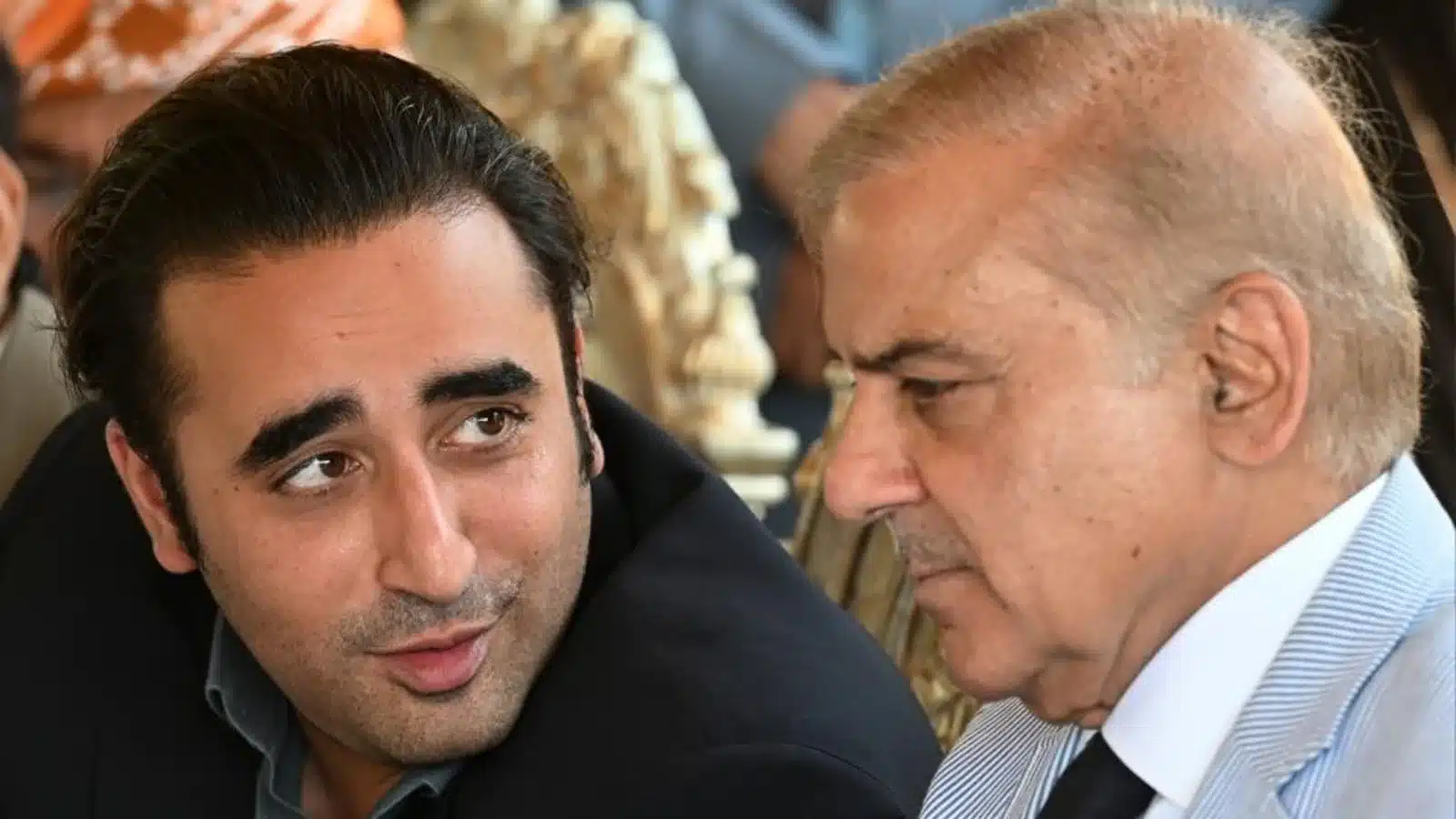
    Foreign Minister (FM) Bilawal Bhutto-Zardari has said that Karachi needs Prime Minister (PM) Shehbaz Sharif’s speed.

    Shehbaz Speed was a term popularly used for projects completed in a short duration when Sharif was the Chief Minister (CM) of Punjab.

    While giving a speech at the groundbreaking ceremony of K-IV project, Bilawal addressed PM Shehbaz, stating, “We are looking at you, you should form your own team to solve these problems being faced by Sindh including Karachi.”

    He added that the prime minister has the support of the two major parties of Sindh and all partners of the coalition government want to solve the problems of the country together. “When we all continue to work together, all of Pakistan’s problems can be solved,” he said.

    Talking about Karachi, he said that if the government pays attention to the metropolis according to its potential, then not only the IMF could bid farewell, but the whole nation could also stand on its own feet.

    About the May 9 episode, he warned that if serious crimes like setting fire to Jinnah House Lahore, demolishing martyrs’ memorials and attacking military installations are neglected, then running this country will become not only difficult but impossible. He also asked that if the conspiracy of May 9 events had been hatched either in Bilawal House, Raiwand or Nine Zero, what would have been the reaction to it.

    Bilawal said that when the police went to comply with the court notice in March this year, Zaman Park had been turned into a battleground. He added that even during PTI’s long march, participants had arms, but the government did not take action, adding that the Prime Minister could have banned PTI on the basis of foreign funding case and Al-Qadir Trust case if he wanted. “But we didn’t want the impression of political vendetta and setting a bad precedent,” he said.

  • Sindh becomes the first province to introduce teaching license policy

    In a historical move, Sindh has become the first province to introduce a teaching license policy for instructors from the public and private sector.

    Under this policy, two teacher training insitutes will be established under the Sindh Teacher’s Education Development Authority (STEDA) and a board will be set up to oversee teacher trainings as well as provide professional licenses.

    With this initiative, anyone who wishes to join with a Bachelor’s in Education (BEd.) can give the exam, after which they will be provided with a license to teach students from one of the three categories: elementary (Grades 1-8), primary (Grades 1-5) and secondary (Grades 6-12).

    The Sindh government has also taken a step to attract more people towards the teaching sector by opening up 700 new vacancies for elementary school teachers for BPS-16 across the province, which will be offered to those with a BEd and a teaching license obtained by passing the exam.

    Speaking on the success of the policy, the Provincial Minister of Sindh for Education, Culture, Tourism and Antiquites, Syed Sardar Ali Shah said:

    “Conceptualising and bringing the teaching license policy to life has not been easy. However, I am grateful to Aga Khan University’s Institute for Educational Development (AKU-IED), Sindh Teachers Education Development Authority (STEDA), Durbeen and all other partners who have worked tirelessly to make this policy a possibility. The success of the next generation of teachers and students ultimately depends on its smooth implementation.”

    He also added that Sindh was the only province in Pakistan to pass the landmark bill which shall improve the teaching profession and attract mroe bright minds to the field:

     “Sindh is the only province that has approved a teaching license policy, which represents a proactive approach to recognising the value and importance of effective teaching. With the policy in place, the Sindh Government has laid the foundation for a more robust and professional teaching workforce, which will have a positive and lasting impact on the educational landscape in the province.”

  • Pink taxis for women in Sindh

    The Sindh government is all set to launch a “Pink Taxi Service” featuring electric cars for facilitating female citizens of the province.

    The development was announced by Minister for Information Sharjeel Inam Memon.

    The minister said that initially, 200 electricity-powered taxis will start operating in Karachi, of which fifty will be women-only taxis driven by female drivers. He said that the hiring of female drivers and setting up of charging and parking depots is yet to be done.

    He said that the project will also provide job opportunities to unemployed youth, while eco-friendly taxis will save oil worth billions of rupees.

    Prior to this, the government also launched a pink bus service for women which is being frequented by a large number of female commuters.

  • History made as Shahzadi Rai becomes first transgender to serve on Karachi Metropolitan Corporation

    Shahzadi Rai announced on her Twitter account on Wednesday that she has become the first transgender person to serve on the Karachi Metropolitan Corporation (KMC), the first such appointment in history. In a tweet she said:

    “I’m excited to share that I have submitted my papers KMC for transgender/Khawajasara reserved seats. It is the first time in Pakistan’s history that such an opportunity has been available, and I am grateful to the @PPP_Org @BBhuttoZardari @SyedNasirHShah @BakhtawarBZ @SaeedGhani1.”

    Speaking to The Current, Rai talked about her goals to help empower the transgender community and ensure that protecting human rights for all remains a priority for the organisation:

    Our priority is that any policy or project initiated should be inclusive for transgender people. We want to work for all the people in Karachi and make life better for them, whether it is men, women or khawaja sira people. We want to implement human rights because I am a feminist and a human right’s activist for the last 12 years, so when we enter politics we shouldn’t forget about our basic principles.”

    Since her announcement, civil society bodies and transgender activists on Twitter have offered congratulations on the historic feat, welcoming it as a necessary step towards including the transgender community into all kinds of policy making.

    https://twitter.com/Bubbleskhanum/status/1661354767380099072?s=20
  • Student dies from heatstroke during board exam in Sindh

    A tragic accident took place at the Government Degree College in Khairpur, Sindh, when a student, Mehtab Ali, passed away during Grade XI intermediate board examinations due to load shedding in extreme heat.

    According to The Nation, Ali fainted during his exam and was rushed to the hospital where he passed away despite attempts to revive him.

    While students are giving their final examinations, the ongoing power outrage has exposed them to the heatwave, putting many at risk of suffering from heat strokes or nose bleeds. The Sindh Minister for Board and Education, Ismail Rahoo, has encouraged authorities to ensure that examination halls have uninterrupted power supply so that such fatal incidents can be avoided.

  • Agar PTI churrwaana chaahtay ho toh goli maar do: Ali Zaidi sheds tears

    Agar PTI churrwaana chaahtay ho toh goli maar do: Ali Zaidi sheds tears

    Pakistan Tehreek-e-Insaf (PTI) Sindh President Ali Zaidi held a press conference on Wednesday to clear the air about rumours of him resigning from the party.

    Stating clearly that he is not leaving the party, Zaidi said that it is unfortunate that the speculations are coming from within PTI.

    Agar PTI churrwaana chaahtay ho toh mujhe mathy par goli maar do” (If you want me to leave PTI, shoot me in the head) he said, adding that “no one can force me to take this step.”

    Getting emotional and teary-eyed, he said that he served the party for 23 years and that PTI is his party. “I will leave PTI when Imran does,” he said of his party chairman.

    Talking about May 9, Zaidi said that he also comes from an army background hence the episode that took place after Imran Khan’s arrest was condemnable.

    The PTI leader said that he will never allow violence.

    Zaidi is under house arrest by the Sindh government.

    It was being speculated that special treatment is being given to Zaidi in comparison to his party fellows.

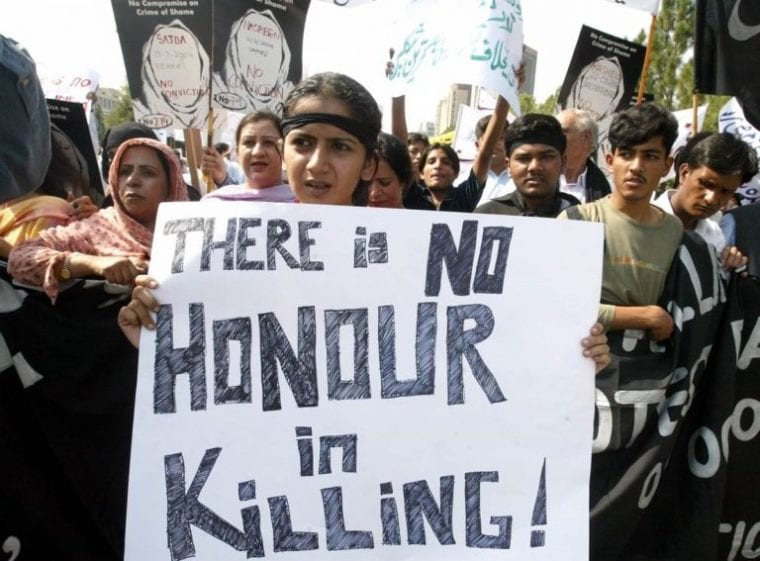
  • Father kills daughter in the name of honour

    Father kills daughter in the name of honour

    A father has killed his own daughter and her alleged friend in Sindh in the name of honour.

    The police in Jamshoro has arrested two suspects in connection with the incident and a heavy contingent of forces have been deployed in the area to avoid any untoward incident.

    In 2022, a report stated that at least 217 people, including 152 women, have been killed in so-called honour-related crimes across Sindh.

    Hundreds of women are killed each year in Pakistan by family members over perceived loss of “honour”.

    Many human rights activists have raised alarms over the issue and while numerous laws have been passed to prevent honour killing, the numbers continue to get higher which each passing year.

  • PM Shehbaz’s wife attended Fatima Bhutto’s wedding

    PM Shehbaz’s wife attended Fatima Bhutto’s wedding

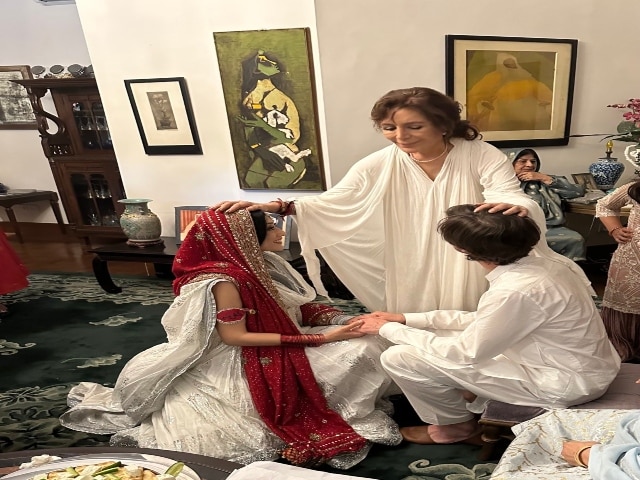
    First Lady of Pakistan and bestselling author Tehmina Durrani attended former Prime Minister (PM) Zulfiqar Ali Bhutto’s granddaughter Fatima Bhutto’s wedding which took place in Karachi a few days ago.

    While sharing a picture of herself with the newlyweds, Durrani wrote: “Fatima Bhutto and Gibran’s marriage is an important message of simplicity for the entire nation.”

    It is pertinent to mention that the history of ties between the Bhutto family and Tehmina goes way back to the 1970s when she was married to former Punjab Governor Ghulam Mustafa Khar, who was one of Bhutto’s closest confidants. However, after Tehmina got divorced from Khar, she remained in touch with Bhutto’s son Murtaza’s family.

    Fatima Bhutto, who is also a famous writer, got married in an intimate ceremony at her family home in Karachi’s 70 Clifton on April 28, with the simple nuptials held in her grandfather’s library.

  • Cotton production in Pakistan drops to 40-year low due to flood damage

    Cotton production in Pakistan drops to 40-year low due to flood damage

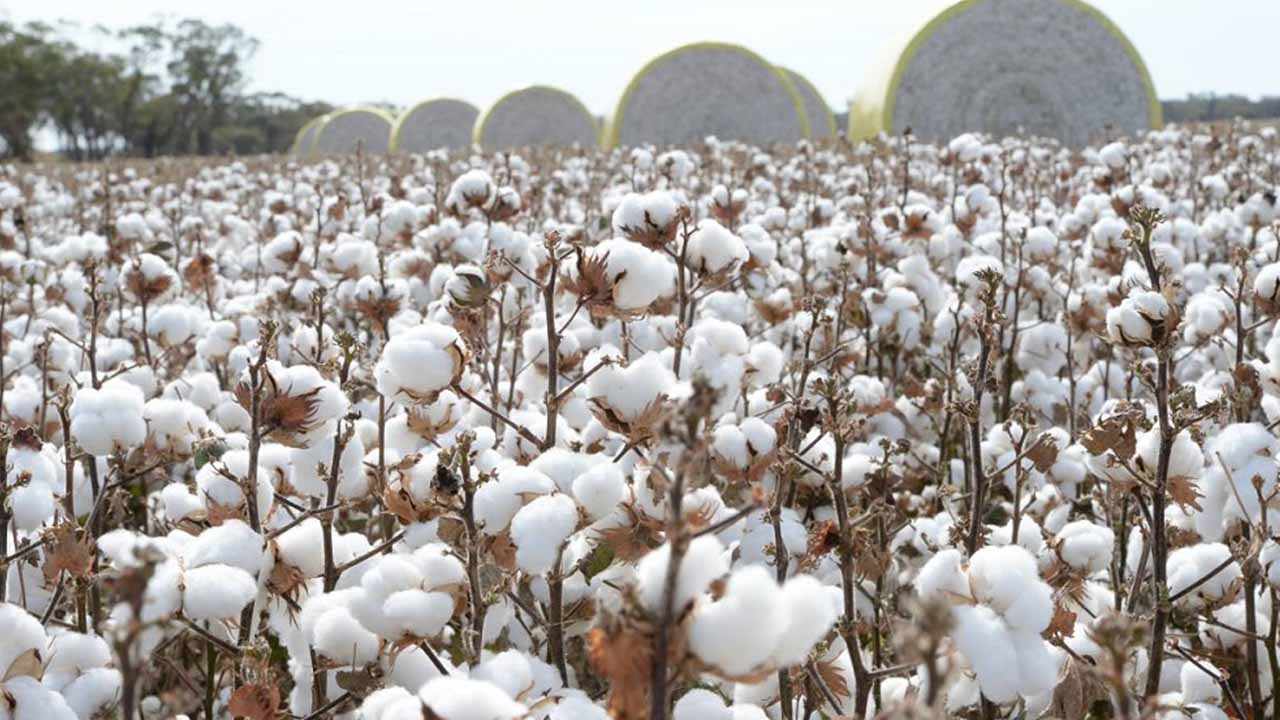
    According to data released by the Pakistan Cotton Ginners Association (PCGA), cotton production in the country has decreased by 34 per cent this year compared to the previous season. The final figures for the crop year 2022-23 show that Pakistan produced 4,912,069 bales, which is the lowest in around four decades, as opposed to 7,441,833 bales produced in the 2021-22 season, resulting in a year-on-year decline of 2,528,764 bales or a 34 per cent loss.

    This drop in production means that the textile industry will have to import around 10 million bales to meet its annual demand of 15 million bales. However, mill consumption in the year 2022-23 has also been reported at 8.8 million bales, the lowest in over 20 years, primarily due to severe import financing issues.

    Market sources state that textile mills have so far signed import agreements for 5.5 million bales, while they have purchased 4,605,449 bales from the local market. Last year, the mills had bought 7,332,000 bales from the domestic market. Ginners report that they are still holding 301,720 bales in their stocks, compared to last year’s inventory of 93,833 bales.

    The massive drop in cotton arrival is blamed on flash floods and heavy rains during last year’s monsoon that devastated large swathes of agricultural land in the country, particularly in Sindh and Balochistan provinces.

    Interestingly, despite strong demand in international markets, only 4,900 bales of white lint were exported this year, compared to the previous year’s figure of 11,000 bales, a fall of over 69 per cent. The main destinations for Pakistan’s raw cotton are the Philippines, Italy, Bangladesh, Greece, and France.

    Province-wise, Punjab registered over a 32 per cent year-on-year decline in output, producing 3,033,050 bales this season against 3,928,690 bales last season. Sindh reported over a 46 per cent year-on-year loss in yield, with the lint production in the province this year standing at 1,879,019 bales against 3,513,143 bales last year.

    Pakistan’s cotton output reached a high of 14.1 million bales in the year 2004-05. But it dropped to 7 million bales in 2020-21 and about 9.45 million bales in 2021-22, as the country’s per acre yield contracted to half of the crop productivity in other countries of the region.

    A recent meeting of the Economic Coordination Committee (ECC) expressed concern over the continuous decline in cotton production and acreage over the years. As a result, the ECC approved Rs8,500 per 40kg as the intervention price on a summary submitted by the Ministry of National Food Security and Research to attract growers towards the crop.

    The ministry informed the ECC that in order to draw up a cotton intervention price proposal, consultations were held with all stakeholders, including the provincial governments, growers, and cotton associations in January and February. Stakeholders, including the All Pakistan Textile Mills Association, called for pegging the cotton intervention price with the import parity price in line with the policy adopted over the past two years.

    To review market prices and propose intervention on a fortnightly basis, the ECC constituted a cotton price review committee with the mandate to review market prices and propose intervention on a fortnightly basis.