Tag: social media

  • Meta secures AI patent to keep dead alive on social media

    Meta secures AI patent to keep dead alive on social media

    Meta Platforms, the parent company of Facebook, Instagram and WhatsApp, has been granted a patent for an artificial intelligence system capable of replicating a user’s social media activity, including posting, commenting and responding to messages after their death.

    Filed in 2023 and approved in late December, the patent outlines a system that trains a large language model on a user’s historical activity to recreate their online behavior.

    The filing, which lists Meta Chief Technology Officer Andrew Bosworth as the primary author, describes how the AI could generate posts, likes, comments and direct message replies using data such as past content, interactions and engagement history. 

    While it could also simulate video or audio calls, according to the patent, the system may maintain a user’s presence during long absences or after death, noting that inactivity has a lasting impact on the experience of followers who cannot interact with the user.

    Meta has stated the patent is conceptual and has no immediate plans to develop or deploy the system. A company spokesperson said that patents are often filed to protect ideas that may never be commercialised.

    However, the concept aligns with remarks made by CEO Mark Zuckerberg in 2023, when he suggested AI could help people interact with digital representations of loved ones, provided it operates with user consent.

    It merits a mention that the concept is not unique. Microsoft patented a chatbot in 2021 designed to simulate deceased individuals, public figures or fictional characters. Several startups have since launched services offering AI-driven memorial avatars. 

    The technology raises legal and ethical questions, particularly regarding post-mortem privacy, as noted by Edina Harbinja, a University of Birmingham professor specialising in digital rights.

    Public response to the news has been largely critical. Users expressed concern over the potential for AI to manipulate the digital identities of the deceased.

    “Imagine arguing with someone online and they’ve been dead for three years,” wrote one user, while another said, “That should be illegal. How can they co-opt the words and data and digital likeness of a dead person without that person’s permission or the permission of their family?” 

    Others highlighted risks to social networks, noting, “Imagine finding out months later that your friend who died was actually an AI chatbot. This isn’t about personal choice when it affects everyone in someone’s network.” 

    Comparisons to fictional scenarios also appeared, with one reaction stating, “So Black Mirror was a product roadmap.”

    One comment used the news to make a joke about politics, stating, “Oh my god. We’re never getting rid of Trump.”
  • Pakistan removes over 500 social media accounts linked to banned groups

    Pakistan removes over 500 social media accounts linked to banned groups

    Pakistan has shut down over 500 social media accounts that are reportedly associated with banned militant groups, as part of a coordinated crackdown with international platforms.

    Information from the National Cyber Crime Investigation Agency (NCCIA) and the Pakistan Telecommunication Authority (PTA) indicates that more than 850 accounts were flagged on platforms such as Facebook, Instagram, TikTok, X, Telegram, and WhatsApp. Among these, 533 accounts have been deleted, while actions regarding the remaining accounts are still in progress.

    Officials have stated that these accounts were linked to organisations like Tehreek-e-Taliban Pakistan (TTP), Baloch Liberation Army (BLA), and Baloch Liberation Front (BLF). All three groups are banned in Pakistan and recognised as proscribed entities by the United Nations (UN), the United States (US), and the United Kingdom (UK). The total number of followers for the blocked accounts exceeded two million.

    The NCCIA and PTA collaborated to identify and report these accounts, working with representatives of the platforms to provide information and request their removal. Federal IT Minister Shaza Fatima Khawaja secured direct cooperation from Telegram, despite the app being banned in Pakistan.

    The level of compliance varied among the platforms. Facebook and TikTok removed more than 90% of the accounts reported, while X and WhatsApp acted on approximately 30% of the requests. 

    The government has called for increased international cooperation to combat the use of social media by prohibited organisations. Officials have urged platforms to implement precautionary measures, including permanent bans on accounts linked to such groups and the application of artificial intelligence systems to identify and eliminate related content.

    Authorities noted that, although extremist content is absent from mainstream Pakistani media, online platforms continue to be used for recruitment and incitement. They proposed creating direct, rapid-response communication channels between platform operators and Pakistani regulators to strengthen enforcement.

  • ‘I can’t even sleep at night’: Nimra Khan on social media trolling

    ‘I can’t even sleep at night’: Nimra Khan on social media trolling

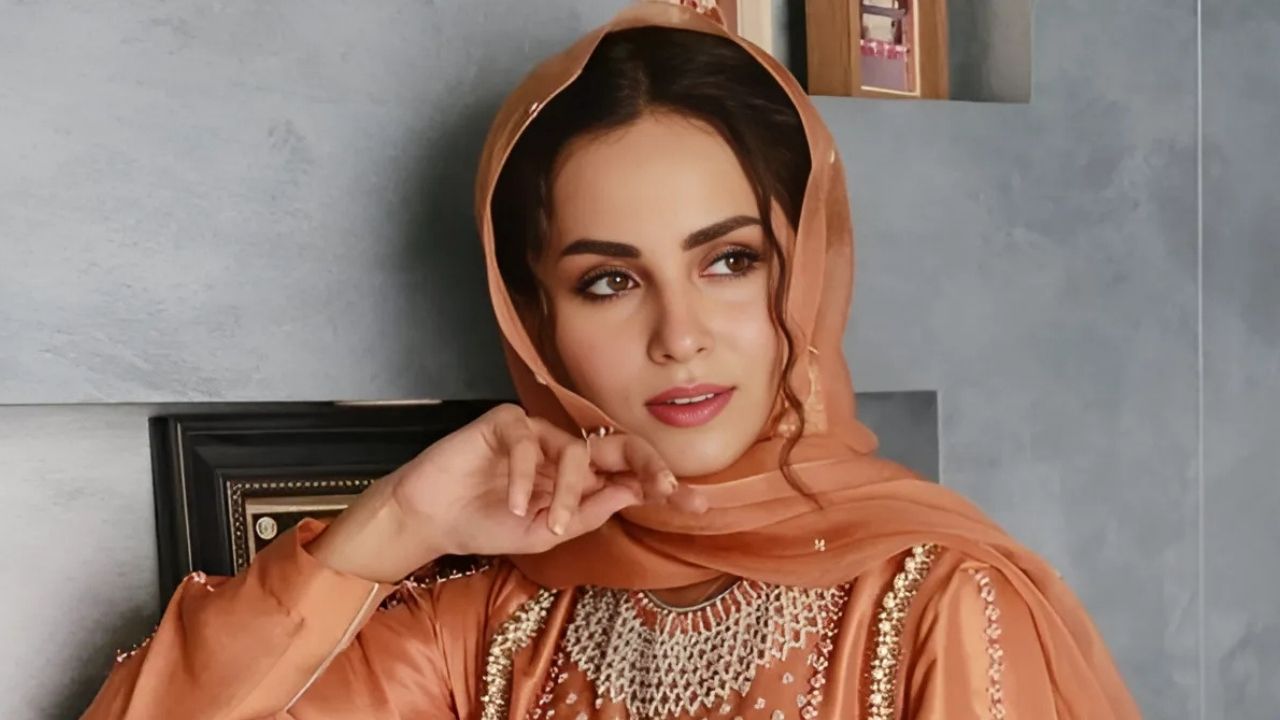
     The pressure to keep up the perfect image on social media is tough for famous people, and actress Nimra Khan is no exception. Dealing with constant judgement and criticism , the Bhool actress has opened up about how tolling has impacted her mental health

     Rabbina Shirjeel said to her, “On social media, you shared happy pictures, but you didn’t share what you were actually going through at the time. Do you think, as a society, we have become too dependent on the idea that we must always share happy pictures?”

    Nimra Khan replied, “Tell me, all of you sitting here, don’t you all have your own struggles in life? Everyone is fighting their own battles. Would you feel like opening social media at 11 or 12 at night and seeing everyone’s struggles? People prefer to see happy, uplifting content to distract themselves. So, I feel that society doesn’t offer us acceptance. If you post something good, you’ll receive good feedback. But if you share something that reflects your pain, you’ll be met with endless judgments. “

    The Blind Love actress also discussed how people’s comments on her social media posts can affect her deeply.

     “During this phase of my life, I learned that people’s perspectives are not my reality. That’s why I don’t even open the comment section. What I wear, how I feel, I know my reasons for it. But people don’t know, and they’ll comment on it in a second. People think we are unaffected by it, but it does affect us a lot. Sometimes, I can’t even sleep at night because of it,”  Nimra said.

    Nimra also addressed a deeper issue close to her heart, sharing a message about personal safety.

    “I just wanted to tell people on social media, ‘Don’t focus on me. Focus on the crime.’ Every girl has the right to walk freely just like men roam freely on the streets. Why do we need to leave the country to achieve this sense of security? We should have it here, within our own country, within our own boundaries, she said

     Nimra then talked about the pressure to present personal life on social media.

     “Sometimes, it’s a good distraction, a positive one, but is it beneficial for you or them? You may deny your pain for a while, but eventually, you heal and move forward. But still, there is pressure from social media — it has become a trend to show that everything is happy and perfect. There’s this added pressure that you must look happy and act happy,” she concluded.

  • Here’s what Hina Bayat thinks of ‘modern marriages’

    Here’s what Hina Bayat thinks of ‘modern marriages’

    Why are divorces and breakups rising? Is social media responsible? Or have people stopped compromising? Veteran actress Hina Bayat has shared her two cents on how she thinks relationships are changing.

    Appearing on FHM podcast, Hina she shared her opinion on the growing number of divorces in society and how tolerance levels have changed. 

    “Why should I blame social media? Basically, over time, people’s tolerance has decreased. I believe that. I’ve heard some people say, ‘I was born to put up with this’, but in any relationship, even at work, not every colleague is someone you click with,” she said when asked about issues in marriages and if social media has played any role in it.

    “You have to compromise a little bit somewhere… you have to tolerate something. There are some things you just can’t tolerate. There are lines you don’t cross, and the same applies to marriage… you set your own boundaries.”

    The Zindagi Gulzar Hai actress emphasised how people now draw clearer boundaries in their relationship. 

    “Tolerance is reducing among people. Just a small thing and people can’t tolerate it… both men and women. Women have become financially secure. They know they can earn for themselves and live their life. The stigma around it has decreased,” she said. 

    The Humsafar actress further reflected on emotional abuse, calling it more dangerous than physical abuse. She highlighted how financial independence and education have empowered women to recognise what they should or shouldn’t tolerate.

    “What women tolerated in the past, they still do today, but emotional torture destroys self-esteem completely. ‘You are good for nothing’ or ‘you can’t do anything’… that’s very dangerous,” she said.

    Hina Bayat also acknowledged that social media, education and upbringing have helped women set boundaries and speak up. She emphasised that both side should work to make relationships work.

    “Women were the ones who tolerated. Women were the ones who used to tolerate more and that’s not entirely how it is now. They know what they should tolerate and what they shouldn’t. They’ve become educated. Social media has done this, people have done this. It must have started at home with mothers’ teachings. But many girls have learned from their mothers that this shouldn’t be done and they saw their mothers struggle.”

    Hina Bayat also starred in drama such as, ‘Jhumka Jaan’, ‘Ishq Gumshuda’ , ‘Uraan’, ‘Humsafar’, Mata-e-Jaan Hai Tu’, ‘Khumar’, ‘Jannat say agay’ and ‘Jaan Nisar.’

  • ‘Agar social media regulate nahi ho sakta tou usse shut down kar dena chahiye,’ says Azma Bokhari

    ‘Agar social media regulate nahi ho sakta tou usse shut down kar dena chahiye,’ says Azma Bokhari

    Punjab Information Minister Azma Bokahri expressed concern on Monday over fake content on social media sites in her case and suggested that social media apps should be blocked if they are not regulated.

    Speaking to the media during her appearance at the Lahore High Court (LHC), She said, “Social media platforms are making money in Pakistan but are not accountable to anyone. If social media apps cannot be regulated, they better be shut down.”

    The information minister pointed out that social media was being regulated all over the world except in Pakistan.

    She further added, “Social media cannot be run without regulation. Whenever we talk about regulation of social media, the talk of freedom of speech comes in the way.”

    “Federal Investigation Agency (FIA) officials complain that they cannot question social media apps due to lack of capacity. This highlights the state of social media affairs in Pakistan, where everyone is free and unaccountable,” Azma Bokhari concluded.

  • ‘Social media holds more power than sword and pen,’ says Rubina Ashraf

    ‘Social media holds more power than sword and pen,’ says Rubina Ashraf

    Actress Rubina Ashraf believes that social media is more powerful than a sword and a pen in this time and age.Recently, she appeared as a guest on ‘Gup Shab’ show.

    “Nowadays, people make headlines not because of their work but because of their statements, because today, social media has become very powerful,” she said.

    “People easily express whatever is in their hearts since now, there is more power in social media than a sword and a pen. So, it was bound to happen, but people should use it properly. They must learn,” she added.

    Ashraf also believes that “When children of celebrities are born and raised in the same environment, nepotism is inevitable.”

    Using her daughter as an example, she added, “If I ever get the chance, I would definitely like to work with my daughter, actress Meena Tariq. She grew up watching me and all my friends, whom she considers her aunts. That’s why she was inspired by us to enter this field.”

  • ‘It’s not possible’; Reporting in internet-challenged Pakistan

    ‘It’s not possible’; Reporting in internet-challenged Pakistan

    With the primary shift from newspapers to television channels and now to digital media applications, the dissemination of information has become increasingly competitive for newsrooms, with the latest updates just a click away.

    “Delays can be managed with newspapers, but today everything is in your hands—specifically, mobile phones,” says Raees Ansari, Bureau Chief of Geo News in Lahore.

    “Every single second is crucial in reporting now; some footage needs to be sent and put on air instantly. But due to poor network conditions and slow WhatsApp, content is not being sent on time, which is affecting our professional activities,” he reveals.

    Over the past week, internet users across Pakistan have reported network disruptions, with WhatsApp, Facebook, and Instagram experiencing slowdowns, hindering online activities. The Pakistan Telecommunication Authority (PTA) has denied any connection between these issues and the alleged firewall installation.

    Since the ban on X (formerly Twitter) on February 17, 2024, many have turned to Virtual Private Networks (VPNs). The ongoing disturbances, however, have complicated internet usage, which is crucial for a number of professions.

    Sumaira Raja, an investigative reporter, who is mostly found out on the field, complains of encountering issues with not only the internet but also phone signals which often prevents her from conveying news on time.

    “I also experience delays with receiving beepers, as head office frequently reports that the number is not available due to poor signals. This situation makes it very difficult to do my job. I’ve tried using a VPN, but it hasn’t worked,” Raja says.

    Sports journalist Faizan Lakhani recalls when javelin champion Arshad Nadeem returned to Pakistan on August 17 after winning the gold medal at the Paris Olympics, all the visuals sent through WhatsApp by reporters were delayed, and they struggled to download them unless they used a VPN.

    “This situation is very challenging and affects our workflow. When reporters are working on a story or covering an event, they need to stay connected with the desk. We usually rely on voice notes to pass instructions, but since we started encountering this issue, we are struggling with that method too,” he says.

    “We have been told that the network disruption is because of the firewall installation. While things are becoming easier around the world, it has been getting harder for us. Everything is happening with the help of technology and the current situation is a major challenge.” says Ansari.

    What’s happening?

    A highly placed source in the IT industry identifies that filtering of content delivery networks (CDNs) through Firewall is causing content to be routed via internet backbone rather than CDNs.

    “This means that around 4 TBs of internet traffic previously served through CDNs, hosted in Pakistan, is becoming ineffective. When all traffic goes on backbone bypassing CDNs, it’s causing massive slowdown at many western destinations that’s happening now,” he explains.

    Recently, Fiverr, an online marketplace for freelance services, warned clients that Pakistani freelancers may experience delays due to internet issues and the use of VPNs to change their locations.

    “Brace for impact. God save the internet in Pakistan”, says the IT expert.

    Background

    It all started on February 17, 2024, about a week into the new government, when X (formerly Twitter) was banned.

    Initially, amid the uproar, the government remained silent on the matter while the Pakistan Telecommunication Authority (PTA) seemed aloof until the High Courts of Sindh and Islamabad intervened. The PTA eventually admitted that the ban on X was imposed on the orders of the Ministry of Interior based on reports from intelligence agencies.

    The government eventually justified the ban by attributing it to national security concerns, citing ‘digital terrorism‘ and online propaganda as among the threats.

    Earlier in August, Provincial Information Minister Azma Bokhari stated that the government is not against social media but wants to focus on rules and regulations, which, if enforced, could lead to the removal of the ban on X.

    The disruption has now extended beyond X, affecting other widely used apps along with the internet.

    Ironically, since the February 2024 election, the new government has emphasised the need to grow the tech industry in Pakistan.

    In March, Lahore Knowledge Park (a science park) was handed over to the Punjab Central Business District Development Authority with the approval of Chief Minister Punjab Maryam Nawaz, with the goal of establishing Pakistan’s largest IT city.

    In June, Prime Minister Shehbaz Sharif visited Shenzhen— the tech hub in China— in hopes of future collaboration. Ironically, he posted on X (Twitter), expressing how “impressed” he was by the “city’s skyline and development that symbolizes modern-day China.”

    Given the lack of proper infrastructure in the country amid burgeoning surveillance, how will Pakistan evolve in the rapidly transforming digital world? It remains to be seen – but likely we won’t be able to download it.

  • Social media apps including WhatsApp experiencing slowdowns yet again

    Social media apps including WhatsApp experiencing slowdowns yet again

    Users across various cities in Pakistan are dealing with drastically slow internet. Reports indicate that messaging apps like WhatsApp are also facing slowdowns.

    People are encountering issues with messages not being downloaded on WhatsApp.

    Geo news reports that according to Down Detector, a website that monitors social media app performance, WhatsApp, Facebook, and Instagram are among the platforms that have been slow.

  • Mawra Hocane’s surfing adventure in Australia makes waves on social media

    Mawra Hocane’s surfing adventure in Australia makes waves on social media


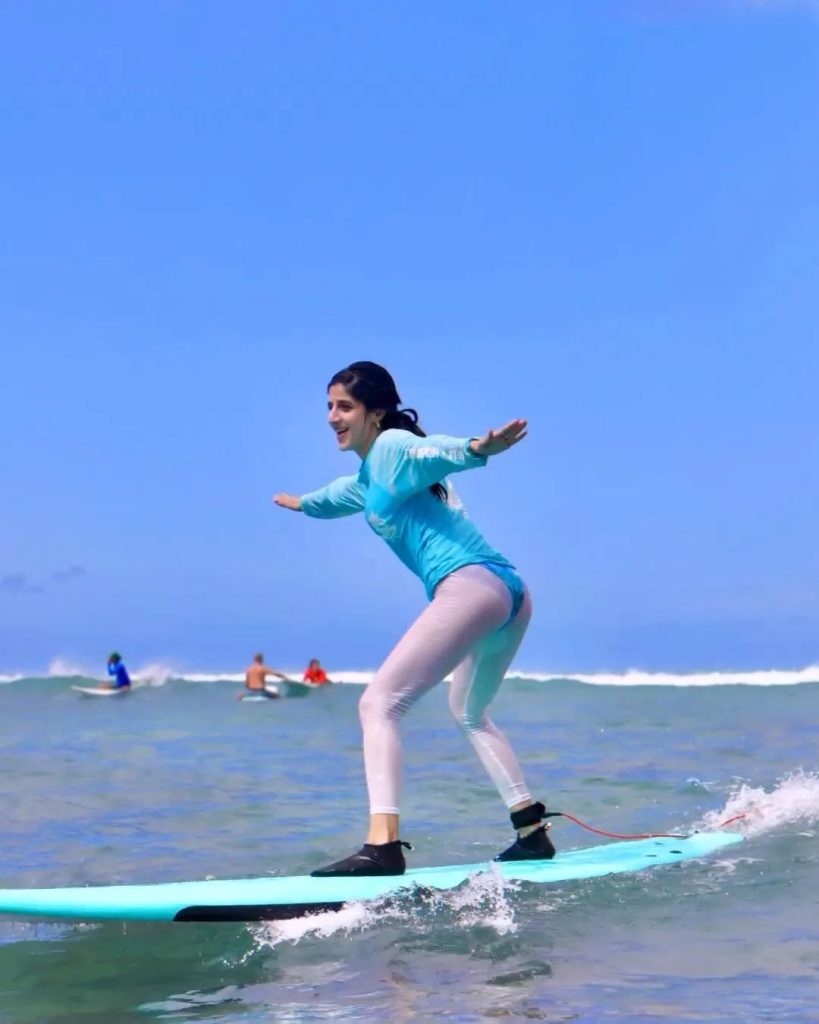
    Actor Mawra Hocane has always been in the limelight for her powerful performances and commandong on-screen presence. But she is also known as one of the most fun stars out there.

    Currently, she has been spending quality time in Australia with her family, including her mother, father, brother, and sister-in-law. Mawra has been exploring the beautiful landscapes of Australia with her close friends and family, sharing glimpses of her adventures on social media.
    Hocane shared pictures on her Instagram with caption, “I’ve got WINGS to fly… // HAWAI’I // surfer girl ♀”. Mawra’s recent surfing photos showcase her daring and bold personality.
    Here are the pictures shared by Mawra:

  • 20 year sentence for Saudi teacher over social media posts

    20 year sentence for Saudi teacher over social media posts

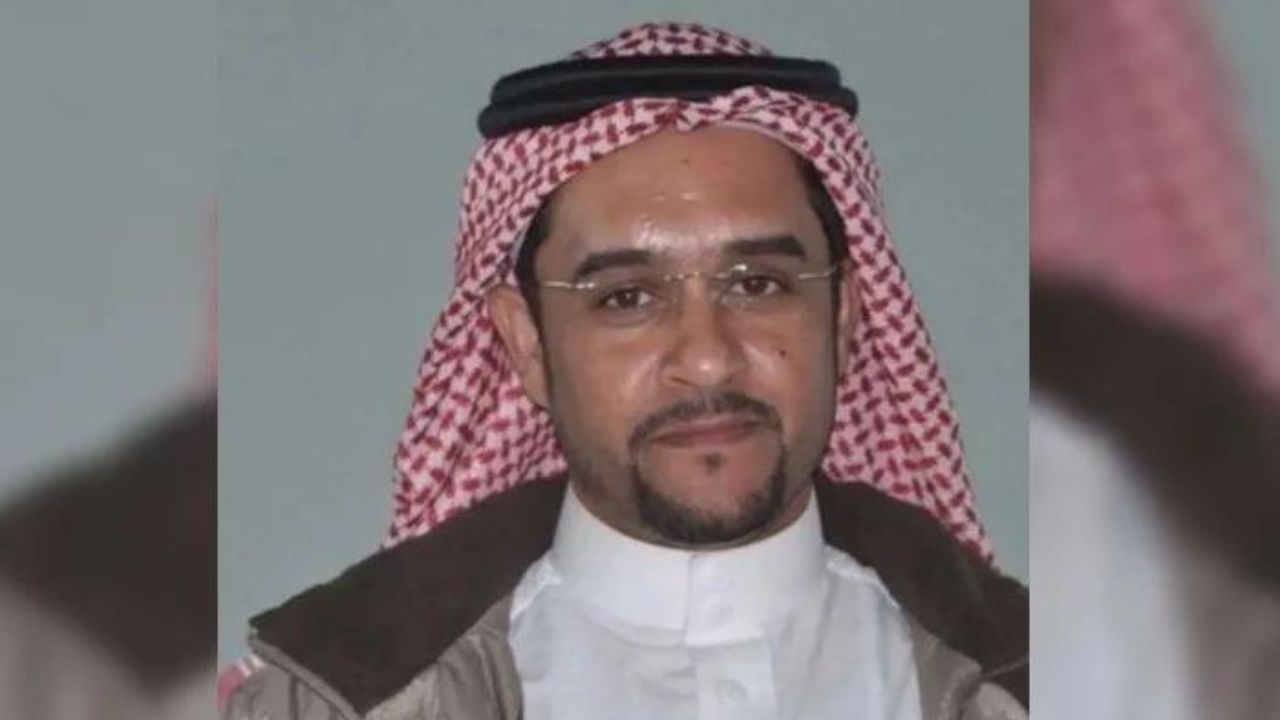
    Saudi Arabia has sentenced a teacher to 20 years in prison over critical social media posts, Human Rights Watch and the convicted man’s brother said Tuesday.

    Asaad al-Ghamdi, 47, was arrested in November 2022, in a nighttime raid on his home in the Saudi city of Jeddah, according to HRW.

    He was convicted on May 29 by Saudi Arabia’s Specialised Criminal Court, which was established in 2008 to try suspects accused of terrorism, the New York-based rights group said.

    He was sentenced “to 20 years in prison on charges related to his peaceful social media activity”, HRW added, calling it “yet another escalation in the country’s ever-worsening crackdown on freedom of expression”.

    Court documents reviewed by HRW showed that Ghamdi was charged with “challenging the religion and justice of the King and the Crown Prince” and “publishing false and malicious news and rumors”.

    According to HRW, the posts used as evidence against him criticised projects related to the Vision 2030 reform agenda.

    One post mourned Abdallah al-Hamed, a leading Saudi human rights figure who died in prison following his conviction on charges relating to his activism.

    Ghamdi faces the same charges as his brother Mohammad, a government critic who denounced alleged corruption and human rights abuses on social media.

    Mohammad was sentenced to death last year based on his social media activity.

    Their third brother, Saeed, an Islamic scholar and government critic living in exile in the United Kingdom, condemned the latest move by Saudi authorities.

    “The accusations are arbitrary and unjust because they are all based on tweets,” Saeed told AFP, commenting on the verdict against Asaad.

    “Maybe I am the target,” he added.

    Over the past two years, the Saudi judiciary has convicted and handed down lengthy prison terms to dozens of individuals for their social media posts, according to rights groups.

    They include Nourah al-Qahtani, who was sentenced to 45 years in prison in 2022, largely over social media posts criticising the government

    Salma al-Shehab, a member of the Sunni-ruled kingdom’s Shiite minority, was sentenced to 34 years behind bars in 2022 for aiding dissidents seeking to “disrupt public order” in the kingdom by relaying their tweets.

    Manahel al-Otaibi, a 29-year-old blogger and fitness instructor, was arrested in November 2022 for challenging Saudi male guardianship laws and requirements for women to wear the customary body-shrouding abaya robe.

    The Specialised Criminal Court sentenced her to 11 years in prison on January 9, but the sentence was only made public later in a Saudi submission to United Nations special rapporteurs enquiring about the case.