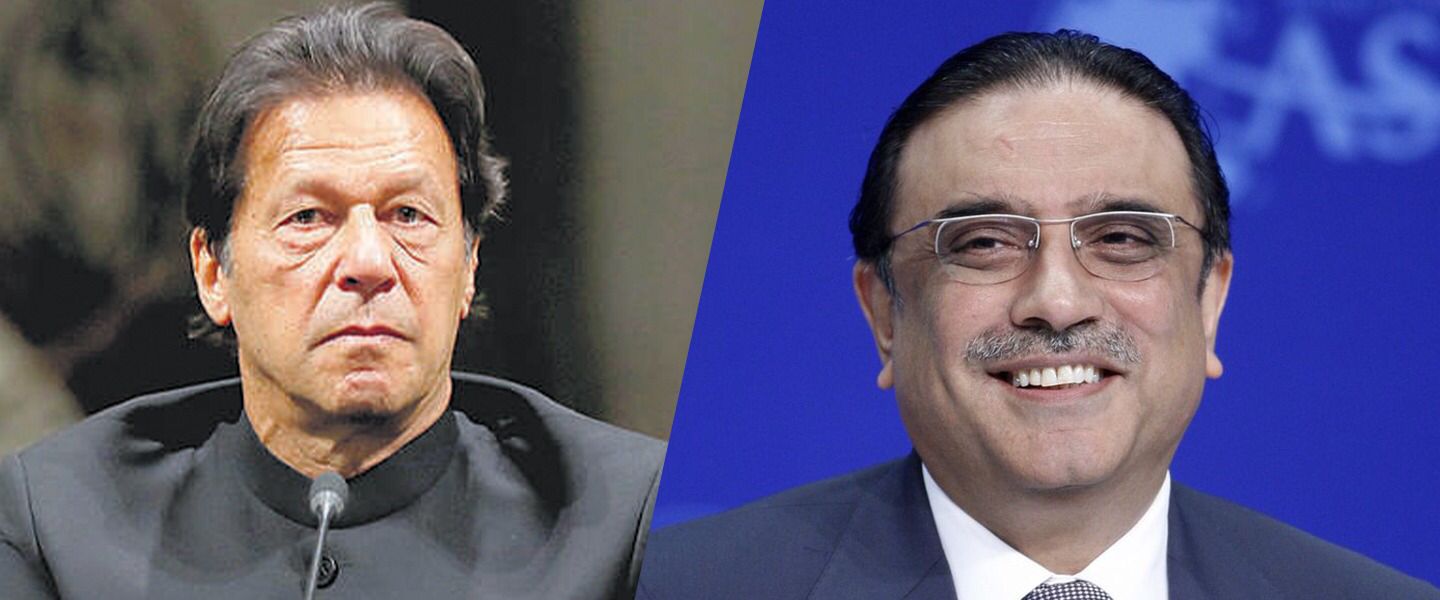
Pakistan People’s Party (PPP) has sent a legal notice to Pakistan Tehreek-e-Insaf (PTI) Chairman Imran Khan for levelling “baseless allegations” against former President Asif Ali Zardari.
“You are…. called upon to render unconditional apology from our client, on television, print and social media, within 14 (fourteen) days from the receipt of this notice, failing whereof, our client shall be constrained to institute appropriate legal proceedings against you, civil as well as criminal, before the competent courts of law and forums of Pakistan as well as of England, including but not limited to Suit for Damages for Rs.10,000,000,000/- (Rupees ten billion Only) at your risk as to cost and consequences,” said the notice.
The notice contends that the PTI chief through his “baseless accusations” tried to create a link between Zardari and terrorist organisations “blindly disregarding the fact that our client and his party has remained the victim of terrorism”.
The notice also reads that the PTI chief through his “defamatory actions” caused “severe agony, mental stress and loss of reputation” to the PPP co-chairperson.
Senator Farooq Naek Advocate SC has sent a legal notice to Imran Khan on behalf of President Asif Ali Zardari. Asks for an unconditional apology on TV & social media within 14 days for slanderous and false allegations. pic.twitter.com/yEkiTi38Wg
Imran Khan had alleged on Friday, January 27, in a televised speech, that Zardari was plotting and financing an assassination attempt for which the ex-president had hired terrorists.
Khan had claimed that four people orchestrated a plan “behind closed doors” to assassinate him.
“I got to know about it and then I recorded a video explaining the attack. In a public rally, I announced that I would release the video if something happened to me. They stepped back after this,” said Khan.
Without naming anyone again, Khan said that another plan was made to have me killed by a religious extremist — hinting towards the November 3, 2022, Wazirabad attack, where he was shot in the legs and is still recovering from his injuries.
“Now, there’s a Plan C. Asif Zardari is behind it. He has amassed a lot of money through corruption, invested that money with terrorists and hired a militant organisation.”
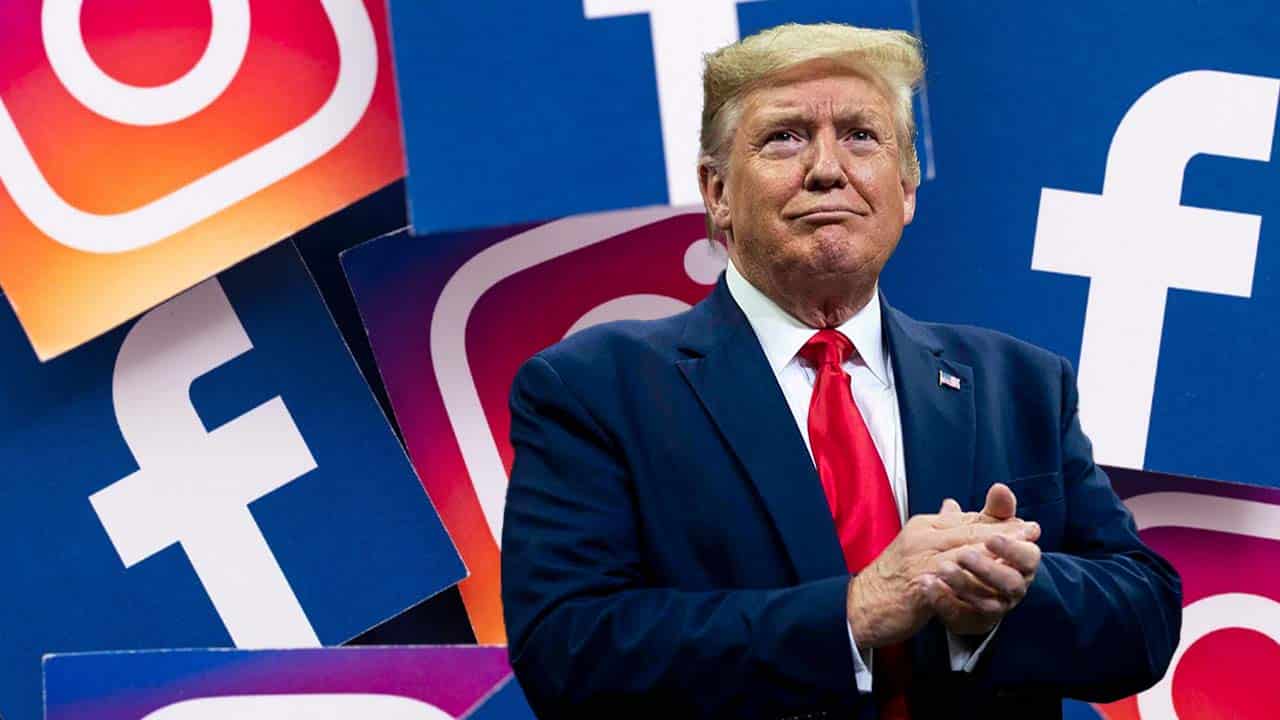
Donald Trump will be allowed back on to Facebook and Instagram after Meta announced it would be ending its two-year suspension of his social media accounts.
The ban will end “in the coming weeks,” Meta said. In a statement, Nick Clegg, Meta’s president of global affairs, said the public “should be able to hear what their politicians are saying.”
The former US president was indefinitely suspended from Facebook and Instagram after the Capitol riots in 2021.
The social media giant had acted following Trump’s “praise for people engaged in violence at the Capitol,” Clegg said. “The suspension was an extraordinary decision taken in extraordinary circumstances,” he added.
Clegg said a review had now found that Trump’s accounts no longer represented a serious risk to public safety. However, owing to Trump’s past, he would now face intensified penalties for any offences in the future.
Meta’s Oversight Board, a body it set up to review moderation rulings, said that the decision to reinstate Trump on its platforms “sat with Meta alone; the board did not have a role in the decision.”
The board had already informed Meta that a review of Trump’s suspension was necessary.
It encouraged Meta to be open and to offer more details about new laws protecting public figures so that it could assess how they were being applied.
By Anum Hanif, Lubna Jerar Naqvi, Shreya Pareek, Zeba Warsi
Sara Zafar Mir, a social media entrepreneur from Karachi, Pakistan, is busy making her own money. She specializes in premium baby products and Facebook is her social media platform of choice. Every day, she reaches more than 150,000 followers who are all potential buyers, bringing to them customized baby clothes and postpartum care packages at the click of a button. She leads this while also raising two young pre-teens.
Mir said: “I am blessed to have a supportive husband and in-laws, who go out of their way to help me in my work. Both my kids help me in my business. It is great to be able to lean on family when needed.”
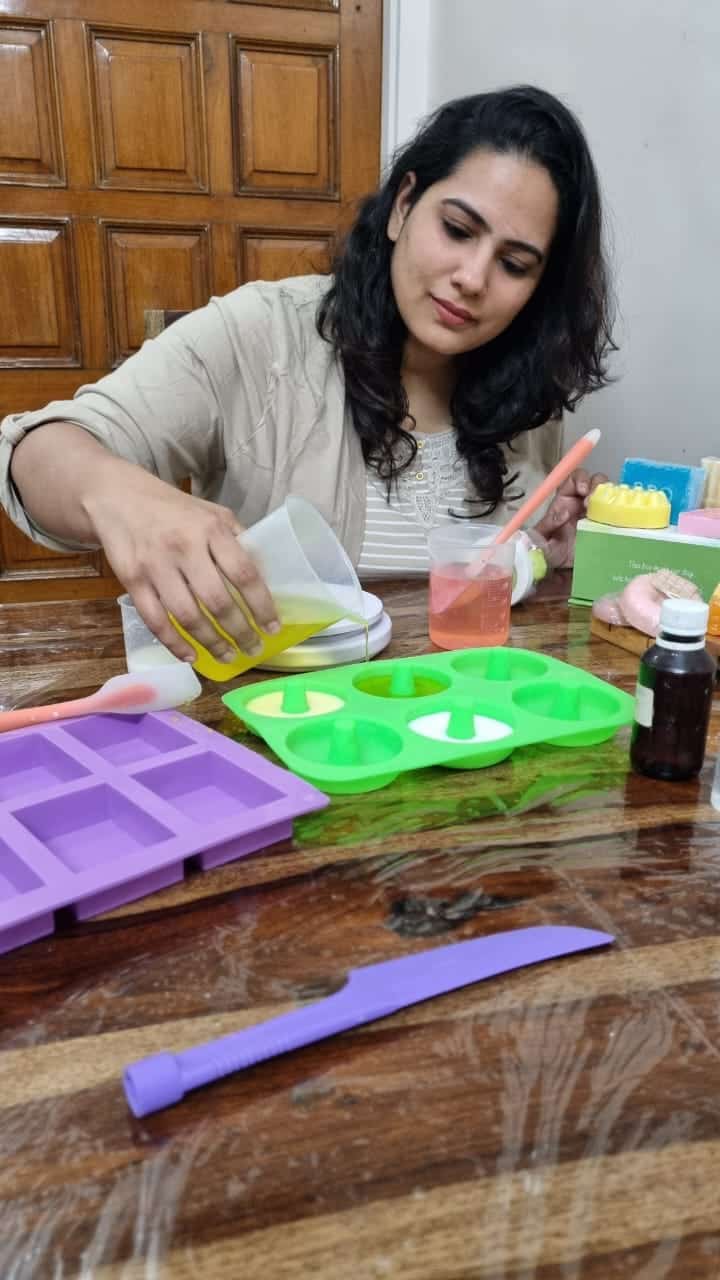
Nearly 500 miles away, in Jaipur, India, thirty-one-year-old Kriti Gupta has a busy morning ahead. She needs to get her daughter ready for school while her toddler demands her attention. Amid this hustle, Gupta’s phone chimes. It’s an Instagram notification. One of her clients has left a thank-you message for the timely delivery and premium quality of soap she sold on the social networking app. Like Mir, Gupta is also a social media entrepreneur who has built a credible brand of customized soaps and toiletries.
Both Mir and Gupta may be separated by the India-Pakistan border, but their similarities far outweigh their differences. They both belong to a new generation of South Asian boss ladies who are taking social media by storm. They’re creating unique online businesses. They use Instagram, WhatsApp, and Facebook, not just to post selfies, or share pictures of their baby showers and family dinners but to earn a livelihood, chase their dreams, and be financially independent.
Over 4.26 billion people use social media worldwide, a number projected to increase to almost six billion in 2027. That’s where a new, dynamic market is emerging, and South Asian women entrepreneurs are here to reach that whole new world of consumers. They are breaking stereotypes and patriarchal norms which had long been dominant in South Asian communities.
Mir, a Kashmiri, was married off at a very young age, moving to Karachi with her new husband. As a young mother in Karachi in 2013, Mir found herself searching for premium baby products and felt that there was a void to be filled. That led her to start Mummy and MiniMe, which is almost like her third baby.
Mir was a teacher before she got married. She left her job when she moved to Karachi. After her son was born, she was ready to start something but didn’t quite know what and how.
“At the time my son was young, so I would always be looking for baby clothes, shoes and products,” Mir said, “so I had some experiences (laughs). I realized that Karachi has some very good quality products which you don’t find in other cities.”
She explored the internet and found that there were not a lot of people in Pakistan who offered quality products at affordable prices. “We began with PKR 25,000 at the time, which is not a lot of investment,” she added. And so, Mother and MiniMe was born on Facebook and then expanded to Instagram. After the launch of her business, Mir was joined by her sister-in-law Nauwarah, who was studying at the time. Mummy and MiniMe currently has 157,673 people following on Facebook and 4,782 followers on Instagram.
“My goal as a young mother was to provide affordability and uniqueness. When I used to shop for my son, I realized there were so many options and I thought to help mothers to get quality stuff in one place,” Sara said. Apart from baby products she also began curating wooden toys. With time, the online space started becoming saturated. Many new businesses popped up online and the online market became competitive.
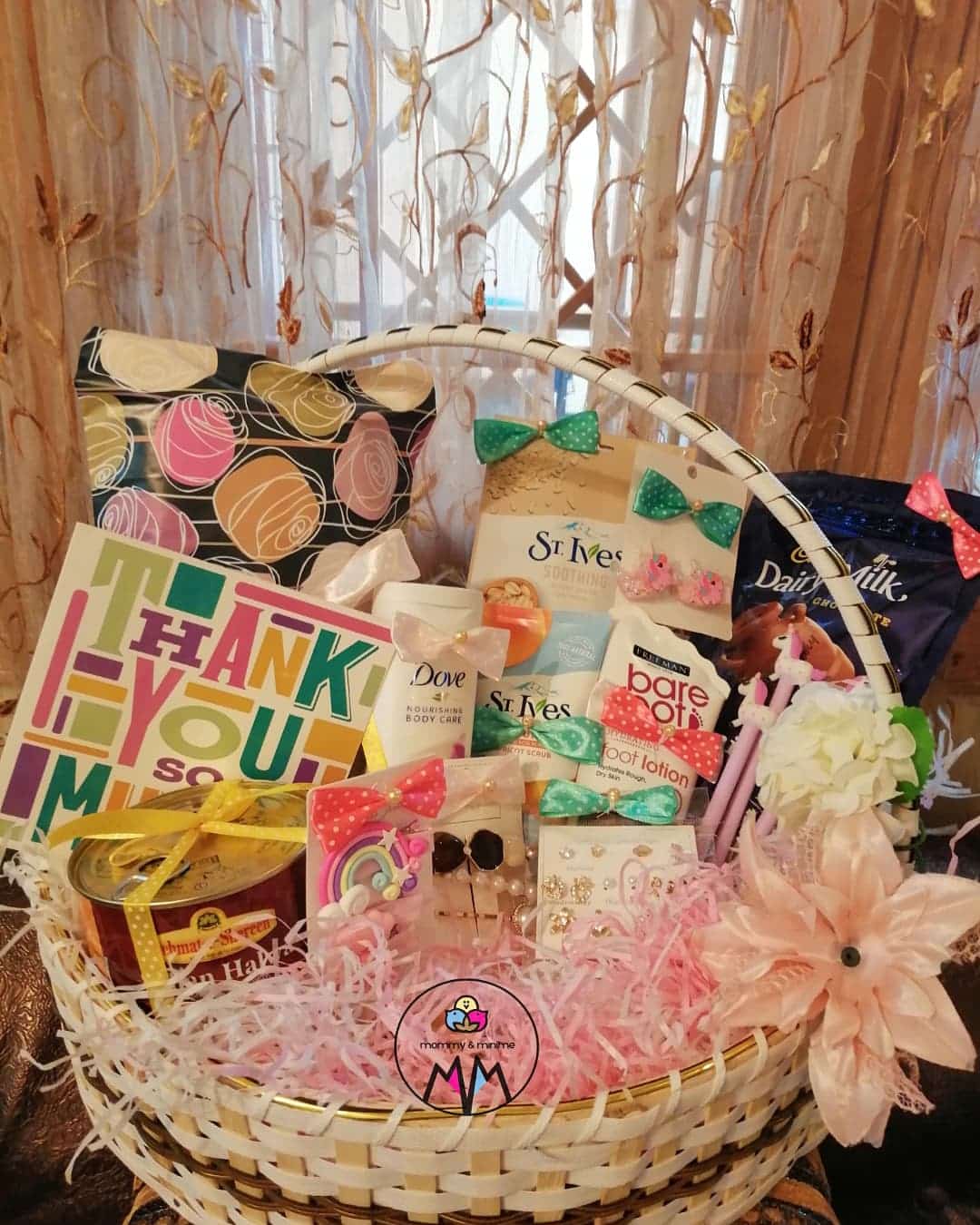
“In 2017, I realized that we need a new strategy. So, we began offering baby gift baskets for new-borns. This is now a favorite among our customers. Mostly grandmothers, aunts, and friends are ordering these.” Mir then started collaborating with bloggers on social media to promote her products.
“I sent a basket with panjeeri (nutritious mixture) to this blogger who had lost her mother and had just had a baby. When I sent her a PR basket, she called me crying saying that my mother used to send her this,” Mir said.
On the other side of the border, Gupta is running her own little online empire with the support of her family.
Gupta said: “My Insta-shop never shuts down. It is open 24×7. Living in a joint family I have realized that everything is manageable if you have a good mother-in-law. And I am blessed in that department,” Gupta said. Living in a three-storey home in Jaipur in northwestern India, she cradles her toddler in one arm, while updating her Instagram business account with the other. The festive season is upon her, she has an order of more than 50 exclusive bath hampers in the pipeline. But she knows she can make it with the support of her family.
Born and brought up in Bangkok, Gupta was 21 years old when she moved to India to get married. Initially, it was a culture shock to settle down in a rich but conservative Marwari (an Indian ethnic group from Rajasthan) family. She dropped out of journalism school to have her dream wedding. Soon, she had her first child, and her career took a back seat. It was on her daughter’s fifth birthday in 2020 that she kickstarted her entrepreneurial journey by starting Bath and Bubble Co, a brand that sells handmade, natural, artisan soaps and bath products.
The business model
In Pakistan, Mir’s business has now reached a stage where she earns a decent living since she first began in 2013. The revenue spikes during Eid but even otherwise her business is consistent and is doing good. She receives around 10-15 queries a week. And a good 80 percent of those convert to sales.
Since it takes time to build trust among customers online, many first-time buyers pay through cash on delivery but the majority of her customers make online payments. Due to her regular and direct engagement with customers online, Mir’s business rarely sees any returns or exchanges.
“It is hard work. You have to be consistent and patient. With time, we can get an idea who is going to continue ordering products and who is there just to window shop, just like a regular retail shop,” Mir said.
There are thousands of such women who use social media exclusively as their main marketplace, especially in South Asian countries.
In India, Gupta exclusively uses Instagram to sell her products. Despite her humble 760 followers on Instagram, she has already found some dedicated and returning customers. Gupta offers over 25 varieties of exclusive, natural soaps. Currently shipping across India, Gupta’s products are favorite among children due to their quirky and colorful designs. Her personalized hampers are a huge hit and are often ordered in bulk through Instagram and WhatsApp for special occasions. Since creating a website or an offline store would require a huge investment of money and time, she decided to stick to Instagram in the beginning.
Gupta manages to get four-to-five queries each day through Instagram. A majority of her buyers use Instagram DMs and WhatsApp to place orders and use online modes of payments like Google Pay or PayTm. Gupta also mentioned how using the right hashtags and trending reels has helped her reach her target audience. The visual format on Instagram has helped business owners like Gupta to connect with her customers in a better way. She claims it is easier to track her customers on a real-time basis on social media and immediately find out what is working for them. Instagram trends also help in boosting the sales.
“You never know what clicks. You have to constantly keep thinking of new ideas. I am currently manufacturing the soaps myself at home after I send my daughter off to school. I soon plan to set up a separate space for my business. The first person I plan to hire is someone who can handle our social media,” she said.
The rise and rise of social media
Economies worldwide have been disrupted by the pandemic, but it has also created new opportunities to do business through social media. Women-owned businesses have received a big boost in recent years. And with a second income coming in, the standard of living of most families has improved. This means the women are not only being empowered financially, but are also getting family support and acceptance for their role as working women.
Nighat Dad from Lahore, Pakistan, a lawyer, internet activist and founder and executive director of Digital Rights Foundation has closely tracked the trend of women using social media for their growing businesses in recent years. “I have so many examples of women who started online businesses and they have grown over the years. They started to have an online presence. A couple of years back, women were really not confident about using these platforms (social media) for their businesses not only in terms of what to do and how to use these platforms but also not having knowledge of financial gains and opportunities,” Dad said.
In Pakistan, Instagram has gradually become the preferred choice to run businesses replacing Facebook as the most popular platform. In 2019, Facebook signed a Memorandum of Understanding of its #SheMeansBusiness with Lahore Chamber of Commerce and industry to provide support in hands on training, skills enhancement and resources to women. This was a major step towards empowering women to become entrepreneurs. It is estimated that women’s earnings in Pakistan have increased by four percent compared to previous year. One of the reasons is start-ups owned by women, and social media has played a pivotal role in helping them grow their businesses.
In India, Sairee Chahal, founder of “Sheroes”, India’s first women-only social media network, has also looked into the changing trends of how women are using social media.
Chahal said: “When I started Sheroes, there were maybe 10 million women online in India. Today, there are 350 million women who are online, who have tasted the internet at least once and there’s an increasing number of women who are using this to their advantage.”
Chahal, who started her first company in 1999 as a first-generation entrepreneur shares her insights on how digital platforms have helped many women entrepreneurs grow: “The mobile phone in a very patriarchal society is a personal device, it has your name on it. And once you have it, there’s no looking back.”
For women in a patriarchal setup, running a business requires much more than entrepreneurial skills. There are many family dynamics that women are expected to navigate and balance.
“Women are invisible in their societal setups, whether it’s families or the work that they do both at home and outside. It’s this recognition that is driving women online. Look on the internet, everybody’s somebody you know. You’re the handler, you are handling your content. So, this recognition more than other things is what makes a difference,” Chahal said. She also said that only 9 percent of women are in the formal workforce. That means that most women are left to fend for themselves.
Thanks to social media, women are now getting a fair chance to establish their businesses and sustain a balanced personal and professional life.
Not all’s well in the digital universe
Although social media has played a pivotal role in helping women become financially independent, it also has its share of challenges. The major issue that entrepreneurs like Gupta and Mir face is developing a sense of trust among customers since it is difficult to showcase the quality of products through just pictures and videos. Another concern shared by various women was the easy imitation of handcrafted products at lower prices. This makes it difficult for micro-entrepreneurs to compete in the vast market.
The digital world can also be intimidating for some entrepreneurs who belong to a different generation. So, while it is a blessing for some women who have grown up with technology, it might not work for others who are still trying to get used to it.
“Social media can be very demanding and takes a toll on one’s life. We have to constantly think of the next reel, next trend, and next viral post,” Gupta said. At the same time, there is a serious threat to cyber security. Several entrepreneurs have found their accounts to be hacked causing them not just financial but also immense emotional loss.
“Sometimes I feel it is easier to make soaps as compared to making an Instagram reel,” Gupta said.
Dad from Pakistan believes there are serious challenges and risks associated with online entrepreneurship.
“All kinds of challenges these women face in terms of harassment, finances, and stumbling upon bad actors online and trusting them. In offline spaces, sometimes they are earning but sometimes they don’t own what they are earning due to having a patriarchal society. Even if you are earning, you really don’t have ownership of your income,” she added.
She also emphasized how women who work online should be aware of their rights. “How safe their devices are, how safe their platforms are, how much women know about digital security, and how strong are their passwords,” she added. Dad’s foundation has a toll-free number on its website to help women entrepreneurs in need.
While Dad is providing much-needed help to the women entrepreneurs of Pakistan, Chahal is filling this gap in India. She uses her platform ‘Sheroes not only provide livelihood and financial support to women but also the offer crucial mental support to them. Over three million women have benefited from Sheroes’ counseling services. During the pandemic, Sheroes launched a digital bank called Mahila Money. The platform exclusively serves women who are not served by microfinance. Sheroes also acts as a marketplace for women where they can sell a range of items online.
Is this the beginning of a new revolution?
This rise of women entrepreneurs on social media is not just restricted to South Asia. It is a global phenomenon attracting millions of dollars of investment.
In 2020 Facebook COO Sheryl Sandberg announced that the social media giant is investing $100 million to help 30,000 small businesses in over 30 countries. According to the latest statistics, there are 252 million female business owners in the world.
In 2021, Instamojo saw a 14.83 per cent spike in new female users in comparison to a five per cent drop in male new users. This shows that women are more eager to start their own businesses now and want to go online. Social media has enabled women to connect across boundaries, cultures, genders and has shown a positive trend where many women are comfortable establishing their businesses in a male-dominated society.
“I never got a chance to look back and see how far I have come. I can’t believe that something which was just an idea or a dream is now a fully functional business. It has not just made me financially independent but has also given my life a new purpose,” Gupta said.
Mir, who started her business with a small investment of 25000 Pakistani rupees, is always looking for innovative ideas to continually grow her business.
President Arif Alvi has offered to mediate between the Shehbaz Sharif-led coalition government and Pakistan Tehreek-e-Insaf (PTI).
In an interview with BBC Urdu on Thursday, Dr. Alvi said that it is now inevitable that simmering political tension be cooled down and advised political leadership to hold talks with each other.
“It is my offer to them [political parties] to sit together and then senior leadership can hold talks,” said Dr Alvi.
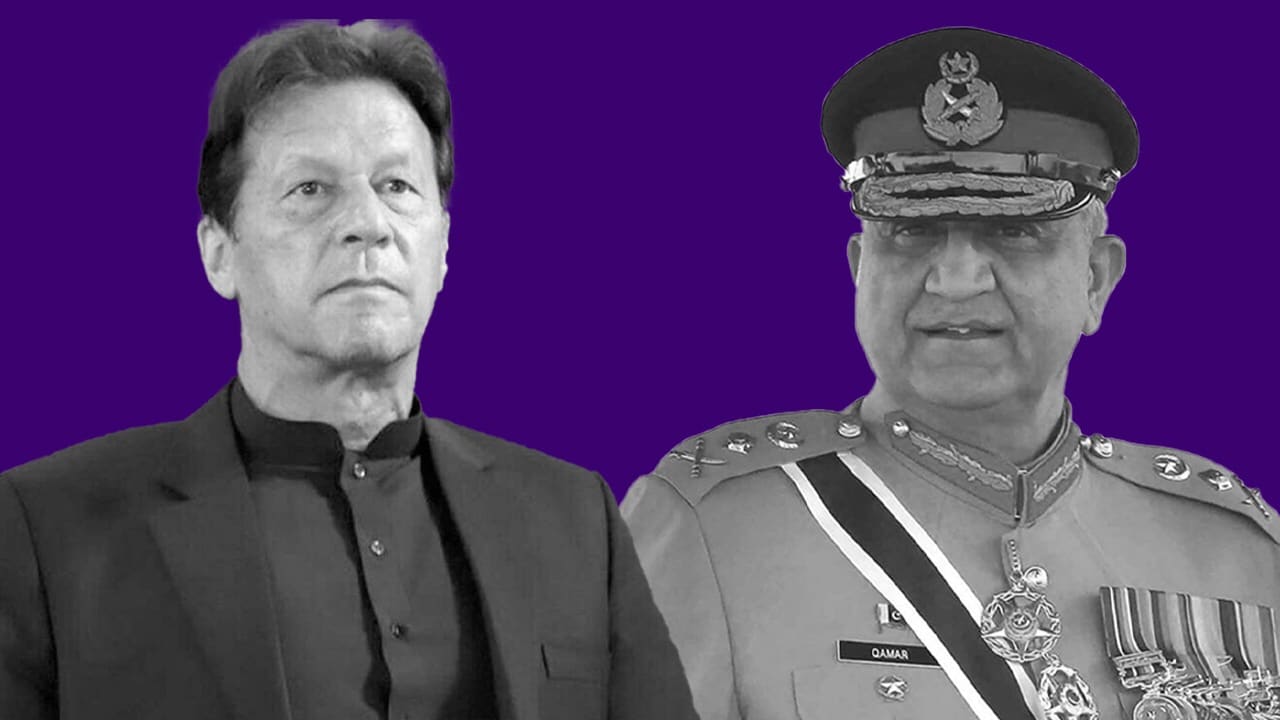
The president blamed social media when commenting on the misunderstandings between former Chief of Army Staff (COAS) General Qamar Javed Bajwa and PTI Chairman Imran Khan.
Misunderstandings began because of the undue importance given to social media, he reasoned, expressing the belief that the country’s decision-makers “are not able to handle social media properly” and that they should do a better job of it.
When pressed if the cause of “friction” between former premier and ex-army chief was the appointment of then director-general (DG) of the Inter-Services Intelligence (ISI) Faiz Hameed, President Alvi said that he would not talk about any specific person or incident.
“Who was not showing flexibility?” the President asked. “I was asking them to set-aside differences and ignore social media.”
“People can’t forgive,” he remarked.
Responding to a question about an extension in tenure offered to the former army chief by Imran Khan, President Alvi said he was not aware of such an offer.
“This is what I am saying. Remove such misunderstandings by having a dialogue together,” he stressed. “Be it any party, opposition, government or the establishment, I am ready to bring people together.”
The president said that Khan expressed satisfaction over the appointment of General Asim Munir as the current army chief when Alvi had consulted the PTI chairman. However, he said that he was not playing any role in conducting a dialogue between the current military leadership and Khan.
He emphasised his offers of negotiations between the government alliance and PTI, saying he had urged them to “sit together”.
“I am not talking about Imran Khan. I am saying that at least the political parties should negotiate with each other. After that, the major figures of the [political] parties can also meet,” he explained.
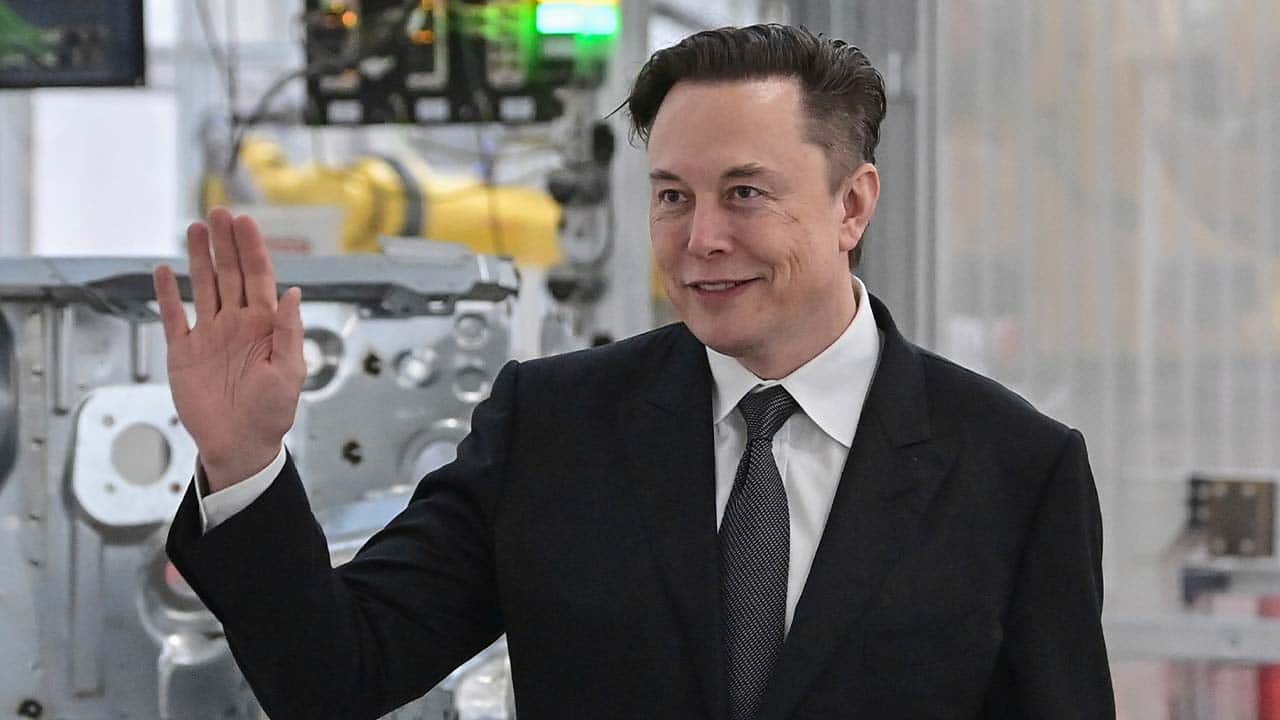
The billionaire Elon Musk announced on Tuesday that he will step down as Twitter’s CEO once he finds a replacement, although he will continue to oversee some crucial departments of the social media network.
“I will resign as CEO as soon as I find someone foolish enough to take the job! After that, I will just run the software & servers teams,” Musk wrote on Twitter.
I will resign as CEO as soon as I find someone foolish enough to take the job! After that, I will just run the software & servers teams.
Some investors have questioned if Musk is too preoccupied to properly operate his electric vehicle automaker Tesla, in which he is actively involved in production and engineering. Musk’s $44 billion buyout of Twitter in October has been defined by upheaval and controversy.
After Twitter users chose for him to stand down in a poll that the billionaire started on Sunday night, Musk has now publicly acknowledged leaving his position as the social media platform’s CEO for the first time.
17.5 million individuals participated in the poll, and 57.5 per cent of them chose “yes.” Musk declared on Sunday that he will follow the outcomes. He has not specified a date for his resignation, and no replacement has been named.
The survey findings brought to a close a hectic week that saw modifications to Twitter’s privacy policy and the suspension and reactivation of journalist accounts, all of which garnered criticism from news outlets, advocacy groups, and government officials across Europe.
Musk stated in a Twitter Spaces session that Twitter’s cash flow will achieve break-even in 2023, according to a tweet from Bloomberg on Wednesday.
Bloomberg claimed that Musk explained the forecast as a result of recent cost-cutting initiatives he has implemented on the social media site.
Wall Street has been calling on Musk to leave for weeks, and more recently even Tesla supporters have questioned his focus on social media and whether it would be a distraction from operating the EV manufacturer.
Musk has acknowledged that he has too much on his plate and that he will search for a new CEO of Twitter. But he claimed on Sunday that there was no one in place to take his place and that “no one wants the job who can actually keep Twitter alive.”
Less than 24 hours after it was first introduced, Twitter removed its controversial new policy that banned links to certain other social media sites on Sunday evening.
Elon Musk, the platform’s owner, asked Twitter users if they thought he should step down as the platform’s CEO before the development took place. The results of the poll are expected early on Monday.
Twitter deleted the tweet that listed the competing websites users will not be allowed to tweet links to, including Facebook, Instagram, Mastodon, and Truth Social, in response to a significant backlash against the policy.
Additionally, it removed a tweet thread from its @TwitterSupport account that had earlier in the day announced the policy.
Another official Twitter account, @TwitterSafety, is now running a poll asking users whether the platform should “have a policy preventing the creation of or use of existing accounts for the main purpose of advertising other social media platforms.” That poll is set to conclude Monday at 9 pm Eastern time.
Twitter is preparing to delete 1.5 billion inactive accounts to free up dormant profiles and user names on the social media platform.
Elon Musk, the company’s CEO, stated that the suspensions would free up the “name space” of inactive profiles. He also stated that the accounts that would be erased were “obvious” since they had “no tweets” and “no log in for years.”
Some Twitter users have expressed dissatisfaction with defunct accounts having interesting and appealing usernames that were captured during Twitter’s formative years.
In the second quarter of 2022, Twitter counted 237.8 million of its users as “monetisable daily active users,” a measure that suggests they’re active on the platform and are being shown advertisements.
Musk has already committed to deleting dormant Twitter accounts. He said in November that accounts that had been idle for 15 years would be deleted.
How long an account may remain dormant before being marked for deletion is unknown at this time. Musk announced in October that accounts that had been inactive for more than a year would potentially be in danger.
According to statistics from Apptopia, Twitter usage appears to have increased in the weeks after Musk’s takeover. In the first week of November, Twitter saw its highest daily active user count ever.
Actor Armeena Rana Khan faced flak for being “too western” in her maternity shoot, a netizen even accused her of plagiarising Bipasha Basu’s pregnancy shoot. However, the Janaan star clapped back at haters.
While sharing a screenshot from the comment section of her maternity shoot picture, Khan showed how she shut a troll for being a “hypocrite” for wanting her to confide to his perfect ‘desi woman’ standard. “Troll me all you want, I don’t care and will never care,” she wrote reiterating that it’s her online space and she shares all updates with her fans and well-wishers and not with haters.
She went on to share the brutal comments she has received on the post. A person commented on how her maternity shoot looked like a “Hollywood copy” and that women shouldn’t copy the “Kafir (sinners)” to feel empowered. “Hey ladies, Don’t be like Fatima. She’s a hypocrite,” wrote Khan.
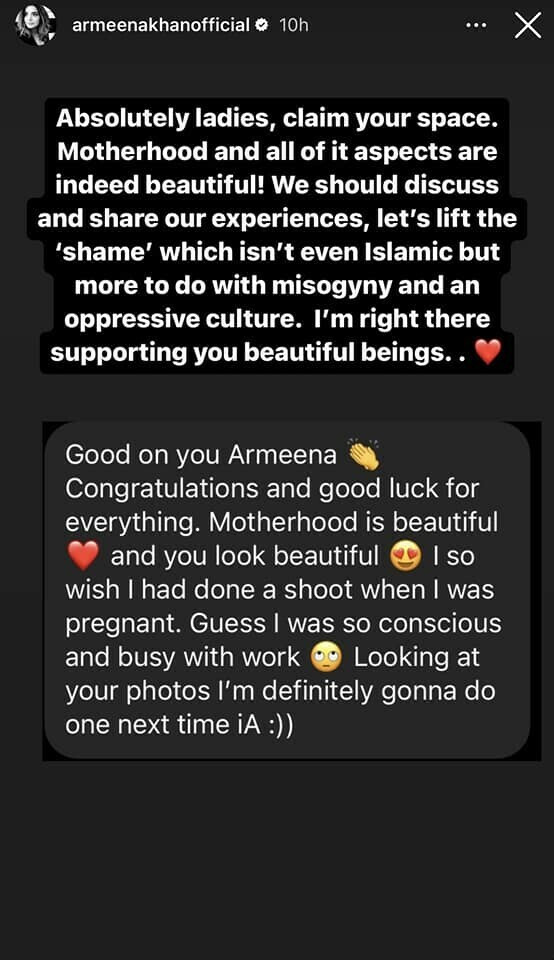
Triggered by the negative comments, Khan put up a PSA for everyone following her. “Next up, I will talk about my delivery and all of the details when it happens. [This is] my space, not yours,” she wrote in a series of Instagram Stories. “If I haven’t triggered you religious fanatics enough yet, watch this space.”
She also went on to encourage other women to share their experiences of motherhood, and otherwise and claim their space after a fan congratulated her for finding the strength to do the same. “Claim your space, ladies. Motherhood and all its aspects are indeed beautiful. We should discuss our experiences. Let’s lift the ‘shame’ which isn’t even Islamic by the way, but has more to do with misogyny and our oppressive culture,” Khan exclaimed.
Khan, on a roll, pointed out the lack of logic in a certain troll’s comment who insisted on her to feel “shameful because she’s a Muslim woman.” She said, “When you see a pregnant woman in public on the streets, do you wear those horse blinkers or do you avert your eyes? I doubt you do either. It all depends on how filthy your mind is,” she concluded her series of posts.
The Daldal star
Armeena was last seen in Mohabbatien Chahatein costarring Junaid Khan and Hira Mani.
Federal Information Technology (IT) Minister Syed Aminul Haque stated on Wednesday that popular social media platform TikTok is interested in opening offices in Islamabad after discussions were successful. He also hinted that another significant social media platform was also open to coming to the country.
On Wednesday, he made this statement while speaking at an event in Islamabad.
He noted that the government wanted social media businesses to establish offices in the nation and stated that TikTok was one with which effective negotiations had taken place. The platform may soon establish headquarters in Islamabad, he added.
TikTok does not belong to a group of regional social media sites that have resisted government attempts in recent years to exert more direct control over what is posted on the site.
He made a suggestion that a significant social media site that is a part of the collective has stated a willingness to establish offices in Pakistan.
Twitter has announced that its office buildings will be temporarily closed, effective immediately and that the offices will reopen on Monday, November 21.
Twitter employees were informed regarding the closure in a letter, but the company withheld an explanation for this.
The statement comes as there are rumours that several employees were leaving after the new owner, Elon Musk, told them to sign up for “long hours at high intensity” or quit.
Mr Musk stated that those who didn’t sign up by Thursday, November 17 would receive three months’ worth of severance money.
The corporation said earlier this month that it will be laying off almost 50 per cent of its workers.
The news that Twitter had temporarily closed its offices today coincided with indications that several employees had already left in protest at Mr Musk’s new contract terms.
To announce their departure from the company, employees have begun tweeting using the hashtag #LoveWhereYouWorked and a saluting emoji.
One former Twitter employee who wished to remain anonymous told BBC: “I think when the dust clears today, there’s probably going to be less than 2,000 people left.”
They added that everyone in their team had been terminated.
“The manager of that team, his manager was terminated. And then that manager’s manager was terminated. The person above that was one of the execs terminated on the first day. So there’s nobody left in that chain of command.”
Around 7,500 people worked for Twitter before Elon Musk took over. Thousands of contract workers were also reportedly employed by the company, the majority of whom are believed to have been let go.
Another person claimed that despite being ready to put in long hours, they had quit their job.
“I didn’t want to work for someone who threatened us over email multiple times about only ‘exceptional tweeps should work here’ when I was already working 60-70 hours weekly,” they said.
The richest person in the world acquired Twitter last month in a $44 billion deal, becoming the company’s CEO in the process.
In response to a query on worries that Twitter was set to shut down after the notification about the closure of Twitter’s offices was sent, Mr Musk tweeted: “The best people are staying, so I’m not super worried”.