Tag: State Bank of Pakistan

  • Pakistan decides to make cryptocurrency illegal

    Pakistan decides to make cryptocurrency illegal

    The State Bank of Pakistan (SBP) and the federal government have come together to make a decision to ban the usage of all types of cryptocurrencies.

    The 38-page report has been submitted by the SBP Deputy Governor Seema Kamil to the Sindh High Court to declare it illegal.

    On October 20, 2021, the provincial high court directed the government to form a committee presided by the federal secretary of finance to determine cryptocurrency’s legal status and submit a detailed report.

    The submitted report has stated that digital currency is based on virtual business that could be used for terrorism financing and money laundering.

    It also listed eleven countries that banned digital currency including Saudi Arabia and China and urged the court to impose high penalties over unauthorised usage as these countries have implemented.

    The court ordered that the report should be submitted to the finance and law ministries for a final decision on its legal status. They will decide if a ban would be within constitutional jurisdiction.

    The hearing was heard by the two-bench judge headed by Justice Karim Khan Agha. The next hearing will be held on April 12 this year.

    Meanwhile, a TV host and crypto entrepreneur, Waqar Zaka pleaded to make digital currency legal. In his view, it would benefit the economy of the country.

    It was reported previously that Pakistanis have lost almost 18 crores in a cryptocurrency-related scam. Almost 55,000 people have become victims of the scam. In total, 11 mobile applications have been identified as part of the fraud.

    As per FIA Cyber Crime Reporting Sindh chief Imran Riaz, the applications that are involved include, MCX, HFC, HTFOX, FXCOPY, OKIMINI, BB001, AVG86C, BX66, UG, TASKTOK, 91fp.

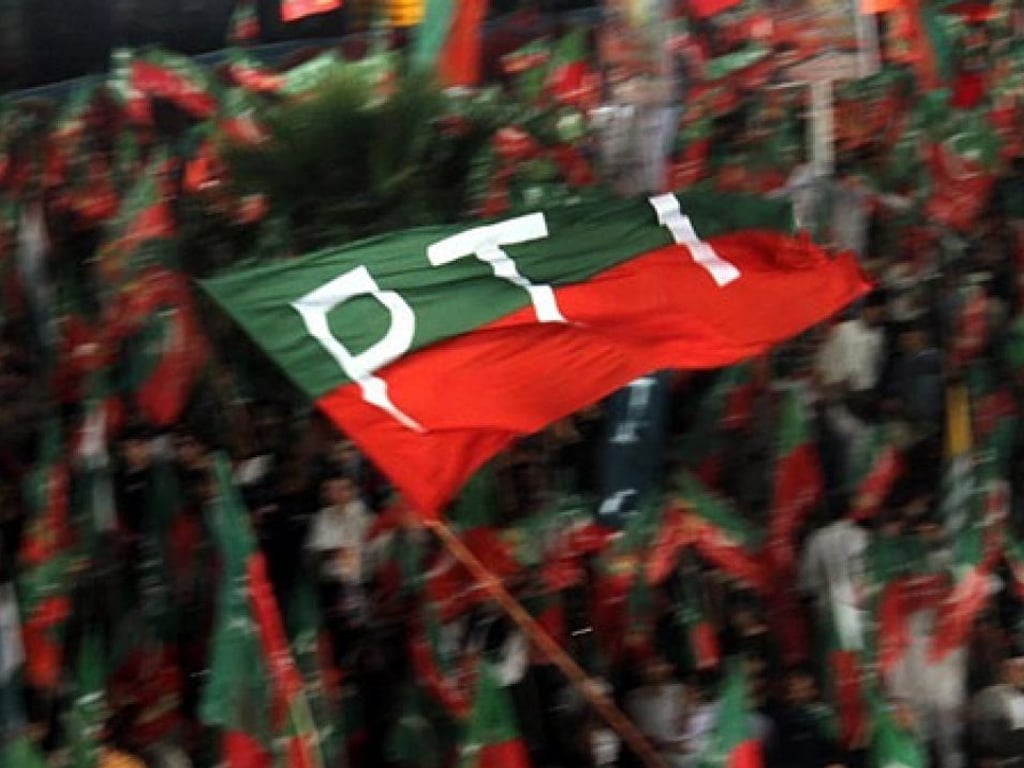
  • No PTI minister present in front row of Parliament, Opposition lashes out at non-seriousness of govt

    No PTI minister present in front row of Parliament, Opposition lashes out at non-seriousness of govt

    Pakistan Muslim League-Nawaz (PML-N) leader Khawaja Asif took to Twitter to lash out at the ruling Pakistan Tehreek-e-Insaf (PTI) and said, “The ongoing session of the Assembly, which has been called to pass the catastrophic budget and the State Bank of Pakistan’s (SBP) slavery bill, is currently suspended due to lack of quorum.”

    “Neither the government has its members beside it nor its allies,” tweeted Asif, adding, “How will both, the budget and the SBP’s bill will get passed.”

    “No minister is present in the front row,” said Asif.

    Meanwhile, Pakistan People’s Party (PPP) Chairperson Bilawal Bhutto-Zardari during his speech in the National Assembly (NA) on Tuesday lamented how the ruling Pakistan Tehreek-e-Insaf (PTI) has imposed taxes on the people of Pakistan. He further said that PTI was bringing a “tsunami of taxes” through the mini-budget.

    He also criticised the government over the SBP Amendment Bill 2021, which was approved by a National Assembly panel on Monday, saying that the IMF had demanded the central bank’s autonomy during the eras of PPP and PML-N as well but neither party had agreed.

    He said Leader of the Opposition in the National Assembly Shehbaz Sharif had talked about a national dialogue on the country’s economy but the government refused because of its “stubbornness”.

    PML-N’s Rana Sanaullah pointed out the lack of quorum as the opposition walked out in protest over the absence of Finance Minister Shaukat Tarin. The session was subsequently suspended for a short while.

    When the opposition returned, Federal Minister for Energy Hammad Azhar defended the government’s economic performance and blamed its predecessors for the country’s financial problems.

  • PTI did not disclose funding worth Rs310 million, hid bank accounts: report

    PTI did not disclose funding worth Rs310 million, hid bank accounts: report

    The ruling Pakistan Tehreek-e-Insaf (PTI) hid 53 bank accounts and funds worth millions of rupees from the Election Commission of Pakistan (ECP).

    The report of an ECP scrutiny committee probing the party’s funds revealed the following details.

    The committee’s report showed that the PTI had only disclosed 12 out of its 65 accounts, which are registered with the State Bank of Pakistan (SBP).

    The report stated that in the years 2008/2009 and 2012/2013, the PTI disclosed funding worth Rs1.33 billion against an actual amount of Rs1.64 billion which was reflected in SBP’s bank statement. Therefore, the party did not disclose funding worth Rs310 million.

    A scrutiny committee of the ECP constituted in March 2019 to audit foreign funds of the PTI had finally submitted its report to the commission on November 26, 2021, about six months after the last deadline was given.

    The PTI foreign funding case continues to linger since November 2014 when it was filed by Akbar S. Babar, the party’s founding member.

    In his petition, Babar alleged financial irregularities in the party’s accounts, including illegal sources of funding, concealment of bank accounts in the country and abroad, money laundering and use of private bank accounts of party employees as a front to receive illegal donations from the Middle East.

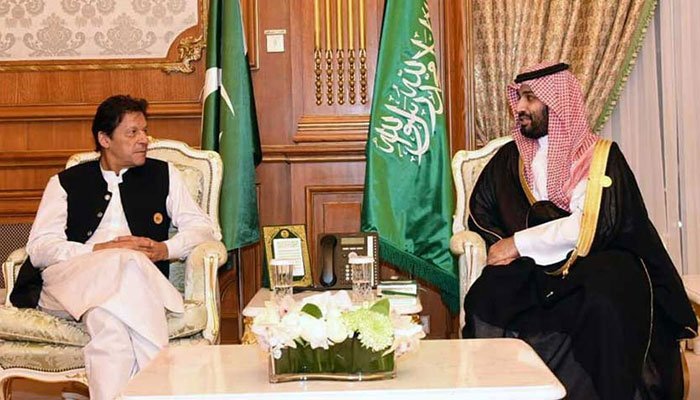
  • After PM Khan’s visit, Saudi Arabia revives $3 billion financial support to Pak

    After PM Khan’s visit, Saudi Arabia revives $3 billion financial support to Pak

    Saudi Arabia has agreed to revive its financial support to Pakistan, including about $3 billion in safe deposits and $1.2bn to $1.5bn worth of oil supplies on deferred payments, reports Dawn.

    The news was first broken by Information Minister Fawad Chaudhry. The minister took to Twitter and wrote, “Saudi Arabia announcement support Pakistan with 3 billion US dollar as deposit in Pakistan central bank and also financing refined petroleum product with 1. 2 billion us dollars during the year.”

    Energy Minister of Pakistan, Hammad Azhar confirmed the news and tweeted, “The Saudi Development Fund has generously announced for Pakistan an oil deferred payments facility of $1.2bn/annum and a $3 bn deposit with SBP. This will help ease pressures on our trade & forex accounts as a result of the global commodities price surge.”

    Prime Minister (PM) Imran Khan thanked Saudi Crown Prince Mohammad Bin Salman for supporting Pakistan with the deposit in the State Bank of Pakistan (SBP) and extending the oil facility on deferred payment.

    The facility is expected to help Pakistan convince the International Monetary Fund  (IMF) about its financing plan.

    The news came after PM Khan’s three visit to Saudi Arabia, where he went to attend the launch ceremony of the Middle East Green Initiative (MGI) Summit in the capital Riyadh.

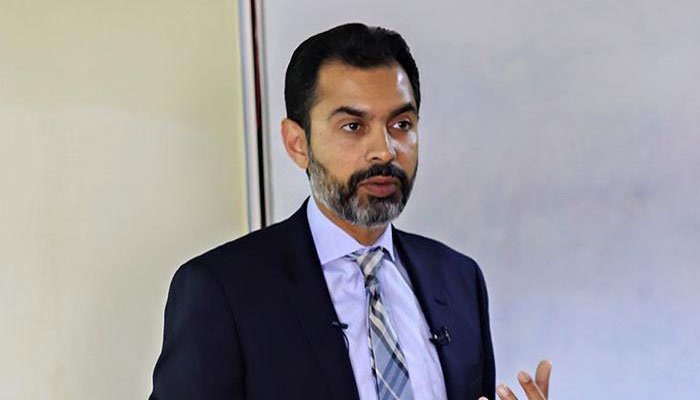
  • ‘Increasing value of dollar benefits overseas Pakistanis,’ Governor State Bank of Pakistan

    ‘Increasing value of dollar benefits overseas Pakistanis,’ Governor State Bank of Pakistan

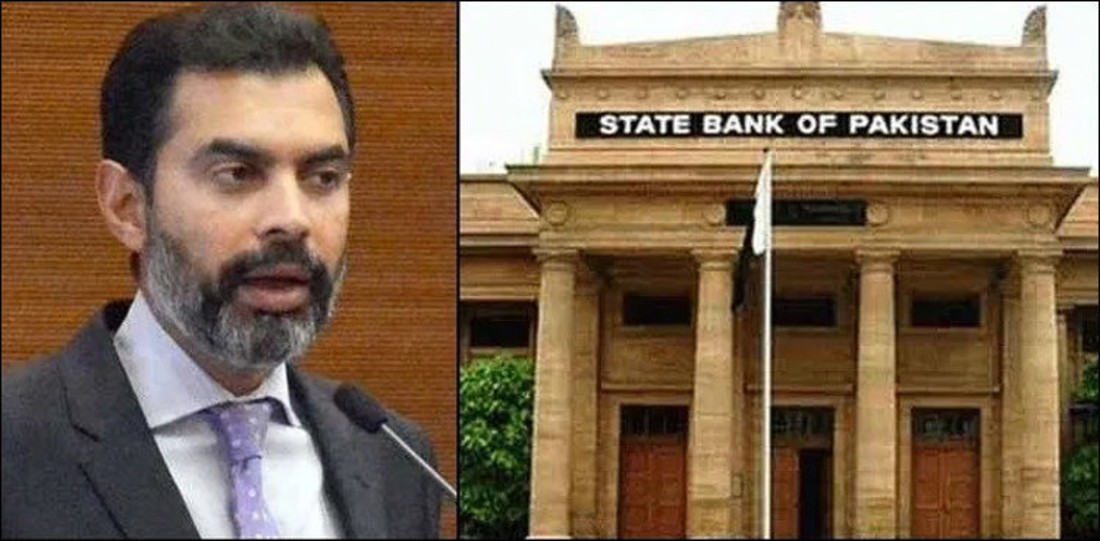
    Governor State Bank of Pakistan, Reza Baqir, while talking to the media in the United Kingdom (UK) said that the increasing value of the dollar benefits overseas Pakistanis and we should not forget those who benefit from this increase.

    “Rising dollar benefits some people and harms others. Overseas Pakistanis benefit because the money they send to their loved ones has more value. We should not forget those who benefit,” he said.

    Twitter users were quick to react to his statement.

  • Devaluation: What, why and how?

    Devaluation: What, why and how?

    The rupee has been sliding down for the past many weeks and dollar is touching Rs170. This wave of devaluation has sparked speculation of further depreciation in the coming days. Should we be panicking and start hoarding dollars?

    Probably not.

    If anything, this is perfectly in line with market fundamentals. The reasons behind the current spell of depreciation are primarily the rising trade deficit and to some extent, the Afghanistan situation. Our imports have risen sharply in the last few months — predominantly due to rising international commodity prices such as for oil, gas, coal, steel, etc.

    Some increase in imports can also be attributed to recovering economy fuelled by fiscal and monetary stimulus. In simpler terms, as the government injected more money into the market through the Covid stimulus package and other means and maintained interest rates at a low level, the demand increased leading to rebounding growth.

    But with growth recovery, the demand for imports also increased, widening the trade deficit. Moreover, some of the recent increase in imports can also be attributed to the vaccine imports, the phenomenal increase in demand for automotive, capital imports under Temporary Economic Refinance Facility (TERF), etc.

    What impact should the trade deficit and current account deficit have on the exchange rate?

    As soon as the current IMF programme started, the government switched to a market-determined exchange rate. Notwithstanding the reports of some intervention by the State Bank in the market, the market-determined regime does not give the flexibility to the central bank to maintain the exchange rate at an artificial level. This in fact is the right strategy for a country like Pakistan, so that its hard-earned forex reserves are not burnt to preserve the exchange rate, indirectly subsidising imports at the cost of scoring political brownie points. The exchange rate, therefore, took the hit, and the rupee devalued.

    But for now, the threat of any further significant devaluation is not in sight. The devaluation itself has made the imports expensive. In addition, the government is also considering increasing regulatory duty on luxury imports to further dampen the demand for these items. These measures are complemented by a change in monetary stance — an increase of 25 basis points, which is likely to be followed by further increases in the future — and passing on the energy price increases. All these measures are expected to immediately reign in the rising current account deficit. Hopefully, the current spell of rising international commodity prices should also be over in the next 6 to 9 months, further supporting an optimistic medium-term outlook.

    But under this cyclical trend, lies the political economy of devaluation in Pakistan.

    What we must understand is that historically the rupee has only gone down against the dollar and that’s the direction it will maintain in the medium-term, notwithstanding any short-term reverse movements. The reason for this perpetual devaluation is the underlying balance of exports and imports. Pakistan is a country with high imports and low exports. The difference is bridged through precious foreign exchange, earned from remittances, foreign direct investment, and external loans. Historically, the rupee has depreciated against the dollar by approximately 7 per cent per annum to account for the perpetual supply and demand gap. This gradual devaluation is in fact absolutely essential for Pakistan until the export composition and volume change significantly.

    During PML-N’s tenure, we followed the managed float exchange rate regime. The then finance minister artificially maintained an overvalued exchange rate and pumped in foreign exchange in the market, whenever the demand for dollars increased. An overvalued exchange rate made exports expensive and imports cheaper, thus further widening the trade deficit. The industry suffered but the traders were happy. The citizens enjoyed quality imported goods at cheaper prices, not realising that they would have to pay the price later on. Therefore, as a result of artificially maintaining the exchange rate at an abnormally low level, our reserves took a serious hit, while imports continued to increase. This prompted a balance of payment crisis and necessitated the present IMF programme. Such an approach was economically disastrous.

    If we don’t want to repeat the same mistake, we should be open to gradual devaluation depending on the current account balance. To manage the CAD, the fiscal and monetary policies have to work in tandem. It’s prudent to go slow and steady than to overheat the engine and lead to yet another balance of payments crisis.

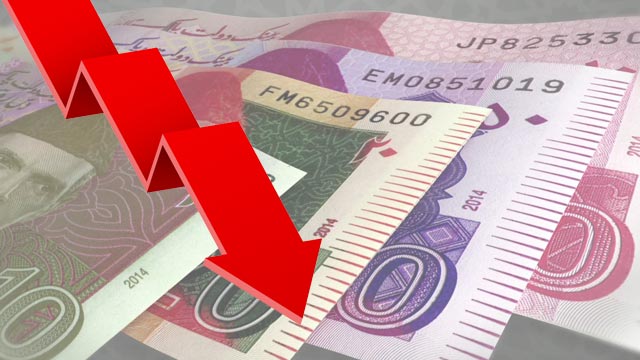
  • Dollar rises to Rs169.6, breaking the previous record

    The United States (US) Dollar continued its surge against the Pakistani rupee as it created a new high, rising to Rs169.6 in the interbank market.

    “Due to the recent sustained rise in the dollar’s value, importers have started booking the currency in advance, which has increased its demand in the interbank market,” Chairman of the Exchange Companies Association of Pakistan Malik Bostan told Dawn.

    Bostan warned that the dollar could become even more expensive if the State Bank of Pakistan (SBP) does not intervene.

    On the other hand, (SBP) pumped $1.2 billion into the inter-bank market in three months to protect the weakening rupee but could not stop the local currency from falling to a historic low.

    From mid-June to the first week of September, the central bank injected $1.2 billion out of its reserves, government sources told The Express Tribune. The maximum single-day injection of $100 million was made in July, followed by $85 million in August, they added.

    Back in November 2019, Pakistan Tehreek-e-Insaf (PTI) Minister for Labour & Culture, Khyber Pakhtunkhwa (KP) Shaukat Yousafzai, was all praises for the rise in the value of the dollar.

    “The increase in dollar benefits Pakistan greatly as we only have to pay in rupees, not in dollars,” said Yousafzai.

    Senior journalist Mansoor Ali Khan shared Yousafzai’s old clip again today as the USD rose to a record high.

    Yousafzai can be heard saying, “The increase in dollar value has increased the cost of BRT by Rs3 billion and at the same time helped us save over Rs3 billion because we only have to pay that amount in rupees, not in dollars.”

    Yousafzai also said that all those saying that the rupee devaluation is going to increase the amout have no idea what they are talking about.

  • How much will SBP charge for online transactions?

    How much will SBP charge for online transactions?

    Speaking on Geo News‘ morning show ‘Geo Pakistan‘, Deputy Governor of State Bank Pakistan (SBP), Sima Kamil, made some clarifications about SBP’s recent instructions to banks about changes to the pricing mechanism of inter-bank fund transfers (IBFT) online.

    A maximum of Rs 200 will be charged for a large transaction in one month, while online transfer of utility bills will not have any transfer charges.

    Before Covid-19, certain banks used to charge Rs100 and some Rs400 for fund transfers, she said.

    But after the pandemic, SBP had waived all charges for online money transfers, added Sima.

    Sima Kamil explained that transactions up to Rs25,000 in a month will be free, while a transaction of Rs10,000 after the first Rs25,000 transaction will be charged at Rs10.

    SBP Deputy Governor further added that there will be no charges on online purchase transactions of up to Rs10,000 but transaction charges will be levied on online purchases of more than Rs25,000 in a month.

    State Bank of Pakistan issued new instructions for inter-bank fund transfers earlier this week.

    The SBP has made changes to its IBFT pricing techniques as it says the Covid-19 situation has improved across Pakistan.

    According to its new instructions, banks have been allowed to charge a minimal fee on “high-value transactions”.

    Banks, however, have been told that they may choose to set this aggregate limit at a higher amount as well.


  • The great debate on State Bank autonomy

    The great debate on State Bank autonomy

    “We must understand that we do need to make SBP autonomous, or else it would continue to get exploited by the government to gain political advantages through expansionary fiscal policies.”

    If you have wondered in recent days what’s the real deal with the proposed changes in the State Bank of Pakistan law but have failed to understand the issue, perhaps this is just the right piece for you.

    Lately, there has been a lot of noise in the media about this issue. Many leading economists have claimed that this would mean compromising on government’s independence. Others have equated it to a deep conspiracy against Pakistan. But there are many contrarian voices as well, claiming that these amendments are justified and well needed. It’s time to put this debate to rest. Let’s objectively look at both sides of the argument and come to an independent conclusion.

    Firstly, why is there so much mistrust about the proposed amendments in the SBP Act?

    While there is always noise in the media, motivated by vested interests, it is hard to attribute all criticism to political motivations when it’s coming from multiple credible economists. There has to be a deeper reason for why so many people are apprehensive about it. There are a few cogent reasons. Pakistan is facing a fifth-generation war, and anything out of the ordinary is bound to raise eyebrows. Given our geostrategic location, it is not a farfetched idea that international powers could have a clandestine agenda. The fact that the current Governor State Bank is a former IMF employee has also not helped, given our eternal mistrust about the Bretton Woods institutions. People have confused two different issues: choice of the Governor and autonomy of the State Bank. Merely because the current governor is a former IMF employee, it’s a bit of a stretch to say that the proposed law will make the SBP subservient to the IMF. Lastly and most importantly, many economists have taken a clue from the recent past, when there was a hyper-reaction by the SBP to the headline inflation, which slowed down the economy. A legitimate question is what would prevent the State Bank from over-reacting in the future if Pakistan were to face similar circumstances.

    The second question is that where these amendments came from and why they are required.

    Pakistan has witnessed repeated boom-and-bust cycles that have taken a toll on national economic health. Many previous governments have spent generously to appease their voters and then got the State Bank to finance the ballooning budget deficits (by literally printing money). Under the government’s pressure, the central bank had kept the interest rates low and exchange rate overvalued to stimulate demand and drive growth. By the time the import-led consumption led to a crisis, it was the next government’s turn to run to the IMF yet again.  No one can deny that this pattern had to break.

    How can this cycle be broken?

    The IMF reports from 2008, 2013 and 2018 all highlighted SBP’s continued financing of large fiscal deficits and currency support operations draining external reserves and recommended enhanced autonomy for SBP with domestic price stability as the primary objective, flexible exchange rate policies and an end to direct lending to the government. Those who criticise the proposed amendments, unfortunately, have not come up with a better practical alternative.

    But the devil is always in the details. So what exactly has the IMF proposed?

    The IMF ran a safeguards assessment, which recommended ensuring full operational independence of SBP, making price stability the primary objective of the central bank, prohibiting monetary financing of public sector debt, and removing quasi-fiscal operations. It also suggested improving SBP’s governance, including creating a firewall between management and oversight functions, establishment of the Executive Board and protecting personal autonomy of members of SBP Board and Monetary Policy Committee. In addition, IMF also proposed strengthening legal provisions for audit and statutory mechanisms for sufficient capitalisation and profit retention.

    Let’s translate these proposed changes into simpler terms. What is the change that we actually need, which should not be unduly criticised?

    Putting an end to government’s direct borrowing from SBP, dissolution of Monetary and Fiscal Policies Coordination Board and removal of Secretary Finance from SBP’s Board, all aimed at cutting the cord between MoF and SBP. This is essential if we intend to remove the government’s influence on the State Bank to take politically motivated decisions.

    The tenure of the Governor also needs to be increased to delink his appointment from electoral cycle, depoliticise the Governor’s role and ensure policy continuity. The proposed tenure of five years is in line with other central banks including India. Some have criticised the provision for reappointment of the Governor, which is actually not new and was also present in the previous draft, albeit with a shorter tenure of three years.

    Then there has been a lot of criticism on proposing domestic price stability as the primary objective and ‘supporting general economic policies’ as a tertiary objective. No one has bothered to check that even the existing law does not mention supporting economic policies or growth as objectives of the SBP, and instead focuses on supporting the regulation and growth of monetary and credit systems. Moreover, putting price stability as a primary objective is not a novel concept and has been embraced by many countries. In fact, macro-economic stabilisation is critical for sustained economic growth and for preventing the boom-and-bust cycles – the kind we have repeatedly experienced.

    Nevertheless, the new law should mention sustainable growth as the ultimate objective. The Indian Reserve Bank Act also mentions price stability as its primary objective but keeping in view the objective of growth. But this would be a semantic change. The central bank cannot operate in isolation from the rest of the economy and ignore the growth considerations altogether.

    The proposed amendments also have a provision for the SBP to support growth. The end to quasi-fiscal operations would not mean the discontinuation of re-financing facilities, at least in the foreseeable future. These schemes have much lesser risk since the credit allocation decisions rest with the commercial banks, which in turn remain accountable for asset quality indicators, like non-performing loans, while the SBP steers clear of the credit risk.

    Another misunderstanding is about inflation targeting. Inflation targeting does not necessarily mean that SBP alone would be able to control inflation, especially if the country is facing supply-driven and cost-pushed inflation, and in the wake of weak monetary policy transmission mechanisms. But even in that situation, SBP’s interventions are required to mitigate the second-round effects of supply-driven inflation. However, given the track record, the SBP will also have to be cautious and not get carried away by inflationary concerns.

    There has also been much criticism about the new accountability clauses, especially the provision of getting prior permission of the SBP Board before NAB or FIA can initiate an investigation. But this is not an unusual concept in Pakistan. Securities and Exchange Commission enjoys the exact same protection under Section 41 (b) of the SECP Act. Why then fear it for the SBP?

    Moreover, a new accountability clause has been proposed to be added whereby the Governor will have to appear in person before the parliament, which wasn’t there earlier. Other than these, no accountability provision has been taken out from the existing law. 

    Furthermore, all SBP officials continue to be considered public servants and therefore subjected to Pakistan Penal Code’s stipulated offences for public servants (sections 161-171) including corruption. Similarly, the SBP’s accounts will continue to be audited by the Auditor General of Pakistan, besides two external auditors. In addition, the law now includes a conflict-of-interest clause, which will ensure transparency.

    Does this mean that all the proposed amendments are good, and nothing really needs to change? Not really. There are a number of proposed amendments that need reconsideration.

    For instance, the new law is not clear on who will set the inflation target. It should be made clear that National Economic Council is the legitimate forum to provide the target range.

    Similarly, the independent directors will now be appointed by the President, but on recommendation of the federal government. The only problem here is that the government will need to base its recommendations on list of candidates proposed by SBP’s Board itself, which seems cyclical and does not make sense. The federal government should be free to propose members who meet the requisite criteria.

    The section on removal of Governor has also been diluted, where previously they could be removed on breach of trust, but not anymore. Even the ground of serious misconduct has to be determined now by the court, which is ridiculous and needs to be fixed.

    Lastly, if the SECP Act is to be considered a benchmark for accountability clauses, then it should also be followed for other provisions. One can see that the newly inserted conflict of interest provision and the amended provision for removal of governor in the SBP Act are quite weak and must be strengthened in light of how these have been provisioned in the SECP Act.

    Most importantly, the question that we all need to ask is if there is anything for us to worry about the new SBP Act. Perhaps not as much as the media has portrayed.

    Many are confusing the issue of who occupies the seat of the governor with whether the central bank should be autonomous. The current governor might be from IMF, but that’s not always the case. So autonomy should not mean IMF controlling the central bank.

    Then, no matter what we write in the law, the parliament will always have the right to amend it. If we can change it once, we can always do that again. The President can even change it overnight through an ordinance if the parliament is not in session.

    Most importantly, there is a big difference between de jure and de facto power. By merely amending the law, the SBP cannot ignore the Prime Minister, the cabinet and the whole federal government.

    Lastly, before criticising the change and fearing the ‘new’, we must ask how the ‘old’ has delivered. We do know that it has not worked in the past, given our economic situation. So something must change.

    In short, we must understand that we do need to make SBP autonomous, or else it would continue to get exploited by the government to gain political advantages through expansionary fiscal policies. But we should not do it in a hush-hush manner and instead debate the proposed amendments in the parliament and only then pass them into law.

  • SBP governor says bank will implement policies benefitting economy

    SBP governor says bank will implement policies benefitting economy

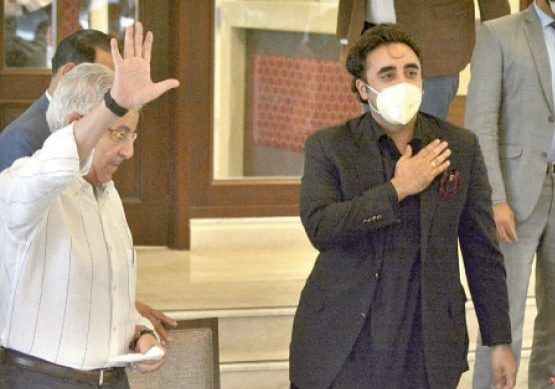
    State Bank of Pakistan (SBP) Governor Dr Reza Baqir on Sunday said that SBP would implement those policies benefiting economy of Pakistan.

    Monitory policy adopted by SBP is supporting the economy of Pakistan, he said in an interview with a private television channel.

    Commenting on approaching International Monitoring Fund (IMF), he said: “We had to seek support of IMF because of weak economic condition.”

    During COVID-19 pandemic, he said the government had to lift loan from IMF amounting to Rs250 billion. Appreciating the steps taken by Pakistan Tehreek-e-Insaf (PTI) government to avert coronavirus pandemic, he said that the SBP and the ruling party had successfully managed to cope the difficulties arisen due to spreading virus that played havoc around the world.

    WATCH THE FULL INTERVIEW:

    In reply to a question about policy rate, he said that the banks have implemented the policy rate that stood at 13 per cent. To another question about SBP’s working in future, he said that the banking system as autonomous body would have better results.