Tag: Supreme Court

  • Supreme Court orders ECP to decide schedule for KP LG polls’ second phase today

    Supreme Court orders ECP to decide schedule for KP LG polls’ second phase today

    The Supreme Court (SC) has ordered the Election Commission of Pakistan (ECP) to take a decision by Tuesday (today) on the second phase of local government (LG) elections in Khyber Pakhtunkhwa (KP).

    Initially, the second phase of LG polls in 18 districts of KP was to be held in the last week of January, but it was rescheduled by the ECP through a Dec 30, 2021 order on applications filed by local MNAs and MPAs.

    On Jan 20 this year, the ECP issued a notification announcing the holding of the second phase of LG elections in KP on March 27.

    But on February 1, the Peshawar High Court’s (PHC) Abbottabad bench had, in a verbal order, postponed the elections after accepting petitions of residents of five districts of KP on the grounds that these districts were expected to remain under snow in the last week of March due to heavy snow accumulation and, therefore, it would not be possible to set up polling stations.

    During Monday’s hearing, KP Advocate General Shumail Butt opposed the new election schedule, saying the ECP had not consulted the province before issuing the new election date. 

  • Faisal Vawda no more a Senator, ECP disqualifies in Dual Nationality Case

    Faisal Vawda no more a Senator, ECP disqualifies in Dual Nationality Case

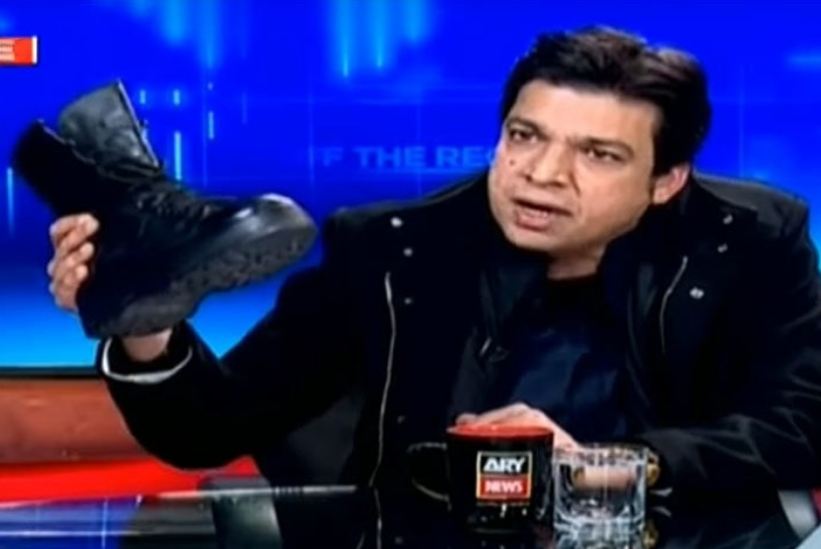
    The Election Commission of Pakistan (ECP) on Wednesday disqualified Pakistan Tehreek-e-Insaf (PTI) Senator Faisal Vawda as a Member of the National Assembly (MNA) over his dual nationality at the time of contesting the NA election on a Karachi seat in the 2018 general elections.

    The commission said Vawda had submitted a “false affidavit” when submitting nomination papers.

    The ECP also declared him ineligible for holding the seat of a senator and ordered to withdraw the notification appointing him as senator.

    However, Vawda can approach the Supreme Court (SC) against the verdict, said the ECP.

    ECP had reserved the verdict on Pakistan People’s Party (PPP) MNA Qadir Khan Mandokhel’s plea seeking Vawda’s disqualification on December 23, 2021.

    During the last hearing, Mandokhel and Vawda had appeared before an ECP bench. Chief Election Commissioner (CEC) Sikandar Sultan Raja had asked Mandokhel whether he wanted to present more documents or give additional arguments.

    Mandokhel had said it was the 30th hearing of the case but he could not get the answers to his questions. The PPP leader had said, “ECP has been issuing warnings for the last one-and-a-half years.”

    Mandokhel was of the view that Faisal Vawda had held United States (US) nationality at the time of filing his election nomination papers. He said that the concerned residing officer (RO) was not punished as he had rejected his papers instead of disqualifying Vawda.

    The PPP leader said that Vawda had falsely declared in an oath to the ECP that he did not hold any foreign nationality. The PTI leader had concealed his dual nationality during the scrutiny of his nomination papers, said Mandokhel.

    Vawda’s counsel rejected the allegations, saying that his client had never applied for another country’s nationality. He said Vawda was born in the US and that his client had cancelled his American passport.

    After hearing the arguments of both sides, the ECP reserved its verdict in Vawda’s disqualification case.

    The News reported in January 2020 that Vawda was a dual national at the time of filing his nomination papers to the ECP to contest the 2018 general elections. Vawda submitted his nomination papers on June 11, 2018, which were approved by the election body a week later on June 18, the report said.

    However, the Vawda applied for the renunciation of his nationality with the US consulate at Karachi four days after his nomination papers were approved act on June 22, 2018, the report revealed.
  • Ravi Urban project not presented correctly in court, govt will approach SC: PM Khan

    Ravi Urban project not presented correctly in court, govt will approach SC: PM Khan

    Prime Minister (PM) Imran Khan said Friday the government would move the Supreme Court after the Lahore High Court (LHC) nullified the Ravi Urban Development Project.

    Prime minister during his visit to Rakh Jhok forest said that this time the case would be presented in a better manner to appraise the court about the significance of the project in view of urban development and civic facilities, further saying that the case was not presented correctly in LHC.

    PM Imran Khan said wealth creation would help run 40 affiliated industries.

    “We need to set up new cities in view of the growing population, otherwise we will not be able to provide civic facilities to people,” he said.

    The premier mentioned that Lahore in near future could face similar civic problems like Karachi as a result of unplanned urban development.

    The LHC on Tuesday had declared the Ravi Riverfront Urban Development Project (RRUDP) illegal while announcing a verdict on the petitions against the project.

    The court also declared Section 4 of the Ravi Urban Development Authority (amendment) Ordinance 2021 unlawful and unconstitutional.

    The mentioned section is contradictory to Article 144 of the Constitution of Pakistan, it said.

  • SCBA president files petition against lifetime disqualification in SC

    SCBA president files petition against lifetime disqualification in SC

    President Supreme Court Bar Association (SCBA) Mohammad Ahsan Bhoon on Thursday filed a petition against the lifelong disqualification of lawmakers and said that such a law without the right to appeal is unjust.

    The petition asks the Supreme Court (SC) to rule that the declaration by a court of law under Article 62(1)(f) only applies to the election under question, and does not entail a perpetual or lifetime bar on contesting future elections, reports Dawn.

    The petition argues that the lack of clarity regarding the procedure for a declaration under Article 62(1)(f) continues to pose an obstacle to the constitutional protection of citizens under Article 17(2), which allows citizens to form or become a member of any political party.

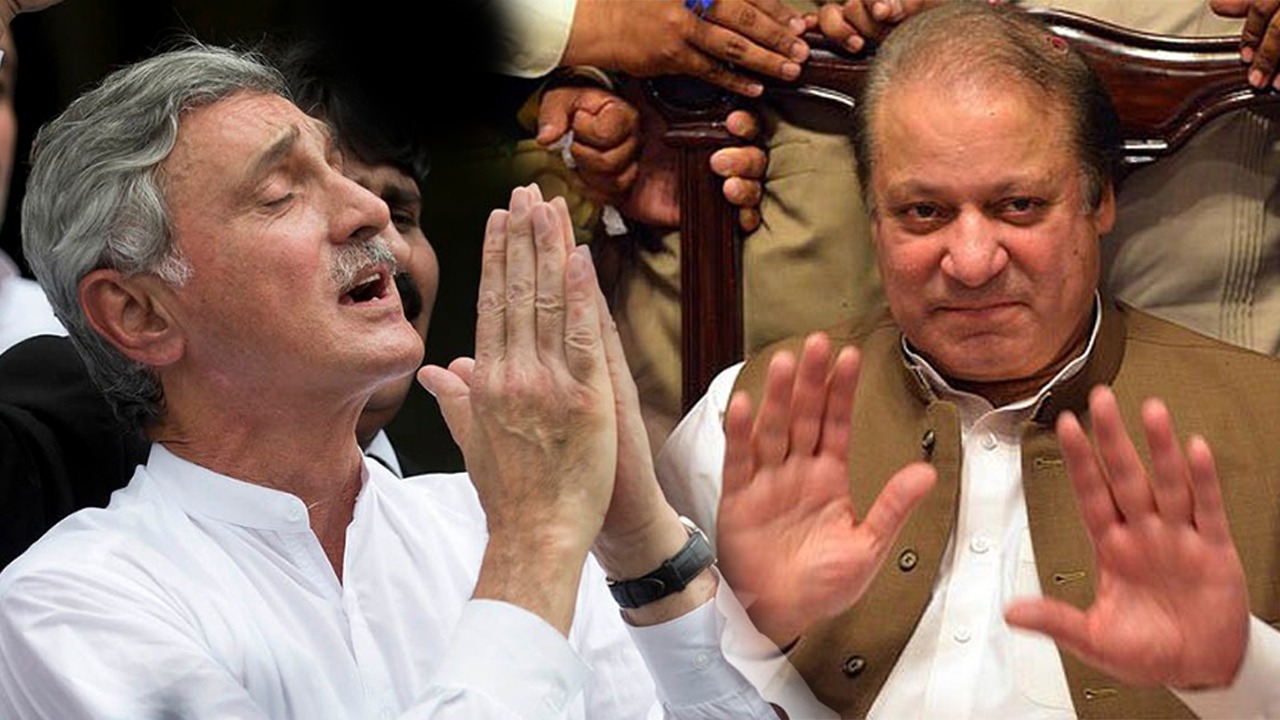
    It is pertinent to mention here that the result of this petition can affect the outcome of SC verdicts disqualifying former prime minister and Pakistan Muslim League-Nawaz (PML-N) supreme leader Nawaz Sharif, as well as Pakistan Tehreek-e-Insaf’s (PTI) disgruntled leader Jahangir Tareen.

    The two were disqualified as lawmakers in judgements rendered in the Panama Papers case on July 28, 2017, and the Hanif Abbasi case on Dec 15, 2017, respectively.

    The contents of the petition said that the principle of lifetime disqualification should only be applied to electoral disputes. Under Article 184/3 of the Constitution, the SC cannot act as a trial court and there is no right to appeal against the decisions made by the apex court, which contradicts the principles of justice.

    The petition said that the lifelong disqualification without the right to appeal is unjust to the voters. 

  • Justice Ayesha Malik takes oath, becomes first woman to be SC Judge

    Justice Ayesha Malik takes oath, becomes first woman to be SC Judge

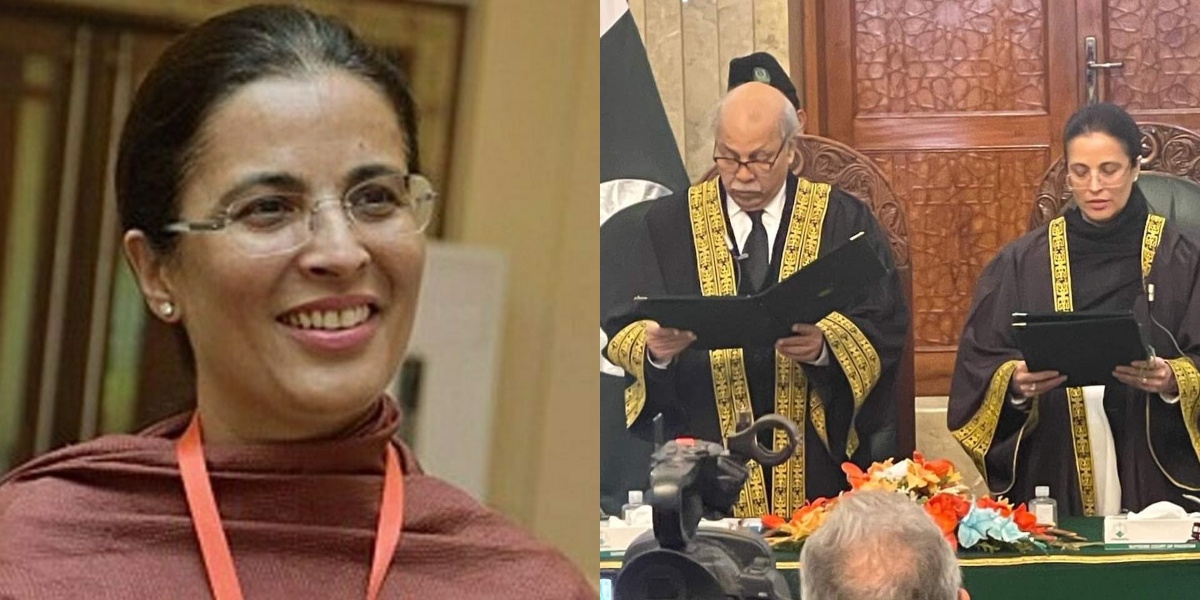
    Justice Ayesha Malik has taken oath as the Judge of Supreme Court of Pakistan. With her appointment, she has become the first woman of the country to reach the apex court.

    Her swearing-in ceremony was held at the apex court today. Chief Justice of Pakistan (CJP) Gulzar Ahmed administered the oath to her.

     Pakistan Muslim League-Nawaz (PML-N) Vice-President Maryam Nawaz has lauded Ayesha Malik’s appointment.

    Senator Shibli Faraz has termed her appointment as the “historic moment” in the judicial history of Pakistan.

    President Arif Alvi on Friday gave final approval of her elevation. The Judicial Commission of Pakistan had on January 7 approved the elevation with a vote of five for and four against after a heated discussion on whether judges should be appointed based on merit or seniority.

  • Justice Ayesha Malik confirmed for Supreme Court Judge, needs President’s formal approval

    Justice Ayesha Malik confirmed for Supreme Court Judge, needs President’s formal approval

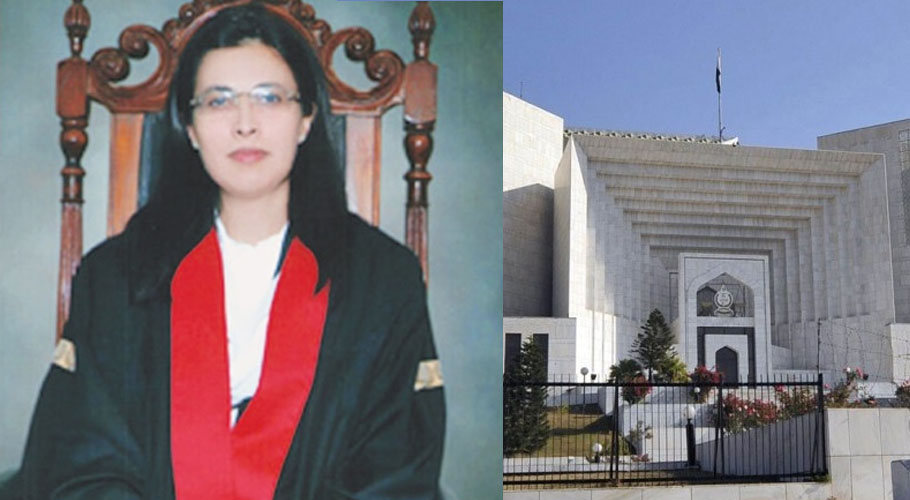
    The Parliamentary Committee on Wednesday confirmed the nomination of Justice Ayesha Malik to the Supreme Court (SC).

    Justice Malik only requires the president’s formal assent to become the first woman to be elevated to the country’s top court.

    Justice Malik will remain a judge of the Supreme Court until March 2031 and may even have a chance to become the first woman to hold the post of chief justice.

    After a session on January 6, the Judicial Commission of Pakistan (JCP) recommended Justice Malik’s name by a majority of five votes to four.

    Chief Justice Gulzar Ahmed, senior judge Justice Umar Ata Bandial, former judge Sarmad Jalal Osmany, Law Minister Barrister Farogh Naseem, and Attorney General Khalid Jawed Khan had supported Justice Malik’s candidature, while Justice Qazi Faez Isa, Justice Maqbool Baqar, Justice Sardar Tariq Masood and Pakistan Bar Council representative Akhtar Hussain opposed the selection.

  • Four more children die of malnutrition in Tharparkar, death toll at 10

    Four more children die of malnutrition in Tharparkar, death toll at 10

    Four more children are reported to have died due to malnutrition within the last two days in Tharparkar. The death toll of children in January has climbed to ten.

    A report released by the United Nation’s Children Fund (UNCF) in April stated that Pakistan is among the countries with the highest infant mortality rates, with 22 infants dying before turning a month old.

    The number of children who have lost their lives during the current year due to malnutrition and other diseases in Tharparkar has reached 413.

    Earlier this month, Chief Justice of Pakistan Justice Gulzar Ahmed asked for the filing of a petition in the Supreme Court for a resolution of the problems of the Thar region.

    The health department in order to avoid humiliation has directed staffers of concerned hospitals not to talk with the media, reports ARY News.

  • Islamabad High Court orders closure of all sheesha cafes in the city

    Islamabad High Court orders closure of all sheesha cafes in the city

    Islamabad High Court (IHC) has ordered the local administration to shut down all sheesha cafes in the federal city with immediate action and submit a progress report to the court as well.

    The Anti-Narcotics Force (ANF) along with the Islamabad administration and police have mobilised their resources to initiate the crackdown on all sheesha cafes operating in Islamabad.

    The complete ban on sheesha was announced across the country led by the Supreme Court previously in 2015 but in the following year, the bench headed by Justice Gulzar Ahmed of the Supreme Court expressed displeasure over the sale and import of sheesha and tobacco smoking items despite the ban from the apex court.

    This time the court emphasised that action must be louder than words.

    The court also asked the advocate generals from the provincial governments about the implementation of previous orders regarding the ban on sheesha smoking in public spaces.

  • KP government wants harsher sentences for those convicted in Mashal Khan case

    KP government wants harsher sentences for those convicted in Mashal Khan case

    The Supreme Court (SC) on Tuesday accepted for hearing a set of appeals by the Khyber Pakhtunkhwa (KP) government seeking to enhance the sentences of the convicts involved in the 2017 lynching of Mardan university student Mashal Khan, reports Dawn.

    Additional Advocate General (AAG) for KP Nisar Khan, told Dawn that the appeals were filed against the November 2020 verdict in which the Peshawar High Court had commuted the death sentence awarded to primary accused Imran Ali in Mashal Khan lynching case, but maintained the jail terms handed down to 32 others.

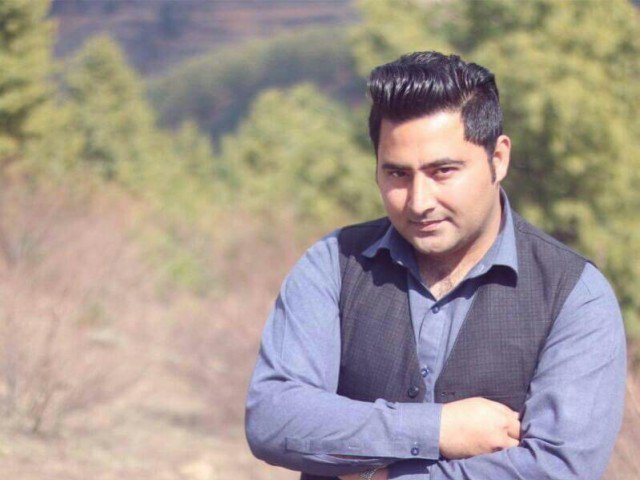
    Mashal Khan, a 23-year-old student of the Department of Mass Communication at Abdul Wali Khan University, Mardan, was lynched by a mob and shot over allegations of blasphemy on April 13, 2017.

    In June 2017, a 13-member joint investigation team concluded that the allegations of blasphemy against Mashal Khan were unfounded and were used as a pretext to incite a mob against him.

  • ‘If law can apply to Nawaz Sharif, why not Imran Niazi?’ Shehbaz demands action against PM

    ‘If law can apply to Nawaz Sharif, why not Imran Niazi?’ Shehbaz demands action against PM

    Leader of the Opposition in the National Assembly (NA) Shehbaz Sharif on Friday demanded legal action and “daily court proceedings” against Prime Minister (PM) Imran Khan.

    In a series of statements shared by the party’s official Twitter account, “A person who hides facts, steals, and lies, cannot hold constitutional, governmental or political office,” said Shehbaz.

    Shehbaz asked, “if the law can apply to a popular leader like Nawaz Sharif, why not Imran Niazi?”

    “If a Panama Papers JIT can be formed against Nawaz Sharif, and can be overseen by the honourable judges of the Supreme Court (SC), then why can this not be done for Imran Niazi?” he further questioned.

     “Under the Constitution of Pakistan and its laws, “no thief can be a prime minister. Imran Niazi, who has been proven a thief and a liar under the law, must resign,” he added.


    The Pakistan Muslim League-Nawaz president demanded that a probe be initiated against PM Imran Khan and his case be heard on a daily basis — like against former prime minister Nawaz Sharif.

    He said equal treatment under the Constitution and law is a fundamental principle of Pakistan’s laws and one that must be fulfilled.

    “The Election Commission of Pakistan (ECP’s) scrutiny committee has charged Imran Niazi and his party under the law,” he said.

    The ruling Pakistan Tehreek-e-Insaf (PTI) hid 53 bank accounts and funds worth millions of rupees from the ECP.

    The report of an ECP scrutiny committee probing the party’s funds revealed the following details.

    The committee’s report showed that the PTI had only disclosed 12 out of its 65 accounts, which are registered with the State Bank of Pakistan (SBP).