Tag: Supreme Court

  • Senate Election on March 3 will be conducted as per past practice: ECP

    Senate Election on March 3 will be conducted as per past practice: ECP

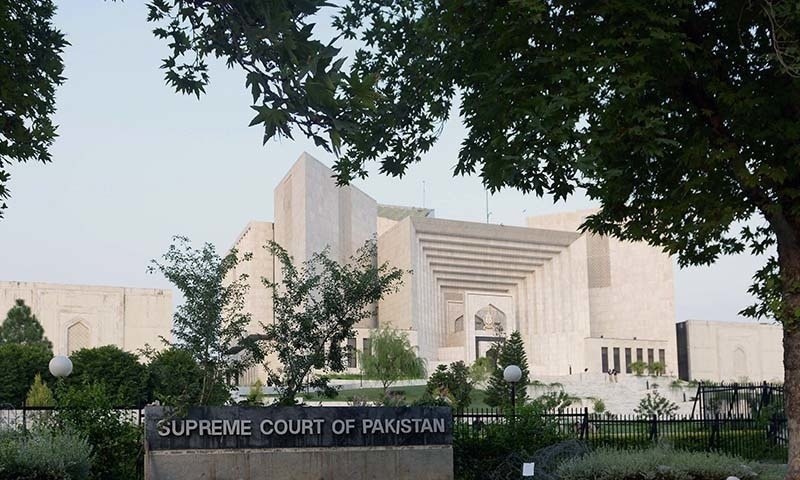
    The Election Commission of Pakistan (ECP) on Tuesday said that it deliberated on the order/opinion of the Supreme Court passed yesterday in Presidential Reference and has “decided to implement it in letter and spirit”.

    In a statement, the ECP said that it is taking all possible steps and measures to fulfil its constitutional duty to check that corrupt practices in the Senate Elections are guarded against.

    The ECP has decided to constitute a committee in this regard so that they can give their recommendations regarding the use of technology in the Senate Elections within a period of four weeks.

    The ECP has decided that “due to time constraint, ensuing Senate Election scheduled for March 3, 2021 will be conducted as provided in the Constitution and Law as per past practice”.

    https://twitter.com/profaltafkhan/status/1366629264746020866

    In a short order issued yesterday, the Supreme Court observed that the Senate Elections are held in accordance with the law and the Constitution, saying it “is the responsibility of the Election Commission of Pakistan (ECP) to protect the polls from the menace of corruption”.

    Federal Minister for Science and Technology Fawad Chaudhry tweeted that though the Supreme Court’s opinion on the matter was different, the ECP’s decision to delay the use of technology till the next Senate polls was astonishing.

    He added that both the apex court and ECP are respectable for him.

    All eyes will be on former prime minister Yousaf Raza Gillani’s election tomorrow.

    He is contesting as the joint candidate of the Pakistan Democratic Movement (PDM) against PTI’s Finance Minister Hafeez Sheikh.

    The election between Gillani and Sheikh is important as a Gillani win would prepare the ground for a no-trust vote against Prime Minister Imran.

    Meanwhile, the premier is taking this contest quite seriously and is leading the Senate campaign for the government. He held back-to-back meetings with lawmakers on Monday and will also host a luncheon today for National Assembly lawmakers.
  • Secret ballot for Senate to continue, rules Supreme Court

    Secret ballot for Senate to continue, rules Supreme Court

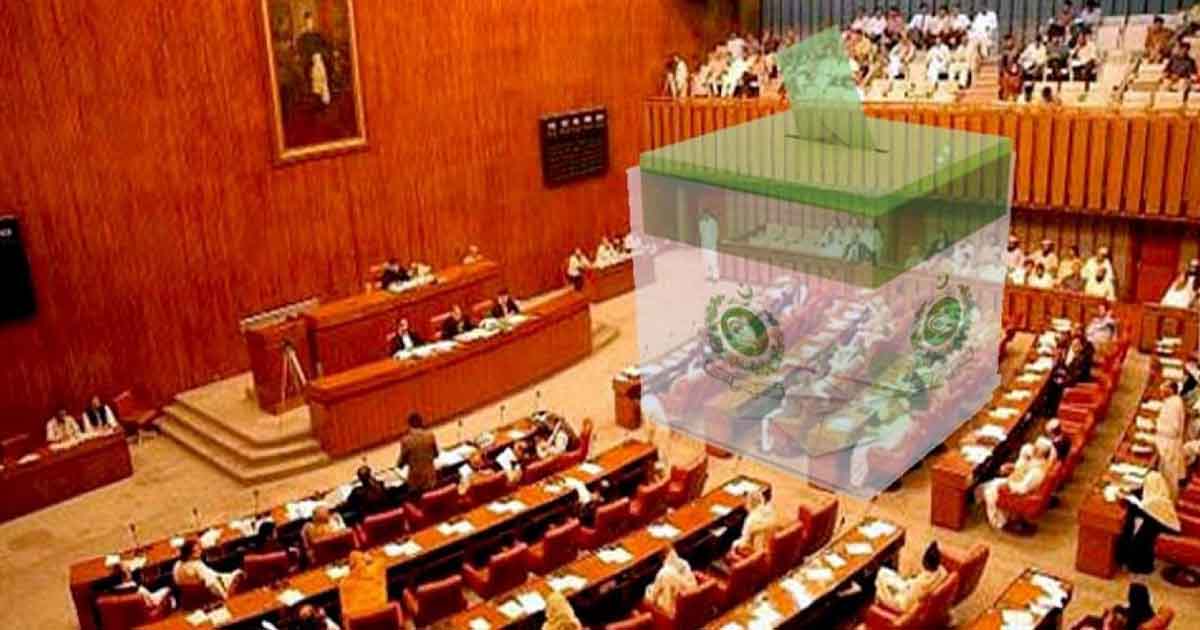
    Announcing its verdict on a presidential reference seeking legal opinion on the holding of Senate election through an open vote, the Supreme Court on Monday said polls for the Upper House will be held through a secret ballot.

    The 4-1 majority opinion was announced by a five-judge larger bench, headed by Chief Justice of Pakistan (CJP) Gulzar Ahmed.

    The reference was forwarded to the apex court in January after Prime Minister Imran Khan expressed his desire to curtail the practice of horsetrading in Senate elections by introducing an open-ballot system.

    READ: Open ballot in Senate polls: What do legal experts have to say?

    Following almost two months of proceedings, the court had on Thursday reserved its verdict, announcing to issue it on Monday (today).

    In a short order issued today, the court observed elections to the House are held in accordance with the law and the Constitution, saying it “is the responsibility of the Election Commission of Pakistan (ECP) to protect the polls from the menace of corruption”.

    While the order cited Article 226 of the Constitution to support its argument, the judges said the Parliament can decide if it feels the need to end the secrecy of the voting process.

    A detailed verdict is expected to be issued shortly.

  • Senate polls cannot remain ‘secret forever’, says SC judge

    Senate polls cannot remain ‘secret forever’, says SC judge

    Supreme Court judge Ijazul Ahsan, while hearing presidential reference pertaining to the secret ballot in the Senate elections, said that the votes cast in the election cannot remain “secret forever”.

    A five-member bench headed by Chief Justice Gulzar Ahmed urged Chief Election Commissioner Sikandar Sultan Raja to consider recommendations presented by Attorney General Khalid Jawed Khan and submit a response to the top court. Raza Rabbani, who is representing the opposition in the case, opposed this, saying the attorney general would share the government’s point of view on the issue.

    The SC had grilled the Election Commission of Pakistan over its response on the secret ballot on Tuesday. Today, the ECP in its reply maintained that the Senate elections can only be held through secret voting under Article 226 until an amendment is made.

    As per the article, the voting in the election would “always remain secret”, the ECP informed the bench. Justice Ahsan remarked that the “secrecy of the vote till the Day of Judgement is neither in the law nor in court judgements”.

    The judge further said if any party got less number of seats in the Senate as compared to its seats in the provincial assemblies then the ECP will be responsible. “If [any party] does not get [the number of seats] in relation to its seats in the provincial assemblies, it will be the ECP’s defeat.”

    At this, the election commission tried to assuage the court’s concerns, saying the ECP has set up a vigilance committee and an online complaints centre. All election candidates will be required to take an oath that they would not buy or sell votes, the ECP representative added.

    He informed the court that more than 1,100 complaints had been received since September. “Whatever complaints the ECP receives regarding elections, action is taken on them immediately.”

    Justice Mushir Alam observed that the matter of secrecy was part of the Elections Act 2017 but the question was to what extent would secrecy be applicable.

    During the hearing, the attorney general said ECP needs to wake up from its slumber and formulate a mechanism to stop horse-trading. AGP Khan said the ECP should ask the heads of political parties whether any seat adjustment was done. Barcodes or serial numbers could be printed on ballot papers, he suggested.

    Meanwhile, the chief justice refused to entertain the Pakistan Bar Council’s plea, saying the PBC won’t be heard on political matters.

  • Who ‘WhatsApp-ed’ Justice Qazi Faez Isa against PM Imran?

    Soon after claiming that it was the son of Pakistan Muslim League (PML) leader Chaudhry Shujaat who had “WhatsApp-ed” to inform Justice Qazi Faez Isa that he received development funds from Prime Minister (PM) Imran Khan, journalist Gharida Farooqi has tweeted a clarification.

    As per the details, Gharida on Thursday tweeted quoting sources that it was Ch Salik who had sent Justice Isa the details and proof of the premier sending him development funds.

    “The PM [had] today submitted [his] reply to the Supreme Court (SC) that the news regarding funds was fake,” she wrote while mentioning Thursday’s hearing of the apex court case over notice of Rs500 million uplift funds in light of the forthcoming Senate polls.

    It wasn’t later that the journalist once again took to Twitter and clarified that it wasn’t Salik.

    “I got a call from Ch Salik after my [earlier] tweet. He categorically denied it and said he didn’t even know Justice Isa. Whereas, Justice Isa said so in the SC today while referring to NA 65 [constituency],” she said.

    It may be noted that Ch Salik of the PML had been elected to the National Assembly from the said constituency in a 2018 by-election.

    While Gharidah’s clarification led to a spat between her and PM Imran’s aide Dr Shahbaz Gill, who said that the SC had dismissed the case, here’s what journalist Umar Cheema had to say:

    Earlier, the Supreme Court disposed of the case, declaring PM Imran’s response satisfactory.

    During the hearing, Justice Isa had inquired if it was the premier’s job to distribute envelopes of money to members of the National Assembly.

    The judge revealed he had received documents via WhatsApp indicating that heavy funds had been provided to a lawmaker from the ruling PTI’s coalition party from the NA-65 constituency, reports said.

    “Can funds be given to certain constituencies? Is it in accordance with the law to give funds for the road,” he inquired.

    The Attorney-General of Pakistan (AGP) Khalid Jawed Khan responded to the apex court judge, saying the WhatsApp documents “are your complaint and would be reviewed”.

    “I am not the complainant, I am just pointing [it] out; perhaps, you did not listen to me,” the judge replied.

    In response, the AGP said, “You have been sharing your observations for a long time. It is I who has not been heard. You received a message on your WhatsApp, so you are a complainant.”

  • Senate elections on March 3: ECP

    Senate elections on March 3: ECP

    Amid a controversy surrounding the Senate elections over the secret ballot, the Election Commission of Pakistan has announced to hold the polls on the upper house seats on March 3.

    According to the ECP, the last date for filing of nomination papers is February 13, followed by a scrutiny process for the nominations. The last date for filing of appeals against acceptance or rejection of papers is February 18, said a notification issued by the ECP.

    The date for disposal of appeals is Feb 19-20, whereas candidates can withdraw their applications by Feb 22 a day after issuance of the revised list of the contestants. The polling will start at 9am and end at 5pm on March 3.

    The Senate elections will be held on 48 seats: two in Islamabad (National Assembly); 11 in Punjab; 11 in Sindh; 12 in Khyber Pakhtunkhwa; and 12 in Balochistan.

    On February 6, President Dr Arif Alvi signed Elections (Amendment) Ordinance 2021 that will pave way for the organisation of Senate elections through open ballot. The opposition, however, has reservations on the move and vowed to oppose it.

    On the other hand, a presidential reference filed by the government in the Supreme Court seeking guidance on the Senate voting procedure is being heard to decide whether the government needs an amendment to end the secret ballot.

    Yesterday, the SC had said that Article 226 allows secret ballot. The article reads: “All elections under the constitution, other than those of the prime minister and the chief minister, shall be by secret ballot.”

  • ‘Inhumane’: SC says ‘mentally-ill’ death row prisoners cannot be executed

    ‘Inhumane’: SC says ‘mentally-ill’ death row prisoners cannot be executed

    The Supreme Court of Pakistan on Wednesday commuted the death sentences of three “mentally-ill” prisoners to life imprisonment, saying executing a person who doesn’t understand the rationale behind their punishment is “inhumane” and doesn’t meet the ends of justice.

    The apex court announced this verdict on a point whether or not mentally ill death-row prisoners can be executed. The pleas were filed on the behalf of Kanizan Bibi, Imdad Ali and Ghulam Abbas who have spent 30, 18 and 14 years on death row, respectively, while exhibiting acute symptoms of mental illness, reported Dawn.

    A five-judge bench, headed by Justice Manzoor Ahmad Malik, comprising Justice Sardar Tariq Masood, Justice Ijazul Ahsan, Justice Mazhar Alam Khan Miankhel and Justice Syed Mansoor Ali Shah gave this verdict at SC’s Lahore registry.

    In its verdict, the apex court that not every mental illness shall automatically qualify for an exemption from carrying out the capital sentence.

    “This exemption will be applicable only in that case where a medical board, consisting of mental health professionals, certifies after a thorough examination and evaluation that the condemned prisoner no longer has higher mental functions to appreciate the rationale behind the sentence of death awarded to them,” the judgement stated.

    “It is with the developing nature of medical science that scope of these terms may also evolve. Therefore, we are of the view that a limited definition of the terms ‘mental disorder’ or ‘mental illness’ should be avoided, and the provincial legislatures may […] consider to appropriately amend the relevant provisions of mental health laws to cater for medically recognised mental and behavioral disorders as notified by the World Health Organisation.”

    The top court also barred the use of “stigmatic labels”, like “unsound mind”, “lunatic” and “insane” to refer to the prisoners who suffer from mental disorders.

    “Latest legislations all over the world do not use such terms. Therefore, we consider it appropriate to direct that the terms ‘unsoundness of mind’ and ‘unsound mind’ occurring in Pakistan Penal Code, the Criminal Code of Procedure and the Prison Rules be substituted with term ‘mental disorder’ or ‘mental illness’.

    “The term ‘lunatic’ wherever it occurs shall also be substituted appropriately,” the judgement stated.

  • Justice Isa holds referendum on country’s press freedom situation in court; no hands raised

    Justice Isa holds referendum on country’s press freedom situation in court; no hands raised

    Supreme Court’s (SC) Justice Qazi Faez Isa has expressed serious concerns over the press freedom situation in Pakistan, holding a referendum on freedom of press in his court.

    “Tell me… is media free in Pakistan?” Justice Isa asked the attorney general while hearing the case regarding local government elections with Justice Maqbool Baqir.

    The top court judge asked the reporters present in the courtroom to raise their hands if media was free in the country. Even though a number of media persons were present, nobody raised their hands.

    At this, Justice Isa said, “The people who are behind curbs on media must go to jails.”

    “The country is systematically being damaged. The poor are crying,” he added.

    Justice Baqir, on the other hand, remarked that a judge should avoid discussing such things but for how long could one remain silent on a situation such as the prevailing one. “It is not an ideal situation.”

    Earlier, the Election Commission of Pakistan (ECP) submitted schedule of local bodies elections to the court.

    The election watchdog, in its reply to the apex court, stated that local government polls will be held in Punjab on July 20 while Khyber Pakhtunkhwa (KP) and Cantonment Boards will hold the election on April 8.

    The commission further said that decision regarding date of the elections in Sindh and Balochistan will be taken on February 11.

    Last Thursday, the top court had asked the ECP to furnish a comprehensive reply within a week on holding the polls.

  • After FIA, NAB too cannot probe BRT project

    After FIA, NAB too cannot probe BRT project

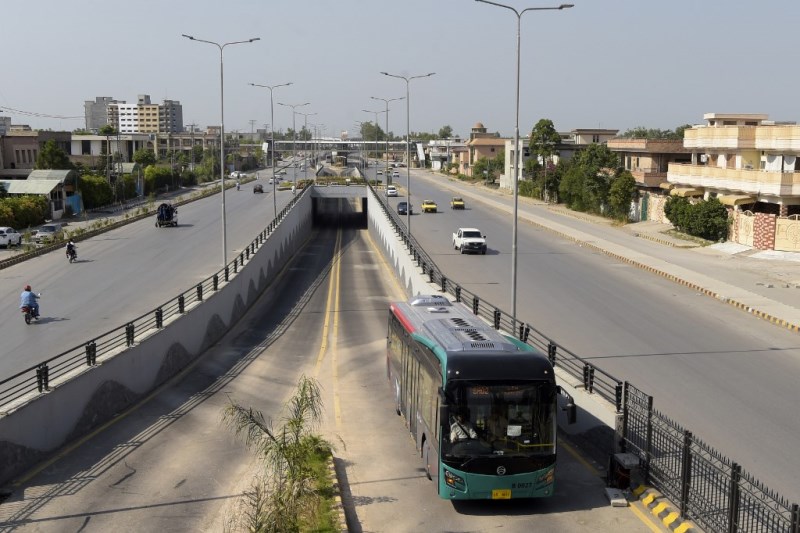
    The Supreme Court has stopped the National Accountability Bureau (NAB) from investigating alleged irregularities in the Peshawar Bus Rapid Transit (BRT) project.

    The Khyber Pakhtunkhwa government had approached the apex court against a ruling by the Peshawar High Court wherein the court had asked NAB to probe the mass transit project over alleged corrupt practices that resulted in massive losses to the national exchequer.

    A three-member bench headed by Justice Umar Ata Bandial set aside the decision of the high court, saying it was based on speculations.

    According to the petition filed in the high court, the project was transferred to the Peshawar Development Authority despite the formation of a special BRT cell in the provincial transport department that also hired staffers and consultants. The court had observed the project was not coordinated well, resulting in delay and loss of money. 

    This is not the first time that NAB has been barred from touching the BRT. In 2018, after the PHC asked NAB to probe the BRT project, then chief justice Saqib Nisar had suspended the decision in Sept 2018.

    In Feb 2020, an SC bench headed by Justice Bandial had stopped the Federal Investigation Agency to stop the BRT investigation. At this time, the KP government’s lawyer had alleged that the PHC had issued its verdict without any reasoning.

    PESHAWAR METRO:

    The BRT bus service was launched on Aug 13 last year by Prime Minister Imran Khan after much delay as it missed several deadlines.

    The KP government and the project’s execution agency had promised to open the project, launched in October 2017, within six months on April 20, 2018. However, the deadline was missed.

    The project managers kept changing the launch dates from May 20 to June 30 to December 31 in 2018 to March 23, 2019, but the project was finally launched in Aug 2020. Since then, multiple buses of the BRT have broken down or caught fire.

  • ‘Enraged’ US wants to prosecute acquitted suspects in Daniel Pearl murder case

    The White House has expressed “outrage” that Pakistan’s Supreme Court ordered the release of an Islamist convicted of beheading American journalist Daniel Pearl.

    Ahmed Omar Saeed Sheikh, who was the main suspect in the 2002 kidnapping and murder of the Wall Street Journal reporter, was acquitted by a panel of three judges.

    White House spokeswoman Jen Psaki called the decision “an affront to terror victims everywhere” and said Washington is “committed to securing justice for Daniel Pearl’s family.”

    At her daily briefing, Psaki called on the Pakistani government to quickly review legal options, including letting the United States prosecute those acquitted.

    The Pakistani court decision comes at a sensitive time in US-Pakistani relations as new President Joe Biden’s administration reviews Afghanistan’s peace process in which Pakistan is a key player.

    SC ORDERS RELEASE OF SHEIKH:

    The Supreme Court dismissed a series of appeals against the acquittal of the British-born militant convicted of masterminding the kidnap and murder of US journalist Daniel Pearl, paving the way for his release.

    “The court has come out to say that there is no offence that he has committed in this case,” Mahmood Sheikh, who represented Ahmed Omar Saeed Sheikh, told AFP.

    The three-judge bench directed authorities to release Sheikh who was sentenced to death for his role in the plot.

    During the hearing, the Sindh advocate general told the court that the prime suspect has links to banned outfits. He added that the Sindh government submitted sensitive information to the top court in a sealed envelope. At this, the court responded that the evidence submitted by the authorities in the case was not enough to convict Sheikh.

    In a dramatic turn of events on Wednesday, Sheik admitted a “minor” role in the death of Pearl. That testimony was at odds with 18 years of denial about his involvement in the killing.

    A letter handwritten by the accused in 2019, in which he admits limited involvement in the death, was submitted to Pakistan’s Supreme Court nearly two weeks earlier.

    Last month, the United States government had also issued a statement expressing concerns over the acquittal of Sheikh by the Sindh High Court.

    “We are deeply concerned by the reports of the December 24 ruling of Sindh High Court to release multiple terrorists responsible for the murder of Daniel Pearl. We have been assured that the accused have not been released at this time,” said the State Department in a series of tweets in response to the ruling of the high court.

  • Opposition concerned over ex-SC judge heading Broadsheet scandal investigation panel

    Opposition concerned over ex-SC judge heading Broadsheet scandal investigation panel

    Two of the country’s major opposition parties, the Pakistan Muslim League-Nawaz (PML-N) and Pakistan People’s Party (PPP), have expressed reservations on the investigation panel that is to be headed by former Supreme Court (SC) justice, Azmat Saeed, to investigate the Broadsheet scandal.

    Speaking to a private media outlet on Thursday, senior PML-N leader Ahsan Iqbal pointed out that the former SC judge was part of the bench in the Panama Papers case that disqualified then prime minister (PM) Nawaz Sharif.

    “He was later invited by PM Imran Khan to join the Shaukat Khanum Memorial Hospital’s Board of Governors after his retirement.”

    Ahsan also pointed out that during the Musharraf regime, when the asset recovery agreement was signed with Broadsheet, Justice Azmat was part of the National Accountability Bureau (NAB).

    Meanwhile, PPP Secretary General Nayyer Bukhari said the PTI’s dishonesty had been exposed by the nomination of committee head. “It seems that the government wants to put all the blame on the previous governments.”

    Bukhari said the PPP has reservations on the committee, adding, “it is a sensitive matter which should be investigated in a transparent manner.”

    According to the Supreme Court’s website, Justice Azmat was the anti-graft watchdog’s deputy prosecutor general in Islamabad in the year 2000 for a period of one year and was later appointed NAB special prosecutor in 2001 to prosecute cases before accountability courts at Attock Fort and in Rawalpindi.

    However, it is not clear if the former judge had played a role, if any, in the formulation and signing of the asset recovery agreement and/or its eventual termination.

    It was reported earlier on Thursday that Azmat will lead the inquiry commission to examine the circumstances relating to the Broadsheet agreement and subsequent arbitration proceedings that resulted in substantial loss to the national exchequer.

    The announcement was made by Information Minister Shibli Faraz.

    Science and Technology Minister Fawad Chaudhry also said that “PM Imran Khan has appointed Justice (r) Azmat Saeed as head of the Broadsheet inquiry committee”, adding that the remaining members of the committee would be appointed with Justice (r) Azmat’s consultation.