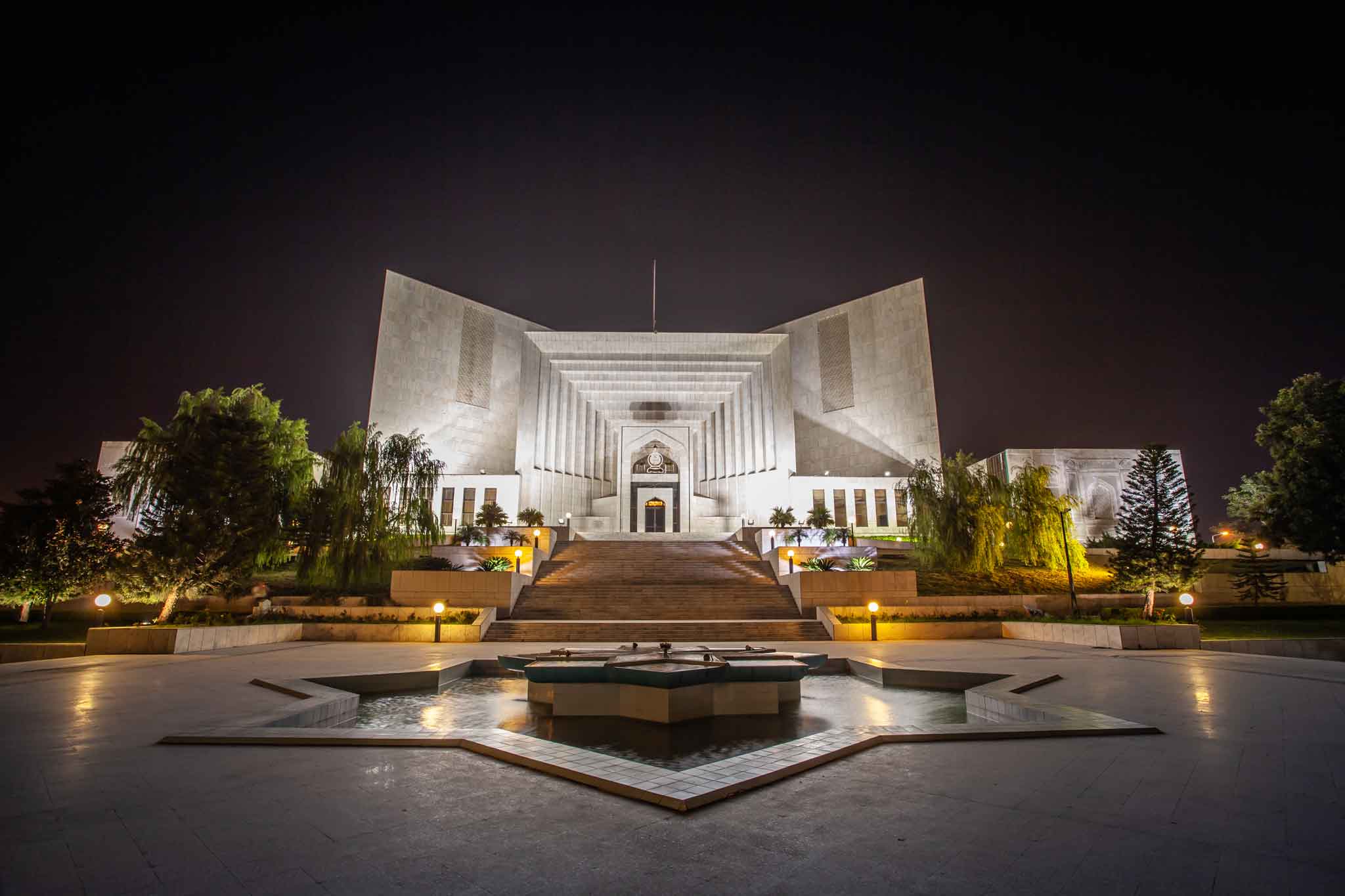
Tag: Supreme Court

  • Issue of missing person can’t be solved overnight, says law minister

    Issue of missing person can’t be solved overnight, says law minister

    Federal Law Minister Azam Nazeer Tarar said on Tuesday, in a press conference in Islamabad, that missing persons were involved in the Gwadar attack. He highlighted the struggle of the government to resolve the issue, but also emphasised that the problem can’t be resolved overnight.

    He also said that the issue of missing persons in Pakistan is closely linked with terrorism.

    Tarar disclosed that the Supreme Court (SC) has taken notice of the problem and has sent over 10,000 cases to the commission responsible for investigating missing persons. He said they’ve successfully resolved approximately 8,000 of these cases.

    During the press conference, he stressed that the government is aware of its responsibility on the issue and is making efforts to resolve it. He also stated that earlier in 2022, the coalition government formed a committee to handle the issue.

    Under the directive of the Prime Minister, efforts to address missing persons cases have been reignited, he added.
  • Judges’ letter: Justice Yahya Afridi recuses from suo moto case

    Judges’ letter: Justice Yahya Afridi recuses from suo moto case

    Justice Yahya Afridi of the Supreme Court has withdrawn himself from the suo motu case that the apex court took up after receiving a letter from Islamabad High Court (IHC) judges, alleging complaints about intelligence agencies interfering in judicial matters.


    Justice Afridi, who was part of the seven-member bench hearing the case, added his recusal in a note attached to the written order issued after the first hearing.

    The judge said the judges should consider the issues in the letter from the IHC judges according to the code of conduct of the Supreme Judicial Council.
    “High Courts are independent courts under the Constitution. Article 184/3 should not be invoked on independence of high courts,” Justice Yahya maintained.
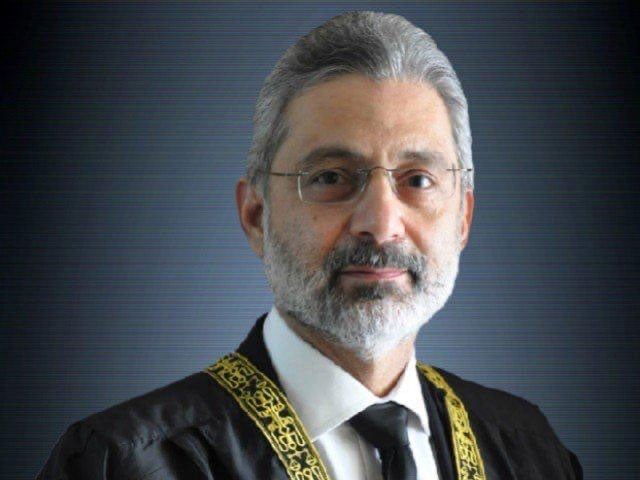
    The seven-member bench conducting the hearing of suo motu case is headed by Chief Justice Qazi Faez Isa and comprised six other judges — Justice Syed Mansoor Ali Shah, Justice Yahya Afridi, Justice Jamal Khan Mandokhel, Justice Athar Minallah, Justice Musarrat Hilali and Justice Naeem Akhtar Afghan.

  • CTD makes ‘progress’ in threatening letters case

    CTD makes ‘progress’ in threatening letters case

    The Counter Terrorism Department (CTD) is getting closer to uncovering the person behind the threatening letters sent to judges of the Supreme Court and various high courts, Geo News reported on Monday.

    Geo sources say that CTD has been actively following key developments in the investigation since they received the forensic report on the handwriting in the letters.

    The investigation department matched the letters written to judges in the Supreme Court, Islamabad, and Lahore High Courts. According to forensic reports, the same person wrote the letters to judges in all three courts under the names Resham, Reshaman, and Gulshad Khatun. The letters were also sent through the same post office.

    “There is a single mastermind behind sending threatening letters to judges,” sources within CTD told Geo News, adding that arsenic found in the letters to the judges was also bought by the same person.

  • Tehreek e Namoos Pakistan sends threatening letters to SC

    Tehreek e Namoos Pakistan sends threatening letters to SC

    After arriving at the doorsteps of Islamabad High Court (IHC) judges, letters containing suspicious powdery substance and threatening messages have been sent to the four Supreme Court (SC) judges – including Justice Qazi Faez Isa and Justice Mansoor Ali Shah.

    Importantly, on the same day four judges of Lahore High Court received the threatening letter as well containing suspicious powdery substance.

    The suspicious powder was suspected to be anthrax.

    The letter sent to the SC jurists read, “You people at the Supreme court of Pakistan are pretending to do justice since the inception of this country. Year after year this country is pluming into chaos, poverty, corruption and disorder. SCP was supposed to be the final and ultimate check for all that is wrong in our holy country instead it became very part of the problem and rescuer of evil.”

    It further said, “Judges, Generals and politicians are the curse and disease of motherland. We Tehreek e Namoos e Pakistan say NO More…”

    Tehreek e Namoos Pakistan (TNP) is a relatively new militant group whose name emerged once before last year. It was when a team of the Wild Life Department discovered explosives and maps related to sensitive installations of the Red Zone at Margalla hills, on Trail 5 of Islamabad, September 17 2023.

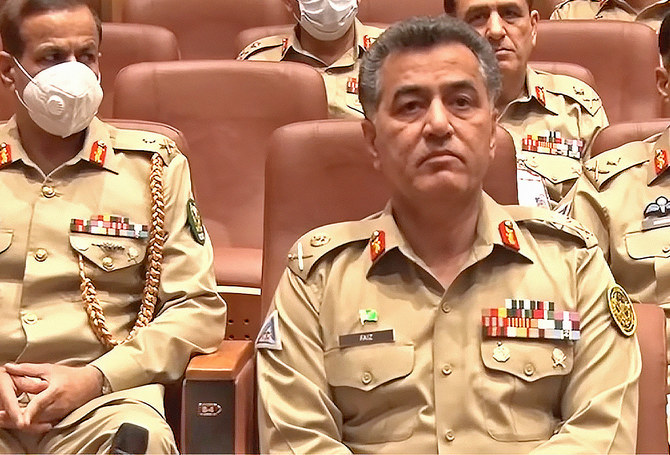
  • Did Gen (r) Faiz Hameed plans TLP’s Faizabad sit-in?

    Did Gen (r) Faiz Hameed plans TLP’s Faizabad sit-in?

    The commission set up to probe the Faizabad sit-in case has completed its report and is ready to submit it to the government and other authorities at any time.

    One of the members connected to the commission told The News that the investigation in the case is already complete and the commission can submit its report to relevant authorities soon.

    “It will be submitted to the government and other authorities at any time,” the source said.

    The commission interviewed many individuals, including some high profile persons like the then DG (C) Inter-Services Intelligence (ISI) and former ISI chief Lt Gen (retd) Faiz Hameed, the then prime minister Shahid Khaqan Abbasi, the then interior and defence ministers Ahsan Iqbal and Khawaja Aasif respectively and concerned senior police and civil administration officials of Rawalpindi and Islamabad.

    The commission will focus on figuring out what the former ISI chief’s role was. Its report will reveal if Hameed was responsible for the Faizabad sit-in.

    The government formed the commission on the instructions of the Supreme Court (SC) to investigate who was involved in the Faizabad sit-in. The commission investigated who had planned, financed, and supported a sit-in at Islamabad’s Faizabad area six years ago.

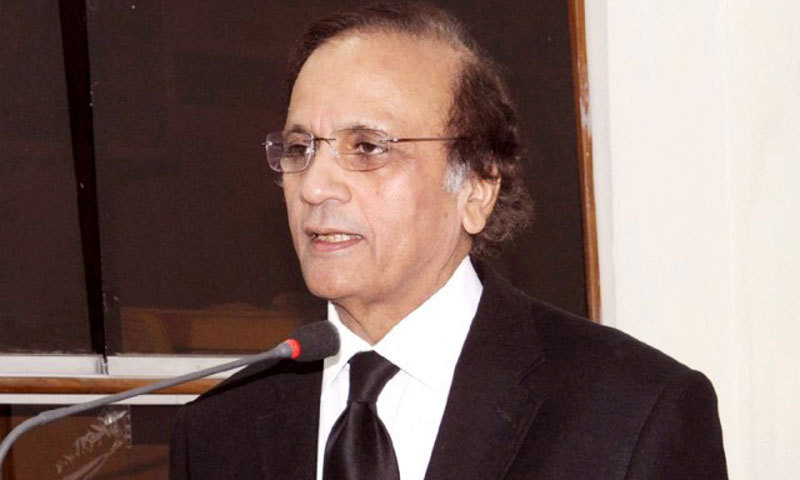
  • Cabinet names ex-CJP Tassaduq Hussain Jillani as head of commission

    Cabinet names ex-CJP Tassaduq Hussain Jillani as head of commission

    The federal cabinet on Saturday officially approved the constitution of an inquiry commission to investigate the shocking allegations made by the six Islamabad High Court (IHC) judges and forwarded the name of former Chief Justice of Pakistan Justice (retired) Tassaduq Hussain Jillani as its head.

    The IHC judges — Justice Mohsin Akhtar Kiyani, Justice Tariq Mehmood Jahangiri, Justice Babar Sattar, Justice Sardar Ejaz Ishaq Khan, Justice Arbab Muhammad Tahir, and Justice Saman Fafat Imtiaz — sent the letter on Tuesday to Supreme Judicial Council headed by CJP Qazi Faez Isa.

    The letter sent shockwaves across the country as it underscored the alleged “interference” of intelligence agencies in legal matters of the court.
    Responding to the letter, the CJP and the Prime Minister held a meeting and a decision was reached to establish a commission to investigate the contents of the letter.

    Justice Jillani is known for his ‘balanced’ approach. He was awarded the 2020 J Clifford Wallace Award by the J Reuben Clark Law Society (JRCLS) to honor his “extraordinary career as a judge and a jurist”. He also received the 2023 American Bar Association (ABA) International Human Rights Award.

  • CJP throws weight behind commission to probe Judges’ letter

    CJP throws weight behind commission to probe Judges’ letter

    Chief Justice of Pakistan (CJP) Qazi Faez Isa on Thursday said that any “interference by the Executive in the affairs and judicial workings of Judges will not be tolerated”.

    The statement came through a widely anticipated press release by the Supreme Court after the CJP met with the Prime Minister of Pakistan Shehbaz Sharif yesterday regarding the six judges’ letter alleging meddling by spy agencies in judicial matters.

    The press release stated “under no circumstances can independence of judiciary be allowed to compromise,” adding that the CJP and the Senior Puisne Judge believed that an independent judiciary is a “foundational pillar which upholds the rule of law” and fosters a strong democracy.

    It added that a proposal was made to constitute an inquiry commission under the Pakistan Commissions of Inquiry Act, 2017 and it would be headed by a retired judge of “impeccable integrity” to probe into the allegations.

    The PM will undertake a Federal Cabinet meeting today to seek approval for the constitution of the said commission. The PM also assured the judges that his office will be taking strong measures to ensure judiciary’s independence.

  • IHC puzzled by FIA singling out Imran, Qureshi in cipher case

    IHC puzzled by FIA singling out Imran, Qureshi in cipher case

    The Islamabad High Court (IHC) on Wednesday questioned why the Federal Investigation Agency (FIA) was only specifically investigating former Prime Minister Imran khan and former Foreign Minister Shah Mehmood Qureshi for not returning the diplomatic cipher even though others involved in the case have done the same.

    Justice Miangul Hassan Aurangzeb gave his remarks during the hearing of appeals filed by both Khan and Qureshi against their conviction.

    Defence council Barrister Salman Safdar presented his argument that the concerned diplomatic cipher was sent to the top eight offices, including the president, PM’s principal secretary, foreign secretary, army chief, director general of Inter-Services Intelligence, chief justice of Pakistan and cabinet secretary.

    However, the defense argued, none of the mentioned recipients returned the diplomatic cable to the Foreign Office when the inquiry commenced in October 2022.

    The other recipients didn’t return the cable for over a year and did so only when proceedings were started against only the ex-PM and FM.

    Justice Aurangzeb asked for an explanation of this move by FIA, to which Barrister Safdar replied it showed “selective prosecution, political victimisation, colourable exercise of power and defective investigation”.

  • ‘Stop arresting journalists’; Supreme Court orders FIA

    ‘Stop arresting journalists’; Supreme Court orders FIA

    A three-member bench of the Supreme Court, led by Chief Justice Qazi Faez Isa, issued a directive instructing the Federal Investigation Agency (FIA) to refrain from arresting any journalists until the next hearing of the suo motu case concerning the alleged harassment of media personnel.

    During the hearing, the lawyer for the Press Association of the Supreme Court, Barrister Salahuddin, argued that action was taken against journalists in the name of violation of privacy. The chief justice asked the lawyer how he would define privacy.

    Salahuddin said that the FIA had become accustomed to the misuse of the Prevention of Electronic Crimes Act (PECA). He added that the Islamabad High Court (IHC) had declared PECA’s Section 20 null and void. He replied in negative, when the chief justice asked whether the decision was challenged.

    Chief Justice Isa raised questions about the issuance of notices to journalists under Section 160 of the Pakistan Penal Code (PPC) before the registration of any First Information Report (FIR).

    The chief justice pointed out that many times there was a pressure from the above, so the officials send a notice to ward off the pressure, yet no FIR was registered and no arrest was made. Under this notice, he added, they could call anyone as witness.

    In response, Salahuddin stressed the importance of providing comprehensive details alongside such notices and argued that notices should only be sent after the registration of an FIR. Chief Justice Isa, however, suggested that officials might be reaching out to individuals to ascertain information before proceeding further.

    The court adjourned the hearing until April 2, ordering the FIA to refrain from arresting journalists until then. Chief Justice Isa emphasized that the court would only invalidate legal processes if they were proven illegal, highlighting the need for clarity and adherence to due process in such matters.

  • Is Pakistan’s spy agency allegedly interfering in legal matters?

    Is Pakistan’s spy agency allegedly interfering in legal matters?

    Calls to investigate the ‘Islamabad High Court (IHC) letter to Supreme Judicial Council’ gain ground as the bar associations of Sindh, Lahore, Islamabad and Khyber Pakhtunkhwa and many senior legal experts express concern.

    Why? Earlier, six judges of the IHC penned a letter to Chief Justice of Pakistan Qazi Faez Isa expressing worry over alleged interference of intelligence agencies in judicial matters.

    The Sindh High Court Bar Association released a statement which said, “Interference in the affairs of the judiciary is tantamount to attacking the judicial system.”

    Similarly, the Islamabad High Court Bar Association condemned the alleged interference and reaffirmed its faith in the importance of autonomy of judiciary. “Public confidence in the justice system is linked to the independence and autonomy of the judiciary,” the bar said.

    Furthermore, Lahore Bar Association also expressed concerns and said, “Action should be taken against those who violate the constitution and law.” Khyber Pakhtunkhwa Bar Council also released a statement, “Interference in judicial matters is condemnable.”

    Meanwhile, the veteran legal expert and Pakistan Tehreek-e-Insaf leader Hamid Khan, commended the six judges for taking this ‘daring initiative’. He also said that this matter is significant and should be investigated in a judicial commission.