Tag: Taliban

  • ‘Govt is going to ensure Pakistani citizens are safe without blood being spilt on either side’: Moeed Yusuf on BBC HARDtalk

    ‘Govt is going to ensure Pakistani citizens are safe without blood being spilt on either side’: Moeed Yusuf on BBC HARDtalk

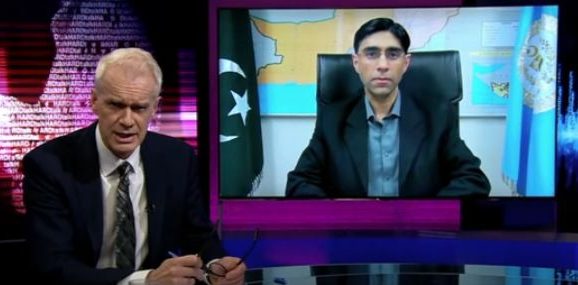
    National Security Adviser (NSA) to the Prime Minister, Dr Moeed Yusuf, while giving an interview to BBC host Stephen John Sackur on BBC HARDtalk said that the state’s job is not to kill another Pakistani.

    “We are going to try our level best to ensure that Pakistani citizens are safe without any more blood being spilt on either side.” The NSA’s comments come in reference to the Pakistan government’s talks with the Tehreek-i-Taliban Pakistan (TTP).

    “How secure is Pakistan after the Taliban are back in power in Afghanistan?”: Sackur

    Sackur questioned Yusuf on how secure Pakistan is after the Taliban are back in power in Afghanistan.

    “Frankly it depends on how responsibly the international community plays the future. Pakistan was not behind anything. There was a policy employed by the United States (US) and others who are in Afghanistan. That was always a failing policy. The only country that kept saying that you will not find a military solution to this problem was Pakistan and our advice was not heeded.”

    “We kept saying negotiate from a position of strength, we weren’t listened to, we were blamed and scape-goated and the result is in front of you,” added Yusuf.

    “We heard the worried voices of the Supreme Court when they were grilling PM Khan,” Sackur

    “Pakistanis are very worried. We heard the worried voices of the Supreme Court when they were grilling PM Khan on what was going on under these negotiations with the Taliban,” responded Sackur and further added that during the grilling of the premier, one of the judges alluded to the 2014 terrible atrocity where the TTP attacked the Army Public School (APS) in Peshawar and killed more than 130 children and questioned PM Khan whether the government was about to sign a documented defeat with those who killed these children, and are we going to surrender once again.

    “You should recognise the state of democracy in this country that the judge calls in the prime minister who goes gets grilled and now Stephen Sackur has the opportunity to ask me. That’s the state of democracy and I am proud of that,” responded Yusuf.

    “We have a consistent policy as a state to say that negotiation must happen from a position of strength and this is what we told the Americans and United Kingdom (UK).”

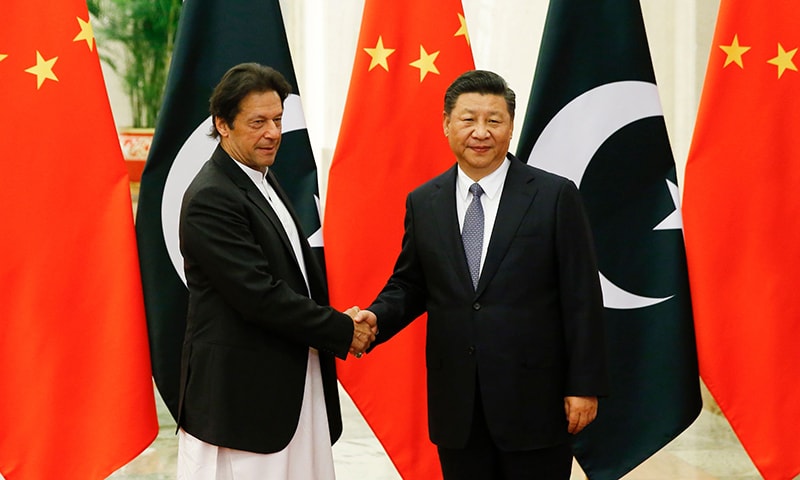
    “No military bases of China in Balochistan”: Yusuf

    Yusuf said there were no military bases of China in Balochistan, rather there were economic bases there where any country could invest.

    “Let me clarify that there are no military bases offered to China in Balochistan, including Gwadar. Yes, there are economic bases and the same was also offered to the United States, Russia, and the Middle East and we are open to all the countries,” the NSA said, adding, “CPEC is what, it is road infrastructure and energy infrastructure and anybody can come and invest there, we are not closed to anybody.”

    “Is Pakistan developing relations with China at the cost of its principles of supporting the rights of Muslims in the world?” Sackur

    Sackur asked whether Pakistan was developing relations with China at the cost of its principles of supporting the rights of Muslims in the world. “You raise your voice for Kashmiri Muslims but refuse to condemn the violation of human rights in a Chinese province,” the interviewer asked.

    Moeed said that Pakistan did not accept the Western version of human rights violations in Xinjiang province and if they have any concerns, they should talk to China. “We have relations of trust with China and our ambassador and other delegations from here also visited the Xinjiang province,” he said.
  • ‘Women are not property,’ Taliban ban forced marriages

    The Taliban issued a decree that bans forced marriages in Afghanistan on Friday, saying women should not be considered “property” and must consent to marriage, reports Al Jazeera.

    It was annouced by Taliban Chief Hibatullah Akhunzada. The international community, which has frozen billions of dollars in funds for Afghanistan, has made women’s and human rights a key element of any future engagement with Afghanistan.

    The decree said, “Both women and men should be equal. No one can force women to marry by coercion or pressure.”

    However, it didn’t mention a minimum age for marriage, which previously was set at 16-years-old.

    The Taliban also allowed a window to re-marry after 17 weeks of her husband’s death. Moreover, the Taliban leadership has ordered Afghan courts to treat women fairly, especially widows seeking inheritance as next of kin.

    The development was hailed on social media by some social media users while most of them shared their concerns.

    https://twitter.com/Nedahalim/status/1466926067323523073?s=20

    During the Taliban’s previous rule from 1996 to 2001, it banned women from leaving the house without a male relative, full face and head covering and girls were made compulsory and restricted from getting education.

    However, now they claim that they have changed but many women, advocates and officials remain skeptical.

  • Pakistan offers to host OIC summit to discuss Afghan crisis

    Pakistan offers to host OIC summit to discuss Afghan crisis

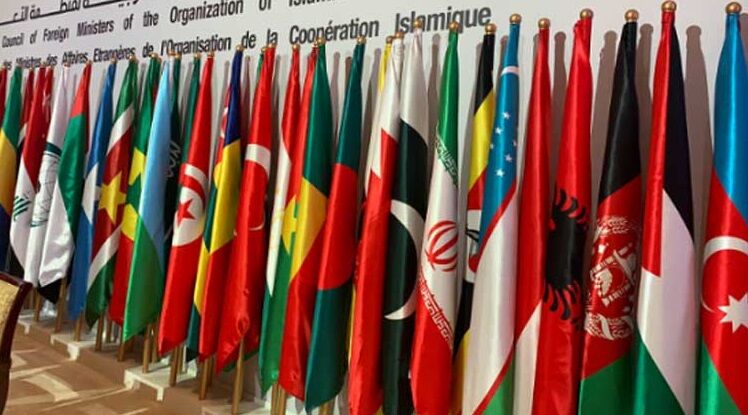
    Foreign Minister (FM) of Pakistan Shah Mahmood Qureshi has announced that Pakistan fully endorses Saudi Arabia’s move to request an extraordinary session of the Organisation of Islamic Cooperation (OIC) to discuss the current Afghanistan situation after the Taliban takeover.

    Qureshi said, “Afghanistan is a founding member of the OIC. As part of the Islamic Ummah, we are bound by fraternal bonds of amity and brotherhood with the people of Afghanistan,” he said stressing that, “today, our Afghan brothers and sisters need us more than ever before.”

    In a video message, shared by the Foreign Office (FO), the minister also announced that Pakistan has offered to host the meeting in Islamabad on December 17.

    Saudi Arabia also made the call for the session on the same day, as per the state-run Saudi Press Agency.

    According to the minister, the arrival of winter has worsened the humanitarian crisis in the worn-torn country. ​He emphasised the need for the OIC to “step in to help our Afghan brothers.”

    According to Qureshi, the first extraordinary session of the OIC Council of Foreign Ministers was held in Islamabad in January 1980, also on the situation in Afghanistan at that time.

    “Next month, we would, once again, gather in Islamabad, to reaffirm our abiding solidarity with and support to the Afghan people,” Qureshi concluded.

    Since the Taliban takeover, the country has been facing obstacles in the face of violations of human rights and economic collapse.

  • ‘Pakistan, China, countries of particular concern for violating religious freedom’: US

    ‘Pakistan, China, countries of particular concern for violating religious freedom’: US

    United States (US) Secretary of State Antony J. Blinken “designated” Pakistan and China as countries of particular concern (CPC) for violating religious freedom, as per the official website of the US State Department.

    In a statement issued by Washington, Secretary Blinken stated, “I am designating Burma, China, Eritrea, Iran, the DPRK, Pakistan, Russia, Saudi Arabia, Tajikistan, and Turkmenistan as Countries of Particular Concern for having engaged in or tolerated systematic, ongoing and egregious violations of religious freedom,” reports Dawn.

    “We will continue to press all governments to remedy shortcomings in their laws and practices and to promote accountability for those responsible for abuses,” he added.

    According to US Commission on International Religious Freedom (USCIRF) official website, each year the US President designates CPC to countries in which governments have engaged in or tolerated systematic, ongoing, and egregious violations of religious freedom.

    Moreover, Washington has placed Taliban governed Afghanistan under a “special watch list”.

  • Taliban given a clear message to uphold international legal obligations: Troika meeting

    Taliban given a clear message to uphold international legal obligations: Troika meeting

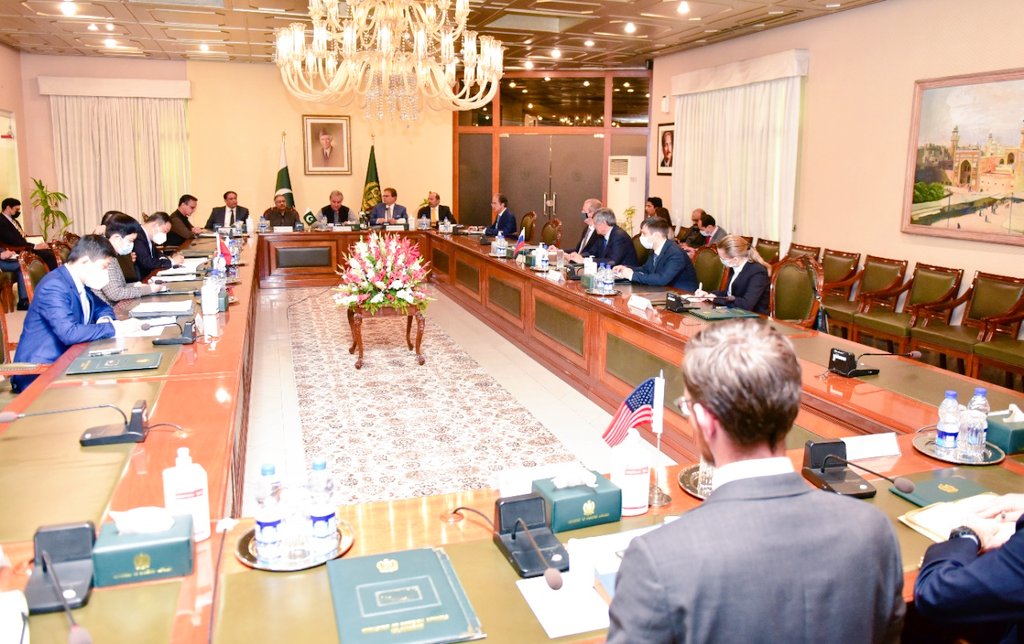
    A meeting of the Troika Plus, hosted by Pakistan, including China, Russia, and the United States (US), was held in Islamabad on Thursday.

    The Taliban government in Afghanistan was given a clear message to uphold its international legal obligations, including universally accepted principles of international law and fundamental human rights, reports Geo News.

    During the meeting, alluding to the US, Pakistan said efforts should be made to enable Afghanistan to access its frozen funds, which would dovetail into efforts to regenerate economic activities and move the Afghan economy towards stability and sustainability.

    Foreign Minister Shah Mahmood Qureshi took to Twitter and said, “The meeting reflects our common desire to see a peaceful, stable, unified, sovereign & prosperous Afghanistan; a shared responsibility.”

    A joint statement issued after a meeting of the Troika Plus stressed that the representative government should protect the rights of all Afghans and provide equal opportunities to women and girls to participate in all aspects of Afghan society.

    The forum agreed to continue practical engagement with the Taliban to encourage the implementation of moderate and prudent policies that could help achieve a stable and prosperous Afghanistan as soon as possible.

    Condemning in the strongest terms the recent terrorist attacks in Afghanistan, the forum called on the Taliban to cut ties with all international terrorist groups, dismantle and eliminate them in a decisive manner, and deny space to any terrorist organisation operating inside the country.

    The participants reaffirmed their expectation that the Taliban will fulfil their commitment to preventing the use of Afghan territory by terrorists against its neighbours, other countries in the region and the rest of the world.

  • No specific reaction to Pakistan-TTP talks, says US official

    No specific reaction to Pakistan-TTP talks, says US official

    The United States (US) has refused to give a specific reaction when asked about Pakistan and Tehreek-i-Taliban Pakistan (TTP) deal, reports Dawn.

    The question was raised at the US State Department briefing where a journalist reminded Spokesperson Ned Price that the US still considered the TTP a terrorist outfit and asked him to comment on it.

    Price replied, “If we have a specific reaction on the Pakistani dialogue with the Pakistani Taliban, we will, of course, let you know,” while adding that Washington is in regular contact with Pakistan regarding their approach to Afghanistan.

    “We have heard both publicly and privately from our Pakistani counterparts that they too have an interest in seeing to it that the gains, including among Afghanistan’s minorities, including among its women and girls, over the past 20 years not be squandered,” the US official added.

    Moreover, he ensured, “There is quite a bit of alignment of interest when it comes to Afghanistan, and we’re continuing to have those conversations.”

    Earlier, it was announced that a new envoy for Afghanistan Tom West would visit Islamabad later this week to clarify US expectations of the Taliban.

    Afghanistan’s Foreign Minister (FM) Amir Khan Muttaqi arrived in Islamabad on Wednesday on a three-day visit. It is the first to Pakistan by an Afghan minister since the Taliban came into power in August.

  • ‘I wrote a letter to PM Khan about women’s rights in Afghanistan, have not received any response’: Malala Yousafzai

    ‘I wrote a letter to PM Khan about women’s rights in Afghanistan, have not received any response’: Malala Yousafzai

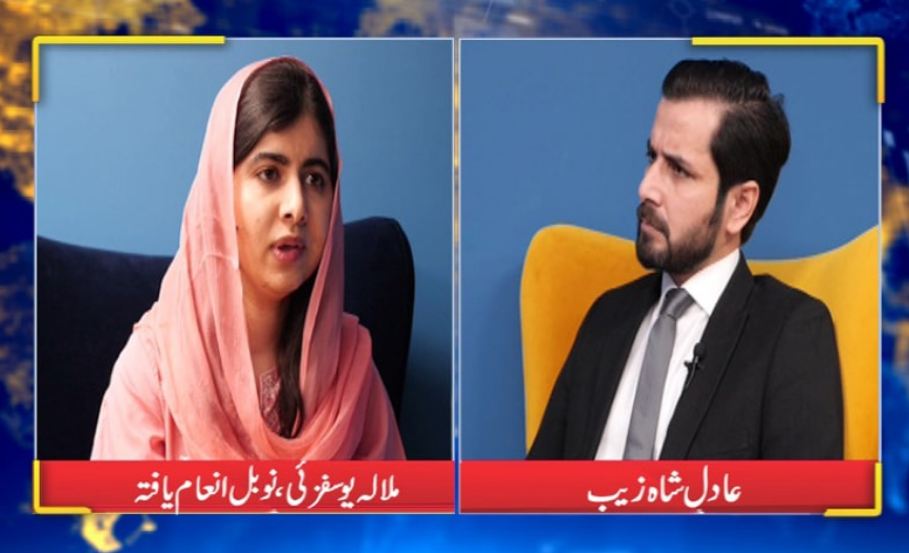
    Nobel Peace Prize laureate and education activist Malala Yousafzai, during a conversation with Dawn News programme, ‘Live with Adil Shahzeb’, said, “I wrote a letter to the prime minister about women’s rights in Afghanistan but so far have not received any response.”

    Anchorperson Adil Shahzeb questioned Malala on girls’ education, a cause she has been advocating and supporting for years. Malala expressed her worry over the situation in Afghanistan.

    “The current temporary restriction on girls’ education [in Afghanistan] shouldn’t turn out to be as long as in their (Taliban’s) first tenure [in the government], when the ban stretched for five years,” she said, adding that she feared something similar. “We don’t want a repeat of their previous rule.”

    When asked about Pakistan’s role for girls’ education in Afghanistan, she said “I am very much hopeful that Prime Minister Imran Khan would … champion [the cause],” she said, urging him to push the Taliban to ensure female education and women’s rights in Afghanistan.

    Speaking about the Taliban in general, the Nobel laureate said, “One should not differentiate between the good and bad [Taliban] as their thinking is the same — of repression [and] forcing their own laws,” further adding, “I do not see any justice system in their governance, but Islam is based on [the principles of] justice,” she said.

  • US envoy to Afghanistan resigns two months after chaotic withdrawal

    US envoy to Afghanistan resigns two months after chaotic withdrawal

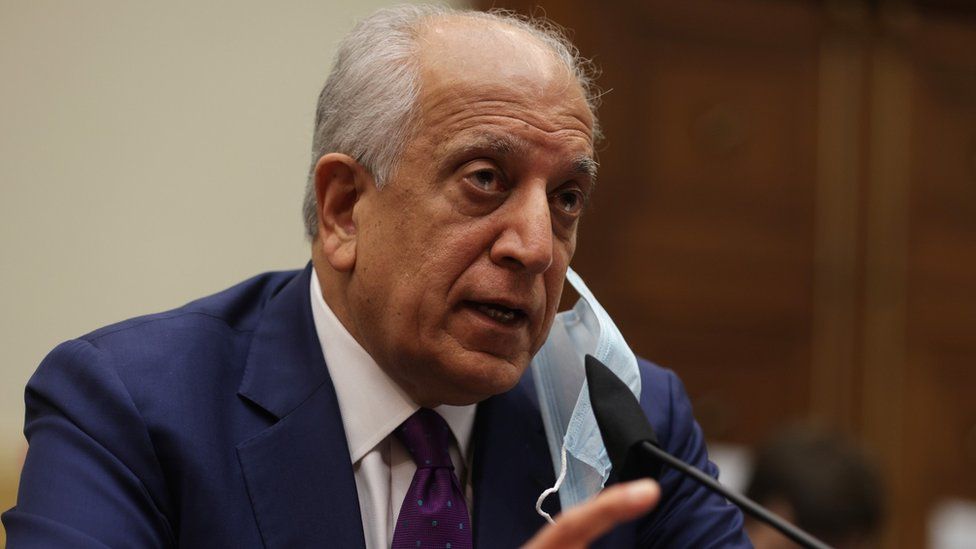
    United States envoy to Afghanistan Zalmay Khalilzad is stepping down, the State Department has announced, less than two months after the chaotic US withdrawal from Afghanistan and the Taliban takeover of the country, reported Al Jazeera.

    Zalmay Khalilzad led the US dialogue with the Taliban. The Taliban took control in August after capturing the capital Kabul.

    In a letter to US Secretary of State Antony Blinken, Zalmay Khalilzad acknowledged that “the political arrangement between the Afghan government and the Taliban did not go forward as envisaged”, reports BBC.

    “The reasons for this are too complex and I will share my thoughts in the coming days and weeks,” he wrote, saying he was stepping aside as the US entered the “new phase of our Afghanistan policy”.

    He added that he was “saddened” for the Afghan people given the current outcome.

    Khalilzad will be replaced by his deputy, Tom West, Secretary of State Antony Blinken said in a statement on Monday, noting that West will work closely with the US embassy, which is now based in Doha, on US interests in Afghanistan.

  • Kabul’s last Jew fearing Taliban divorces wife to be in Israel

    Kabul’s last Jew fearing Taliban divorces wife to be in Israel

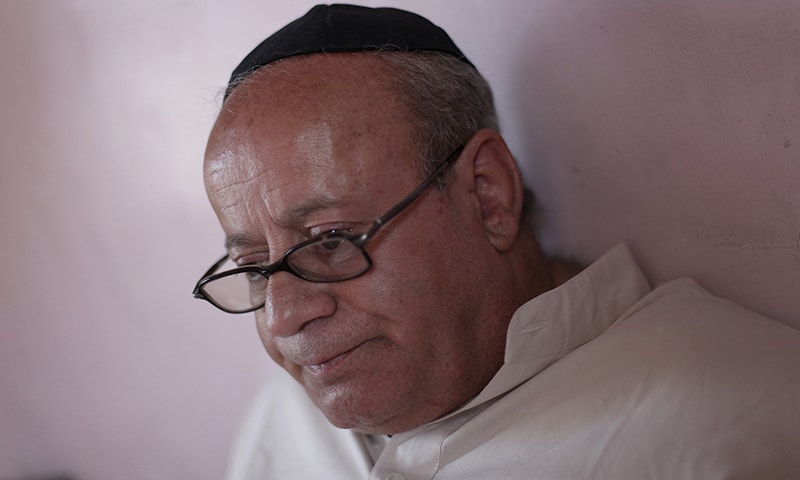
    Zebulon Simentov, who is known as the last Jew of Kabul, divorced his wife over a Zoom call so that he can be allowed to enter his Holy Land, reports Dawn.

    Under Jewish religious law, a husband must agree to grant his wife divorce, which Simentov had refused to do for many years. But last month, he finally agreed to avoid any legal procedures from his wife, who lives in Israel.

    Simentov fled Afghanistan last month after the Taliban takeover and landed in Turkey on Sunday on what his rescuers say is a final stop before travelling to Israel.

    Rabbi Moshe Margaretten, whose non-profit group Tzedek Association funded Simentov’s journey, said he had spent the last few weeks living quietly in Pakistan.

    “We are relieved we were successful in helping Zebulon Simentov escape from Afghanistan and now into safety in Turkey. His life was in danger in Afghanistan,” said Margaretten.

    He said his group had looked into bringing Simentov to the United States (US) but decided that Israel was a better destination as he has many relatives, including five siblings and two daughters, already in Israel.

    Rabbi Mendy Chitrik, chairman of the Alliance of Rabbis in the Islamic States, greeted Simentov at the airport in Istanbul upon his arrival.

    He said he had an appointment to take Simentov to the Israeli consulate to arrange his entry to Israel. Under Israel’s “Law of Return”, any Jew is entitled to Israeli citizenship.

    Simentov was born in Herat, Afghanistan, in 1959 and used to run a kebab shop.

  • ‘We don’t see ourselves building our broad relationship with Pakistan’: US Deputy Secretary of State

    ‘We don’t see ourselves building our broad relationship with Pakistan’: US Deputy Secretary of State

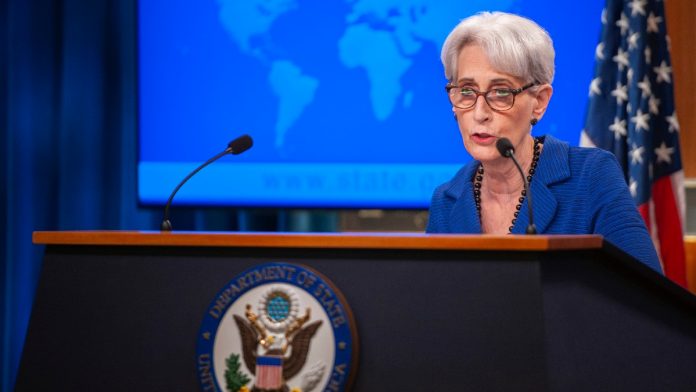
    United States (US) Deputy Secretary of State Wendy Sherman, while speaking at an event in Mumbai, said, “We (the US) don’t see ourselves building our broad relationship with Pakistan and we have no interest in returning to the days of a hyphenated India, Pakistan. That’s not where we are, that’s not where we are going to be,” reports The Print.

    “But we all need to know what’s going on in Afghanistan. We all need to be of one mind in the approach to the Taliban. We all need to make sure that we have the capabilities that we need to ensure everybody’s security, including India’s, of course. So I am going to have some very specific conversations, continuing conversations that Secretary (Antony) Blinken has had (with Pakistan),” she added.

    Wendy Sherman is in Pakistan to meet officials during her October 7-8 visit.

    Sherman said that her trip to Islamabad is only for a “specific and narrow purpose”.

    Taking to Twitter, Sherman wrote, “I met yesterday evening with Pakistani National Security Advisor, Moeed Yusuf to discuss Afghanistan and areas of cooperation in the U.S.-Pakistan relationship.”

    https://twitter.com/deputysecstate/status/1446361767932801039?s=21

    Ahead of her visit to Pakistan, Sherman told reporters, “We seek a strong partnership with Pakistan on counterterrorism and we expect sustained action against all militant and terrorist groups without distinction.”

    “Both of our countries have suffered terribly from the scourge of terrorism and we look forward to cooperative efforts to eliminate all regional and global terrorist threats,” she said.