Tag: Taliban

  • New Zealand denies re-entry of pregnant national, Taliban offers refuge

    New Zealand denies re-entry of pregnant national, Taliban offers refuge

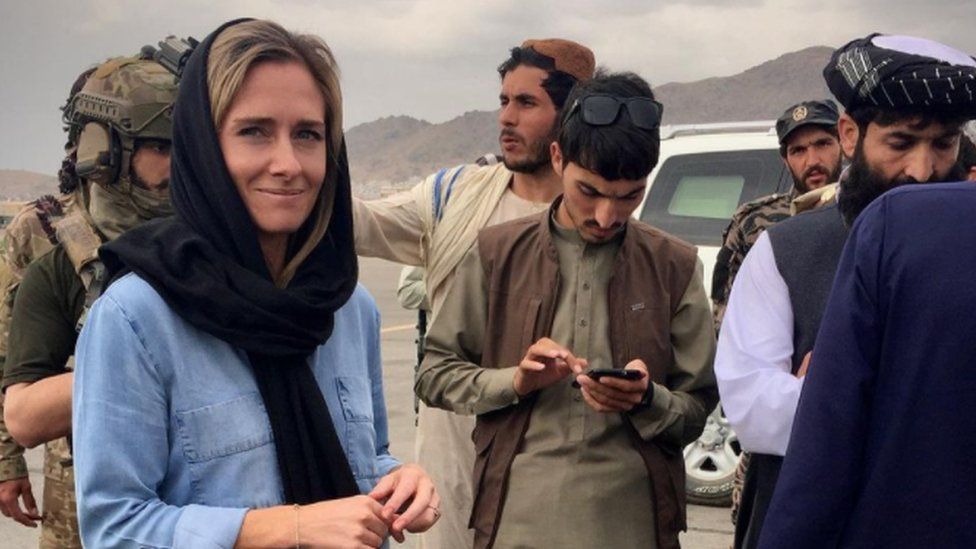
    A former Al Jazeera pregnant journalist, Charlotte Bellis, who is a New Zealand national, was denied re-entry by her home country on the basis of strict Covid-19 protocol. She was offered refuge by the Taliban government in Afghanistan.

    While speaking to Radio New Zealand(RNZ) from Kabul, she said, “This just feels like such a breach of trust.”

    Bellis said that the Taliban told her, “We’re happy for you, you can come and you won’t have a problem”.

    She did not get to know about her pregnancy until she returned back to the Al-Jazeera headquarter in Doha, Qatar.

    She kept quiet about her pregnancy as it is unlawful to conceive a baby out of wedlock in Qatar.

    She left Al Jazeera in November 2021 while working in Afghanistan as a journalist and went to Belgium, the home country of her partner, Jim Huylebroek. As Bellis is not a resident of a country, she could not stay for a longer period.

    She was left with only one option: to travel to Afghanistan with her partner as they had visas. She is currently in Afghanistan.

    Meanwhile, she started her preparation to return back to New Zealand.

    Her application was rejected by authorities in New Zealand for an emergency return.

    New Zealand’s Covid-19 response minister, Chris Hipkins, said on Monday, “I understand she wanted to return on a specific date and that officials reached out to her for more information shortly after looking at her application. The emergency allocation criteria includes a requirement to travel to New Zealand within the next 14 days. Ms Bellis indicated she did not intend to travel until the end of February and has been encouraged by MIQ (Managed isolation and quarantine) to consider moving her plans forward.”

    Bellis applied for a MIQ option through the medical treatment pathway however authority asked her to sign up under the different category where its nationals are in a location that is under serious risk to their safety, she told to RNZ.

    Currently, she is in contact with officials in New Zealand who claimed her rejected application is under review now.

    The New Zealand government has closed down its borders after the emergence of the omicron variant, including for its nationals who want to return back to the country except for special circumstances.
  • Taliban meet Afghan women activists and journalists in Oslo

    Taliban meet Afghan women activists and journalists in Oslo

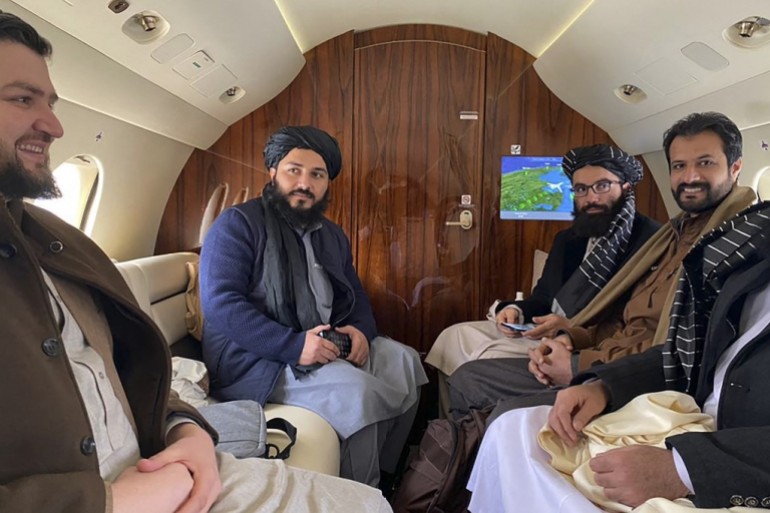
    A delegation of the Afghan Taliban, led by Foreign Minister (FM) Amir Khan Muttaqi, met women activists and journalists in Oslo, Norway.

    “It was a positive icebreaking meeting,” feminist activist Jamila Afghani told AFP.

    “They listened patiently and responded to most of our concerns. Let’s see what their actions will be, based on their words,” she added.

    Anas Haqqani, a leader of the most violent faction of the Taliban movement, is also a part of the delegation.

    Following the talks, Taliban spokesperson Zabihullah Mujahid tweeted: “Afghanistan is the shared home of all Afghans. They need to work together for the political, economic and security prosperity of the country.”

    Taliban representatives will meet delegations from other western nations [United States (US), France, Britain, Germany, Italy and the European Union (EU)] today (Monday) and will be certain to press their demand to unfreeze $10 billion by the US and other western countries as the country is currently facing a humanitarian crisis.

    It has been confirmed by Norwegian FM Anniken Huitfeldt that the meetings are not for legitimation or recognition of the Taliban.

    So far, the Taliban have visited Russia, Iran, Qatar, Pakistan, China and Turkmenistan.

  • Taliban call for Muslim nations to recognise them

    Taliban call for Muslim nations to recognise them

    Afghan Prime Minister (PM) Mohammad Hassan Akhund has called on Muslim nations to be the first to officially recognise the government that seized power in Afghanistan in August.

    “I call on Muslim countries to take the lead and recognise us officially. Then I hope we will be able to develop quickly”, Akhund said and stressed that it’s for the public.

    No country has yet recognised the Taliban government. After they gained power, they promised rights for women but they are largely excluded from government employment, and secondary schools for girls are closed.

    According to the recently released report by United Nations (UN), jobs have dried up and women’s employment levels are extremely low by global standards.

    The lack of work also threatens to worsen child labour levels in Afghanistan, where only 40 per cent of children aged five to 17 years old attend school. Moreover, the UN has warned that half the population is threatened with food shortages.

    Last month, a special meeting of the 57-member Organisation of Islamic Cooperation (OIC) was held to discuss the Afghanistan crisis. However, Afghanistan’s Foreign Minister (FM) was excluded from the official photograph taken during the event.

  • ‘We are not against education’, Taliban to open separate schools for girls

    ‘We are not against education’, Taliban to open separate schools for girls

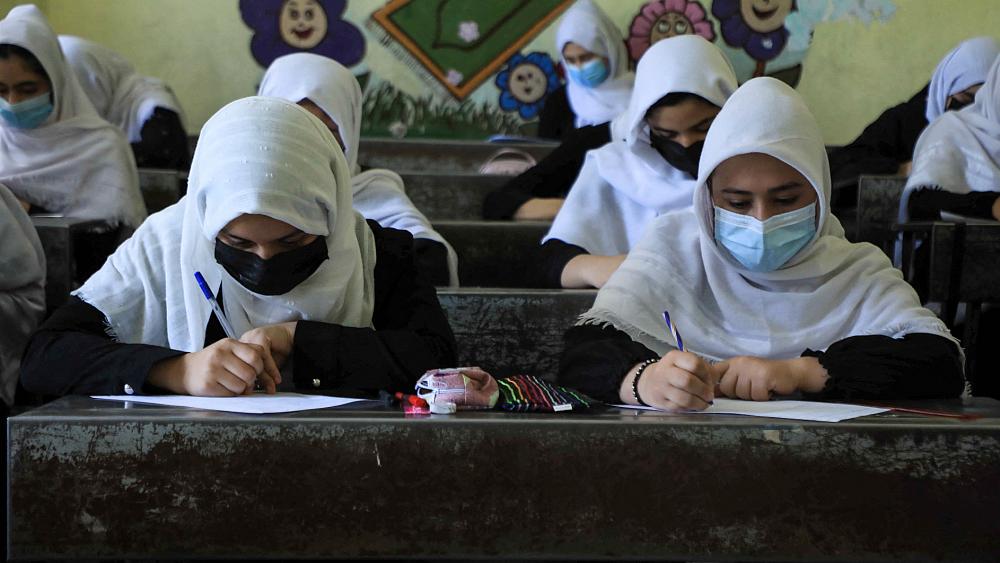
    The Taliban has said that they hope to open all schools for girls and women across the country after March 21.

    Zabihullah Mujahid, spokesperson and deputy Culture and Information Minister of Afghanistan said girls and boys must be completely segregated in schools. According to him, the biggest obstacle so far has been finding enough space where girls could stay while going to school. In heavily populated areas, there is not enough space to have separate classrooms for boys and girls.

    “We are not against education,” Mujahid stressed while talking to Associated Press (AP). He also said women are working in the health and education sector and at Kabul International Airport in customs and passport control. But didn’t comment that whether women would be allowed to return to work in government ministries.

    Since August, girls in most of Afghanistan have not been allowed back to school beyond grade 7. However, private universities in the capital Kabul are still operating.

    Earlier this month, the United Nations (UN) launched a $5 billion appeal for the war-torn country.

  • ‘Women cover up’: Taliban order new ban on Afghan women

    ‘Women cover up’: Taliban order new ban on Afghan women

    The Taliban’s religious police have put up posters around the capital Kabul ordering Afghan women to cover up, an official said on Friday, reports Dawn.

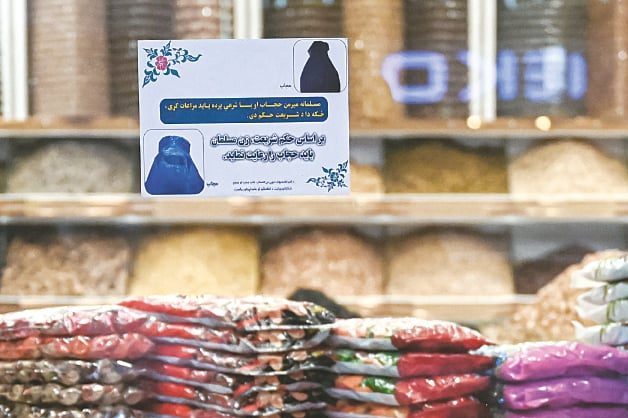
    The poster, which includes an image of the face-covering burqa, was slapped on cafes and shops this week by the Ministry for the Promotion of Virtue and Prevention of Vice.

    “According to Sharia law, Muslim women must wear the hijab,” the poster reads, referring to the practice of covering up. A spokesman for the ministry, responsible for enforcing the Taliban’s interpretation of Islamic law, confirmed on Friday that it was behind the orders.

    “If someone does not follow it, it does not mean she will be punished or beaten, it’s just encouragement for Muslim women to follow Sharia law,” Sadeq Akif Muhajir said.

    “What they’re trying to do is to spread fear among the people,” a university student and women’s rights advocate, who did not want to be identified, said.

    “The first time I saw the posters I was really petrified, I thought maybe (the Taliban) will start beating me. They want me to wear a burqa and look like nothing, I would never do that.”

  • Video: Taliban orders beheading of dummies, mannequins

    Video: Taliban orders beheading of dummies, mannequins

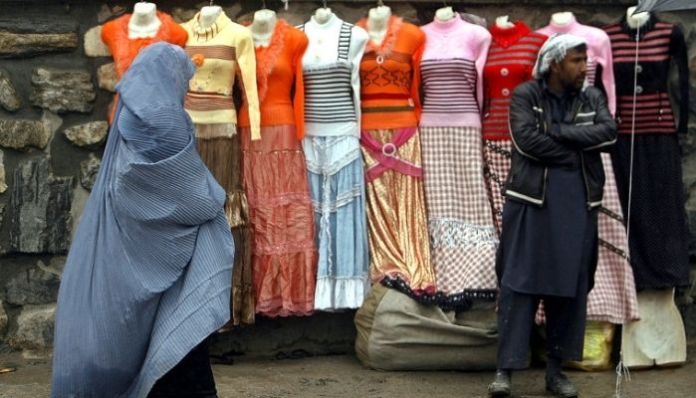
    The Taliban has ordered a series of mannequin beheadings in Afghanistan. The order was issued after the Taliban described dummies as “idols” and according to them, forbidden in Islam. Shopkeepers in the western Afghan province of Herat were told to remove the heads of female mannequins. As per Afghan media, those who disobey the order would face harsh consequences as ordered by the ministry’s local department.

    Journalist Arshad Yousafzai shared a video of a shopkeeper beheading female dummy mannequins.

    Read more- No transport for women travelling without hijab, male relative: Taliban

    Earlier on December 27, Aghanistan’s Taliban announced that women who seek to travel long distances should not be offered transport if they are not wearing hijab and are not accompanied by a close male relative.

  • ‘Backward thinking dangerous for Pakistan’: Fawad on Taliban’s restrictions on Afghan women

    Federal Minister for Information and Broadcasting Fawad Chaudhry, while talking about the recent Taliban’s restrictions on Afghan women, stated that the Taliban’s ‘retrogressive thinking’ is dangerous for Pakistan, reports Dawn.

    While addressing a ceremony in Islamabad, the minister said, “Saying that women can’t travel alone or go to schools and colleges — this kind of retrogressive thinking is a danger for Pakistan.”

    “You see that two extremist regimes have cropped up on right [India] and left [Afghanistan] of Pakistan. On one side there is Afghanistan where the Taliban have arrived. We want to fully help the Afghan people”, he added.

    Fawad said, “We have had failures and successes but till now Pakistan is that bright hope in this region which while remaining amid these extremes can emerge out from them.”

    Chaudhry’s statement has come after Afghanistan’s Taliban authorities’ announcement about women who seek to travel long distances should not be offered transport if they are not wearing hijab or not accompanied by a close male relative.

    Furthermore, he pointed out that extremists in the country and said, “Quaid-e-Azam never saw Pakistan as a religious country and all these people who today on his name are fooling the people that the meaning of an Islamic country was a religious country — this was entirely not the case.”

    While talking about the Sialkot lynching incident, Fawad said, “You saw the whole of Pakistan was united and condemned that incident. This is happening every day in India with Muslims and no one is bothered.”

    Chaudhry stressed that Pakistan’s purpose was “preserving minority rights and safeguarding them”.

  • No transport for women travelling without hijab, male relative: Taliban

    Afghanistan’s Taliban leadership has announced that women who seek to travel long distances should not be offered transport if they are not wearing hijab and are not accompanied by a close male relative, reports Agence France-Presse (AFP).

    The guidance was issued on Sunday by the country’s Ministry for the Promotion of Virtue and Prevention of Vice. The ministry spokesman Sadeq Akif Muhajir told AFP: “Women travelling for more than 72 kilometers (km) should not be offered a ride if they are not accompanied by a close family member.”

    Previously, the government had also called on women TV journalists to wear hijabs while presenting. They also directed people to stop playing music in their vehicles.

    Taliban also banned women from acting in dramas due to which they received immense backlash.

    Since August, the Taliban have been imposing severe restrictions for women in the country despite promising the fulfillment of their rights.

    However, activists hope that the Taliban’s battle to gain international recognition and get aid flowing back into Afghanistan will lead to them making concessions to women.

  • UNSC adopts resolution to facilitate Afghanistan

    The United Nations Security Council (UNSC) members unanimously adopted a resolution to provide vital support to Afghanistan.

    The resolution states that “payment of funds, other financial assets or economic resources, and the provision of goods and services necessary to ensure the timely delivery of such assistance or to support such activities are permitted.”

    Such assistance supports “basic human needs in Afghanistan” and is “not a violation” of sanctions imposed on entities linked to the Taliban, added the resolution.

    The move came as Afghanistan faces an economic meltdown since the Taliban seized control of the country in August. The crisis has left nearly 23 million people facing acute food insecurity, according to the World Food Programme.

    “Humanitarian aid and life-saving assistance must be able to reach the Afghan people without any hindrance,” China’s UN (United Nation) Ambassador, Zhang Jun, said in a tweet on Monday.

    The decision has been made to limit the scope of the resolution to one year, which only suggests that this aims to satisfy Washington’s European allies.

  • ‘Human rights and women rights are different’: PM Khan

    ‘Human rights and women rights are different’: PM Khan

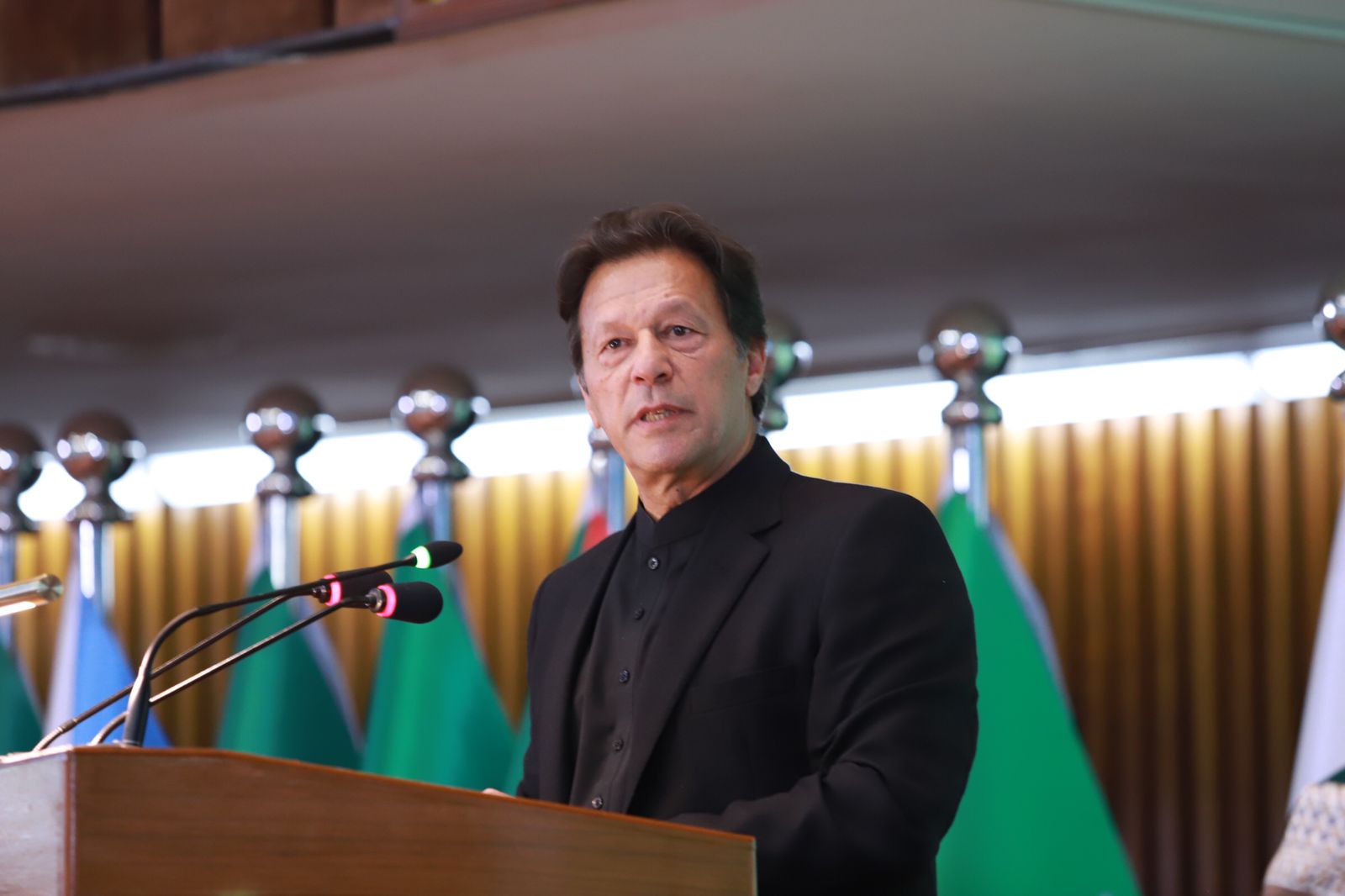
    Prime Minister (PM) Imran Khan during his address at the 17th extraordinary session of the Organisation of Islamic Cooperation (OIC) said that human rights and women’s rights are different.

    “We must understand that when we talk about human rights, every society is different, every society’s idea of human rights and normal rights is different,” said PM Khan.

    “The Pakhtunkhawan province, which borders Afghanistan because the culture is similar because there the Taliban are predominantly the Pashtun movement and there are more Pashtuns on our side of the border,” said the premier, adding, “The city culture is completely different from the rural culture.”

    https://twitter.com/mSaleemJaved/status/1472515320850038785

    “Culture in Kabul was always different to culture in rural areas. Just like in Peshawar it is completely different from the culture to the district adjoining the Afghanistan border,” said the prime minister.

    “I will give you an example. We give stipends to the girl’s child parents to put the girls in school but in tribal districts or districts adjoining Afghanistan, if we are not sensitive to the cultural norms of those people, even with stipends they will not send the girls to school,” said the premier.

    “But if we are sensitive to their cultural norms, without stipends they are willing to send their girls to school,” said PM Khan adding, “So this sensitivity I am afraid when we are talking about human rights and women’s rights we have to be sensitive about this.”

    PM Khan’s words received some criticism online.