Tag: USA

  • US Deputy Secretary of State receives cold reception upon her arrival in Pakistan

    US Deputy Secretary of State receives cold reception upon her arrival in Pakistan

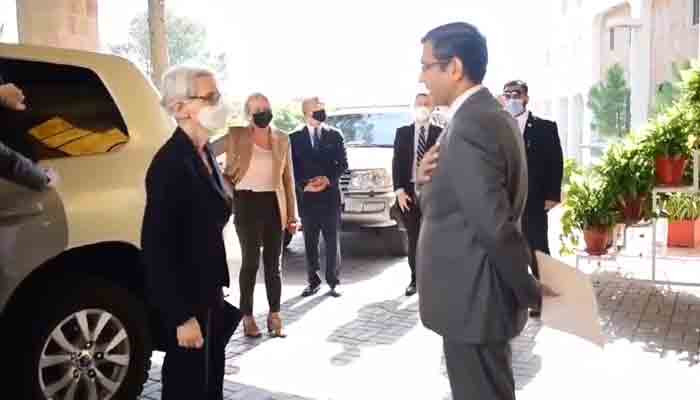
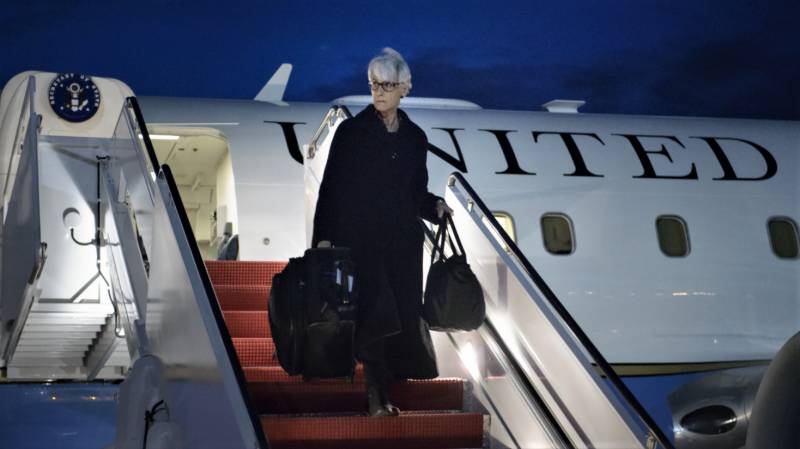
    United States (US) Deputy Secretary of State Wendy R Sherman, following her visit to India, received a cold reception upon her arrival in Islamabad as per The News.

    She was welcomed by a mid-level diplomat, instead of her counterpart, Foreign Secretary Sohail Mehmood.

    Well aware of Pakistan concerns: Wendy R Sherman

    Before coming to Pakistan, Sherman in Mumbai had made it very clear that the US was not interested in a broad relationship with Pakistan, beyond Afghanistan.

    She stated, “My visit to Pakistan is for a very specific narrow purpose and the United States does not see itself building a broad relationship with Pakistan and we have no interest in returning to days of hyphenated [India and Pakistan]. That is not where we are. That is not where we’re going to be.”

    “My visit to Pakistan in the context of Afghanistan is in a bid to make sure that Pakistan has the capabilities to ensure everybody’s security, including India’s and the US”, she said as she left India.

    According to The News, the government was shocked at Sherman’s undiplomatic statements that she had made in India.

    Sherman met with the National Security Adviser (NSA) Moeed Yusuf where he stressed that the world “must maintain contact” with the interim Taliban government in Afghanistan.

    Furthermore, Yusuf blatantly said that Indian human rights violations in Indian Illegally Occupied Jammu and Kashmir (IIOJK) also pose a threat to regional peace.

    Foreign Minister (FM) Shah Mahmood Qureshi met the Deputy Secretary on Thursday but he didn’t tweet about the meeting. However, Sherman tweeted, “I met today with Pakistan FM to discuss Afghanistan’s future and the important and long-standing US-Pakistan relationship. We look forward to continuing to address pressing regional and global challenges.”

    https://twitter.com/DeputySecState/status/1446387306131251235?s=20

    Sherman also met Chief of the Army Staff (COAS) General Qamar Javed Bajwa where matters of mutual interest, regional security situation, and collaboration in humanitarian measures in Afghanistan were discussed.

    Apart from the meetings, while talking to The News’ editors, Sherman said she believed US President Joe Biden will soon talk to Prime Minister (PM) Imran Khan. She said, “We have an idea that every country wants to have a telephone conversation with US President. I am sure that this conversation will be held with PM Khan soon.” 

    “I am sure that this contact will take place soon, so I don’t think it should mean anything else,” she added.

    Moreover, while replying to a question about a bill presented in September by 22 Republican senators targeting Pakistan, Sherman assured, “We get hundreds of bills; thousands of people are behind them but we are well aware of Pakistan’s concerns and are closely looking at the situation.”

  • At least 1 million Afghan children at risk of starvation, warns UNICEF director

    At least 1 million Afghan children at risk of starvation, warns UNICEF director

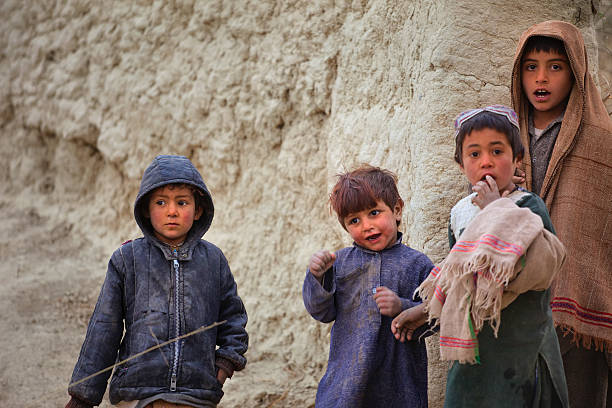
    At least one million children in Afghanistan will suffer from severe acute malnutrition this year and could die without proper treatment, warned United Nations International Children’s Emergency Fund’s (UNICEF) Executive Director Henrietta Fore. “Please help us,” she said.

    According to a report by CNBC, Fore implored the international community and wealthy nations to help avert further suffering after the Taliban takeover in Afghanistan.

    “Nearly 10 million girls and boys depend on humanitarian assistance just to survive,” she said at a UN ministerial-level meeting on the humanitarian crisis unfolding in Afghanistan.

    Fore also emphasised UNICEF’s ability to operate in Afghanistan. She said, “UNICEF has been on the ground in Afghanistan for more than 70 years. We know what needs to be done for children. And we can get it done.”

    According to Fore, during the last week of August, UNICEF provided 4,000 severely malnourished children under five with life-saving therapeutic treatment.

    “Please help us. There has never been a more urgent time to stand with the children of Afghanistan and the people who serve them,” she said.

  • US right-wing journalist praises PM Khan for saving Afghan’s lives

    US right-wing journalist praises PM Khan for saving Afghan’s lives

    A right-wing television presenter, Glenn Beck has thanked Prime Minister Imran Khan in a series of tweets for his support in getting Afghans out from the war-torn country.

    Beck, who has a charity organisation called Mercury One, has been assisting with evacuations from Afghanistan since the Taliban’s takeover, revealed that Pakistan’s leadership helped with the release and departure of three flights.

    In a tweet, he stated that, “We reached out and asked numerous leaders in political and civil society around the world for help. The silence was shocking as was the outpouring of help on a humanitarian basis. We received an immediate response to our requests from PM Imran Khan of Pakistan who then acted on his willingness to assist.”

    “Pakistan has once again proven to be a valued partner in all seasons for the United States, despite recent criticisms from some sections of US media,” he added.

    While stressing that the US should recognize Pakistan’s assistance at this point, he tweeted, “We will not forget this support that has enabled America and its allies to make good on their promises to those who helped them without pause or reflection.”

    “Let no one fool you, the International Federation of Association Football (FIFA) female athletes are out because of you and Imran Khan”, he concluded in his last tweet.

    Earlier, there were reports that six chartered planes by Beck’s charity were seeking to evacuate at least 1,000 people, including more than 100 Americans. During his efforts, his supporters praised him for doing “more for Americans than all of Biden’s supporters combined.” 

    According to the statement made by Pakistan Foreign Office in early September, 12,000 people had been evacuated from Afghanistan with the help of Pakistan.

    Beck is one of the most controversial media figures in the US and quite well-known among conservative circles. 

  • US apologises for killing civilians, children in Kabul drone attack

    US apologises for killing civilians, children in Kabul drone attack

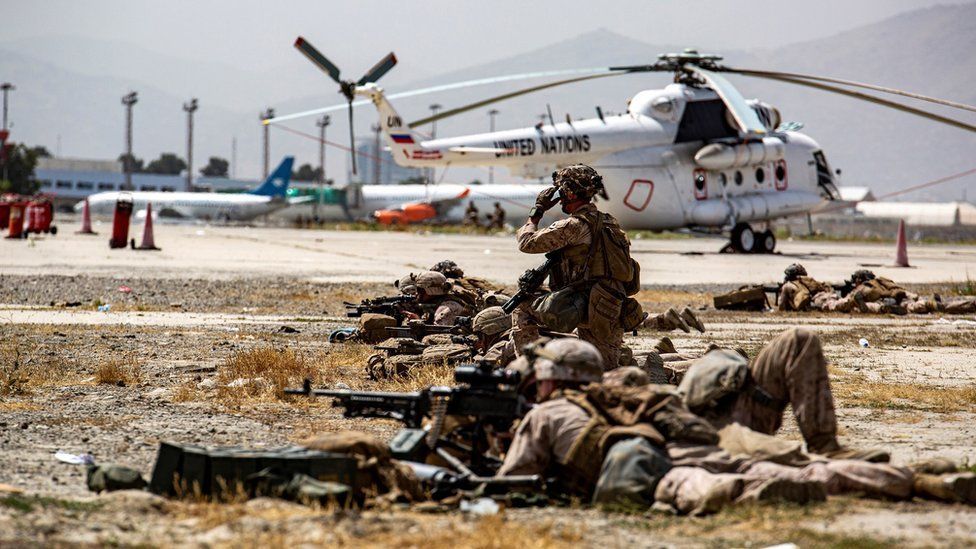
    Head of the US Central Command General Frank McKenzie, has apologised for a drone strike in Kabul last month at Hamid Karzai Airport that killed as many as 10 civilians, including seven children.

    “Our investigation now concludes that the strike was a tragic mistake,” McKenzie told reporters. Earlier, while defending the attack, the US had said that the strike was targeting a suicide bomber of the militant Islamic State group and had described it as “righteous”, reports Al Jazeera.

    The US general offered his condolences to the families of the victims and stated that those who were killed had no connection with local Islamic State affiliates or posed any direct threat to US forces.

    Defence Secretary Lloyd Austin said the drone strike had killed a civilian, Mr Ahmadi, who worked for a non-profit called Nutrition and Education International.

    “They were innocent, helpless children,” Aimal Ahmadi, whose nieces and nephews were killed in the attack, told Al-Jazeera.

    Ahmad Naser who was among the victims had been a translator for the US forces. The youngest child, Sumaya, was just two years old, as per BBC.

    Zabihullah Mujahid, the spokesman for the Afghan Taliban, confirmed at the time that the strike had killed seven people.

  • HRW releases report on 9/11 calling US to end global war on terror

    Human Rights Watch (HRW) has released a report on September 11, 2001, attacks in the United States titled, ‘9/11 Unleashed a Global Storm of Human Rights Abuses’.

    The report says, “The brutal rulers [US leaders] figured out that the best way to get away with mass abuse was to label it a fight against terrorism.”

    Furthermore it states, “The war paradigm was also used to justify killing suspects wherever they were found, often on the flimsiest of evidence. However, international human rights law requires law enforcement officials to arrest suspects whenever possible and to use lethal force only as a last resort to stop an imminent threat to life.”

    “They [US] not only mistreated the people of Afghanistan but its citizens also had to face discrimination. Globally, Muslims are the primary victims of terrorism. The US has always treated ‘presumed terrorists’ as combatants,” the report reads.

    HRW also has discussed the ill-treatment of one million Uyghurs in Xinjiang, China and the bombings on Gaza by Israel.

    “It is a time to condemn the evil of terrorism. It is also the time to close Guantanamo, by releasing all of the 39 aging detainees still there, who have not been charged and giving the rest a fair trial in a proper court,” the report concluded.

    People from all over the world remembered the horrifying episode today on social media, while some of them share their stories.

    Since 2001, the notorious military prison at Guantanamo has become a symbol of US human rights abuses. Many detainees — mostly Muslim men — were tortured or held for years and even decades without charges, trials, or basic legal rights.

    The 9/11 attacks are the deadliest terrorist attacks on American soil in US history. It was a series of airline hijackings and suicide attacks committed by 19 militants associated with al-Qaeda.

  • Pakistan may send experts to replace Afghan brain drain

    Pakistan may send experts to replace Afghan brain drain

    Federal Minister for Finance and Revenue Pakistan, Shaukat Tarin has said that Pakistan may have to send experts to Afghanistan because of the country’s major experts have left the country which has complicated the Taliban’s administration, reports The News.

    While giving an extensive briefing to the Senate Standing Committee on Finance on Thursday, Mr Tarin said that the government was building up strategic reserves of essential food commodities to meet domestic as well as Afghanistan’s requirements.

    According to him, “they [Afghanistan} require assistance and we may have to dispatch experts because of the brain drain in Afghanistan. The situation is fluid and we are analysing it. The West has stopped foreign reserves of Afghanistan to the tune of $10 billion, as the IMF has stopped $400 million and many others so Kabul will be facing a scarcity of foreign exchange. Our bilateral trade will surge but we may have to undertake bilateral trade in the Pak rupee.”

    Talking about Pakistan’s economic situation he stated, “Pakistan’s trade deficit stands at $4 billion and remittances are hovering around $2.5 billion.”

    “On tax revenue, FBR revenues are ahead of target by 23 percent. The track and trace system will be placed for five major sectors. The Point of Sale (POS) will integrate receipts and standardised and frivolous notices will be withdrawn,” he assured.

    More than 120,000 people evacuated from Afghanistan are qualified professionals from civil servants to lawyers.

    Michael Barry, a specialist on Afghanistan who taught at the American University in Kabul, said that many members of the Taliban are from rural areas and lack the knowledge to run the state bureaucracy, as per Agence France-Presse (AFP).

  • Thrown to the wolves

    A relative, who is one of this government’s true believers, recently circulated a video of people hurriedly getting onto a small airplane. When I asked what this was and why they had shared this video, the answer was, “This is Ashraf Ghani’s family fleeing Afghanistan.”

    The explanation was made in such a gleeful tone that I found it extremely disturbing. Other family members got in on the discussion with one cousin, remarking, “Historically, Taliban rule in Pakistan had been better for Pakistan.” That remark simply seemed to reflect the sense of excitement and anticipation that appears to be widespread in Pakistan about the return of the Taliban next door.

    Pakistan’s Afghan policy, has always centred around somehow being in control of the politics of that country, mainly through religious groups. The lucrative nature of using Islam as a rallying cry in Afghanistan was made clear after the Russian invasion. The US, aided willingly by Saudi Arabia and Pakistan, mobilised ‘mujahideen groups’ against the Soviet forces and the rallying cry of ‘saving Islam’, along with the cash and arms that poured in for this purpose proved to be very effective in the conflict. Certainly, many in Pakistan profited from the conflict but while these individuals and establishments would often complain about all the Afghan refugees who flooded into Pakistan, they never really complained about all the money they made. They just went on and on about ‘strategic depth’ and continued to happily support militant groups. The generals watched in horror as one Pakistani prime minister tried to find a political and consensual solution to the conflict so he (Junejo) was dismissed by the military dictator General Zia-ul-Haq fairly quickly. Subsequent, elected prime ministers have been similarly undermined and challenged on the Afghan policy front.

    My cousin thinks that history shows us that Taliban rule in Afghanistan has been good for Pakistan. Hmm, that would be because of the scores of public executions in the football stadium. Or perhaps because of the Taliban government’s efforts to take the country back to the dark ages. Or perhaps because the Taliban’s efforts to fix the country concentrated on such useful and revolutionary measures as smashing televisions, destroying ancient statues and insisting that women and minorities (like the well-entrenched Sikh communities) had no rights at all. Or perhaps that regime was ‘good’ for Pakistan because the militant violence then seeped into Pakistan and resulted in more than a decade of terror: bomb blasts and armed attacks. Despite all of that violence, many Pakistanis refused to condemn the killers because somehow they felt a sort of grudging admiration for the extremists, the ‘true believers’. Never mind the brutality of armed attacks or the heroin, Kalashnikovs and network of Saudi funded madrassahs that flooded the country, the mujahideen/Taliban groups were apparently ‘good’ for Pakistan.

    The way the US has simply upped and left Afghanistan is shockingly callous. They invaded the country in 2001, after the 9/11 attacks, all in the name of fighting against religious militancy and terrorism. I am not sure what they did in two decades of occupying the country: but the Afghan Taliban now seem stronger than before and their forces are now re-taking the country bit by bit. Along the way, they execute journalists, comedians and anyone else they disapprove of. And they continue their practice of targeting any high profile individuals or government officials who oppose them – just a few days ago they killed Dawood Khan Menapal, the head of the Afghan government’s press operations for local and foreign media. He was gunned down in his car in Kabul during the time of Friday prayers.

    The interesting thing about all this is that the world does not seem to be interested in Afghanistan any more. The advance of the Taliban forces on the capital, the decimation of the Afghan security forces along the way, the fact that thousands who believed in the west’s false claims of furthering democracy and progress now fear for their lives – none of this is considered worthy of sustained media coverage. There are occasional news stories, of course, but the intensity is nothing like it was when the Bamiyan Buddhas were blown up or when one or two western coalition soldiers were killed. Everybody seems to be watching events in Afghanistan with a degree of resignation, with a sense that Taliban victory is inevitable. The country seems to have been thrown to the wolves. After two decades of US occupation, it’s back to square one, nothing seems to have changed in the country except that Kabul now has trendy coffee shops and the trappings of western capitalism. After claiming that they were training and supporting government forces, the US-led coalition has abandoned them: the soldiers who resist the Taliban are now simply cannon fodder. It seems a familiar enough pattern: invade and occupy a country and wage a war in the name of peace and progress, get lots of people killed, and then just get up and leave.

    Many organisations in the west are now trying to do their conscientious bit by arranging sanctuary for those Afghans who worked with the western coalition – the translators and media fixers in particular. But how tragic it is that those who worked for what they thought was positive change, progress and the rule of law in their homeland are now forced with the choice of either losing their country or losing their life.

    Meanwhile, people in Pakistan (or at least my right-wing relatives) continue to be all excited about the return of the Middle Ages. Probably because of the thinking that Afghanistan should be regarded mainly as a battleground for the covert Indo-Pakistan war and ongoing power struggle in the region. Or perhaps because of the thinking that a religious ideology will trump any other ideology, particularly that of Pakhtun nationalism (something that we seem particularly phobic about). Some people will be of the opinion that the Taliban are more representative of the Afghan nation than any other group so eventually some sort of political evolution will happen in the country and that will be better than an artificially imposed system. Well, that’s all very well but what about those two decades then? What of all the lives lost and the promises made?

    And what about the Afghans dreaming of peace and progress? Their fate can be summed up in two words: cannon fodder.

    Thank you America. And thank you also to all you neighbours of Afghanistan.
  • ‘Smartphones are worse than a spy in your pockets’: Edward Snowden

    ‘Smartphones are worse than a spy in your pockets’: Edward Snowden

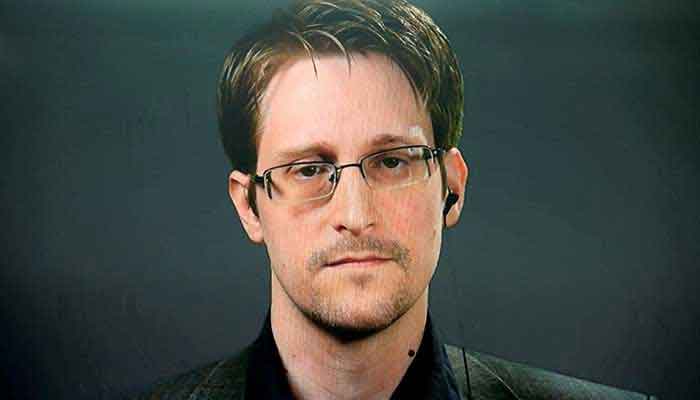
    Ex-computer intelligence consultant at the United States (US) National Security Agency (NSA) Edward Snowden has said that smartphones are “worse than a spy in your pockets”, reports Geo News.

    Snowden urged governments to impose a global delay on the international spyware trade or face a world in which no mobile phone is safe from state-sponsored hackers, reported The Guardian.

    In the wake of the revelations about Israeli NSO Group, whose software Pegasus was used to hack mobile phones for surveillance, Snowden said the consortium’s findings illustrated “how commercial malware had made it possible for repressive regimes to place vastly more people under the most invasive types of surveillance”.

    “If you don’t do anything to stop the sale of this technology, it’s not just going to be 50,000 targets. It’s going to be 50 million targets, and it’s going to happen much more quickly than any of us expect,” he warned.

    Snowden said commercial malware such as Pegasus was so powerful that ordinary people could in effect do nothing to stop it.

    Asked how people could protect themselves, he said: “What can people do to protect themselves from nuclear weapons?”

    “There are certain industries, certain sectors, from which there is no protection, and that’s why we try to limit the proliferation of these technologies. We don’t allow a commercial market in nuclear weapons.”

  • ‘To blame Pakistan is extremely unfair’: PM Khan tells Ashraf Ghani

    ‘To blame Pakistan is extremely unfair’: PM Khan tells Ashraf Ghani

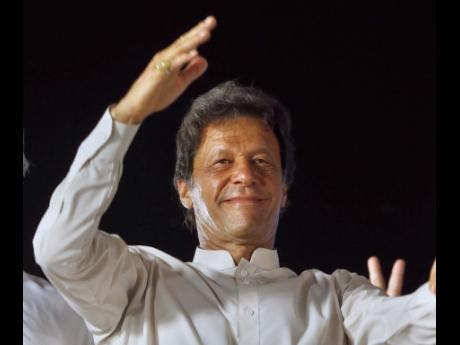
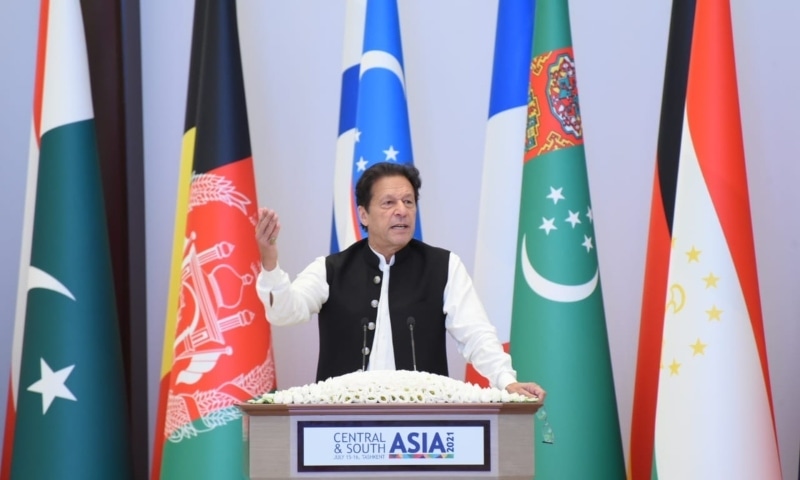
    Prime Minister Imran Khan on Friday countered Afghan President Ashraf Ghani’s claims about Pakistan’s “negative role” in the Afghan peace process and said, “To blame Pakistan for what is going on in Afghanistan I feel is extremely unfair.” PM Khan was addressing the international conference on “Central and South Asia Regional Connectivity: Challenges and Opportunities” during his two-day visit to Uzbekistan.

    “President Ghani, let me just say that the country that will be most affected by turmoil in Afghanistan is Pakistan. Pakistan suffered 70,000 casualties in the last 15 years. The last thing Pakistan wants is more conflict,” the premier said

    “To blame Pakistan for what is going on in Afghanistan, I feel, is extremely unfair,” said PM Khan.

    “Why would I come to Kabul if I was not interested in peace? The whole idea was that Afghanistan should have looked at Pakistan as a partner in peace. I feel really disappointed that we have been blamed for what is going on in Afghanistan.”

    “I repeat, the last thing we want is turbulence in Afghanistan,” said PM Khan.

    PM Khan added, “What is happening in Afghanistan is over two decades of conflict, deep divisions, and unfortunately the United States (US) seeking a military solution when there was no one. When there were 150,000 Nato troops in Afghanistan, the greatest military machine, that was the time to ask the Taliban to come on the table. Why were the Taliban to compromise when their existing date was given and with only a few thousand American troops left? Why would they [Taliban] listen to us, when they are sensing victory?”

    He said that he had a conversation with Uzbekistan President Shavkat Mirziyoyev about how all the neighbours in the region can help the Afghan peace process. 

    “All neighbours are interested in a peace settlement in Afghanistan. There are already three million Afghan refugees in Pakistan. We are petrified that will be another flow of refugees coming in. We do not have the capacity or the economic strength to bear another flow of refugees. So I can assure you again, if any country is trying its best of all the countries in the world, it’s Pakistan today.”

     Director-General Inter-Services Intelligence (ISI) Lt Gen Faiz Hameed Friday rejected the allegations of infiltration levelled by Afghan President Ashraf Ghani.

     Afghan president had levelled unsubstantiated accusations against Pakistan, saying that 10,000 fighters had crossed over into Afghanistan from Pakistan.

    “If talks fail, we will fight the Taliban,” said Ghani. “This is the last chance for peace,” he had said.

    DG ISI explicitly stated that these accusations against Pakistan are not true. In fact, infiltration is being done from Afghanistan, he added.

    “We want peace in the neighbouring country as a peaceful and stable Afghanistan is in the interest of Pakistan and other countries,” DG ISI said.

    He said that Pakistan is not supporting any group in Afghanistan. “We are interested in a negotiated settlement among all the Afghan groups,” added DG ISI.

  • We accept the Chinese version on Uyghurs in Xinjiang: PM Khan

    We accept the Chinese version on Uyghurs in Xinjiang: PM Khan

    Prime Minister (PM) Imran Khan on Thursday said that the relationship between Pakistan and China is very deep. “It’s not just the governments, but it’s a people-to-people relationship.”

    “Whatever will happen…[the] relationship between our two countries, no matter what pressure is put on us, is not going to change,” PM Khan said in response to a question.

    Speaking to Chinese journalists as Beijing marked the centenary of the ruling Communist Party of China (CPC), the premier said the Chinese version about the treatment of Uyghur Muslims in Xinjiang was completely different from what was being reported in the western media.

    “Because of our extreme proximity and relationship with China, we actually accept the Chinese version,” added PM Khan.

    He said that it was hypocritical that while the Uyghur situation and Hong Kong were being highlighted, attention was not being given to the human rights violations in Indian-Occupied Kashmir.

    “It is hypocritical. There are much worse human rights violations taking place in other parts of the world such as in occupied Kashmir. But western media hardly comments on this,” he said.

    PM Khan praised the Communist Party. He said that until now, it was believed that electoral democracy is the best way to bring leaders on merit and hold them accountable.

    “But China’s process to hunt talent and then polish it is better than any electoral democracy.”

    PM Khan also praised President Xi for his success in the fight against poverty and corruption in China.

    “China has lifted 700 million people out of poverty in a few years, which is a great achievement. We want to further develop political, economic and trade relations between the two countries.”

    PM Khan said that Pakistanis are impressed by the Chinese president’s fight against corruption and consider him “a great politician of modern times”.

    “President Xi Jinping’s anti-corruption campaign is effective and successful.”

    PM Khan said that it is unfair of the US and western powers to expect countries like Pakistan to take sides. “Pakistan will not downgrade its relations with China.

    “The United States expects Pakistan to choose a side. This is not appropriate,” he added.