Tag: whatsapp

  • Having trouble with renewing your passport? There’s a WhatsApp number you can contact for help

    Having trouble with renewing your passport? There’s a WhatsApp number you can contact for help

    The Department of Immigration and Passports has released a phone number and WhatsApp number for complaints and awareness on the issuance or renewal of passports.

    Afzal Nadeem Dogar’s report in Geo states that the Director General of Immigration and Passports, Mustafa Jamal Qazi, explained that due to his efforts, the issuance of passports is going on as usual. However, if the public has any problems, they should call phone numbers 0519107072 and 0519107072 to register their complaints or get information.

    According to DG Immigration and Passports, in case of delays in receipts or printing of passports, citizens should send a photo of their passport token receipt to WhatsApp number 03368566685 so that their complaint can be redressed.

    To read more: Why aren’t you getting your passport?

  • Over 7.5 million WhatsApp accounts banned in India in one month 

    Over 7.5 million WhatsApp accounts banned in India in one month 

    In compliance with the Information Technology (Intermediary Guidelines and Digital Media Ethics Code) Rules, 2021, WhatsApp has released its monthly report detailing actions taken in response to user grievances and violations of Indian laws or WhatsApp’s Terms of Service. The report covers the period from October 1, 2023, to October 31, 2023. 

    The report from Meta’s instant messaging platform details the abuse detection mechanisms operating at various stages of an account’s lifecycle and emphasises the company’s focus on prevention. In the specified period, WhatsApp banned a total of 7,548,000 accounts in India, with 1,919,000 of these accounts being proactively banned before any user reports. 

       
    As per the instant messaging platform, the section on user grievances provides insights into the types of complaints received and the corresponding actions taken. 

       
    Reportedly, WhatsApp received a total of 9,063 reports during the reporting period. The majority of the reports were related to “Ban appeal” (4,771), while others covered topics such as “Account support,” “Other support,” “Product support,” and “Safety.” Out of the total reports, 12 accounts were actioned, with bans or account restorations based on the nature of the complaint. 

    Additionally, the report outlines the orders received from the Grievance Appellate Committee (GAC), indicating that WhatsApp received five orders during the same period, complying with all of them. 

    To recall, from September 1, 2023, to September 30, 2023, a total of 7,111,000 WhatsApp accounts were banned. Among these, 2,571,000 accounts were proactively banned prior to receiving any user reports, as mentioned in the WhatsApp report. 

    In the month of September, as per the report, the platform received six orders from the Grievance Appellate Committee, all of which were duly adhered to. 

       
    Moreover, WhatsApp mentioned receiving 10,442 user reports in various categories during September, including account support (1,031), ban appeal (7,396), other support (1,518), product support (370), and safety (127). 
  • No social media allowed for Punjab Government employees

    No social media allowed for Punjab Government employees

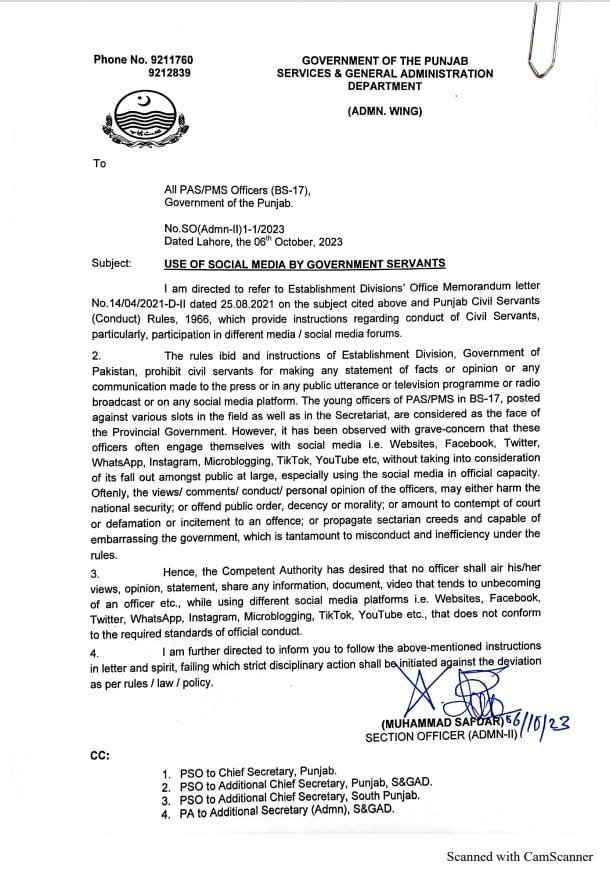
    The Services and General Administration Department Punjab has issued a letter to government officers restricting them from expressing their personal opinions on social media and commenting on conventional as well as social media.

    In view of the increasing trend of using social media among newly recruited government officers, the Punjab government has imposed a ban on Grade 17 officers, including assistant commissioners, on expressing their opinions on social media and media.
    The letter says that according to the civil services rules, giving statements in the media and social media based on one’s personal opinion is a violation of the rules.

    The letter says, “The young officers of PAS/PMS in BS-17, posted against various slots in the field as well as in the Secretariat, are considered as the face of the Provincial Government. However, it has been observed with grave-concern that these officers often engage themselves with social media i.e. Websites, Facebook, Twitter, WhatsApp, Instagram, Microblogging, TikTok, YouTube etc, without taking into consideration of its fall out amongst public at large, especially using the social media in official capacity.”

    It further states, “Often, the views/ comments/ conduct/ personal opinion of the officers, may either harm the national security; or offend public order, decency or morality; or amount to contempt of court or defamation or incitement to an offence; or propagate sectarian creeds and capable of embarrassing the government, which is tantamount to misconduct and inefficiency under the rules.”

    It also warned that strict action will be taken against those violating the instructions.

  • WhatsApp to introduce animated avatars for video calls soon

    WhatsApp to introduce animated avatars for video calls soon

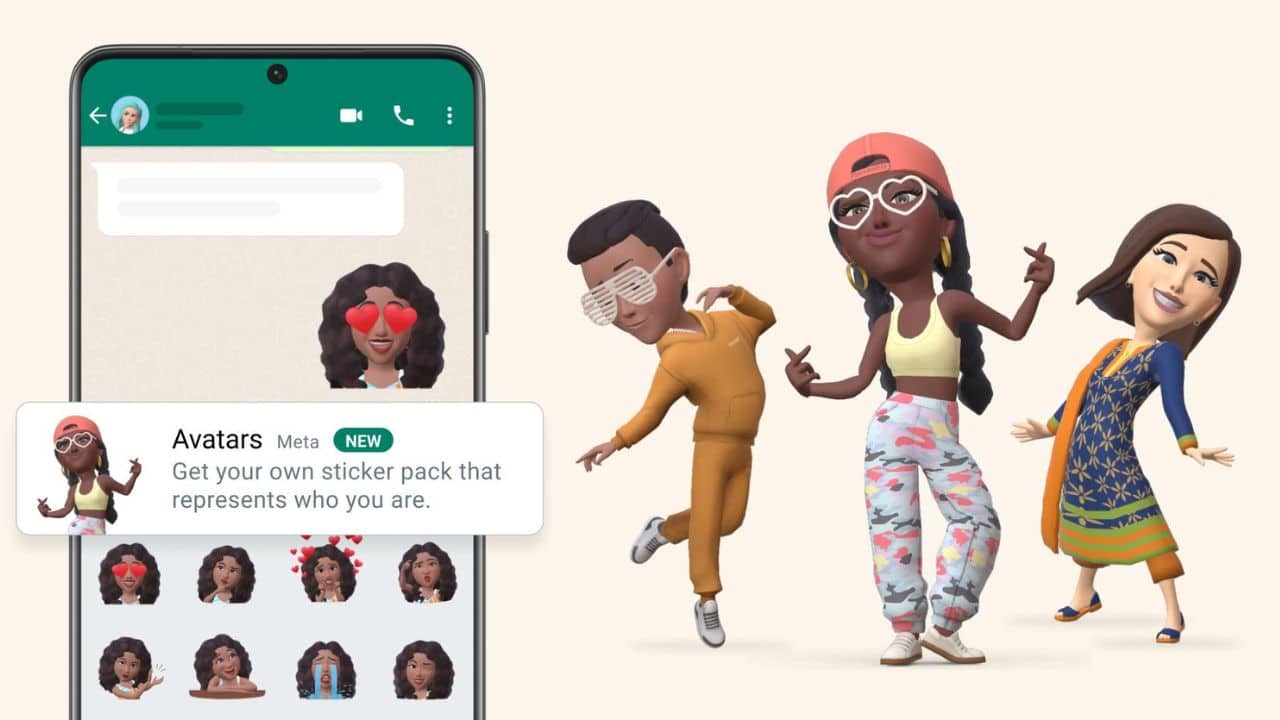
    Meta’s messaging application, WhatsApp, is reportedly gearing up to introduce animated avatars for video calls. This anticipated feature, reminiscent of Apple’s Memoji, has been in development since the previous year.

    According to WABetaInfo, an independent source for real-time WhatsApp updates, the Messenger app has now unveiled the capability to use animated avatars during video calls in its latest Android beta version 2.23.19.14.

    WhatsApp is actively informing its users about this innovation through a pop-up notification. This notification provides the option to “utilise your avatar during calls,” offering the choice to either “switch to avatar” or defer the decision with a “not now” button.

    To employ this new video call avatar feature, users must select the “Switch to avatar” option. This function will replicate their facial movements and expressions in real-time through the use of an avatar character. Importantly, users retain the flexibility to disable this feature at any time through the settings, allowing them to reveal their true selves. Crucially, the introduction of the avatar feature will not compromise WhatsApp’s end-to-end encryption, ensuring the preservation of user safety and privacy.

    It’s worth noting that some data usage will be necessary to enhance the Avatar experience on the app. Additionally, WhatsApp is actively developing avatars for status updates, although there is no official information regarding their release at this time.

  • WhatsApp introduces multi-account feature for beta users

    WhatsApp introduces multi-account feature for beta users

    WhatsApp, owned by Meta, has rolled out a new multi-account system, streamlining the user experience. Users can now log into multiple accounts simultaneously, eliminating the need for device switching.

    The feature, after being tested in the WhatsApp Business beta, is now available for some beta testers through the Google Play Store update (version 2.23.17.8). Adding a new account is simple; tapping the arrow icon next to the QR code button allows users to switch between accounts easily. Added accounts remain on the device until logged out.

    This update simplifies the management of various conversations, from private chats to professional exchanges. Chats and notifications stay separate for each account, ensuring a smooth transition between them without requiring multiple devices or apps.

    WhatsApp’s website facilitates managing multiple accounts on one device without setting up separate configurations. This innovation underscores WhatsApp’s commitment to enhancing user connectivity and efficiency.

    As digital communication evolves, WhatsApp continues to pioneer practical solutions. The new multi-account feature reflects the platform’s dedication to adapting and empowering users in their digital interactions.

  • WhatsApp rolls out live screen sharing feature

    WhatsApp rolls out live screen sharing feature

    Mark Zuckerberg, the CEO of Meta, recently unveiled a new enhancement for WhatsApp, introducing screen-sharing functionality within video calls. This innovative feature boasts cross-platform compatibility, enabling seamless sharing of a real-time screen view with one or multiple participants engaged in the call.

    WhatsApp’s official press release articulates, “Whether sharing documents for work, browsing photos with family, planning a vacation or shopping online with friends, or just helping grandparents with tech support – screen sharing lets you share a live view of your screen during the call.”

    To access this feature, users are required to have the latest version of WhatsApp installed. While engaged in a video call, a novel ‘Share’ icon will be conspicuously positioned at the base of the screen. Upon activation, users will be prompted to authorise screen-sharing access. Subsequently, the content of their screen will be relayed to the other participant(s).

    It’s important to acknowledge that the deployment of this feature is being carried out in a phased manner. While a subset of users may already have encountered the feature within their WhatsApp interface, others may encounter a slight delay in its availability.

    Moreover, this advancement accommodates landscape mode for video calls, ensuring an expansive and immersive viewing experience. This capability proves particularly advantageous when sharing content from desktop platforms, providing a broader perspective.

    WhatsApp’s screen-sharing functionality extends its utility to group video calls as well, amplifying its relevance in professional scenarios. Users who previously relied on alternative platforms such as Google Meet and Zoom for screen-sharing purposes can now seamlessly integrate this function within the WhatsApp ecosystem.

  • WhatsApp introduces animated avatars to spice up messaging

    WhatsApp introduces animated avatars to spice up messaging

    WhatsApp, the renowned messaging app, is stepping up its game with the introduction of a highly anticipated feature: animated avatars. The update, now available through the Google Play Beta programme, elevates the app’s version to 2.23.16.12 and promises to bring more life and personality to communication.

    According to reports from WABetaInfo, the animated avatars feature had been under development for some time and has finally been rolled out to beta users. To check whether the feature is enabled for their account, users need to open the keyboard and select the avatar tab. Once activated, beta users can enjoy various animations associated with specific avatars.

    Excitingly, animated avatars can be shared with anyone, regardless of whether the recipient is using the beta version or not. However, it’s worth noting that only a limited number of stickers currently support animation. Nonetheless, industry experts speculate that WhatsApp will expand this feature, offering an animated version of the entire avatar pack in the future.

    The addition of animated avatars is expected to elevate the overall communication experience on the platform. By infusing stickers with motion, users can now convey emotions, expressions, and reactions in a more engaging and dynamic way.

    As of now, the animated avatar feature is available to select beta testers who have installed the latest WhatsApp beta for iOS from the TestFlight app. In the coming days, WhatsApp plans to roll out the feature to a broader user base, enhancing the overall messaging experience for millions of users worldwide.

    Moreover, WhatsApp enthusiasts can look forward to even more exciting features on the horizon. The messaging giant is also working on a Video Messaging feature akin to Voice Messaging, which is bound to add another layer of convenience and richness to communication. Additionally, a time-saving group creation feature is in the works, making it easier for users to organise and manage their group chats.

    Furthermore, WhatsApp is also embracing Material Design 3 enhancements, offering users a modern and visually pleasing interface that aligns with Google’s design language.

    As technology continues to evolve, WhatsApp’s commitment to innovation and improving user experiences sets the stage for a more engaging and dynamic messaging platform, delighting users worldwide.

  • Sending heart emojis to women online can land you in jail in Kuwait and Saudi Arabia

    Sending heart emojis to women online can land you in jail in Kuwait and Saudi Arabia

    In a surprising move, Kuwait and Saudi Arabia have both passed laws that criminalise the sending of heart emojis via WhatsApp and other social networking sites, considering it an act of incitement to debauchery and harassment, respectively.

    According to Kuwaiti lawyer Haya Al Shalahi, individuals found guilty of sending heart emojis in Kuwait may face severe consequences. A conviction of this offence could lead to up to two years of imprisonment, along with a fine not exceeding 2,000 Kuwaiti dinars.

    Likewise, in Saudi Arabia, the consequences are equally harsh. Sending ‘red heart’ emojis on WhatsApp may result in a jail term ranging from two to five years, accompanied by a fine of 100,000 Saudi Riyals, as per Saudi law.

    Saudi cybercrime expert Al Moataz Kutbi highlighted that certain images and expressions used in online conversations, like red hearts, could be deemed harassment within the country’s jurisdiction. The act might lead to a lawsuit being filed by the aggrieved party, turning it into a serious offence.

    Moreover, for repeat offenders in Saudi Arabia, the financial penalty could escalate to a staggering 300,000 Saudi Riyals, coupled with a maximum imprisonment of five years.

    The rationale behind these strict measures is to combat online harassment and protect individuals from potentially harmful or inappropriate content shared through emojis. Authorities in both countries view such seemingly innocuous expressions as having the potential to incite indecent behaviour or cause emotional distress to recipients.

    As social media and messaging platforms continue to play a significant role in modern communication, governments are increasingly taking measures to regulate online interactions and enforce cyber laws. Individuals in Kuwait and Saudi Arabia are now urged to exercise caution in their online communication to avoid potential legal consequences.

    It remains to be seen how these laws will be enforced and how they will impact digital communication practises in both nations. In the meantime, citizens are encouraged to be aware of these recent legal developments and adapt their online behaviour accordingly.

  • My best friend’s fake wedding: Bajaur man held for hoax of British girl marrying his friend

    My best friend’s fake wedding: Bajaur man held for hoax of British girl marrying his friend

    In a bizarre turn of events, a man from Bajaur district was arrested by local police for making and spreading a fake Facebook post claiming his best friend had married a British woman.

    Muhammad Gulab posted a fake picture of a woman, claiming that Ela from Britain had travelled to the Bajaur district to marry his best friend. When the viral post caught the attention of the police, they quickly dispatched a team to investigate the presence of an undocumented foreigner in the area.
    However, the post was found to be fake and Gulab was arrested for spreading false information on social media.

    News sources reported that local residents were enraged by the arrest and were protesting against it

    This case comes to light after a string of foreign women from Chile, Mexico, India and China travelled to the province to marry the men they had met on social media. Recently, 49-year-old Rosa from Mexico travelled to Buner to marry 17-year-old Izaz Ali, after meeting him on Facebook.

    READ MORE: Ye KP mein kya ho raha hai: Mexican woman flies to Pakistan to marry Facebook lover

    Another case emerged when 36-year-old Nicole Ilgesias from Chile travelled to marry Ikramullah, whom she met on Tiktok.

    READ MORE: Humaray paani mein kuch hai? In third love story this month, Chile woman flies to marry Pakistani lover

  • WhatsApp introduces high-quality video sharing and enhanced profile icons in latest update

    WhatsApp introduces high-quality video sharing and enhanced profile icons in latest update

    WhatsApp is introducing two exciting features in its latest version update. The first feature allows iOS users to send high-quality videos, similar to the previous HD photos feature.

    When a user sends a photo or video using this new feature, a tag is added to the message bubble to indicate that it is of high quality. Previously, this feature was automatically applied to photos, but now it is also available for videos after users update to the latest WhatsApp beta version on iOS.

    The new high-quality video feature is not the same as sharing videos in their original quality, as there is still some light compression applied. Nonetheless, it ensures a better quality compared to the standard option. To use this feature, users must select the high-quality option every time they send a video, as the default remains as “standard quality.”

    Once the high-quality video is sent, it will be marked as such in the chat bubble, making it easy for recipients to identify that it was sent in better quality. However, this feature does not apply to videos shared via status updates on WhatsApp.

    The second feature being introduced is related to group chats. WhatsApp is enhancing profile icons within group chats, specifically for contacts whose profile pictures are hidden or unavailable.

    Now, instead of showing a blank thumbnail, the updated version will display the initials of the respective group member’s name. This way, other participants in the conversation can quickly identify the person represented by the thumbnail.

    Currently, these features are available on the TestFlight app and will soon be rolled out to more users. It’s worth noting that further updates may be needed, as there are some discrepancies in the text descriptions related to videos, but these are expected to be resolved in future updates.