Tag: World Bank

  • World Bank reiterates support for $20bn Pakistan development plan

    World Bank reiterates support for $20bn Pakistan development plan

    The World Bank on Sunday reaffirmed its commitment to Pakistan’s $20 billion development programme, signalling continued backing for the country’s reform and development agenda.

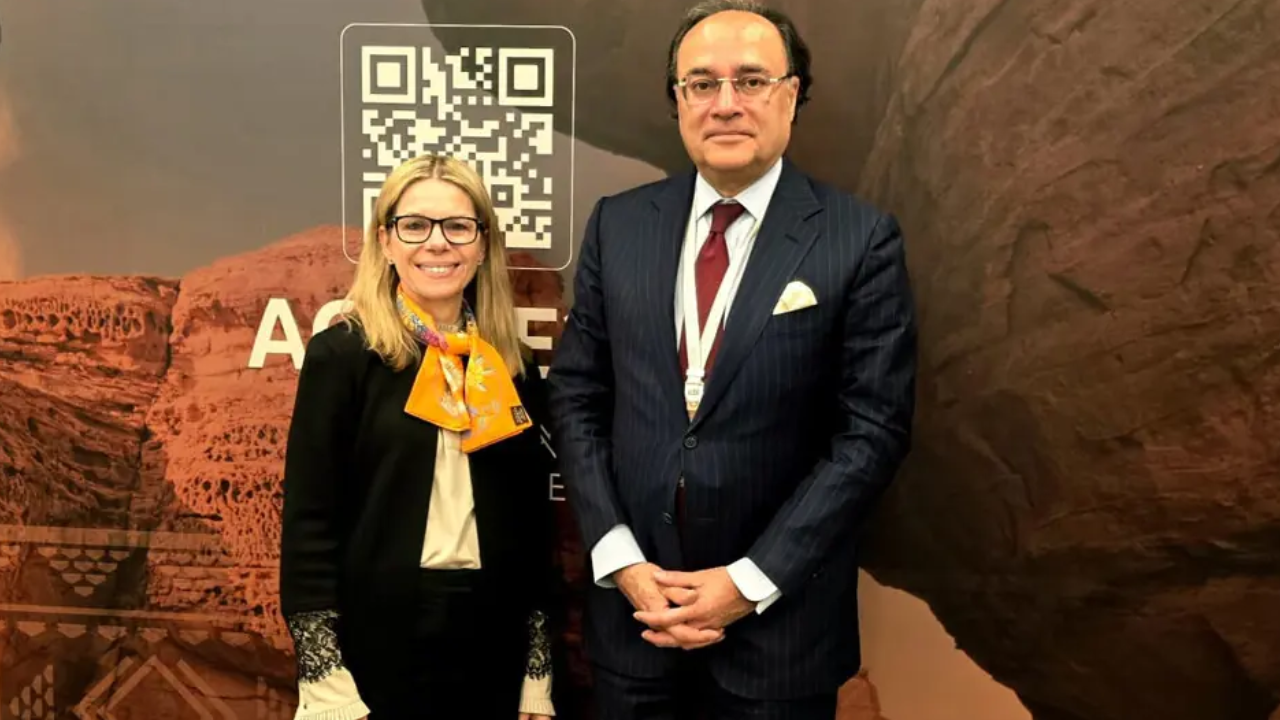
    The assurance was conveyed during a meeting between Finance Minister Muhammad Aurangzeb and World Bank Group Managing Director Anna Bjerde on the sidelines of the AlUla Conference for Emerging Market Economies in Saudi Arabia.

    According to officials, the meeting included a review of progress under Pakistan’s Country Partnership Framework (CPF) and followed up on the recent visit of the World Bank president to Pakistan. The discussions covered a range of priority areas identified under the framework, including energy, education, health, climate resilience, infrastructure, fiscal reforms and debt-for-development swaps.

    Both sides highlighted the importance of adopting a more focused approach to programme execution, stressing the need for clear performance benchmarks and strong implementation mechanisms to ensure timely and measurable outcomes.

    During the meeting, Bjerde reaffirmed the World Bank Group’s commitment to Pakistan’s 10-year development programme valued at $20 billion. Aurangzeb reiterated Pakistan’s resolve to work closely with the World Bank, including through engagement with provincial governments to improve coordination and delivery under the framework.

    The World Bank Board approved the $20 billion financing package for Pakistan last year, covering the period from 2025 to 2035. The Country Partnership Framework was formally released following approval by the World Bank Group’s Board of Executive Directors.

    The programme aims to address learning poverty, improve health outcomes for disadvantaged populations and strengthen protection against climate-related risks. The framework outlines investments and reforms across multiple sectors identified as critical to Pakistan’s development objectives.

    Ahead of the plan’s approval, the World Bank projected Pakistan’s economic growth at 3.8 percent by 2029. It also projected a fiscal deficit equivalent to six percent of gross domestic product and a debt-to-GDP ratio of 73 percent which were cited as benchmarks for assessing economic performance during the programme period.
  • World Bank commits $55 million to help govt reform power sector

    World Bank commits $55 million to help govt reform power sector

    Minister for Power Sardar Awais Ahmad Khan Leghari received a delegation from the World Bank to discuss reforms that are currently in progress, along with discussing additional avenues of collaboration. Details from reports reveal that Anna Bjerde, Managing Director Operations at the World Bank, is heading the delegation.

    According to a press statement, the power minister has highlighted initiatives to bring about a competitive power market in the country. This move is reportedly expected to reduce financial strain on the federal government by improving efficiency.

    During the discussions, the power minister told the World Bank’s delegation about the establishment of an Independent System and Market Operator (ISMO), which will serve to ease the shift from the government being the only power purchaser to a system where various buyers and sellers can operate in the power market.

    Reports indicate that Pakistani authorities have already begun to hire officials to make the aforementioned shift. Moreover, the power minister outlined progressive policies, telling the delegation about the ministry’s success in public revenue enforcement and Islamabad’s goals to substitute broad subsidies with those that offered support to a targeted segment.

    This could result in the national exchequer being spared unnecessary strain, allowing the government to consolidate its fiscal position or allocate the freed-up funds elsewhere. 

    According to reports, the power minister requested the World Bank’s help regarding the design and implementation of narrow subsidies. If designed correctly, it would allow for only the deserving stratum of the population to receive subsidies.

    Anna Bjerde assured Pakistani officials that the country would have the World Bank’s support in the implementation of the reforms. She hailed the ISMO as a significant landmark in Pakistan’s journey to deregulate and liberalise the power market.

    The power minister outlined Pakistan’s excess electricity capacity of approximately 7,000 megawatts. As per reports, he suggested that the electricity should be diverted to industrial customers at competitive rates instead of allowing it to go to waste.

    The reduction in electricity rates could encourage a greater level of industrialisation in the economy. A fall in power rates could pull the large-scale manufacturing (LSM) sector out of its decline, which has witnessed a 1.9 percent contraction in the large-scale manufacturing (LSM) sector during the first eight months of fiscal year 2024-25. 

    The delegation from the World Bank agreed with the idea of utilising surplus electricity. The World Bank’s Country Director, Najy Benhassine, pledged $55 million in funding to assist Islamabad in transforming the country’s power sector.

  • World Bank approves $102 million for microfinance project

    World Bank approves $102 million for microfinance project

    In a bid to improve and foster resilience in Pakistan’s microcredit schemes, the World Bank (WB) has authorised Islamabad to receive $102 million in financing. As per credible reports, the international lender has approved the loan to insulate the microfinance sector from climate shocks.

    The WB’s delegation to Islamabad revealed in a news release that the aforementioned financing would fall under the umbrella of the Resilient and Accessible Microfinance (RAM) project. This spells great news for cash-strapped Pakistan as these funds may allow the country to equip itself to face its chronic climate issues.

    A team from the WB recently went over possible reforms that could help revitalise Pakistan’s economy. According to reports, the WB team outlined possible venues for privatisation along with the willingness to extend financial assistance to approximately $20 billion.

    The WB’s country director for Pakistan, Najy Benhassine, claimed that microfinance was a key financial instrument that could help economically vulnerable households in the country. As per reports, he outlined the need for microfinance in Pakistan’s rural areas, highlighting how the provision of such services could boost the sector’s resilience.

    There is merit to this claim as expanding the user base would allow for more individuals to rely on the microfinance sector – effectively entrenching itself in the economy as a vital service. Najy announced how the RAM project was just part of the wider 10-year Country Partnership Framework (CPF).

    If the project is implemented as per the roadmap laid out by the WB, approximately 1.89 million Pakistanis will benefit from improved microfinance coverage. As per reports, 1 million of the 1.89 million Pakistanis will be women – particularly those residing in rural areas with low income.

    Moreover, the WB’s project could also benefit approximately 350,000 young people who are in financially vulnerable positions. Reports claim that coverage will improve as, under the project, microfinance entities are subject to receive financial assistance along with aid to guarantee that these entities do not fail when severe climate emergencies result in financial issues.

    The project could significantly assist small businesses in areas struck by calamities, and ‘recovery loans’ are to be issued to stabilise businesses struck by a disaster. Moreover, small farmers may also be eligible to receive financial assistance under the program.

    According to reports, the framework was developed in light of the widespread destruction of the floods that caught the country off-guard in 2022.

  • Govt discusses $20 billion partnership framework with World Bank

    Govt discusses $20 billion partnership framework with World Bank

    Executives from the World Bank (WB) met with Finance Minister Muhammad Aurangzeb to go over the cash-strapped economy’s growth targets. As per credible reports, the international lender also discussed the $20 billion fiscal program under the Country Partnership Framework (CPF).

    The Ministry of Finance (MoF) issued a press release which outlined how the CPF will attempt to eradicate issues in Pakistan’s health and education sectors. Moreover, the framework will also consider other key development factors, namely climate resilience and long-term sustainable growth.

    According to reports, high-ranking officials from the MoF and the Federal Board of Revenue were also present in the meeting. The meeting was called to go over the WB’s upcoming investments in the country’s economic reforms.

    The WB’s team reportedly shared their progress regarding the National Growth and Fiscal Program (NGFP), which outlined multiple strategies Islamabad can take. These strategies could help Pakistan mobilise revenue, improve the efficiency of services and promote both sustainable and inclusive growth in the economy.

    Reports reveal the WB intends to foster an environment that is conducive to business growth, and to create such an environment by assisting Pakistan in implementing progressive reforms.

    Moreover, analysts have outlined that the WB aims to guarantee that state resources are utilized effectively to promote ‘inclusive development’. During the meeting, the WB’s team informed Muhammad Aurangzeb of various policy proposals that they had analysed.

    He highlighted how the federal government was committed to following an ‘integrated approach’ to trade, fiscal and private sector reforms. Moreover, he stressed how both provincial and federal bodies must collaborate to ensure that the economy moves in the right direction.

    Muhammad Aurangzeb reportedly announced that the country needed performance and outcome-based reforms – to account for issues pertaining to human development and the economy.

    He cited the National Fiscal Pact, going over the need to follow a country-wide approach to ensure macroeconomic stability in the coming periods. According to Aurangzeb, a unified strategy under which federal, provincial and municipal governments work collaboratively would allow Pakistan to enjoy sustained macroeconomic growth.

    Reports reveal that the meeting ended with a shared understanding of the roadmap Pakistan needs to follow to improve the economy. Both Islamabad and the WB remain committed to collaborating to pass progressive economic reforms in the country.

  • Pakistan’s growth depends on doubling investment, economic stability: World Bank

    Pakistan’s growth depends on doubling investment, economic stability: World Bank

    The World Bank’s (WB) Vice President for South Asia, Martin Raiser, has reportedly claimed that Pakistan could witness a sharp increase in its growth rate if it doubles investment levels and efficiently uses its human capital and assets. According to reports, the senior official quoted that the cash-strapped nation’s annual growth rate could surge to as high as eight percent.

    Commenting on the potential increase in Pakistan’s investments, the official explained that this could be achieved if Islamabad streamlined its investment regulations and created a stable, predictable economic environment.

    His soothing remarks turned sour as he criticised the economic roadmap Pakistan was on. He explained that the economy will not be able to grow if investment levels hover at an abysmal “12 percent of Gross Domestic Product (GDP),” implying that only a miracle could help the country attain a respectable growth rate if low levels of investment persist.

    Data from the Finance Ministry serves to prove Martin Raiser correct. Currently, Pakistan has the lowest average investment-to-GDP ratio in the region. The ratio has fallen dangerously low, beyond 15 percent, in the recent past because of a multitude of factors.

    Falling investment levels show that investors do not perceive Pakistan as an attractive destination for them to park their funds. This, along with other macroeconomic factors, has led economists to forecast Pakistan’s growth rate at just three percent this year.

    While the growth rate seems alarmingly low, Pakistan has posted a significant economic recovery since 2023, when the economy actually shrank, according to reports. Lawmakers in Islamabad successfully pulled the economy out of the quagmire and stabilised it, to the point that analysts are now forecasting positive growth rates for Pakistan’s economy.

    After successfully preventing the country from defaulting with the help of international creditors, Prime Minister Shehbaz Sharif has set a growth target of 3.6 percent which he wants to achieve by the end of Fiscal Year (FY) 2024-25. However, following the conditions laid out by the International Monetary Fund may make boosting investments a tough task.

    As part of the IMF extended fund facility, the government has to boost tax collection levels, which might create downward pressure on investment levels. However, the privatisation drive associated with the IMF programme could bring in investments, especially from abroad.

    The WB recently approved a partnership framework for Pakistan along with a $20 billion loan. According to Martin Raiser, the framework could assist Islamabad in creating a more stable business environment.

  • Pakistan’s future secured? $20 billion World Bank loan could change everything

    Pakistan’s future secured? $20 billion World Bank loan could change everything

    Business owners and citizens alike are delighted after the World Bank (WB) approved a 20-billion-dollar loan package for Pakistan. The aims of the WB for providing the loan package aligns closely with Prime Minister Shehbaz Sharif’s economic plan Uraan Pakistan.

    Experts are predicting that the loan package will significantly bolster the health of Pakistan’s economy and increase the standard of living. The loan package aims to eradicate gaps in education, improve access to healthcare facilities and protect vulnerable segments of Pakistani society from climate change risks.

    The terms of the loan are fairly advantageous to Pakistan as well. A staggering 14 billion dollars of the amount will be in the form of concessional loans. This means that the economy can significantly benefit from the lax terms of the loan if authorities can leverage the loan amount to build sustainable solutions to the issues that are currently plaguing the economy.

    The primary issue to be addressed is that of creating a financially sustainable energy sector. Currently, power producers and distributors are causing the economy to tank as they are heavily contributing to the rapid growth of circular debt.

    Najy Benhassine, WB’s country director for Pakistan, highlighted issues pertaining to the energy sector and the paramount importance of tackling said issues. If Pakistan can use the loan amount to set up an efficient system of power distribution, free from theft and defaulters, users of the national electricity grid may witness a drop in electricity bills.

    This spells great news for businesses, especially industrialists in the textile sector as they utilize a large amount of electricity. A drop in electricity costs will result in greater revenues for the textile sector – which accounts for 60 percent of Pakistan’s export revenues.

    The loan amount will also be allocated to educational and healthcare ventures. According to the Ministry of Federal Education and Professional Training, the current literacy rate sits below 63 percent.

    This means that 37.7 percent of Pakistan’s population is illiterate which translates into a staggering 60 million people. This is enough to reveal the reality of the education gap Pakistan possesses when compared to the rest of the world.

    It does not help that the people who do receive formal education are more likely to leave the country in favor of foreign countries where wages are higher. This exacerbates the gap in education Pakistan has with the rest of the world.

    Having an educated workforce is known to have positive effects on both an individual’s financial outcomes and on the growth of the economy. According to ResearchGate, various studies have revealed that a 7-8 percent increase in earnings can be witnessed with an additional year of schooling.

    With the WB interested in improving educational outcomes, Pakistan may witness a growth in the national average income in the coming years. This could help the economy retain skilled workers for local businesses.

  • World Bank announces 100 billion dollar support for world’s poorest countries

    World Bank announces 100 billion dollar support for world’s poorest countries

    The World Bank announced Thursday that it had raised close to $24 billion to provide loans and grants for some of the world’s poorest nations, which it can leverage to generate a record $100 billion in total spending power.

    Donor countries committed $23.7 billion to replenish the bank’s concessional lending arm, known as the International Development Association (IDA), a World Bank spokesperson told AFP, marking a slight increase from the roughly $23.5 billion pledged during the last fundraising round three years ago.

    The Bank can use this money to borrow on financial markets, allowing it to leverage the amount raised by around four times, unlocking around $100 billion in new loans and grants, up from $93 billion in 2021.

    “We believe the historic success of this IDA21 replenishment is a vote of confidence and support from donors and clients,” a World Bank statement read, referring to the current IDA funding round.

    “This funding will be deployed to support the 78 countries that need it most,” World Bank President Ajay Banga said in a separate statement, referring to the developing countries that are eligible for IDA support.

    It would, he added, help provide “resources to invest in health, education, infrastructure, and climate resilience,” as well as helping to stabilize economies and create jobs.

    The World Bank’s announcement follows two days of talks in the South Korean capital, Seoul, a city still reeling after President Yoon Suk Yeol declared martial law late on Tuesday local time, before backtracking under pressure from lawmakers.

    IDA has become the single largest source of concessional, or below-market, climate finance, and around two-thirds of all IDA funding over the past decade has gone to support countries in Africa, according to the World Bank.

    IDA replenishment is a crucial part of the Bank’s operations, and happens once every three years, with much of the funding coming from the United States, Japan and several European countries including the United Kingdom, Germany and France.

    This year, the United States announced ahead of time that it would commit a record $4 billion in new funding to the IDA, while other countries — including Norway and Spain — also significantly stepped up their financial support.

    Thirty-five former recipients of IDA assistance have graduated from developing economy status in recent decades, including China, Turkey and South Korea, with many of them now donors to the fund.

  • 10 power distribution companies likely to be transferred to president

    10 power distribution companies likely to be transferred to president

    The World Bank has proposed transferring the ownership of 10 power distribution companies (DISCOs) to the president of Pakistan before their privatisation.


    According to reports, Power Division officials, during a meeting of the Senate Standing Committee on Privatisation, revealed that the World Bank had outlined at least nine conditions for DISCO privatisation, of which only two had been met so far.


    The recommendations include notifying tariff rules, clarifying subsidies and revising eligibility criteria for licenses.


    The global lender has also emphasised cleaning up DISCOs’ balance sheets, recognising liabilities and implementing a clear electricity policy to define roles and responsibilities aimed at reducing technical and commercial losses.


    Officials expressed optimism that the remaining seven conditions would be met by January 2025.  
    The privatisation process is backed by the World Bank under its Non-Lending Technical Assistance programme. 

    However, Federal Minister for Privatisation Abdul Aleem Khan stressed that unresolved legacy issues and off-balance sheet liabilities must be addressed before moving forward.  


    The additional secretary of the Power Division disclosed that the government’s uniform tariff policy would remain intact even after privatisation.


    This means consumers in efficient regions, like Punjab, will continue subsidising those in areas with higher line losses, such as Sindh and Balochistan. Furthermore, the government will maintain subsidies for privatised companies, keeping the budget under strain.  


    In August, the cabinet had approved a phased privatisation plan for DISCOs. In the first phase, profitable entities such as Islamabad Electric Supply Company (IESCO), Faisalabad Electric Supply Company (FESCO) and Gujranwala Electric Power Company (GEPCO) will be sold outright. 


    The second phase will include loss-making entities like Lahore Electric Supply Company (LESCO), Multan Electric Power Company (MEPCO) and Hazara Electric Supply Company, while the highest loss-making firms such as Hyderabad and Peshawar DISCOs, will be offered under long-term concession agreements.

  • World Bank ranks Pakistan in fourth quintile for challenging business environment

    World Bank ranks Pakistan in fourth quintile for challenging business environment

    The World Bank has placed Pakistan in the fourth quintile of economies owing to a challenging business environment caused by weak regulatory frameworks and limited public services, which hinder business operational efficiency.

    The newly released report, “Business Ready (B-READY),” is a data collection and analysis project to assess the global business and investment climate. This annual report replaces and improves upon the previous “Doing Business” project, with the first edition of B-READY covering 50 economies.

    B-READY is currently in a three-year rollout phase, from 2024 to 2026, during which the project will expand its geographic coverage and refine its methods. The 2024 report is the first of three in this rollout phase.

    Pakistan scored 65.90 in operational efficiency, placing it in the third quintile, indicating a mixed performance in its business environment.

    The report highlighted that eight economies—Botswana, Cambodia, Indonesia, Lesotho, Morocco, Pakistan, the Philippines, and the Seychelles—ranked in the top quintile for at least one topic. Meanwhile, Hungary and Singapore scored in the top quintile across eight topics.

  • SBP to introduce digital currency in Pakistan with technical support from IMF, World Bank

    SBP to introduce digital currency in Pakistan with technical support from IMF, World Bank

    In a media briefing held today in Karachi, Deputy Governor of the State Bank of Pakistan (SBP), Salimullah, announced that the central bank is currently evaluating the introduction of a digital currency.

    This project is being pursued with technical support from the World Bank, in collaboration with the International Monetary Fund (IMF).

    Salimullah highlighted that efforts are underway to link Pakistan with 60 countries, including those in the Middle East, to enhance remittance flows.

    Looking ahead, the governor revealed that the Raast payment system will be integrated with the Arab Monetary Fund’s cross-border payment platform, Buna, by next year.

    Buna facilitates secure, cost-effective, and transparent transactions for financial institutions and central banks across the Arab region and beyond, enabling payments in both Arab and major international currencies.

    The integration with Buna is expected to provide 60 million Pakistanis living abroad with the capability to transfer funds instantly and at minimal costs, significantly boosting economic and financial connectivity.