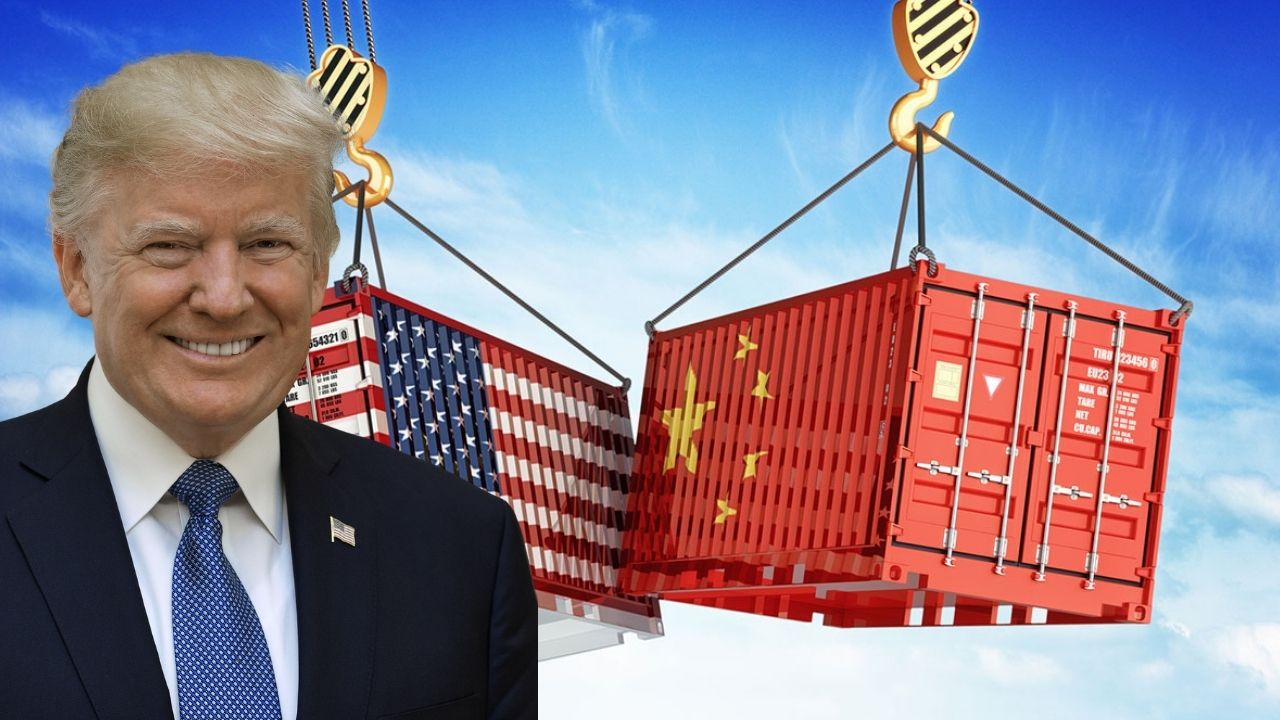
President Donald Trump reignited the U.S.-China trade war by imposing 100 percent tariffs on all Chinese exports and tightening controls on key U.S. software.
The announcement sent global markets and cryptocurrencies into a sharp decline.
Bitcoin tumbled more than 8 percent on Friday, October 11, falling to $104,782 as global markets reacted to renewed U.S.-China trade tensions after President Donald Trump imposed sweeping new tariffs and export restrictions, according to media reports.
Beijing has tightened its export controls on rare earth minerals, materials that are essential to technology, defense, and electric vehicle manufacturing. In response, Trump said, “I thought it was very, very bad. For every element they monopolize, we have two. But we have to respond.” He also announced additional port fees on U.S. ships that will begin on October 14, 2025.
Markets immediately turned volatile. Bitcoin slumped 8.4 percent, Ethereum lost 5.8 percent to trade at $3,637, and the S&P 500 dropped more than 2 percent, recording its biggest one-day fall since April. The Nasdaq sank 3.56 percent to close at 22,204.43. Semiconductor stocks also plunged, with the PHLX Semiconductor Index down 6.3 percent, while gold and U.S. Treasuries rose as investors sought safe havens.
Cryptocurrencies and tech stocks faced the hardest hits. Nvidia, Tesla, Amazon, and AMD all lost over two percent in after-hours trading. Qualcomm dropped 7.3 percent amid reports of a new antitrust investigation in China. U.S.-listed Chinese tech giants, including Alibaba, JD.com, and PDD Holdings, fell between 5.3 percent and 8.5 percent.
The sell-off erased hundreds of billions of dollars in market capitalization and reignited fears that the new tariffs and export controls could disrupt global supply chains, especially in the technology and semiconductor sectors.
Bitcoin’s sharp decline left investors anxious as the world’s largest cryptocurrency now trades nearly 20 percent below its September highs. Analysts told Reuters that the pullback reflects a shift toward a broader “risk-off” sentiment in global markets as investors brace for prolonged geopolitical and economic uncertainty.
Attention now turns to the White House, Beijing, and the upcoming U.S. corporate earnings season, which begins Tuesday, October 14, with major banks set to report.