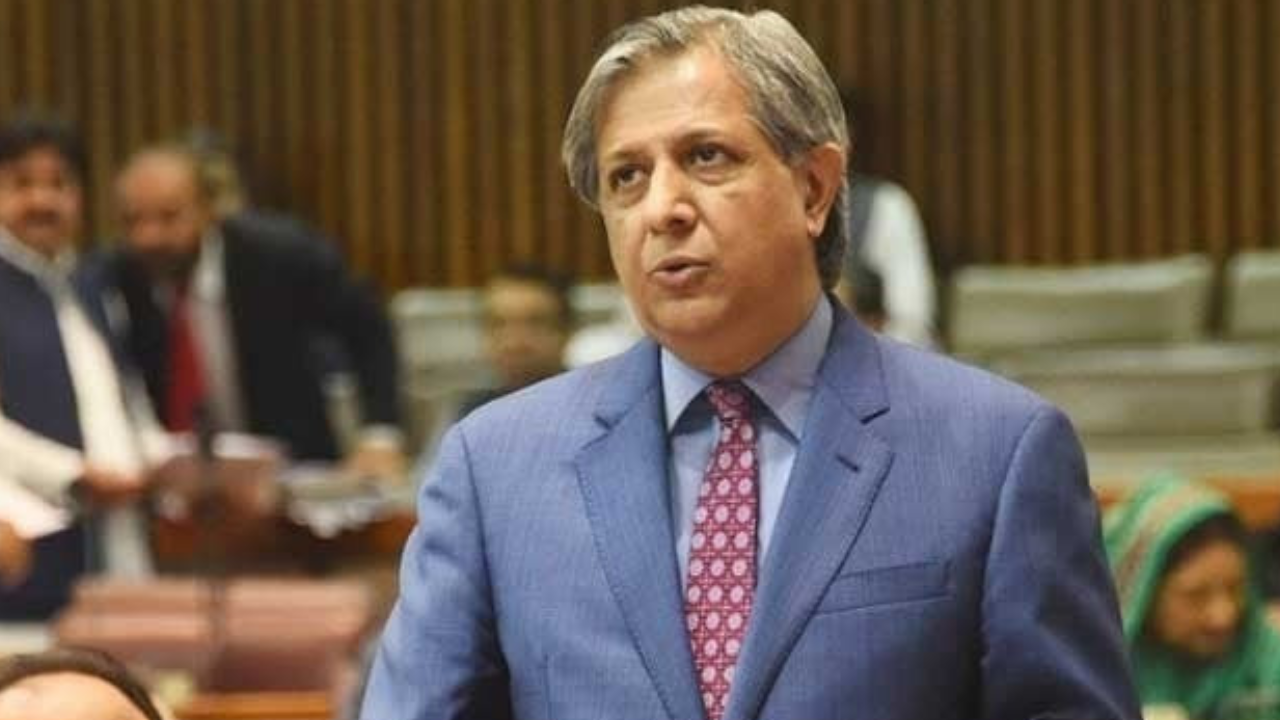
Amid criticism that the 27th Amendment compromised judicial independence, Law Minister Azam Nazeer Tarar has defended the tweak, calling the establishment of the Federal Constitutional Court (FCC) a “cornerstone achievement” that strengthens Pakistan’s federal structure.
The law minister made the remarks Thursday while speaking at the book launch of Tea Talk, a compilation of columns by Advocate Talat Abbas Khan, held at the Supreme Court Bar Association (SCBA).
His comments came in response to a report by Amnesty International, which described the amendment as an attack on the independence of the judiciary, the right to a fair trial and the rule of law.
Rejecting the assessment, Tarar said the creation of the FCC was the central feature of the amendment and had long been part of Pakistan’s constitutional discourse. “This is a monumental contribution of Parliament to strengthen the federation,” he said, adding that the court ensured equal representation of all federating units.
The law minister said the idea of a constitutional court was first articulated in the 2006 Charter of Democracy, which he said was endorsed by major political parties, including the Pakistan Muslim League-Nawaz (PML-N), Pakistan People’s Party (PPP), Pakistan Tehreek-e-Insaf (PTI) founder Imran Khan and Jamiat Ulema-e-Islam-Fazl (JUI-F) chief Maulana Fazlur Rehman.
He urged critics to examine the intent behind the amendment before dismissing it.
Referring to past judicial practice, Tarar said the demand for a separate constitutional court intensified after the Supreme Court’s (SC) use of suo motu powers under Article 184(3).
The minister said the FCC was designed to address structural imbalances in judicial representation.
He explained that apex court appointments were historically linked to the size of provincial high courts, resulting in a higher number of judges from Punjab due to the Lahore High Court’s (LHC) larger bench, and said that smaller provinces such as Balochistan, Sindh and Khyber Pakhtunkhwa had comparatively limited representation.
According to Tarar, the FCC consists of 13 judges, with equal representation from all four provinces and one judge from Islamabad, which he described as part of the federation and therefore entitled to representation.
The statements come after members of the legal fraternity questioned the manner in which the FCC was constituted while an Amnesty International report said that the first batch of FCC judges and its chief justice were appointed by the president on the advice of the prime minister, bypassing the Judicial Commission of Pakistan (JCP) process under Article 175A.
The report also raised concerns about future appointments, noting that changes introduced through the 26th Amendment altered the composition of the JCP, allowing parliamentary members to outnumber judicial members.
Amnesty further pointed out that the president has the authority to determine the number of FCC judges and noted that the chief justice and four judges were sworn in less than 24 hours after the amendment became law, without any stated criteria or justification.
Legal experts said senior judges from Sindh, Balochistan, the SC and the Peshawar High Court (PHC) were bypassed.