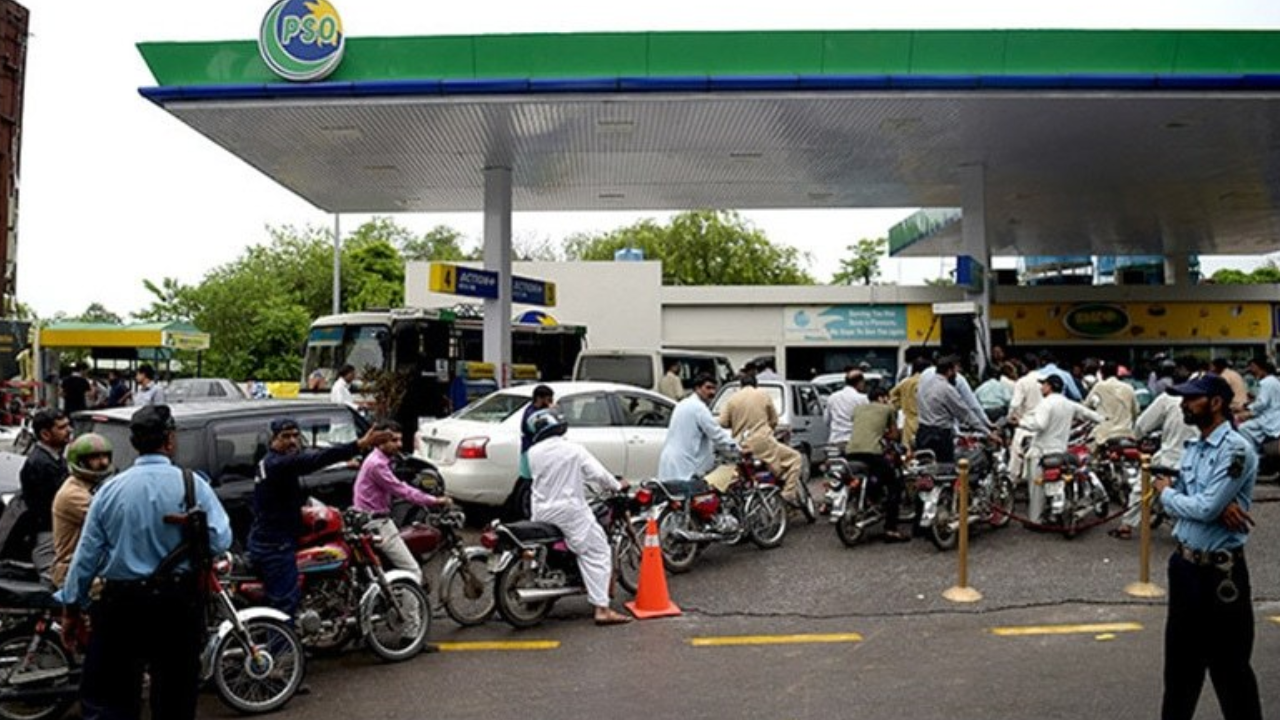
The federal government has placed a ban on the export of all petroleum products and is exploring the possibility of holding back any immediate increase in domestic fuel prices despite continued upward trends in the global market. Authorities plan to use a Rs389 billion emergency fund to absorb potential price shocks.
Recent calculations based on existing taxation and pricing formulas indicate that High-Speed Diesel (HSD) could increase by Rs56 per litre and petrol by Rs41. Retail prices currently stand at around Rs337 per litre for HSD and Rs322 per litre for petrol. Kerosene and light diesel oil are projected to rise by Rs7 and Rs53 per litre, respectively.
While the next scheduled price review is March 15, ministers have suggested that adjustments could be considered as early as March 13. Sources told a private media outlet that Prime Minister Shehbaz Sharif conveyed during a consultative session, attended by federal and provincial officials as well as Field Marshal Asim Munir, that no further price hikes would be implemented in the near future regardless of Middle East market movements.
During the session, it was reported that the government will utilise block allocations intended for emergencies to offset additional increases. The prime minister noted that the current fuel supply disruptions represented the most pressing emergency for the nation.
The report quoted sources as saying that cabinet members remained divided over the prime minister’s stance. Technocrats, particularly those involved with the International Monetary Fund, expressed reservations about tapping into existing pricing buffers.
In a meeting of the Senate Standing Committee on Finance, Petroleum Minister Ali Pervez Malik stated that efforts were underway to manage petroleum prices under the prime minister’s directives and that a final decision would follow a review of global rates on Friday.
Minister of State for Finance and Railways Bilal Azhar Kiyani confirmed that while prices will be reassessed, the government aimed to avoid imposing additional burdens on the public. He added, “The prime minister has also directed that the burden should not be passed on to the people.”
Both ministers defended the March 7 price increase of Rs55 per litre, citing supply risks similar to disruptions experienced in Bangladesh and India.