Author: AFP

  • UNESCO awards press prize to Palestinian journalists in Gaza

    UNESCO awards press prize to Palestinian journalists in Gaza

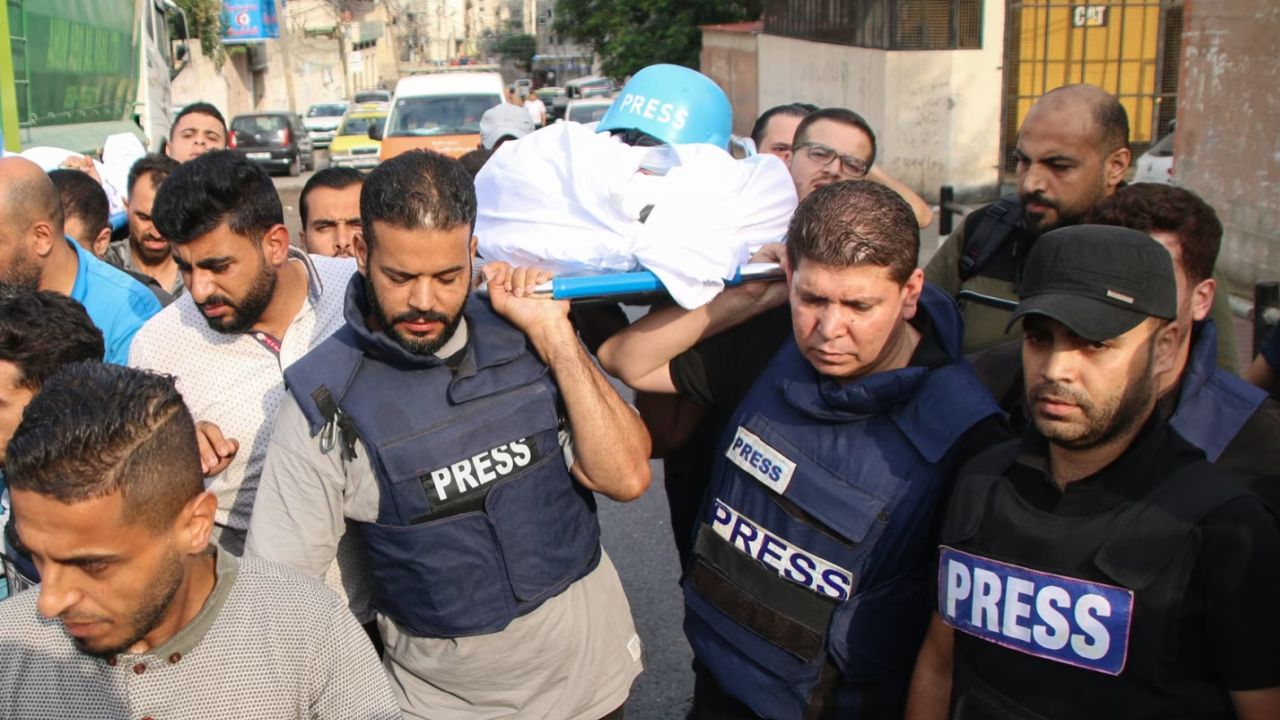
    UNESCO on Thursday awarded its world press freedom prize to all Palestinian journalists covering the Israeli genocide against the people in Gaza since October 8, 2023.

    “In these times of darkness and hopelessness, we wish to share a strong message of solidarity and recognition to those Palestinian journalists who are covering this crisis in such dramatic circumstances,” said Mauricio Weibel, chair of the international jury of media professionals.

    “As humanity, we have a huge debt to their courage and commitment to freedom of expression.”

    Audrey Azoulay, director general at the UN organisation for education, science and culture, said the prize paid “tribute to the courage of journalists facing difficult and dangerous circumstances”.

    According to the New York-based Committee to Protect Journalists (CPJ), at least 97 members of the press have been killed since the war broke out in October, 92 of whom were Palestinians.

  • Police say 20 killed in mountain bus accident in Pakistan

    Police say 20 killed in mountain bus accident in Pakistan

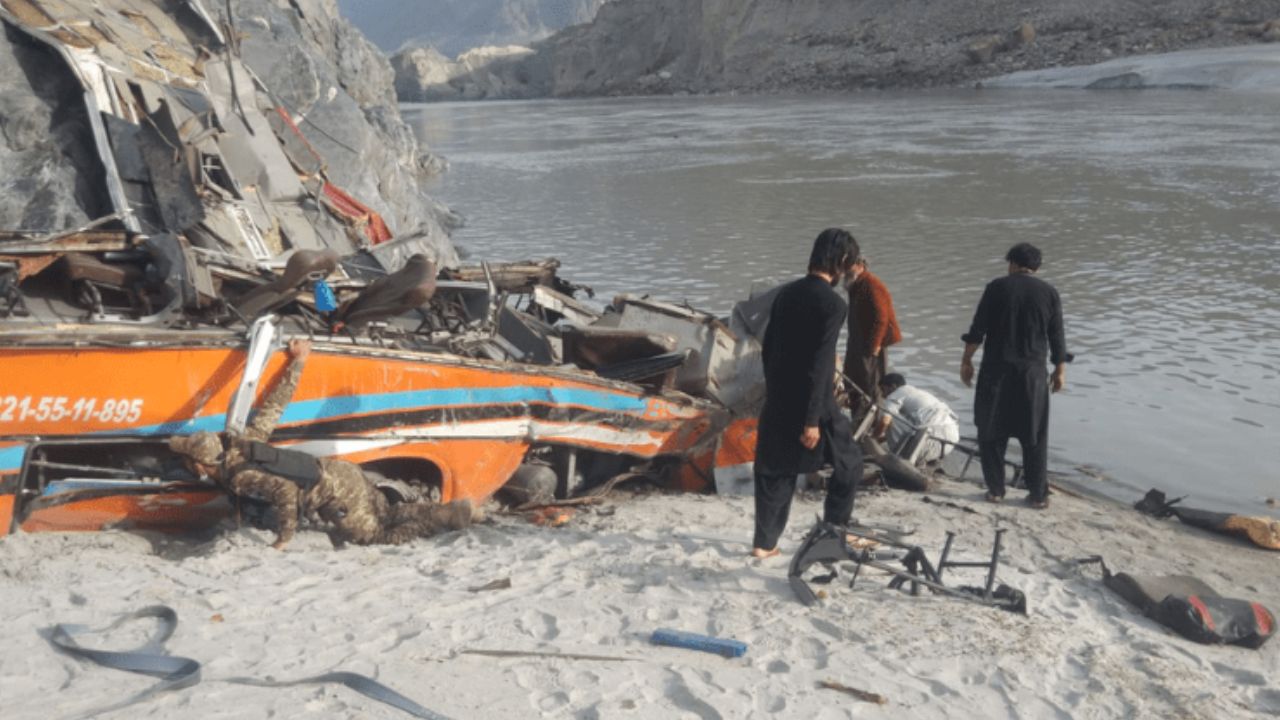
    At least 20 people were killed on Friday when a bus plunged into a deep valley in Pakistan’s mountainous northern region, police said.

    The driver lost control of the vehicle on a bend near the city of Chilas, in the Gilgit-Baltistan region, around dawn, falling into a rocky ravine where the River Indus flows.

    “The local Ulema (Muslim leader) announced the news of the accident from the loudspeaker of the mosque and urged the people to donate blood for the injured,” Azmat Shah, a police official in the city told AFP.

    “Rescue operations have been completed. Among the 21 injured, the condition of five is very critical.”

    The bus was travelling from the capital Islamabad to Gilgit.

    Road accidents with high fatalities are common in Pakistan, where safety measures are lax, driver training is poor and transport infrastructure often decrepit.

  • Pro-Palestinian students camp out at Mexico’s largest university

    Pro-Palestinian students camp out at Mexico’s largest university

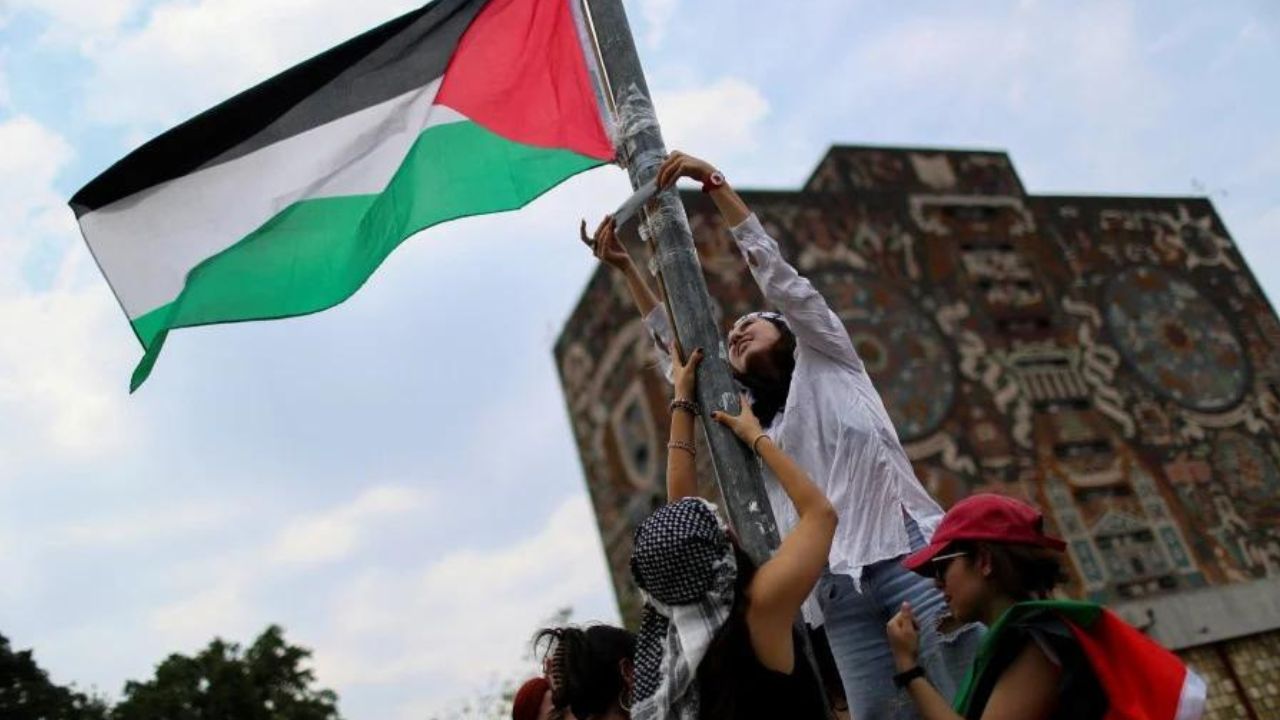
    Mexico City (AFP) – Dozens of pro-Palestinian students from Mexico’s largest university camped out Thursday in solidarity with similar protests that have swept colleges in the United States.

    Mounting flags and chanting “Long live free Palestine,” the protesters set up tents in front of the National Autonomous University of Mexico’s (UNAM) head office in Mexico City.

    The students called on the Mexican government to break diplomatic and commercial ties with Israel.

    “We are here to support Palestine, the people who are in Palestine, and the student camps in the United States,” said Valentino Pino, a 19-year-old philosophy student.

    Jimena Rosas, 21, said she hoped the protest would have a domino effect and spread to other universities in the country.

    “Once people see that UNAM is beginning to mobilize, other universities should start as well,” she said.

    Dozens of universities in the United States have seen pro-Palestinian demonstrations in recent weeks, leading to clashes with police and counter-protests.

    Israeli genocide against Palestinians since October 8 has killed more than 34,500 people in Gaza, mostly women and children, according to the territory’s health ministry.

  • China says to take ‘necessary measures’ after fresh US sanctions

    China says to take ‘necessary measures’ after fresh US sanctions

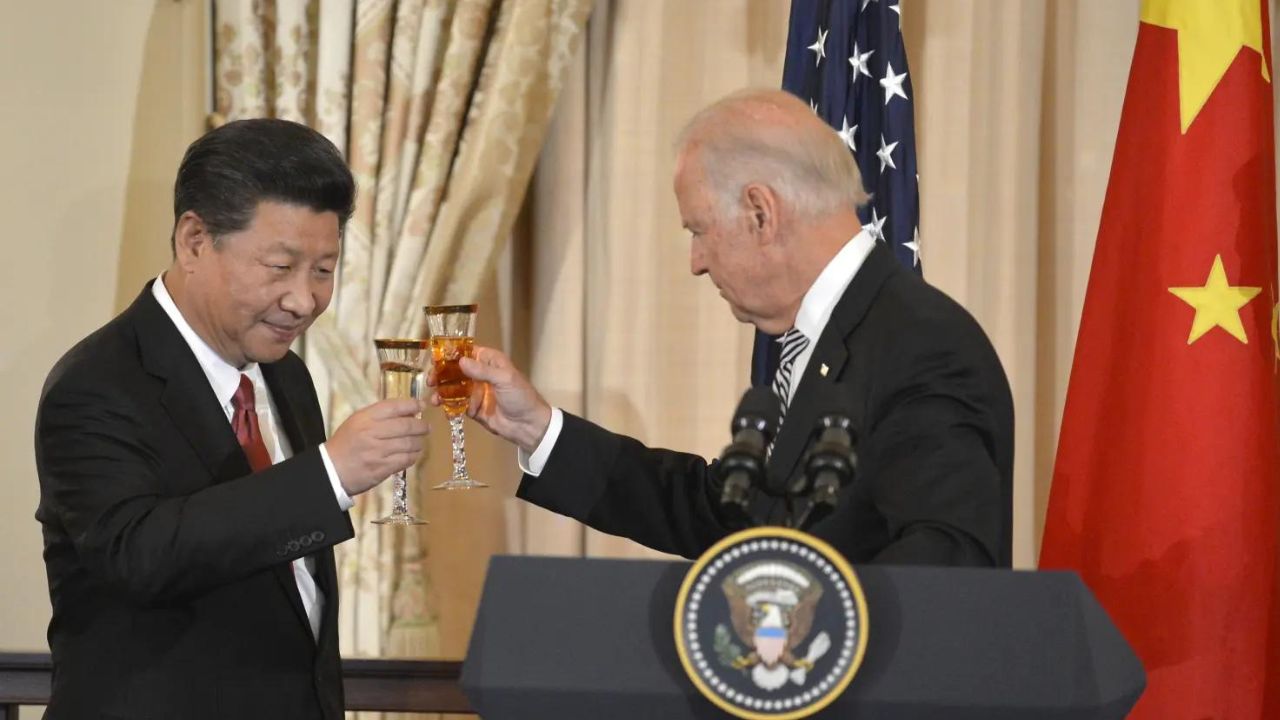
    Beijing on Thursday said it would take “necessary measures” after the United States announced fresh sanctions aimed at crippling Russia’s military and industrial capabilities, punishing companies in China and elsewhere that help Moscow acquire weapons for its war in Ukraine.

    “The Chinese side urges the US to stop smearing and containing China and stop wantonly implementing illegal and unilateral sanctions,” a foreign ministry spokesman said in a message to AFP.

    “China will take all necessary measures to resolutely uphold the legal rights and interests of Chinese companies,” he added.

    In a sweeping package announced by the US Treasury Department on Wednesday, Washington targeted nearly 300 entities in Russia, China and other countries accused of supporting President Vladimir Putin’s invasion.

    Treasury Secretary Janet Yellen said her department had “consistently warned that companies will face significant consequences for providing material support for Russia’s war”, and that its “actions will further disrupt and degrade Russia’s war efforts”.

    China has never condemned Russia’s attack on Kyiv, and stands accused of indirectly supporting the war through its strategic partnership with its neighbour Moscow.

    Beijing insisted again on Thursday it was “neither a creator nor a party” to the crisis in Ukraine, and said it had the right to develop “normal” trading relations with all countries, including Russia.

    “China has always resolutely opposed the United States implementing illegal and unilateral sanctions against Chinese enterprises and exercising ‘long-arm jurisdiction’,” the spokesman said.

  • Tweets or ‘terrorism’?: Saudi’s jailed online activists

    Tweets or ‘terrorism’?: Saudi’s jailed online activists

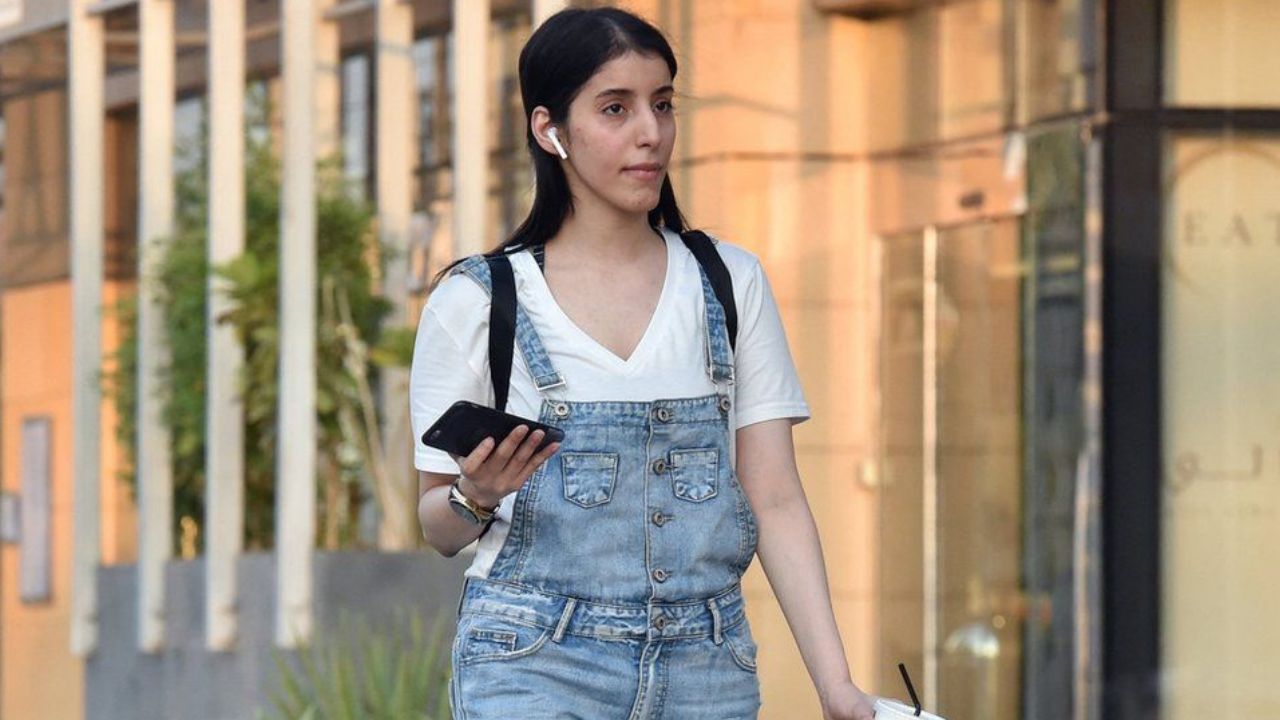
    A Saudi court’s decision to sentence fitness influencer Manahel al-Otaibi to 11 years in prison highlights what activists describe as a fierce crackdown on even vaguely critical online speech.

    In the past two years the Saudi judiciary has “convicted and handed down lengthy prison terms on dozens of individuals for their expression on social media”, the human rights groups Amnesty International and ALQST said in a joint statement on Tuesday.

    These cases are generally handled by the Specialised Criminal Court, which was established in 2008 to try suspects accused of terrorism, and Saudi authorities do not often comment on them.

    Here are some of the most high-profile recent examples:

    Nourah al-Qahtani

    A mother-of-five, Qahtani was arrested in July 2021 largely in connection with critical posts on Twitter, since rebranded as X, according to a sentencing document provided by Democracy for the Arab World Now (DAWN), a Washington-based rights group.

    She initially received a prison sentence of six-and-a-half years, however prosecutors appealed for a harsher sentence and got their wish: a 45-year term issued in mid-2022.

    Qahtani’s Twitter account, as identified in the sentencing document, features numerous posts criticising the government and others warning of attempts to arrest those behind public protests, which are not tolerated in Saudi Arabia.

    The court found Qahtani had used Twitter “to challenge the religion and justice” of King Salman and Crown Prince Mohammed bin Salman

    Get info without
    leaving the page., the kingdom’s 38-year-old de facto ruler, according to the sentencing document.

    It also says she incited “the activities of those who seek to disturb public order and destabilise the security of society and the stability of the state” by “publishing false and malicious tweets”.

    Qahtani did not have a large public profile and it is not clear how her anonymous Twitter account, which has fewer than 600 followers, attracted the attention of Saudi authorities.

    Salma al-Shehab

    A member of Sunni-ruled Saudi Arabia’s Shiite minority, Shehab had been studying for a doctorate in Britain and was arrested in January 2021 while visiting on holiday.

    In August 2022 she was sentenced to 34 years behind bars for aiding dissidents seeking to “disrupt public order” in the kingdom by relaying their tweets.

    The mother-of-two, who mostly posted about women’s rights to an account with just a few thousand followers, was also banned from travelling abroad for a further 34 years.

    Both the sentence and travel ban were later reduced to 27 years each, according to Amnesty.

    After Shehab’s sentence was made public, the University of Leeds, where she was studying, said in a statement it was “deeply concerned” and trying to find ways to support her.

    Mohammed al-Ghamdi

    A government critic who denounced alleged corruption and human rights abuses on social media, Mohammed al-Ghamdi was sentenced to death last year.

    The charges include conspiracy against the Saudi leadership, undermining state institutions and supporting terrorist ideology, sources briefed on the details of the verdict said.

    The case against him was at least partly built on posts criticising the government and expressing support for “prisoners of conscience” like the jailed religious clerics Salman al-Awda and Awad al-Qarni, Mohammed’s brother Saeed al-Ghamdi told AFP at the time.

    Mohammed al-Ghamdi, a retired teacher in his 50s, was arrested in June 2022.

    Human Rights Watch said in August 2023 it had seen court documents contending that Ghamdi “targeted the status of the King and the Crown Prince” and that the “magnitude of his actions is amplified by the fact they occurred through a global media platform, necessitating a strict punishment”.

    In an interview with Fox News that aired in September 2023, Prince Mohammed said he disapproved of the judgement and raised the possibility that Ghamdi might be spared death.

    “I’m hoping that in the next phase of trials, the judge there is more experienced. And they might look at it totally different,” Prince Mohammed said.

    Manahel al-Otaibi

    Otaibi, a 29-year-old blogger and fitness instructor, was arrested in November 2022.

    Rights groups contend that law enforcement targeted her for challenging Saudi male guardianship laws and requirements for women to wear the customary body-shrouding abaya robe.

    The Specialised Criminal Court sentenced her to 11 years in prison on January 9, but the sentence was only made public later in a Saudi submission to United Nations special rapporteurs inquiring about the case.

    That document, dated January 24 and seen by AFP on Tuesday, says Otaibi “was convicted of terrorist offences that have no bearing on her exercise of freedom of opinion and expression or her social media posts”.
  • More war debris in Gaza than Ukraine: UN

    More war debris in Gaza than Ukraine: UN

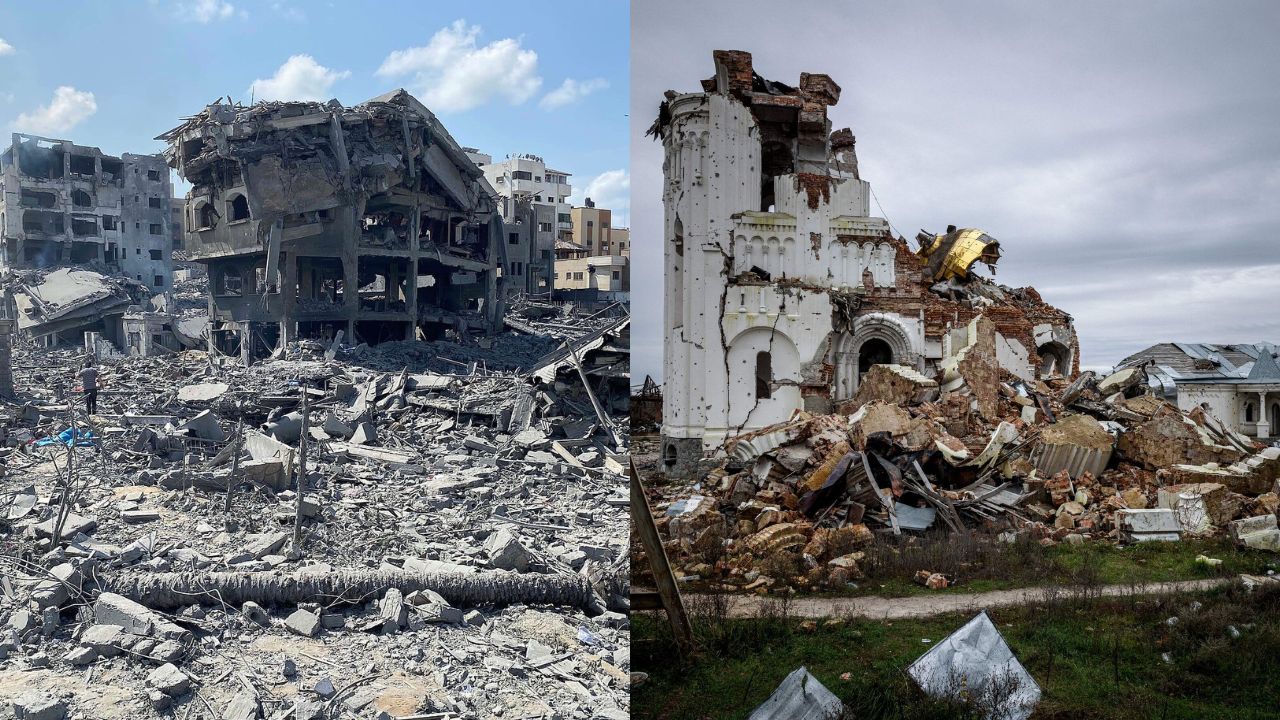
    Geneva (AFP) – The Gaza Strip is filled with more war debris and rubble than Ukraine, the head of UN demining operations for the narrow Palestinian territory said Wednesday.

    And the danger for clearance work is restricted not just to unexploded ordnance but includes possible exposure to toxic substances such as asbestos.

    The United Nations Mine Action Service (UNMAS) estimated the amount of debris in Gaza at 37 million tonnes in mid-April, or 300 kilogrammes per square metre.

    “Gaza has more rubble than Ukraine, and to put that in perspective, the Ukrainian front line is 600 miles (nearly 1,000 kilometres) long, and Gaza is 25 miles (40 km) long,” said Mungo Birch, head of the UNMAS programme in the Palestinian territories.

    But the sheer volume of rubble is not the only problem, said UNMAS.

    “This rubble is likely heavily contaminated with UXO (unexploded ordnance), but its clearance will be further complicated by other hazards in the rubble,” Birch told journalists.

    “There’s estimated to be over 800,000 tonnes of asbestos, for instance, alone in the Gaza rubble.” The cancer-causing mineral used in construction requires special precautions when handling.

    Birch said he hoped UNMAS, which works to mitigate the threats posed by all types of explosive ordnance, would become the coordination body for mine action in Gaza.

    It has secured $5 million of funding but needs a further $40 million to continue its work in Gaza over the next 12 months.

    However, “the sector as a whole will need hundreds of millions of US dollars over multiple years in order to make Gaza safe again for the population”, Birch added.

    Israel’s retaliatory offensive has killed at least 34,568 people in Gaza, mostly women and children, according to the health ministry.

  • Istanbul police clash with May Day protesters

    Istanbul police clash with May Day protesters

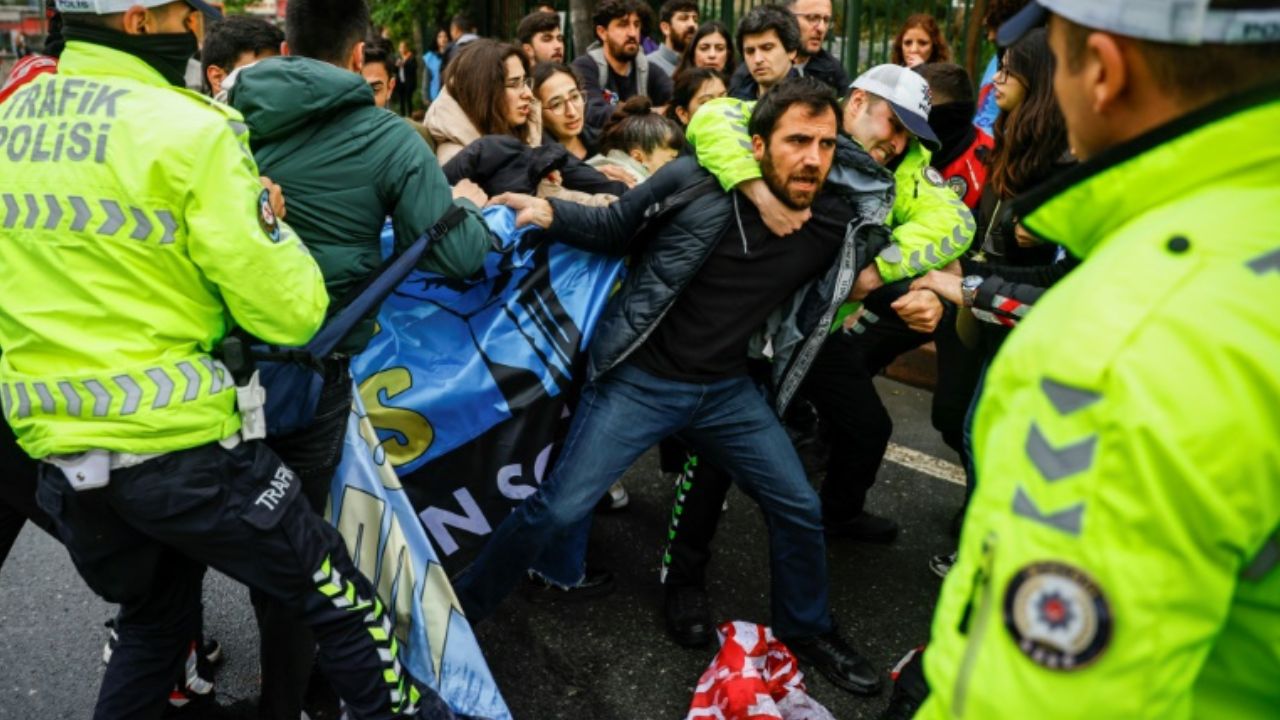
    Turkish police on Wednesday fired tear gas and rubber bullets and detained dozens of protesters after authorities banned May 1 rallies at Istanbul’s historic Taksim Square.

    More than 40,000 police were deployed across Istanbul, blocking even small sidestreets with metal barriers in an attempt to prevent protesters gathering.

    Police clashed with demonstrators near city hall in the Sarachane district, firing tear gas and rubber bullets to stop protesters breaching barricades, AFP reporters said.

    According to media reports, at least 150 people had been detained by midday, but authorities did not confirm the figure. AFP reporters saw many people being arrested.

    Some were detained trying to enter Taksim Square.

    Tall metal barriers were put up around the square, where authorities have banned rallies since 2013, when it was the focus of demonstrations against President Recep Tayyip Erdogan’s government.

    Taksim was a rallying ground for May Day celebrations until 1977, when at least 34 people were killed during demonstrations. Authorities opened it up again in 2010, but it was shut again after the 2013 protests.

    In the Besiktas district, police detained at least 30 left-wing protesters who were shouting “Taksim cannot be banned”, an AFP journalist.

    One protester was dragged along the ground by police and his group detained.

    Another 30 people were detained in the Sisli district.

    The MLSA rights group said several journalists were pushed to the ground during the troubles.

    – ‘Taksim belongs to workers’ –

    Main roads across Istanbul were closed to traffic while public transport including ferries and subway trains were halted because of the security clampdown. Landmarks such as the Topkapi palace were cordoned off.

    Interior Minister Ali Yerlikaya said Taksim would be out of bounds for rallies to stop “terrorist organisations” using it for “propaganda”.

    Turkey’s main opposition Republican People’s Party (CHP) and unions had pressed the government to open the square for labour rallies but Erdogan warned on Tuesday against any provocation.

    CHP leader Ozgur Ozel, accompanied by Istanbul’s mayor Ekrem Imamoglu and labour unions, gathered at the Sarachane neighbourhood.

    “We will keep on fighting until Taksim is free,” Ozel said. “Taksim belongs to the workers.”

    Addressing the police, Ozel declared: “These workers are not your enemies Our only desire is for the day to be celebrated as a festival. We do not want conflict.”

    In 2023, Turkey’s top constitutional court ruled that the closure of Taksim Square for protests was a violation of rights.

  • 4 years after TikTok ban, India’s influencers still searching for solid ground

    4 years after TikTok ban, India’s influencers still searching for solid ground

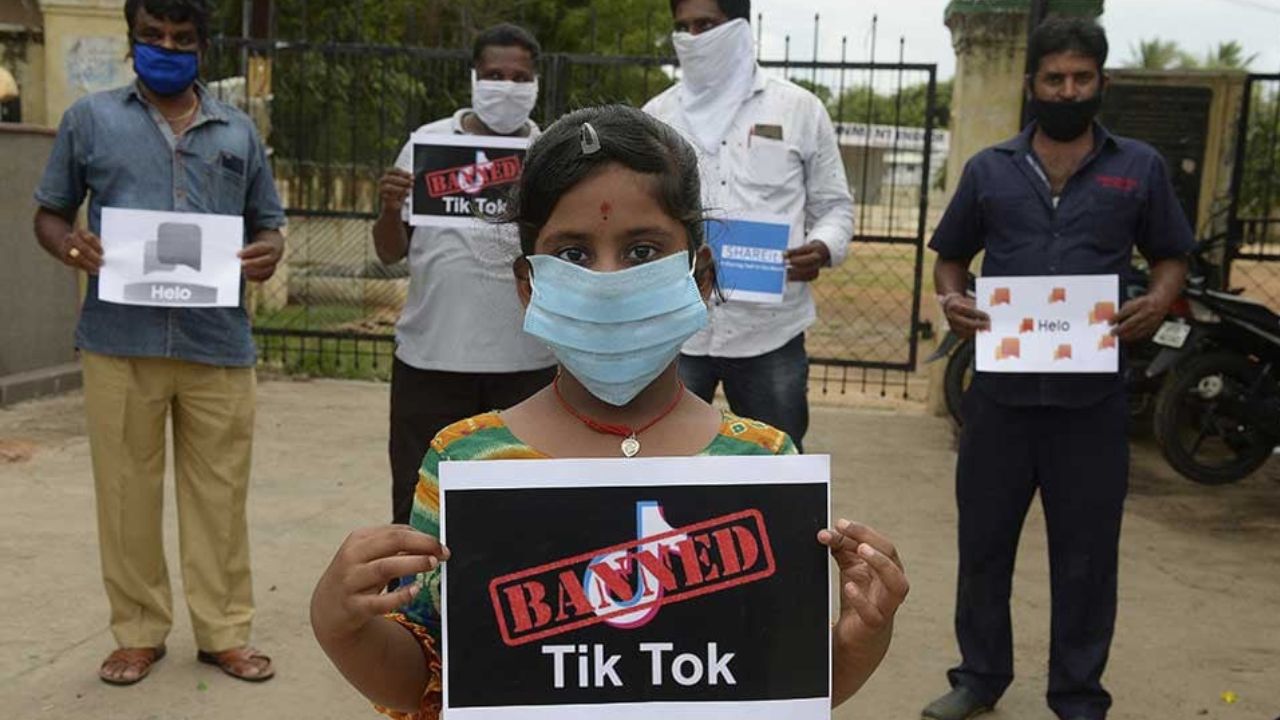
    Choreographer Sahil Kumar found fame showcasing folk dances on TikTok but his profile has been dormant since the video he posted four years ago supporting India’s decision to ban the platform. The world’s most populous country offers a glimpse of what the social media landscape could look like in the United States next year, if a move to block local access to the Chinese-owned short video app goes ahead.

    Several local copycats tried to fill the void left by TikTok’s departure – prompted by a wave of nationalist fervour that followed a border clash between Chinese and Indian troops – but the biggest beneficiaries of the decision were YouTube and Instagram.

    Kumar and many other content creators eventually flocked to those US-owned platforms, but few were able to replicate their earlier followings. “It is difficult to recreate the success elsewhere, because I haven’t got the same engagement on any other platform,” Kumar, 30, told AFP from his studio in Rohtak, a short drive south of the capital New Delhi.

    “It takes years to grow an audience on Instagram and especially on YouTube,” he added. Kumar was an engineer by training but ditched white collar work when he found an audience for his dance routines on TikTok, eventually garnering more than 1.5 million followers.

    His newfound celebrity netted him paid opportunities to choreograph dance numbers for other influencers on the platform and music videos featuring Indian celebrities. But his career was derailed in June 2020 after a deadly clash far from his home on the Himalayan frontier dividing India from China.

    ‘India comes first’ 

    Twenty Indian and four Chinese soldiers were killed in the encounter, the deadliest face-off between the two nuclear-armed neighbours in half a century, and two weeks later the app vanished from Apple and Google’s online stores.

    The official government order mandating the removal made no reference to the incident or even China, only saying that TikTok had engaged in activities that were “prejudicial to sovereignty and integrity of India”.

    Kumar said in his final video on the platform that he agreed with the ban, urging those watching to follow him over to Instagram and YouTube. “They must have thought thoroughly before making this decision,” he said in a short speech to camera. “India comes first.”

    Four years later, just under 94,000 people follow him on Instagram – a tiny fraction of his earlier audience – and he laments that his chances to make money have dried up. “For us, the work stopped,” he said.

    TikTok arrived in India years after other established social media platforms, but quickly became a national phenomenon. A year before it was kicked out of the market, the platform said it had more than 200 million users in India – one out of every seven people in the country.

    ‘Everyone was helter-skelter’ 

    “Every influencer, every personality trying to build an online following had to tap into the platform whether or not they liked it,” Viraj Sheth, co-founder of influencer marketing agency Monk Entertainment, told AFP.

    “As soon as we got the news of TikTok getting banned, everyone was helter-skelter.” Several local tech start-ups attempted to capitalise on TikTok’s disappearance by rushing their own short-form video apps to market.

    But it was established US platforms that eventually proved best primed to triumph in the new market. In the first year after the ban, Instagram saw about six million short videos from India posted each day to Reels, its own interface attempting to match TikTok’s content model.

    That compared to 2.5 million videos posted each day to Indian video sharing platform Moj, according to local media reports. Market tracker Statista estimates that more than 362 million people in India use Instagram and 462 million more use YouTube — which rolled out Shorts, its own TikTok rival, the same year as the India ban.

    That compares to a total audience of 250 million people across manifold homegrown video apps, according to estimates by Redseer Strategy Consultants published last November.

    “When TikTok was banned, we were all expecting that there will probably be some other app which will come and take over,” Amiya Swarup of professional services firm EY India told AFP. “But you know, it’s still the Instas and the YouTube Shorts which are still really ruling in terms of short-form videos.”

    While that had been beneficial for their respective parent companies Meta and Google, Sheth of Monk Entertainment said some influencers had struggled to make the transition.

    TikTok’s endless-scroll interface and algorithm are renowned for both matching audiences with the content they want to see and boosting niche content creators, but Sheth said its rivals require a different formula for success.

    “You probably didn’t need to show personality on TikTok as much,” he said. “On a platform like Instagram, that’s not something that replicated that well.”

  • April temperatures in Bangladesh hottest on record

    April temperatures in Bangladesh hottest on record

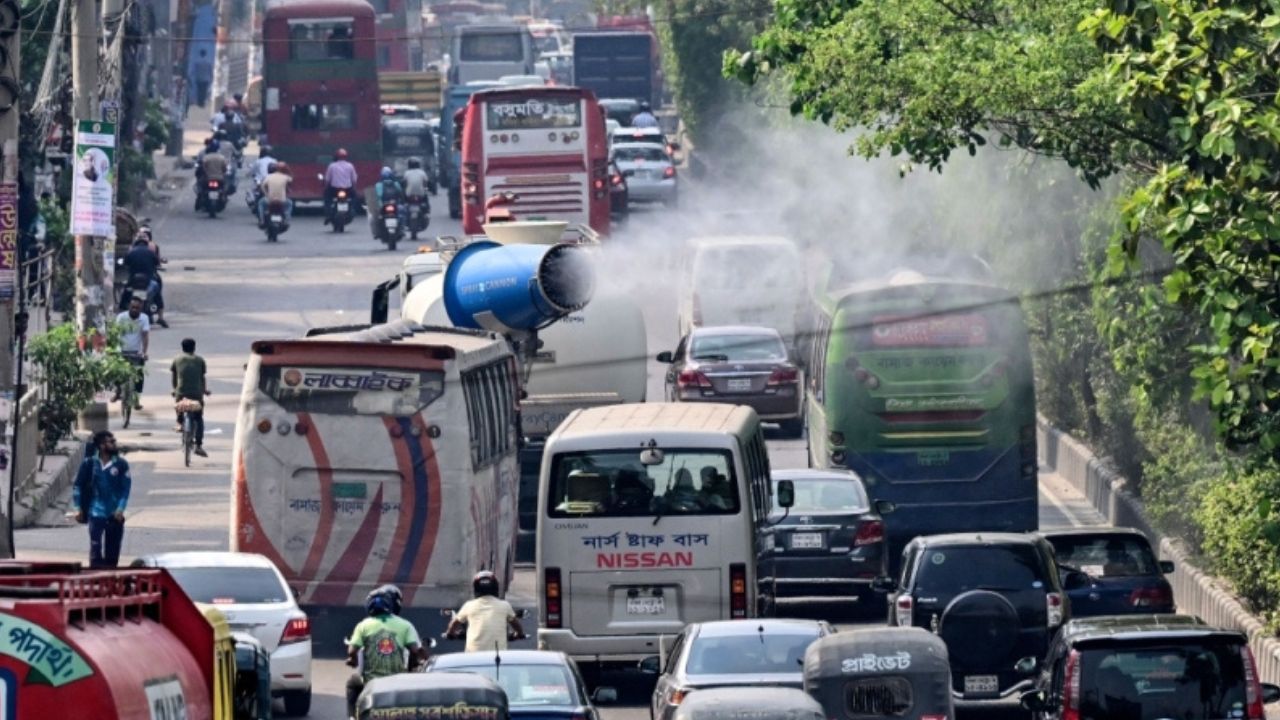
    Bangladesh last month saw the hottest average April temperatures since the country began keeping weather records in 1948, a senior forecaster told AFP on Wednesday.

    “2024 was the hottest April since 1948 in terms of hot days and area coverage in the country,” Bangladesh Meteorological Department senior forecaster Muhammad Abul Kalam Mallik said.

    Bangladesh remains in the grips of a suffocating heatwave that prompted authorities to close schools nationwide, with temperatures not expected to moderate until Thursday.

    “This year the heatwave covered around 80 percent of the country. We’ve not seen such unbroken and expansive heatwaves before,” Mallik said.

    Mallik said the 30-year average daily temperature for April between 1981 and 2010 was 33.2 degrees Celsius, but this year weather stations around the country recorded temperatures of between two and eight degrees higher.

    He added that Bangladesh had not seen the usual pre-monsoon April thunderstorms which normally cools the South Asian nation ahead of summer.

    “Bangladesh gets an average 130.2 millimetres of rain in April. But this April we got an average of one millimetre of rain,” he said.

    Mallik said the bureau was checking data to confirm whether this year marked record low rainfalls for April.

  • Brown University reaches deal with student protesters

    Brown University reaches deal with student protesters

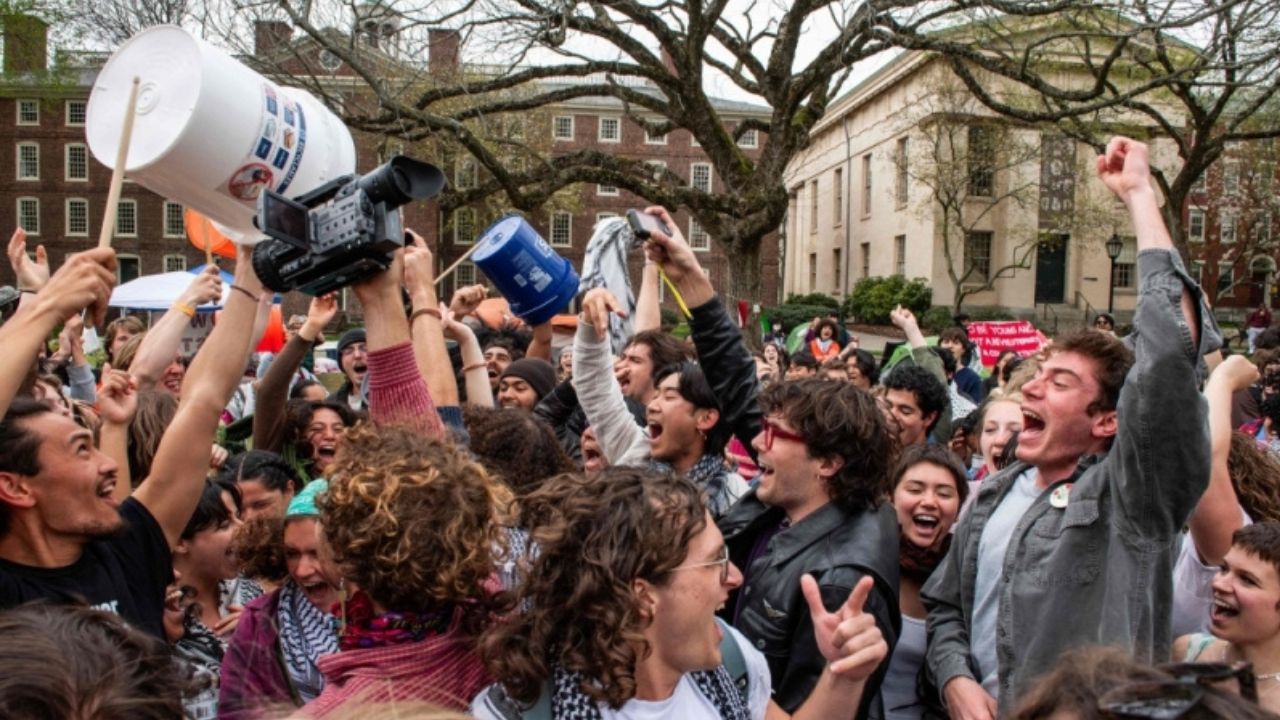
    Brown University on Tuesday reached an agreement with students protesting the genocide in Gaza that would see them remove their encampment from school grounds in exchange for the institution considering divesting from Israel.

    The move represents a first major concession from an elite American university amid student protests that have taken over campuses across the country, divided public opinion and led to hundreds of arrests.

    In a statement, Brown President Christina Paxson said students had agreed to end their protests and clear their camp by 5:00 pm local time Tuesday and “refrain from further actions that would violate Brown’s conduct code through the end of the academic year.”

    In turn, “five students will be invited to meet with five members of the Corporation of Brown University in May to present their arguments to divest Brown’s endowment from ‘companies enabling and profiting from the genocide in Gaza’.”

    The board will vote on the proposal in October.

    Student protesters jumped for joy upon hearing the news of the deal and chanted “with love not fear, divestment is getting near” before beginning to remove their tents.

    “We are ending (the encampment) knowing that we made a huge victory for divestment at Brown, for this international movement and a victory for the people of Palestine,” said Brown student Leo Corzo-Clark.

    The university, located in Providence, Rhode Island, “has come to the table to listen to our demands and to listen to its students and to consider divesting from war, divesting from death, divesting from occupation,” said Sam Theoharis, another student protester.

    In her statement, Paxson said “the devastation and loss of life in the Middle East has prompted many to call for meaningful change, while also raising real issues about how best to accomplish this.”

    But she added: “I have been concerned about the escalation in inflammatory rhetoric that we have seen recently, and the increase in tensions at campuses across the country.”