Author: AFP

  • Why is South Africa still waiting for a female president?

    Why is South Africa still waiting for a female president?

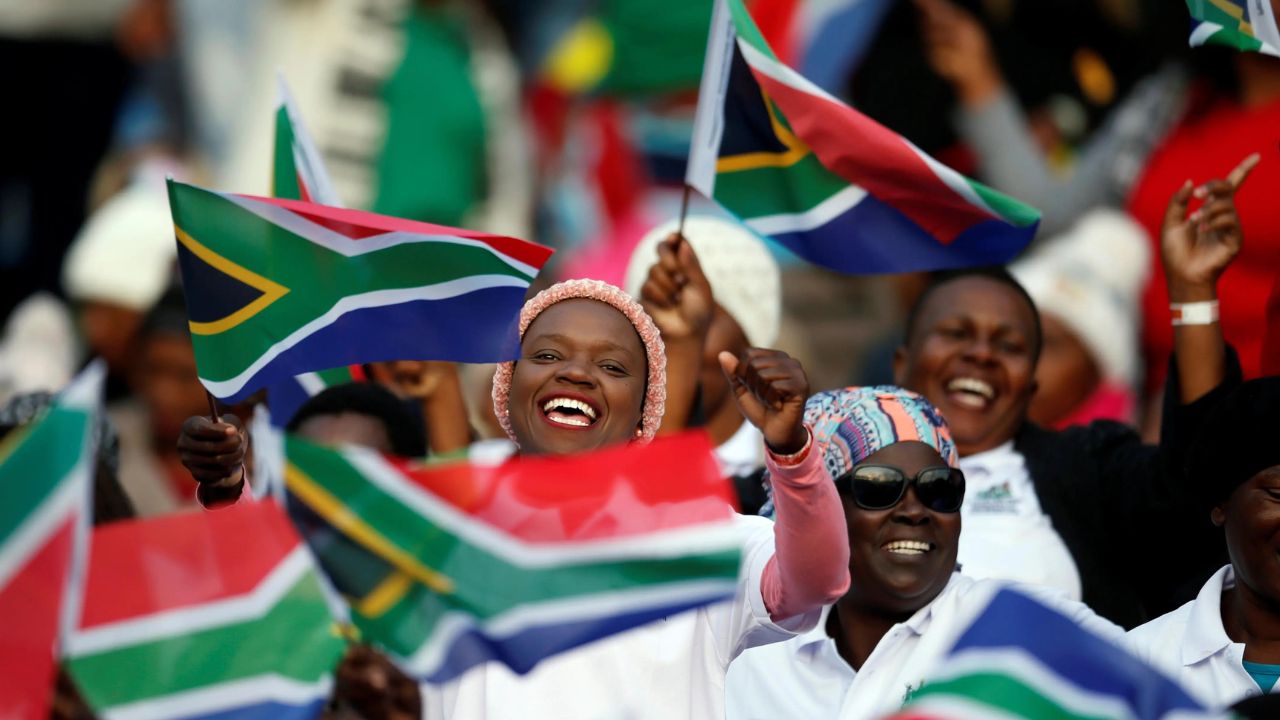
    South Africa has one of the world’s highest rates of female parliamentary representation in the world while boasting one of the most progressive constitutions.

    Yet the country is yet to produce a female president — something upcoming general elections are unlikely to change.

    Of the more than 50 parties in the running on May 29, only a handful are led by a woman. The five largest are all headed by men.

    “It is rare for a woman-owned party to stand, succeed and be sustainable,” said Colleen Makhubele, one of the few female party chiefs, who runs the small South African Rainbow Alliance (SARA).

    The dearth is despite South Africa ranking 11th globally for female representation in parliament, just below Sweden and higher than Finland.

    Women played a major role in the anti-apartheid struggle, and have held important government posts since the advent of democracy in 1994.

    About half the country’s ministries, including the key departments of foreign affairs and defence, are currently run by women.

    Women’s rights activists say the reason partially lies in the disconnect between the liberal views on which democratic South Africa was founded, and what still remains a fairly conservative society.

    The rainbow nation’s constitution lists “non-racialism and non-sexism” as the country’s second founding value after democracy itself.

    Yet many still see women as fit to lead their family — but not the nation.

    About one in five respondents to a 2017 Ipsos survey said that a woman’s place was in the home. Moreover, 22 percent thought men made better political leaders.

    This results in women often being overlooked when parties choose a leading candidate, said Bafana Khumalo, co-director of NGO Sonke Gender Justice.

    “Women are seen as important… but not to be voted into power,” he said.

    Makhubele of SARA, a former Johannesburg council speaker, said she has to work twice as hard as her male colleagues to win votes, funding and media coverage.

    Attitudes are slowly changing.

    A 2020 poll by Women Deliver, a non-profit, found 91 percent of respondents believed gender equality was important.

    Forty-three percent supported the government taking action to achieve equal representation in politics, and 69 percent backed gender quotas.

    The latter are already implemented by the ruling African National Congress (ANC) and the leftist Economic Freedom Fighters (EFF) — the country’s third largest party.

    The second largest party, the liberal Democratic Alliance (DA), had a female leader between 2007 and 2015.

    But that’s not enough, said political analyst and author Susan Booysen.

    “I’m blaming political parties for not systematically nurturing women’s ascendancy in party politics to get them to the top… women don’t see that systemic mentoring and promotion” she said.

    Parties might be missing out.

    Women make up more than 55 percent of registered voters in the upcoming elections and are seen as key drivers of support.

    “They’re the ones who actually make sure the people they live with go and vote on election day,” said Zama Khanyase of the ANC’s youth league.

    The ANC is largely expected to get less than 50 percent of the vote and for the first time lose its absolute majority in parliament when South Africans head to the polls in a month’s time.

    That could force it into a coalition to remain in power.

    After the parliamentary vote national assembly lawmakers then appoint a president.
  • Scotland’s first minister Yousaf quits after a year

    Scotland’s first minister Yousaf quits after a year

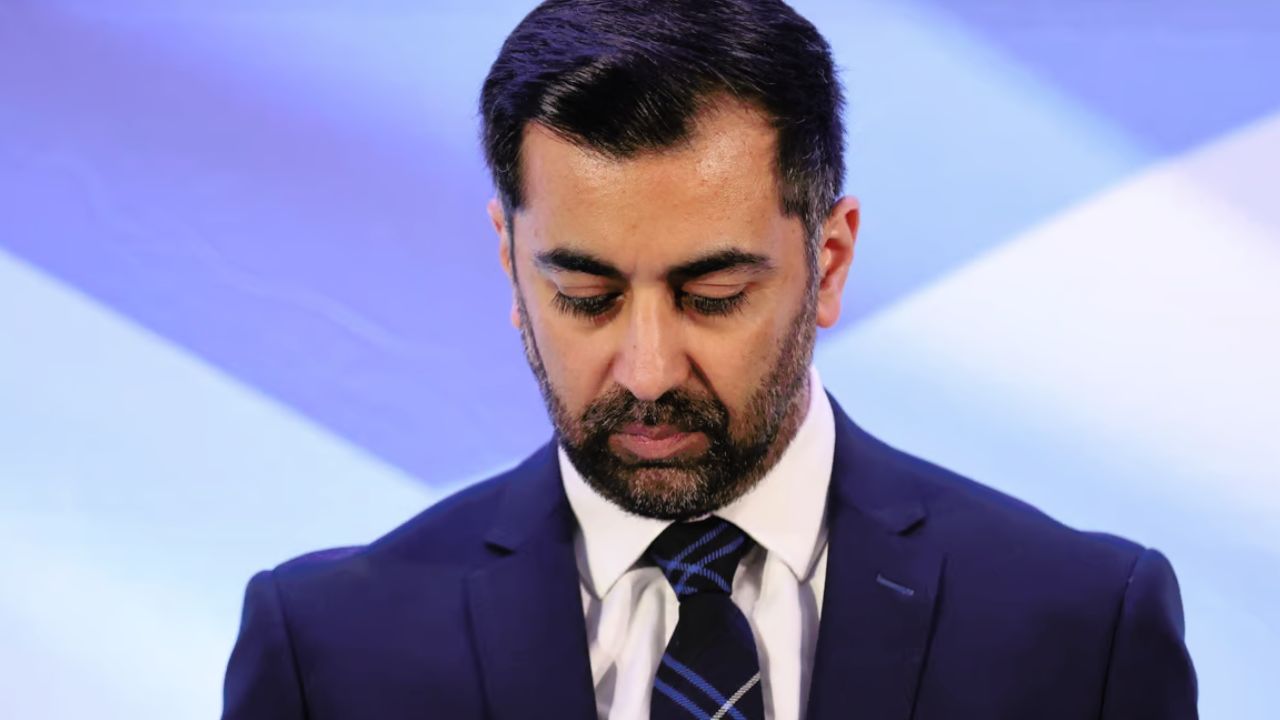
    Edinburgh, United Kingdom – Humza Yousaf announced his resignation as Scotland’s first minister on Monday, before he was due to face two confidence votes this week sparked by his ditching of junior coalition partners in a row over climate policy.

    The 39-year-old quit following a turbulent year as head of the devolved administration, during which support for his pro-independence Scottish National Party (SNP) has fallen.

    Yousaf had been facing growing calls to resign since unceremoniously ending the SNP’s power-sharing deal with the Scottish Greens in the Scottish parliament last week.

    His government had earlier abandoned ambitious targets for the transition to net-zero carbon emissions, angering the Greens.

    The opposition Scottish Conservatives then lodged a vote of no-confidence in Yousaf, which was due to be held as early as Wednesday and which the first minister was at risk of losing.

    Scottish Labour also lodged another no-confidence vote in his government.

    The Tories, Labour, Liberal Democrats and Greens had all said they would vote against him in the personal vote, forcing him to seek the backing of the sole lawmaker from the pro-independence Alba party.

    Alba’s Ash Regan is a former SNP colleague of Yousaf who ran against him in the March 2023 leadership election to succeed Nicola Sturgeon as first minister.

    Yousaf — the first Muslim leader of a major UK political party — said in a statement that he thought winning was “absolutely possible”.

    But he added that he was “not willing to trade in my values or principles or do deals with whomever simply for retaining power”.

    He added: “I have concluded that repairing our relationships across the political divide can only be done with someone else at the helm.”

    Divisions

    Yousaf’s pro-independence SNP has 63 members in the 129-seat parliament — two short of a majority. The presiding officer has a casting vote.

    Yousaf initially said he had no intention of quitting and intended to win the confidence votes.

    But following his announcement, parliament now has 28 days to choose a new first minister.

    He only became Scotland’s leader 13 months ago, after Sturgeon sensationally announced she was quitting, citing tiredness after eight years in charge.

    Yousaf defeated Kate Forbes and Regan in a bruising contest that highlighted divisions in the party between those on the left wing and others closer to the right.

    His leadership was quickly plunged into turmoil when Sturgeon was arrested with her husband, Peter Murrell, over claims of mismanagement of SNP finances.

    Murrell was charged in the case earlier this month. Sturgeon has not been charged.

    Controversies

    Sturgeon had been the figurehead of the Scottish independence movement.

    She oversaw a surge in support for the SNP, particularly after Brexit — in which Scotland opposed leaving the European Union — and during the Covid pandemic.

    But the SNP, which has run the Scottish government since 2007, has suffered a drop in popularity under Yousaf.

    He also came under pressure over controversial new laws which made it an offence to stir up hatred against a number of groups, including transgender people.

    The law has been heavily criticised, including most prominently by “Harry Potter” author J.K. Rowling, who lives in Edinburgh.

    Relations between the SNP and the Greens were also strained by the recent pause in prescribing puberty blockers in Scotland.

    Some within the SNP wanted Yousaf to end the coalition with the Greens because they felt the deal was pulling the party further leftwards.

    The SNP’s slump has also come in the context of a resurgent Labour party, which is tipped to win a UK general election due later this year.

    Scotland voted against independence in a referendum in 2014, with 55 percent of electors choosing “No”.

    The SNP has argued that the UK’s vote to leave the EU in 2016 had put separatism back on the table, because Scotland overwhelmingly voted to remain part of the bloc.

    But the party, in power in Edinburgh for 17 years, has struggled to build momentum for another vote, and the independence movement is at arguably its lowest ebb in recent memory.

    The Scottish Parliament, re-established in 1999, has limited powers to set policy in areas such as health, education, transport and the environment.

    The UK government in London retains powers for countrywide issues such as defence and foreign policy.

    pdh/phz/rlp

    © Agence France-Presse

  • Dubai begins construction of ‘world’s largest’ airport terminal

    Dubai begins construction of ‘world’s largest’ airport terminal

    Dubai announced on Sunday that work had begun on a new terminal at Al Maktoum International Airport, which the Gulf emirate’s ruler said will become “the world’s largest” at a cost of almost $35 billion.

    “We approved the designs for the new passenger terminal at Al Maktoum International Airport, and (are) commencing construction of the building at a cost of AED 128 billion ($34.85 billion),“ Sheikh Mohammed bin Rashid Al Maktoum, the ruler of Dubai and prime minister of the United Arab Emirates, said on X.

    Once fully operational, the airport will “handle a passenger capacity of 260 million annually”, the government said in a statement.

    Sheikh Mohammed said it will have “the world’s largest capacity” and be “five times the size of the current Dubai International Airport”, which is one of the world’s busiest air hubs.

    According to Sheikh Ahmed bin Saeed Al Maktoum, president of the Dubai Civil Aviation Authority and CEO of flag carrier Emirates, “the first phase of the project will be ready within a period of 10 years, with a capacity to accommodate 150 million passengers annually.”

    Built on the city’s outskirts, Al Maktoum airport has received a relatively small share of the Gulf financial hub’s air traffic since 2010.

    Authorities want it to replace Dubai International Airport, which has a capacity of up to 120 million passengers annually and whose city-centre location prevents expansion.

  • India is not an autocracy, insists PM Modi

    India is not an autocracy, insists PM Modi

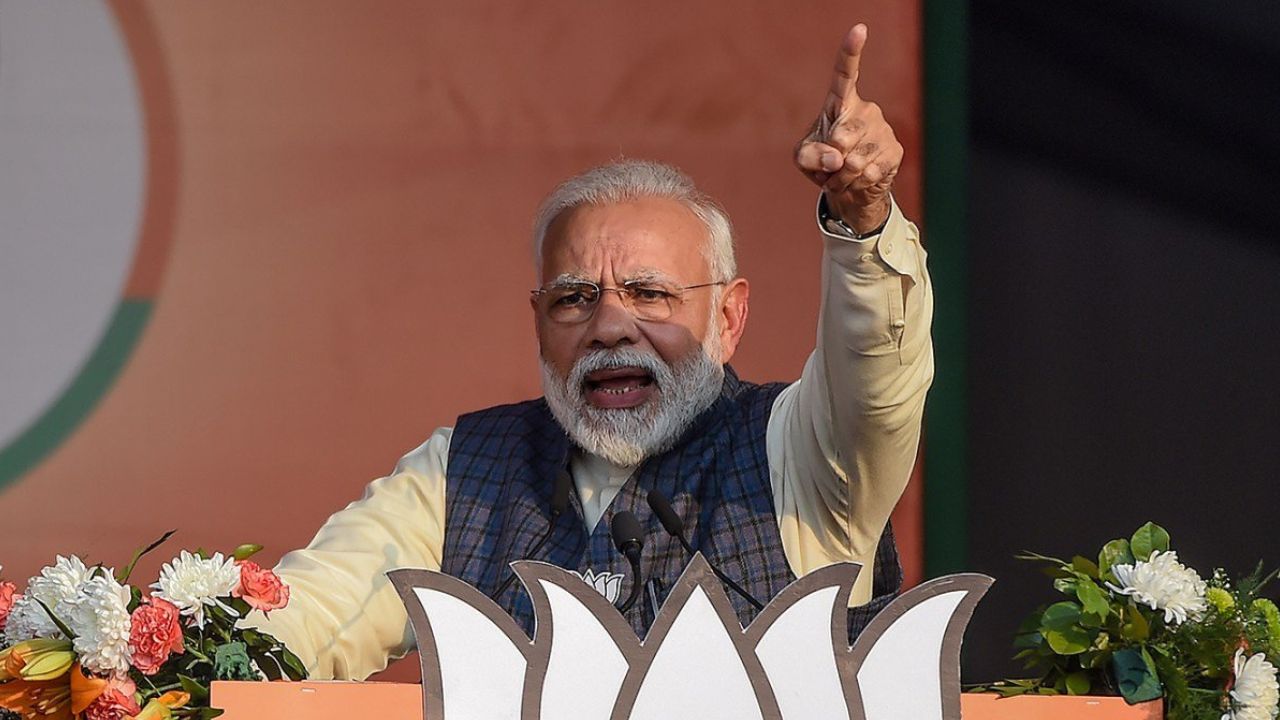
    New Delhi, India – Indian Prime Minister Narendra Modi denied Monday that his country was sliding towards autocracy, following accusations that his government orchestrated criminal probes to weaken rivals ahead of an ongoing general election.

    Modi, 73, remains resoundingly popular after a decade in office, and he is widely expected to win a third term when the six-week-long national polls conclude in June.

    His prospects have been further bolstered by several criminal investigations into opponents, including a tax probe that in February froze the bank accounts of Congress, India’s largest opposition party.

    But Modi said the suggestion India was becoming “an electoral autocracy” under his rule was a fiction spread by his disgruntled rivals.

    “Because the opposition is not able to get power, they start defaming India on the world stage,” he told the Times of India newspaper in an interview published Monday.

    “They spread canards about our people, our democracy and our institutions.”

    India’s press freedom rankings have declined markedly since Modi took office in 2014, while restrictions on civil society have seen rights groups such as Amnesty International severely curtail their local operations.

    This year Modi is being challenged by a motley alliance of more than two dozen political parties, several of whom have leaders either under investigation or in jail facing criminal charges.

    Modi’s chief opponent Rahul Gandhi, the son, grandson and great-grandson of past Indian prime ministers, was briefly disqualified from parliament last year after being convicted of criminal libel.

    The 53-year-old faces numerous other active criminal cases, several of which were brought by members of Modi’s ruling Bharatiya Janata Party (BJP).

    Gandhi and his Congress party already lost two prior landslide elections to Modi, who told the newspaper that his opponent’s unpopularity had no bearing on the robustness of India’s democratic institutions.

    “India does not become an electoral autocracy if the ‘Yuvraj’ cannot automatically get power,” Modi said, using the Hindi word for “prince” to disparage Gandhi’s upbringing as a political dynast.

    ‘Unprecedented display of love’

    Turnout in India’s election has so far been several percentage points lower than the last poll in 2019.

    Indian media outlets have speculated that higher-than-average temperatures were to blame, with parts of the country remaining subject to a heatwave alert.

    Analysts also say voter enthusiasm has been dampened because of the widespread expectations that Modi’s party will easily win the vote.

    Modi told the newspaper he remained confident that the BJP and its allies would secure more than 400 seats in India’s 543-seat parliament, its best-ever total.

    “Everywhere I have gone, I have seen an unprecedented display of love, affection and support,” he said.

    abh/gle/dhw

    © Agence France-Presse

  • Palestinian prisoner in Israel wins top fiction prize

    Palestinian prisoner in Israel wins top fiction prize

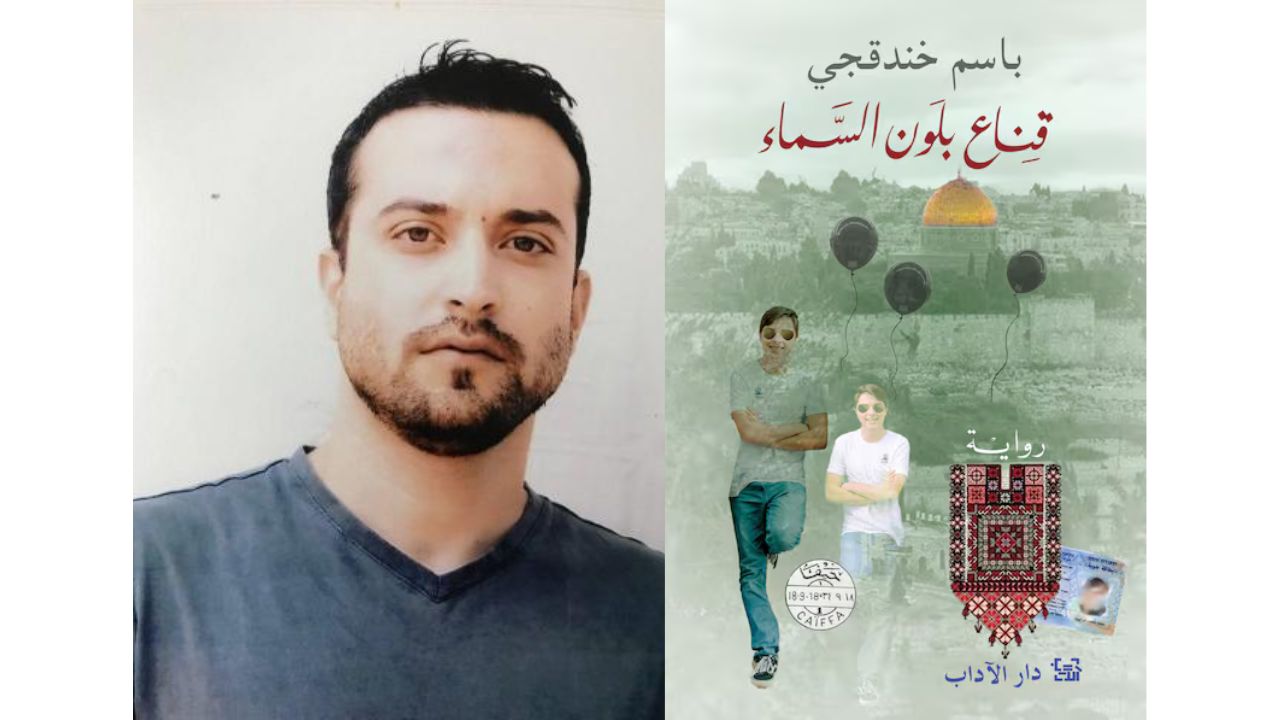
    Palestinian writer Basim Khandaqji, jailed 20 years ago in Israel, won a prestigious prize for Arabic fiction on Sunday for his novel “A Mask, the Colour of the Sky”.

    The award of the 2024 International Prize for Arabic Fiction was announced at a ceremony in Abu Dhabi.

    The prize was accepted on Khandaqji’s behalf by Rana Idriss, owner of Dar al-Adab, the book’s Lebanon-based publisher.

    Khandaqji was born in the Israeli-occupied West Bank city of Nablus in 1983, and wrote short stories until his arrest in 2004 at the age of 21.

    He was convicted and jailed on charges relating to a bombing in Tel Aviv, and completed his university education from inside jail via the internet.

    The mask in the novel’s title refers to the blue identity card that Nur, an archaeologist living in a refugee camp in Ramallah, finds in the pocket of an old coat belonging to an Israeli.

    Khandaqji’s book was chosen from 133 works submitted to the competition.

    Nabil Suleiman, who chaired the jury, said the novel “dissects a complex, bitter reality of family fragmentation, displacement, genocide, and racism”.

    Since being jailed Khandaqji has written poetry collections including “Rituals of the First Time” and “The Breath of a Nocturnal Poem”.

    He has also written three earlier novels.

    bur-srk/srm

    © Agence France-Presse

  • Spanish PM’s supporters turn out and beg him to stay

    Spanish PM’s supporters turn out and beg him to stay

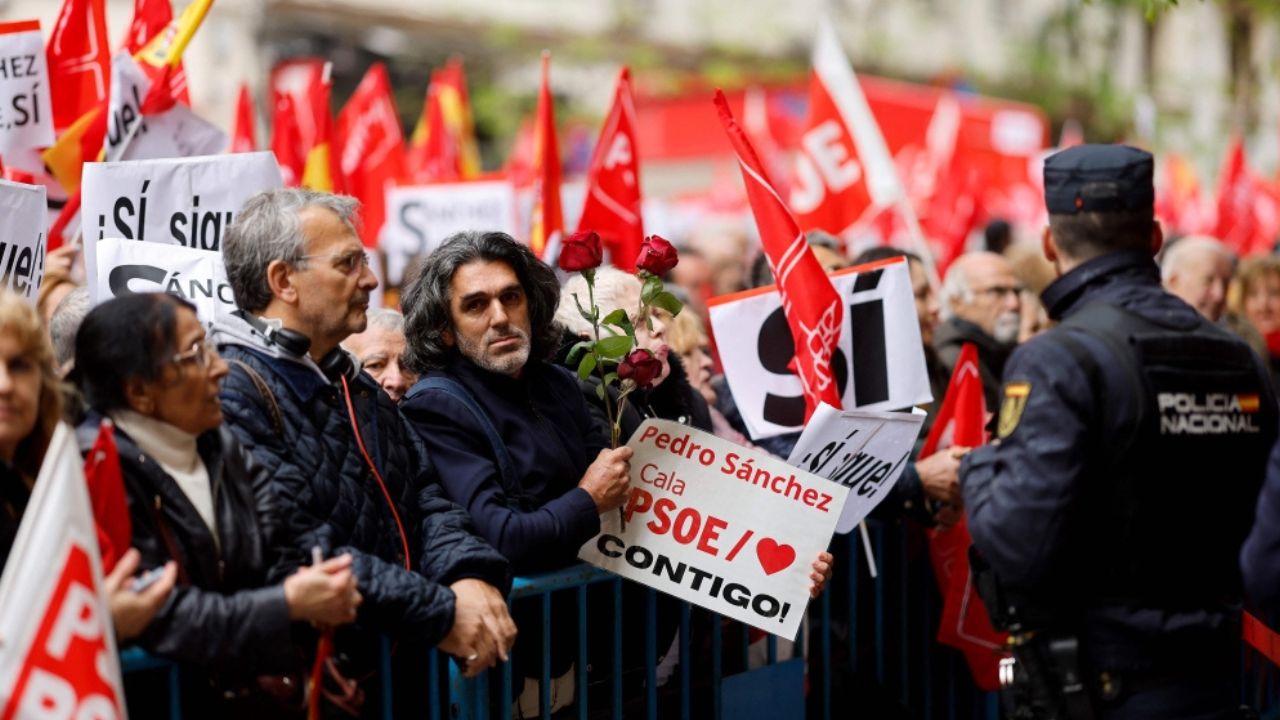
    Madrid, Spain – Thousands of supporters of Spanish Prime Minister Pedro Sanchez rallied at the headquarters of his Socialist party imploring him not to step down over a graft investigation against his wife.

    The 52-year-old, who has been in office since 2018, stunned Spain on Wednesday when he put his resignation on the line after a Madrid court opened a preliminary investigation into suspected influence peddling and corruption against his spouse Begona Gomez.

    Sanchez said he would suspend all public duties until he announces his decision on Monday. The normally hyperactive premier has since remained out of sight and silent.

    According to Madrid city authorities, the crowd rallying on Saturday to beg Sanchez to stay on numbered around 12,500.

    Supporters held up placards saying “Spain needs you”, “Pedro don’t abandon us’, and shouted slogans such as “Pedro leader”.

    “I hope that Sanchez will say on Monday that he will stay,” said Sara Dominguez, a consultant in her 30’s, adding that his government had “taken good steps for women, the LGBT community and minorities”.

    Jose María Diez, a 44-year-old government official who came from Valladolid in northern Spain to express his support, said there was a real possibility that the far-right could take power if Sanchez quit.

    “This will mean a step backwards for our rights and liberties,” he warned.

    Inside the party headquarters, there were similar passionate appeals.

    ‘Pedro stay’

    “Pedro stay. We are together and together we can … take the country forward, Spain can’t step back,” said Budget Minister Maria Jesus Montero, the government number two.

    “Today all democrats, all progressives, are summoned to Madrid against a pack whose only aim is to overthrow a democratic and legitimate government,” said Felix Bolanos, Minister of the Presidency, Justice and Parliamentary Relations.

    At one point, Socialist leaders took to the streets to thank those gathered. “They won’t succeed,” government spokeswoman Pilar Alegria told the crowd.

    The court opened the investigation into Sanchez’s wife in response to a complaint from anti-corruption pressure group Manos Limpias (Clean Hands), whose leader is linked to the far right.

    The group, which has presented a litany of unsuccessful lawsuits against politicians in the past, said on Wednesday its complaint was based on media reports and could not vouch for their veracity.

    While the court did not give details of the case, online news site El Confidencial said it focused on links Gomez had to Spanish tourism group Globalia when carrier Air Europa was in talks with the government to secure a huge bailout.

    The airline sought the bailout after it was badly hit by plunging paseenger numbers during the Covid-19 crisis.

    At the time, Gomez was running IE Africa Centre, a foundation linked to Madrid’s Instituto de Empresa (IE) business school, which had signed a sponsorship agreement with Globalia in 2020.

    Spain’s public prosecutors office on Thursday requested the dismissal of the investigation, which Sanchez said was part of a campaign of “harassment” against him and his wife waged by “media heavily influenced by the right and far right”.

    If Sanchez decides to remain in office, he could choose to file a confidence motion in parliament to show that he and his minority government are still supported by a majority of lawmakers.

    If he resigns, an early election could be called from July — a year after the last one — with or without Sanchez at the helm of the Socialist party.

    The right-wing opposition has accused the prime minister of being irresponsible for putting the country on hold while he mulls his decision.

    “It’s very clear to us that this is all a tactic… We know Pedro Sanchez and things with him always turn out like a soap opera,” Cuca Gamarra, the number two of the main opposition conservative Popular Party, said on Friday.

    “He is making us all wait and the country is at a standstill,” she added.

    du/ach/gv

    © Agence France-Presse

  • Iraqi female TikTok star shot dead: officials

    Iraqi female TikTok star shot dead: officials

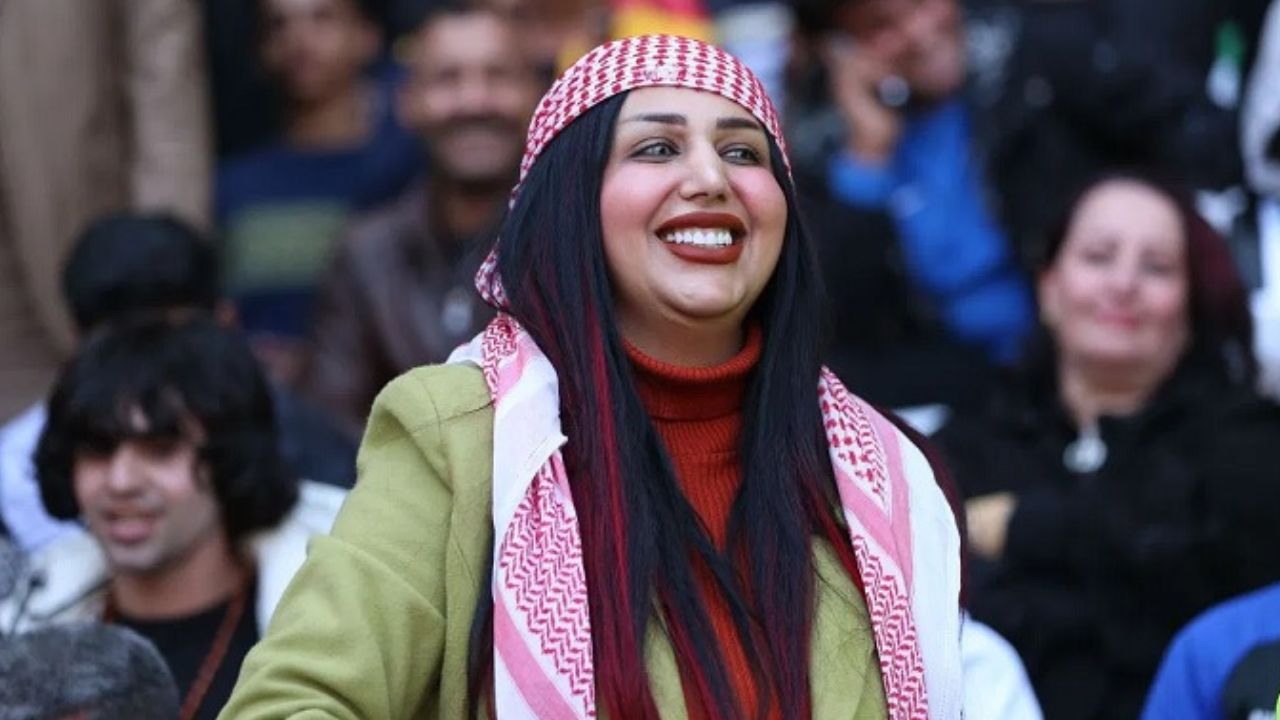
    A gunman on a motorbike shot dead a well-known Iraqi social media influencer known as Om Fahad outside her Baghad home on Friday, Iraqi security officials told AFP.

    An unidentified attacker shot Om Fahad in her car in the Zayouna district, a security official said, requesting anonymity because he was not cleared to speak to the media.

    Another security source said the attacker appeared to have pretended to be making a food delivery.

    Om Fahad had become known for light-hearted TikTok videos of herself dancing to Iraqi music wearing tight-fitting clothes.

    In February 2023, a court sentenced her to six months in jail for sharing “videos containing indecent speech that undermines modesty and public morality”.

    The Iraqi government launched a campaign last year to clean up social media content that it said breached Iraqi “morals and traditions”.

    An interior ministry committee was established to scour TikTok, YouTube, and other platforms for clips it deemed offensive.

    Several influencers have since been arrested, according to authorities.

    Despite years of war and sectarian conflict after the 2003 US invasion to overthrew Saddam Hussein, Iraq has returned to a semblance of normality.

    But civil liberties — for women, sexual minorities and other groups — remain constrained in the conservative society.

    In 2018, model and influencer Tara Fares was shot dead by gunmen in Baghdad.

  • Woman hides two kilos of cocaine in false hair braids

    Woman hides two kilos of cocaine in false hair braids

    A woman who was carrying two kilos (4.4 pounds) of cocaine in false hair braids has been jailed for 18 months in the French Caribbean territory of Guadeloupe, a regional customs official said Friday.

    The 24-year-old woman from Guyana was caught at an airport in March, said Olivier Fouque, regional customs director.

    The cocaine was in “tubes hidden in false braids,” the official said. The woman was jailed for 18 months and fined 30,000 euros, he added without giving more details.

    Fouque cited the woman as an example of new ways being used to get drugs into France’s Caribbean islands after the introduction of tougher airport checks.

    Last year there were 47 cases of people being detained for carrying cocaine and other drugs in their stomachs, according to the official.

    This year, there have been “one or two”, he added.

    France introduced tougher checks on flights in Guyana in 2022 and the tactic was extended to Guadeloupe and Martinique in March this year.

    Fouque said at least 30 “suspect” people had been turned away from flights at France’s Caribbean airports this year.

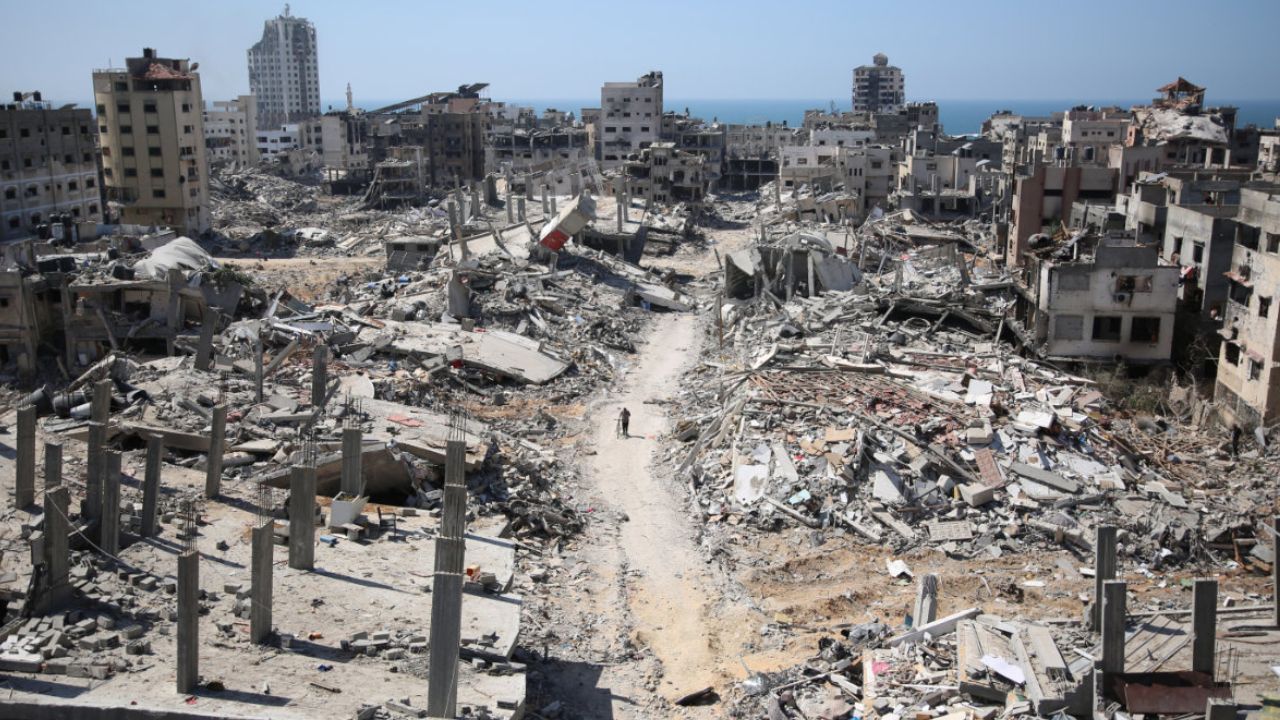
  • 37 million tonnes of debris in Gaza could take years to clear: UN

    37 million tonnes of debris in Gaza could take years to clear: UN

    There are some 37 million tonnes of debris to clear away in Gaza once the Israeli offensive is over, a senior official with the UN Mine Action Service said Friday (Apr 26).

    And unexploded ordnance buried in the rubble would complicate that work, said UNMAS’ Pehr Lodhammar, who has run mine programmes in countries such as Iraq.

    It was impossible to say how much of the ammunition fired in Gaza remained live, said Lodhammar.

    “We know that typically there is a failure rate of at least 10% of land service ammunition,” he told journalists in Geneva.

    “What we do know is that we estimated 37 million tonnes of debris, which is approximately 300 kilos of debris per square metre,” he added.

    Starting from a hypothetical number of 100 trucks, that would take 14 years to clear away, he said.

    Lodhammar was speaking as UNMAS launched its 2023 annual report Friday.

    The war in Gaza between Israel and Hamas erupted when the Palestinian militant group Hamas launched an unprecedented attack on Israel on Oct 7.

    The attack resulted in the deaths of 1,170 people in Israel, according to an AFP tally based on official Israeli figures.

    Israel vowed to eliminate Hamas, and its ensuing military offensive in Gaza has killed at least 34,356 people, most of them women and children, according to the health ministry in the Hamas-run territory.

  • Calls for mosque demolition weigh on India’s Muslim voters

    Calls for mosque demolition weigh on India’s Muslim voters

    Muslim teacher Tasleem Qureshi’s walk to the polls on Friday took her past the yellow barricades and police cordon guarding her local mosque — a looming flashpoint in India’s religious divide.

    Her hometown Mathura is the site of the Shahi Idgah, an Islamic house of worship that the Hindu faithful believe was built over the birthplace of the deity Krishna.

    Hindu activists want to “reclaim” the site in a campaign endorsed by members of Prime Minister Narendra Modi’s ruling Bharatiya Janata Party (BJP).

    “The BJP keeps saying that the Shahi Idgah will cease to exist after the elections,” Qureshi, 48, told AFP.

    “We will not let that happen and we will protect it with our lives,” she said.

    Modi is widely expected to win a third term in office once India’s six-week-long election concludes in June, in large part thanks to his championing of the country’s majority faith.

    Mathura is one of several locations across India’s northern heartlands where activists have sought to replace centuries-old Islamic monuments with Hindu temples.

    In January, Modi presided over the inauguration of a grand temple to Ram, one of the most important deities in the Hindu pantheon.

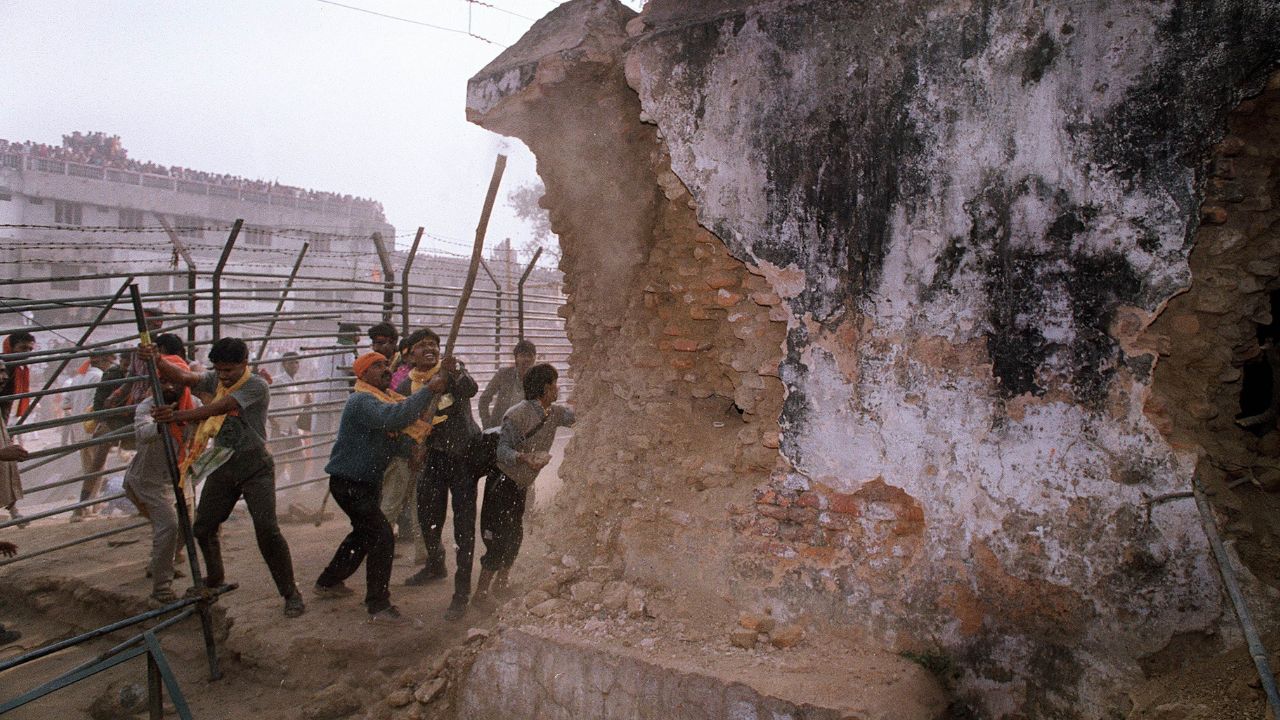
    It was built in the northern city of Ayodhya on the grounds of a centuries-old mosque razed by Hindu zealots decades earlier.

    Modi told an audience of thousands at a glitzy ceremony attended by Bollywood celebrities and cricket stars that India was “creating the genesis of a new history”.

    Construction of the temple fulfilled a long-standing demand of Hindu activists and was widely celebrated across India, with extensive television coverage and street parties.

    Jubilant Hindu activists had proclaimed when the mosque was destroyed that more would follow, identifying the Shahi Idgah in Mathura as one of their future targets.

    Modi’s opponents accuse his Hindu-nationalist government of marginalising India’s 220-million-plus Muslim population.

    He was accused last weekend of “blatantly targeting” the faith in a campaign speech in which he claimed his opponents had once pledged that Muslims had “first right over the nation’s wealth”.

    Temples small and large line Mathura’s narrow, pot-holed streets, teeming with young men offering guided tours for pilgrims.

    The street leading to the mosque has for decades been guarded by a stern, round-the-clock police detachment to prevent vandalism.

    A polling station nearby is testament to the close quarters in which the city’s two main faiths live, with women in Muslim dress voting alongside saffron-clad Hindu priests.

    But with Hindus accounting for more than 80 percent of Mathura’s population, its religious divide is a microcosm of the one across India at large.

    Its parliamentary seat has been held by the BJP since Modi was first elected in 2014, represented by movie star Hema Malini, and the Ayodhya temple’s inauguration has galvanised Hindu voters in the city who support the mosque’s removal.

    Gokul Prasad, an electrician, told AFP that Modi’s inauguration of the Ayodhya temple was the “single most important issue” of the election campaign.

    “Since we live in Mathura so close to the Shahi Idgah, we will obviously vote for Modi,” the 50-year-old said.

    The fate of the Shahi Idgah has also mobilised the city’s Muslim minority.

    But several told AFP that they had lined up to vote on Friday only to find their names were missing on the electoral rolls.

    “They told me neither I nor my husband can vote as our names are not there,” said 55-year-old Rehana Qureshi — no relation to Tasleem — outside a polling booth.

    “We have lived and voted here for generations,” she added. “It seems that the only right we Muslims still have is also being taken away.”