Author: AFP

  • Waste not want not: Peruvian drive to feed more with less

    Waste not want not: Peruvian drive to feed more with less

    Peruvian cook Isabel Santos prepares a salad with carrot peels and pea shells at a community kitchen in Lima; a disciple of a sustainable cuisine movement seeking to tackle hunger and food waste at the same time.

    With five other women, she works at making 150 tasty, vitamin-packed servings that include “the peels of potatoes, peas, carrots, leeks and ginger that we used to throw away,” the 76-year-old told AFP.

    Santos is a follower of the “Optimum Kitchen” concept of renowned Peruvian chef Palmiro Ocampo, who promotes the concept of nose-to-tail cooking — part of a more planet-friendly food drive increasingly finding a following world-wide.

    “There is no such thing as waste,” Ocampo, 40, told AFP on a recent visit to Santos’s Maria Parado de Bellido kitchen in a poor district of southern Lima.

    “An ingredient has to be used in its entirety,” he said, in a world where a third of food is wasted while 800 million people go hungry.

    Palmiro and his wife Anyell San Miguel train cooks from Peruvian soup and community kitchens and share recipes through their project Ccori, which means gold in the Indigenous Quechua language and was created 11 years ago to promote “culinary recycling.”

    As a result “more than a ton of ingredients that would normally end up in the garbage have been… turned into delicious food,” said the chef.

    Not only tasty but healthy too: “many of these (formerly discarded) food parts have more nutrients” — vital to combat anemia, which affects more than two in five children in Peru.

  • Samsung returns to top of the smartphone market: industry tracker

    Samsung returns to top of the smartphone market: industry tracker

    San Francisco (AFP) – Samsung regained its position as the top smartphone seller, wresting back the lead from Apple as Chinese rivals close the gap on both market leaders, industry tracker International Data Corporation (IDC) reported Monday.

    South Korea-based Samsung overtook Apple as worldwide smartphone shipments grew nearly 8 percent in the first quarter of this year to 289.4 million, IDC said, citing its preliminary data.

    It was the third consecutive quarter of growth in the global smartphone market, signalling that a recovery from a slump in the sector is underway, according to IDC.

    IDC Worldwide Mobility and Consumer Device Trackers team vice president Ryan Reith expected top smartphone companies to gain share and small brands to struggle for position as recovery progresses.

    Samsung shipped 60.1 million smartphones in the first quarter of this year, claiming nearly 21 percent of the market, according to IDC figures.

    Apple shipped 50.1 million iPhones, garnering just over 17 percent of the market in the same period, IDC reported.

    Apple smartphone shipments were down 9.6 percent in a quarter-over-quarter comparison, while Samsung shipments slipped less than one percent, according to the market tracker.

    Meanwhile, China-based Xiaomi saw shipments grow about 33 percent to 40.8 million and Transsion about 85 percent to 28.5 million, taking third and fourth positions in the overall smartphone market, IDC reported.

    “While Apple managed to capture the top spot at the end of 2023, Samsung successfully reasserted itself as the leading smartphone provider in the first quarter,” Reith said.

    IDC expects Samsung and Apple to maintain their hold on the high end of the smartphone market while Chinese competitors seek to expand sales, according to Reith.

    Nabila Popal, research director with IDC’s Worldwide Tracker team, said: “There is a shift in power among the Top 5 companies, which will likely continue as market players adjust their strategies in a post-recovery world.

    “Xiaomi is coming back strong from the large declines experienced over the past two years and Transsion is becoming a stable presence in the Top 5 with aggressive growth in international markets.”

  • OpenAI comes to Asia with new office in Tokyo

    OpenAI comes to Asia with new office in Tokyo

    Tokyo (AFP) – ChatGPT creator OpenAI opened a new office in Tokyo on Monday, the first Asian outpost for the groundbreaking tech company as it aims to ramp up its global expansion.

    Thanks to the stratospheric success of its generative tools that can create text, images and even video, OpenAI has become a leader in the artificial intelligence revolution and one of the most significant tech companies in the world.

    The Japan office is the latest part of the Microsoft-backed firm’s international push, having already set up bases in London and Dublin.

    “We’re excited to be in Japan which has a rich history of people and technology coming together to do more,” OpenAI CEO Sam Altman said in a statement.

    “We believe AI will accelerate work by empowering people to be more creative and productive, while also delivering broad value to current and new industries that have yet to be imagined.”

    OpenAI said its Japan office would bring it closer to enterprise clients — including global auto leader Toyota, tech conglomerate Rakuten and industrial giant Daikin — that are using its products “to automate complex business processes”.

    “We chose Tokyo as our first Asian office for its global leadership in technology, culture of service, and a community that embraces innovation,” the company added.

    OpenAI also announced a new Japanese-language version of ChatGPT on Monday, and hailed the country as a “key global voice on AI policy”, offering potential solutions to issues such as labour shortages.

    The company said its Japan office would also help “accelerate the efforts of local governments, such as Yokosuka City” in their drive to improve the efficiency of public services.

    The Tokyo ‘buzz’

    The San Francisco-based firm has been reportedly in discussions with hundreds of companies as it looks to expand revenue sources.

    OpenAI’s chief operating officer Brad Lightcap told Bloomberg in an interview published this month that the firm has seen huge demand for its corporate version of ChatGPT.

    “We have a very global base of demand,” he said in the interview.

    “So we want to show up where our customers are. We feel a lot of pull from places like Japan and Asia broadly.”

    OpenAI, reportedly valued at $80 billion or more earlier this year, is the latest major tech firm to invest in Japan.

    Microsoft, one of OpenAI’s biggest investors, last week announced a separate $2.9 billion investment to provide Japan with the powerful graphics processing units crucial for running AI apps, and to train three million Japanese workers in AI skills.

    Amazon Web Services is spending $14 billion to expand its cloud infrastructure in Japan, while Google has launched a regional cybersecurity hub in the country.

    Experts say geopolitical tensions have made Japan an increasingly attractive partner for tech firms compared to China, in addition to advantages such as supportive policies and a highly educated talent pool.

    “What happens in Tokyo can create a buzz,” Hideaki Yokota, vice president of the MM Research Institute, told AFP.

    “A base in Tokyo should help (OpenAI) attract much young talent.”

  • Pakistani man among those killed in Sydney attack: community groups

    Pakistani man among those killed in Sydney attack: community groups

    A 30-year-old Pakistani man was named on Sunday as the security guard killed in a weekend knife attack in a Sydney shopping mall, according to two local community groups.

    The Australian Pakistani National Association and Ahmadiyya Muslim Community said Faraz Tahir was killed by a knife-wielding man who also killed five women.

    On Sunday evening, members of the Muslim community held a silent vigil for the man, who is said to have moved to Australia last year.

    “He quickly became an integral part of our community,” a statement said.

    The Australian Pakistani National Association encouraged the community to “stand together in solidarity, offering support and prayers to those grieving and affected by this heartbreaking loss”.

    As the attack unfolded on Saturday, online social media accounts falsely reported that the attack was linked to ideological or religious groups or events in the Middle East.

    Police have named the assailant as 40-year-old itinerant man Joel Cauchi who was previously diagnosed with a mental health issue.

  • Five Palestinians sue Germany over weapons for Israel

    Five Palestinians sue Germany over weapons for Israel

    Five Palestinians living in the Gaza Strip have filed a legal complaint in Berlin against the German government over its delivery of weapons to Israel, an NGO representing them said Friday.

    The complaint seeks to “revoke the export licences issued by the German government for arms deliveries to Israel”, the European Center for Constitutional and Human Rights (ECCHR) said in a statement.

    A spokeswoman for the administrative court in Berlin confirmed it received the complaint late Thursday. The five plaintiffs live in different parts of the Gaza Strip, including Rafah, the official added.

    The Palestinians are “challenging the authorisation already granted for the delivery of anti-tank weapons” and seeking to stop deliveries that have not yet been authorised, the spokeswoman said.

    The complaint is directed against the economy ministry, which now has two weeks to respond.

    The five Palestinians have all had family members killed in Israeli missile attacks since Hamas attacks on Israel on October 7, according to the ECCHR.

    The plaintiffs say Berlin is failing to fulfil its obligations under international law, including the 1948 United Nations Genocide Convention.

    “Germany cannot remain true to its values if it exports weapons to a war in which serious violations of international humanitarian law are evident,” said Wolfgang Kaleck, general secretary of the ECCHR.

    Germany is the second biggest arms exporter to Israel after the US, accounting for 30 percent of imports between 2019 and 2023, according to the Stockholm International Peace Research Institute (SIPRI).

    Berlin is facing a case in the International Court of Justice in which Nicaragua says it is in breach of the UN Genocide Convention, set up after the Holocaust.

    On Tuesday, Berlin’s representatives insisted that Germany supplied arms only “on the basis of detailed scrutiny… that far exceeds the requirements of international law”.

    Israeli genocide in Gaza Strip has killed more than 33,000 people since October 7, according to the Gaza health ministry.

  • Five dead in Sydney shopping centre attack: police

    Five dead in Sydney shopping centre attack: police

    Five people were killed and several others injured — including a small child — when a knife-wielding attacker rampaged through a busy Sydney shopping centre on Saturday, Australian police said.

    Multiple people were stabbed by the unidentified assailant, who was shot dead by a policewoman at the scene.

    The incident occurred at the sprawling Westfield Bondi Junction mall complex, which was packed with Saturday afternoon shoppers.

    “I’m advised that there are five victims who are now deceased as a result of the actions of this offender,” said New South Wales police assistant commissioner Anthony Cooke.

    The motive was not immediately clear, but Cooke said “terrorism” could not be ruled out at this stage.

    “I do not know at this stage who he is. You would understand this is quite raw. Inquiries are very new and we are continuing to make attempts to identify the offender in this matter,” said Cooke.

    A New South Wales Ambulance spokesperson told AFP that eight patients were taken to various hospitals across Sydney, including a young child who was taken to the city’s Children’s Hospital.

    “They all have traumatic injuries,” the official said.

    Security camera footage broadcast by local media showed a man wearing an Australian rugby league jersey running around the shopping centre with a large knife and injured people lying lifeless on the floor.

    Eyewitnesses described a scene of panic, with shoppers scrambling to safety and police trying to secure the area.

    Several people took shelter in shops as they tried to protect themselves and their families.

    Pranjul Bokaria had just finished up work and was doing some shopping when the stabbing occurred.

    She ended up running to a nearby shop and taking shelter in a break room.

    “It was scary, there are some people who were emotionally vulnerable and crying,” she told AFP.

    She escaped using an emergency exit with other shoppers and staff, which took them to a back street.

    She described a scene of “chaos”, with people running, and police swarming the area.

    “I am alive and grateful,” she said.

    Reece Colmenares was on her way to the gym when she saw “people running and screaming” past her.

    She told AFP the people were saying someone had been stabbed so she ran into a nearby hardware shop with 10 to 12 other people

    “They took us down [to a room] and closed the shop,” she said.

    “It’s scary, there are little children and elderly and people in wheelchairs everywhere.”

    As night fell, dozens of police and ambulances were still outside the shopping complex, with stretchers ready to take people to nearby hospitals.

    The sound of police sirens and helicopters filled the air.

    The mall has been locked down and police have urged people to avoid the area.

    Australian Prime Minister Anthony Albanese echoed Australians’ sadness and shock at the attack.

    “Tragically, multiple casualties have been reported and the first thoughts of all Australians are with those affected and their loved ones,” he wrote on social media platform X.

    Such attacks are virtually unheard of in Australia, which has relatively low rates of violent crime.

  • How humanitarian aid reaches war-torn Gaza

    How humanitarian aid reaches war-torn Gaza

    Most aid bound for war-ravaged Gaza arrives overland from neighbouring Egypt but Israel and UN agencies clash on how much actually makes it inside the Palestinian territory.

    The volume of aid entering Gaza by road each day through the Rafah crossing from Egypt is insufficient, aid workers say, blaming rigorous Israeli inspections at least in part.

    With no truce in sight to pause the Israel-Hamas war, here is a look at how aid currently reaches Gaza and what alternatives are being weighed to alleviate the crisis in the besieged Palestinian territory.

    First stop: Egypt

    Most Gaza-bound goods arrive by sea in the Egyptian ports of Port Said or El-Arish.

    El-Arish is closer to Gaza but also smaller, and was quickly overwhelmed by the volume of shipments arriving, aid groups say.

    Israeli authorities, who have blockaded Gaza since Hamas took sole control of the Palestinian territory in 2007, require that all aid entering Gaza be inspected by them.

    The main inspection area for goods is Kerem Shalom in southern Israel, not far from the Rafah crossing.

    Another inspection area exists in Nitzana, on the Israeli-Egyptian border about 40 kilometres (25 miles) to the southeast.

    Long wait for trucks

    Before reaching the inspection areas, many aid trucks wait for days at the Egyptian side of the Rafah checkpoint.

    Once inspected, goods that are cleared to enter by Israel are unloaded from the mostly Egyptian trucks in the zone between Egypt and Gaza.

    The supplies are then loaded onto separate vehicles, driven by Gazans working for aid groups, for distribution inside the Palestinian territory.

    Cumbersome screenings are a major reason shortages are so glaring, aid workers say.

    Israel blames a lack of sufficient capacity on the Palestinian side to distribute the aid once it gets in.

    In recent days, Israel took issue with UN figures on the number of trucks entering Gaza, accusing UN Palestinian refugee agency UNRWA of counting only trucks it had processed, not those processed by Israel.

    Heading north

    For months, aid groups and foreign governments including top ally the United States have urged Israel to reopen border crossings into the north of Gaza, where the humanitarian crisis is most severe.

    Israel announced that six World Food Programme (WFP) aid trucks entered the north directly from its territory in early March, in what it described as a “pilot project”.

    The trial was not extended, however, and aid convoys bound for northern Gaza must travel the length of the territory negotiating battlegrounds, Israeli bombardments and mobs of desperate civilians.

    In March, the WFP said one of its convoys had been blocked by Israeli forces inside Gaza before it could reach the north.

    After turning back, the agency said the convoy was looted by a “crowd of desperate people”.

    According to Israeli authorities, 28 trucks reached northern Gaza on Wednesday.

    They were among 298 trucks that Israel said entered Gaza on Wednesday, still far below the number aid groups say is needed to sustain the territory’s 2.4 million people.

    Under pressure from the international community, Israel announced on April 5 that it would open a new crossing directly into northern Gaza, without specifying its exact location or when it would open.

    By air and by sea

    In a bid to get round the logjam, several Arab and European governments, later joined by Washington, began carrying out aid airdrops over Gaza, particularly the north.

    But the airdrops have proved controversial, with multiple deaths among civilians on the ground who were crushed by aid crates when parachutes failed to open, or drowned trying to reach others accidentally dropped in the sea.

    There has also been an attempt to establish a maritime aid corridor from the Mediterranean island of Cyprus but it has largely fizzled out after seven aid workers were killed by Israeli fire on April 1 as they unloaded food from the second flotilla to make the crossing.

    Even though the Cypriot government insists it has not given up on the aid corridor, no further crossings are currently planned after the US and Spanish charities behind the first two suspended their operations in the region.

    UN agencies have in any case said repeatedly that road convoys are the only practical way of meeting Gaza’s needs.

  • Chinese factory shreds wedding photos for fuel

    Chinese factory shreds wedding photos for fuel

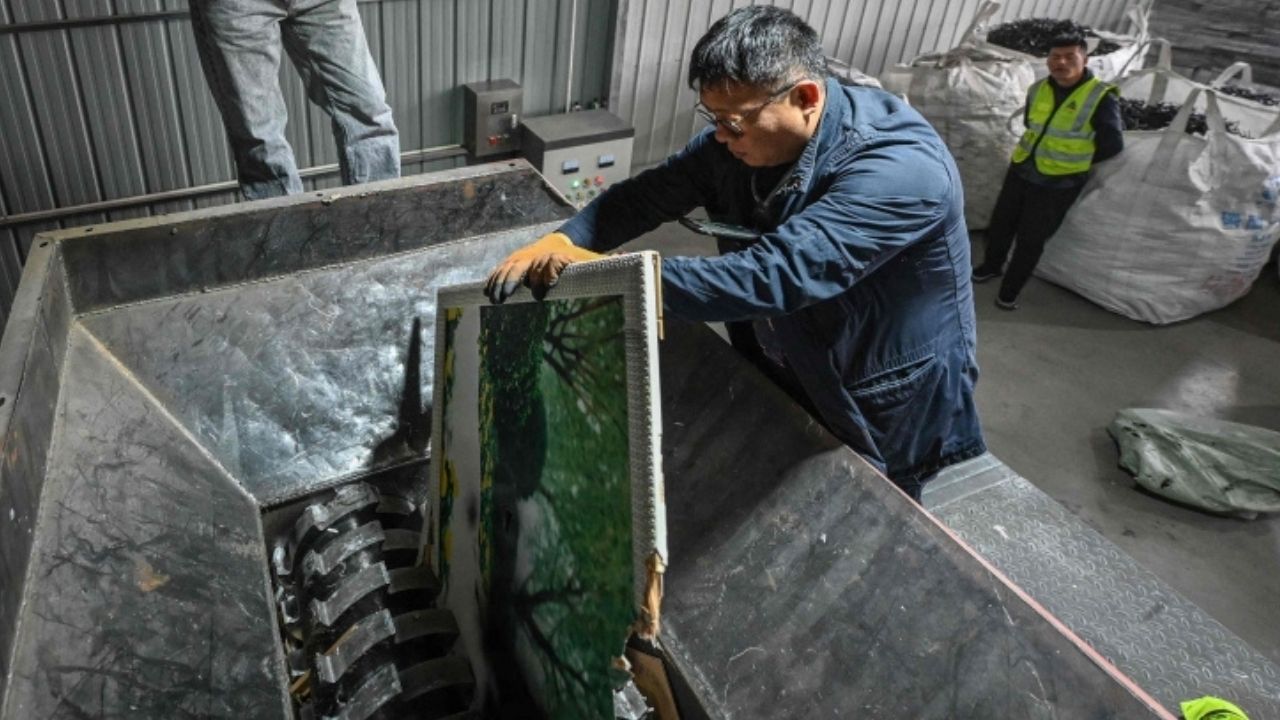
    At a dusty warehouse in northern China, Liu Wei feeds photos of beaming bridal couples into an industrial shredder — turning stories of heartbreak into a source of electricity.

    Wedding photos are big business in China, where parks, temples and historic sites often teem with newlyweds posing for elaborate shots capturing their supposedly unbreakable bond.

    But in a country where millions of divorces take place each year, many marital snaps end up shoved into the attic or tossed into the trash.

    Liu’s company offers an alternative: bereft ex-lovers can have their memories destroyed and recycled into fuel.

    “From our daily business exchanges, we found the destruction of personal belongings is a blank space nationwide,” the 42-year-old told AFP at his factory, 120 kilometres (75 miles) from Beijing.

    “People with less experience in the market probably wouldn’t have spotted this opportunity,” he added.

    Despite cultural taboos around destroying images of living people, Liu’s facility receives an average of five to 10 orders per day from across China.

    They include large wall photos and smaller decorative shots and albums, mostly cast from plastic, acrylic and glass.

    Workers heave the images onto a forklift truck and scatter them onto the warehouse floor for sorting.

    They then obscure every face with dark spray paint to protect client privacy and smash unshreddable glasswork with a sledgehammer.

    “These people are all trying to find closure,” said Liu. “They mainly want to unpick the knots in their hearts.”

    Complex motivations

    Sullied and broken, the pictures give glimpses of broken families in happier times.

    In one, a woman in a white bridal dress reclines on a bed of flowers, while another shows a lovestruck couple gazing into each other’s eyes.

    A sporty pair in matching kits pose with a football, while nearby, a smitten man presses his face tenderly to his pregnant wife’s belly.

    Brandishing his phone, Liu films the defaced photos and sends clips to customers for final confirmation.

    He estimates he has served about 1,100 clients — mostly under the age of 45, and around two-thirds women — since launching the service a year ago.

    They typically speak little about their separations, and several declined interview requests from AFP.

    Liu says the motivations for destroying wedding photos are often complex.

    “Few of them do this out of malice,” he told AFP.

    “It might be that this item brings on certain thoughts or feelings… or be a hurdle hard to overcome.”

    Some clients attend the destructions in person to give a sense of ceremony to a closing chapter in their lives, said Liu.

    Others keep their photos for years and only dispose of them when they remarry or finally come to terms with a former spouse’s death.

    Given the irreversible nature of the process, Liu says he gives clients a final chance to salvage their items in case they live to regret their decision.

    After getting the green light, he films his staff gently pushing the photos into the shredder’s gnashing teeth.

    The debris is taken to a nearby biofuel plant where it is processed with other household waste to generate electricity.

    ‘Respect others’ choices’

    Divorce rates soared in socially conservative China after marriage laws were relaxed in 2003.

    They have fallen dramatically since the government enacted a law in 2021 mandating a month-long “cooling-off” period before couples untie the knot.

    China registered 2.9 million divorces in 2022, down from over 4.3 million two years earlier.

    The number of marriages rose last year for the first time in nearly a decade, giving Beijing some relief as it seeks to reverse a steep fall in births.

    After annihilating the visual evidence of hundreds of unions, Liu says he has become numb to the emotions they stir up.

    “The deepest feeling I have in my heart towards my clients… is that you must respect others’ choices,” he said.

    “You must never persuade people one way or another,” he added. “It does no good.”

  • Report links H&M, Zara to environmental destruction in Brazil

    Report links H&M, Zara to environmental destruction in Brazil

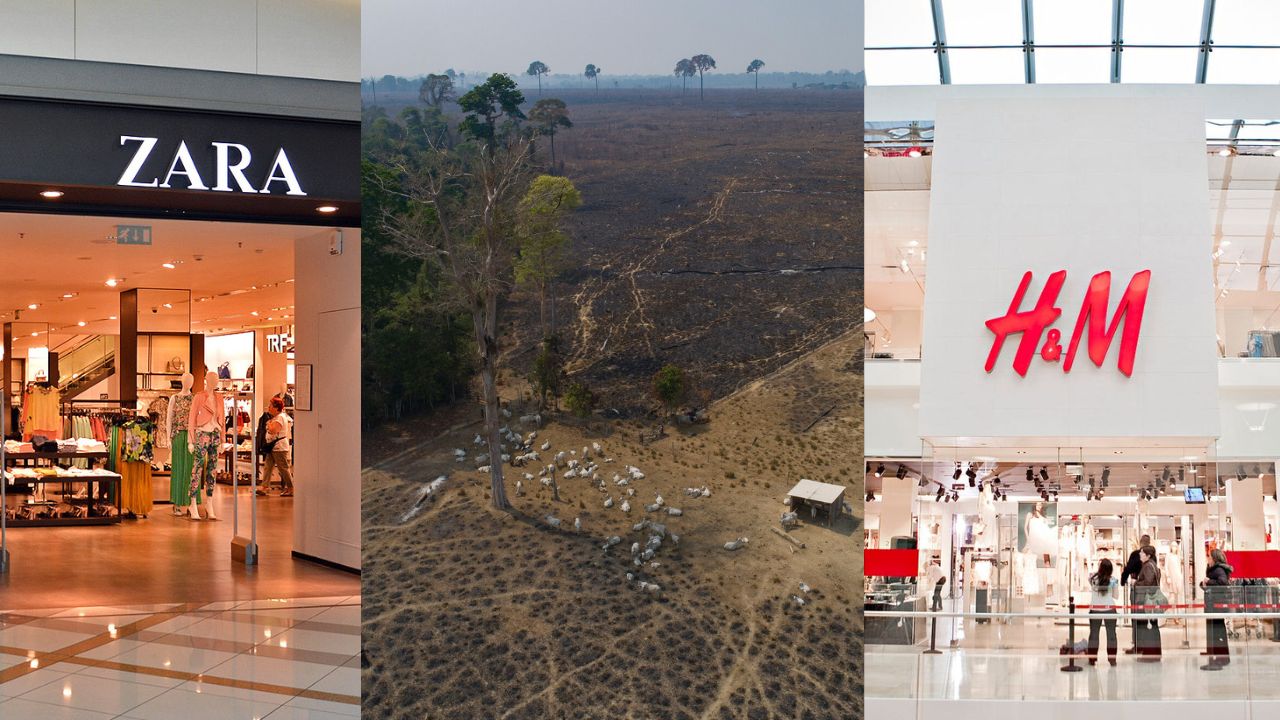
    Fast fashion giants H&M and Zara have used cotton from farms linked to massive deforestation, land-grabbing, corruption and violence in Brazil, a report by the environmental group Earthsight said Thursday.

    Based on satellite images, court rulings, shipment records and an undercover investigation, the report, titled “Fashion Crimes,” found the companies sourced “tainted cotton” farmed in the fragile Cerrado savanna by two of Brazil’s biggest agribusiness firms, SLC Agricola and the Horita Group.

    Despite abuses linked to its production, the cotton had been labeled as ethical by leading certification scheme Better Cotton, exposing “deep flaws” in the oversight program, said the British environmental group.

    The Cerrado, the most biodiverse savanna on Earth, has been disappearing at an accelerating rate as Brazil’s massive agribusiness industry has increasingly turned to the region in recent decades.

    Earthsight traced at least 816,000 tonnes of cotton exported from 2014 to 2023 to farms run by SLC and Horita, which “have a long record of court injunctions, corruption rulings and millions of dollars in fines related to clearances of around 100,000 hectares of Cerrado wilderness,” it said.

    The cotton in question was farmed in the northeastern state of Bahia and shipped to eight Asian clothing manufacturers whose clients include Sweden-based H&M and Spain-based Zara, the report said.

    Brazil, the world’s top exporter of beef and soybeans, has also emerged as a major cotton producer in recent years, now second only to the United States.

    But that has contributed to environmental destruction in the Cerrado, where “a ruinous mix of corruption, greed, violence and impunity has led to the blatant theft of public lands and dispossession of local communities,” Earthsight said.

    Better Cotton said in a statement it had conducted an independent audit of the “highly concerning issues raised” in the report, and that it would provide a summary of the findings.

    Zara parent company Inditex and H&M said they took the allegations seriously, and urged Better Cotton to release the auditors’ findings.

    The Brazilian Cotton Producers’ Association (ABRAPA) said it had worked with the growers in question to provide records and evidence countering the report’s allegations.

    “Unfortunately, these were largely disregarded,” it said in a statement.

    “ABRAPA unequivocally condemns any practices that undermine environmental conservation, violate human rights or harm local communities.”

  • Israel on alert after Iranian threat as genocide in Gaza grinds on

    Israel on alert after Iranian threat as genocide in Gaza grinds on

    Palestinian Territories – Israel was on alert Thursday after Iran threatened reprisals over a strike in Syria this month that killed two Iranian generals, and as genocide in Gaza continues.

    Days after Israel strengthened its air defences and paused leave for combat units, the United States also warned of the risk of an attack by Iran or its allied groups at a time Middle East tensions have soared.

    Iran is “threatening to launch a significant attack on Israel,” US President Joe Biden said Wednesday, pledging “ironclad” support for its top regional ally despite diplomatic tensions over Israel’s military conduct in Gaza.

    Israel was widely blamed for an April 1 attack that destroyed Iran’s consulate building in Damascus and killed seven Revolutionary Guards, including two generals.

    Iran’s supreme leader, Ayatollah Ali Khamenei, warned Wednesday that Israel “must be punished and will be punished”, days after one of his advisers said Israeli embassies are “no longer safe”.

    Israeli Foreign Minister Israel Katz swiftly replied on social media site X that “if Iran attacks from its territory, Israel will respond and attack Iran”.

    Biden said he had told Israeli Prime Minister Netanyahu that “our commitment to Israel’s security against these threats from Iran and its proxies is ironclad”.

    US Central Command chief Michael Kurilla was in Israel on Thursday to discuss the situation with Defence Minister Yoav Gallant, the Pentagon said.

    “We warned Iran,” Press Secretary Karine Jean-Pierre told a briefing without elaborating.

    During a visit to an airbase in central Israel, Netanyahu spoke of “challenging times” on multiple fronts.

    “We are in the middle of the war in Gaza which continues in full force… but we are also preparing for scenarios of challenges from other arenas,” he said in comments released by his office.

    Moscow called on both Iran and Israel to exercise restraint.

    German Foreign Minister Annalena Baerbock urged “maximum restraint”, and Lufthansa said it had extended a temporary suspension of Iran flights until Saturday.

    Iranian Foreign Minister Hossein Amir-Abdollahian said he had received phone calls Thursday from Baerbock as well as her British and Australian counterparts.

    In a post on X, he said he had told them that “when the Zionist regime breaches the immunity of diplomatic persons and places” and the UN Security Council fails to condemn it, “legitimate defence… is a necessity”.

    Israel and the United States have long faced off against Iran and its so-called “Axis of Resistance” allies based in Lebanon, Iraq, Syria and Yemen.

    ‘Panic among children’

    Regional tensions have been stoked following October 7 attack in Israel left.

    Israeli genocide in Gaza has killed at least 33,545 people, mostly women and children, according to the Hamas-run territory’s health ministry.

    Hamas said 20 people were killed in Israeli bombardments on Thursday. It said two schools and two mosques were among the buildings hit and an imam was among the dead.

    In the Nuseirat area, which took the brunt of the bombing, Imad Abu Shawish, 39, said “the situation is dire and still getting worse. Bombardment hasn’t stopped and is still happening now.”

    Much of Gaza has been reduced to a bomb-cratered wasteland, with yet more bodies feared under the rubble.

    An Israeli siege has deprived Gaza’s 2.4 million people of most food, water, fuel and medicines, the dire shortages only alleviated by sporadic aid deliveries.

    Israeli war cabinet member Benny Gantz said Wednesday “Hamas is defeated” militarily but pledged to keep fighting “what remains of it” in the years to come.

    An Israeli air strike on Wednesday killed three sons of Hamas’s Qatar-based leader Ismail Haniyeh.

    Haniyeh insisted their deaths would not influence Hamas’s position in ongoing talks in Cairo for a truce and hostage release deal.

    Those talks, which started Sunday, have brought no breakthrough on a plan presented by US, Qatari and Egyptian mediators, which Hamas said it was studying.

    The framework plan would halt fighting for six weeks and see the exchange of about 40 hostages for hundreds of Palestinian prisoners, as well as more aid deliveries.

    Biden said that “it’s now up to Hamas, they need to move on the proposal that’s been made”.

    Israel accused Hamas Thursday of “walking away” from what government spokesman David Mencer called “a very reasonable offer on the table”.

    Hamas official Bassem Naim said only a ceasefire could provide “enough time and safety” to locate Israeli hostages held across the territory and ascertain their fate because they are held by different groups.

    ‘Destabilising Middle East’

    Washington has ramped up pressure on Netanyahu to agree to a truce, increase aid flows and abandon plans to send troops into Gaza’s far-southern city of Rafah where about 1.5 million civilians are sheltering.

    Rafah is the last Gazan city yet to face a ground incursion.

    Gallant promised Israel would “flood Gaza with aid”, using an Israeli crossing point, streamlined checks and two new routes organised with Jordan.

    He said they expected to reach 500 aid trucks a day, the pre-war average.

    However, a UN Security Council statement Thursday said “more should be done to bring the required relief given the scale of needs in Gaza”.

    Israel has faced a chorus of international criticism over its handling of the war.

    Spain is among several Western nations, including Ireland and Australia, to have suggested they would recognise a Palestinian state as a starting point for wider peace talks.

    Spanish Prime Minister Pedro Sanchez warned that Israel’s “disproportionate response” in Gaza risked “destabilising the Middle East and, as a consequence, the entire world”.

    burs-jd/srm/kir

    © Agence France-Presse